 YardMate


Black Medick
Medicago lupulina
Easy · Beginner friendlyAbout Black Medick
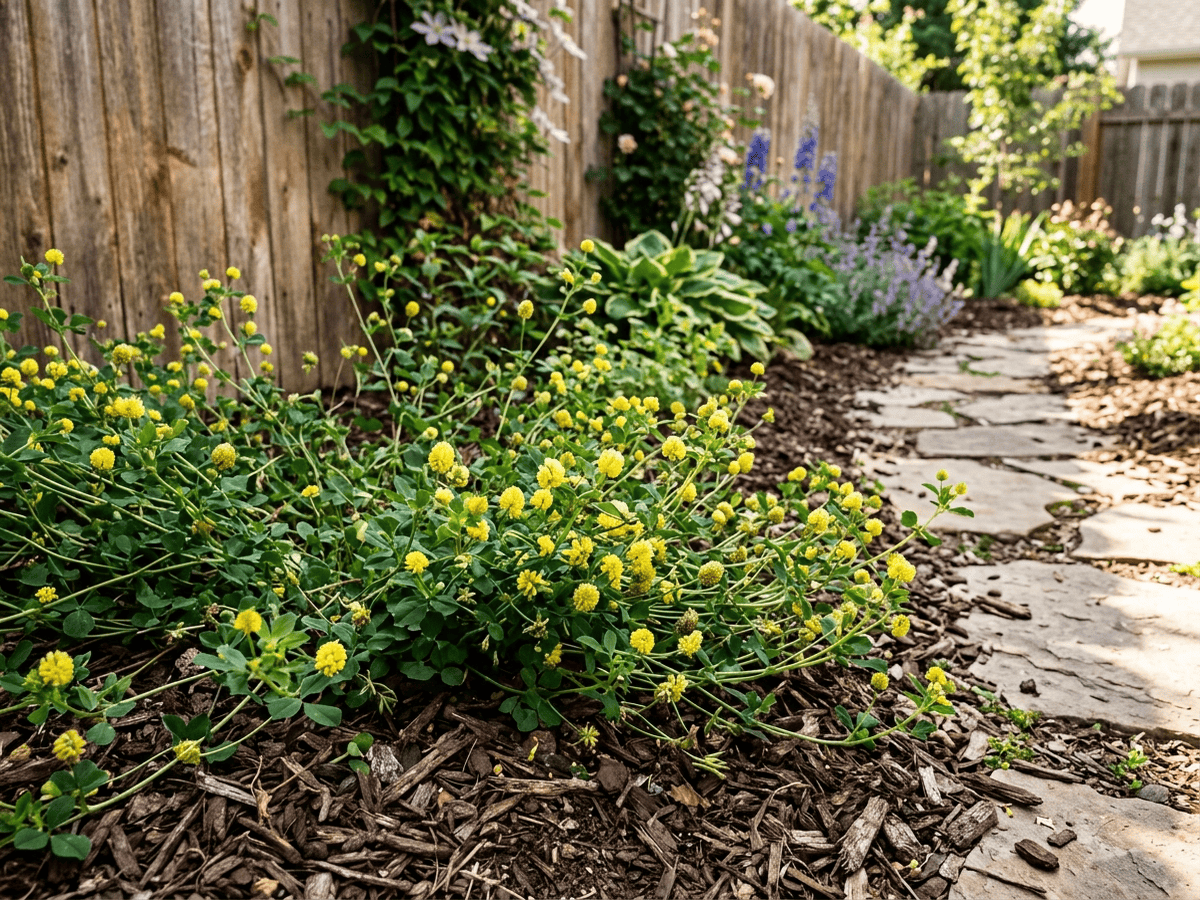
Black Medic is a low-growing European annual legume naturalized across US lawns and roadsides, resembling clover with trifoliate leaves (the middle leaflet on a short stalk) and small tight yellow flower heads followed by distinctive tiny black spiral seed pods. Fixes nitrogen like clover but considered weedy due to sprawling habit and ubiquitous presence in thin lawn areas. Often confused with yellow hop clover.
- Pollinator-friendly
How to care for Black Medick
Watering
- Springevery 7 days
- Summerevery 5 days
- Fallevery 10 days
- Winterevery 21 days
Soil · Well-draining
- Top dressingPine bark mulch10%
- Main mixPotting soil + perlite 2:170%
- DrainageLECA / gravel20%
Never skip the drainage layer — standing water is the top cause of root rot.
FERTILIZER
This plant needs little to no feeding.
At a Glance
- NativeEurope, Africa, Western Asia
- Height0.5–2 ft (0.2–0.6 m)
- Spread1–2 ft (0.3–0.6 m)
- Flower colorYellow
- Foliage colorGreen
- Fruit colorBlack
- SoilAlkaline, Well-drained, Loamy
- LocationsYard
Bloom time
BLOOM CYCLE
Peak bloom
May–Oct
Tight yellow flower heads May through October
Fragrance
LIGHT FRAGRANCE
The flowers have a lightly honey-scented scent.
Toxicity
No toxicity has been reported for this plant. Still, it is wise to keep pets from chewing on any houseplant.
Educational information, not medical or veterinary advice. If exposure is suspected, contact a doctor or veterinarian.
DISTRIBUTION

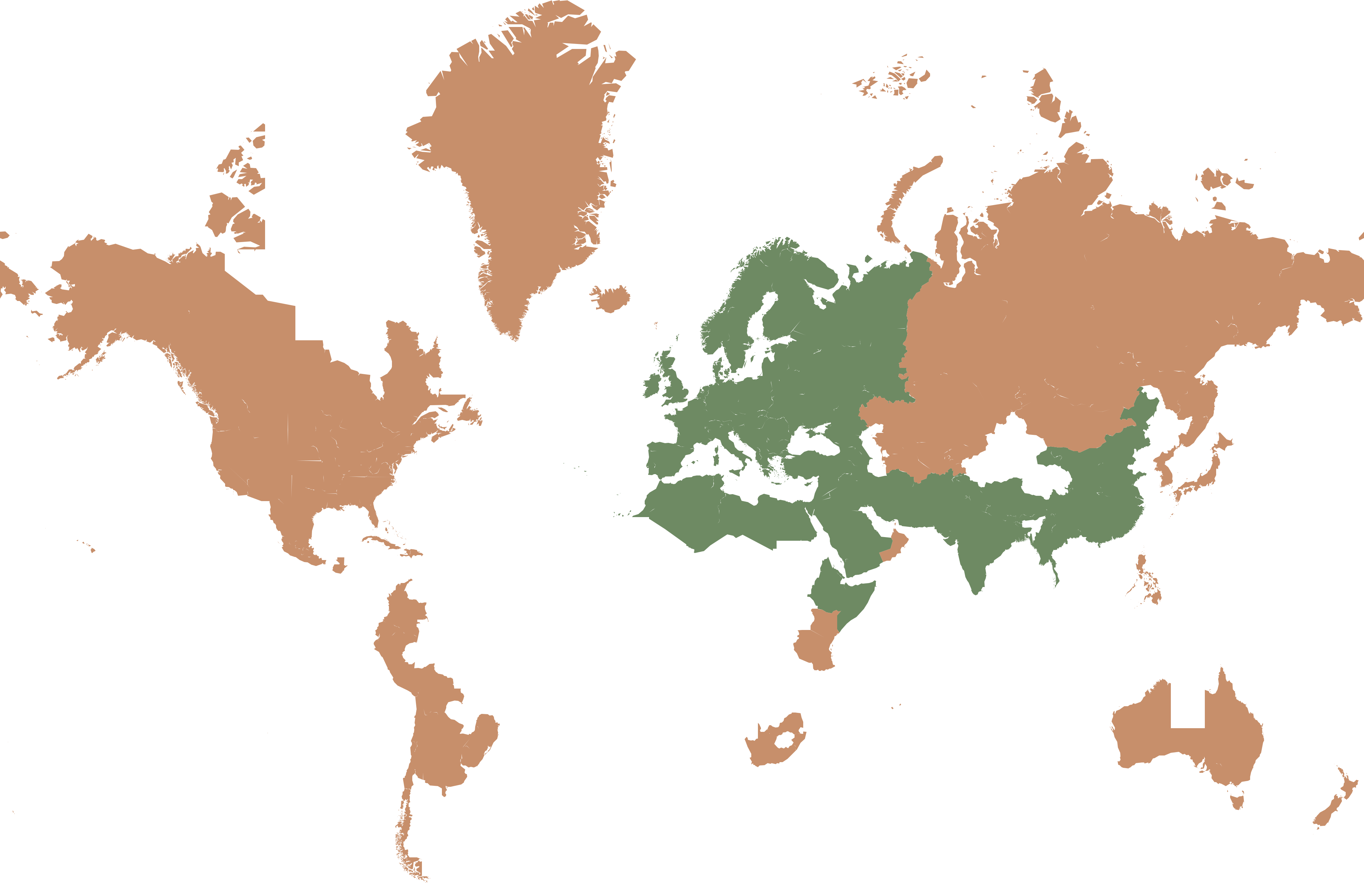
- Native
- Introduced
- Europe
- Africa
- Western Asia
History
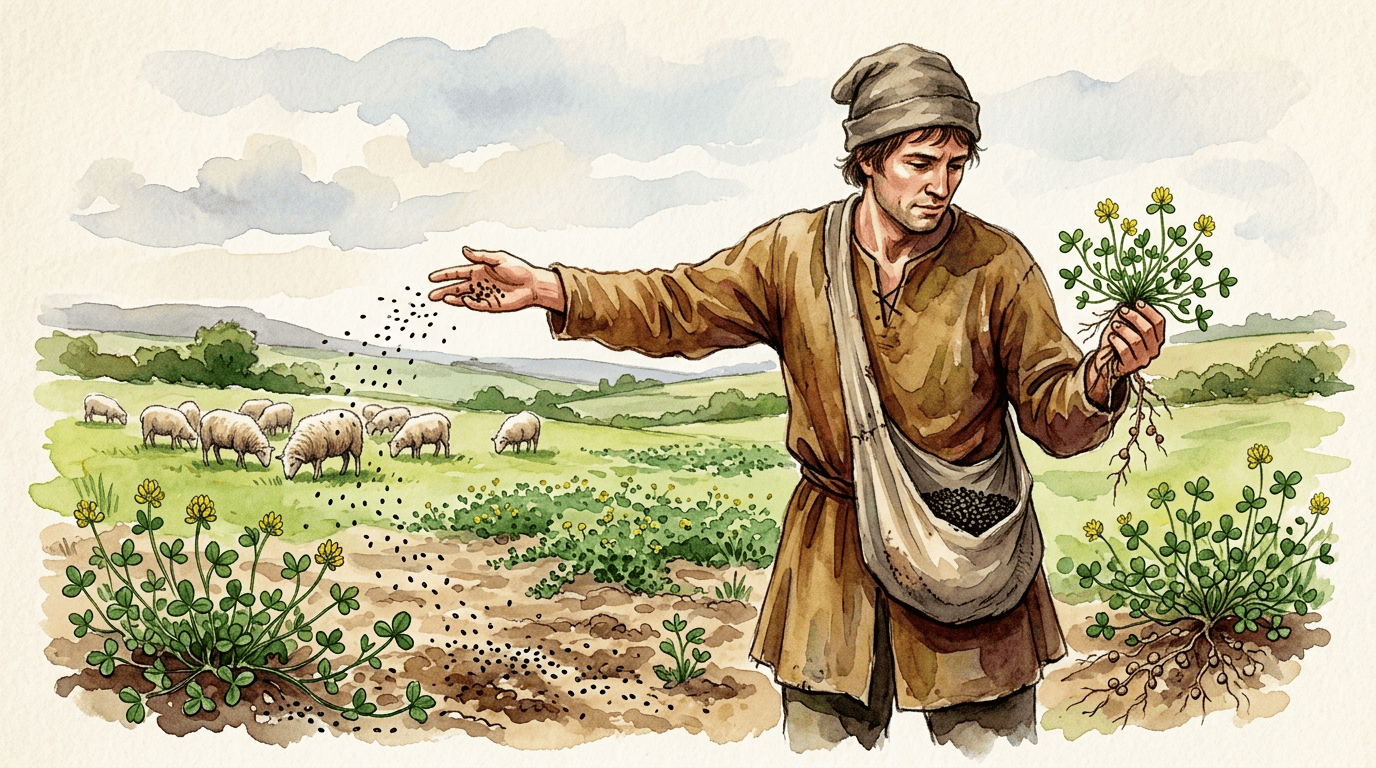
Medicago lupulina, black medick, is native to Europe, North Africa, and western Asia. Linnaeus described it in 1753. As a Medicago it is closely related to alfalfa, and like alfalfa it fixes atmospheric nitrogen through root nodules, quietly enriching the soil where it grows.
Medieval and early modern farmers sometimes sowed it in Britain under names such as nonsuch or hop clover as a small forage legume, especially where true clovers were less reliable. In modern lawns it is often dismissed as a weed because of its low mats and tiny yellow flowers, yet it has real ecological value: it feeds small pollinators, tolerates drought, and adds nitrogen without fertilizer. In cover-crop mixes it remains useful for exactly the traits that make it persistent in turf.
Symbolism & meaning
What It Symbolizes
Black Medick offers modest benefit in thin lawn soil, quietly fixing nitrogen through its small clover-like roots wherever it settles. Its distinctive coiled black seed pods give it both name and folk identity, sometimes mistaken for clover until those pods appear. Its meaning is ecological observation rather than romance — a small unsung helper in tired turf, asking nothing and giving a little fertility back.
- Modest benefit — adds nitrogen to thin lawn soil
- Black medicago — distinctive spiral black seed pods
Where the Name Comes From
The common name highlights its dark coloring. 'Medicago' from the ancient Persian region Media where alfalfa was believed to originate; 'lupulina' means hop-like for the yellow flower heads that resemble tiny hop flowers.
Related plants
Plants with similar care
 Chinese AbeliaAbelia chinensis
 Fragrant AbeliaAbelia mosanensis
 Large-Flowered AbeliaAbelia uniflora
 Glossy AbeliaAbelia x grandiflora
Frequently asked questions
How often should I water Black Medick?
In summer, water about every 5 days; in winter, about every 21 days. Adjust for heat, pot size and drainage.
How much light does Black Medick need?
Full sun: 6+ hrs direct. Watch the leaves — scorching or stretching means the light needs adjusting.
Is Black Medick toxic to cats or dogs?
No toxicity has been reported for this plant. Still, it is wise to keep pets from chewing on any houseplant. Educational information, not medical or veterinary advice. If exposure is suspected, contact a doctor or veterinarian.
Is Black Medick easy to grow?
Yes — it is considered an easy, beginner-friendly plant.
When does Black Medick bloom?
It typically blooms May–Oct in the Northern Hemisphere.
YardMate
Identify any plant in seconds
Snap a photo — YardMate names the plant, diagnoses problems, and reminds you when to water.
Download on the App Store