 YardMate

Crimson Bottlebrush
Melaleuca citrina
Easy · Beginner friendlyAbout Crimson Bottlebrush
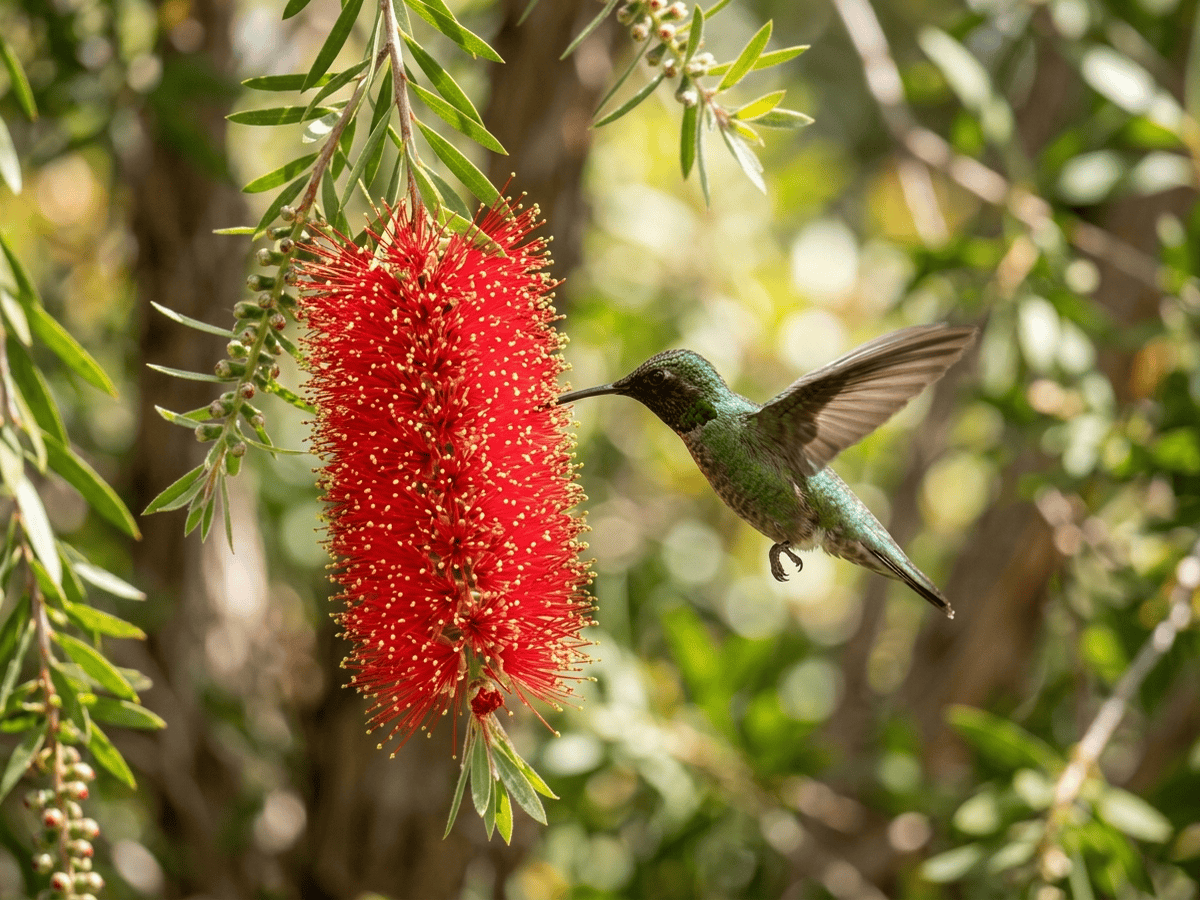
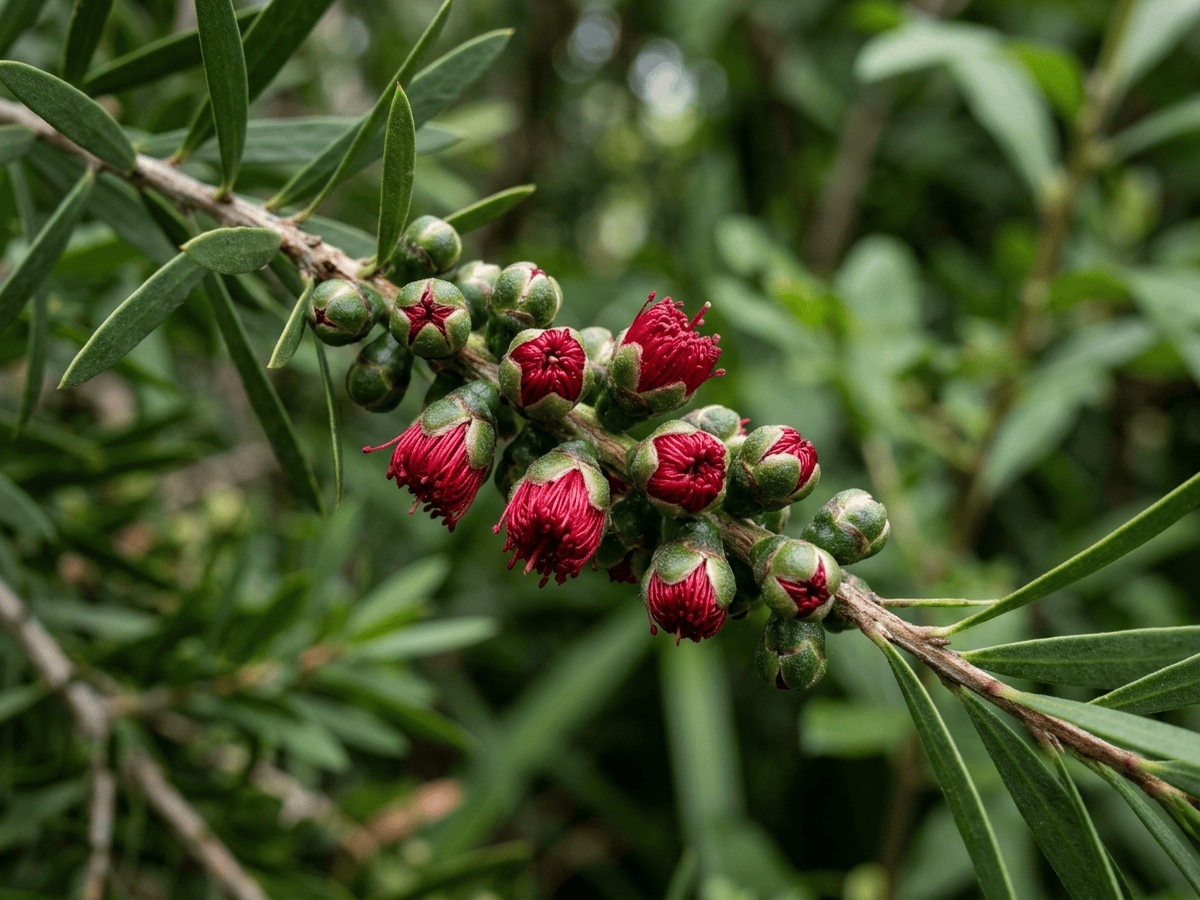
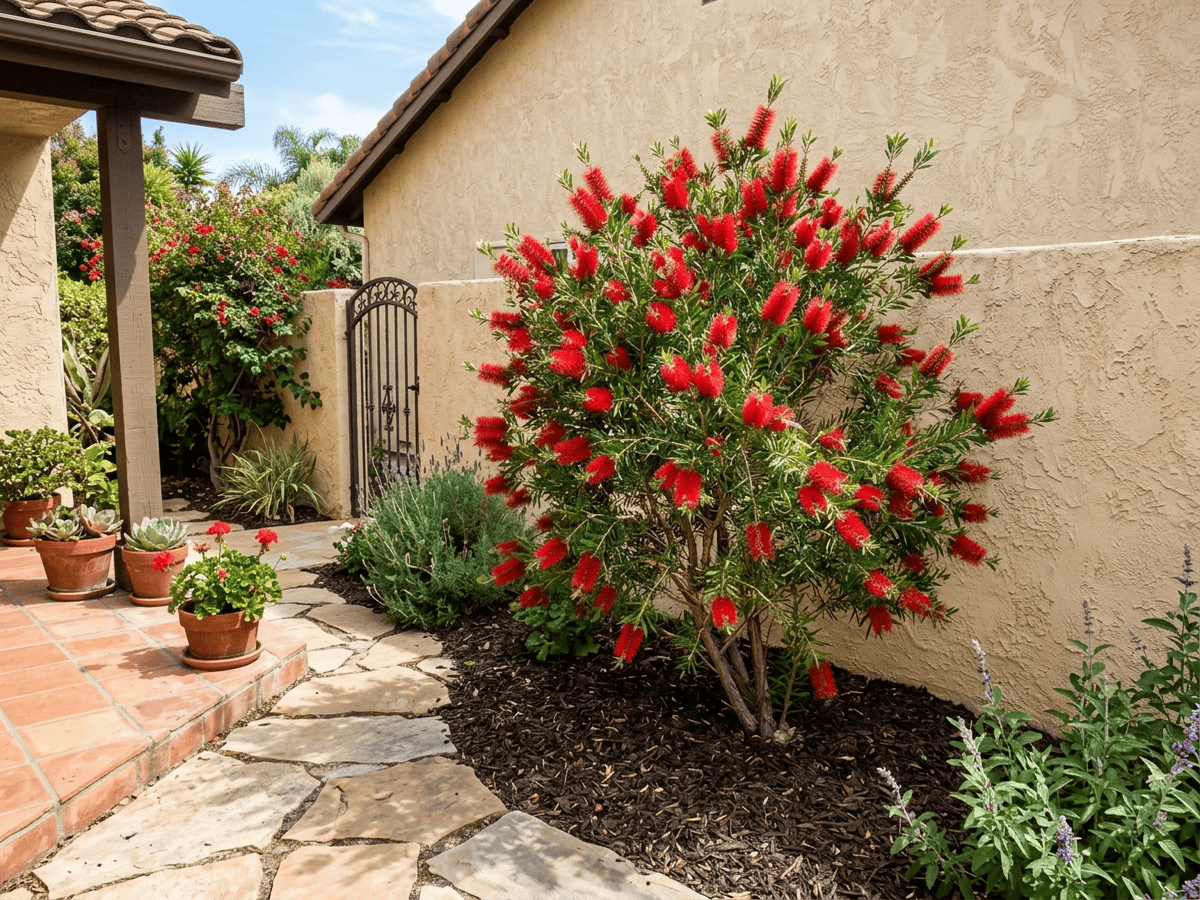
Melaleuca citrina (syn. Callistemon citrinus), the crimson bottlebrush, is an iconic Australian evergreen shrub or small tree native to New South Wales and Victoria. It reaches 2-5 m tall and produces distinctive brush-shaped flower spikes of brilliant scarlet-red flowers throughout spring and sporadically year-round in mild climates. The 'bottlebrush' form comes from the dense arrangement of stamens — each flower is mostly stamens with tiny petals.
The flowers are heavy with nectar and attract hummingbirds (in the Americas), honeyeaters (in Australia), and many bee species. Crushed leaves smell of lemon, the source of the species name 'citrina.'
Grown extensively in California, Florida, Mediterranean Europe, and warm coastal regions worldwide. Drought-tolerant once established, salt-tolerant, and among the easiest flowering evergreen shrubs for USDA zones 9-11. A landscape staple of Southern California since the 1920s.
- Fragrant
- Drought-tolerant
- Evergreen
- Pollinator-friendly
How to care for Crimson Bottlebrush
Watering
- Springevery 10 days
- Summerevery 7 days
- Fallevery 14 days
- Winterevery 21 days
Soil · Well-draining
- Top dressingPine bark mulch10%
- Main mixPotting soil + perlite 2:170%
- DrainageLECA / gravel20%
Never skip the drainage layer — standing water is the top cause of root rot.
FERTILIZER
Balanced Feed 14-14-14
An even feed covers all three needs at once, keeping leaves, roots and blooms moving together with nothing pushed out of balance.
- Nitrogen · Leaves
- Phosphorus · Roots + Blooms
- Potassium · Strength
- Springevery 30 days
- Summerevery 30 days
- Fallevery 45 days
At a Glance
- NativeAustralasia, Europe
- Height6–15 ft (1.8–4.6 m)
- Spread5–10 ft (1.5–3 m)
- Flower colorRed, Burgundy
- Foliage colorGreen
- Fruit colorBrown
- SoilWell-drained, Loamy, Sandy
- LocationsYard
Bloom time
BLOOM CYCLE
Peak bloom
Jan–Dec
Scarlet bottlebrush spikes in spring and sporadically year-round; extremely attractive to hummingbirds.
Fragrance
MODERATE FRAGRANCE
Lemony eucalyptus scent from crushed foliage.
Toxicity
No toxicity has been reported for this plant. Still, it is wise to keep pets from chewing on any houseplant.
Educational information, not medical or veterinary advice. If exposure is suspected, contact a doctor or veterinarian.
DISTRIBUTION


- Native
- Introduced
- Australasia
- Europe
History

Melaleuca citrina (until 2006 Callistemon citrinus) is endemic to eastern Australia — New South Wales and Victoria — where it grows along creek banks and swamp edges. It was collected by Joseph Banks and Daniel Solander during Captain Cook's 1770 Endeavour voyage (at Botany Bay) and seed was successfully introduced to Britain at Kew by 1776. The plant entered Southern California horticulture in the late 19th century and became a signature landscape shrub of Mediterranean-climate American gardens by the 1920s.
Its drought-tolerance, salt-tolerance, and extended flowering period made it an instant fit for the Southwestern and Floridian landscape palette. Hummingbirds quickly adopted the flowers — a case of evolutionary convergence, since in Australia the flowers are bird-pollinated by honeyeaters, and American hummingbirds fill the same niche.
Molecular phylogenetic work by Lyndley Craven and colleagues (2006) merged Callistemon into Melaleuca based on DNA evidence of paraphyly; horticultural trade still commonly uses the old Callistemon name. Phosphorus-sensitive like many Australian myrtaceae — never use high-phosphorus fertilizers. Moved from Callistemon to Melaleuca in 2006 molecular taxonomy.
Symbolism & meaning
What It Symbolizes
Crimson Bottlebrush is Fiery beauty given form — scarlet brushes blazing along its branches each spring, alive with honeyeaters and bees. It also carries a story of Discovery, among the very first Australian plants brought to European gardens through Joseph Banks's collections from Cook's voyage. A shrub that traveled from Australian bush to English glasshouse on the strength of one extraordinary flower.
- Fiery Beauty — Scarlet brushes blaze through spring
- Discovery — One of the first Australian plants introduced to European gardens via Joseph Banks
Where the Name Comes From
The name Crimson Bottlebrush describes its rushlike stems. Melaleuca from Greek 'melas' (black) + 'leukos' (white), referring to bark colors in related species; 'citrina' means lemon-scented.
Uses & Fun Facts
- Crimson bottlebrush spikes attract bees and nectar birds
- Continuous warm-season bloom on adaptable shrub
- Dense growth makes informal flowering screen
Related plants
Plants with similar care
 Chinese AbeliaAbelia chinensis
 Fragrant AbeliaAbelia mosanensis
 Large-Flowered AbeliaAbelia uniflora
 Glossy AbeliaAbelia x grandiflora
Frequently asked questions
How often should I water Crimson Bottlebrush?
In summer, water about every 7 days; in winter, about every 21 days. Adjust for heat, pot size and drainage.
How much light does Crimson Bottlebrush need?
Full sun: 6+ hrs direct. Watch the leaves — scorching or stretching means the light needs adjusting.
Is Crimson Bottlebrush toxic to cats or dogs?
No toxicity has been reported for this plant. Still, it is wise to keep pets from chewing on any houseplant. Educational information, not medical or veterinary advice. If exposure is suspected, contact a doctor or veterinarian.
Is Crimson Bottlebrush easy to grow?
Yes — it is considered an easy, beginner-friendly plant.
When does Crimson Bottlebrush bloom?
It typically blooms Jan–Dec in the Northern Hemisphere.
YardMate
Identify any plant in seconds
Snap a photo — YardMate names the plant, diagnoses problems, and reminds you when to water.
Download on the App Store