 YardMate


Blackfoot Daisy
Melampodium leucanthum
Easy · Beginner friendlyAbout Blackfoot Daisy
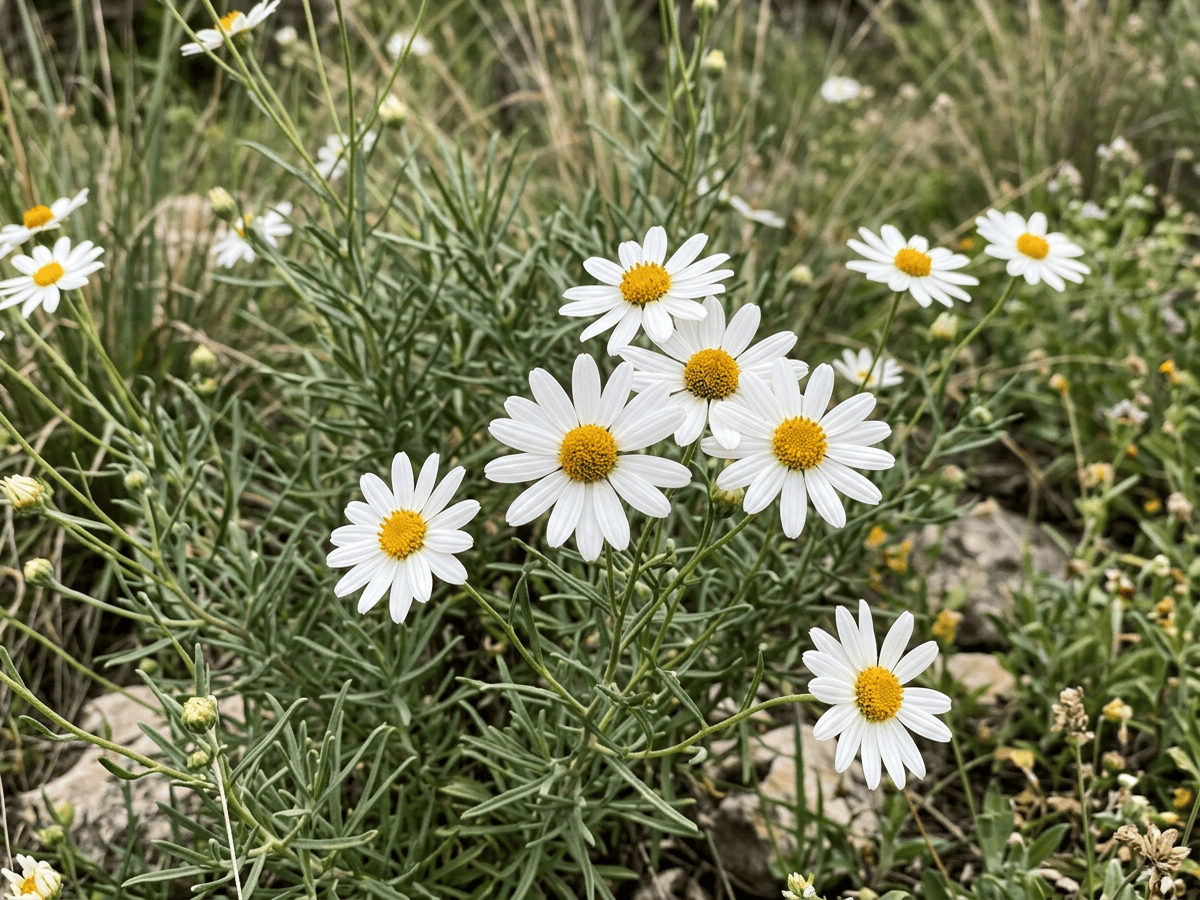
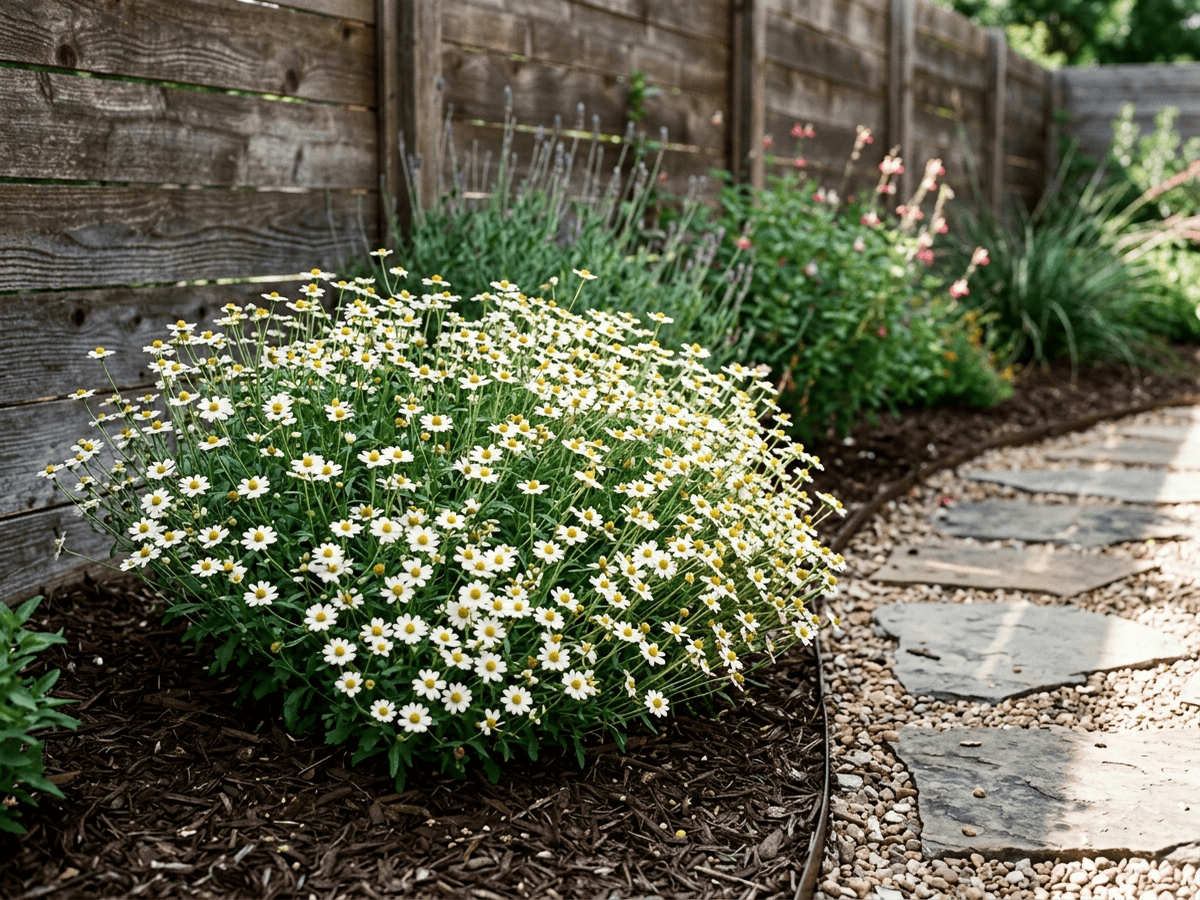
Blackfoot Daisy is a low mounding perennial wildflower native to the dry plains, mesas, and foothills of the southwestern United States and northern Mexico. Forming compact mounds 6 to 12 inches tall and 12 to 18 inches wide, it bears an abundance of charming white daisy flowers with sunny yellow centers and a sweet honey fragrance from spring through fall. Among the longest-blooming and easiest-care Southwest native perennials.
- Fragrant
- Drought-tolerant
- Evergreen
- Long-blooming
How to care for Blackfoot Daisy
Watering
- Springevery 10 days
- Summerevery 10 days
- Fallevery 14 days
- Winterpause watering
Soil · Well-draining
- Top dressingPine bark mulch10%
- Main mixPotting soil + perlite 2:170%
- DrainageLECA / gravel20%
Never skip the drainage layer — standing water is the top cause of root rot.
FERTILIZER
This plant needs little to no feeding.
At a Glance
- NativeNorth America
- Height0.5–1 ft (0.2–0.3 m)
- Spread1–2 ft (0.3–0.6 m)
- Flower colorWhite, Cream
- Foliage colorGreen
- SoilSandy, Well-drained
- LocationsYard · Balcony
Bloom time
BLOOM CYCLE
Peak bloom
Mar–Nov
White daisy flowers with yellow centers spring through fall
Fragrance
LIGHT FRAGRANCE
Light honey-like scent attracts pollinators.
Toxicity
Toxicity unknown
None reported
Unknown
EXPOSURE Unspecified plant material.
EFFECT Toxic effects are not specified.
NOTE Toxicity for humans is not well documented; use caution until verified.
Unknown
EXPOSURE Unspecified plant material.
EFFECT Toxic effects are not specified.
NOTE Toxicity for dogs is not well documented; use caution until verified.
Unknown
EXPOSURE Unspecified plant material.
EFFECT Toxic effects are not specified.
NOTE Toxicity for cats is not well documented; use caution until verified.
Educational information, not medical or veterinary advice. If exposure is suspected, contact a doctor or veterinarian.
DISTRIBUTION


- Native
- North America
History
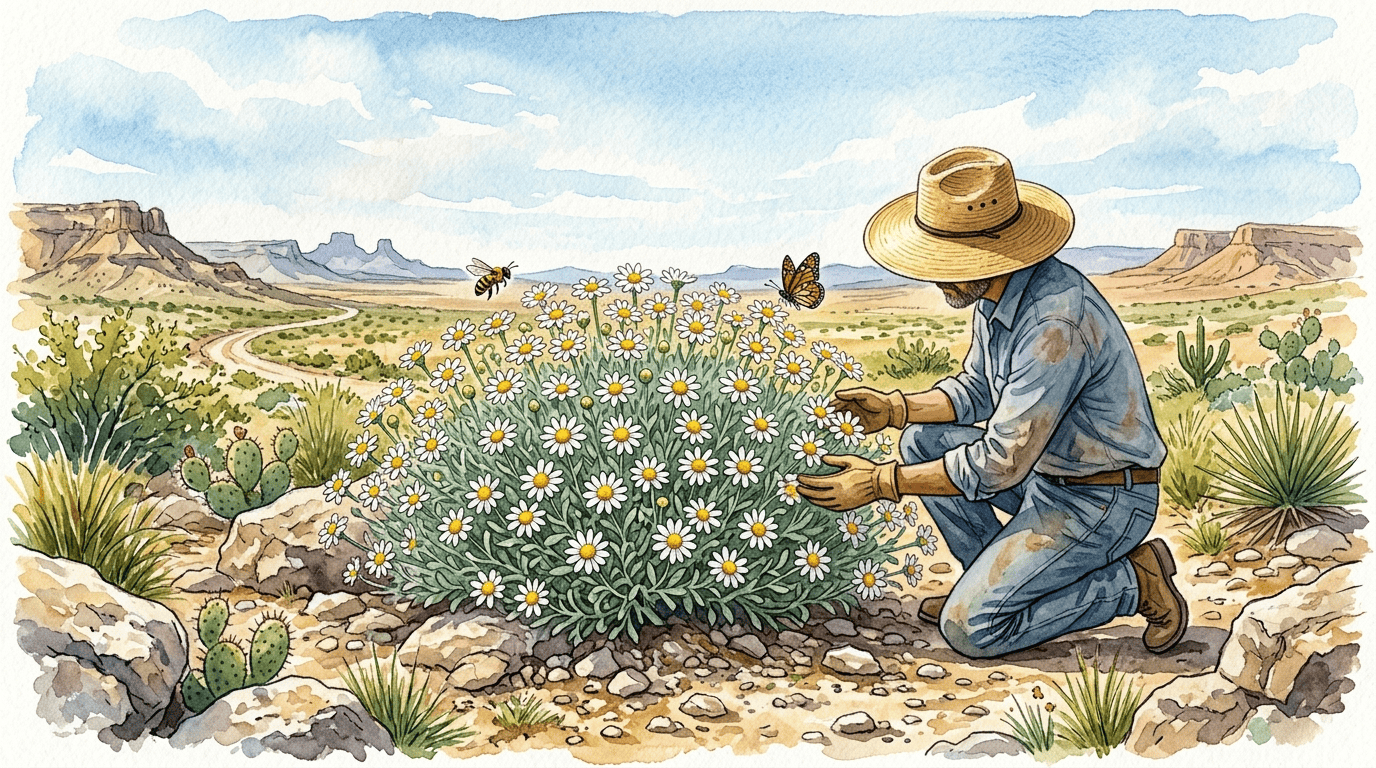
Melampodium leucanthum, the blackfoot daisy or plains blackfoot, is a compact mounding perennial native to rocky slopes, mesas, and calcareous soils of the Chihuahuan Desert and adjacent southern Great Plains from Colorado and Kansas through Texas, New Mexico, Arizona, and northern Mexico. American botanists Torrey and Gray described it in 1842. The plant forms a tidy gray-green cushion 30 centimeters across and produces white daisy flowers with bright yellow centers nearly continuously from spring through frost.
The flowers are honey-scented and attract native bees and butterflies. Texas Superstar, Plant Select, and Arboretum at Flagstaff trials championed it in the 1990s, and it is now widely used in residential xeriscape, rock gardens, and pollinator plantings across the US Southwest and southern Rockies.
A signature mounding wildflower of Trans-Pecos Texas, New Mexico, and Arizona, Blackfoot Daisy has become one of the most popular Southwest native perennials due to its remarkable bloom duration and tough constitution. Featured prominently in the Lady Bird Johnson Wildflower Center's recommended plant lists.
Symbolism & meaning
What It Symbolizes
Blackfoot Daisy is a cheerful welcome to the desert garden, scattering honey-scented white daisies for months across the hottest, driest weather. As an icon of Southwest xeriscape design, it proves that toughness and friendliness can grow on the same low mound. In its persistent bloom, the high desert smiles back at whoever stops to look.
- Cheerful welcome — honey-scented daisies bloom for months
- Desert charm — icon of Southwest xeriscape gardens
Where the Name Comes From
The name Blackfoot Daisy describes its daisy-like flower heads. 'Melampodium' is Greek for 'black foot,' referring to dark seed bases; 'leucanthum' means white-flowered.
Uses & Fun Facts
- Compact mounds bloom white daisies through Southwest summer heat
- Long flowering season feeds native bees and small butterflies
- Tough evergreen native fills parking strips and rock gardens
- Drought-tolerant Texas wildflower thrives in xeric pots
Related plants
Plants with similar care
 Chinese AbeliaAbelia chinensis
 Fragrant AbeliaAbelia mosanensis
 Large-Flowered AbeliaAbelia uniflora
 Glossy AbeliaAbelia x grandiflora
Frequently asked questions
How often should I water Blackfoot Daisy?
Water about every 10 days during the growing season, and always let excess water drain away.
How much light does Blackfoot Daisy need?
Full sun: 6+ hrs direct. Watch the leaves — scorching or stretching means the light needs adjusting.
Is Blackfoot Daisy toxic to cats or dogs?
Pets Unknown (Dogs Unknown · Cats Unknown) Educational information, not medical or veterinary advice. If exposure is suspected, contact a doctor or veterinarian.
Is Blackfoot Daisy easy to grow?
Yes — it is considered an easy, beginner-friendly plant.
When does Blackfoot Daisy bloom?
It typically blooms Mar–Nov in the Northern Hemisphere.
YardMate
Identify any plant in seconds
Snap a photo — YardMate names the plant, diagnoses problems, and reminds you when to water.
Download on the App Store