 YardMate

Dawn Redwood
Metasequoia glyptostroboides
Easy · Beginner friendlyAbout Dawn Redwood
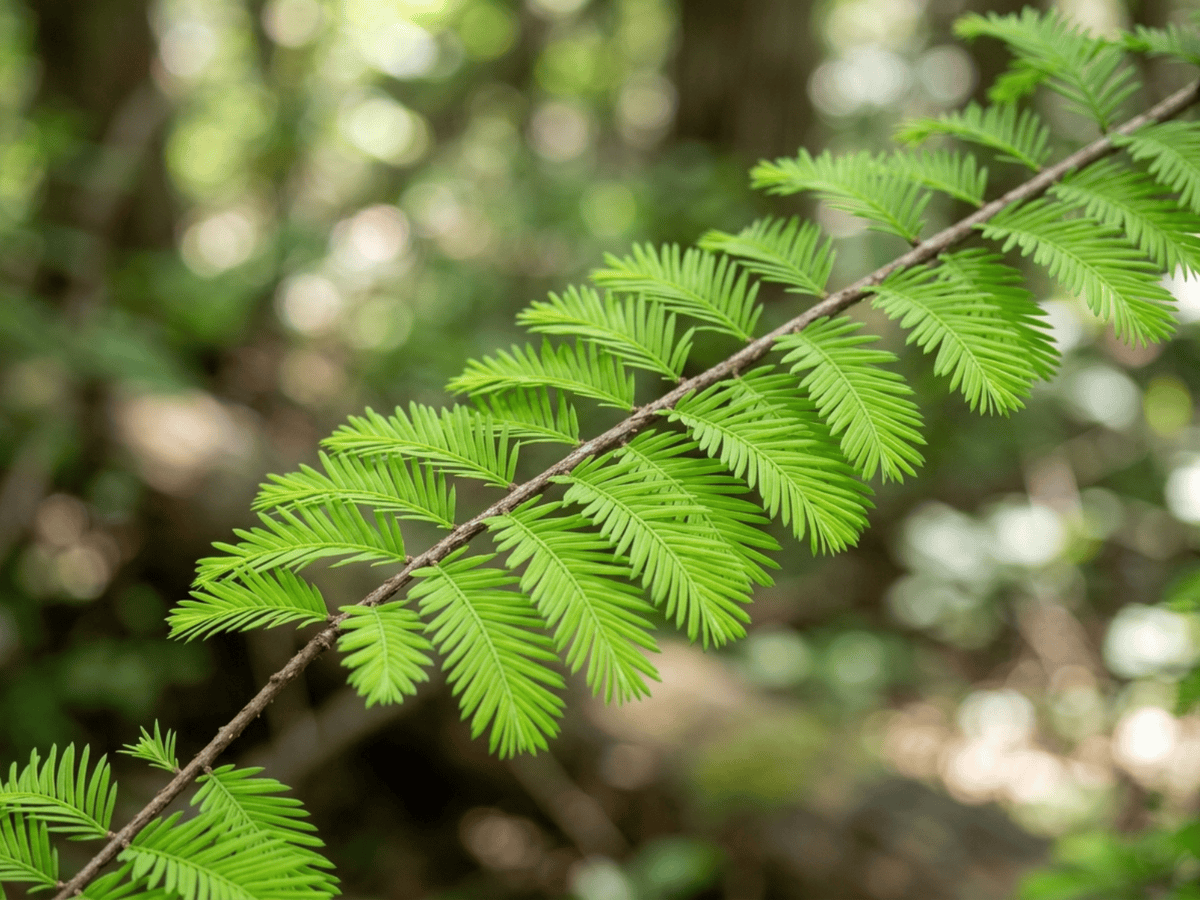
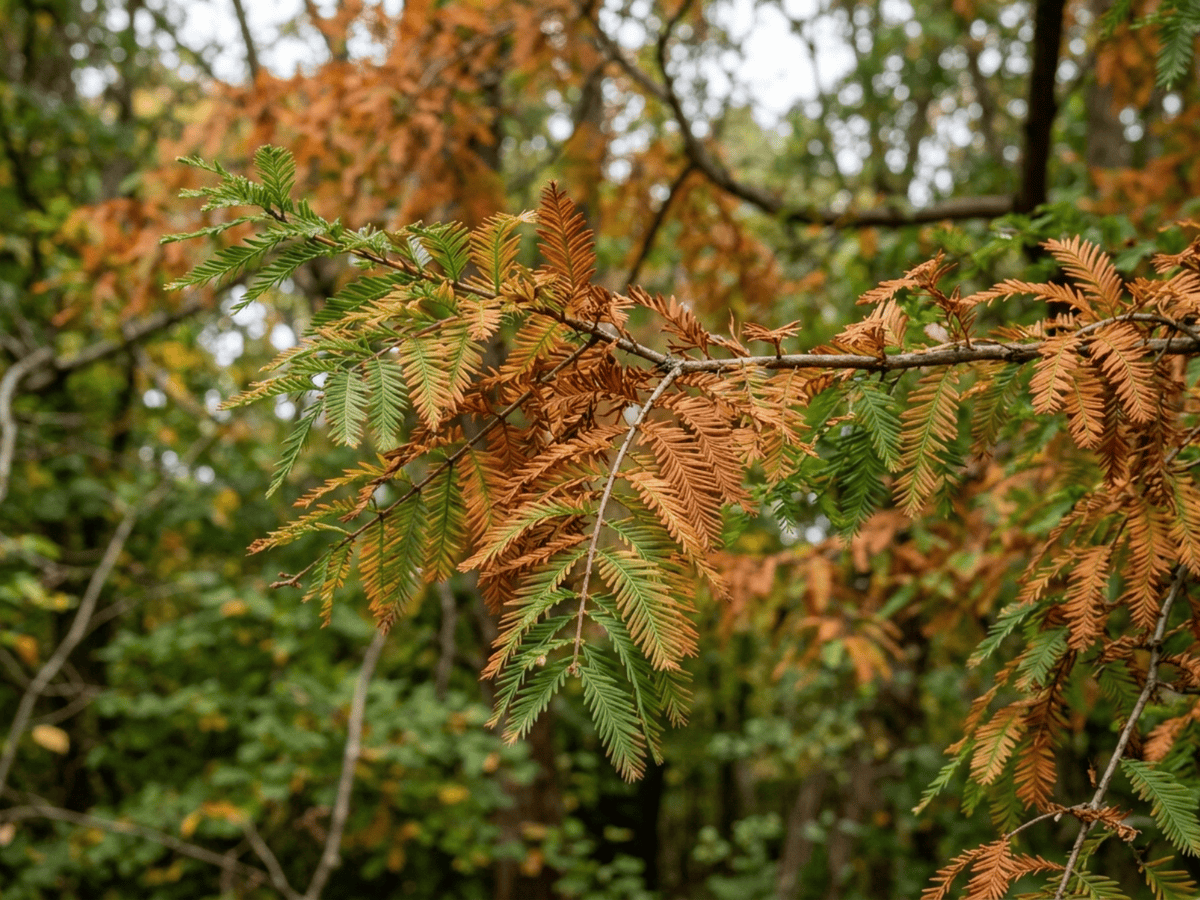
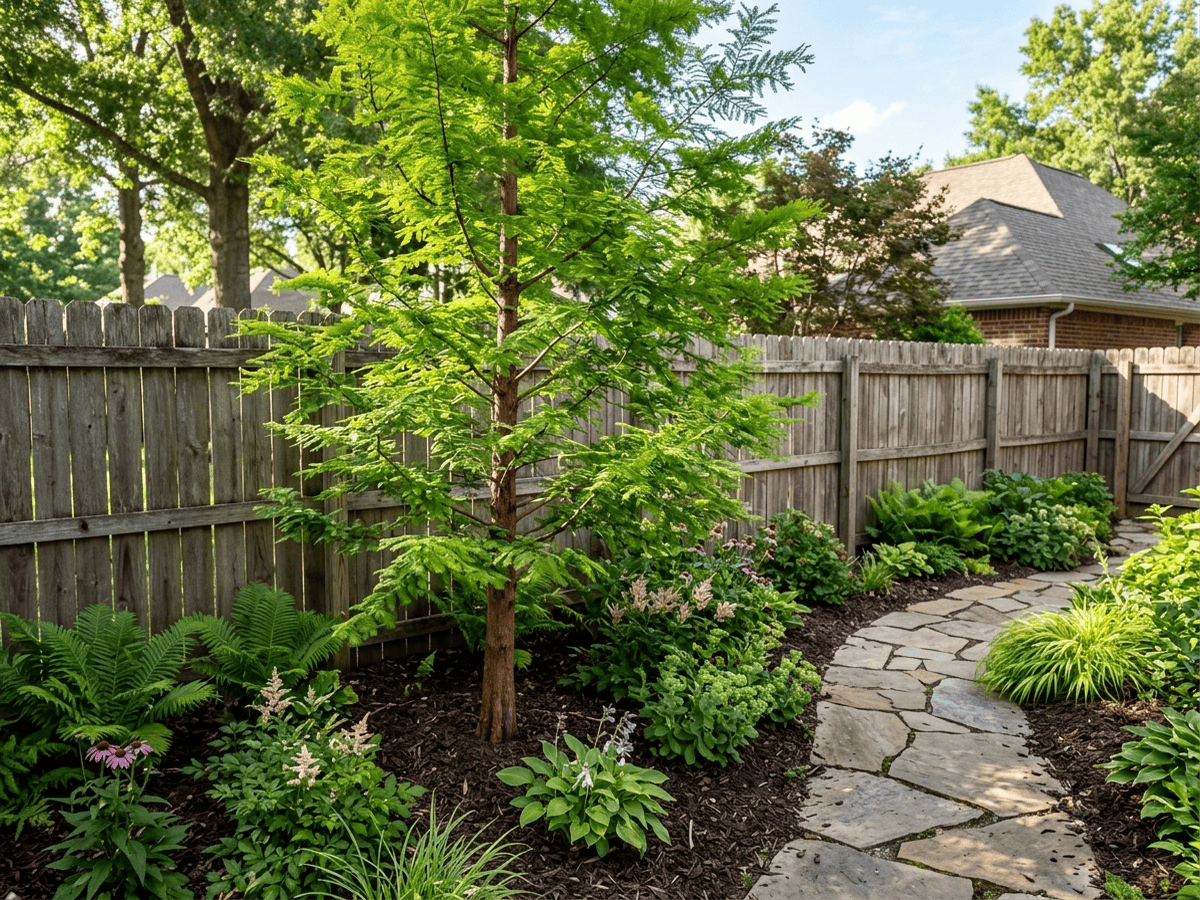
Metasequoia glyptostroboides, the dawn redwood, is a living fossil and one of botany's greatest modern discoveries. Known only from Mesozoic-era fossils and presumed extinct for five million years, a living population was found in a remote Chinese valley in Hubei province in 1941. Seeds were distributed to botanical gardens worldwide in 1948, launching one of the most successful conservation introductions in history. This deciduous conifer grows rapidly — up to 2 meters per year in youth — reaching 25 to 40 meters at maturity, with a neat conical form and feathery bright green foliage that turns spectacular russet-orange before dropping in autumn. Unlike most conifers, it is fully deciduous, shedding its needles along with entire branchlets. The deeply buttressed trunk and fibrous, reddish-brown bark add winter interest. Dawn redwood thrives in moist, slightly acidic soil and tolerates waterlogged conditions, reflecting its native streamside habitat. It prefers full sun and is surprisingly cold-hardy for a species from subtropical China.
- Fast-growing
- Fall-color
How to care for Dawn Redwood
Watering
- Springevery 5 days
- Summerevery 4 days
- Fallevery 10 days
- Winterevery 30 days
Soil · Well-draining
- Top dressingPine bark mulch10%
- Main mixPotting soil + perlite 2:170%
- DrainageLECA / gravel20%
Never skip the drainage layer — standing water is the top cause of root rot.
FERTILIZER
Balanced Feed 14-14-14
An even feed covers all three needs at once, keeping leaves, roots and blooms moving together with nothing pushed out of balance.
- Nitrogen · Leaves
- Phosphorus · Roots + Blooms
- Potassium · Strength
- Springevery 60 days
At a Glance
- NativeEast Asia
- Height70–100 ft (21.3–30.5 m)
- Spread15–25 ft (4.6–7.6 m)
- Flower colorYellow
- Foliage colorGreen, Bronze
- SoilLoamy, Moisture-retentive, Acidic
- LocationsYard
Bloom time
BLOOM CYCLE
Small cones on mature trees; spectacular russet-orange autumn foliage is the main seasonal display
Fragrance
LIGHT FRAGRANCE
Light resinous scent when foliage is crushed.
Toxicity
No toxicity has been reported for this plant. Still, it is wise to keep pets from chewing on any houseplant.
Educational information, not medical or veterinary advice. If exposure is suspected, contact a doctor or veterinarian.
DISTRIBUTION


- Native
- Introduced
- East Asia
History
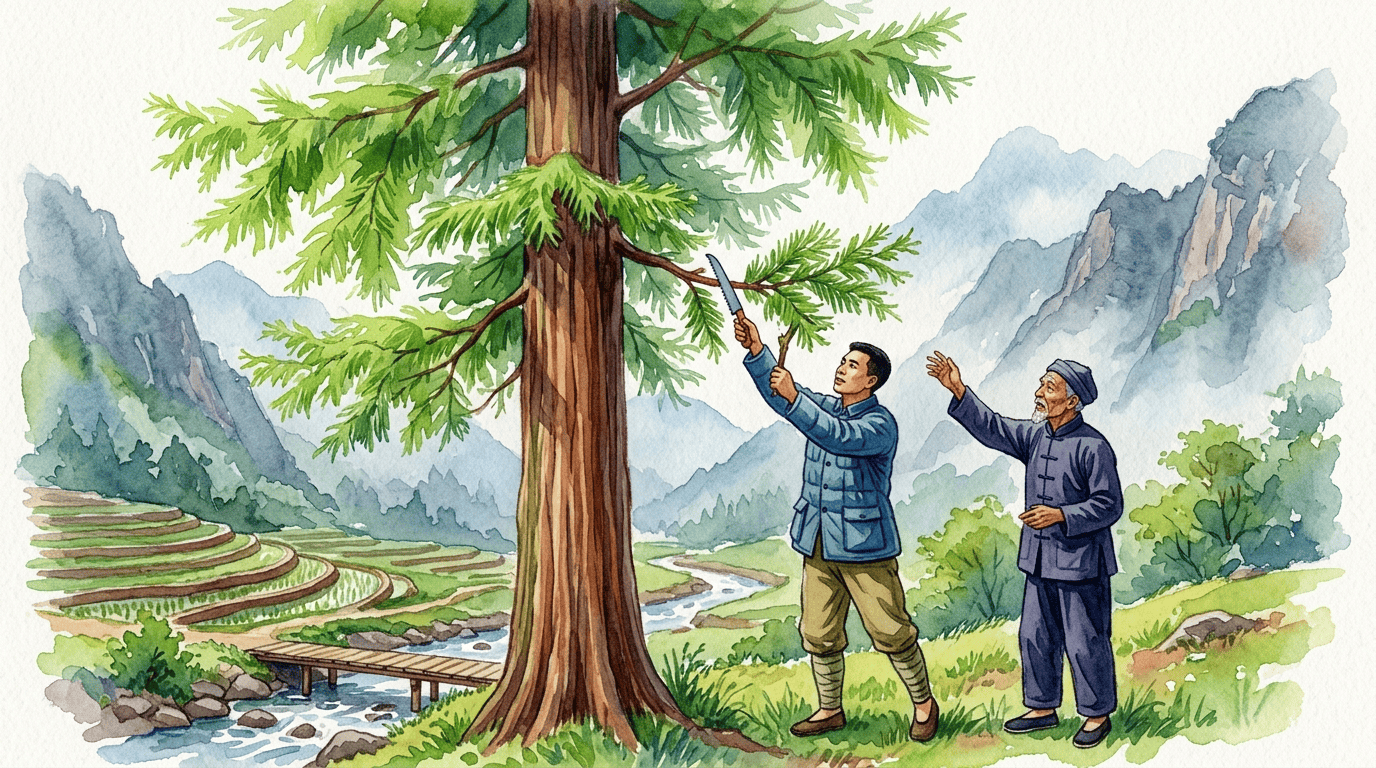
Metasequoia glyptostroboides is one of the great botanical rediscoveries of the 20th century. Japanese paleobotanist Shigeru Miki described Metasequoia from fossils in 1941, believing the genus extinct. In 1944, Chinese forester Zhan Wang collected branches from an unknown deciduous conifer in Sichuan, where villagers knew it as water fir.
Botanists Hu Hsen-Hsu and Cheng Wan-Chun soon recognized it as a living match for Miki's fossil genus, a tree thought gone for millions of years. In 1948 the Arnold Arboretum helped fund seed collection, and Elmer Drew Merrill distributed material to botanical gardens around the world.
Dawn redwood proved easy to grow, so a living fossil moved from remote Chinese valleys into parks and campuses within a generation. The original wild populations in Hubei and Sichuan remain endangered, but their descendants now stand across temperate cities, soft green in summer and russet before leaf fall.
Symbolism & meaning
What It Symbolizes
Dawn Redwood is rediscovery itself — known only from ancient fossils until a single grove was found alive in a remote Chinese valley in 1944, returning a presumed-extinct genus to the living world overnight. As a true living fossil it carries ancient wisdom, the deep continuity of life across eras. It is the tree that taught a generation of botanists never to assume a species is gone for good.
- Rediscovery — Back from presumed extinction, it symbolizes unexpected second chances and renewal
- Ancient wisdom — As a living fossil, it embodies the deep continuity of life across geological time
Where the Name Comes From
The common name highlights its red coloring. Metasequoia means 'related to Sequoia,' from Greek 'meta' (with/after). Glyptostroboides means 'resembling Glyptostrobus' (Chinese swamp cypress), referring to its similar deciduous needles.
Uses & Fun Facts
- Living fossil deciduous conifer as park and arboretum centerpiece
- Fast-growing pyramid casts cooling summer shade on large lots
- Feathery foliage turns rusty orange before winter drop
Related plants
Plants with similar care
 Chinese AbeliaAbelia chinensis
 Fragrant AbeliaAbelia mosanensis
 Large-Flowered AbeliaAbelia uniflora
 Glossy AbeliaAbelia x grandiflora
Frequently asked questions
How often should I water Dawn Redwood?
In summer, water about every 4 days; in winter, about every 30 days. Adjust for heat, pot size and drainage.
How much light does Dawn Redwood need?
Full sun: 6+ hrs direct. Watch the leaves — scorching or stretching means the light needs adjusting.
Is Dawn Redwood toxic to cats or dogs?
No toxicity has been reported for this plant. Still, it is wise to keep pets from chewing on any houseplant. Educational information, not medical or veterinary advice. If exposure is suspected, contact a doctor or veterinarian.
Is Dawn Redwood easy to grow?
Yes — it is considered an easy, beginner-friendly plant.
YardMate
Identify any plant in seconds
Snap a photo — YardMate names the plant, diagnoses problems, and reminds you when to water.
Download on the App Store