 YardMate

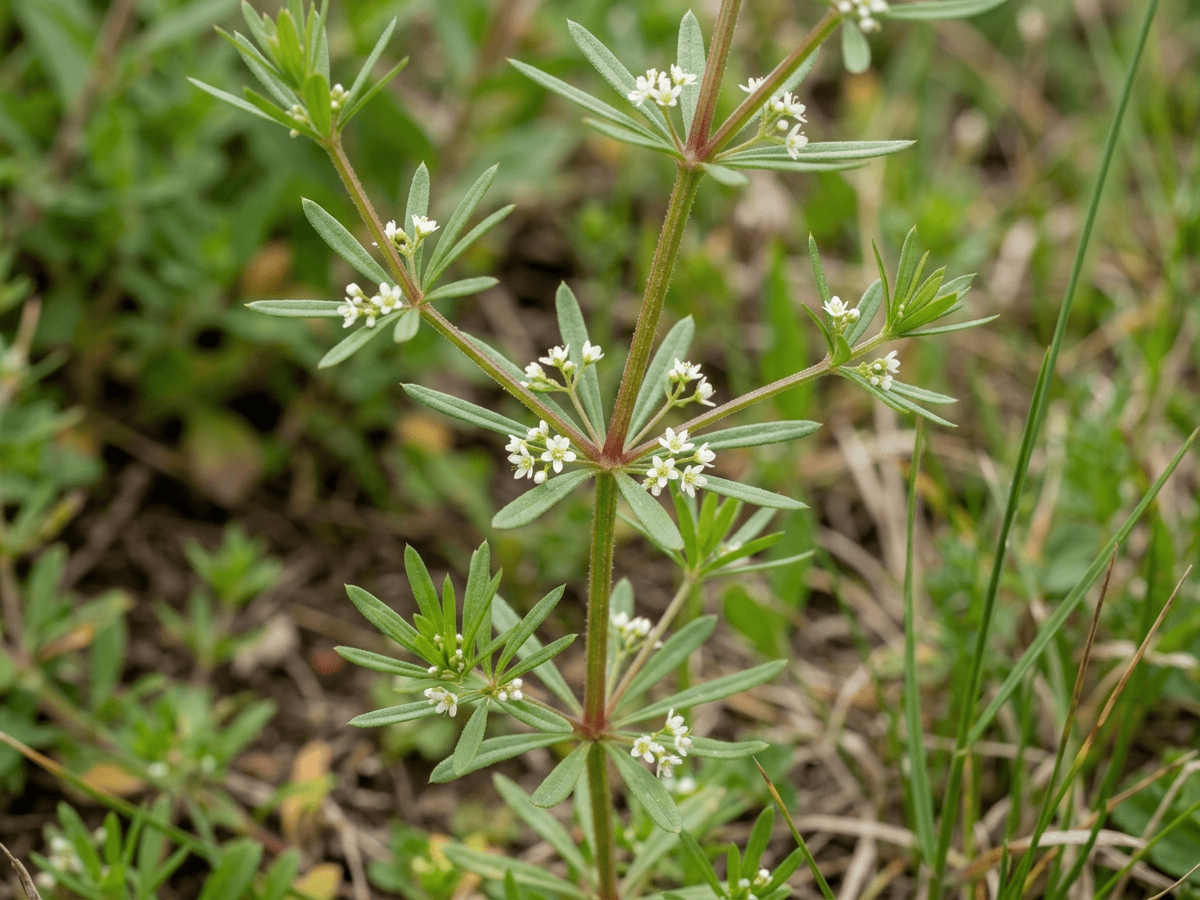


Green Carpetweed
Mollugo verticillata
Easy · Beginner friendlyAbout Green Carpetweed
Carpetweed is a small summer annual of likely tropical American origin, naturalized throughout the warm-to-temperate US. Forms distinctive flat wheel-like rosettes with whorls of 5 to 6 narrow leaves radiating from each node along prostrate stems, dotted with tiny white flowers. Invades summer gardens, cropland, and thin lawns especially in sandy soil, germinating later than most summer weeds after bare soil warms.
- Heat-tolerant
How to care for Green Carpetweed
Watering
- Springevery 14 days
- Summerevery 7 days
- Fallevery 14 days
- Winterpause watering
Soil · Well-draining
- Top dressingPine bark mulch10%
- Main mixPotting soil + perlite 2:170%
- DrainageLECA / gravel20%
Never skip the drainage layer — standing water is the top cause of root rot.
FERTILIZER
This plant needs little to no feeding.
At a Glance
- NativeCentral America
- Height0.3–0.5 ft (0.1–0.2 m)
- Spread1–2 ft (0.3–0.6 m)
- Flower colorWhite
- Foliage colorGreen
- Fruit colorBrown
- SoilSandy, Well-drained
- LocationsYard
Bloom time
BLOOM CYCLE
Peak bloom
Jul–Nov
Tiny white flowers midsummer to frost
Toxicity
No toxicity has been reported for this plant. Still, it is wise to keep pets from chewing on any houseplant.
Educational information, not medical or veterinary advice. If exposure is suspected, contact a doctor or veterinarian.
DISTRIBUTION

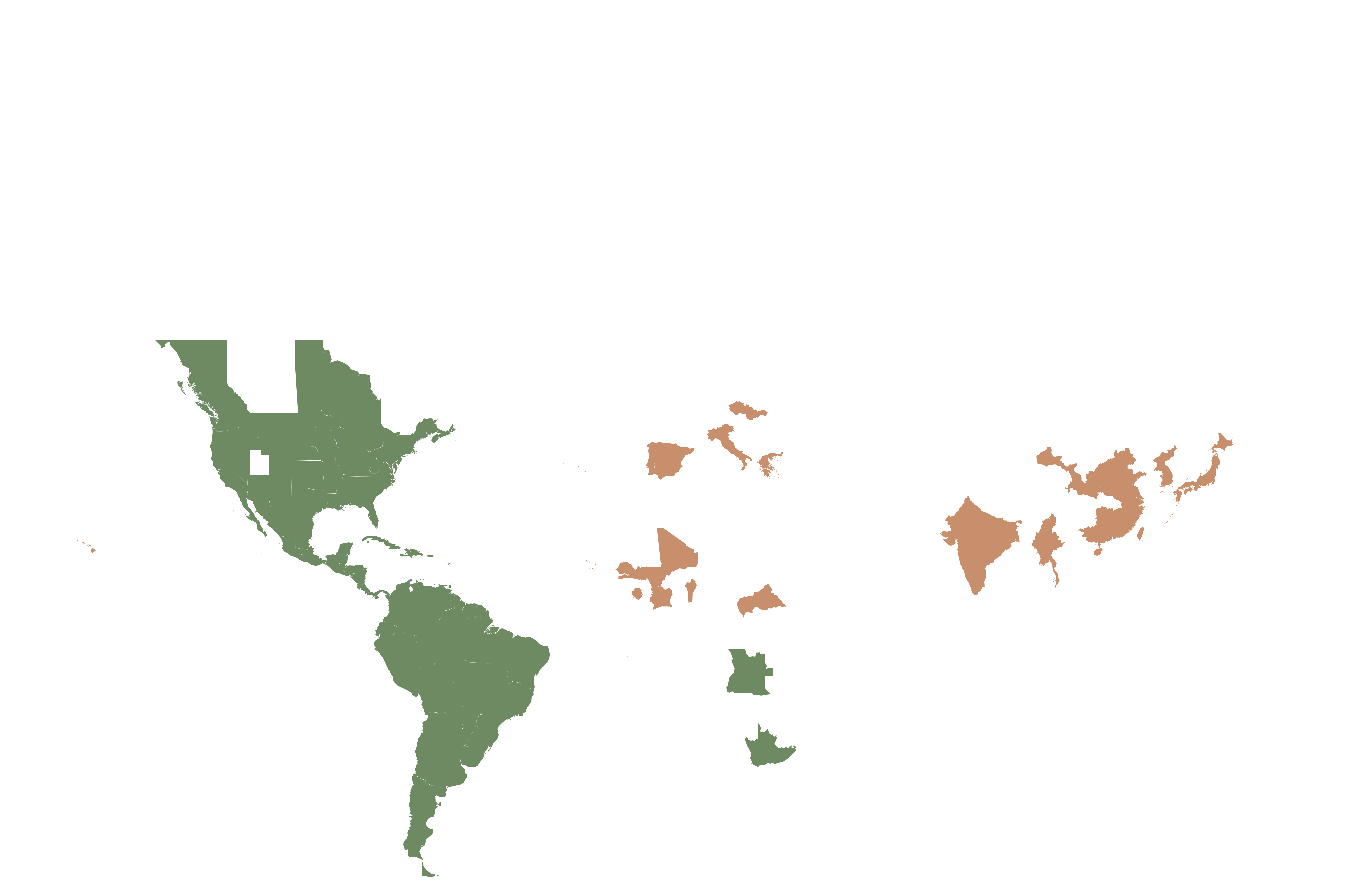
- Native
- Introduced
- Central America
History
Mollugo verticillata originated in the tropical Americas and has spread worldwide as a warm-season prostrate annual weed. Linnaeus described it in Species Plantarum (1753); the epithet verticillata refers to the whorled arrangement of its narrow leaves. It is a classic summer annual, germinating only after soil temperatures exceed 70°F, so it emerges late in the season when other weeds are already mature; it then forms flat green carpets over bare soil.
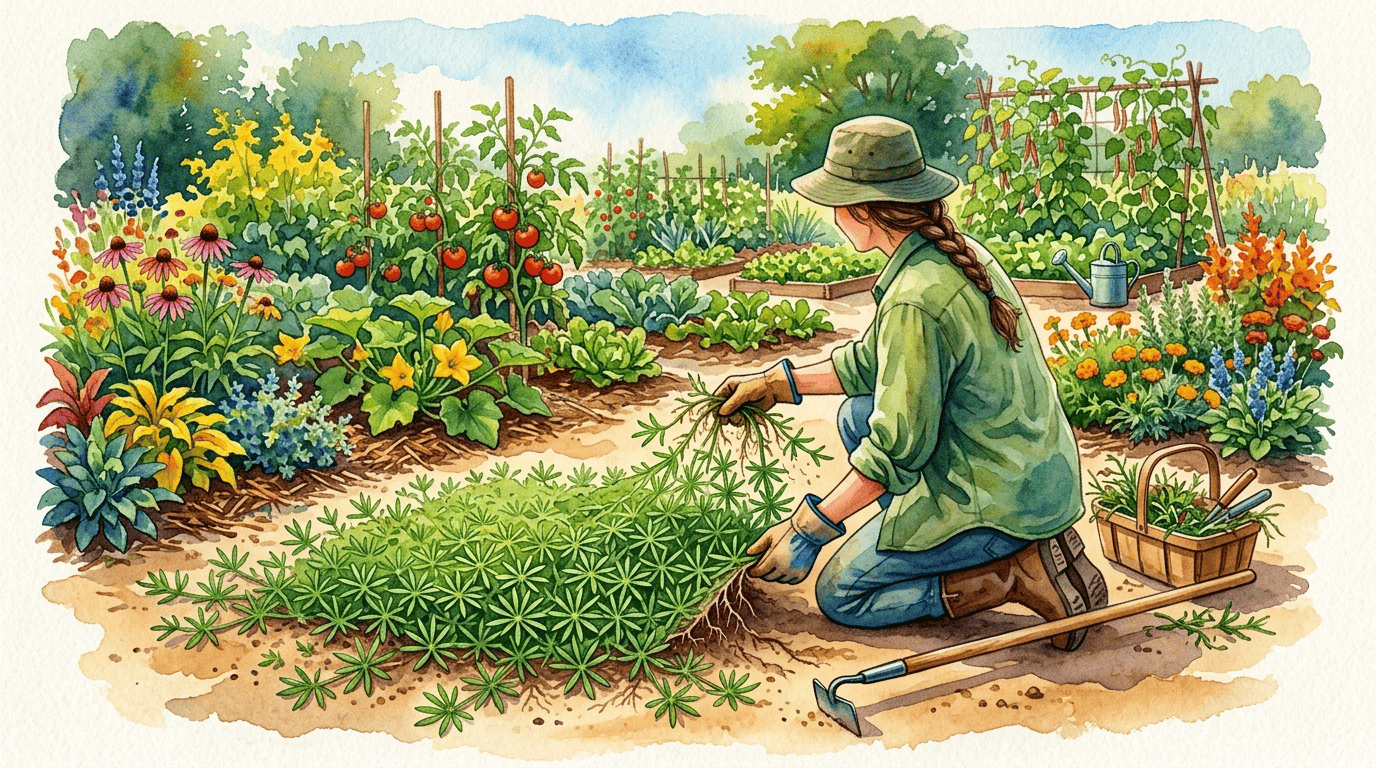
Some North American Indigenous groups used weak decoctions as a mild digestive tonic but its ethnobotanical importance is limited. It is valuable to soil ecologists as an early-successional species on disturbed sandy ground, stabilizing soil until perennials establish. In modern gardens it is usually tolerated more than targeted because its flat habit and shallow roots make it easy to remove manually.
Likely native to tropical Americas, spread to temperate North America with human agriculture and now naturalized across the warm-temperate world. The distinctive wheel-like leaf whorls make it one of the easiest American summer weeds to identify. A persistent weed of sandy summer gardens and thin lawns.
Symbolism & meaning
What It Symbolizes
Green Carpetweed forms a quiet summer carpet across bare warm soil, its delicate whorls of five or six leaves spreading flat like spokes at each node. Those wheeled leaves give it an instantly recognizable signature, even at the size of a coin. Its meaning is ecological observation — a humble pioneer that knits exposed earth back together while gardeners look mostly elsewhere.
- Summer carpet — forms green carpets on bare summer soil
- Wheeled leaves — distinctive whorls of 5-6 leaves at each node
Where the Name Comes From
The common name highlights its green coloring. 'Mollugo' from Latin 'mollis' meaning soft; 'verticillata' from Latin means whorled, for the wheel-like leaf arrangement.
Related plants
Plants with similar care
 Chinese AbeliaAbelia chinensis
 Fragrant AbeliaAbelia mosanensis
 Large-Flowered AbeliaAbelia uniflora
 Glossy AbeliaAbelia x grandiflora
Frequently asked questions
How often should I water Green Carpetweed?
Water about every 14 days during the growing season, and always let excess water drain away.
How much light does Green Carpetweed need?
Full sun: 6+ hrs direct. Watch the leaves — scorching or stretching means the light needs adjusting.
Is Green Carpetweed toxic to cats or dogs?
No toxicity has been reported for this plant. Still, it is wise to keep pets from chewing on any houseplant. Educational information, not medical or veterinary advice. If exposure is suspected, contact a doctor or veterinarian.
Is Green Carpetweed easy to grow?
Yes — it is considered an easy, beginner-friendly plant.
When does Green Carpetweed bloom?
It typically blooms Jul–Nov in the Northern Hemisphere.
YardMate
Identify any plant in seconds
Snap a photo — YardMate names the plant, diagnoses problems, and reminds you when to water.
Download on the App Store