 YardMate

Wood Forget-Me-Not
Myosotis sylvatica
Easy · Beginner friendlyAbout Wood Forget-Me-Not
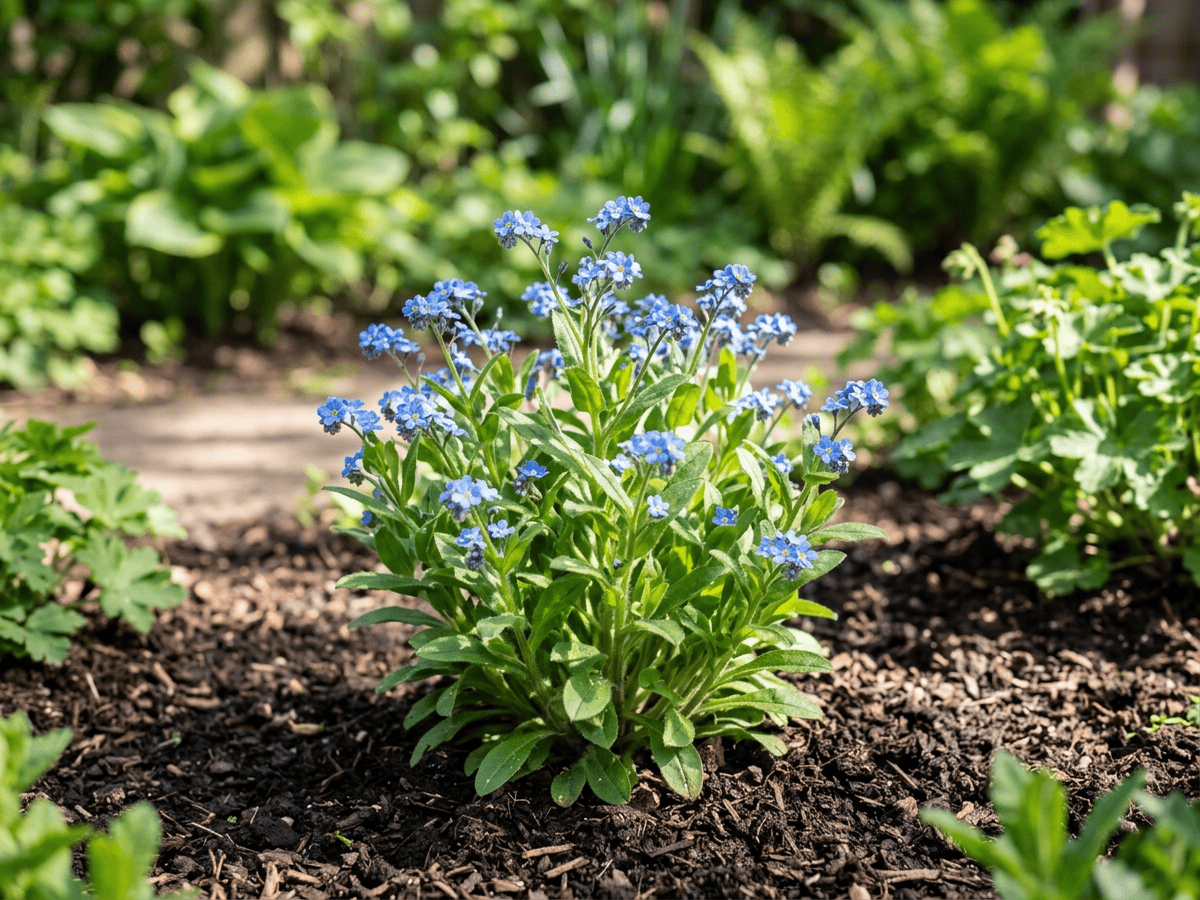
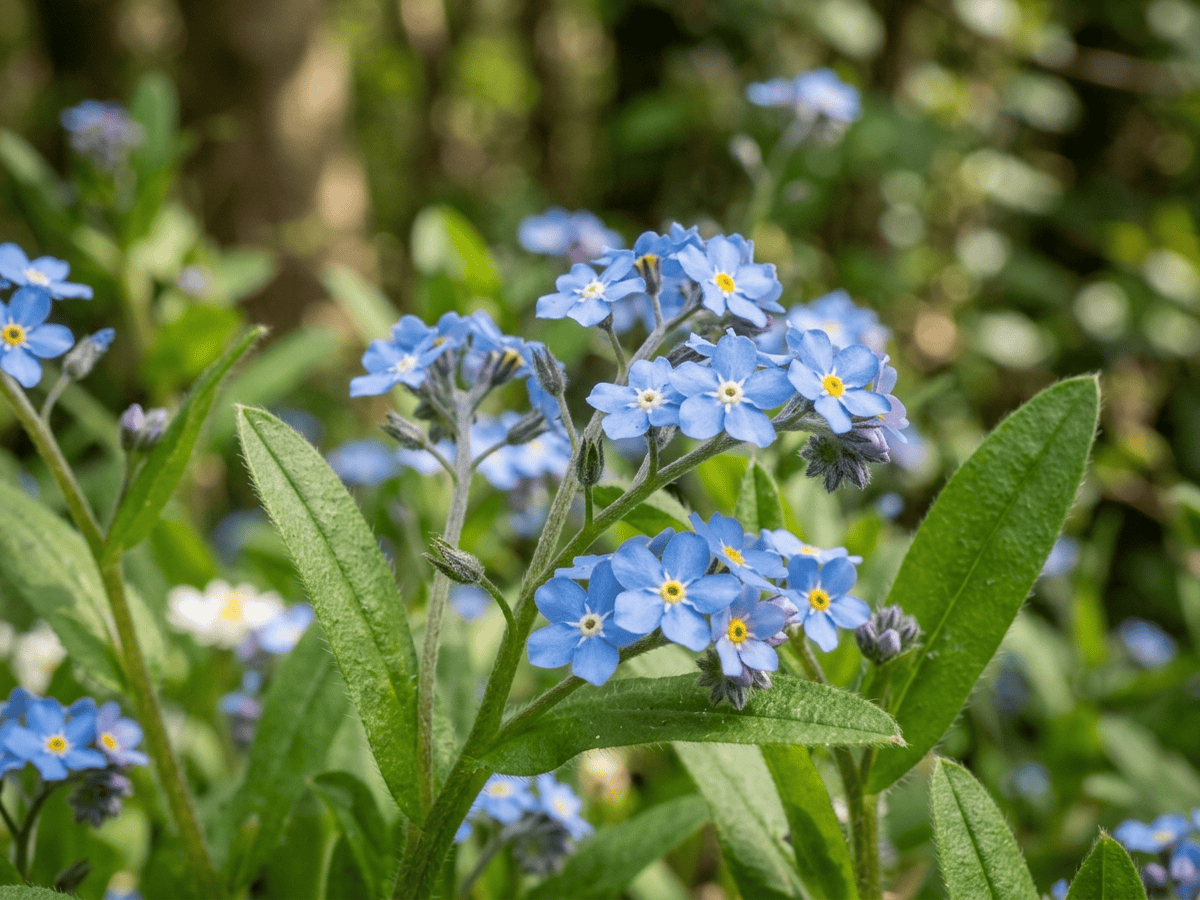
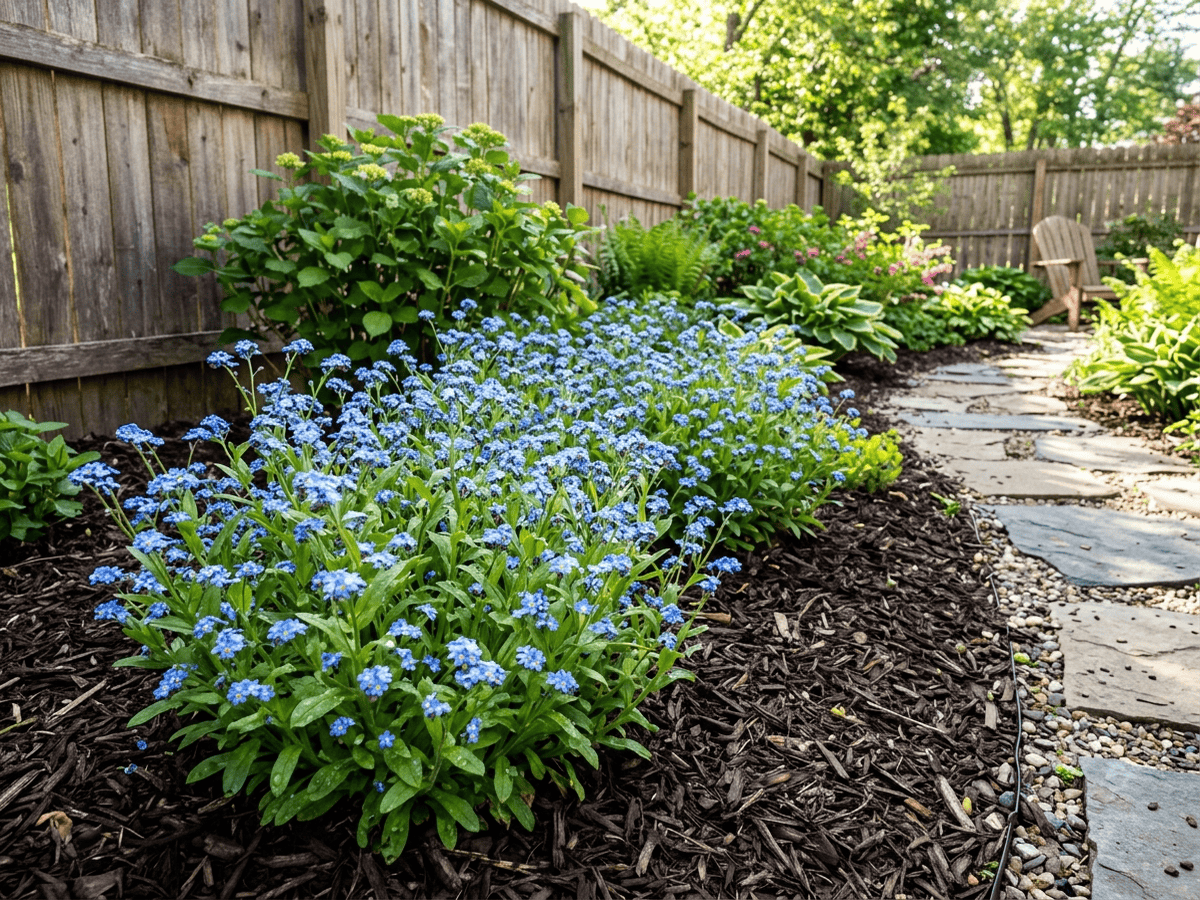
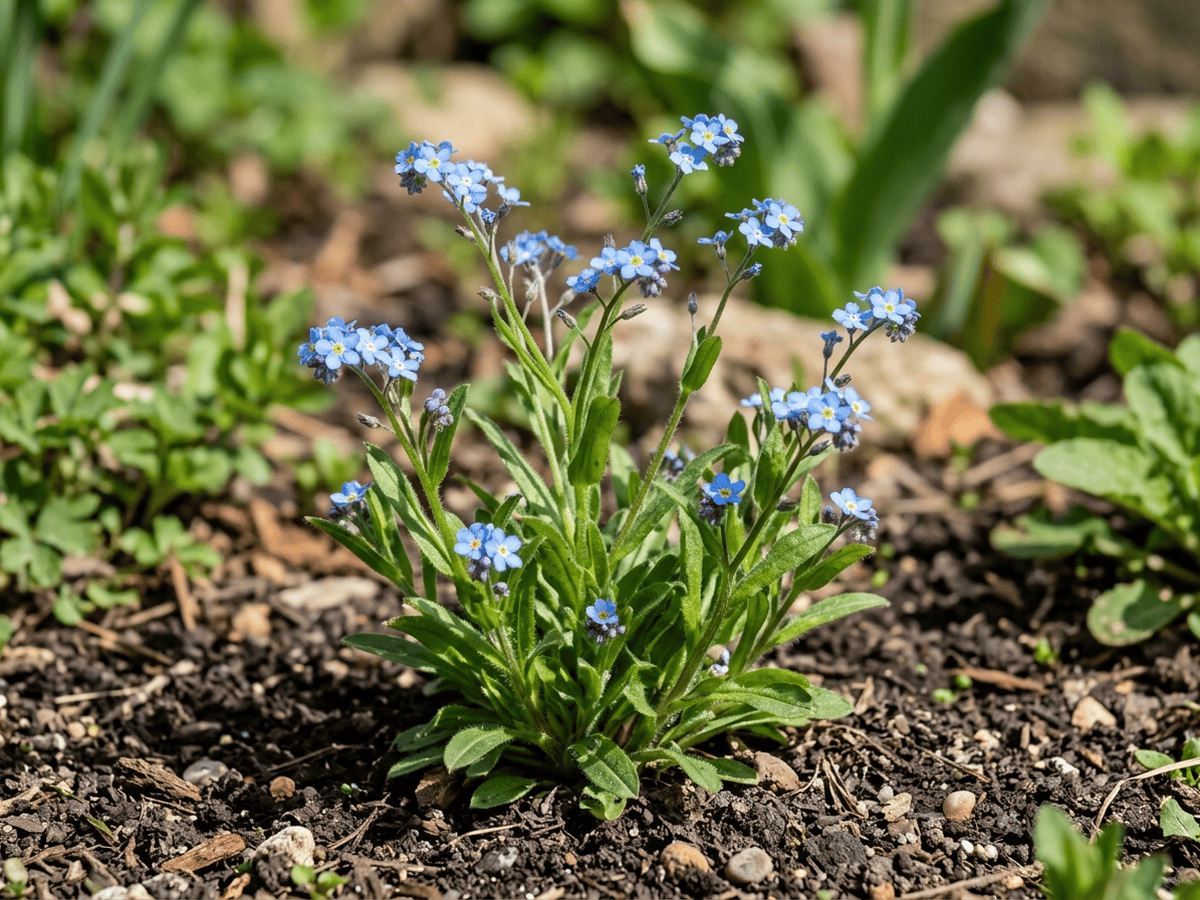
Myosotis sylvatica, the woodland forget-me-not, produces clouds of tiny, sky-blue flowers with yellow centers from mid-spring through early summer. At 15–30 cm tall, it self-seeds prolifically, creating romantic blue carpets under trees and between spring bulbs. Native to European woodlands, it is a biennial or short-lived perennial that perpetuates through self-sowing. The combination of forget-me-nots with tulips is one of the classic spring garden partnerships. Pink and white varieties exist but the true blue form remains most popular. It thrives in cool, moist, partially shaded conditions.
- Shade-tolerant
How to care for Wood Forget-Me-Not
Watering
- Springevery 5 days
- Summerevery 3 days
- Fallevery 7 days
- Winterevery 14 days
Soil · Well-draining
- Top dressingPine bark mulch10%
- Main mixPotting soil + perlite 2:170%
- DrainageLECA / gravel20%
Never skip the drainage layer — standing water is the top cause of root rot.
FERTILIZER
- Springevery 21 days
- Summerevery 21 days
At a Glance
- NativeEurope
- Height0.5–1 ft (0.2–0.3 m)
- Spread0.5–1 ft (0.2–0.3 m)
- Flower colorBlue, Pink, White
- Foliage colorGreen
- SoilMoisture-retentive, Loamy, Rich
- LocationsYard
Bloom time
BLOOM CYCLE
Peak bloom
Jun–Aug
Self-sows blue carpets; pairs beautifully with tulips; biennial but self-perpetuating
Fragrance
NO FRAGRANCE
No notable fragrance.
Toxicity
Humans Slight
pyrrolizidine alkaloids (low concentration)
Slight
- All
- Ingestion
EXPOSURE Eating any part of the plant.
EFFECT Low alkaloid content, large ingestion can cause mild GI upset, and boraginaceae family may contain pyrrolizidine alkaloids.
NOTE Low-risk in normal garden exposure; family Boraginaceae includes species with hepatotoxic PAs, so large consumption not advised.
Not reported
EXPOSURE No exposure route is reported.
EFFECT Not listed as toxic.
NOTE No toxicity is reported for dogs in this catalog; this is not evidence that the plant is edible or harmless.
Not reported
EXPOSURE No exposure route is reported.
EFFECT Not listed as toxic.
NOTE No toxicity is reported for cats in this catalog; this is not evidence that the plant is edible or harmless.
Educational information, not medical or veterinary advice. If exposure is suspected, contact a doctor or veterinarian.
DISTRIBUTION


- Native
- Introduced
- Europe
History

Myosotis sylvatica is native to damp woodlands and mountain meadows of Europe. The name "forget-me-not" traces to a 15th-century German legend of a knight picking the flower for his beloved at a riverbank; falling into the water and drowning, he tossed the blossoms to her crying "Vergiss mein nicht!" The plant became an emblem of remembrance and faithfulness in Romantic-era Europe.
During the Nazi era in Germany, Freemasons adopted the forget-me-not as a discreet recognition symbol after the Masonic square and compass was banned. Since 2006 the Alzheimer's Association has used a stylized forget-me-not as an international symbol of dementia remembrance. In horticulture it is a classic spring bedding plant, paired with tulips to produce the blue-and-red carpet beds of Victorian and municipal garden tradition.
In 1948, the Grand Lodge of Freemasons adopted the forget-me-not as a memorial to members persecuted by the Nazis. Alzheimer's charities worldwide use it as their symbol. Alaska adopted it as the state flower in 1949. In garden design, the ethereal blue carpet of self-sown forget-me-nots is one of spring's most magical sights.
Symbolism & meaning
What It Symbolizes
Wood Forget-Me-Not is the universal flower of True love — by legend, the last word of a knight swept away by a river, calling 'forget me not' to his beloved as he disappeared. Its small blue flowers became the quiet emblem of faithful, undying memory. Few plants carry so much meaning in so modest a bloom.
- True love — The legendary knight's last words — a universal symbol of faithful, undying love
Where the Name Comes From
Myosotis from Greek 'myos' (mouse) and 'otis' (ear), for the fuzzy leaf shape. Sylvatica means 'of the woods.'
Uses & Fun Facts
- Sky-blue flower clouds drift through spring borders
- Self-seeds into woodland and bulb plantings
- Tiny blooms feed early-emerging hoverflies and bees
Related plants
More Myosotis plants
Plants with similar care
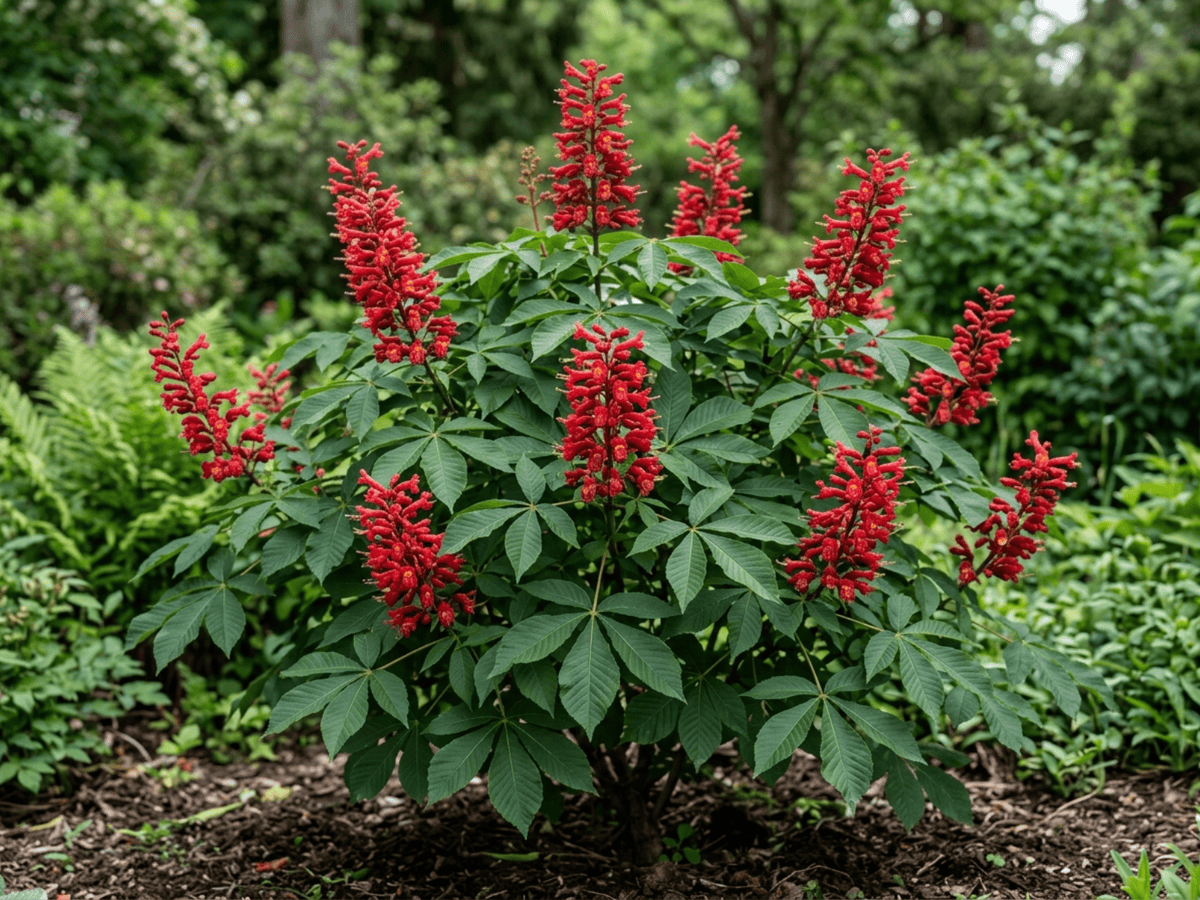 Red BuckeyeAesculus pavia
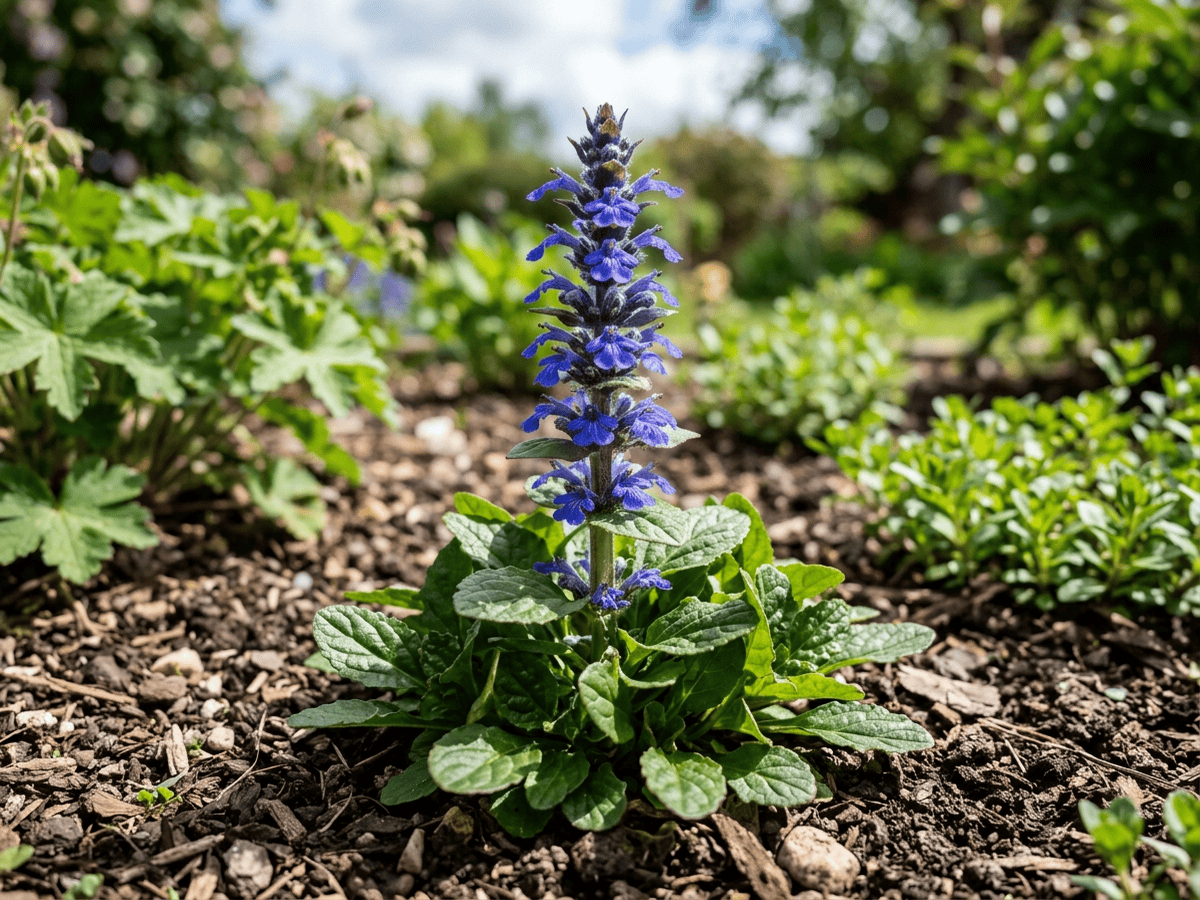 Blue BugleAjuga genevensis
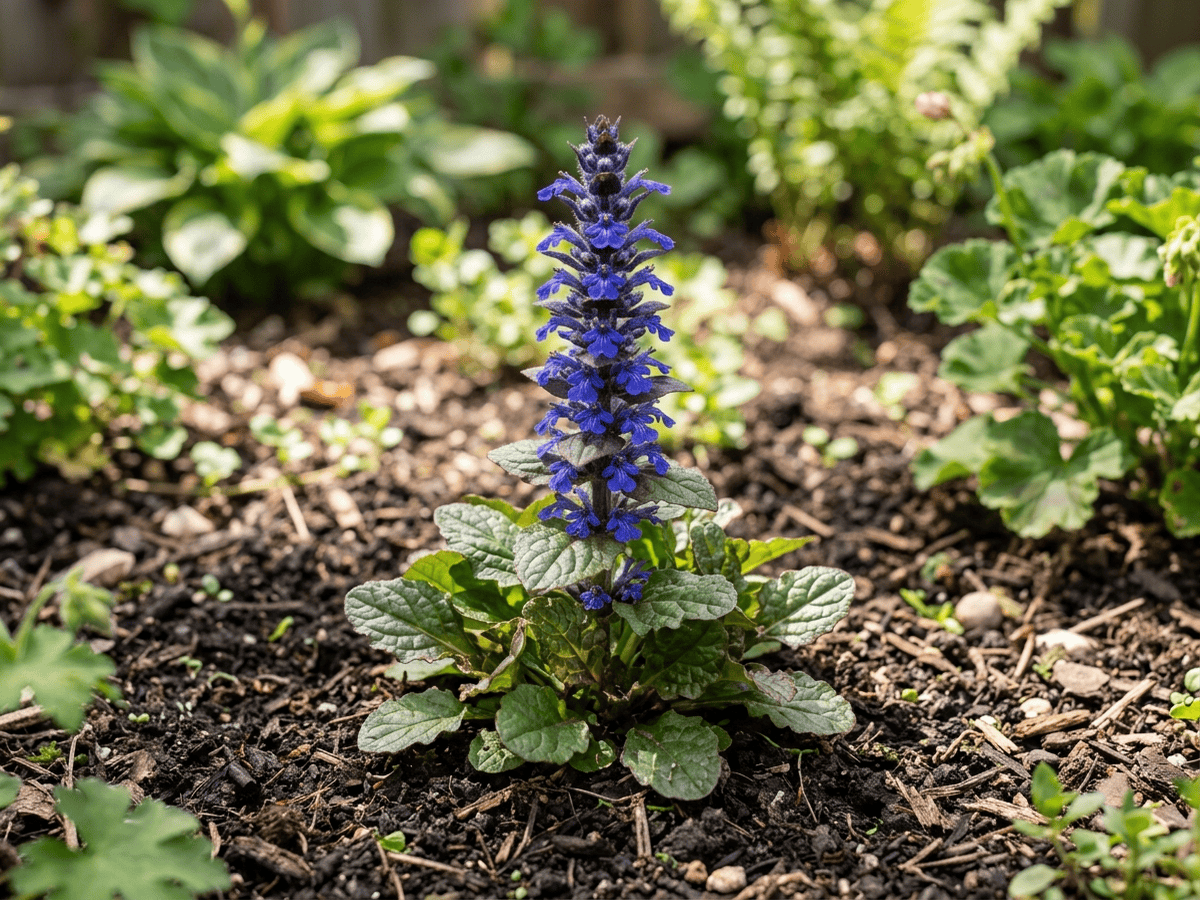 Pyramidal BugleAjuga pyramidalis
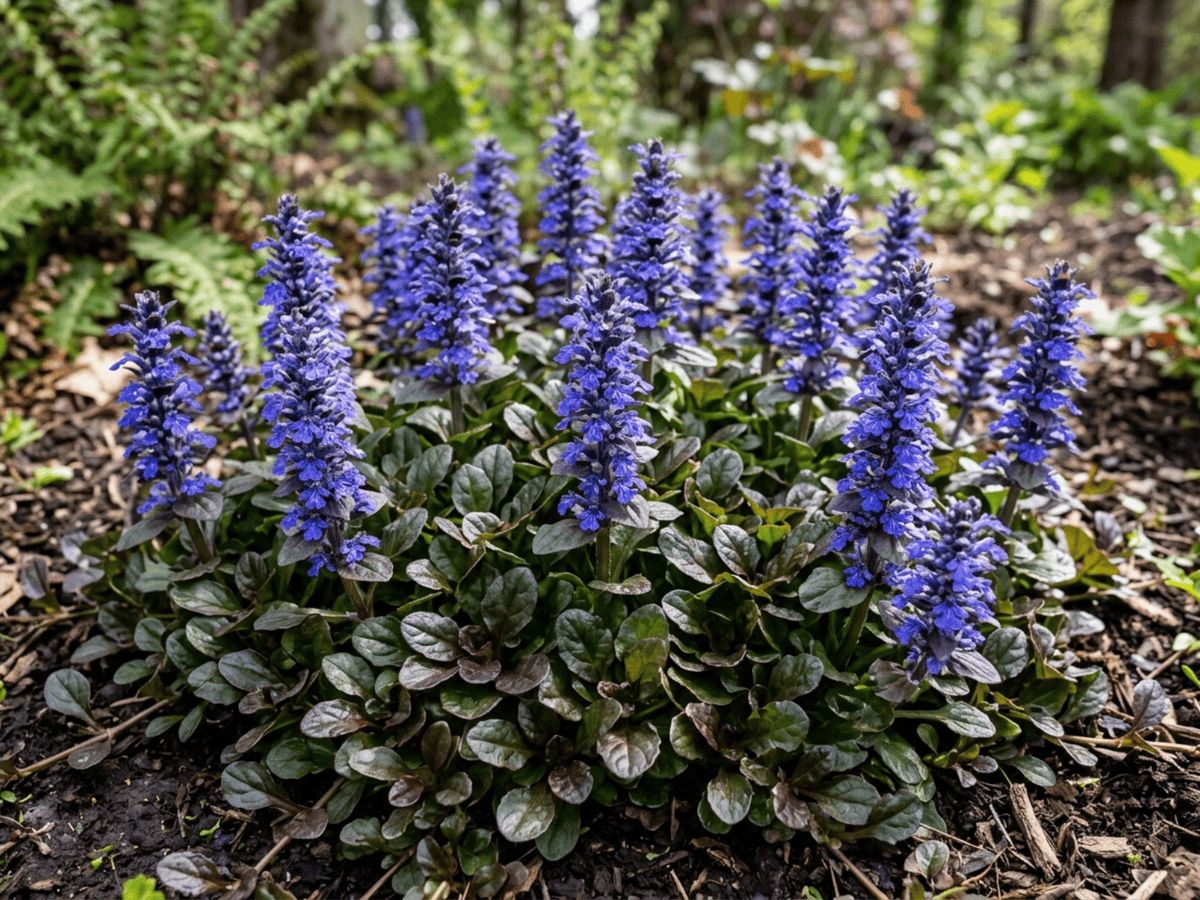 Carpet BugleAjuga reptans
Frequently asked questions
How often should I water Wood Forget-Me-Not?
In summer, water about every 3 days; in winter, about every 14 days. Adjust for heat, pot size and drainage.
How much light does Wood Forget-Me-Not need?
Part shade: 2–4 hrs direct. Watch the leaves — scorching or stretching means the light needs adjusting.
Is Wood Forget-Me-Not toxic to cats or dogs?
Pets Not reported (Dogs Not reported · Cats Not reported) Educational information, not medical or veterinary advice. If exposure is suspected, contact a doctor or veterinarian.
Is Wood Forget-Me-Not easy to grow?
Yes — it is considered an easy, beginner-friendly plant.
When does Wood Forget-Me-Not bloom?
It typically blooms Jun–Aug in the Northern Hemisphere.
YardMate
Identify any plant in seconds
Snap a photo — YardMate names the plant, diagnoses problems, and reminds you when to water.
Download on the App Store