 YardMate
Field Forget-me-not
Myosotis arvensis
Medium · Some experienceAbout Field Forget-me-not
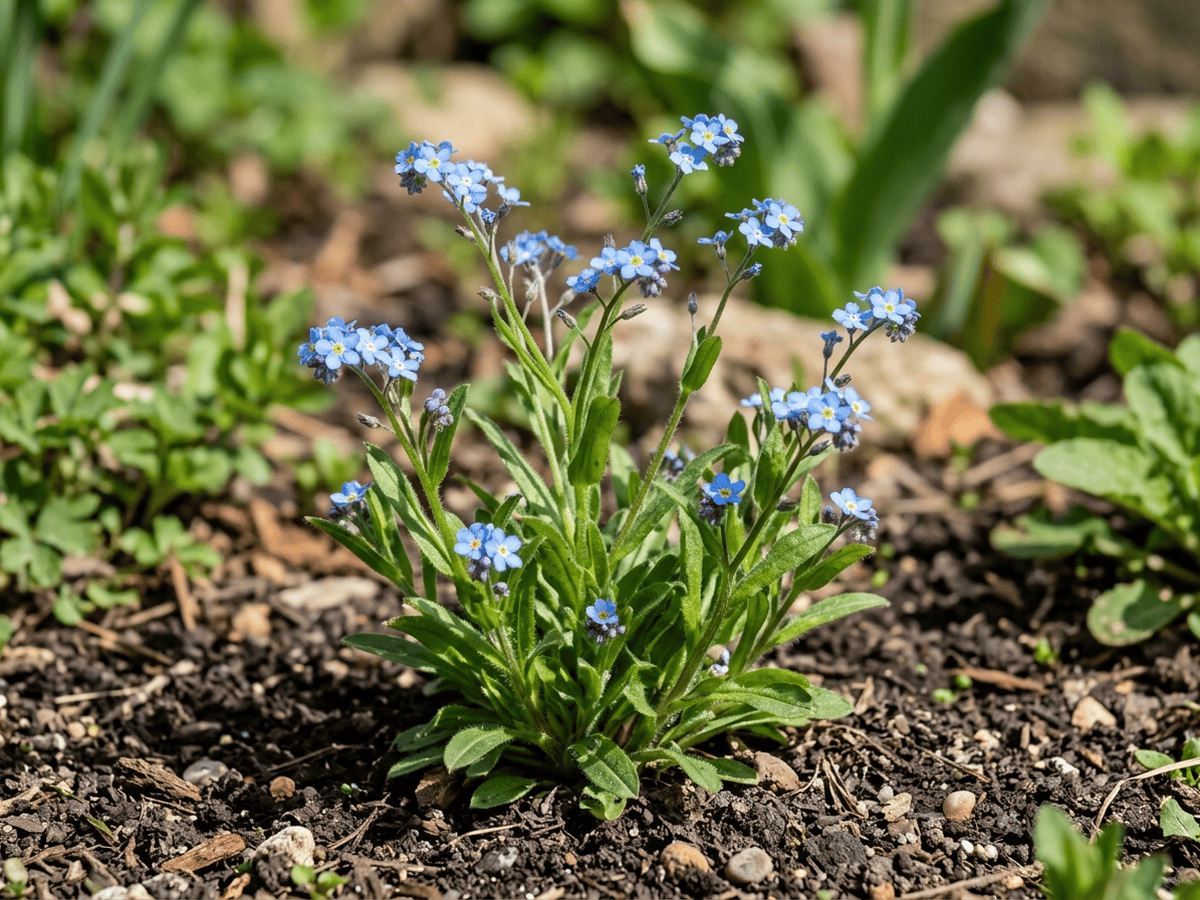
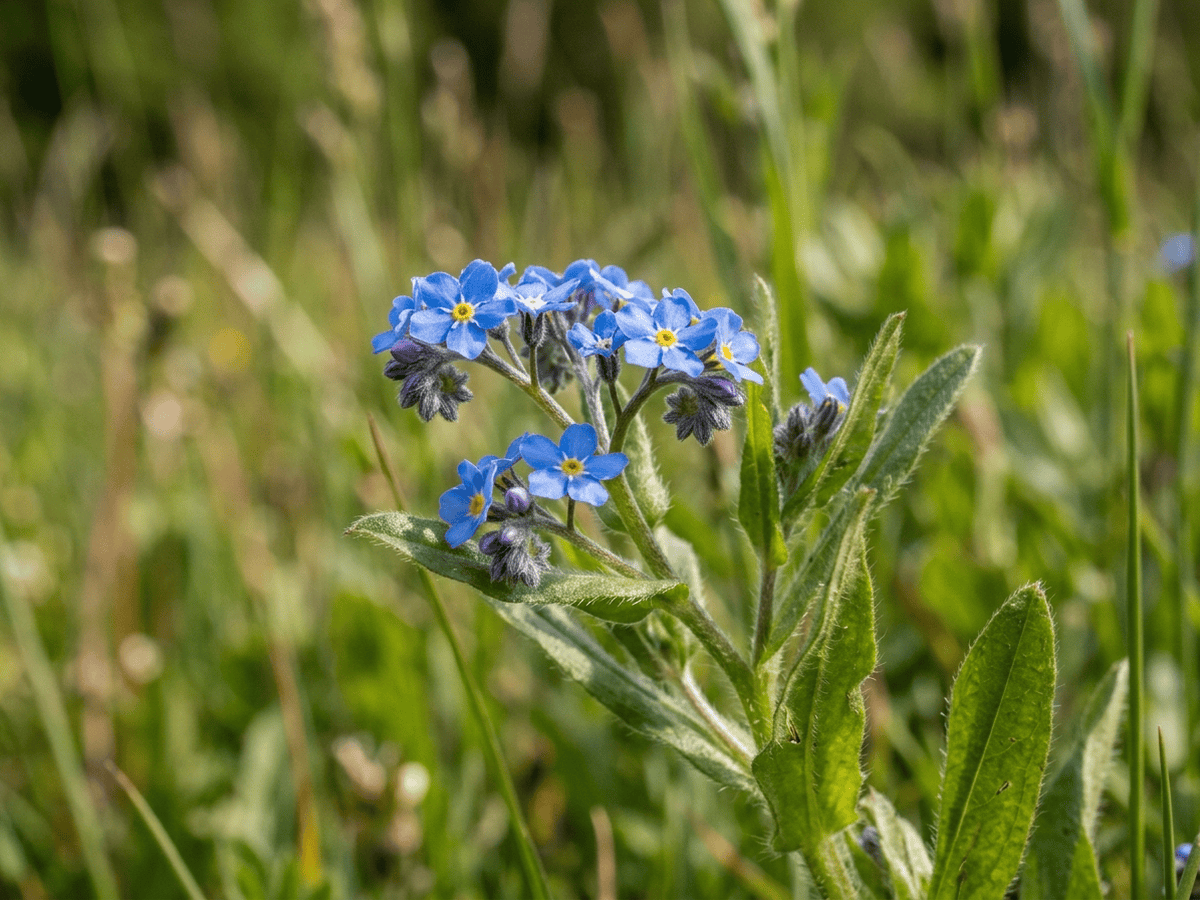
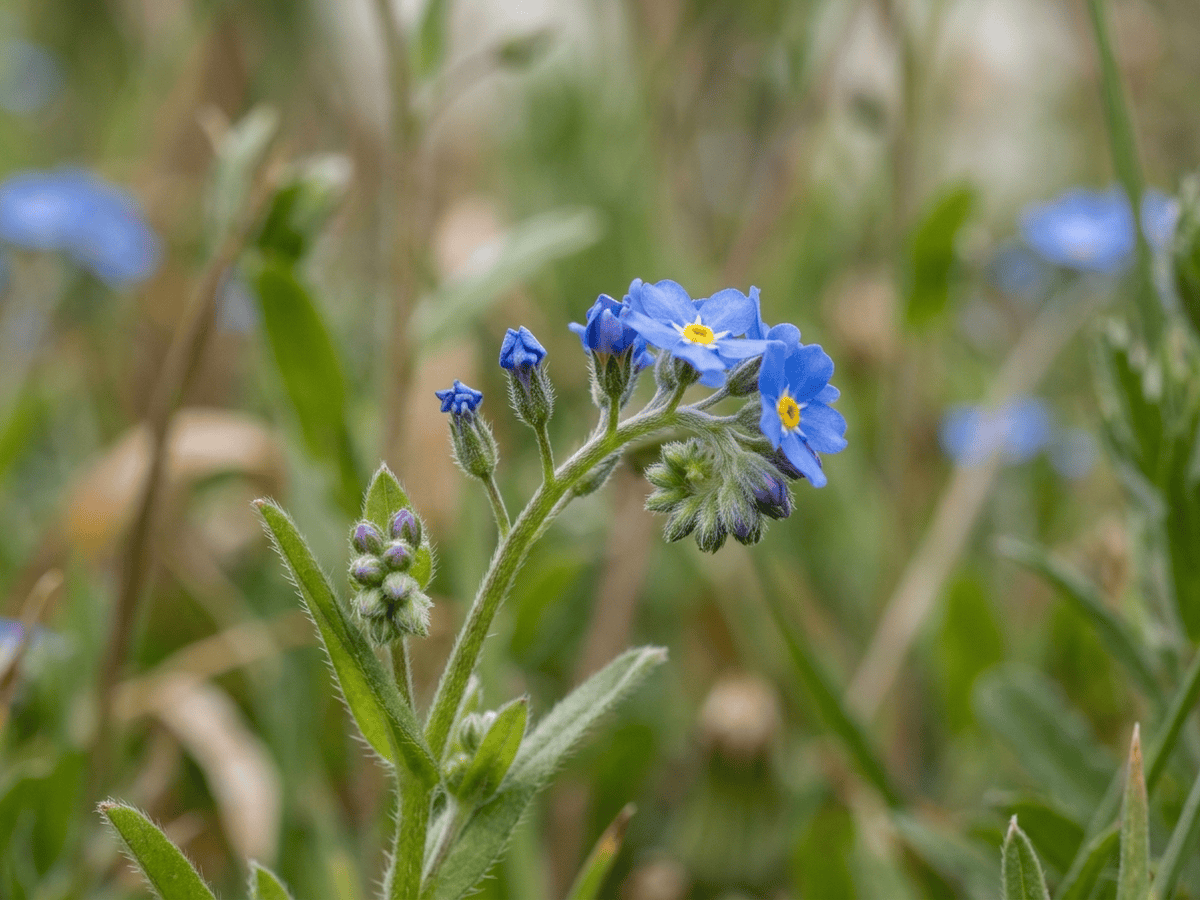
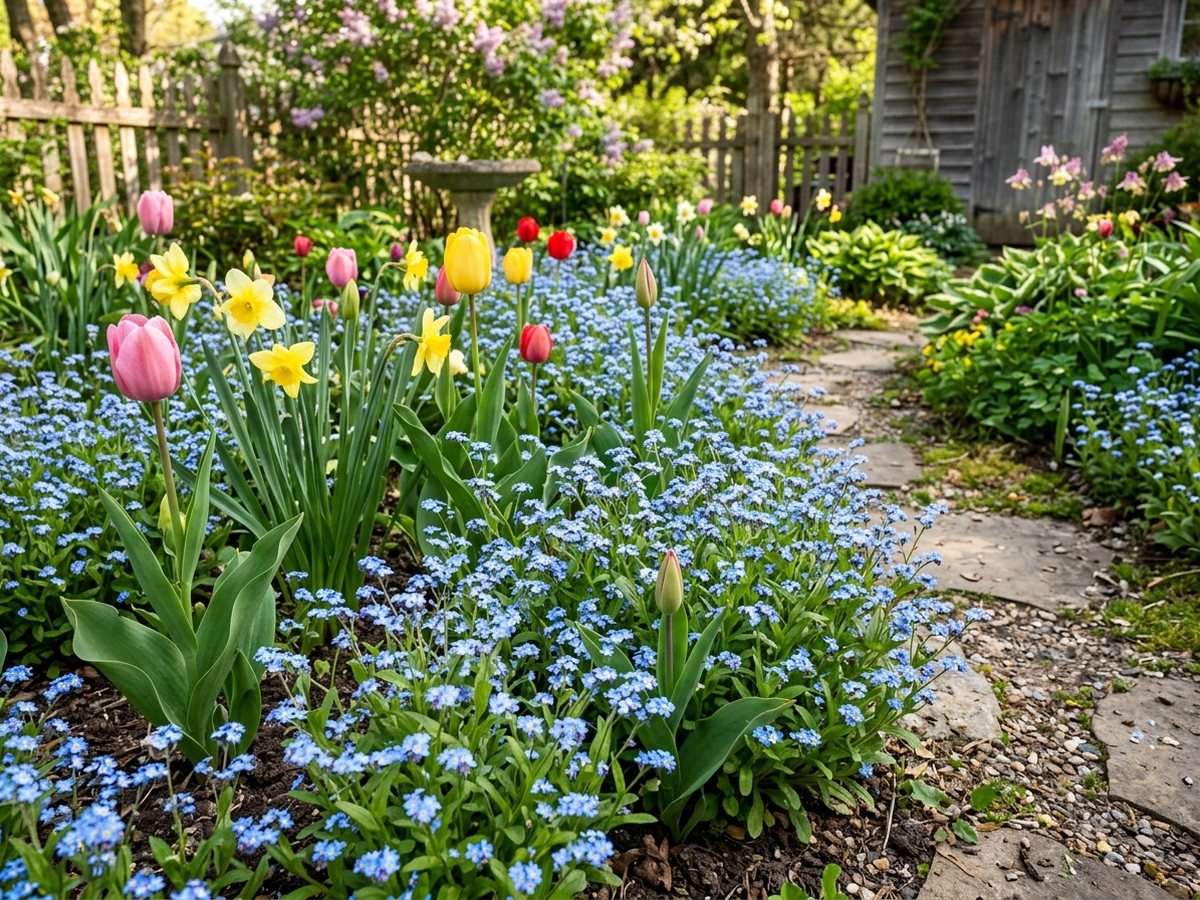
Myosotis arvensis, the Field Forget-me-not, is a delicate annual or biennial wildflower native to meadows and hedgerows across Europe and Asia. Tiny sky-blue flowers with a cheerful yellow eye crowd its slender stems from spring through summer, creating frothy blue drifts that naturalize effortlessly in cottage gardens, borders, and woodland edges. Self-seeding freely, it returns year after year without effort. Its vivid color and modest stature make it one of the most charming companions for spring bulbs and early perennials.
- Long-blooming
- Pollinator-friendly
- Spreading
- Compact
How to care for Field Forget-me-not
Watering
- Springevery 10 days
- Summerevery 7 days
- Fallevery 15 days
- Winterpause watering
Soil · Well-draining
- Top dressingPine bark mulch10%
- Main mixPotting soil + perlite 2:170%
- DrainageLECA / gravel20%
Never skip the drainage layer — standing water is the top cause of root rot.
FERTILIZER
Balanced Feed 14-14-14
An even feed covers all three needs at once, keeping leaves, roots and blooms moving together with nothing pushed out of balance.
- Nitrogen · Leaves
- Phosphorus · Roots + Blooms
- Potassium · Strength
- Springevery 30 days
- Summerevery 30 days
- Fallevery 30 days
At a Glance
- NativeEurope, Asia
- Height0.5–1 ft (0.2–0.3 m)
- Spread0.5–1 ft (0.2–0.3 m)
- Flower colorBlue
- Foliage colorGreen
- SoilMoist, Well-drained
- LocationsYard · Balcony
Bloom time
BLOOM CYCLE
Peak bloom
Apr–Aug
This plant blooms from spring to summer, with beautiful flowers.
Toxicity
No toxicity has been reported for this plant. Still, it is wise to keep pets from chewing on any houseplant.
Educational information, not medical or veterinary advice. If exposure is suspected, contact a doctor or veterinarian.
DISTRIBUTION

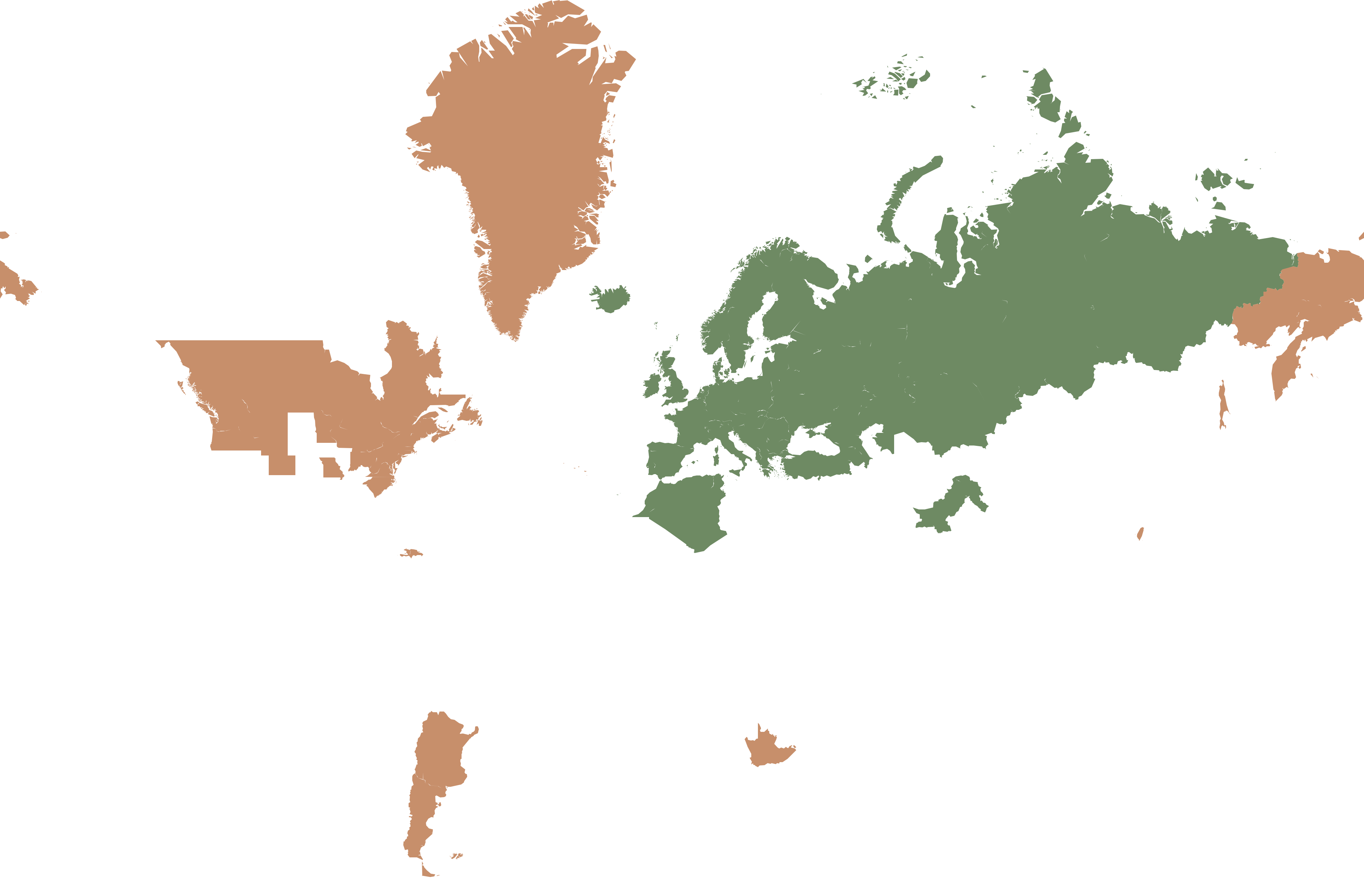
- Native
- Introduced
- Europe
- Asia
History
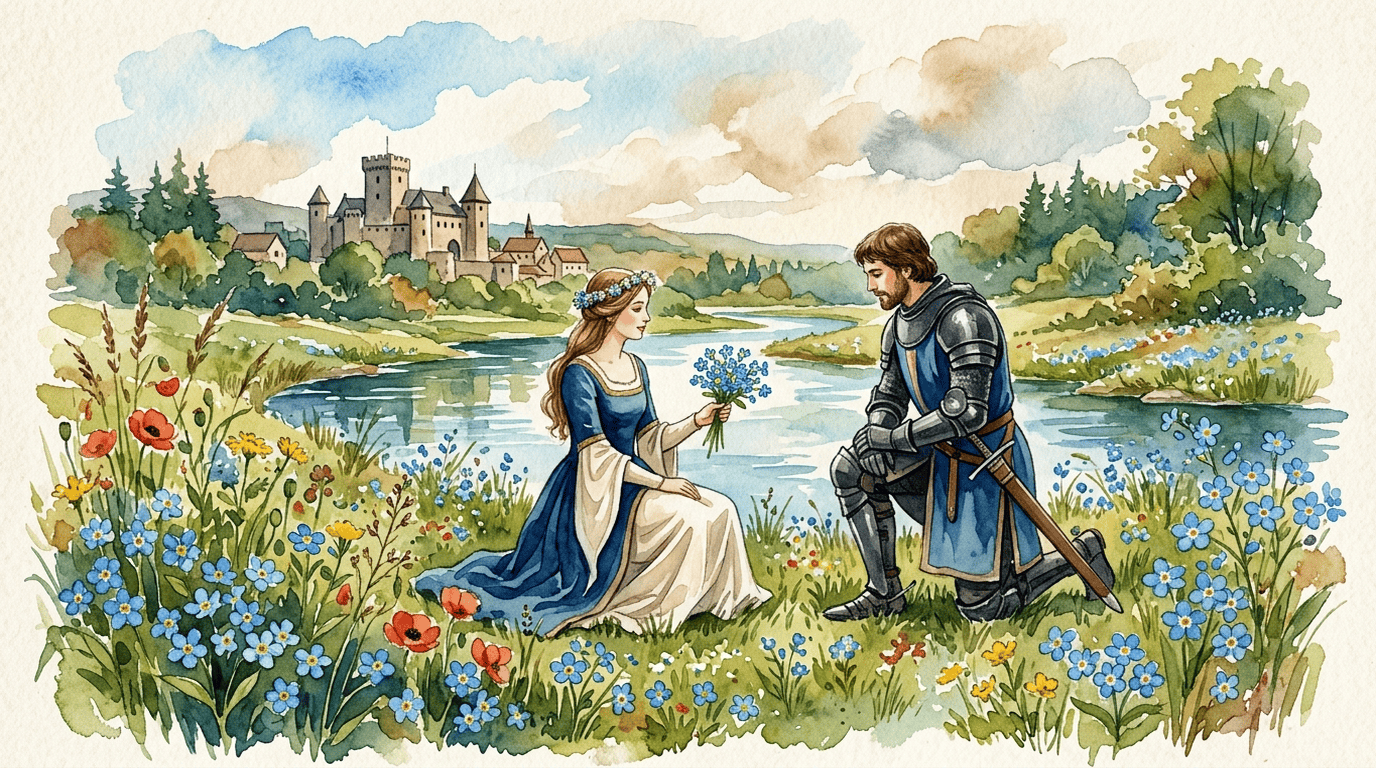
Myosotis arvensis has been woven into European folklore and romantic tradition for centuries, its common name appearing in German, French, and English literature as a symbol of remembrance and faithful love. The genus name Myosotis comes from the Greek for 'mouse's ear,' a reference to the soft, downy texture of the plant's small leaves.
A celebrated medieval German legend tells of a knight gathering these blue flowers for his beloved along a rushing riverbank when he lost his footing and was swept into the current. As he sank beneath the water, he called out 'Vergiss mein nicht!'—Forget me not!—and the words gave the flower an enduring name across European languages.
By the 19th century, the forget-me-not had become one of the most culturally resonant flowers in the Western world. It appeared in the verse of Coleridge, Keats, and Longfellow, and became a beloved emblem of the Romantic era. Blue forget-me-nots were particularly fashionable in Victorian mourning jewelry, pressed into lockets and embroidered on handkerchiefs as tokens of absent loved ones. German emigrants carried the seeds as a symbol of homeland memory.
Myosotis arvensis, the field species, grows wild in cultivated fields, roadsides, and hedgerows across Europe and western Asia. Though a prolific self-seeder sometimes called weedy in formal gardens, it is adored by cottage gardeners for the luminous blue carpets it creates each spring. Today the forget-me-not serves as the floral emblem of Alzheimer's disease awareness, continuing its ancient role as a symbol of memory and the importance of not being forgotten.
Symbolism & meaning
What It Symbolizes
A medieval legend tells of a knight gathering blue flowers from a rushing riverbank for his beloved when he lost his footing and was swept into the current. As he sank, he called out: 'Forget me not!' The words gave a name to a flower—and to a feeling—that has endured for centuries. Across Europe, the forget-me-not became the emblem of faithful love and tender remembrance, worn in lockets, pressed into letters, and planted at graves. Today it remains a quiet symbol for all who wish to be remembered by those they love.
- remembrance — The forget-me-not's very name is a plea to be remembered—a meaning it has carried across European cultures for centuries, from medieval legend to Victorian mourning customs and modern memory-loss awareness campaigns
- faithful love — Given between lovers and worn as a pledge of devotion, the tiny blue flower represents the constancy and sincerity of heartfelt affection that outlasts distance and time
Where the Name Comes From
The genus name Myosotis derives from the Greek myos (mouse) and ous (ear), describing the small, soft, rounded leaves that resemble a mouse's ear. The species epithet arvensis is Latin for 'of the fields,' reflecting the plant's natural habitat in meadows, farmland margins, and disturbed ground.
Uses & Fun Facts
- Perfect for naturalizing in cottage gardens, spring borders, and woodland edges, creating luminous blue drifts among tulips, daffodils, and early perennials
- Tiny flowers provide an early nectar source for bees and small butterflies during spring and early summer
- Delicate stems make charming additions to small posies and cottage-style spring arrangements
Related plants
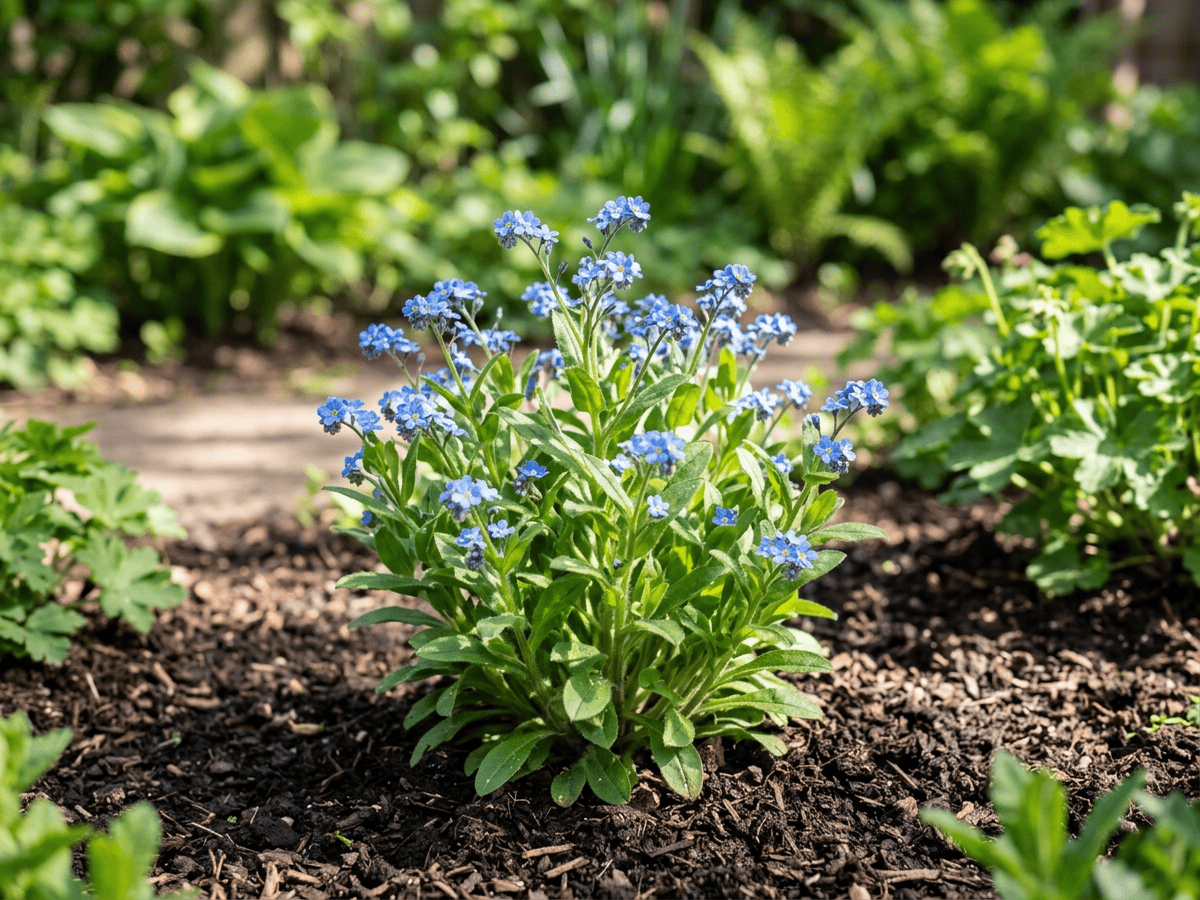
More Myosotis plants
Plants with similar care
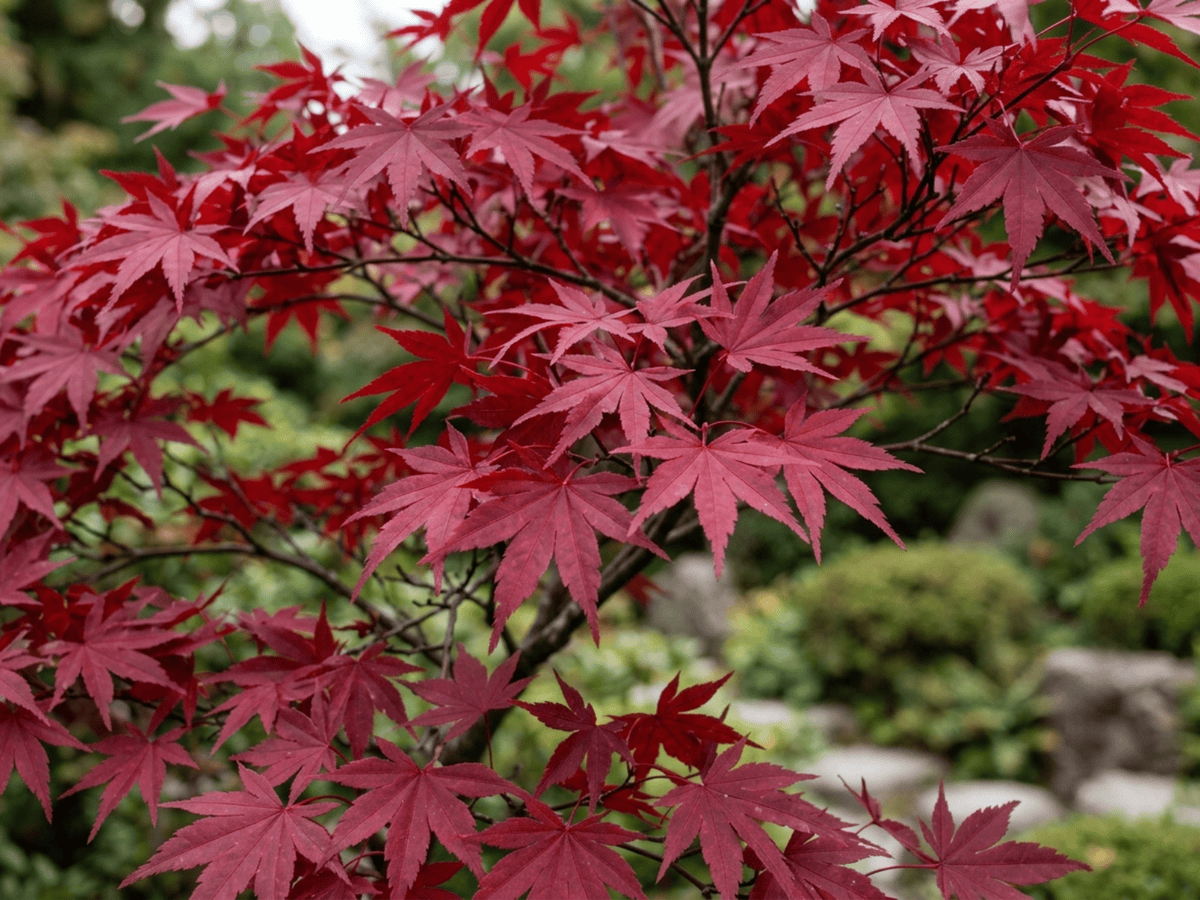 Japanese MapleAcer palmatum
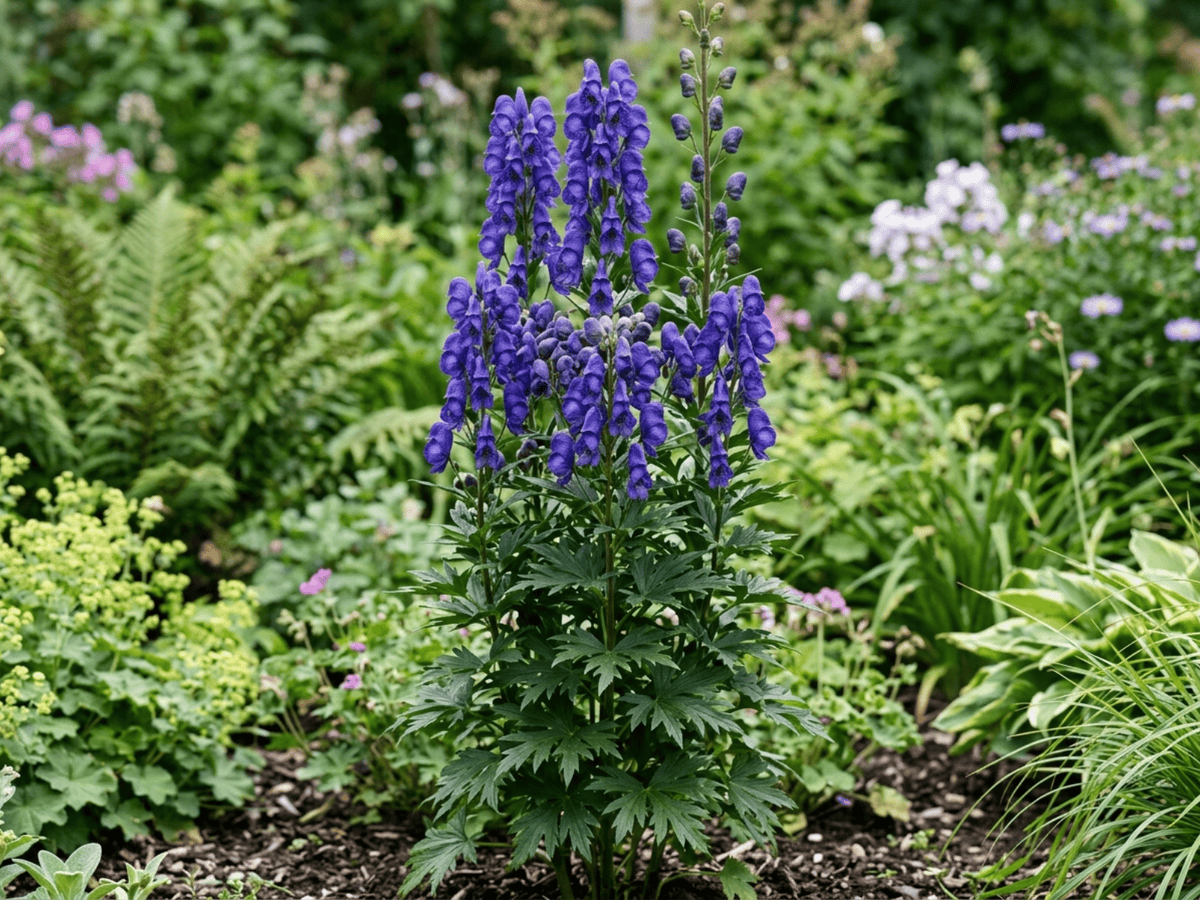 Azure MonkshoodAconitum carmichaelii
 Florida HobblebushAgarista populifolia
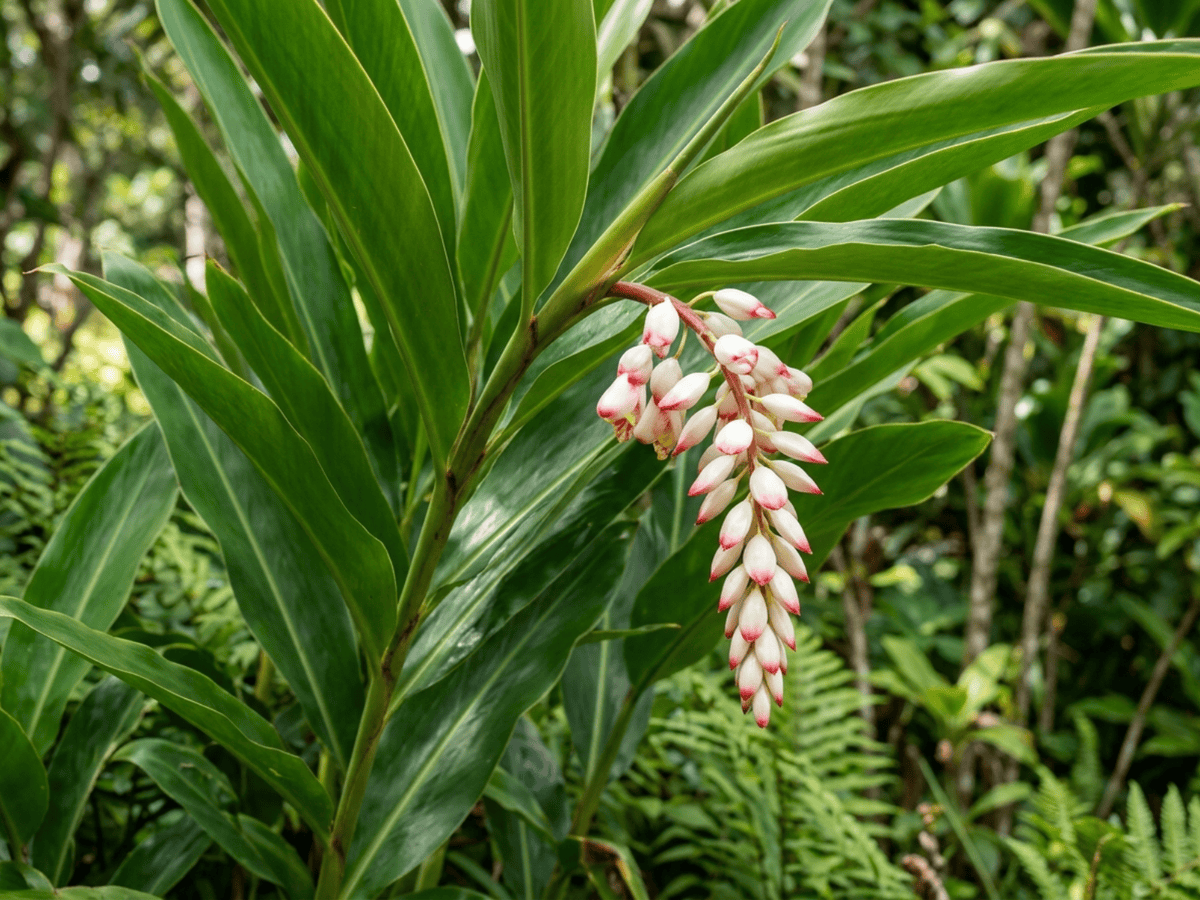 Shell GingerAlpinia zerumbet
Frequently asked questions
How often should I water Field Forget-me-not?
Water about every 10 days during the growing season, and always let excess water drain away.
How much light does Field Forget-me-not need?
Part shade: 2–4 hrs direct. Watch the leaves — scorching or stretching means the light needs adjusting.
Is Field Forget-me-not toxic to cats or dogs?
No toxicity has been reported for this plant. Still, it is wise to keep pets from chewing on any houseplant. Educational information, not medical or veterinary advice. If exposure is suspected, contact a doctor or veterinarian.
Is Field Forget-me-not easy to grow?
It is moderately demanding: a good choice once you have a little experience.
When does Field Forget-me-not bloom?
It typically blooms Apr–Aug in the Northern Hemisphere.
YardMate
Identify any plant in seconds
Snap a photo — YardMate names the plant, diagnoses problems, and reminds you when to water.
Download on the App Store