 YardMate


Heavenly Bamboo
Nandina domestica
Easy · Beginner friendlyAbout Heavenly Bamboo
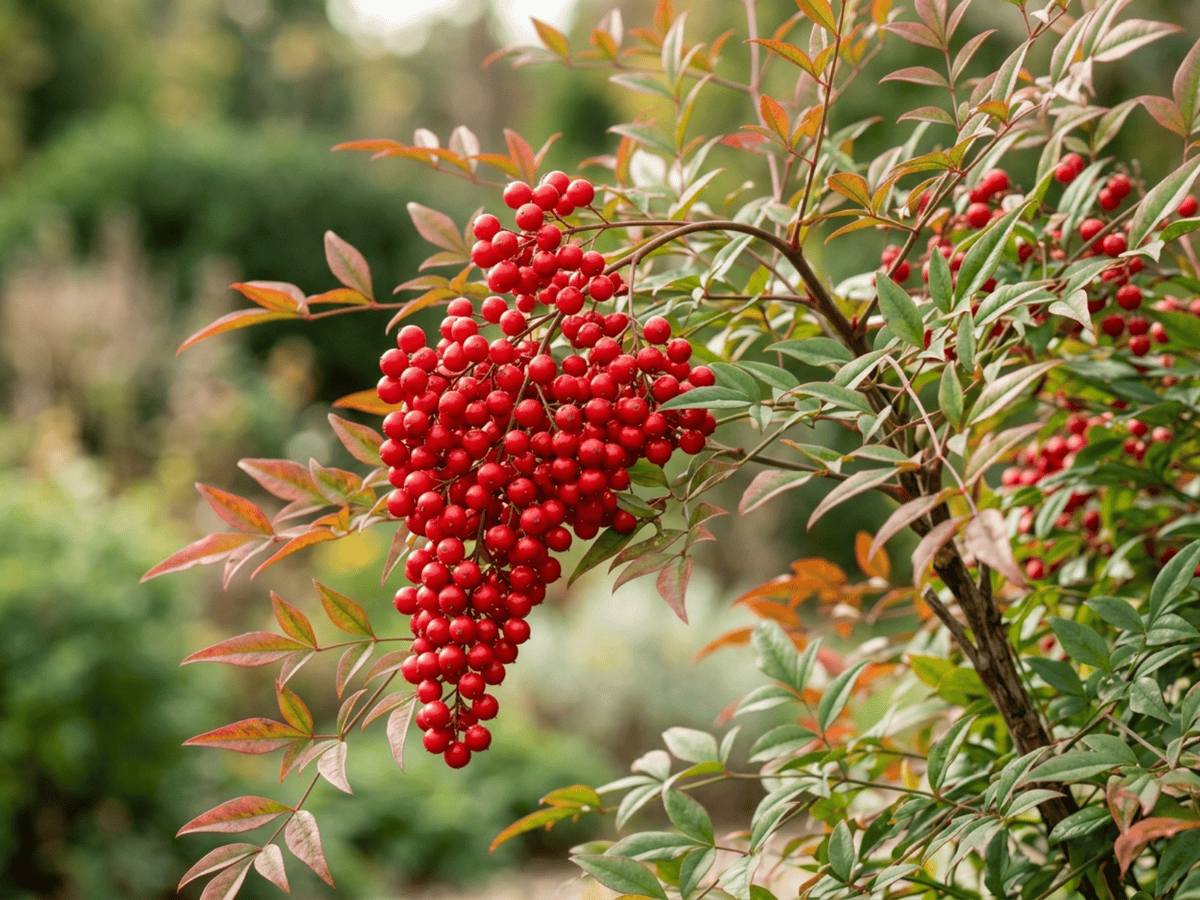
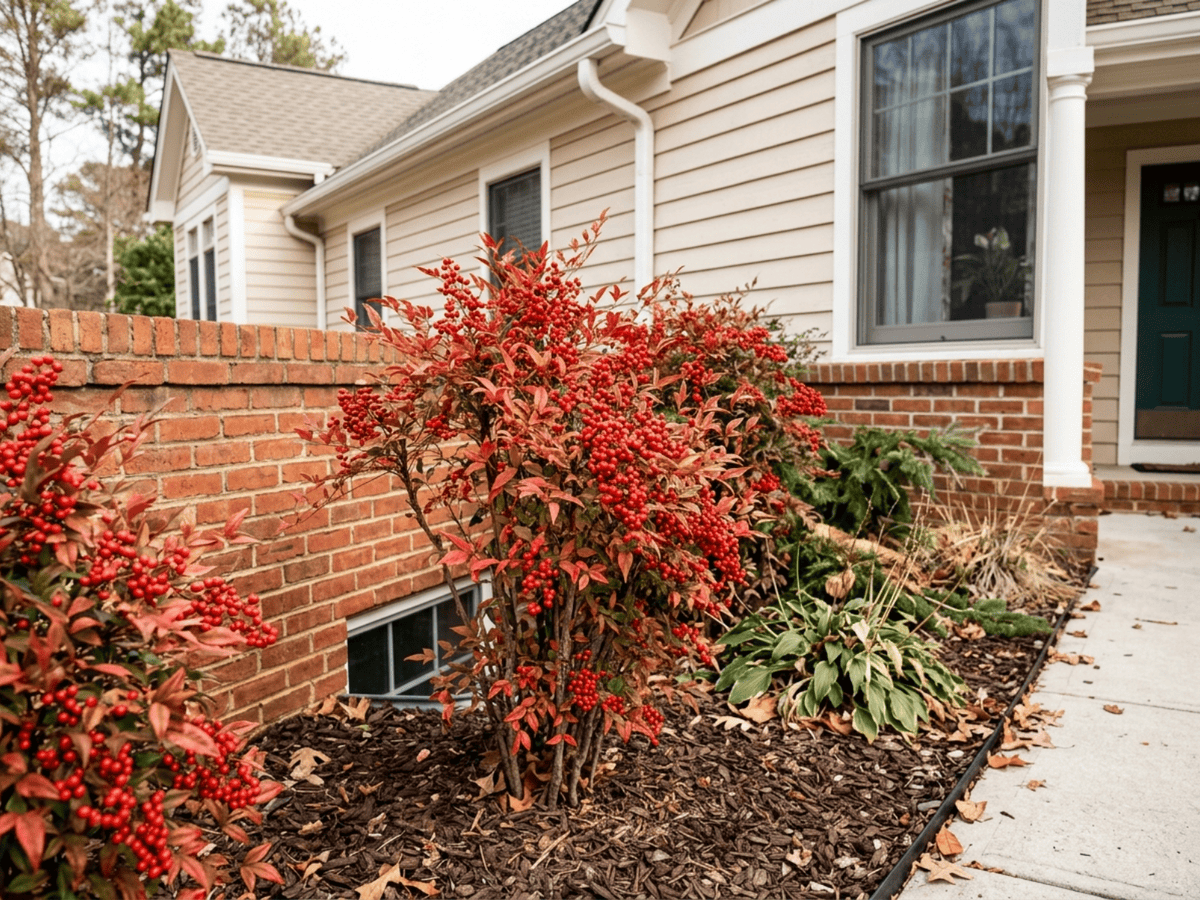
Nandina domestica, commonly known as heavenly bamboo, is an elegant evergreen shrub native to eastern Asia, from Japan to India. Despite its common name, it is not a true bamboo but belongs to the barberry family. The plant features delicate, compound leaves that shift dramatically through the seasons — emerging coppery red in spring, maturing to soft green in summer, and turning vivid crimson in autumn and winter. Clusters of small white flowers appear in early summer, followed by bright red berries that persist through winter, providing striking ornamental interest. It typically grows one to two meters tall with an upright, cane-like habit that resembles bamboo. Heavenly bamboo is a staple of Japanese garden design, often planted near entrances for good luck. It is remarkably adaptable, tolerating a range of soils and light conditions, and requires minimal pruning. While the berries are attractive, they contain cyanogenic compounds that can be toxic to birds in large quantities, so placement should be considered carefully in wildlife-friendly gardens.
- Low-maintenance
- Deer-resistant
- Evergreen
How to care for Heavenly Bamboo
Watering
- Springevery 7 days
- Summerevery 5 days
- Fallevery 14 days
- Winterevery 30 days
Soil · Well-draining
- Top dressingPine bark mulch10%
- Main mixPotting soil + perlite 2:170%
- DrainageLECA / gravel20%
Never skip the drainage layer — standing water is the top cause of root rot.
FERTILIZER
Balanced Feed 14-14-14
An even feed covers all three needs at once, keeping leaves, roots and blooms moving together with nothing pushed out of balance.
- Nitrogen · Leaves
- Phosphorus · Roots + Blooms
- Potassium · Strength
- Springevery 60 days
At a Glance
- NativeEast Asia, South Asia
- Height4–8 ft (1.2–2.4 m)
- Spread3–5 ft (0.9–1.5 m)
- Flower colorWhite
- Foliage colorGreen, Red, Bronze
- SoilLoamy, Well-drained
- LocationsYard
Bloom time
BLOOM CYCLE
Peak bloom
Jun
Small white flower clusters in early summer; berries provide winter color
Fragrance
LIGHT FRAGRANCE
The flowers have a lightly sweet-scented scent.
Toxicity
Humans Slight · Pets Moderate
cyanogenic glycosides and nantenine
Slight
- Berry
- Ingestion
EXPOSURE Eating berries.
EFFECT Berries contain cyanogenic glycosides and moderate ingestion unlikely to cause serious harm to humans.
NOTE Documented concern for humans: Berries contain cyanogenic glycosides and moderate ingestion unlikely to cause serious harm to humans.
Moderate
- Berry
- Ingestion
EXPOSURE Eating berries.
EFFECT Weakness, incoordination, dilated pupils, bloody urine and potentially severe with large ingestion.
NOTE ASPCA lists Nandina as toxic to dogs, cats, and grazing animals. Significant wild-bird mortality (cedar waxwings) documented in US Southeast.
Moderate
- Berry
- Ingestion
EXPOSURE Eating berries.
EFFECT Same as dogs.
NOTE ASPCA lists Nandina as toxic to dogs, cats, and grazing animals. Significant wild-bird mortality (cedar waxwings) documented in US Southeast.
Educational information, not medical or veterinary advice. If exposure is suspected, contact a doctor or veterinarian.
DISTRIBUTION


- Native
- Introduced
- East Asia
- South Asia
History
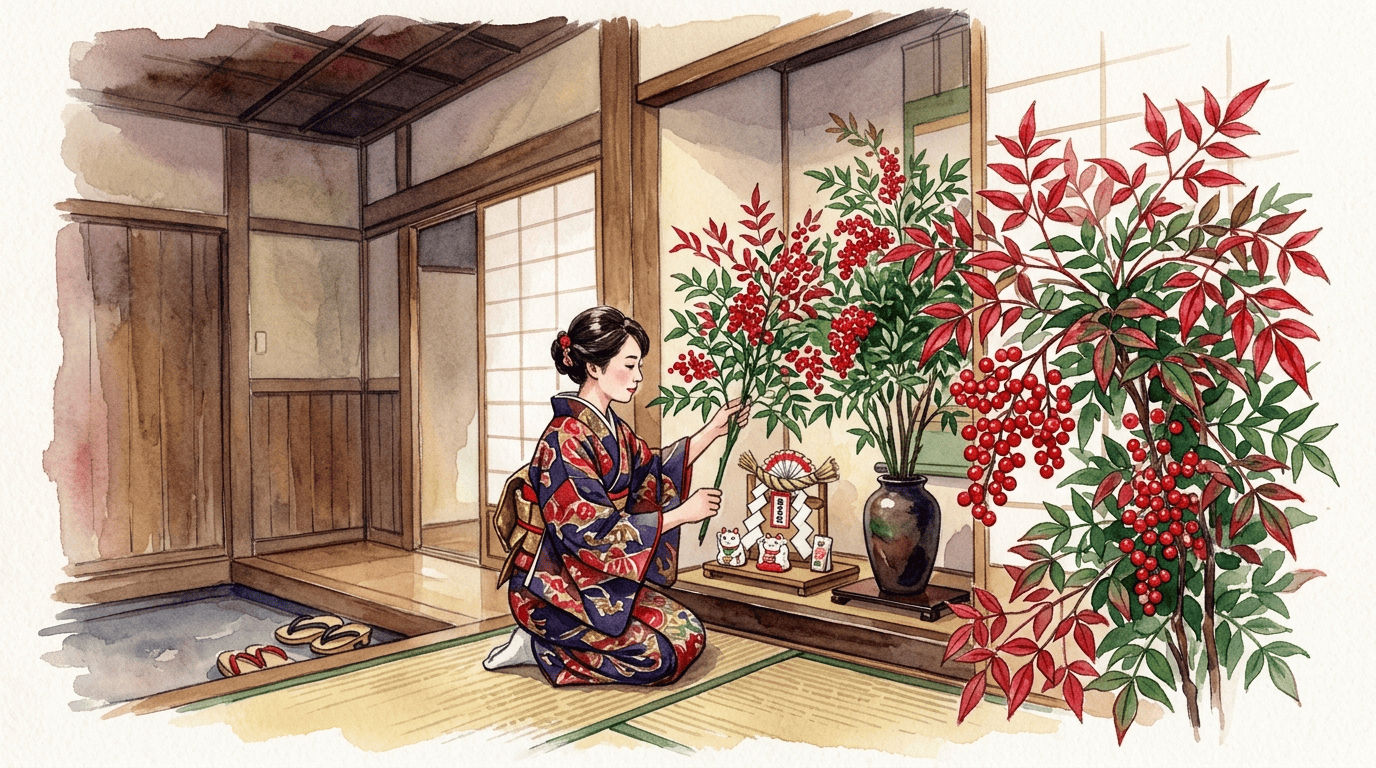
Nandina domestica is native to eastern Asia, including China, Japan, and parts of the Indian subcontinent, and has been cultivated in temple and residential gardens for more than a thousand years. Its common name heavenly bamboo comes from its upright stems and compound leaves, though it is not a bamboo at all but a member of the barberry family. In Japan and China, berried branches became New Year decorations associated with protection, purification, and good fortune; the Japanese name nanten is cherished partly because it sounds like difficulty reversal.
Introduced to the United States in the late 18th century, nandina became a defining evergreen shrub of Southern landscapes, valued for red winter foliage and persistent berries. Recent studies and wildlife deaths, however, have shown that heavy berry consumption can poison cedar waxwings and other birds.
Sterile or low-berry cultivars are now promoted where gardeners still want the foliage without the risk.
Symbolism & meaning
What It Symbolizes
Heavenly Bamboo can symbolize good fortune, traditionally planted at Japanese doorways to welcome luck and reverse misfortune. In East Asian folklore it offers sacred protection, believed to absorb bad dreams and ward off evil spirits from the household it guards. Few shrubs combine ornament and amulet so neatly — a feathery evergreen whose berry-laden branches stand quiet vigil over the threshold of home.
- Good fortune — Traditionally planted at doorways in Japan to bring luck and reverse misfortune
- Sacred protection — Believed to ward off evil spirits and bad dreams in East Asian folklore
Where the Name Comes From
The name Heavenly Bamboo describes its bamboo-like canes. The genus name 'Nandina' derives from the Japanese name 'nanten'. 'Domestica' means 'of the household', reflecting its traditional placement near homes.
Uses & Fun Facts
- Lacy evergreen canes add red winter color to low-maintenance borders
Related plants
Plants with similar care
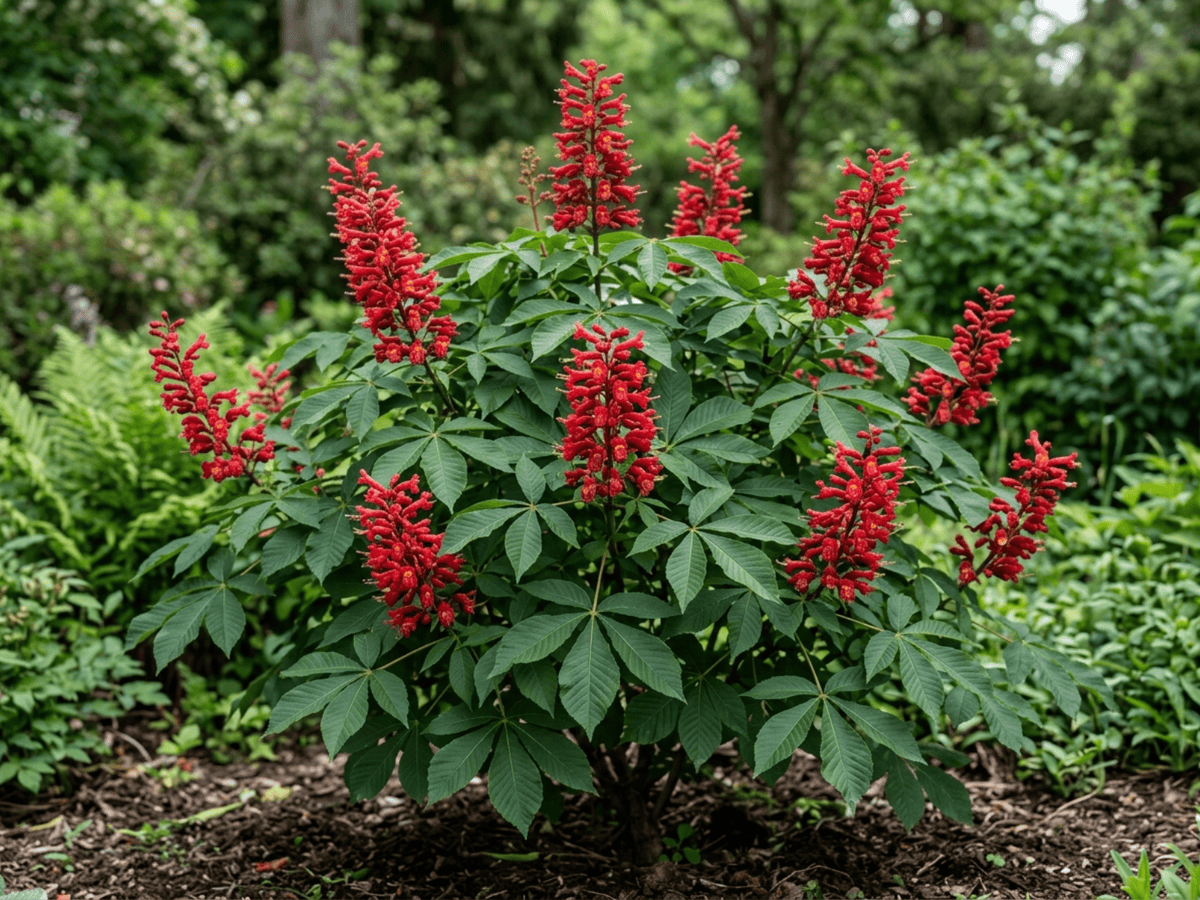 Red BuckeyeAesculus pavia
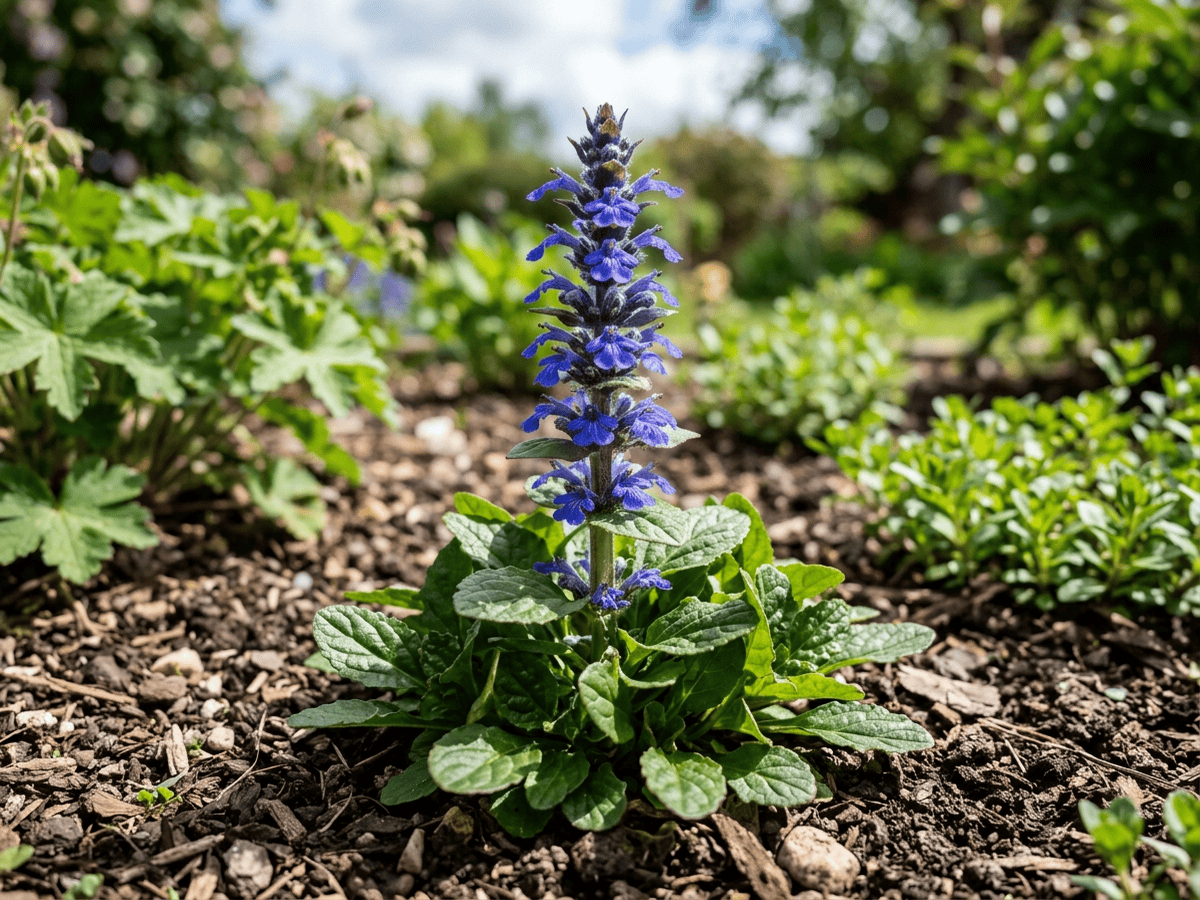 Blue BugleAjuga genevensis
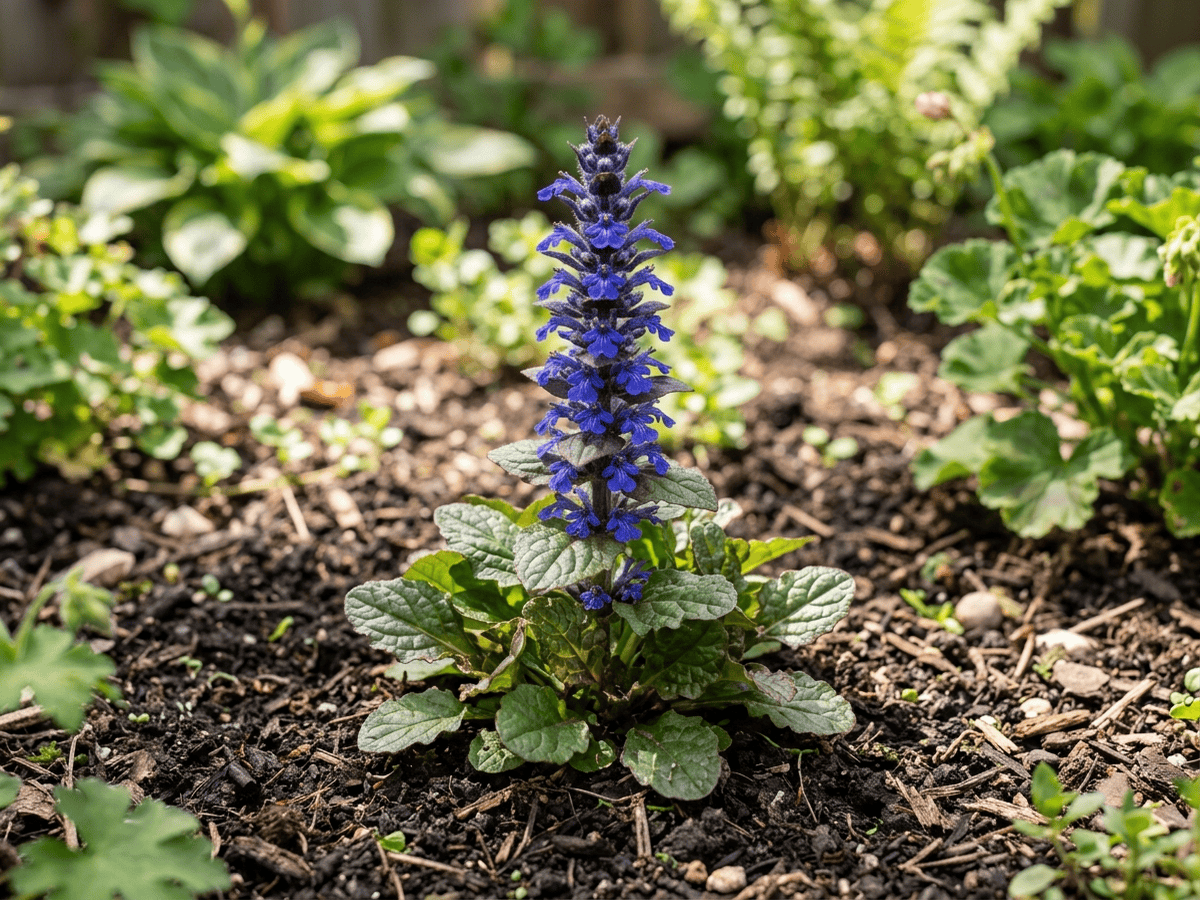 Pyramidal BugleAjuga pyramidalis
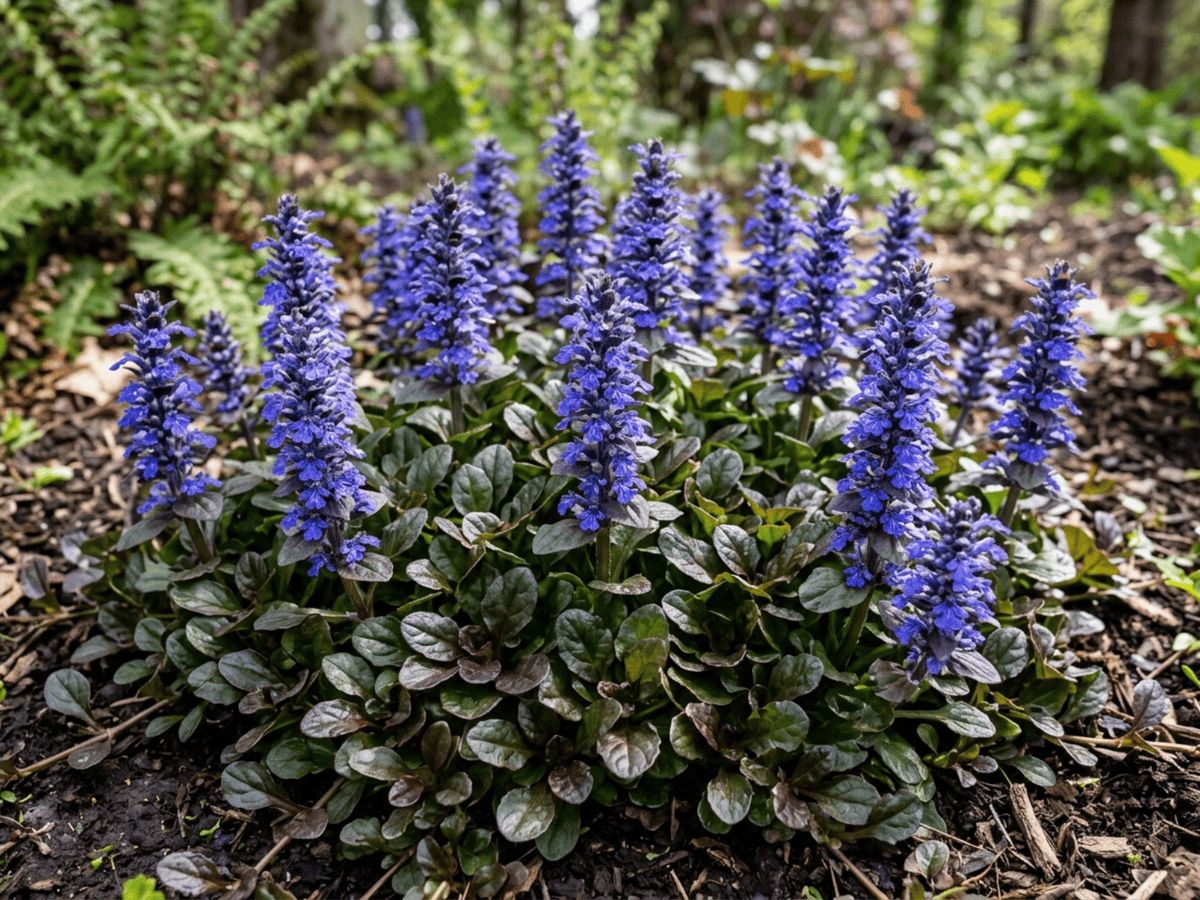 Carpet BugleAjuga reptans
Frequently asked questions
How often should I water Heavenly Bamboo?
In summer, water about every 5 days; in winter, about every 30 days. Adjust for heat, pot size and drainage.
How much light does Heavenly Bamboo need?
Part shade: 2–4 hrs direct. Watch the leaves — scorching or stretching means the light needs adjusting.
Is Heavenly Bamboo toxic to cats or dogs?
Pets Moderate (Dogs Moderate · Cats Moderate) Educational information, not medical or veterinary advice. If exposure is suspected, contact a doctor or veterinarian.
Is Heavenly Bamboo easy to grow?
Yes — it is considered an easy, beginner-friendly plant.
When does Heavenly Bamboo bloom?
It typically blooms Jun in the Northern Hemisphere.
YardMate
Identify any plant in seconds
Snap a photo — YardMate names the plant, diagnoses problems, and reminds you when to water.
Download on the App Store