 YardMate


Mexican Feathergrass
Nassella tenuissima
Easy · Beginner friendlyAbout Mexican Feathergrass
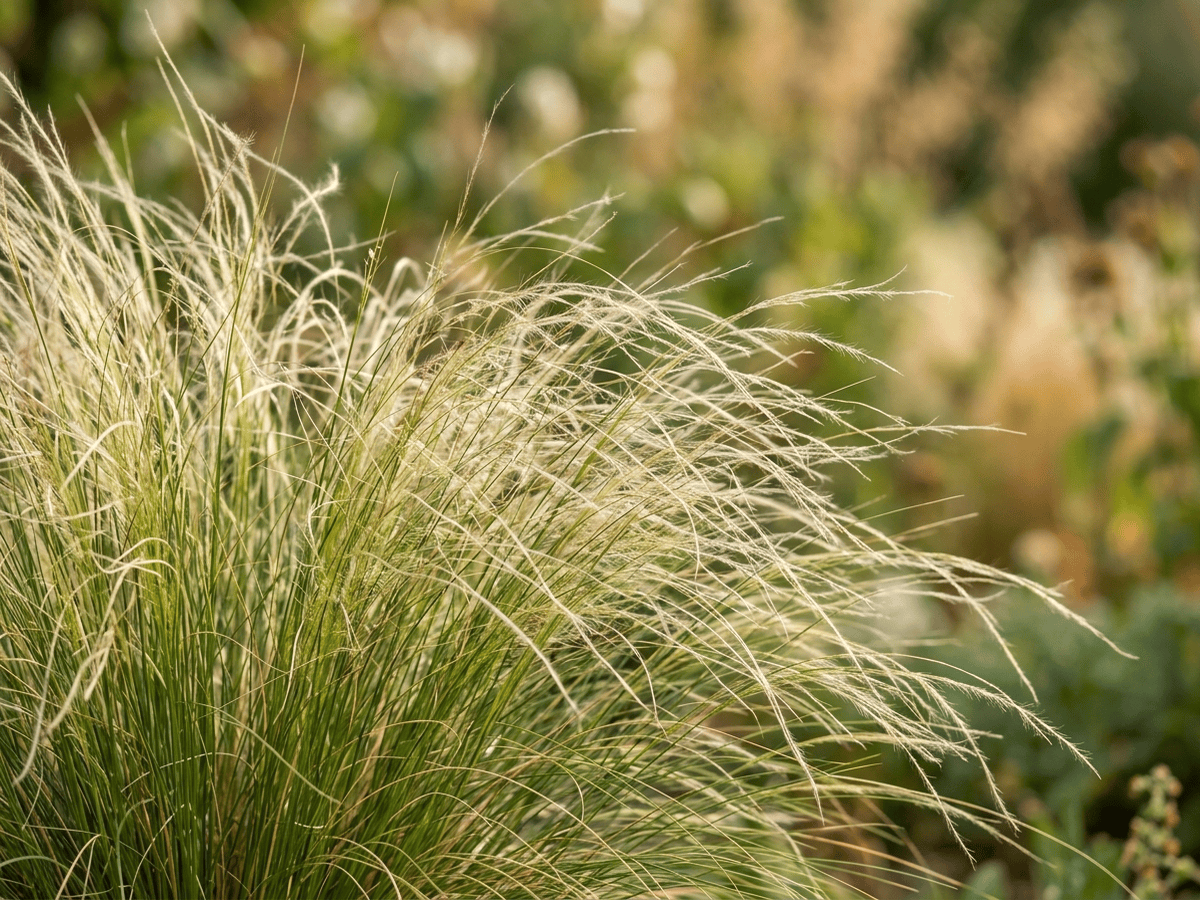
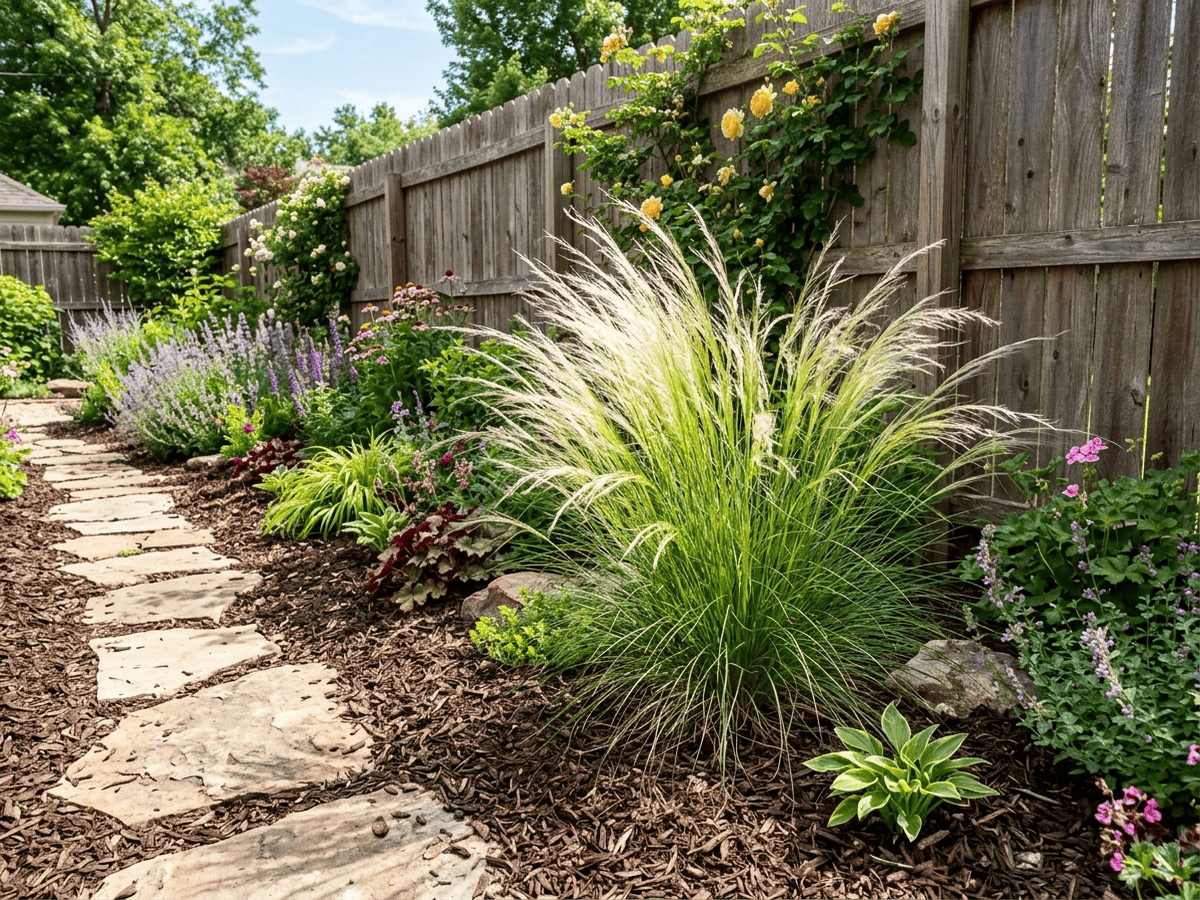
Mexican Feather Grass is a delicate cool-season grass from the American Southwest and Mexico reaching 18-24 inches tall, forming graceful weeping fountains of incredibly fine bright-green to golden foliage that ripples in the slightest breeze. Among the most popular ornamental grasses in California and Texas landscape design. Note that it has become invasive in parts of California—check local recommendations before planting and consider clumping selections.
- Drought-tolerant
How to care for Mexican Feathergrass
Watering
- Springevery 14 days
- Summerevery 21 days
- Fallevery 21 days
- Winterevery 45 days
Soil · Well-draining
- Top dressingPine bark mulch10%
- Main mixPotting soil + perlite 2:170%
- DrainageLECA / gravel20%
Never skip the drainage layer — standing water is the top cause of root rot.
FERTILIZER
- Springevery 60 days
At a Glance
- NativeNorth America, South America
- Height1–2 ft (0.3–0.6 m)
- Spread1–2 ft (0.3–0.6 m)
- Flower colorGreen, Cream
- Foliage colorGreen, Silver, Bronze
- SoilSandy, Well-drained
- LocationsYard · Balcony
Bloom time
BLOOM CYCLE
Peak bloom
Jun–Aug
Silky golden seed heads in summer
Toxicity
Pets Slight
Unknown toxic principle
Not reported
EXPOSURE No exposure route is reported.
EFFECT No toxic effect is reported.
NOTE No toxicity is reported for humans in this catalog; this is not evidence that the plant is edible or harmless.
Slight
- Seed
- Contact
- Ingestion
EXPOSURE Touching seeds. Eating seeds.
EFFECT Awns can lodge in ears, eyes, throat.
NOTE Not chemically toxic; seed awns pose mechanical injury to grazing pets (foxtail-type injuries).
Slight
- Seed
- Contact
- Ingestion
EXPOSURE Touching seeds. Eating seeds.
EFFECT Awns can lodge in ears, eyes, throat.
NOTE Not chemically toxic; seed awns pose mechanical injury to grazing pets (foxtail-type injuries).
Educational information, not medical or veterinary advice. If exposure is suspected, contact a doctor or veterinarian.
DISTRIBUTION

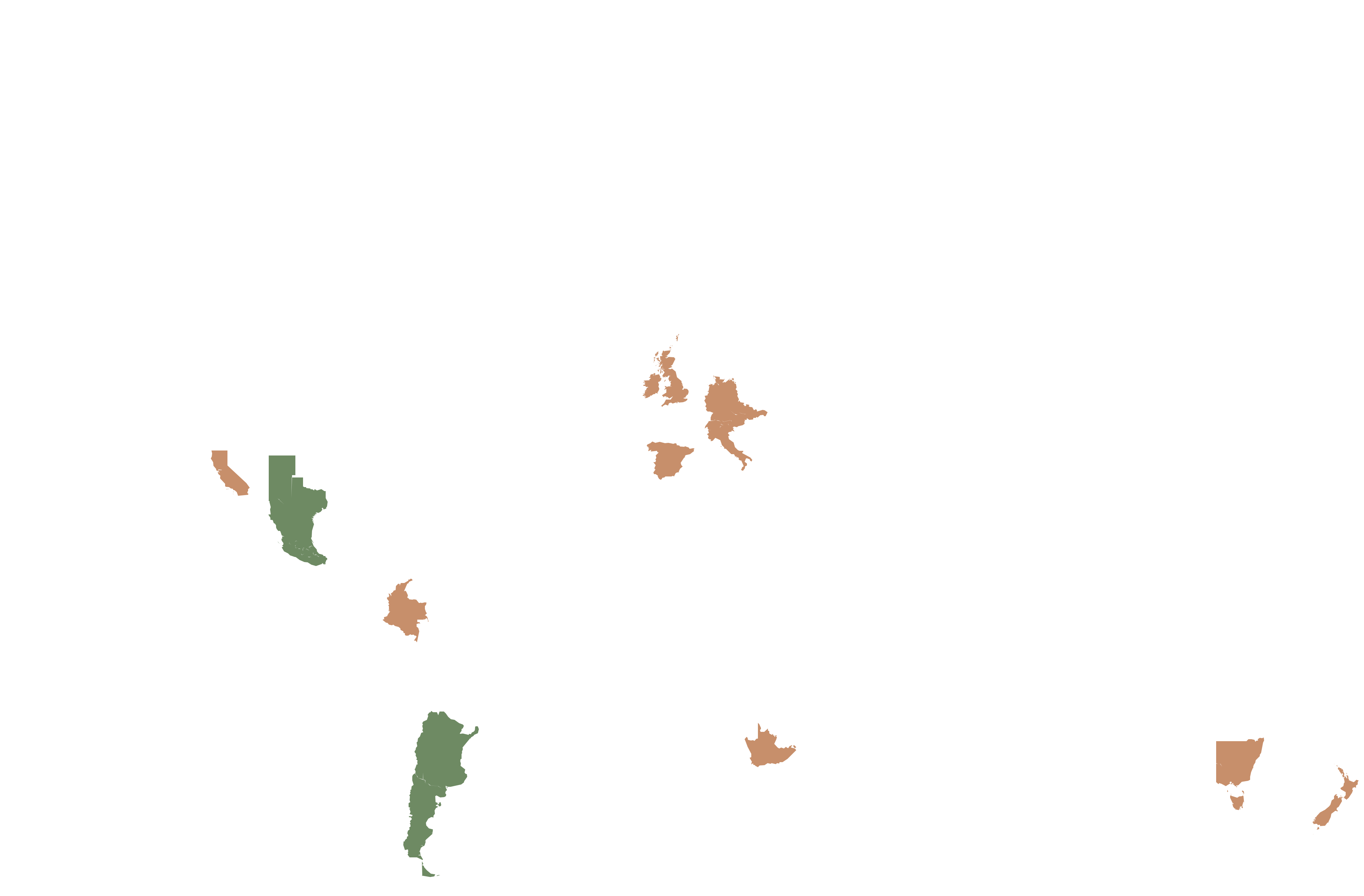
- Native
- Introduced
- North America
- South America
History
Nassella tenuissima, commonly called Mexican feather grass or finestem needle grass, is a cool-season clumping perennial grass in the family Poaceae native to a disjunct range including the southwestern United States (New Mexico, western Texas), much of Mexico, and temperate Argentina and Chile. Russian botanist Carl Bernhard von Trinius originally described it as Stipa tenuissima in 1829; American grass specialist Mary Elizabeth Barkworth transferred it to Nassella in 1990 as part of a revision of New World needle grasses. The species has become enormously popular in ornamental landscaping since the 1990s worldwide for its extremely fine, threadlike blue-green foliage that forms soft 45-60 cm mounds that billow and shimmer in the slightest breeze, producing silvery-green panicles that bleach to near-white in summer.
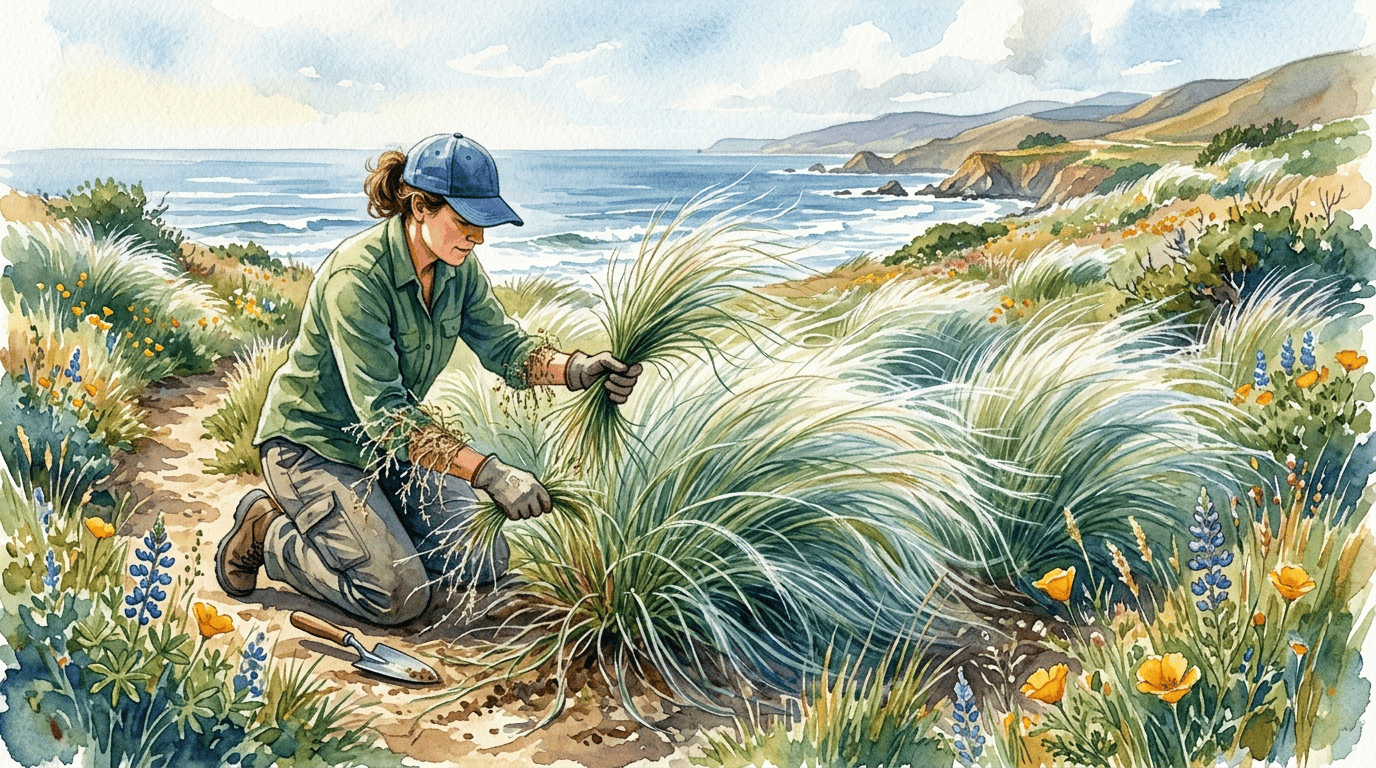
However, by 2010-2020 the species was recognized as invasive in coastal California, Australia, New Zealand, and parts of Europe, where it seeds aggressively into grasslands. California nurseries have begun phasing it out in favor of native bunch grasses.
Native to the Chihuahuan Desert of the American Southwest and Mexico, and parts of South America. A defining ornamental grass of modern California and Texas landscape design but now categorized as invasive in coastal California—use with caution and avoid in fire-prone areas.
Symbolism & meaning
What It Symbolizes
Mexican Feathergrass is movement made visible, its hair-fine blades rippling in the slightest breeze like flowing water held above the soil. Yet its eagerness to seed makes it a quiet caution flag, especially across California's coastal regions where it slips beyond garden walls. In its airy beauty and ecological warning, grace and wariness sway on the same stem.
- Movement — ripples like flowing water in the wind
- Caution — invasive potential in California coastal regions
Where the Name Comes From
The name Mexican Feathergrass describes its grasslike foliage. 'Nassella' from Latin meaning small basket; 'tenuissima' means very slender.
Uses & Fun Facts
- Fine flowing foliage forms graceful weeping fountain shapes
- Drought-tolerant grass softens patio pots and dry beds
- Mass plantings ripple beautifully in mild-climate landscapes
Related plants
Plants with similar care
 Chinese AbeliaAbelia chinensis
 Fragrant AbeliaAbelia mosanensis
 Large-Flowered AbeliaAbelia uniflora
 Glossy AbeliaAbelia x grandiflora
Frequently asked questions
How often should I water Mexican Feathergrass?
In summer, water about every 21 days; in winter, about every 45 days. Adjust for heat, pot size and drainage.
How much light does Mexican Feathergrass need?
Full sun: 6+ hrs direct. Watch the leaves — scorching or stretching means the light needs adjusting.
Is Mexican Feathergrass toxic to cats or dogs?
Pets Slight (Dogs Slight · Cats Slight) Educational information, not medical or veterinary advice. If exposure is suspected, contact a doctor or veterinarian.
Is Mexican Feathergrass easy to grow?
Yes — it is considered an easy, beginner-friendly plant.
When does Mexican Feathergrass bloom?
It typically blooms Jun–Aug in the Northern Hemisphere.
YardMate
Identify any plant in seconds
Snap a photo — YardMate names the plant, diagnoses problems, and reminds you when to water.
Download on the App Store