 YardMate

Blushing Bromeliad
Neoregelia carolinae
Easy · Beginner friendlyAbout Blushing Bromeliad
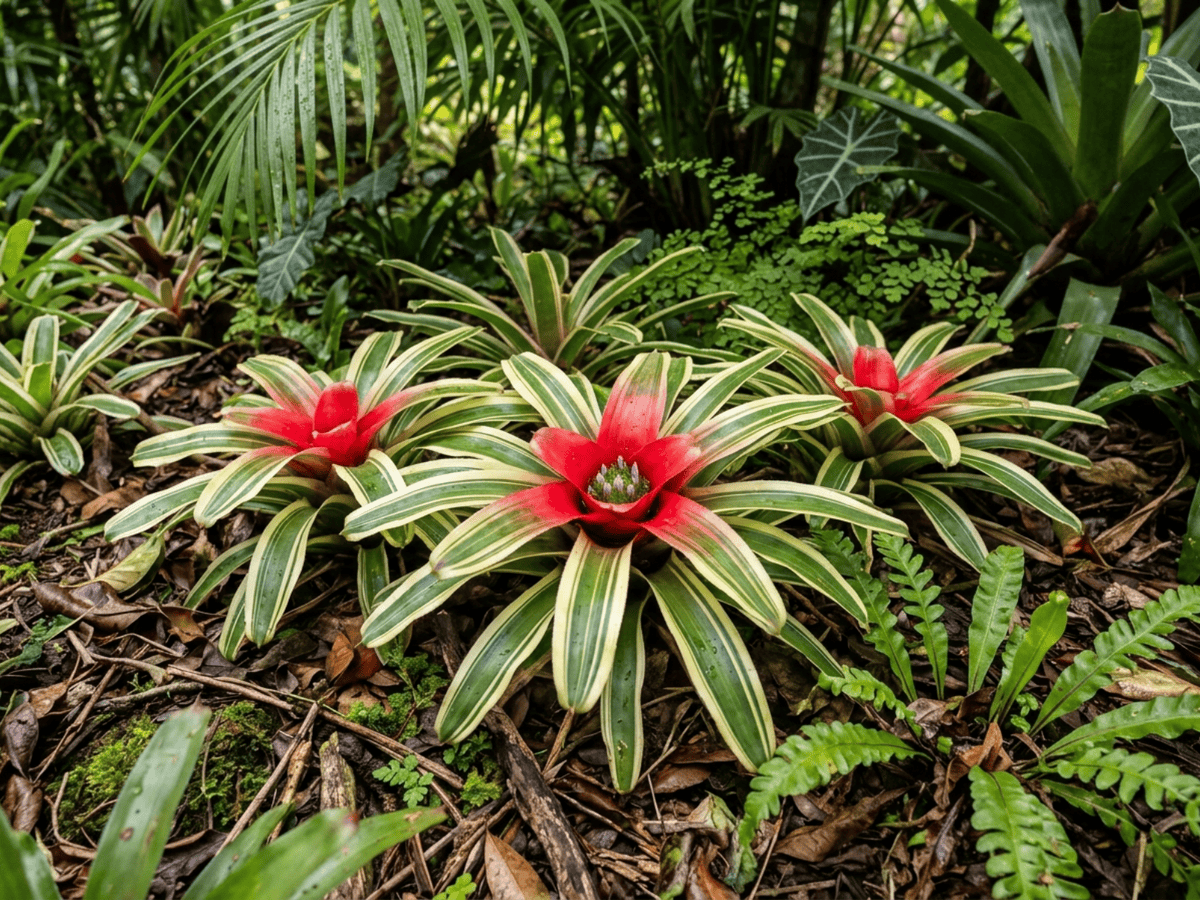
Neoregelia carolinae, the blushing bromeliad, is a striking rosette-forming plant whose central leaves flush vivid red or pink before flowering, as if blushing. The stiff, glossy leaves form a vase-shaped rosette that naturally collects rainwater in its central cup. Tiny blue-purple flowers emerge from this water-filled cup. Native to Brazilian rainforests, it is an epiphyte that grows on tree branches. Indoors, it adds bold tropical color and requires minimal care beyond keeping the central cup filled with water. After flowering, the mother rosette slowly dies while producing offsets.
- Tropical
How to care for Blushing Bromeliad
Watering
- Springevery 7 days
- Summerevery 5 days
- Fallevery 10 days
- Winterevery 14 days
Soil · Airy & open
- Single layerOrchid bark + charcoal100%
No soil at all — orchid roots need air moving around them.
FERTILIZER
Balanced Feed 14-14-14
An even feed covers all three needs at once, keeping leaves, roots and blooms moving together with nothing pushed out of balance.
- Nitrogen · Leaves
- Phosphorus · Roots + Blooms
- Potassium · Strength
- Springevery 45 days
- Summerevery 45 days
- Fallevery 60 days
At a Glance
- NativeSouth America
- Height0.7–1 ft (0.2–0.3 m)
- Spread1–1.5 ft (0.3–0.5 m)
- Flower colorPurple, Blue, White
- Foliage colorGreen, Red, Variegated
- SoilWell-drained, Acidic
- LocationsIndoor
Bloom time
BLOOM CYCLE
Peak bloom
Jun–Aug
Tiny blue flowers in water-filled cup; central leaves blush red
Fragrance
NO FRAGRANCE
Not fragrant.
Toxicity
No toxicity has been reported for this plant. Still, it is wise to keep pets from chewing on any houseplant.
Educational information, not medical or veterinary advice. If exposure is suspected, contact a doctor or veterinarian.
DISTRIBUTION


- Native
- South America
History
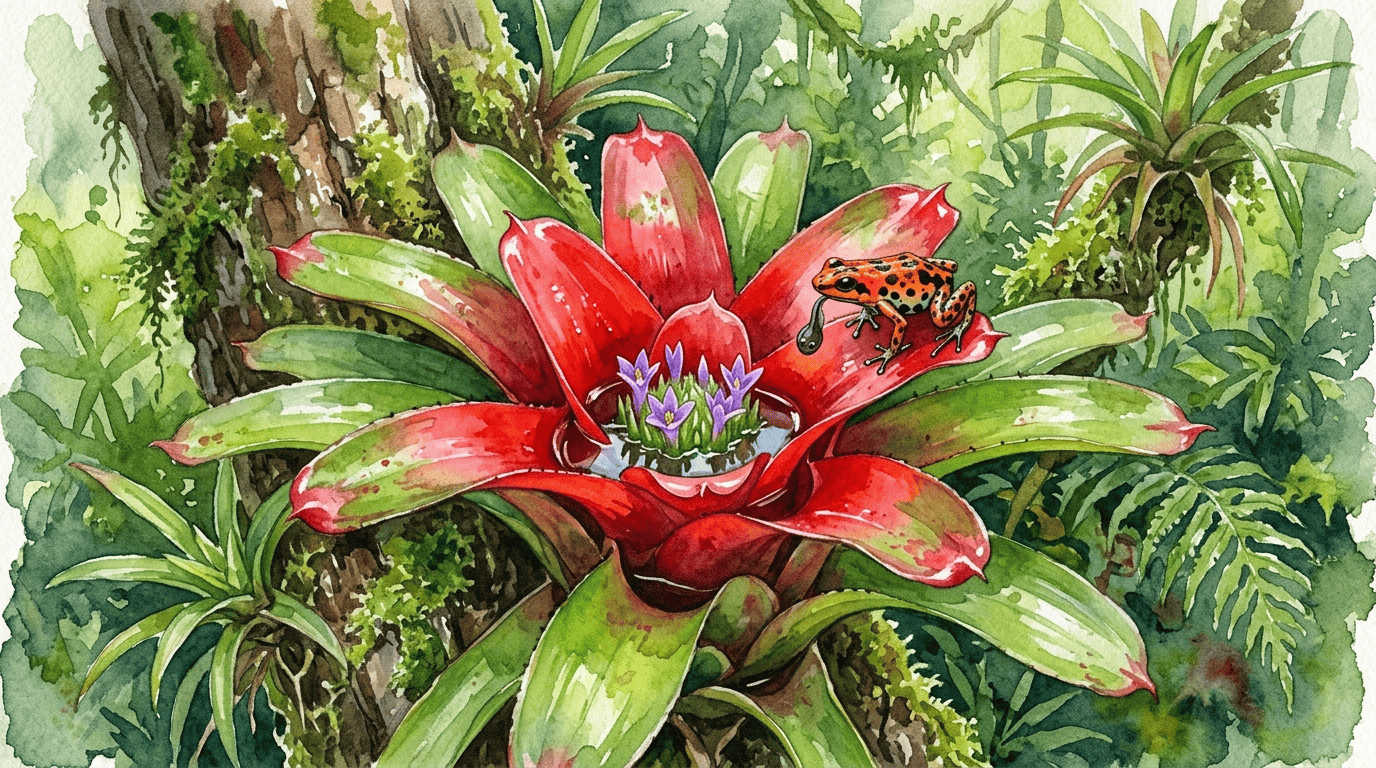
Neoregelia carolinae is native to the Atlantic Forest of southeastern Brazil, where it grows as a tree-mounted epiphyte or terrestrial rosette. Like other 'tank bromeliads' it holds pooled rainwater in the cup formed by its overlapping leaf bases, creating miniature aquatic habitats that in the wild host entire communities of microinvertebrates, mosquito larvae, tree frog tadpoles, and even some species of tiny frogs that breed exclusively in bromeliad tanks. As flowering approaches, the short-stemmed central cluster of small purple flowers emerges just above the water surface, and the inner leaves flush brilliant scarlet to signal pollinators.
The variegated cultivar 'Tricolor' (1930s) remains the single most popular bromeliad in Western cultivation. Non-toxic to pets. In the wild, bromeliad water cups (phytotelmata) are miniature ecosystems — a single Neoregelia rosette can host mosquito larvae, tadpoles, aquatic insects, and even small crabs.
Some poison dart frogs in the Amazon deposit their tadpoles exclusively in bromeliad cups, where they develop safely above the forest floor. The genus Neoregelia is named after Eduard August von Regel, director of the Saint Petersburg Imperial Botanical Garden in the 1800s. Brazilian bromeliad collectors maintain extensive gardens called 'bromeliários,' and Neoregelia hybrids number in the thousands.
Symbolism & meaning
What It Symbolizes
Blushing Bromeliad expresses warmth, its center blushing crimson at the heart of glossy green rosettes as if quietly delighted by the company. It radiates tropical heat and welcoming energy — a plant that seems perpetually mid-greeting. A houseplant that turns any windowsill into a small, friendly piece of the rainforest understory.
- Warmth — Its blushing center radiates tropical heat and welcoming energy
Where the Name Comes From
Neoregelia means 'new Regelia,' honoring Eduard von Regel after the genus was separated from Regelia. Carolinae may reference a person named Caroline.
Uses & Fun Facts
- Rosette flushes scarlet at center before blooming as focal piece
- Tank bromeliad grown indoors and in shaded patio pots
- Vivid central blush brightens warm shaded plantings
Related plants
Plants with similar care
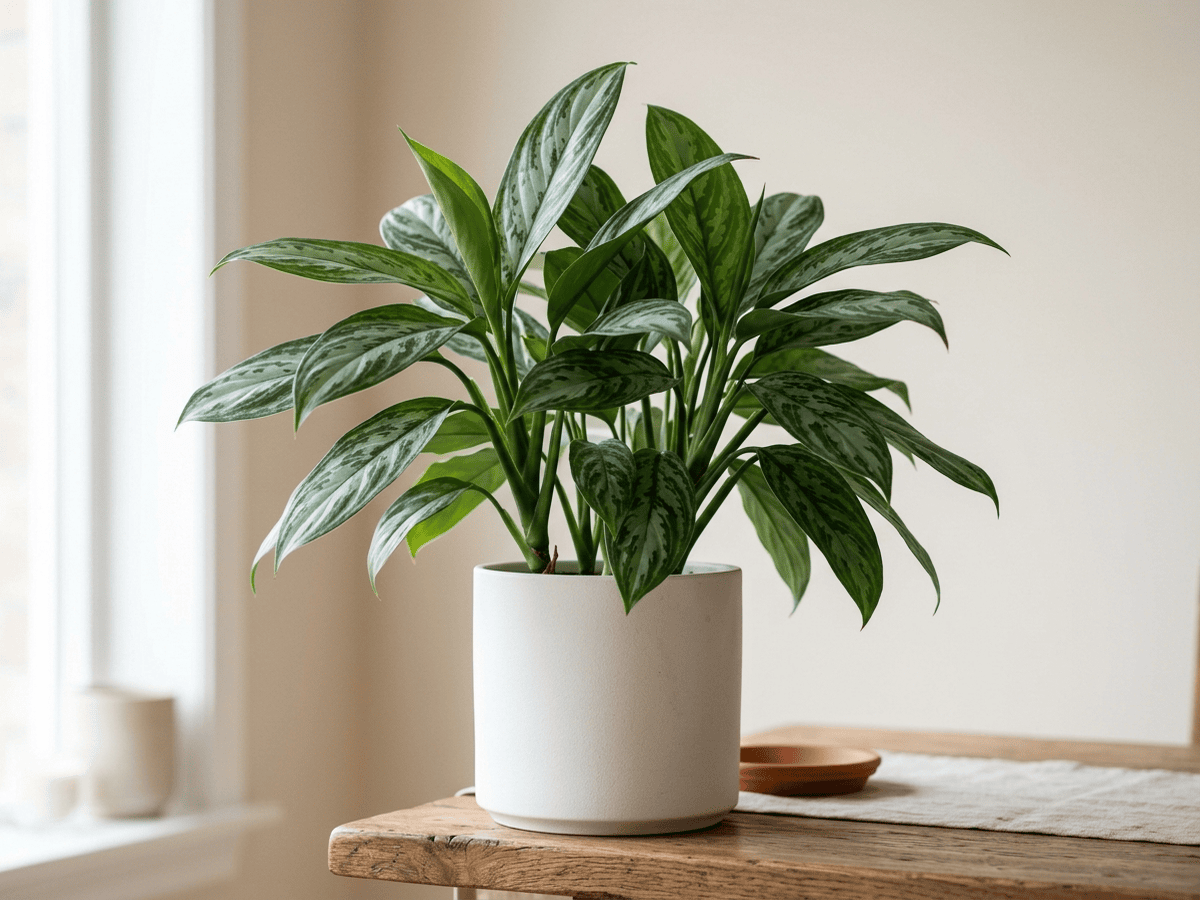 Philippine EvergreenAglaonema commutatum
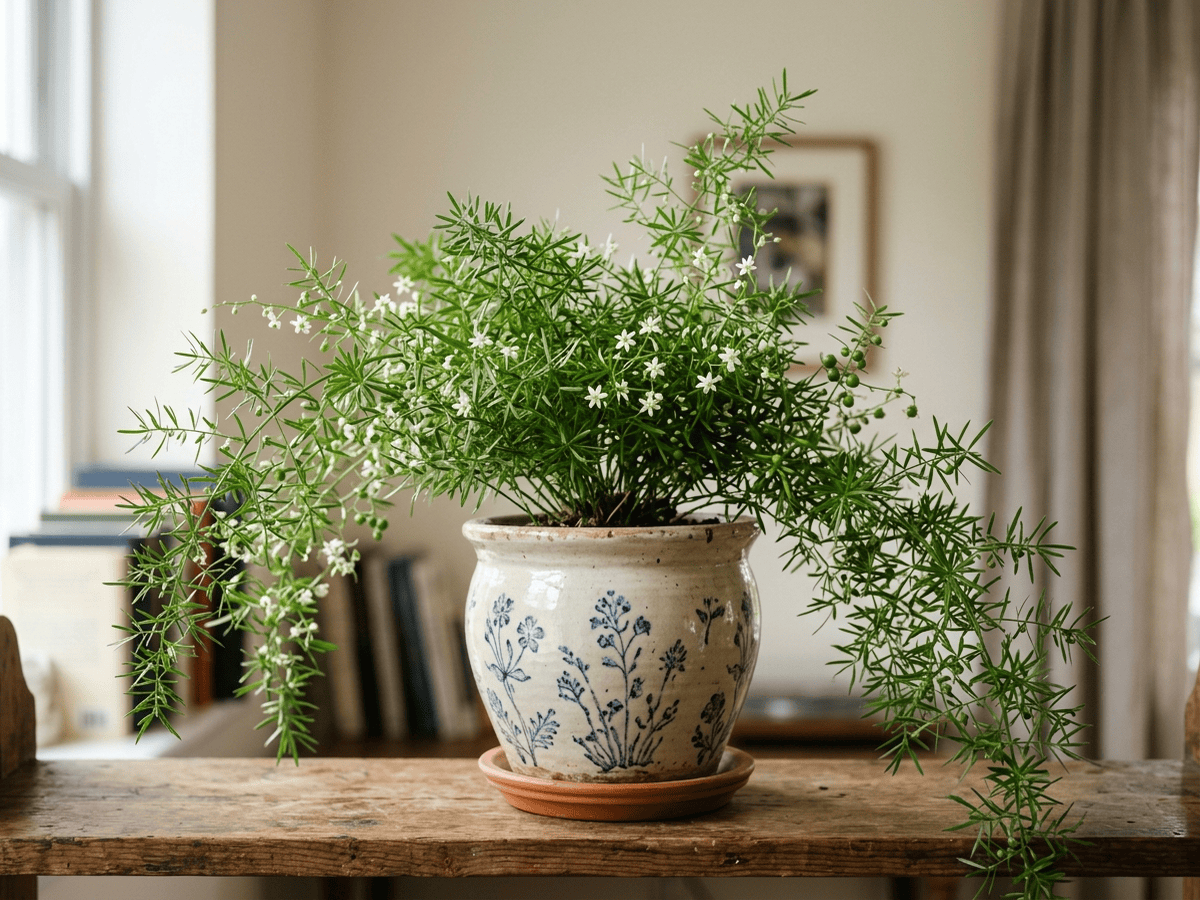 Sprenger's AsparagusAsparagus densiflorus
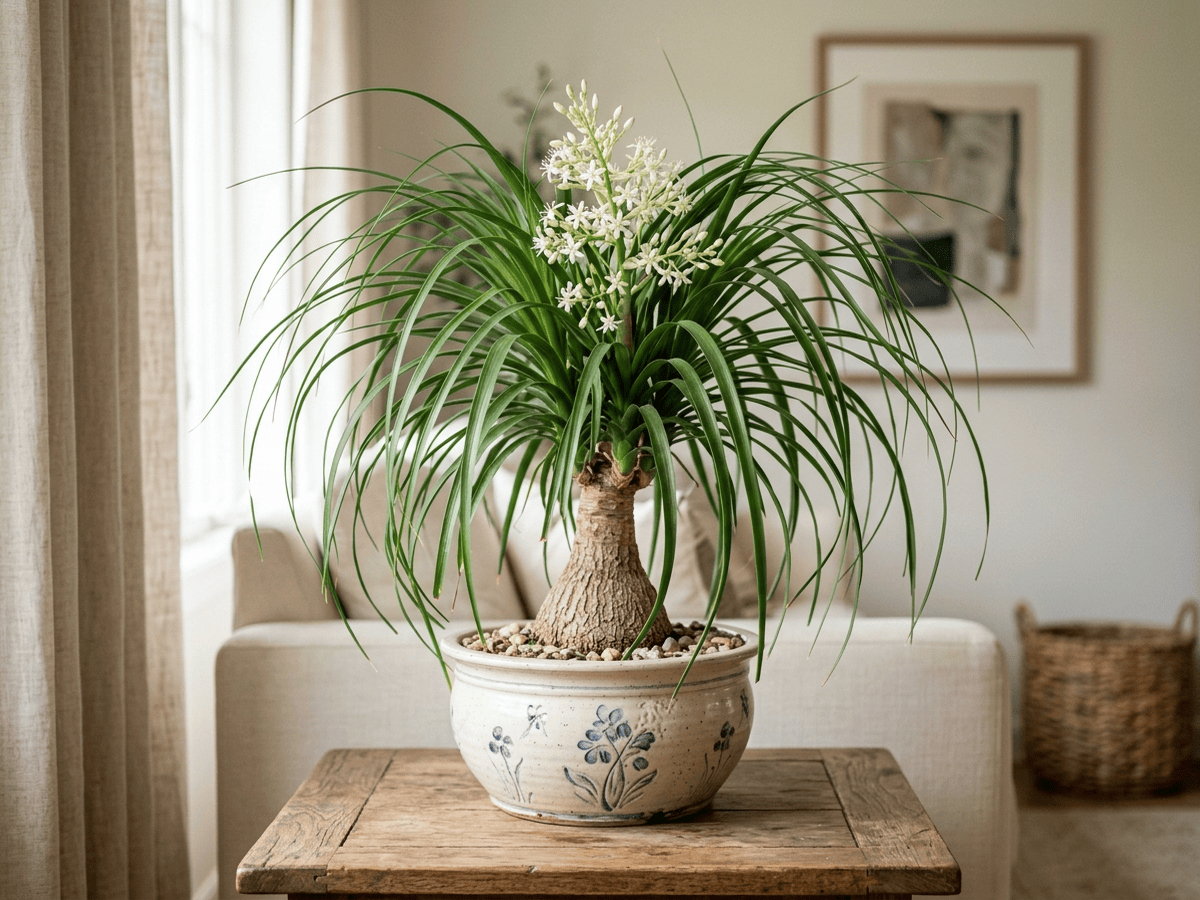 Ponytail PalmBeaucarnea recurvata
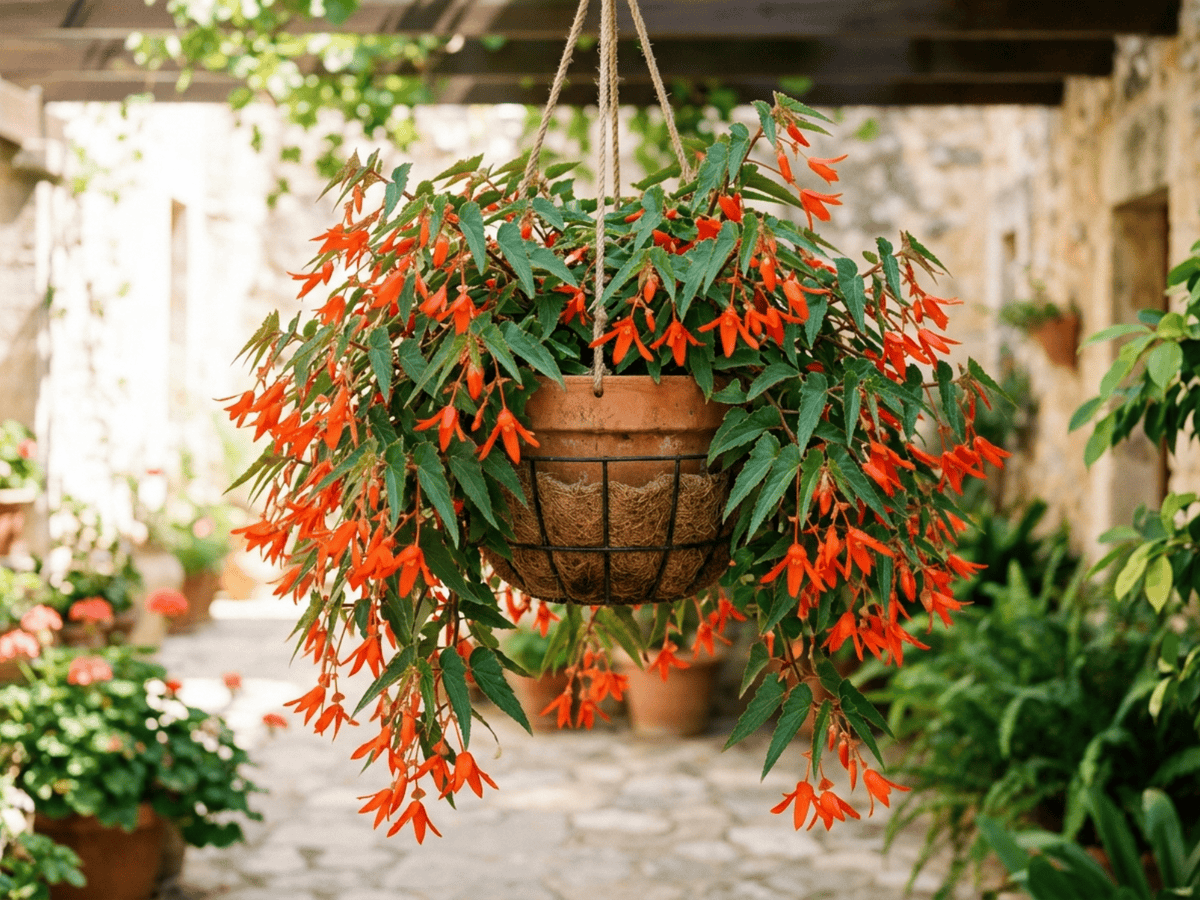 Tuberous BegoniaBegonia boliviensis
Frequently asked questions
How often should I water Blushing Bromeliad?
In summer, water about every 5 days; in winter, about every 14 days. Adjust for heat, pot size and drainage.
How much light does Blushing Bromeliad need?
Part shade: 2–4 hrs direct. Watch the leaves — scorching or stretching means the light needs adjusting.
Is Blushing Bromeliad toxic to cats or dogs?
No toxicity has been reported for this plant. Still, it is wise to keep pets from chewing on any houseplant. Educational information, not medical or veterinary advice. If exposure is suspected, contact a doctor or veterinarian.
Is Blushing Bromeliad easy to grow?
Yes — it is considered an easy, beginner-friendly plant.
Can Blushing Bromeliad be grown indoors?
Yes, it adapts well to indoor growing given the right light.
When does Blushing Bromeliad bloom?
It typically blooms Jun–Aug in the Northern Hemisphere.
YardMate
Identify any plant in seconds
Snap a photo — YardMate names the plant, diagnoses problems, and reminds you when to water.
Download on the App Store