 YardMate


Sprenger's Asparagus
Asparagus densiflorus
Easy · Beginner friendlyAbout Sprenger's Asparagus
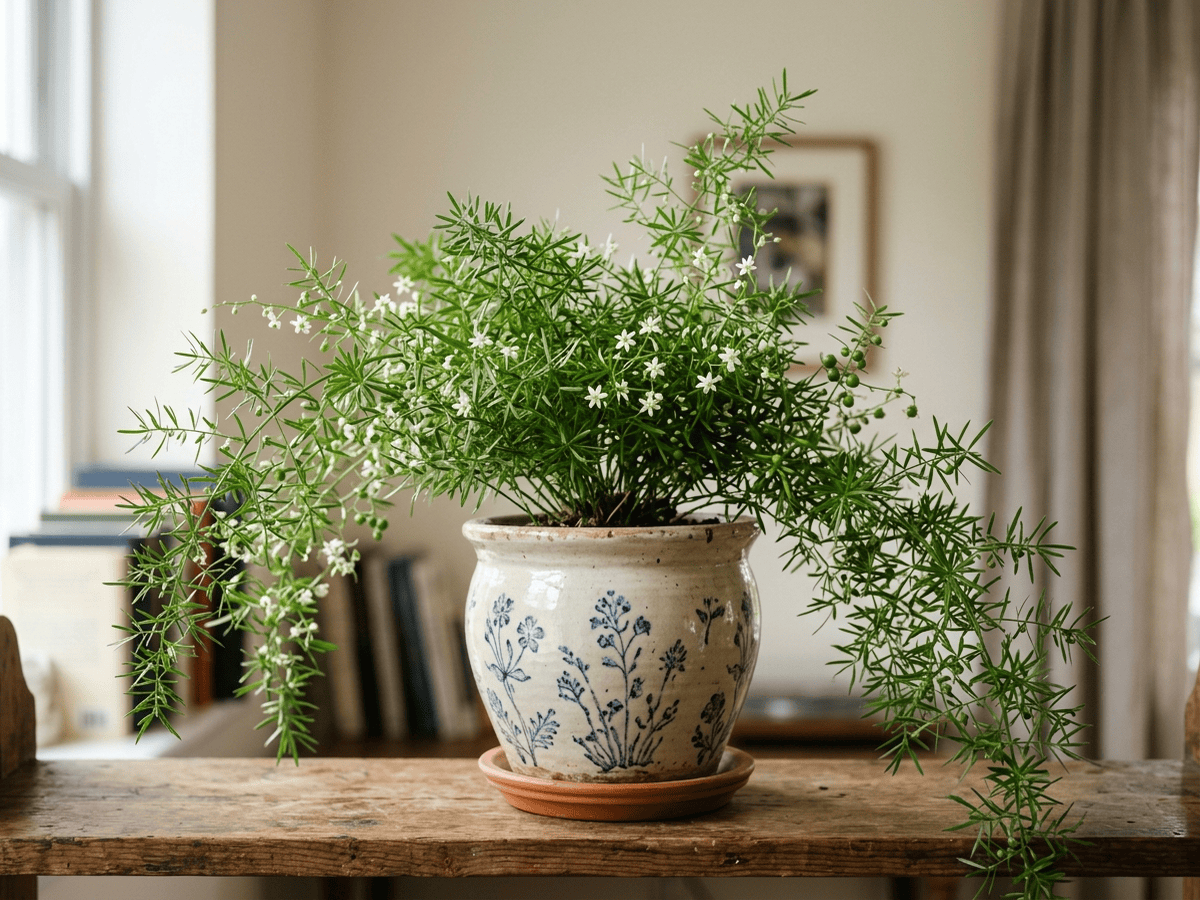
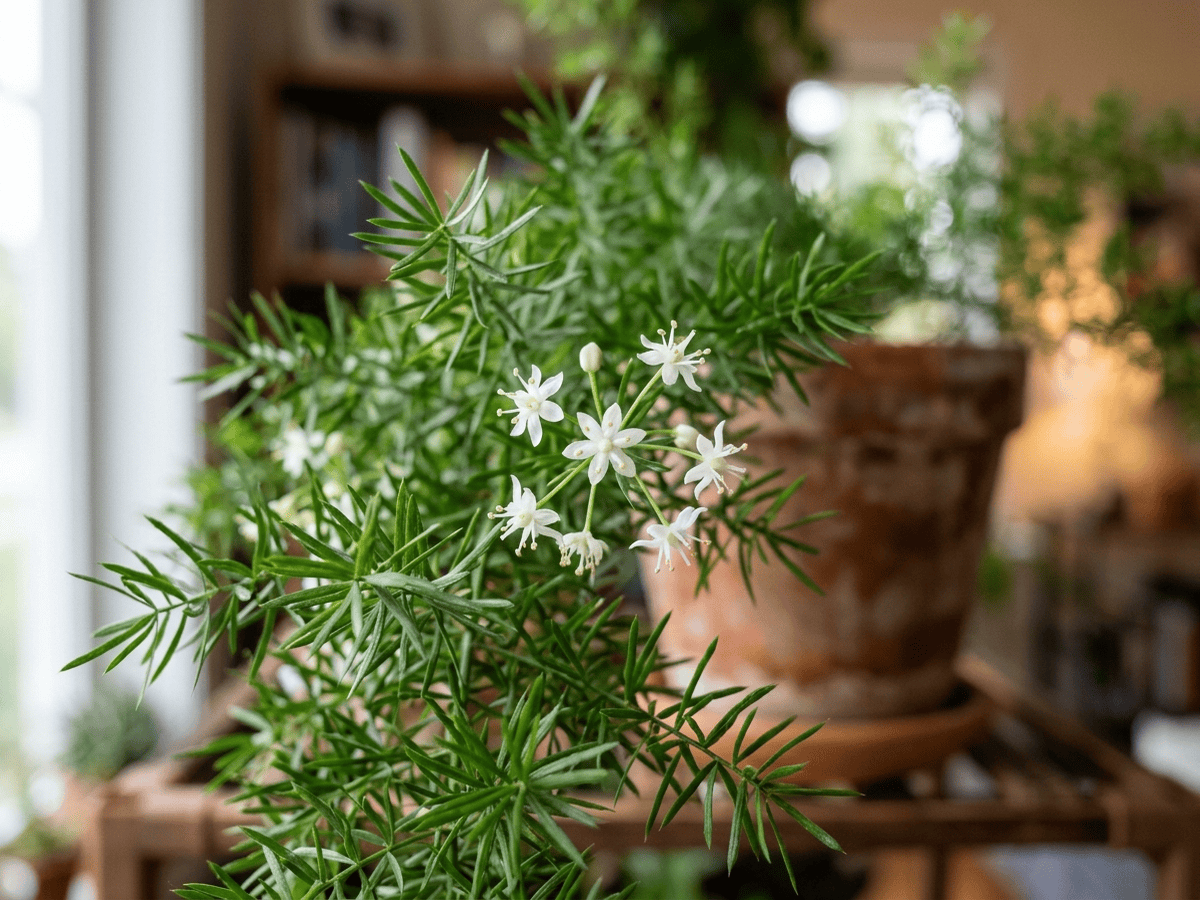
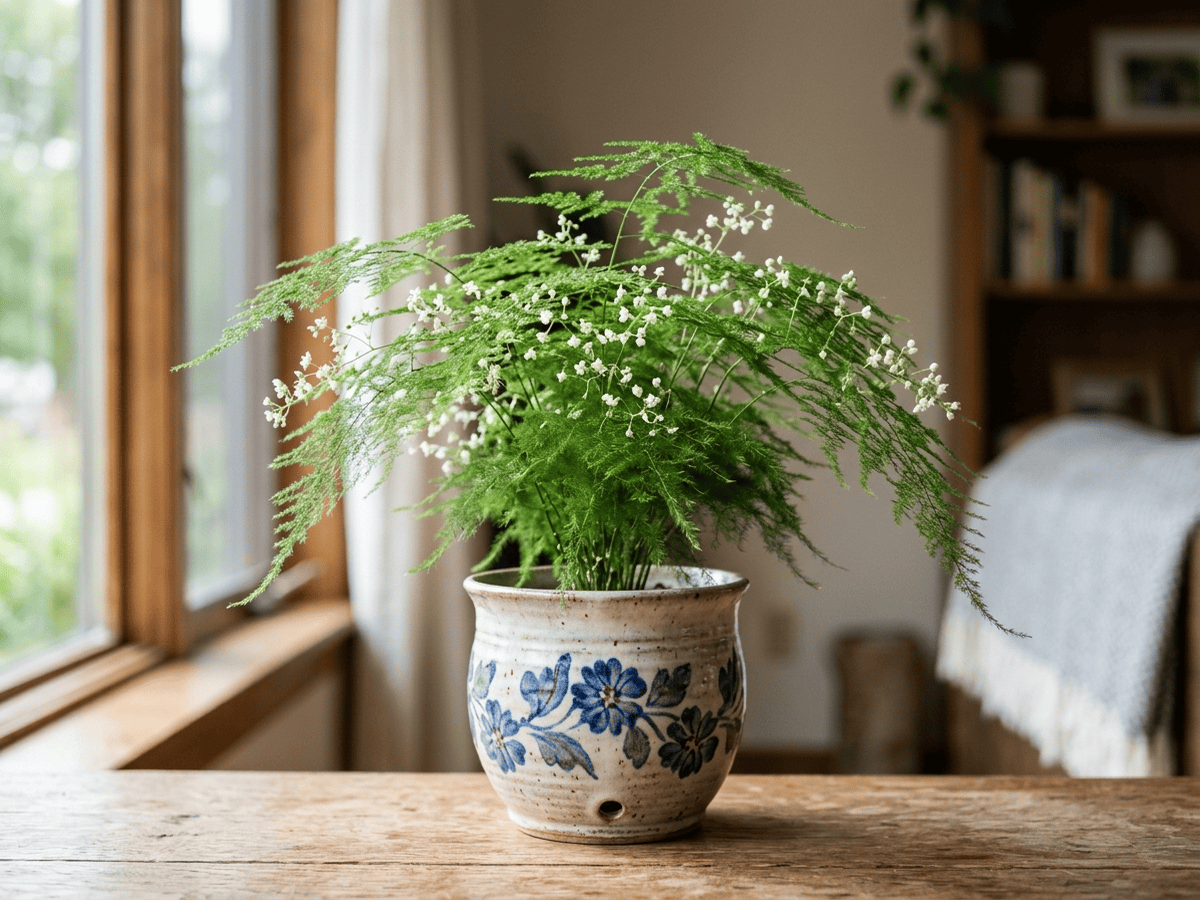
Asparagus densiflorus, the foxtail fern or Sprenger's asparagus, has dense, arching plumes of bright green needle-like cladodes on tough stems. The 'Sprengeri' cultivar cascades beautifully from hanging baskets, while 'Myersii' (foxtail fern) forms upright, bushy fox-tail shapes. Native to South Africa, it has thick tuberous roots that store water, making it drought-tolerant. Small fragrant white flowers produce red berries that attract birds. It is vigorous and adaptable but can become invasive in warm climates. Indoors, it prefers bright light and regular watering.
- Drought-tolerant
- Trailing
How to care for Sprenger's Asparagus
Watering
- Springevery 5 days
- Summerevery 4 days
- Fallevery 7 days
- Winterevery 10 days
Soil · Well-draining
- Top dressingPine bark mulch10%
- Main mixPotting soil + perlite 2:170%
- DrainageLECA / gravel20%
Never skip the drainage layer — standing water is the top cause of root rot.
FERTILIZER
Balanced Feed 14-14-14
An even feed covers all three needs at once, keeping leaves, roots and blooms moving together with nothing pushed out of balance.
- Nitrogen · Leaves
- Phosphorus · Roots + Blooms
- Potassium · Strength
- Springevery 30 days
- Summerevery 30 days
- Fallevery 60 days
At a Glance
- NativeAfrica
- Height1–2 ft (0.3–0.6 m)
- Spread2–3 ft (0.6–0.9 m)
- Flower colorWhite, Pink
- Foliage colorGreen
- Fruit colorRed
- SoilLoamy, Well-drained
- LocationsIndoor · Balcony
Bloom time
BLOOM CYCLE
Peak bloom
Jun–Aug
Tiny fragrant white flowers followed by bright red berries
Fragrance
LIGHT FRAGRANCE
Small flowers have a light sweet scent.
Toxicity
Humans Slight · Pets Slight
steroidal saponins
Slight
- Fruit
- Stem
- Contact
- Ingestion
EXPOSURE Touching fruit and stems. Eating fruit and stems.
EFFECT Contact dermatitis from sap and gI upset from berries.
NOTE Bright red berries are attractive to pets and small children; these are the main hazard.
Slight
- Fruit
- Stem
- Contact
- Ingestion
EXPOSURE Touching fruit and stems. Eating fruit and stems.
EFFECT Allergic dermatitis, vomiting, diarrhea, abdominal pain from berries, and per ASPCA.
NOTE Bright red berries are attractive to pets and small children; these are the main hazard.
Slight
- Fruit
- Stem
- Contact
- Ingestion
EXPOSURE Touching fruit and stems. Eating fruit and stems.
EFFECT Allergic dermatitis, vomiting, diarrhea, abdominal pain from berries, and per ASPCA.
NOTE Bright red berries are attractive to pets and small children; these are the main hazard.
Educational information, not medical or veterinary advice. If exposure is suspected, contact a doctor or veterinarian.
DISTRIBUTION

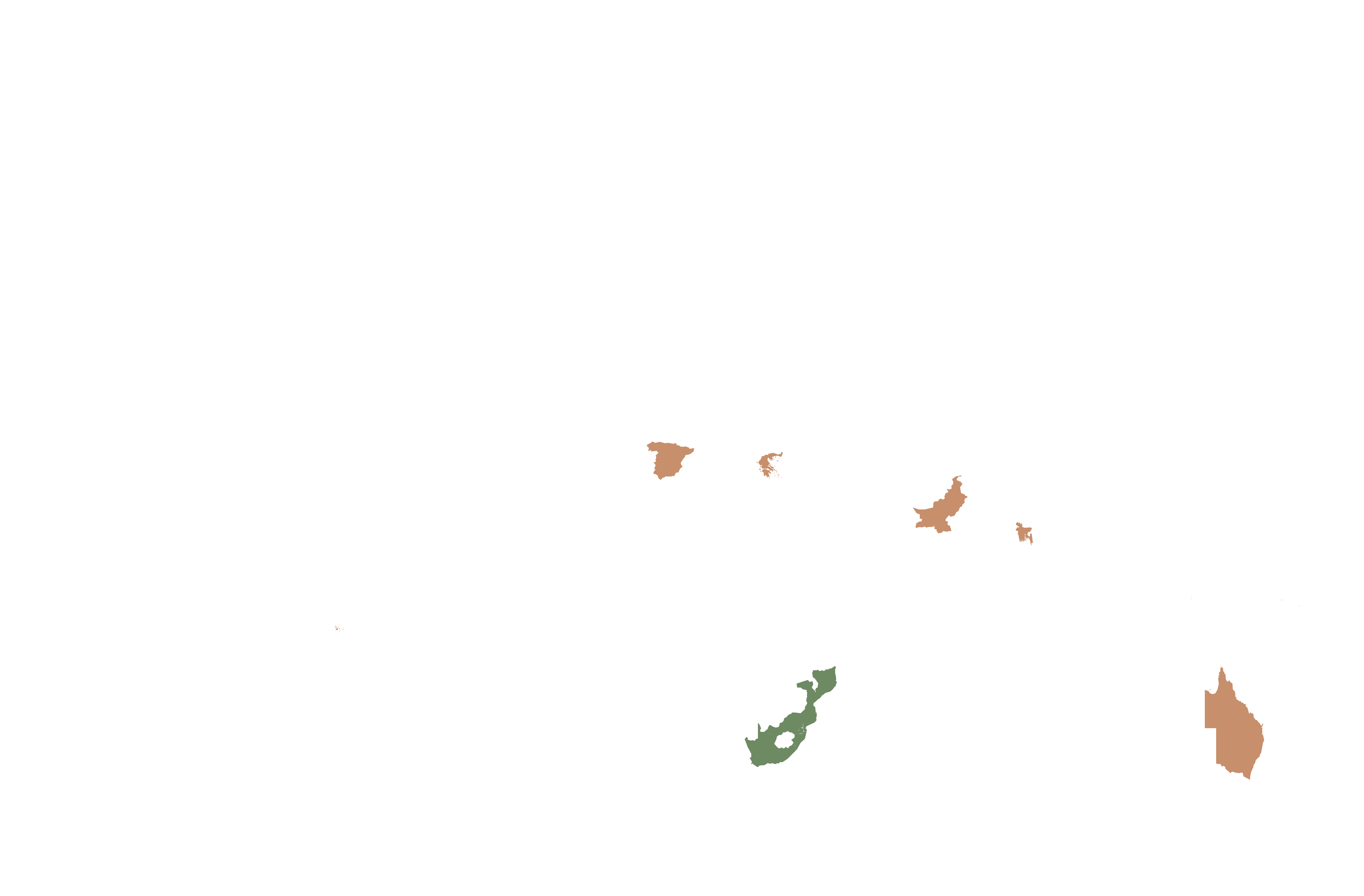
- Native
- Introduced
- Africa
History
Asparagus densiflorus is native to coastal South Africa, where it grows as a rambling cladode-covered shrub. It entered European horticulture in the mid-19th century, and two of its cultivars dominate the modern trade: 'Sprengeri', a trailing form introduced in 1886 and named after nurseryman Carl Ludwig Sprenger, is the standard mixed-planter and hanging-basket 'asparagus fern'; 'Meyeri' ('Foxtail Fern'), introduced later, produces dense upright plumes and has become a signature modern landscape and cut-foliage plant since the 2000s. Like its congener A. setaceus, it is not a true fern — the fine needles are cladodes — and its bright red berries, which follow small fragrant white flowers, are significantly toxic to pets and contain steroidal saponins.
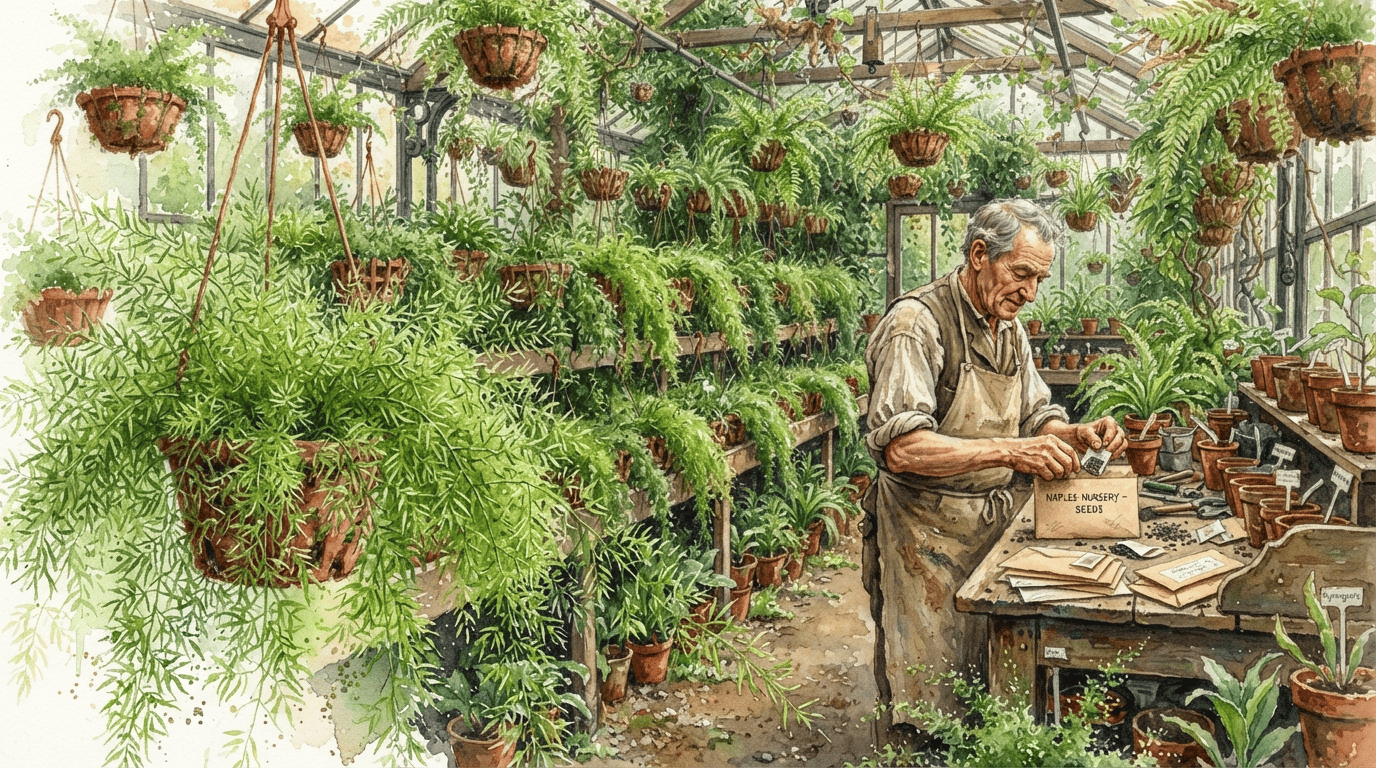
Listed as an invasive weed in Hawaii, Florida, and eastern Australia. The Sprenger asparagus fern is named after Carl Ludwig Sprenger, a German-Italian nurseryman who popularized it in the 1890s from his nursery near Naples.
He sent seeds to gardeners worldwide, and the plant's vigorous growth quickly made it a garden staple — perhaps too successfully. It is now listed as an invasive species in Hawaii, Florida, Australia, and parts of Africa and Pacific Islands. The foxtail form ('Myersii') was discovered as a chance mutation in a South African garden and named after a Mr. Myers of Pietermaritzburg who first propagated it commercially.
Symbolism & meaning
What It Symbolizes
Sprenger's Asparagus pours abundance from every pot, its lush, feathery stems cascading in a green waterfall of overflowing vitality. There is a generosity to its growth — always more, always softer, always reaching — that makes it a living emblem of plenty. In its airy fronds, the simple message is fullness: of leaf, of life, of welcome.
- Abundance — Its prolific, lush growth represents overflowing vitality and generosity
Where the Name Comes From
Asparagus from Greek 'asparagos.' Densiflorus means 'densely flowered.'
Uses & Fun Facts
- Cascading plumes spill beautifully from hanging baskets
- Feathery cladodes used as filler greenery in bouquets
- Bright green foxtail texture softens borders and patios
Related plants
More Asparagus plants

Plants with similar care
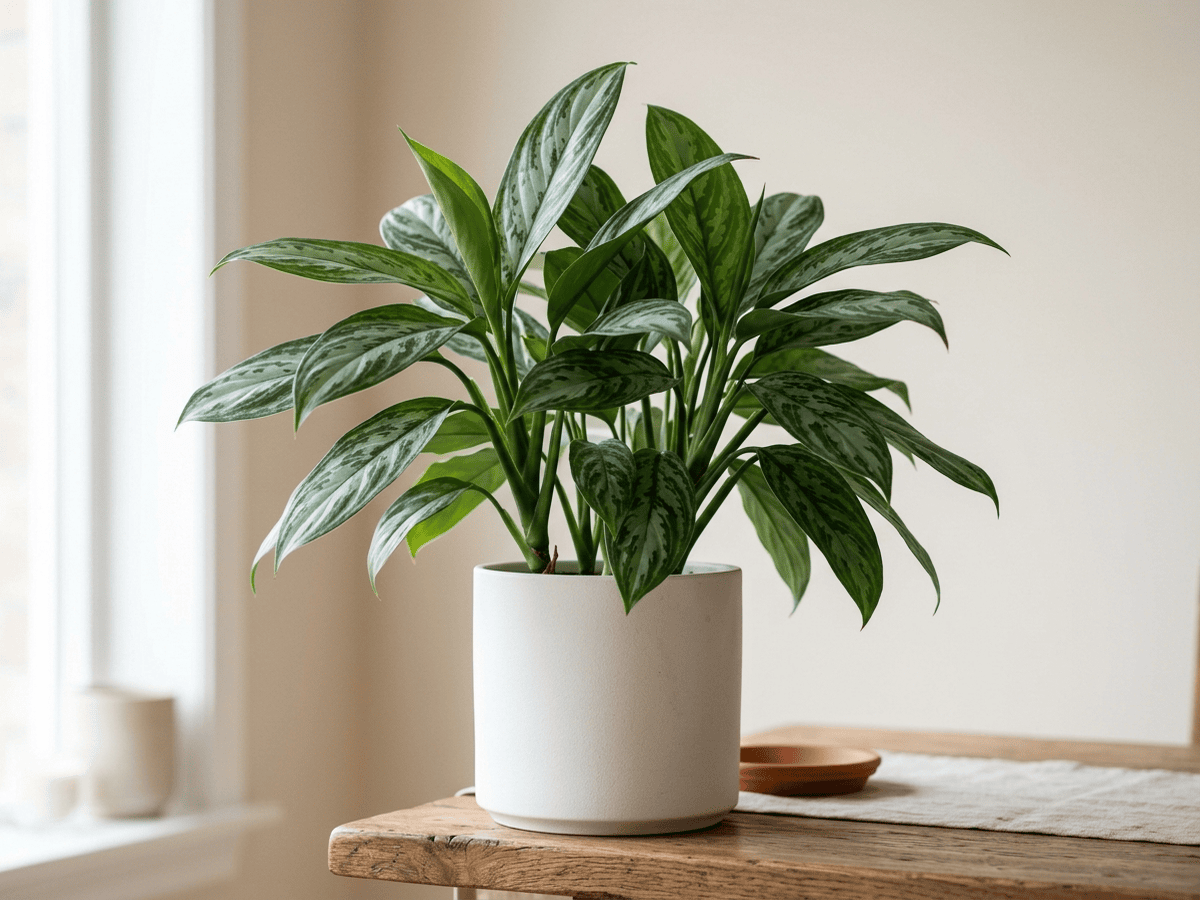 Philippine EvergreenAglaonema commutatum
 Entire-Leaf False Goat’s BeardAstilbe simplicifolia
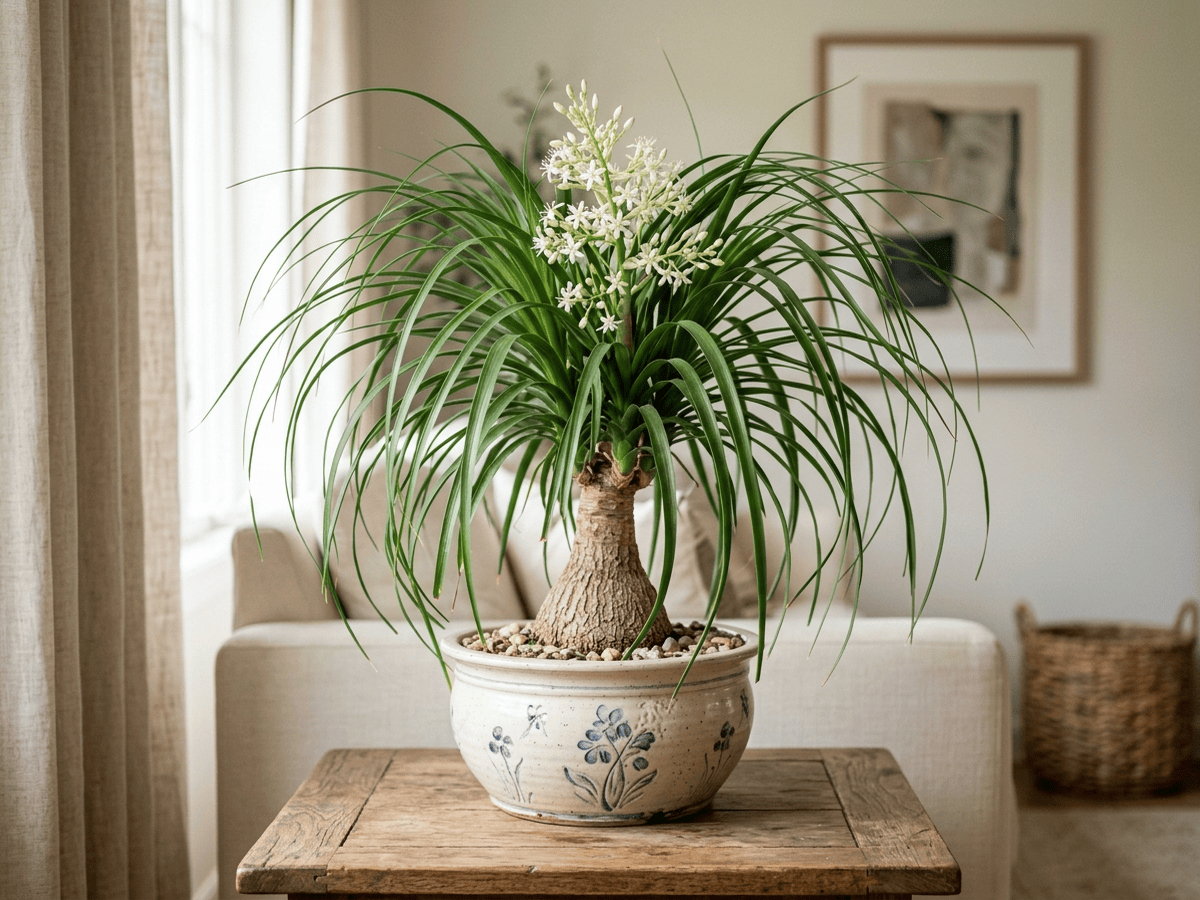 Ponytail PalmBeaucarnea recurvata
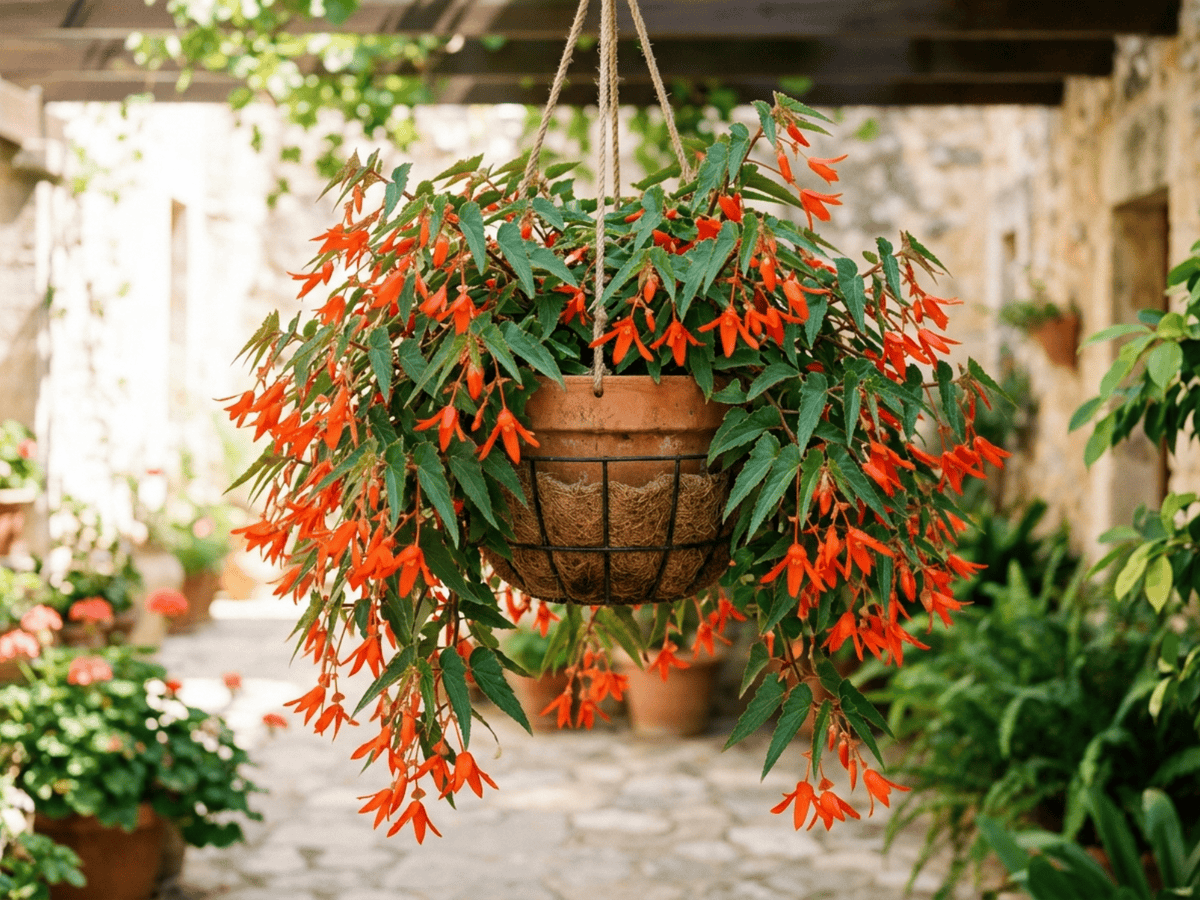 Tuberous BegoniaBegonia boliviensis
Frequently asked questions
How often should I water Sprenger's Asparagus?
In summer, water about every 4 days; in winter, about every 10 days. Adjust for heat, pot size and drainage.
How much light does Sprenger's Asparagus need?
Part shade: 2–4 hrs direct. Watch the leaves — scorching or stretching means the light needs adjusting.
Is Sprenger's Asparagus toxic to cats or dogs?
Pets Slight (Dogs Slight · Cats Slight) Educational information, not medical or veterinary advice. If exposure is suspected, contact a doctor or veterinarian.
Is Sprenger's Asparagus easy to grow?
Yes — it is considered an easy, beginner-friendly plant.
Can Sprenger's Asparagus be grown indoors?
Yes, it adapts well to indoor growing given the right light.
When does Sprenger's Asparagus bloom?
It typically blooms Jun–Aug in the Northern Hemisphere.
YardMate
Identify any plant in seconds
Snap a photo — YardMate names the plant, diagnoses problems, and reminds you when to water.
Download on the App Store