 YardMate


Oleander
Nerium oleander
Easy · Beginner friendlyAbout Oleander
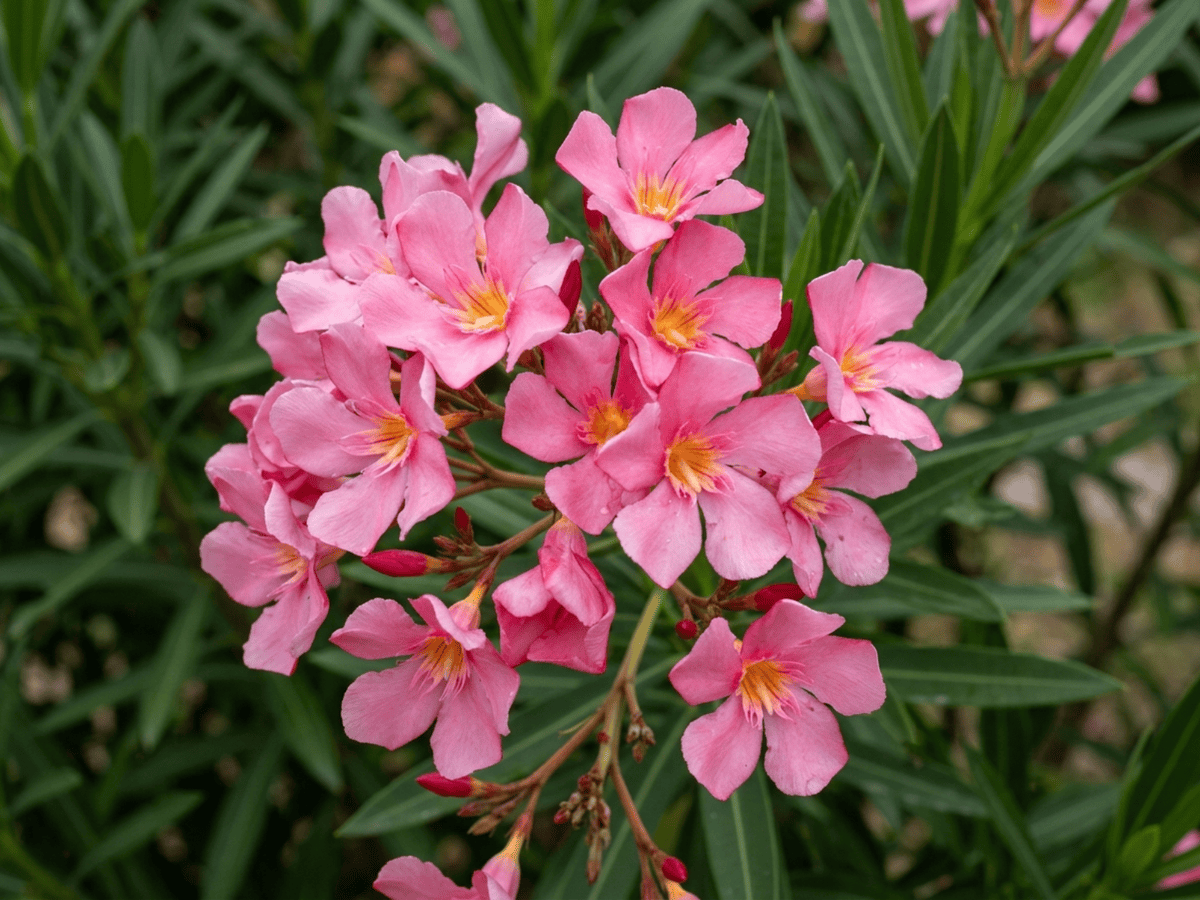
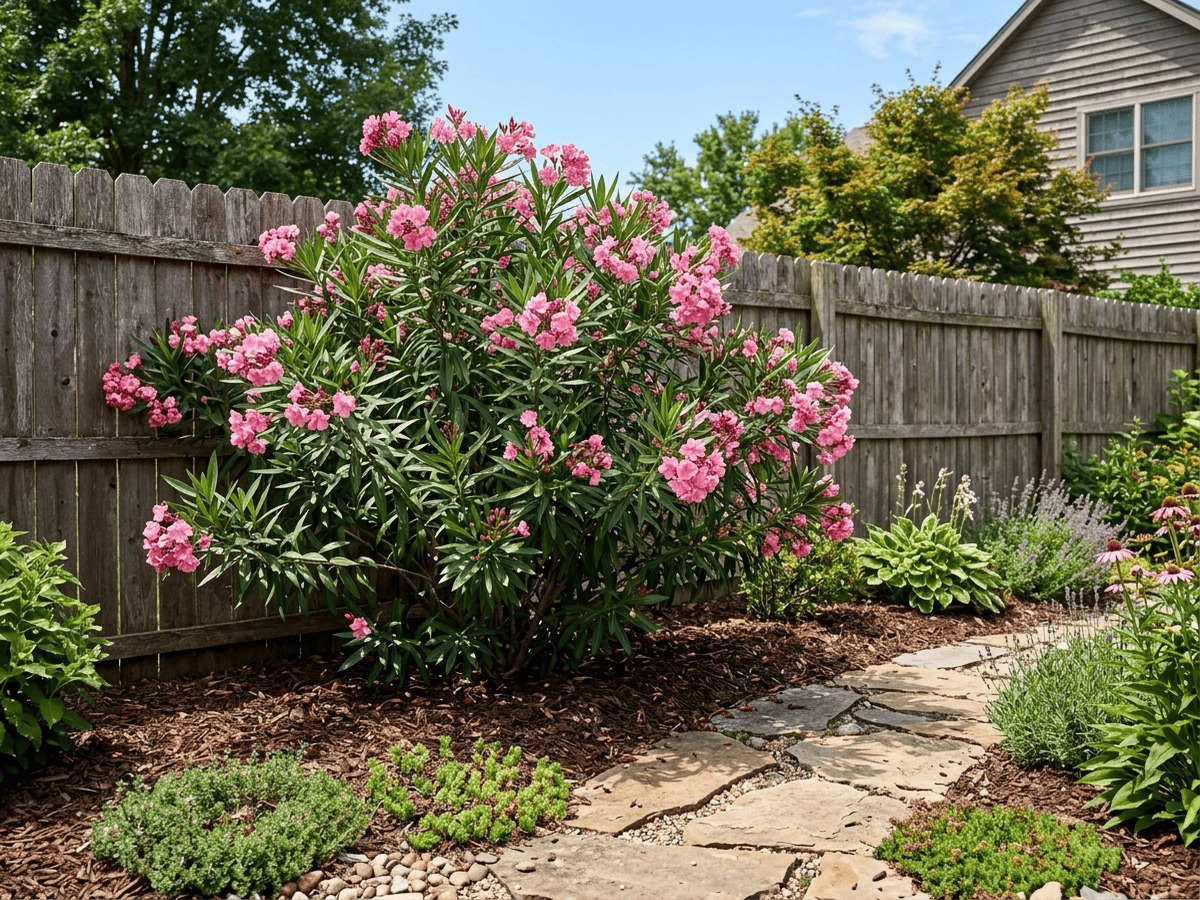
Oleander is a beautiful but deadly evergreen shrub native to the Mediterranean, Middle East, and South Asia. Growing 6 to 20 feet tall, it produces clusters of showy, funnel-shaped flowers in white, pink, red, salmon, or yellow from spring through fall — one of the longest blooming periods of any flowering shrub. The narrow, leathery, lance-shaped leaves are dark green and arranged in whorls of three. Oleander is extraordinarily tough, thriving in heat, drought, poor soil, salt spray, and urban pollution. However, it is one of the most poisonous garden plants in the world — every part contains cardiac glycosides (oleandrin and neriine) that can cause fatal heart arrhythmias. A single leaf can potentially kill a child. Even smoke from burning oleander is toxic, and honey made from oleander nectar has caused poisoning. Despite its danger, it is widely planted in warm climates for its beauty and resilience, lining highways across the American South and Mediterranean coastlines.
- Drought-tolerant
- Evergreen
- Long-blooming
How to care for Oleander
Watering
- Springevery 5 days
- Summerevery 4 days
- Fallevery 10 days
- Winterevery 21 days
Soil · Rich & loamy
- Top dressingBark mulch15%
- Main mixRich loam + compost 3:170%
- DrainageGravel15%
Use fully finished compost — fresh compost burns roots.
FERTILIZER
Balanced Feed 14-14-14
An even feed covers all three needs at once, keeping leaves, roots and blooms moving together with nothing pushed out of balance.
- Nitrogen · Leaves
- Phosphorus · Roots + Blooms
- Potassium · Strength
- Springevery 45 days
- Summerevery 45 days
At a Glance
- NativeMediterranean, Africa, Western Asia
- Height8–12 ft (2.4–3.7 m)
- Spread6–12 ft (1.8–3.7 m)
- Flower colorPink, White, Red, Yellow
- Foliage colorGreen, Variegated
- SoilLoamy, Well-drained
- LocationsYard
Bloom time
BLOOM CYCLE
Peak bloom
Mar–Nov
Profuse flower clusters in pink, red, white, or yellow from spring through fall
Fragrance
MODERATE FRAGRANCE
Sweet, sometimes apricot-like scent, stronger in evening.
Toxicity
Humans Severe · Pets Severe
oleandrin, nerioside, oleandroside, and cardiac glycosides
Severe
- All
- Ingestion
- Inhalation
EXPOSURE Eating any part of the plant. Inhaling any part of the plant.
EFFECT Cardiac glycoside poisoning: vomiting, bradycardia, cardiac arrhythmia, death. Single leaf can be fatal. Smoke from burning is also toxic.
NOTE Documented concern for humans: Cardiac glycoside poisoning: vomiting, bradycardia, cardiac arrhythmia, death. Single leaf can be fatal. Smoke from burning is also toxic.
Severe
- All
- Ingestion
EXPOSURE Eating any part of the plant.
EFFECT Vomiting, diarrhea, cardiac arrhythmia, potentially fatal.
NOTE ASPCA lists oleander as extremely toxic to dogs, cats, and horses. All parts are dangerous; do not burn, and keep away from livestock and pets.
Severe
- All
- Ingestion
EXPOSURE Eating any part of the plant.
EFFECT Same as dogs.
NOTE ASPCA lists oleander as extremely toxic to dogs, cats, and horses. All parts are dangerous; do not burn, and keep away from livestock and pets.
Educational information, not medical or veterinary advice. If exposure is suspected, contact a doctor or veterinarian.
DISTRIBUTION

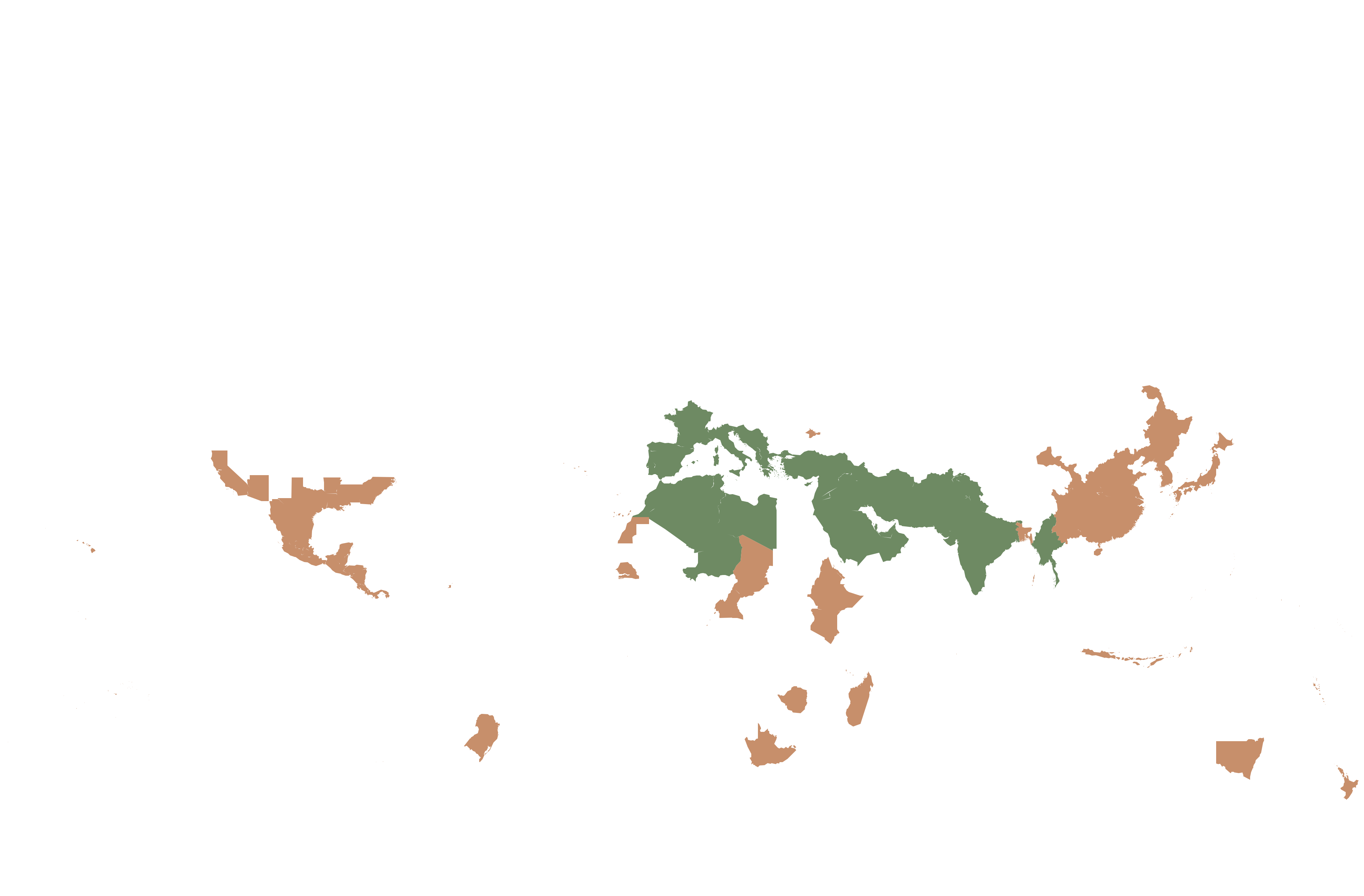
- Native
- Introduced
- Mediterranean
- Africa
- Western Asia
History
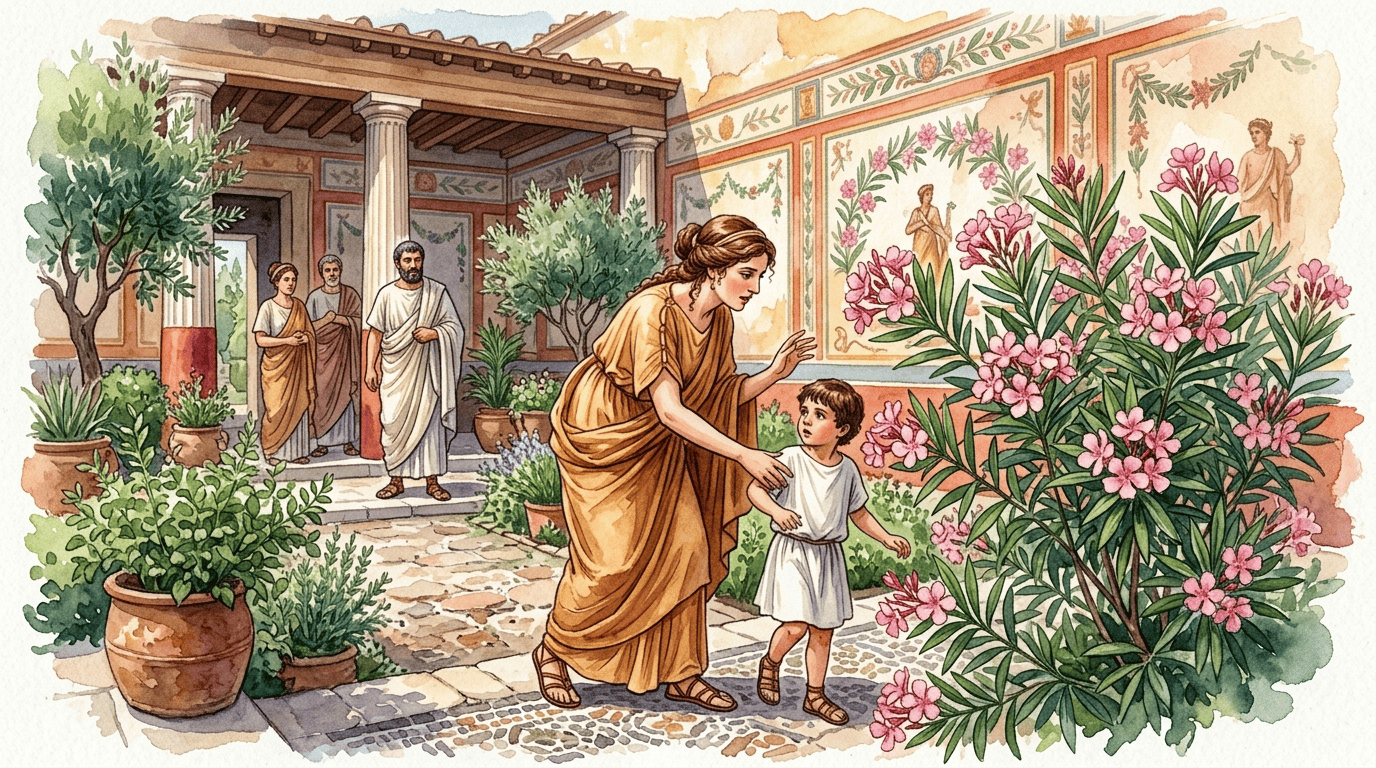
Nerium oleander is native to the Mediterranean basin, North Africa, and southwest Asia through to Iran and western China, where it grows along seasonal streambeds in Mediterranean and semi-arid climates. It has been cultivated as an ornamental for at least 3,500 years — the species was grown in ancient Egyptian, Minoan, Greek, and Roman gardens; a dried oleander wreath was found in a Pharaonic Egyptian tomb, and oleander features in the Pompeii frescoes. Because of its tolerance of heat, drought, salt, urban pollution, and poor soil, oleander has become one of the most widely planted street and highway median shrubs in Mediterranean, Californian, Southwestern US, and Australian landscapes.
However, oleander is also one of the most dangerously toxic common ornamental plants in the world: all parts contain cardiac glycosides (oleandrin, nerioside, neriantin) that disrupt heart function. Ingestion of a single leaf has caused adult human deaths; burning the wood releases toxic smoke; honey from oleander nectar is toxic; and livestock have died from small amounts of leaves.
A persistent and false urban legend claims that scouts or hikers have been poisoned by using oleander sticks to roast marshmallows or hot dogs — this specific scenario is probably apocryphal, but the underlying toxicity is real. The plant should not be burned, composted near grazing animals, or left where children and pets can access fallen leaves.
Symbolism & meaning
What It Symbolizes
Oleander is Mediterranean glamour with a warning shadow. Glossy leaves and relentless pink, white, or red flowers make it look like the easiest shrub in the world, blooming beside roads and sea walls in fierce heat. Its symbolism is dangerous beauty: dazzling, drought-proof, and never to be underestimated.
- Vigilance — the deadly beauty demands caution and careful awareness
- Resilience — Hiroshima's flower, first to bloom after the atomic bomb, symbolizing endurance
Where the Name Comes From
'Nerium' derives from the Greek 'neros' (water), as the plant often grows near streams despite being drought-tolerant. 'Oleander' may come from Latin 'olea' (olive) due to the similar leaf shape.
Uses & Fun Facts
- Long-blooming pink, white, or red flowers across hot Mediterranean summers
- Dense evergreen privacy screen for highway medians and seaside plantings
- Heat- and salt-tolerant flowering shrub for arid courtyards
Related plants
Plants with similar care
 Chinese AbeliaAbelia chinensis
 Fragrant AbeliaAbelia mosanensis
 Large-Flowered AbeliaAbelia uniflora
 Glossy AbeliaAbelia x grandiflora
Frequently asked questions
How often should I water Oleander?
In summer, water about every 4 days; in winter, about every 21 days. Adjust for heat, pot size and drainage.
How much light does Oleander need?
Full sun: 6+ hrs direct. Watch the leaves — scorching or stretching means the light needs adjusting.
Is Oleander toxic to cats or dogs?
Pets Severe (Dogs Severe · Cats Severe) Educational information, not medical or veterinary advice. If exposure is suspected, contact a doctor or veterinarian.
Is Oleander easy to grow?
Yes — it is considered an easy, beginner-friendly plant.
When does Oleander bloom?
It typically blooms Mar–Nov in the Northern Hemisphere.
YardMate
Identify any plant in seconds
Snap a photo — YardMate names the plant, diagnoses problems, and reminds you when to water.
Download on the App Store