 YardMate


Large-Flowered Orlaya
Orlaya grandiflora
Easy · Beginner friendlyAbout Large-Flowered Orlaya
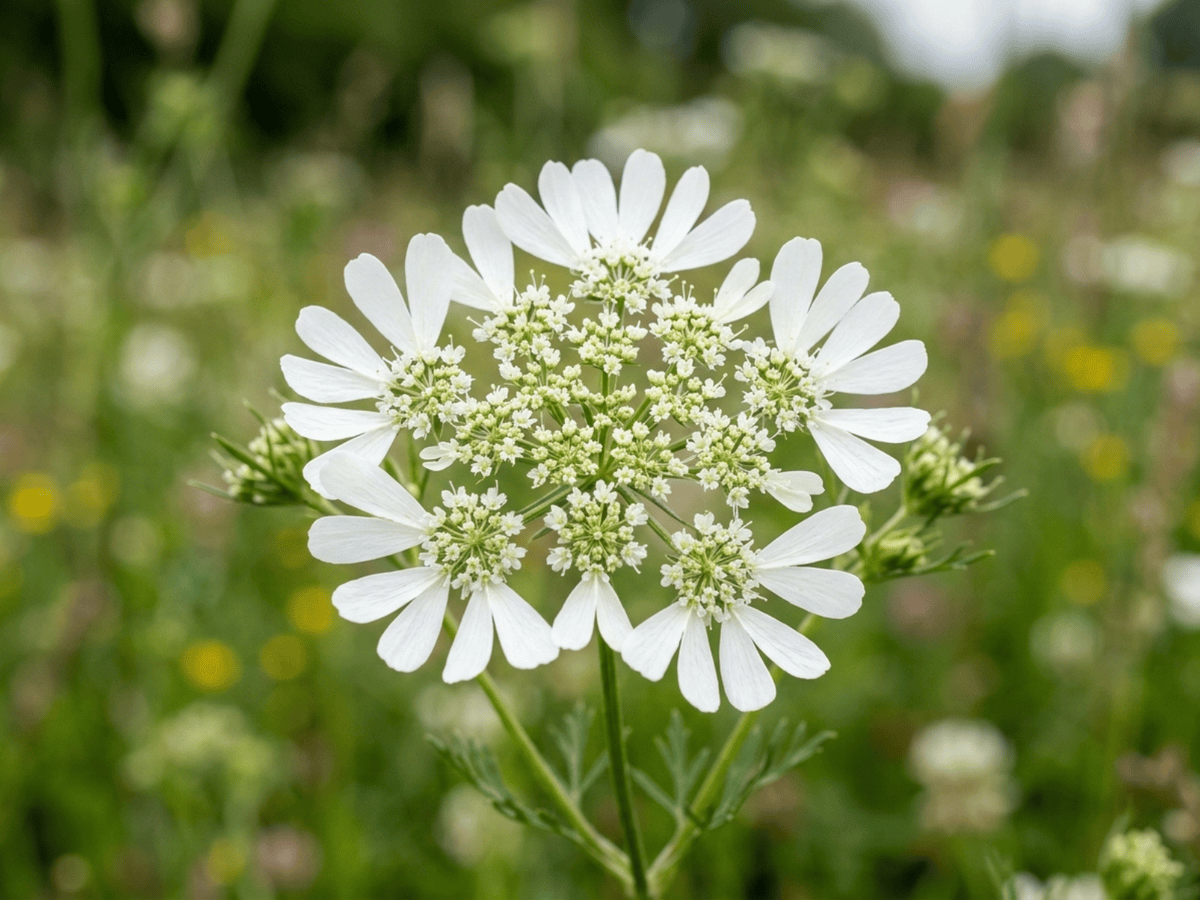
White Lace Flower is a cool-season annual from the Mediterranean, 18–24 inches tall, bearing flat, umbrella-like clusters of lacy white flowers reminiscent of Queen Anne's lace but more refined. A top-rated American cutting-garden flower for its long stems, clean white blooms, and feathery foliage. Self-seeds prolifically. Thrives in cool spring weather; fades in summer heat of the South. Widely grown by flower farmers in the PNW, Northeast, and California coast.
- Cut-flower
- Pollinator-friendly
How to care for Large-Flowered Orlaya
Watering
- Springevery 5 days
- Summerevery 4 days
- Fallevery 7 days
- Winterpause watering
Soil · Well-draining
- Top dressingPine bark mulch10%
- Main mixPotting soil + perlite 2:170%
- DrainageLECA / gravel20%
Never skip the drainage layer — standing water is the top cause of root rot.
FERTILIZER
Balanced Feed 14-14-14
An even feed covers all three needs at once, keeping leaves, roots and blooms moving together with nothing pushed out of balance.
- Nitrogen · Leaves
- Phosphorus · Roots + Blooms
- Potassium · Strength
- Springevery 30 days
- Summerevery 30 days
At a Glance
- NativeMediterranean, Europe
- Height1.5–2.5 ft (0.5–0.8 m)
- Spread1–1.5 ft (0.3–0.5 m)
- Flower colorWhite
- Foliage colorGreen
- SoilLoamy, Well-drained, Alkaline
- LocationsYard · Balcony
Bloom time
BLOOM CYCLE
Peak bloom
May–Jun
Lacy white umbels late spring to early summer
Fragrance
LIGHT FRAGRANCE
The flowers have a mild herbaceous scent.
Toxicity
Toxicity unknown
None reported
Unknown
EXPOSURE Unspecified plant material.
EFFECT Toxic effects are not specified.
NOTE Toxicity for humans is not well documented; use caution until verified.
Unknown
EXPOSURE Unspecified plant material.
EFFECT Toxic effects are not specified.
NOTE Toxicity for dogs is not well documented; use caution until verified.
Unknown
EXPOSURE Unspecified plant material.
EFFECT Toxic effects are not specified.
NOTE Toxicity for cats is not well documented; use caution until verified.
Educational information, not medical or veterinary advice. If exposure is suspected, contact a doctor or veterinarian.
DISTRIBUTION

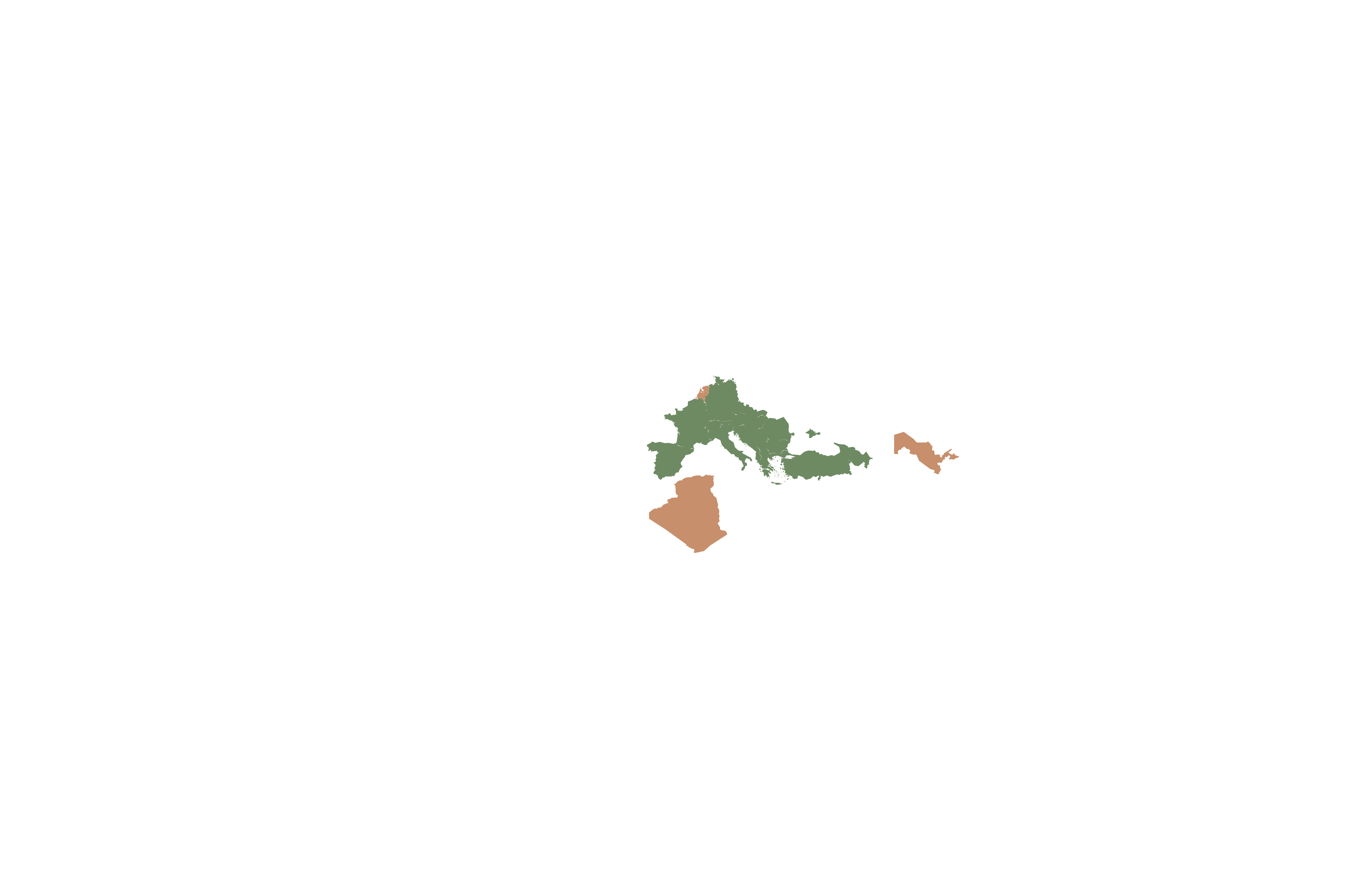
- Native
- Introduced
- Mediterranean
- Europe
History
Native to southern Europe and the Mediterranean basin, Orlaya grandiflora was historically a weed of calcareous grain fields before modern herbicides reduced its presence. The genus was named by German botanist Johann Konrad Wilhelm Hoffmann in 1814 to honor Johann Orlay. Though known to 19th-century flora writers, it was rarely cultivated ornamentally until British and Dutch cut-flower growers discovered its superior vase life compared to Ammi majus.
Seed firms began offering it commercially in the 1990s, and it rapidly spread through the cottage garden revival led by designers like Sarah Raven. The plant is now a staple of naturalistic meadow plantings and wedding floristry, prized for its pure white lace-cap umbels.
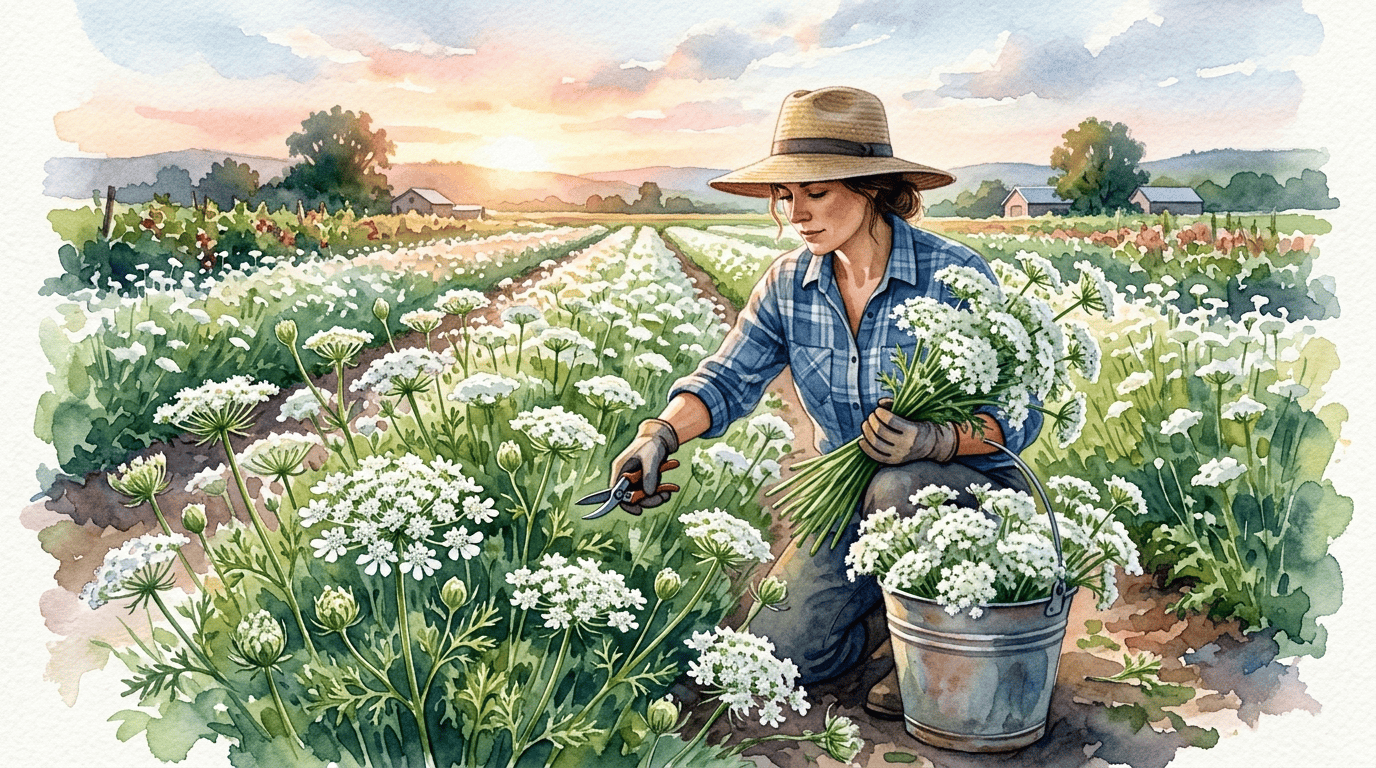
Though European-native, Orlaya grandiflora was popularized in American horticulture in the 2000s by the small-farm cut-flower movement (Floret Farm and others), becoming one of the most sought-after specialty spring cut flowers in US farmers' markets and DIY wedding bouquets.
Symbolism & meaning
What It Symbolizes
Large-Flowered Orlaya carries delicacy, its lace-like flat-topped blooms evoking the refinement of Victorian collars and old summer linen. The pure white petals also represent purity, an antique register that suits its cottage-garden style perfectly. A cool-season annual that seems to belong more to a watercolor painting than to a modern bed, in the best possible way.
- Delicacy — lace-like blooms evoke refinement
- Purity — pure white flowers
Where the Name Comes From
Genus honors Estonian botanist Johann Orlay; 'grandiflora' means 'large-flowered'.
Uses & Fun Facts
- Lacy white umbels prized in romantic wedding bouquets
- Open umbels feed hoverflies and small native bees
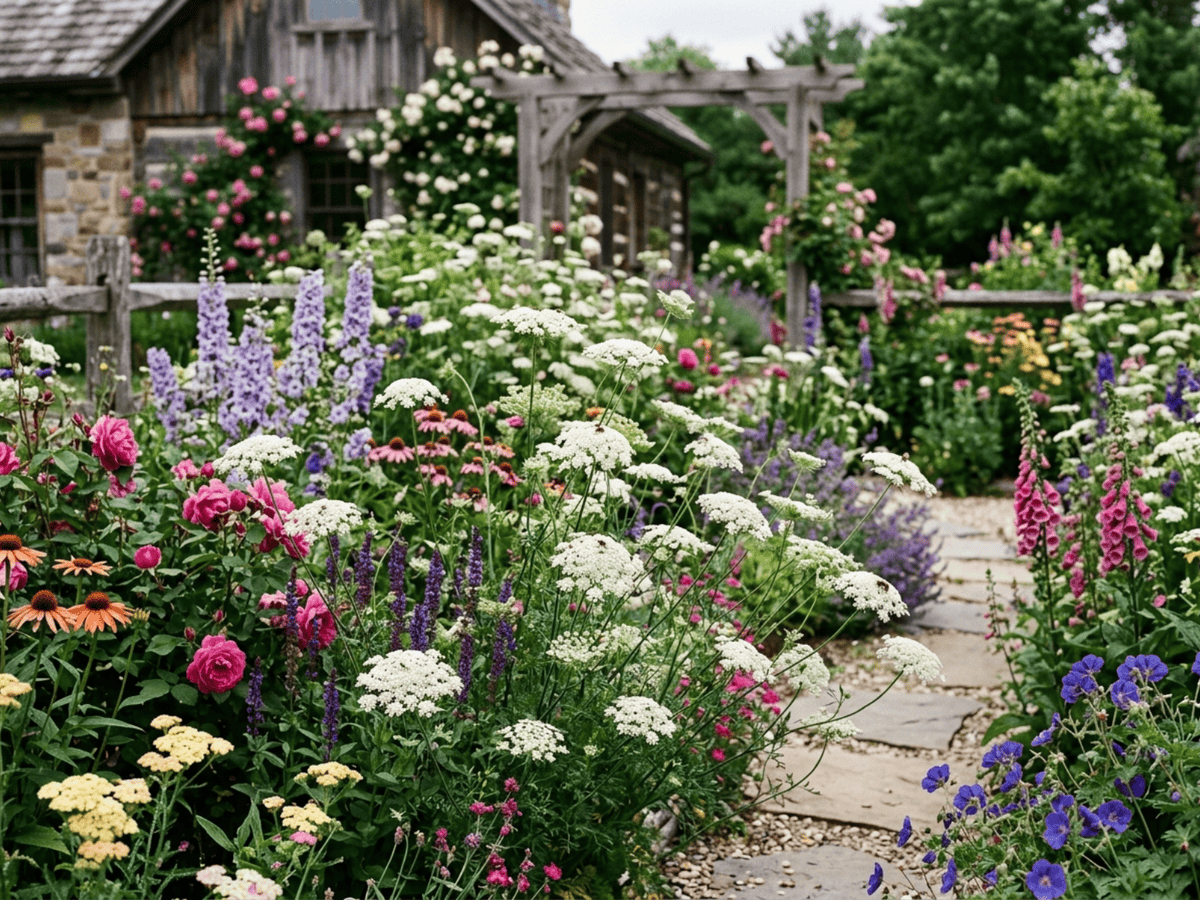
- Cottage-garden annual resembling a refined Queen Anne's lace
Related plants
Plants with similar care
 Chinese AbeliaAbelia chinensis
 Fragrant AbeliaAbelia mosanensis
 Large-Flowered AbeliaAbelia uniflora
 Glossy AbeliaAbelia x grandiflora
Frequently asked questions
How often should I water Large-Flowered Orlaya?
Water about every 5 days during the growing season, and always let excess water drain away.
How much light does Large-Flowered Orlaya need?
Full sun: 6+ hrs direct. Watch the leaves — scorching or stretching means the light needs adjusting.
Is Large-Flowered Orlaya toxic to cats or dogs?
Pets Unknown (Dogs Unknown · Cats Unknown) Educational information, not medical or veterinary advice. If exposure is suspected, contact a doctor or veterinarian.
Is Large-Flowered Orlaya easy to grow?
Yes — it is considered an easy, beginner-friendly plant.
When does Large-Flowered Orlaya bloom?
It typically blooms May–Jun in the Northern Hemisphere.
YardMate
Identify any plant in seconds
Snap a photo — YardMate names the plant, diagnoses problems, and reminds you when to water.
Download on the App Store