 YardMate


Japanese Pachysandra
Pachysandra terminalis
Easy · Beginner friendlyAbout Japanese Pachysandra
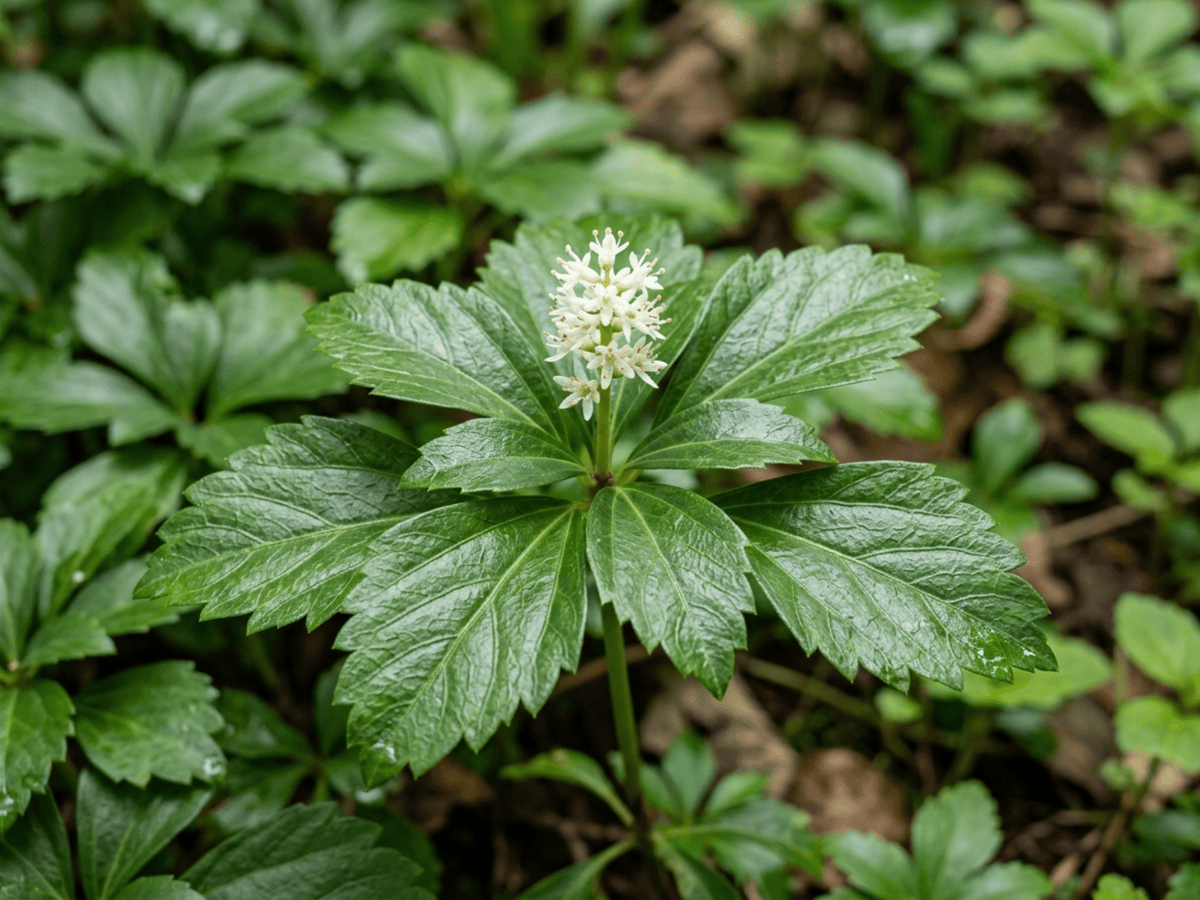
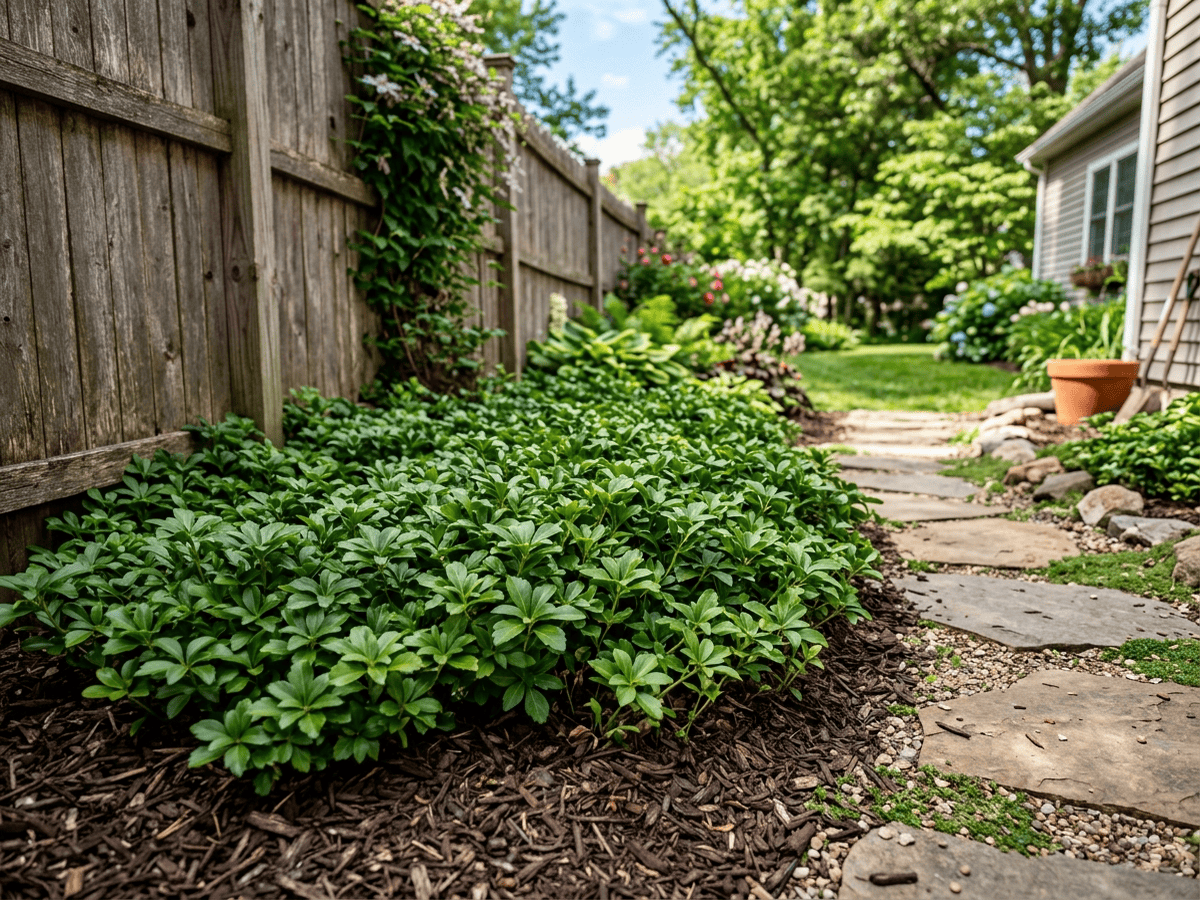
Pachysandra terminalis, Japanese spurge, is a dense evergreen groundcover native to Japan and China. It forms a uniform carpet of whorled, dark-green leathery leaves about 20–30 centimeters tall, making it one of the most reliable choices for deep shade under trees where grass and most other plants refuse to grow. Small white flower spikes appear in early spring, fragrant but inconspicuous. The plant spreads steadily by underground rhizomes, filling in over two to three years to create a maintenance-free living mulch. It is remarkably shade-tolerant, thriving under dense canopies of maples, oaks, and conifers. Once established, it requires virtually no care — no mowing, no fertilizing, and minimal watering. It performs poorly in full sun and hot, humid climates where leaf scorch and stem blight can become problematic. The cultivar 'Green Carpet' is more compact and disease-resistant than the species.
- Shade-tolerant
- Low-maintenance
- Evergreen
- Groundcover
How to care for Japanese Pachysandra
Watering
- Springevery 7 days
- Summerevery 5 days
- Fallevery 14 days
- Winterevery 30 days
Soil · Acidic · pH 4.5–6
- Top dressingPine needle mulch10%
- Main mixAcid-lover mix + peat 3:175%
- DrainageGravel15%
Never add lime or wood ash — it cancels out the acidity.
FERTILIZER
- Springevery 60 days
At a Glance
- NativeEast Asia
- Height0.5–1 ft (0.2–0.3 m)
- Spread1–2 ft (0.3–0.6 m)
- Flower colorWhite
- Foliage colorGreen, Variegated
- SoilMoisture-retentive, Loamy, Acidic
- LocationsYard
Bloom time
BLOOM CYCLE
Peak bloom
Mar–May
Small fragrant white spikes in early spring; ornamental value is in the foliage
Fragrance
LIGHT FRAGRANCE
Faint sweet scent from flowers in early spring.
Toxicity
Humans Slight · Pets Slight
pachysandrine alkaloids
Slight
- Leaf
- Stem
- Ingestion
EXPOSURE Eating leaves and stems.
EFFECT Generally low concern and contains steroidal alkaloids in small amounts.
NOTE Documented concern for humans: Generally low concern and contains steroidal alkaloids in small amounts.
Slight
- Leaf
- Ingestion
EXPOSURE Eating leaves.
EFFECT Mild GI upset possible.
NOTE Not specifically listed by ASPCA. Generally considered low-risk in home settings.
Slight
- Leaf
- Ingestion
EXPOSURE Eating leaves.
EFFECT Mild GI upset possible.
NOTE Not specifically listed by ASPCA. Generally considered low-risk in home settings.
Educational information, not medical or veterinary advice. If exposure is suspected, contact a doctor or veterinarian.
DISTRIBUTION

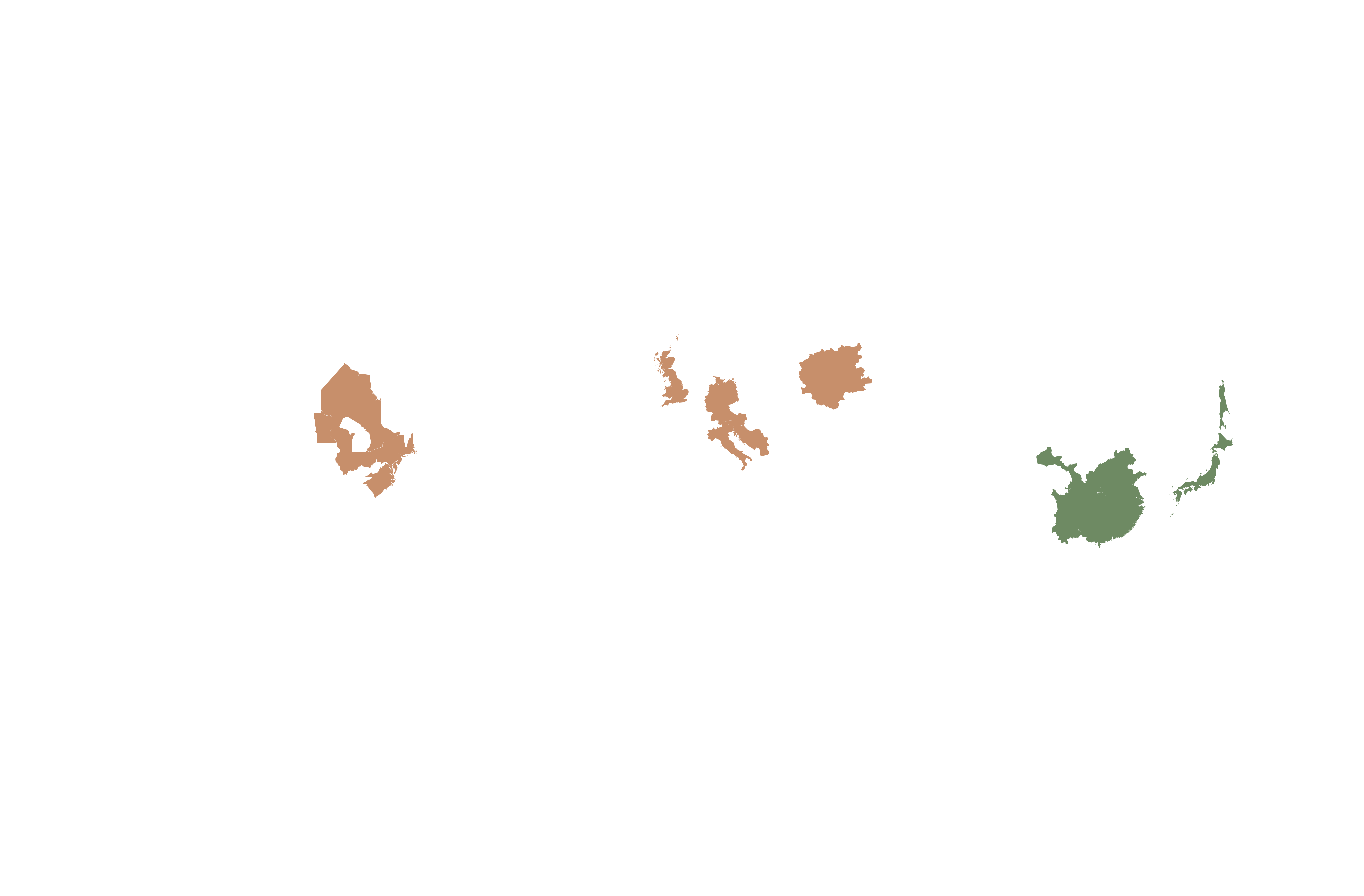
- Native
- Introduced
- East Asia
History
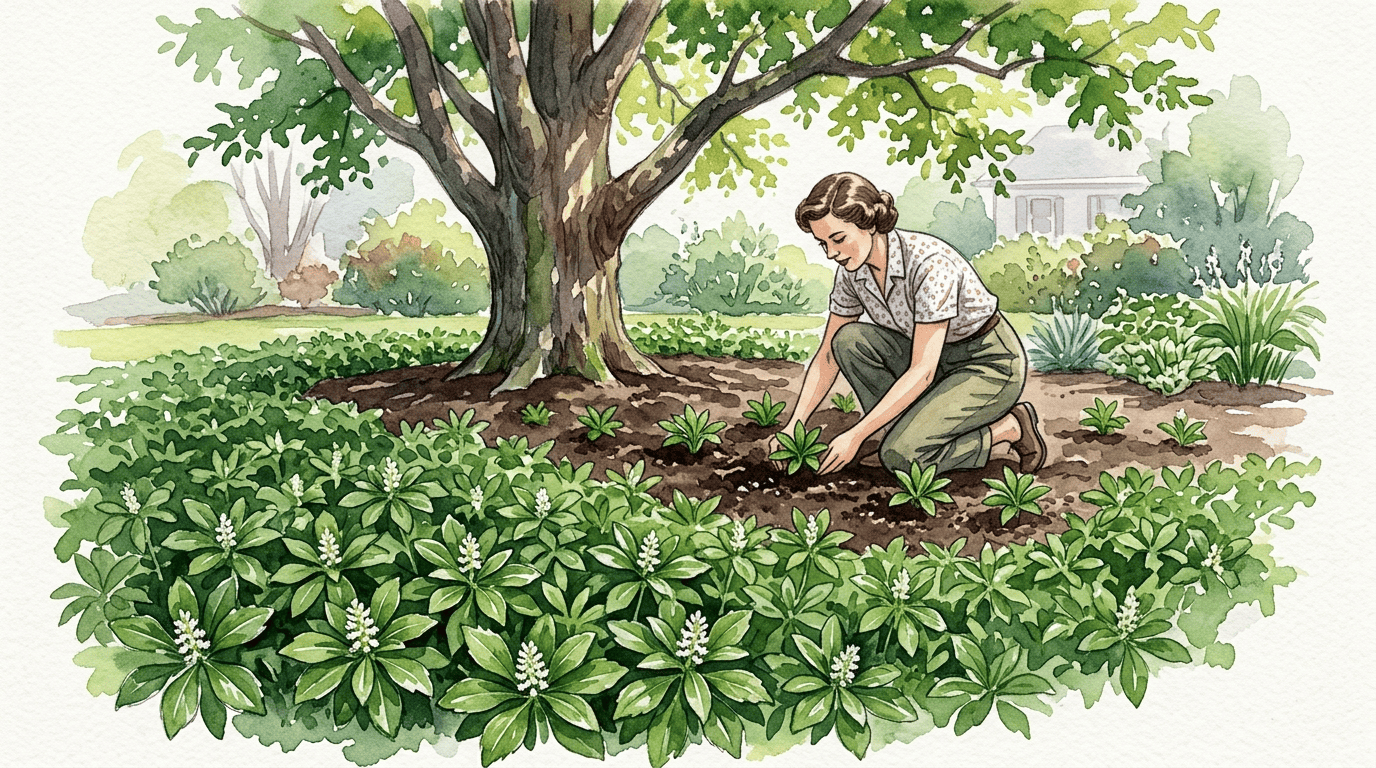
Pachysandra terminalis is native to Japan, Korea, and central and eastern China, growing as an evergreen groundcover of temperate forest floors. It was introduced to American horticulture by Charles Sprague Sargent of the Arnold Arboretum in or around 1882, and from the 1920s through the 2000s it became the dominant evergreen groundcover of eastern and midwestern US suburban shade gardens — a carpet of glossy whorled leaves that tolerates dense shade, poor soil, and dry root competition under trees where almost nothing else grows. The 'Green Sheen' and 'Silver Edge' cultivars diversified the look.
Since about 2005, however, massive plantings across the US Northeast and Midwest have been hit by Volutella blight (Volutella pachysandricola), a fungal disease that causes stem and leaf die-back, particularly in dense stands weakened by drought or winter damage. Horticultural recommendations now emphasize cultural preventive care (thinning, better air circulation, avoiding overhead irrigation) and landscape designers increasingly specify diverse groundcover mixes rather than monocultures. The native North American Pachysandra procumbens is more resistant but less vigorous.
Small white flower spikes appear in early spring but are inconspicuous. Pachysandra has been cultivated in Japanese temple gardens for centuries, valued for its ability to create serene green carpets beneath forest trees. In traditional Japanese garden design, pachysandra represents the moss-like ground plane that creates visual calm beneath specimen trees.
Symbolism & meaning
What It Symbolizes
Japanese Pachysandra suggests Steadfastness — an unchanging evergreen carpet that holds its color and form through every season, asking almost nothing in return. Its Humility is in its preferred place: deep shade beneath trees where lawn refuses to grow. A plant that quietly solves the hardest corner of the garden without complaint.
- Steadfastness — its unchanging evergreen presence symbolizes reliability and constancy
- Humility — thrives quietly in deep shade, asking for nothing in return
Where the Name Comes From
Pachysandra from Greek 'pachys' (thick) and 'aner' (man/stamen), referring to the thick filaments of the male flowers. Terminalis means 'at the tip', describing the leaf arrangement.
Uses & Fun Facts
- Evergreen carpet thrives in deep dry shade under trees
- Glossy whorled leaves form tidy uniform mat
Related plants
Plants with similar care
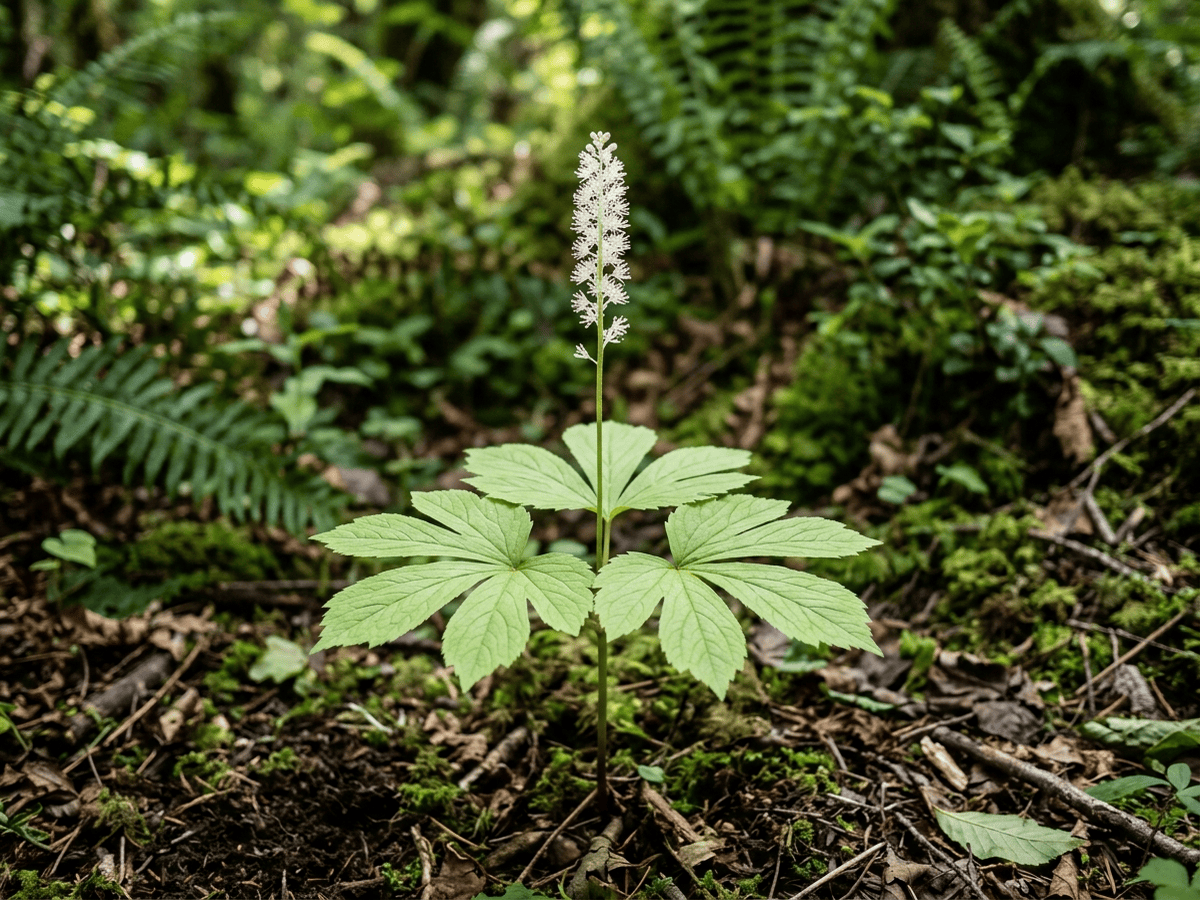 Vanilla LeafAchlys triphylla
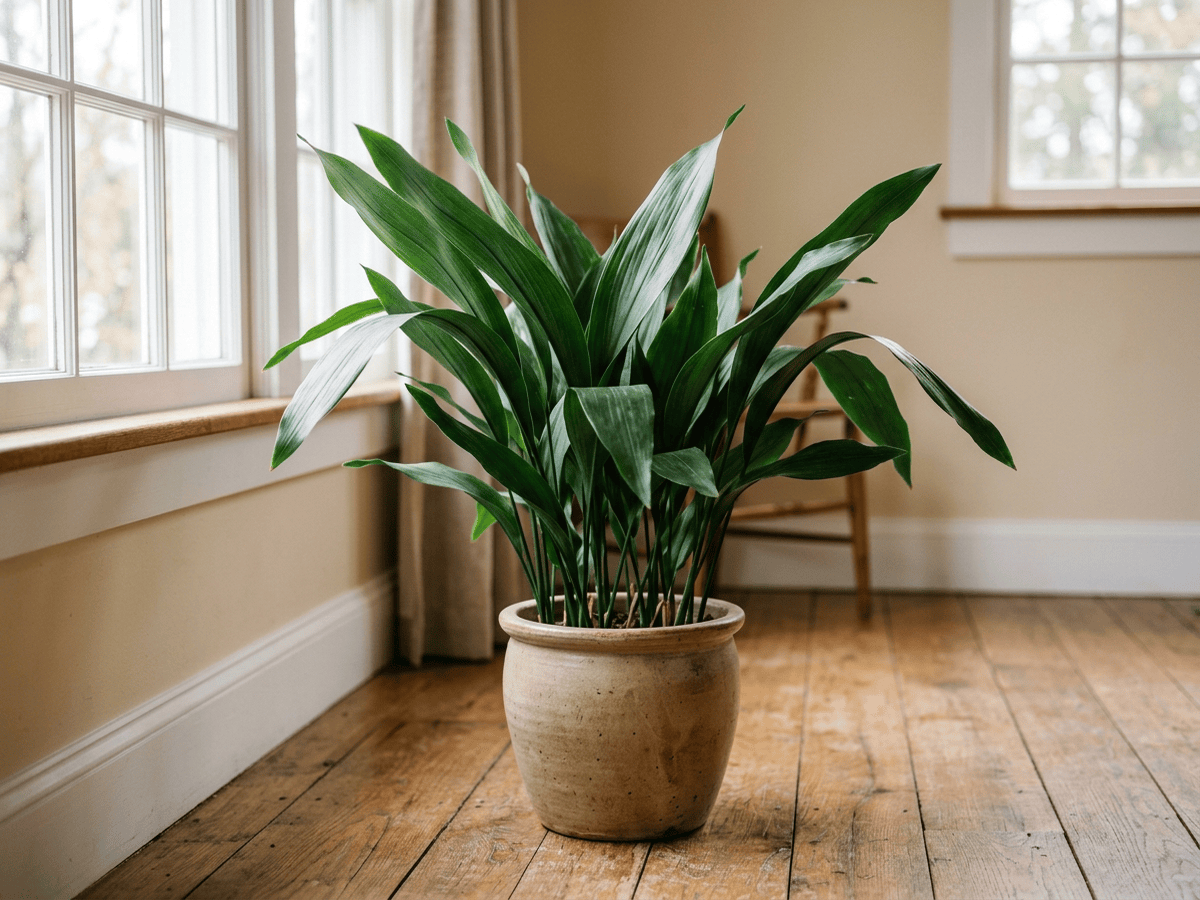 Cast-Iron PlantAspidistra elatior
 Chinese AucubaAucuba chinensis
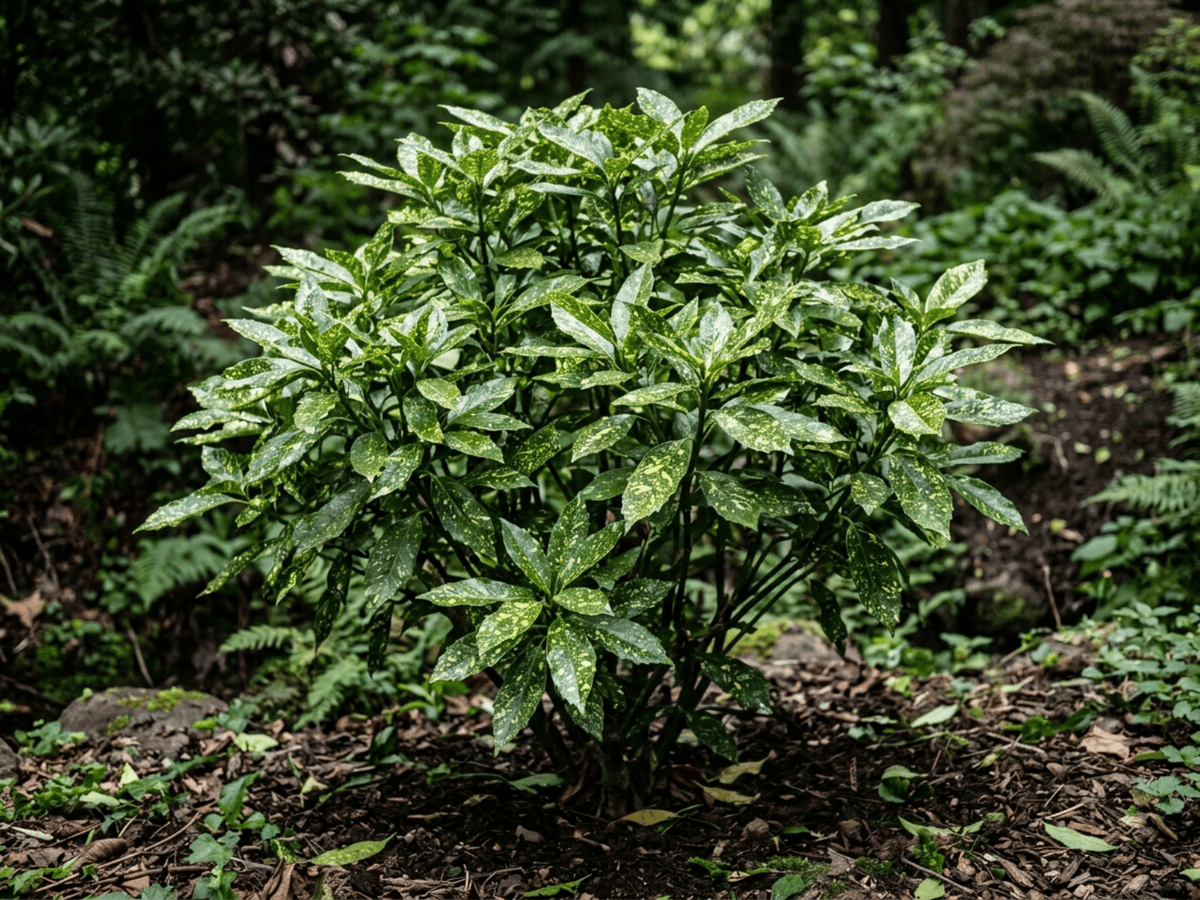 Japanese AucubaAucuba japonica
Frequently asked questions
How often should I water Japanese Pachysandra?
In summer, water about every 5 days; in winter, about every 30 days. Adjust for heat, pot size and drainage.
How much light does Japanese Pachysandra need?
Full shade: <2 hrs direct. Watch the leaves — scorching or stretching means the light needs adjusting.
Is Japanese Pachysandra toxic to cats or dogs?
Pets Slight (Dogs Slight · Cats Slight) Educational information, not medical or veterinary advice. If exposure is suspected, contact a doctor or veterinarian.
Is Japanese Pachysandra easy to grow?
Yes — it is considered an easy, beginner-friendly plant.
When does Japanese Pachysandra bloom?
It typically blooms Mar–May in the Northern Hemisphere.
YardMate
Identify any plant in seconds
Snap a photo — YardMate names the plant, diagnoses problems, and reminds you when to water.
Download on the App Store