 YardMate

Chinese Aucuba
Aucuba chinensis
Easy · Beginner friendlyAbout Chinese Aucuba
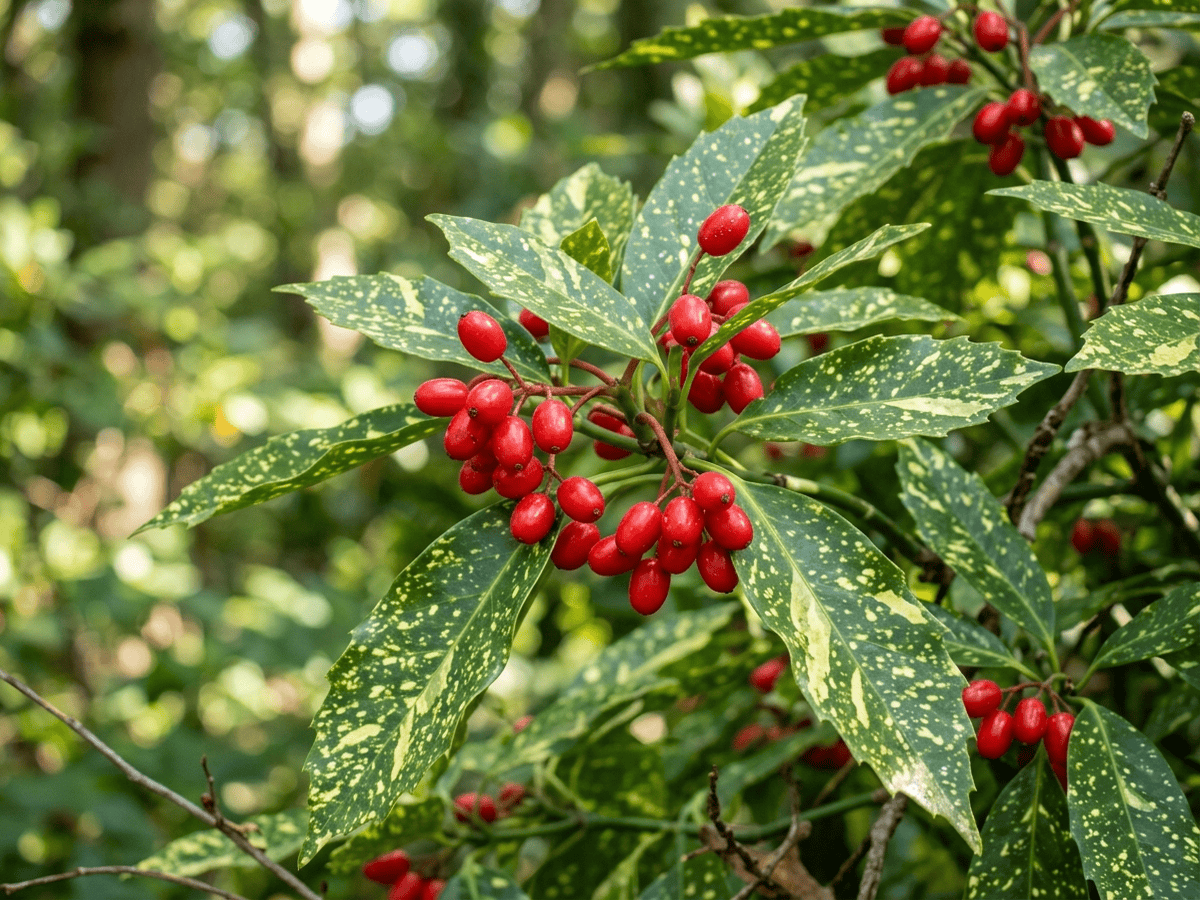
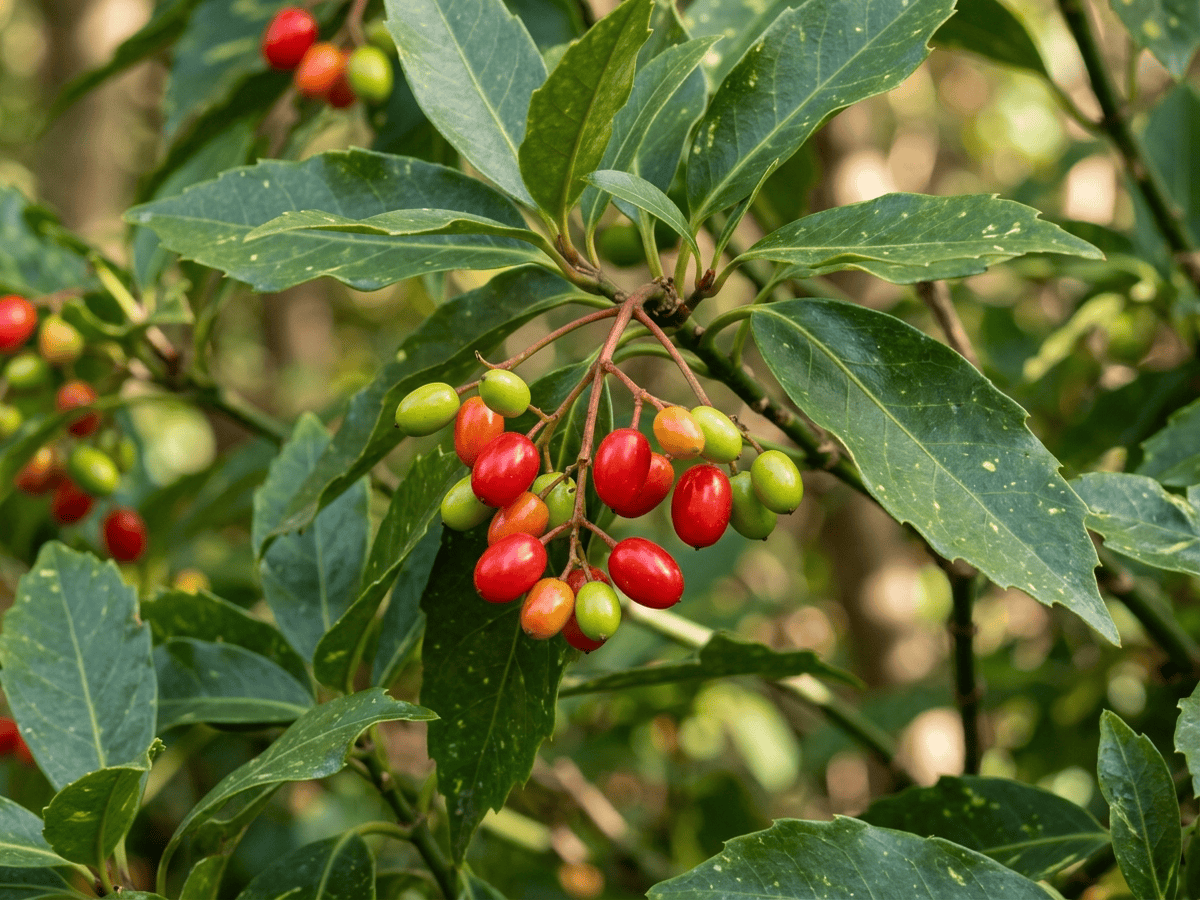
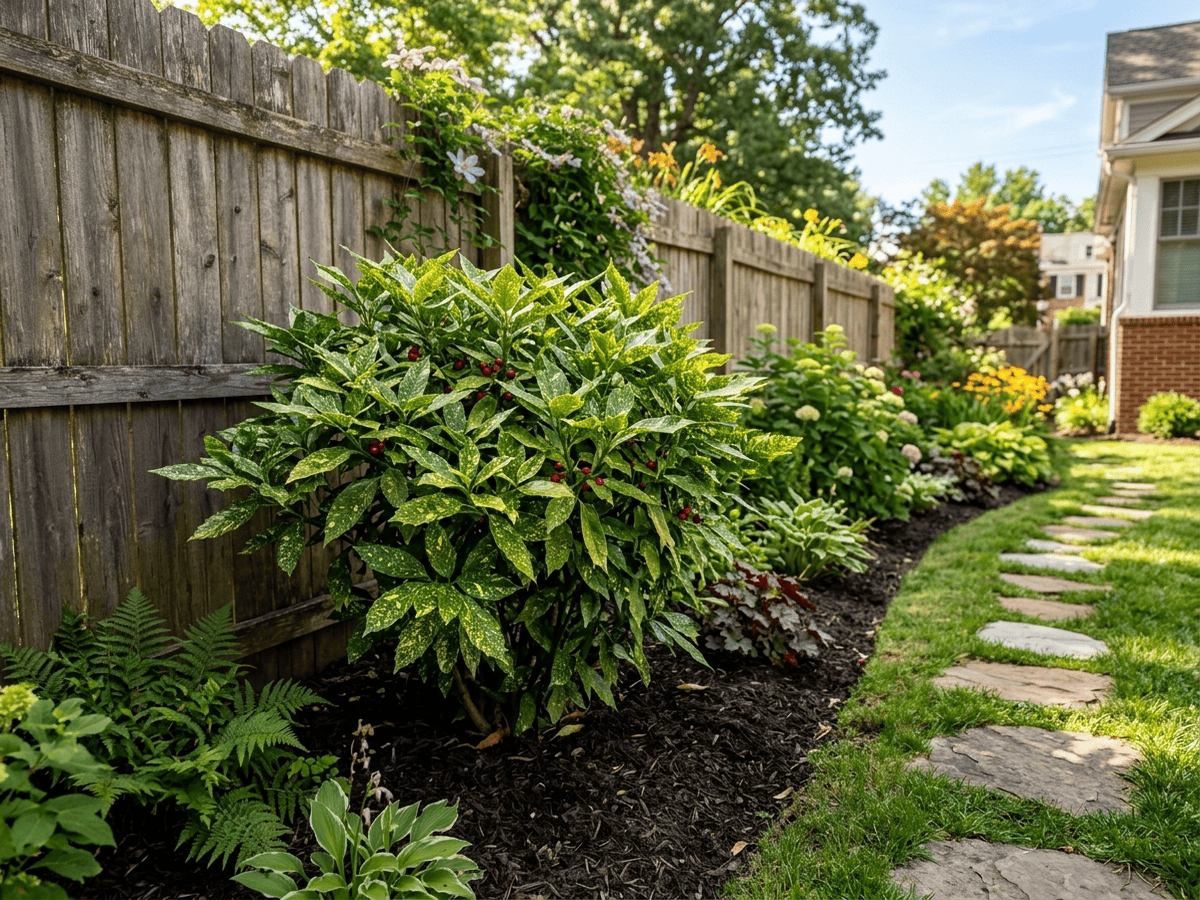
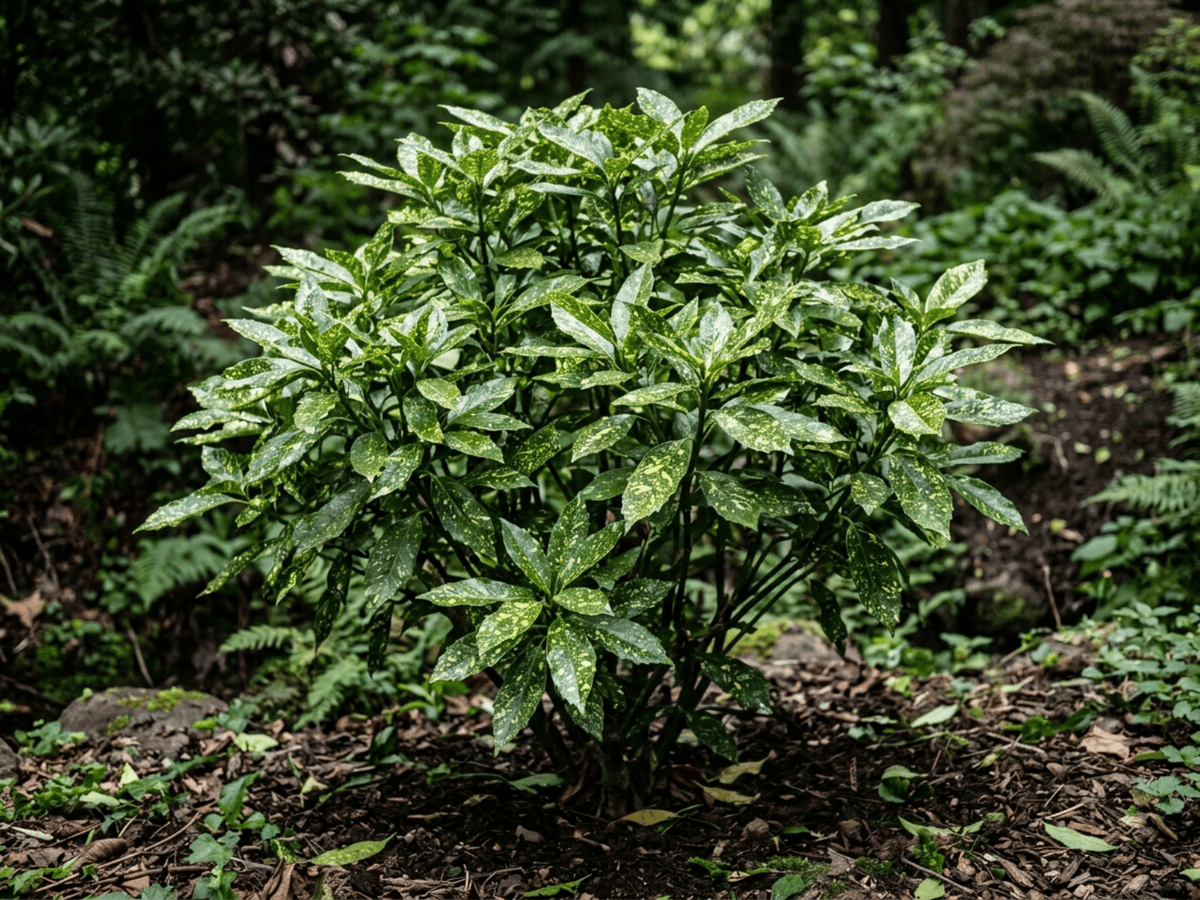
Chinese Aucuba is an evergreen shrub reaching 6-10 feet with large glossy dark green leaves and a bushy upright form. Smaller and more refined than the common Japanese Aucuba, female plants produce bright red berries in fall if a male is nearby. An exceptional plant for deep shade, it thrives where most broadleaf evergreens fail, bringing glossy year-round green to dark corners of the Southern US garden.
- Shade-tolerant
- Drought-tolerant
- Evergreen
How to care for Chinese Aucuba
Watering
- Springevery 7 days
- Summerevery 5 days
- Fallevery 10 days
- Winterevery 21 days
Soil · Well-draining
- Top dressingPine bark mulch10%
- Main mixPotting soil + perlite 2:170%
- DrainageLECA / gravel20%
Never skip the drainage layer — standing water is the top cause of root rot.
FERTILIZER
Balanced Feed 14-14-14
An even feed covers all three needs at once, keeping leaves, roots and blooms moving together with nothing pushed out of balance.
- Nitrogen · Leaves
- Phosphorus · Roots + Blooms
- Potassium · Strength
- Springevery 30 days
At a Glance
- NativeEast Asia
- Height6–10 ft (1.8–3 m)
- Spread4–8 ft (1.2–2.4 m)
- Foliage colorDark-green, Green, Yellow
- Fruit colorRed
- SoilWell-drained, Loamy, Moisture-retentive
- LocationsYard
Toxicity
Humans Slight · Pets Slight
aucubin
Slight
- Fruit
- Leaf
- Ingestion
EXPOSURE Eating fruit and leaves.
EFFECT Mild GI upset; berries not commonly toxic but not edible.
NOTE Aucubin is a mild iridoid glycoside; can cause GI upset but not seriously toxic at normal exposure.
Slight
- Fruit
- Leaf
- Ingestion
EXPOSURE Eating fruit and leaves.
EFFECT Mild GI upset.
NOTE Aucubin is a mild iridoid glycoside; can cause GI upset but not seriously toxic at normal exposure.
Slight
- Fruit
- Leaf
- Ingestion
EXPOSURE Eating fruit and leaves.
EFFECT Mild GI upset.
NOTE Aucubin is a mild iridoid glycoside; can cause GI upset but not seriously toxic at normal exposure.
Educational information, not medical or veterinary advice. If exposure is suspected, contact a doctor or veterinarian.
DISTRIBUTION


- Native
- Introduced
- East Asia
History

Aucuba chinensis is native to southern China (Guangdong, Guangxi, Hainan, Yunnan, Sichuan, Guizhou), Taiwan, northern Laos, and northern Vietnam. English botanist George Bentham formally described the species in 1861. Compared with the widely cultivated and cold-hardy A. japonica, A. chinensis has narrower, more lance-shaped, glossier leaves and a somewhat more tender constitution—hardy only to about zone 8.
Like its Japanese relative it is dioecious, with male and female flowers on separate plants. In deep shade under moist tropical-subtropical conditions it grows into a shapely 3-meter evergreen shrub with bold exotic-looking foliage—useful for creating a tropical-effect understory in frost-free parts of the southeastern US, Gulf Coast, California, and the Mediterranean. Female plants produce clusters of bright red berries, though fruit set can be unreliable.
The species is generally uncommon in cultivation, its more hardy Japanese relative dominating the North American trade. Aucuba was among the first Chinese plants introduced to Europe (1783) by James Gordon. Native to central and southern China where it grows in forest understory. Introduced to Western horticulture in the 19th century, it remains less well-known in the US than its Japanese cousin but is gaining popularity among Southern gardeners seeking refined deep-shade evergreens.
Symbolism & meaning
What It Symbolizes
The Chinese Aucuba is a study in Reliability — broad glossy leaves holding their shine where ferns sulk and other evergreens fail. Its Subtle elegance belongs to the dim corners of a garden, places overlooked by sun and admiration alike. It rewards shaded patience, lighting dark spaces with steady, unflashy grace.
- Reliability — thrives where other evergreens fail
- Subtle elegance — glossy leaves light up dark corners
Where the Name Comes From
The name Chinese Aucuba points to China. Genus from Japanese 'aokiba' (green-leaf tree); 'chinensis' means of China.
Uses & Fun Facts
- Glossy evergreen leaves form dense shade-tolerant screens
- Variegated foliage brightens deep-shade plantings year-round
- Tolerates pots in entryways and dim courtyards
Related plants
More Aucuba plants
Plants with similar care
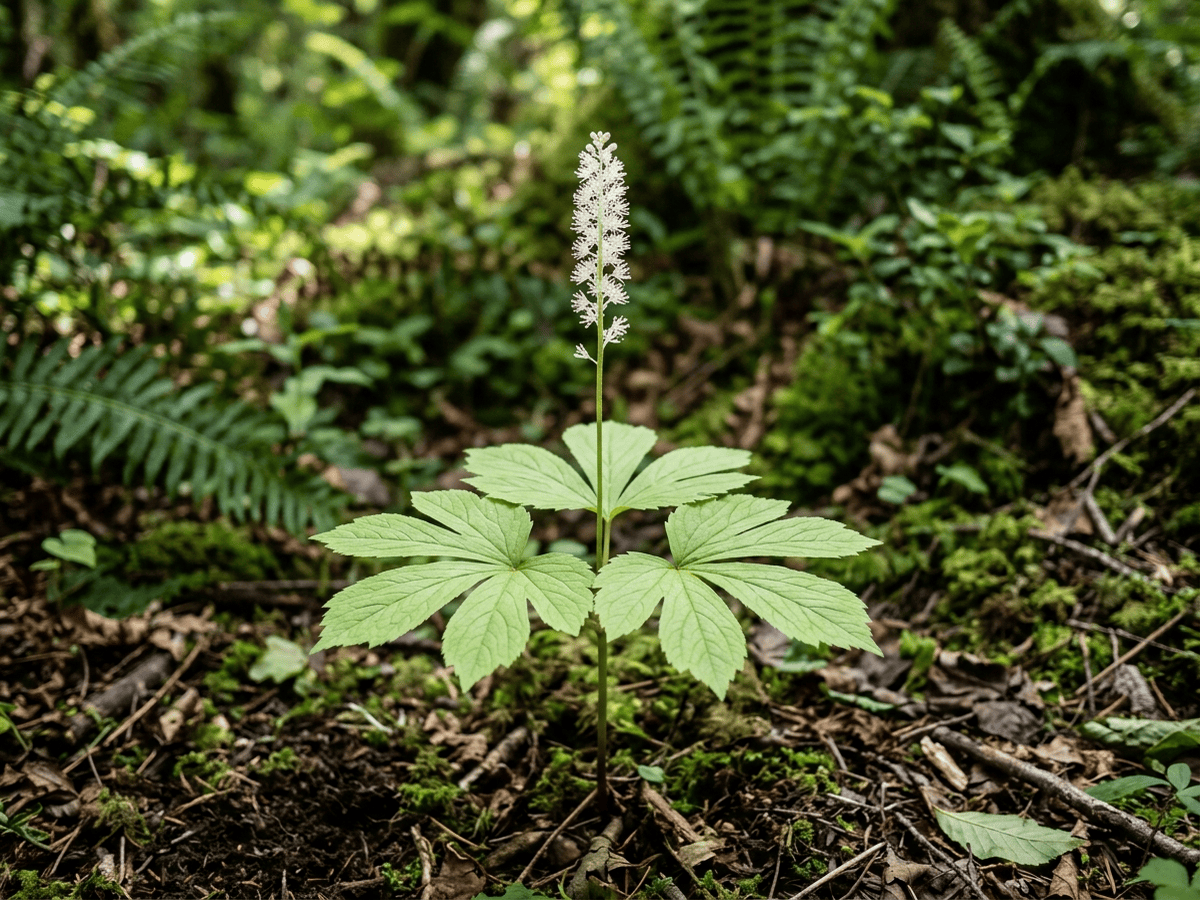 Vanilla LeafAchlys triphylla
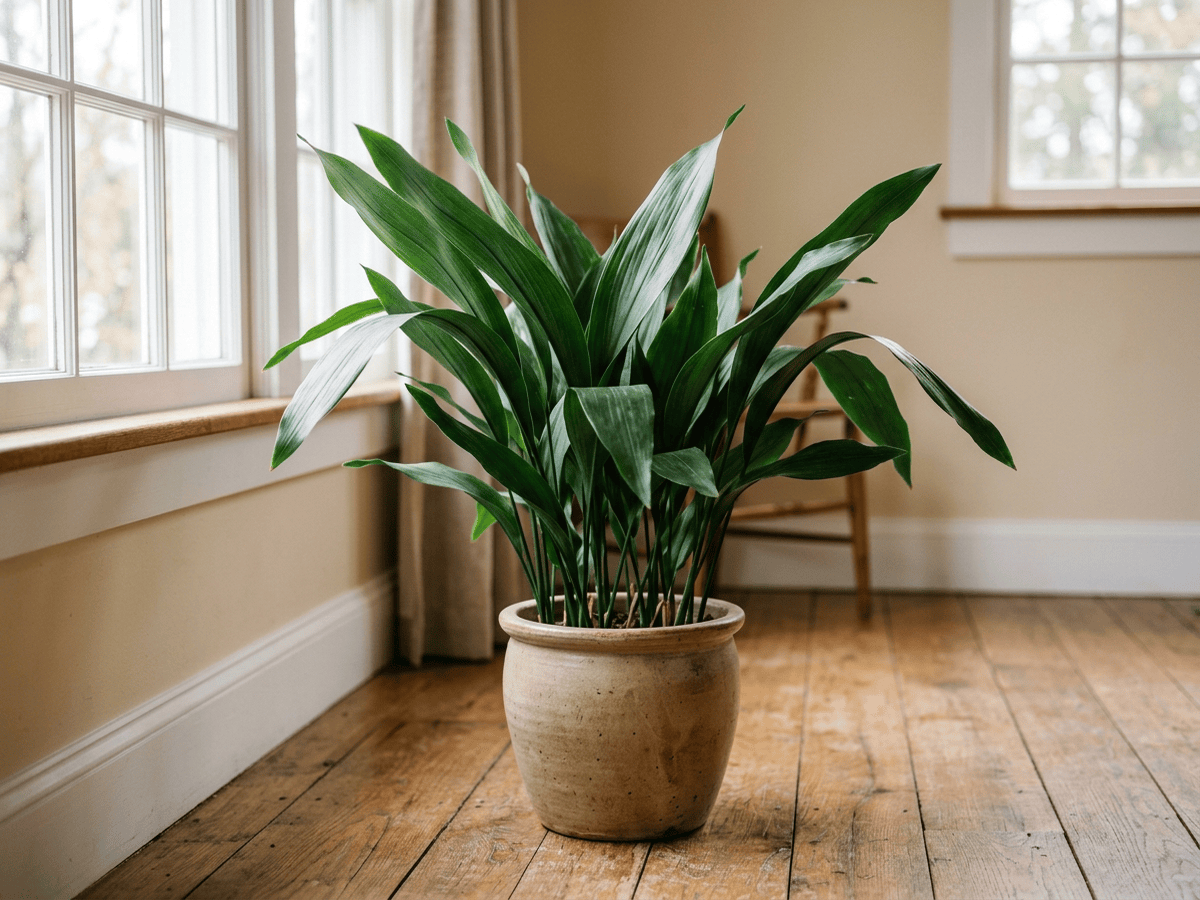 Cast-Iron PlantAspidistra elatior
 Hardy BegoniaBegonia grandis
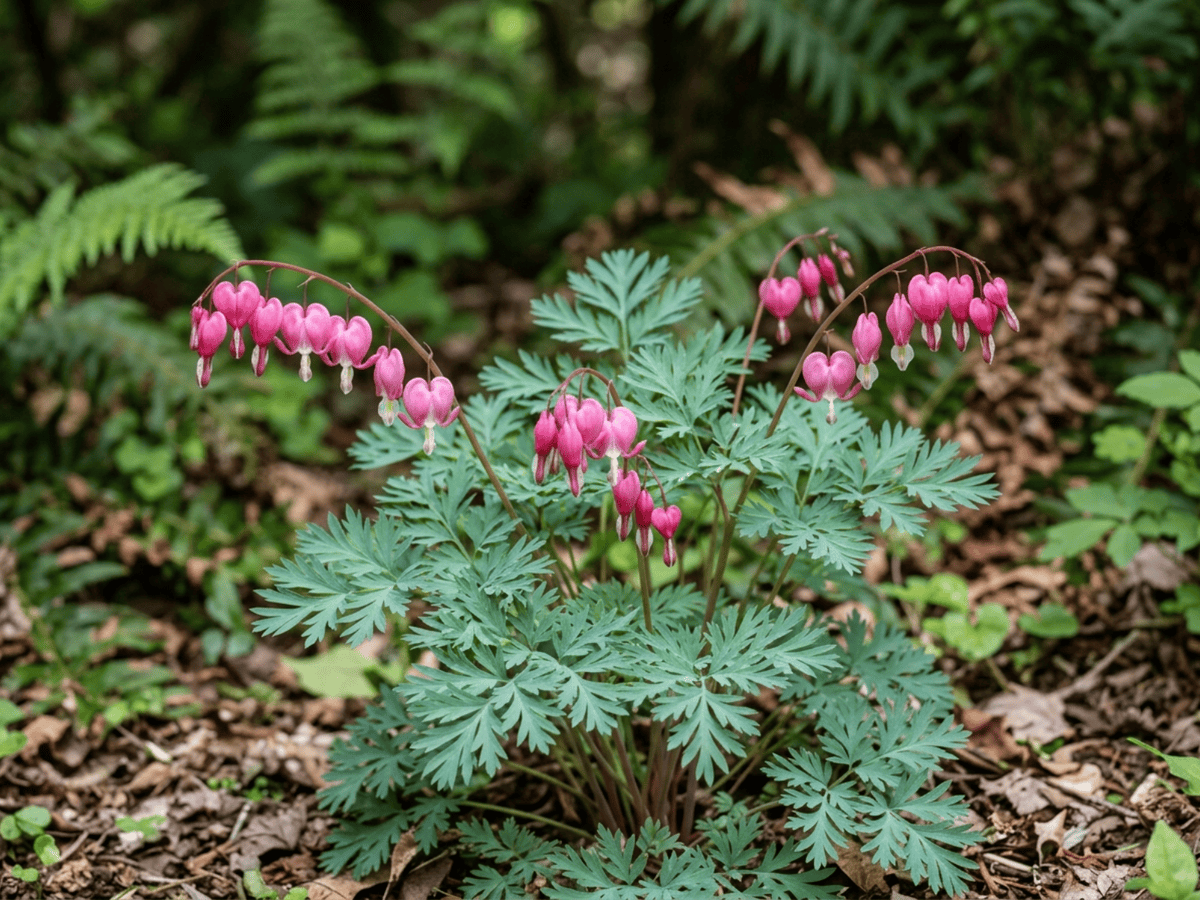 Pacific Bleeding HeartDicentra formosa
Frequently asked questions
How often should I water Chinese Aucuba?
In summer, water about every 5 days; in winter, about every 21 days. Adjust for heat, pot size and drainage.
How much light does Chinese Aucuba need?
Full shade: <2 hrs direct. Watch the leaves — scorching or stretching means the light needs adjusting.
Is Chinese Aucuba toxic to cats or dogs?
Pets Slight (Dogs Slight · Cats Slight) Educational information, not medical or veterinary advice. If exposure is suspected, contact a doctor or veterinarian.
Is Chinese Aucuba easy to grow?
Yes — it is considered an easy, beginner-friendly plant.
YardMate
Identify any plant in seconds
Snap a photo — YardMate names the plant, diagnoses problems, and reminds you when to water.
Download on the App Store