 YardMate


Japanese Aucuba
Aucuba japonica
Easy · Beginner friendlyAbout Japanese Aucuba
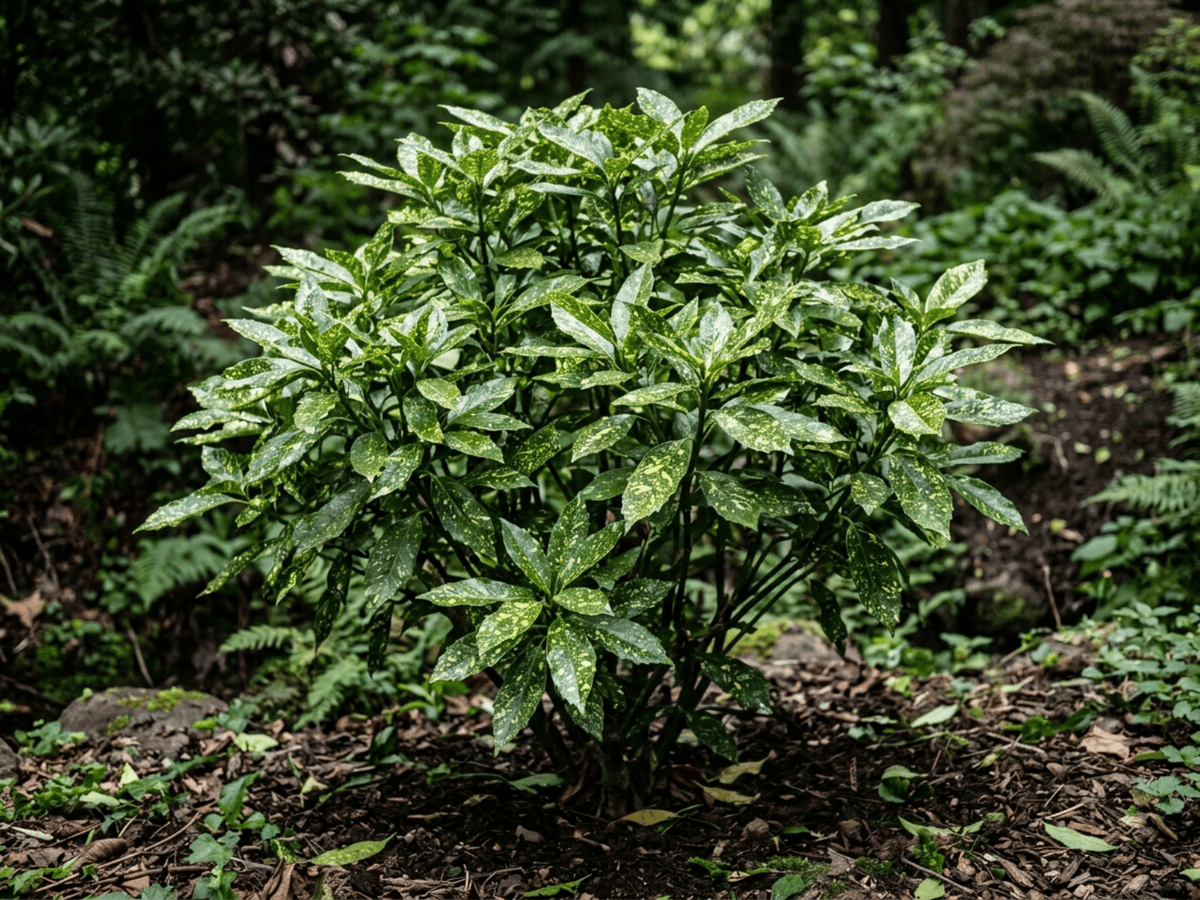
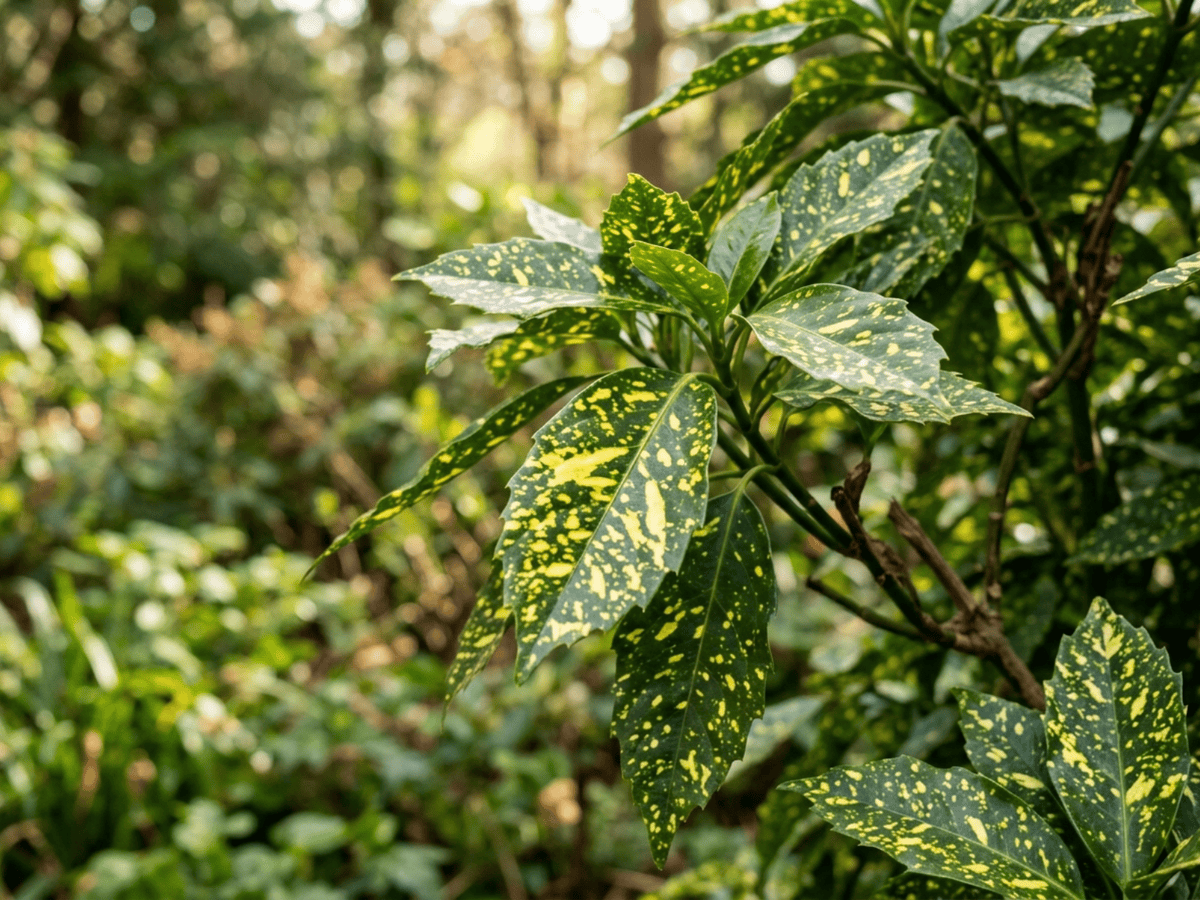
Aucuba japonica, commonly called Japanese aucuba or gold dust plant, is a shade-loving evergreen shrub native to the moist woodlands of Japan, Korea, and China. It is best known for its bold, glossy leaves that are often splashed with golden-yellow speckles, giving rise to the 'gold dust' nickname. The plant grows one to three meters tall with a dense, rounded habit, making it an excellent choice for shaded borders and woodland gardens. Small purplish flowers appear in spring, and female plants produce clusters of glossy red berries in autumn if a male pollinator is nearby. Aucuba is one of the most shade-tolerant shrubs available, thriving in deep shade where few other ornamentals survive. It handles urban pollution, dry shade, and salt spray remarkably well, making it a versatile choice for city gardens and coastal landscapes. In traditional Japanese gardens, aucuba is valued for bringing color and life to deeply shaded areas beneath tree canopies. It requires little pruning and is largely pest-free, though it dislikes waterlogged soil.
- Low-maintenance
- Shade-tolerant
- Evergreen
How to care for Japanese Aucuba
Watering
- Springevery 7 days
- Summerevery 5 days
- Fallevery 14 days
- Winterevery 30 days
Soil · Well-draining
- Top dressingPine bark mulch10%
- Main mixPotting soil + perlite 2:170%
- DrainageLECA / gravel20%
Never skip the drainage layer — standing water is the top cause of root rot.
FERTILIZER
Balanced Feed 14-14-14
An even feed covers all three needs at once, keeping leaves, roots and blooms moving together with nothing pushed out of balance.
- Nitrogen · Leaves
- Phosphorus · Roots + Blooms
- Potassium · Strength
- Springevery 60 days
At a Glance
- NativeEast Asia
- Height6–10 ft (1.8–3 m)
- Spread5–9 ft (1.5–2.7 m)
- Flower colorPurple
- Foliage colorGreen, Variegated, Yellow
- Fruit colorRed
- SoilLoamy, Well-drained, Moisture-retentive
- LocationsYard
Fragrance
NO FRAGRANCE
No notable fragrance.
Toxicity
Humans Slight · Pets Slight
aucubin
Slight
- Berry
- Leaf
- Ingestion
EXPOSURE Eating berries and leaves.
EFFECT Berries contain aucubin iridoid glycosides — mild GI upset.
NOTE Documented concern for humans: Berries contain aucubin iridoid glycosides — mild GI upset.
Slight
- Berry
- Leaf
- Ingestion
EXPOSURE Eating berries and leaves.
EFFECT Vomiting, drooling, mild GI upset.
NOTE Not prominently listed by ASPCA; low-level toxicity reported.
Slight
- Berry
- Leaf
- Ingestion
EXPOSURE Eating berries and leaves.
EFFECT Same as dogs.
NOTE Not prominently listed by ASPCA; low-level toxicity reported.
Educational information, not medical or veterinary advice. If exposure is suspected, contact a doctor or veterinarian.
DISTRIBUTION

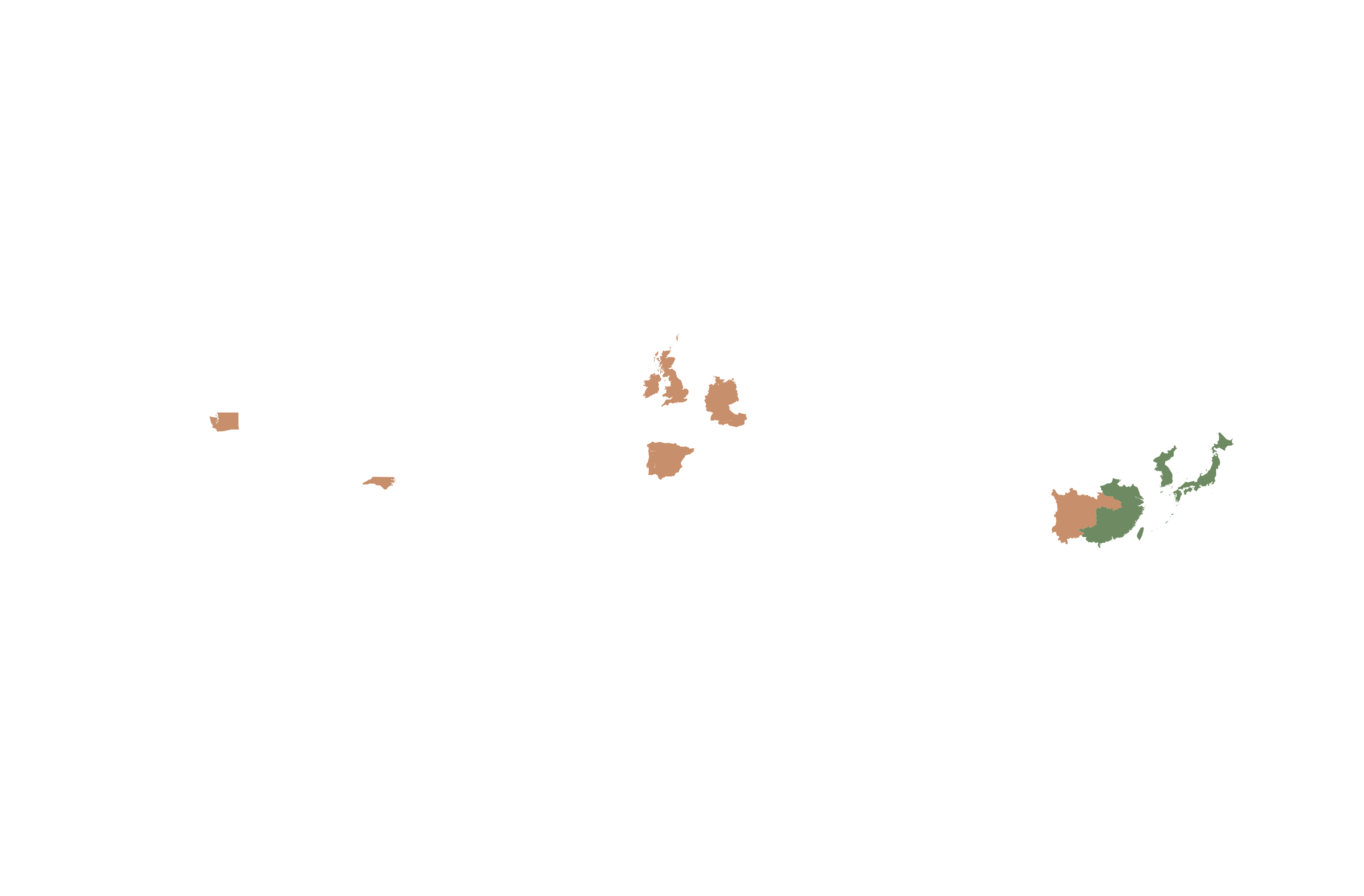
- Native
- Introduced
- East Asia
History

Aucuba japonica is native to Japan (where it is called "aoki"), Korea, and China, where it grows as an understory evergreen shrub in mixed deciduous-evergreen woodlands. It produces glossy dark-green leaves (or gold-spotted variegated forms) and small inconspicuous red-purple flowers in early spring, followed on female plants by persistent bright red olive-shaped berries 1-2 cm long that remain on the plant through winter. The species has an unusual Western horticultural history: it was first introduced to England in 1783 by John Graeffer via the nurseryman James Gordon, but only as a single female plant (the widely cultivated Japanese garden form, the gold-variegated "Variegata" which is always female). Because male plants remained absent from Western cultivation for 78 years, English aucuba produced flowers but never set the celebrated red berries until 1861, when Scottish plant hunter Robert Fortune finally sent a male plant back from Japan to Kew on his third Asian expedition.
Following Fortune's male-plant introduction, correct male-female pairing produced the ornamental red berries for the first time in Europe, and aucuba enjoyed a Victorian horticultural vogue. The variegated form became a defining shrub of Victorian parlor conservatories and shade gardens, tolerating dim light, urban soot, and neglect with remarkable grace. It remains widely planted throughout temperate gardens today.
Hardy to approximately USDA zone 7. Aucuba was introduced to England in 1783 by botanist John Graeffer, but only female plants arrived initially. The plant became a Victorian parlor favorite, thriving in the dim, gas-lit rooms of 19th-century London. Its tolerance of pollution made it one of the few ornamental shrubs that survived in heavily industrialized British cities.
Symbolism & meaning
What It Symbolizes
Japanese Aucuba is resilience polished to a shine, thriving in the sooty shade and polluted air that defeats finer evergreens. Its gold-speckled leaves bring hidden beauty into the gloomiest courtyards, a quiet light kindled where none was expected. To plant aucuba is to insist that even neglected corners deserve a constellation of their own.
- Resilience — Thrives in deep shade and polluted conditions, symbolizing perseverance through adversity
- Hidden beauty — Brings golden light to the darkest corners of a garden
Where the Name Comes From
'Aucuba' is a Latinization of the Japanese name 'aokiba', meaning green leaf. 'Japonica' indicates its Japanese origin.
Uses & Fun Facts
- Gold-speckled glossy foliage brightens deep urban shade
- Reliable evergreen screen for woodland understory and walls
- Tolerates low light and pollution in shaded courtyard pots
Related plants
More Aucuba plants

Plants with similar care
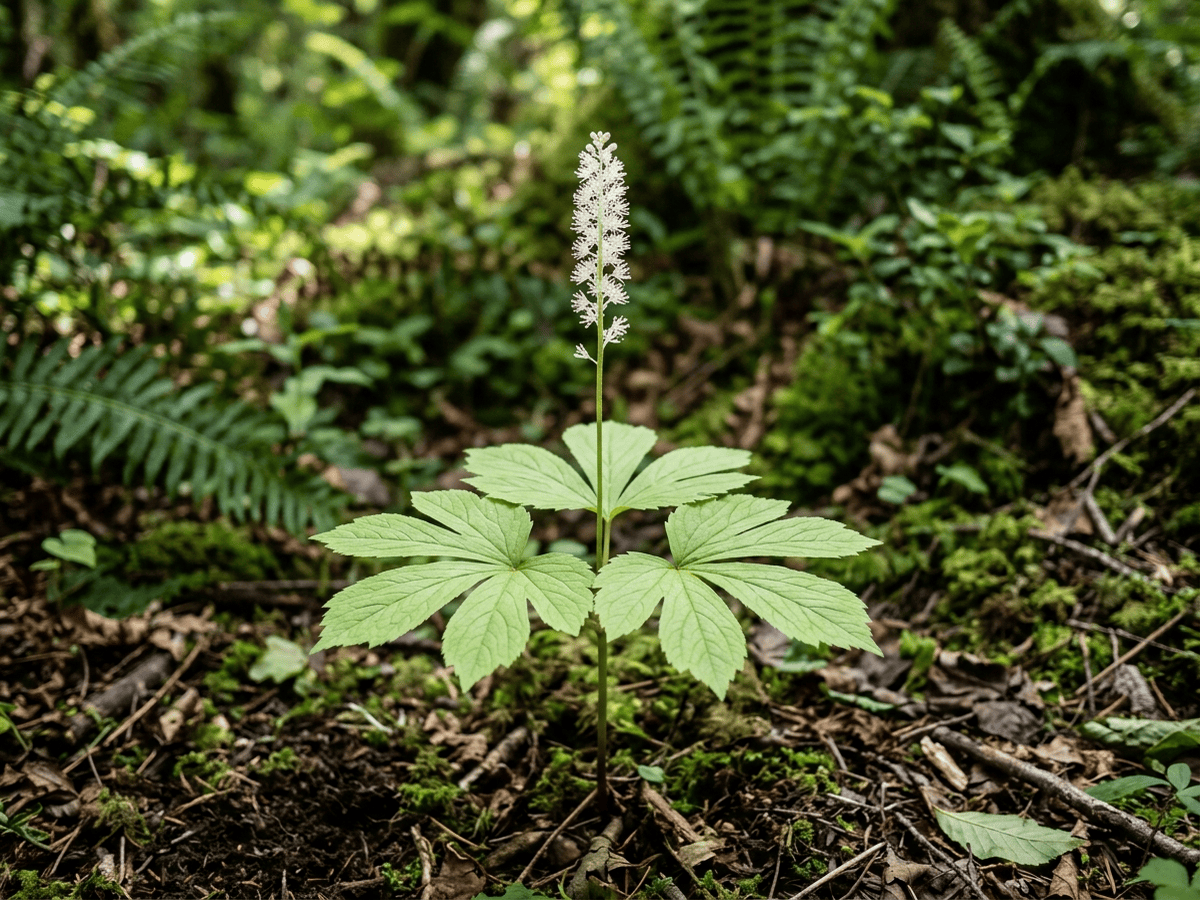 Vanilla LeafAchlys triphylla
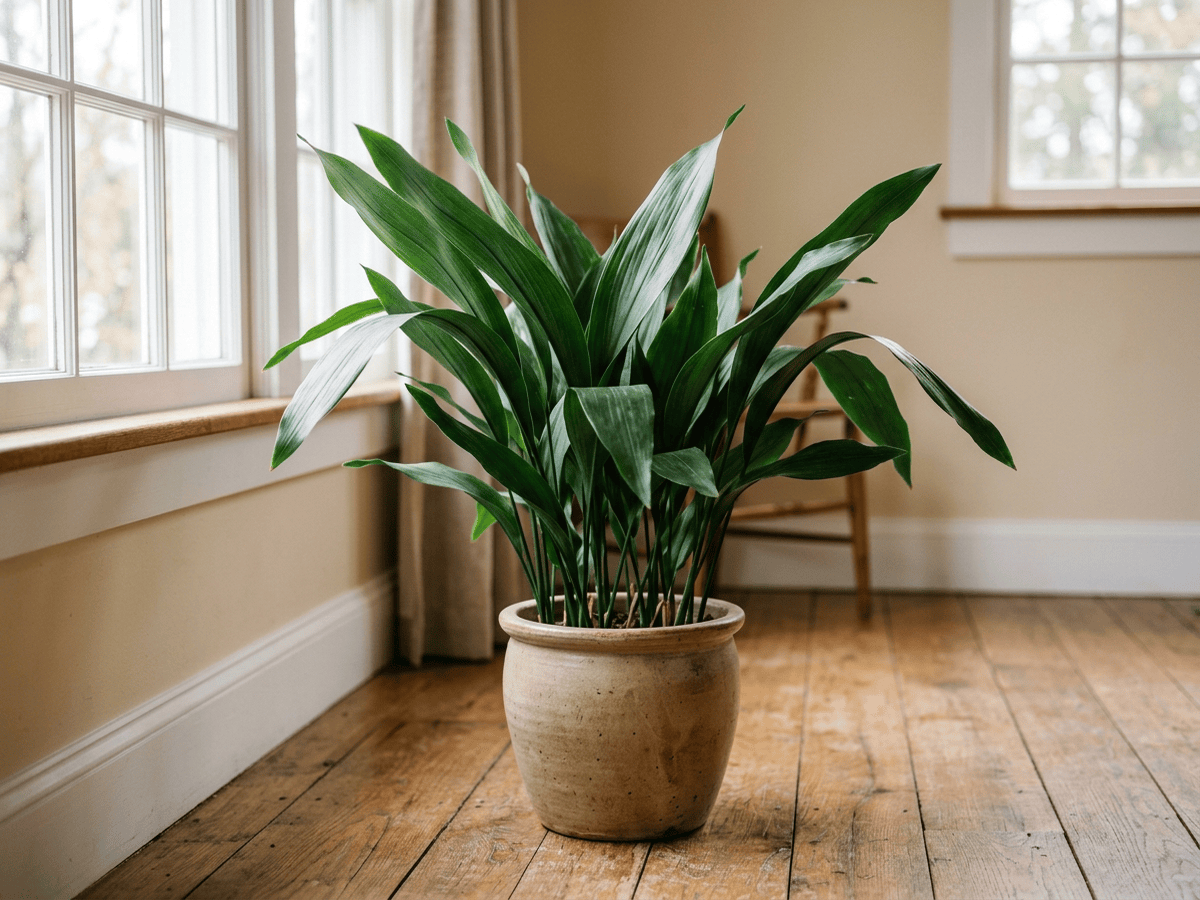 Cast-Iron PlantAspidistra elatior
 Hardy BegoniaBegonia grandis
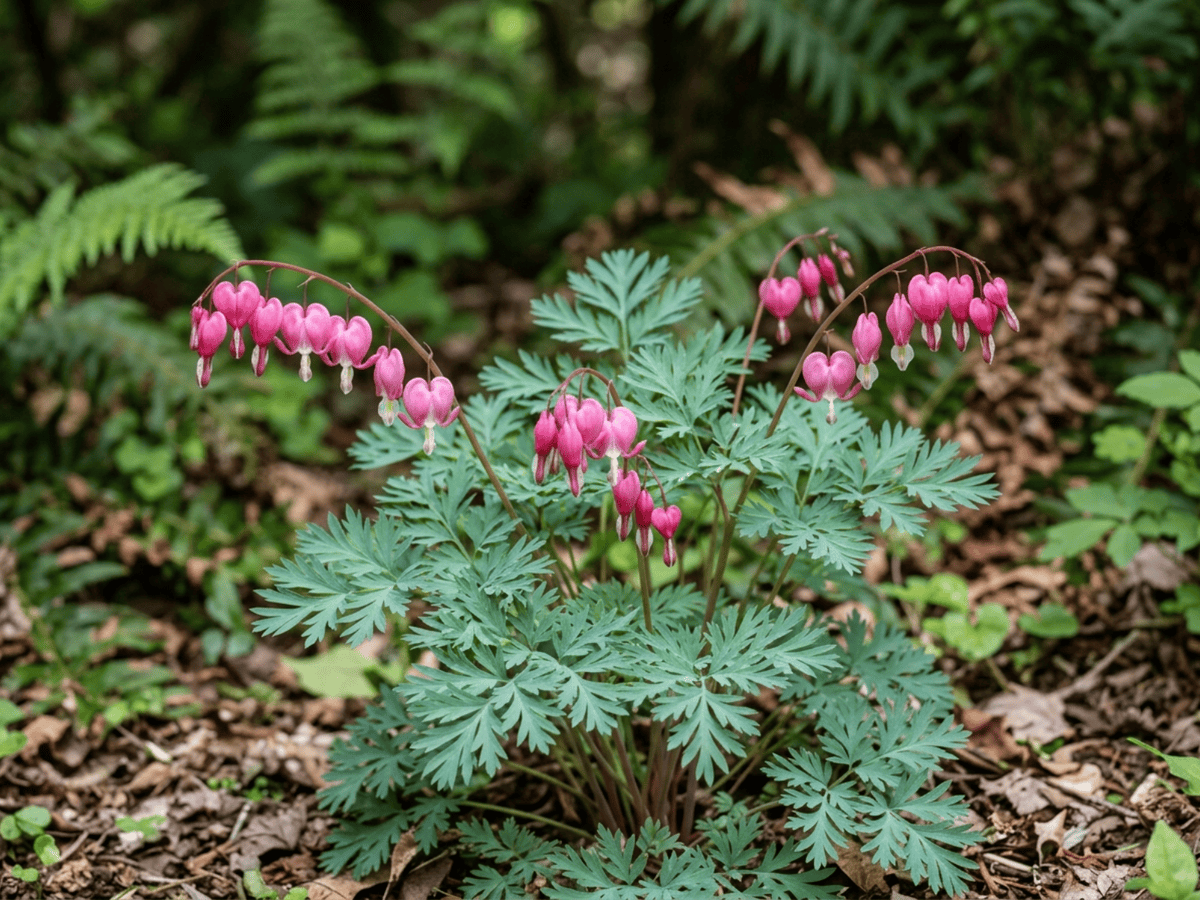 Pacific Bleeding HeartDicentra formosa
Frequently asked questions
How often should I water Japanese Aucuba?
In summer, water about every 5 days; in winter, about every 30 days. Adjust for heat, pot size and drainage.
How much light does Japanese Aucuba need?
Full shade: <2 hrs direct. Watch the leaves — scorching or stretching means the light needs adjusting.
Is Japanese Aucuba toxic to cats or dogs?
Pets Slight (Dogs Slight · Cats Slight) Educational information, not medical or veterinary advice. If exposure is suspected, contact a doctor or veterinarian.
Is Japanese Aucuba easy to grow?
Yes — it is considered an easy, beginner-friendly plant.
YardMate
Identify any plant in seconds
Snap a photo — YardMate names the plant, diagnoses problems, and reminds you when to water.
Download on the App Store