 YardMate


Princess Tree
Paulownia tomentosa
Easy · Beginner friendlyAbout Princess Tree
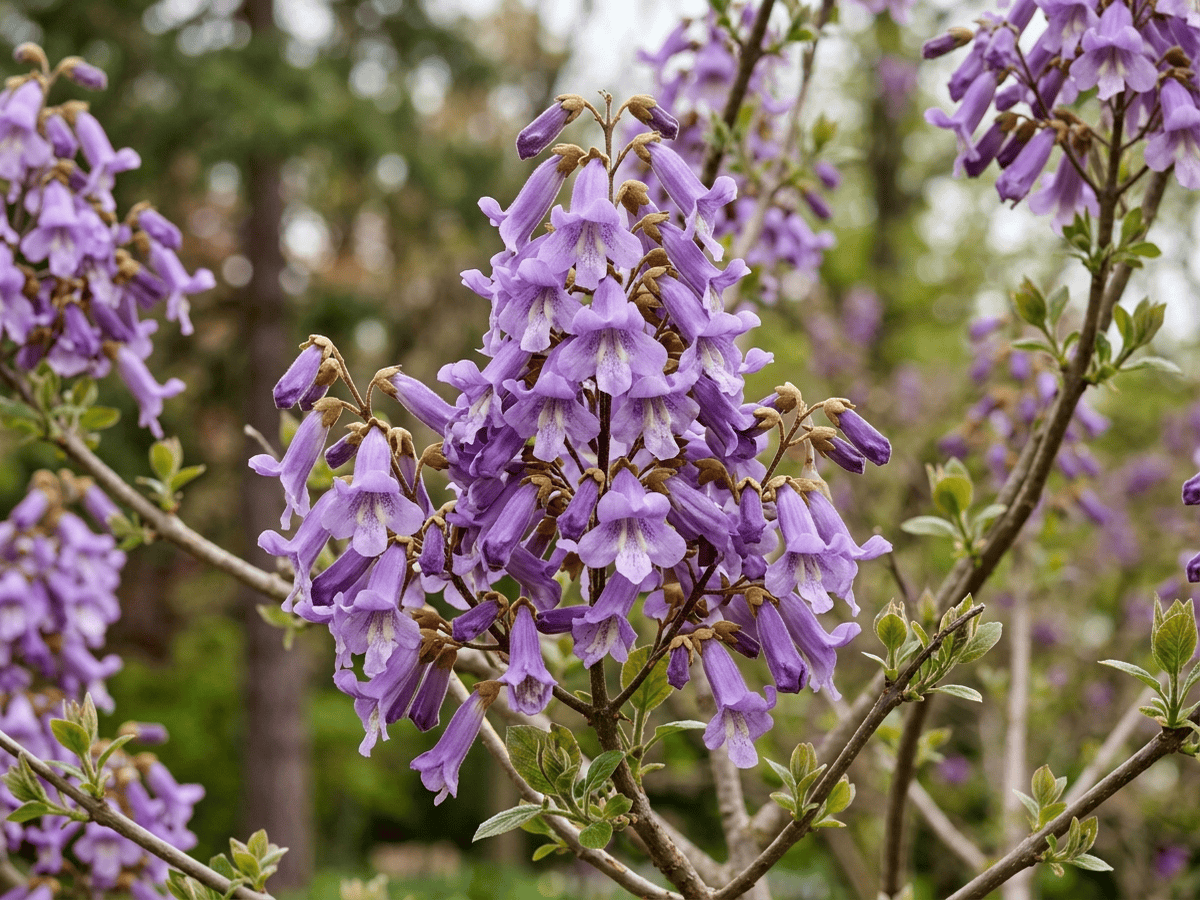
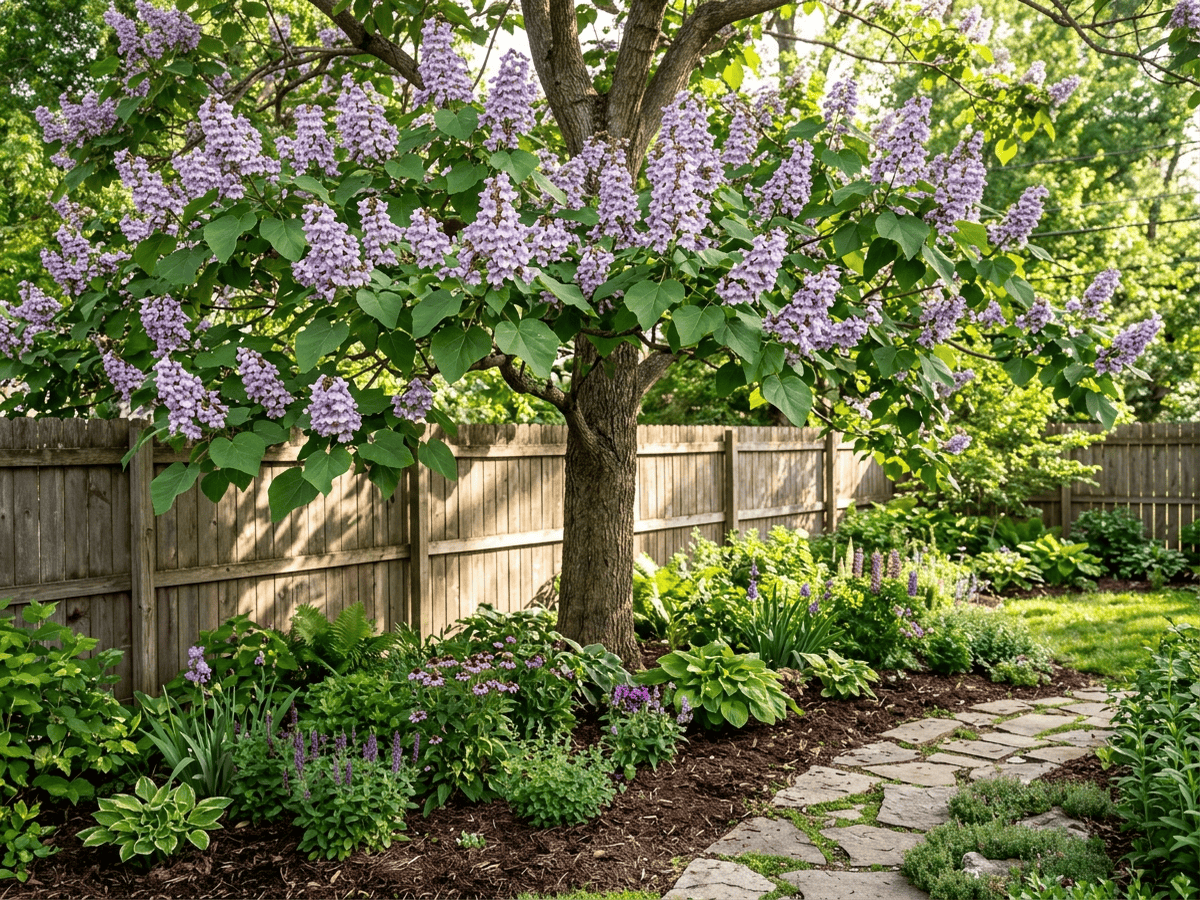
Princess Tree or Empress Tree is a Chinese deciduous tree introduced to the US in the 1840s, famous for spectacular panicles of large lavender foxglove-like flowers in spring and prized timber value. Growing 30 to 60 feet tall with massive heart-shaped leaves to 2 feet across, it produces abundant wind-borne seeds (up to 20 million per tree) that colonize disturbed ground aggressively. Listed invasive in many eastern states.
- Fragrant
- Fast-growing
How to care for Princess Tree
Watering
- Springevery 14 days
- Summerevery 10 days
- Fallevery 14 days
- Winterevery 30 days
Soil · Well-draining
- Top dressingPine bark mulch10%
- Main mixPotting soil + perlite 2:170%
- DrainageLECA / gravel20%
Never skip the drainage layer — standing water is the top cause of root rot.
FERTILIZER
- Springevery 45 days
At a Glance
- NativeEast Asia
- Height30–50 ft (9.1–15.2 m)
- Spread30–40 ft (9.1–12.2 m)
- Flower colorPurple
- Foliage colorGreen
- SoilLoamy, Well-drained
- LocationsYard
Bloom time
BLOOM CYCLE
Peak bloom
Mar–May
Spectacular lavender foxglove-like flower panicles mid-spring
Fragrance
STRONG FRAGRANCE
The flowers have a sweet vanilla-like scent.
Toxicity
Humans Safe · Pets Safe
None reported
Safe
EXPOSURE No exposure route is reported.
EFFECT No toxic effect is reported.
NOTE Listed as non-toxic for humans; avoid eating ornamental plants unless confirmed edible.
Safe
EXPOSURE No exposure route is reported.
EFFECT No toxic effect is reported.
NOTE Listed as non-toxic for dogs; avoid eating ornamental plants unless confirmed edible.
Safe
EXPOSURE No exposure route is reported.
EFFECT No toxic effect is reported.
NOTE Listed as non-toxic for cats; avoid eating ornamental plants unless confirmed edible.
Educational information, not medical or veterinary advice. If exposure is suspected, contact a doctor or veterinarian.
DISTRIBUTION


- Native
- Introduced
- East Asia
History
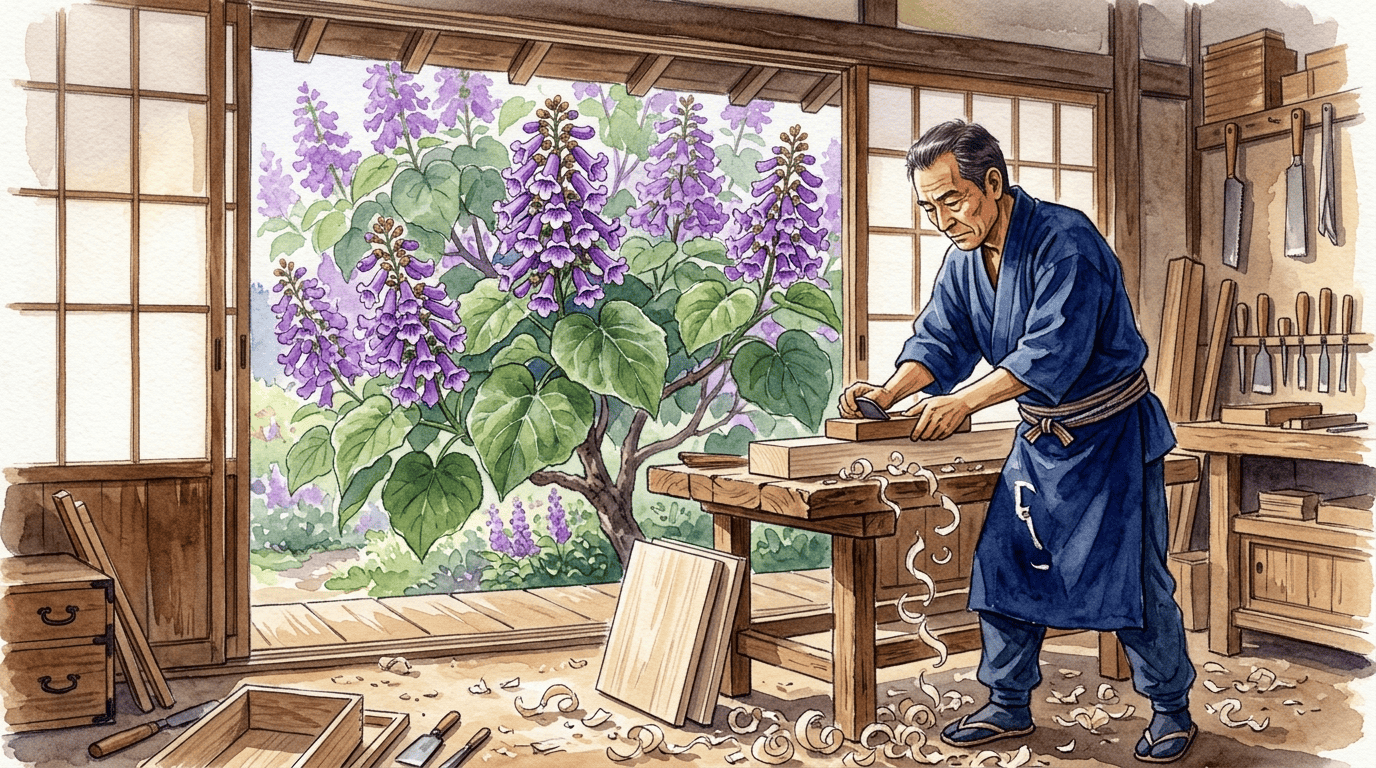
Paulownia tomentosa, empress tree or princess tree, is a deciduous tree native to central and western China, reaching fifteen meters with enormous fuzzy heart-shaped leaves and foxglove-like purple flowers in spring. Japanese cabinetmakers have prized the light, warp-resistant wood for over a thousand years to make kimono-storage tansu chests, geta sandals, and the soundboards of koto zithers, and the species became a symbol of the Empress; its flower appears on the Japanese Prime Minister's seal. Philipp von Siebold sent seeds to Leiden in 1834, and the Parsons nursery of Long Island introduced it to America in 1844.
Seeds once packed around porcelain shipments escaped along railways, and Paulownia now colonizes disturbed hillsides across the eastern and southern United States. Native to China, Paulownia tomentosa was introduced to the US in the 1840s and escaped from nursery cultivation.
Historically planted for its valuable timber and unique flowers, it now invades disturbed areas, road cuts, and forest edges across the eastern US, producing enormous seed rains that colonize rapidly.
Symbolism & meaning
What It Symbolizes
The princess tree is, ecologically, an imperial spread — named for European royalty, planted as ornament across the eastern United States, and now an aggressive invader of disturbed land. Each tree releases roughly twenty million seeds in a season, riding the wind for miles to colonize roadsides and clearings. Some imported beauties belong in the garden; this one tends instead to inherit the entire neighborhood.
- Imperial spread — named for royalty, now invasive
- Seed cloud — 20 million seeds per tree annually
Where the Name Comes From
'Paulownia' honors Russian Queen Anna Paulowna (1795-1865); 'tomentosa' from Latin means hairy, for the fuzzy leaves and shoots.
Uses & Fun Facts
- Foxglove-like lavender flower panicles scent spring landscapes
- Lightweight knot-free wood prized in Japan for chests and koto
Related plants
Plants with similar care
 Chinese AbeliaAbelia chinensis
 Fragrant AbeliaAbelia mosanensis
 Large-Flowered AbeliaAbelia uniflora
 Glossy AbeliaAbelia x grandiflora
Frequently asked questions
How often should I water Princess Tree?
In summer, water about every 10 days; in winter, about every 30 days. Adjust for heat, pot size and drainage.
How much light does Princess Tree need?
Full sun: 6+ hrs direct. Watch the leaves — scorching or stretching means the light needs adjusting.
Is Princess Tree toxic to cats or dogs?
Pets Safe (Dogs Safe · Cats Safe) Educational information, not medical or veterinary advice. If exposure is suspected, contact a doctor or veterinarian.
Is Princess Tree easy to grow?
Yes — it is considered an easy, beginner-friendly plant.
When does Princess Tree bloom?
It typically blooms Mar–May in the Northern Hemisphere.
YardMate
Identify any plant in seconds
Snap a photo — YardMate names the plant, diagnoses problems, and reminds you when to water.
Download on the App Store