 YardMate


Egyptian Star-Cluster
Pentas lanceolata
Easy · Beginner friendlyAbout Egyptian Star-Cluster
Pentas lanceolata, the Egyptian star cluster, is one of the most reliable butterfly-attracting plants available, native to East Africa and the Arabian Peninsula. Its flat-topped clusters of small, star-shaped flowers bloom non-stop from spring through frost in colors ranging from red, pink, and lavender to white. The five-pointed flower shape (pentas means five in Greek) is perfectly adapted for butterfly feeding — the flat cluster provides a landing pad while the tubular flower base holds nectar accessible to long tongues. It thrives in full sun and heat, tolerating humidity and drought equally well once established. Growing 30–90 cm tall depending on the cultivar, it works beautifully in borders, containers, and mass plantings. It is a top recommendation for monarch waystation gardens and pollinator habitats. The lance-shaped, deeply veined leaves remain attractive even between bloom flushes. Modern breeding has produced compact dwarf series and larger landscape forms in an expanding color palette.
- Heat-tolerant
- Long-blooming
- Pollinator-friendly
How to care for Egyptian Star-Cluster
Watering
- Springevery 3 days
- Summerevery 2 days
- Fallevery 5 days
- Winterpause watering
Soil · Well-draining
- Top dressingPine bark mulch10%
- Main mixPotting soil + perlite 2:170%
- DrainageLECA / gravel20%
Never skip the drainage layer — standing water is the top cause of root rot.
FERTILIZER
Balanced Feed 14-14-14
An even feed covers all three needs at once, keeping leaves, roots and blooms moving together with nothing pushed out of balance.
- Nitrogen · Leaves
- Phosphorus · Roots + Blooms
- Potassium · Strength
- Springevery 30 days
- Summerevery 30 days
- Fallevery 30 days
At a Glance
- NativeAfrica, Western Asia
- Height1.5–3 ft (0.5–0.9 m)
- Spread1.5–2 ft (0.5–0.6 m)
- Flower colorRed, Pink, Coral, White
- Foliage colorGreen
- SoilWell-drained, Loamy
- LocationsYard · Indoor · Balcony
Bloom time
BLOOM CYCLE
Peak bloom
Jun–Aug
Five-pointed star clusters in red, pink, lavender, white; deadhead for continuous bloom
Fragrance
NO FRAGRANCE
No notable fragrance.
Toxicity
Pets Safe
None reported
Not reported
EXPOSURE No exposure route is reported.
EFFECT No significant toxicity.
NOTE No human toxicity is reported in this catalog; avoid eating ornamental plants unless confirmed edible.
Safe
EXPOSURE No exposure route is reported.
EFFECT Not listed as toxic by ASPCA.
NOTE Listed as non-toxic for dogs; avoid eating ornamental plants unless confirmed edible.
Safe
EXPOSURE No exposure route is reported.
EFFECT Not listed as toxic by ASPCA.
NOTE Listed as non-toxic for cats; avoid eating ornamental plants unless confirmed edible.
Educational information, not medical or veterinary advice. If exposure is suspected, contact a doctor or veterinarian.
DISTRIBUTION

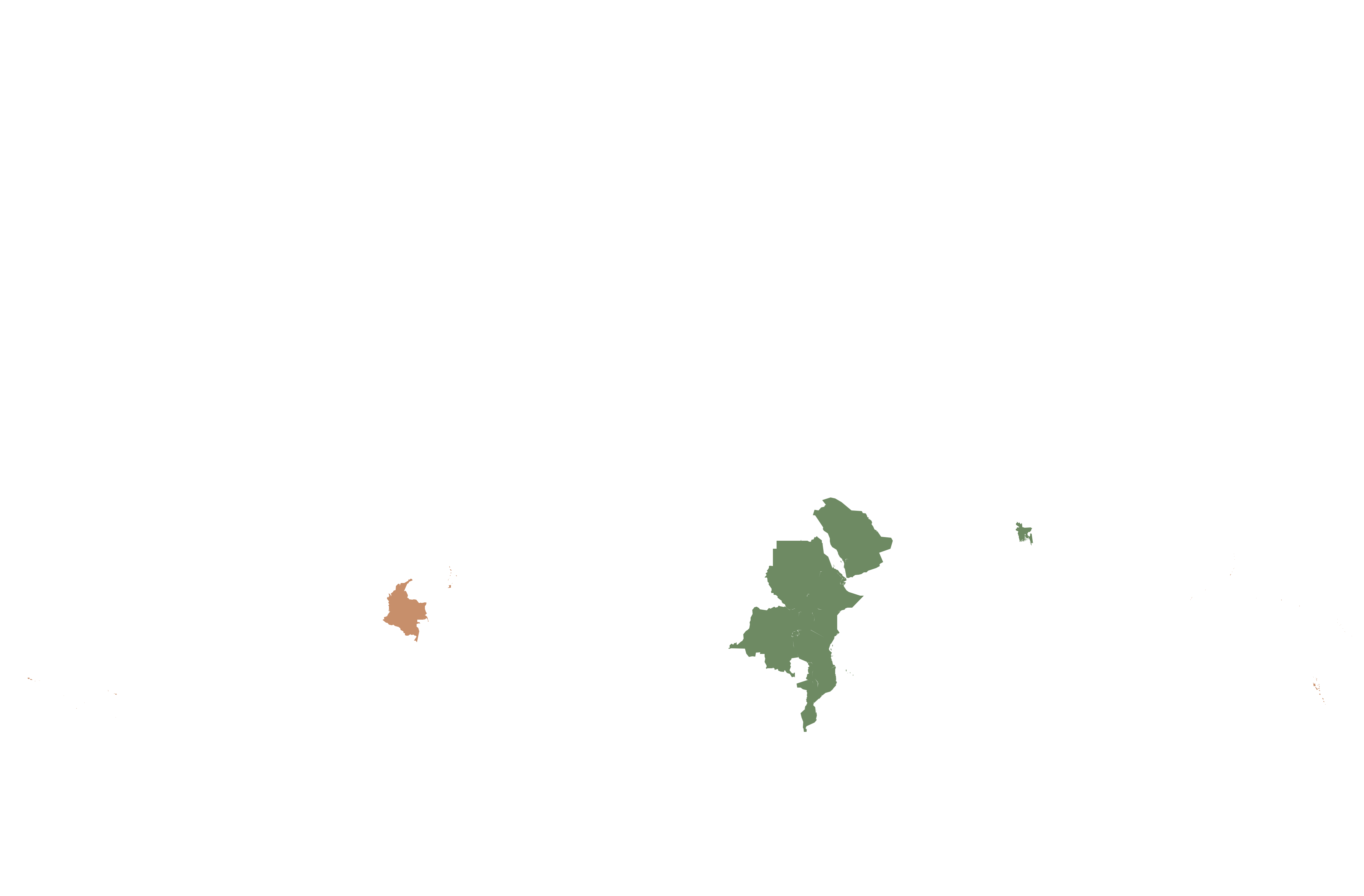
- Native
- Introduced
- Africa
- Western Asia
History

Pentas lanceolata is native to eastern Africa — Yemen, Ethiopia, Kenya, Uganda, Tanzania — and the Arabian Peninsula, where it grows as an evergreen sub-shrub in rocky sunny habitats. The common name "Egyptian star cluster" or "Egyptian star flower" does not reflect a specifically Egyptian origin — the species barely occurs in Egypt — but rather a 19th-century European trade-route naming habit. The genus name "Pentas" means "five" and refers to the five-lobed star-shaped flowers. In tropical and subtropical climates the species is a shrubby perennial producing its flat-topped flower clusters (corymbs) continuously through the warm season; in temperate regions it is grown as a reliable summer annual or tender container plant.
It is one of the very best plants for attracting butterflies — particularly swallowtails, monarchs, and skippers — and nectar-feeding hummingbirds, owing to the long narrow flower tubes well-matched to long tongues and bills. Modern breeding has produced compact bedding series including "Butterfly" (Benary), "Graffiti," "Kaleidoscope," and "Starcluster," in color ranges from white and pink through red, coral, and rose-purple. Sometimes placed in the genus Rondeletia or other Rubiaceae genera in older literature.
Pentas lanceolata has been grown in European gardens since the mid-19th century when it was introduced from tropical East Africa. It quickly earned a reputation as the 'butterfly bush of the tropics' for its unmatched ability to attract swallowtails, monarchs, and painted ladies. In its native habitat across Kenya, Tanzania, and Yemen, it grows in open woodland margins and grasslands. Modern breeding programs, particularly in the United States and Europe, have developed heat-tolerant landscape series like 'Graffiti' and 'Starcluster' that bloom continuously even in extreme summer heat. It is now a cornerstone plant for certified monarch waystation gardens.
Symbolism & meaning
What It Symbolizes
Egyptian Star-Cluster expresses harmony through its symmetrical five-pointed stars, each tiny flower a perfect figure of balance and natural order. Hospitality is its companion meaning — a generous nectar source that welcomes butterflies, bees, and hummingbirds to any garden it joins. Its warmth is double: visual order paired with an open invitation to every passing pollinator looking for a meal.
- Harmony — The symmetrical five-pointed stars represent balance and natural order
- Hospitality — A generous nectar source that welcomes all pollinators to the garden
Where the Name Comes From
Pentas from Greek 'pente' (five), referring to the five-pointed star shape of each flower. Lanceolata means 'lance-shaped,' describing the leaf form.
Uses & Fun Facts
- Star-cluster flowers attract butterflies and hummingbirds
- Heat-loving annual fills sunny patio pots and beds
Related plants
Plants with similar care
 Chinese AbeliaAbelia chinensis
 Fragrant AbeliaAbelia mosanensis
 Large-Flowered AbeliaAbelia uniflora
 Glossy AbeliaAbelia x grandiflora
Frequently asked questions
How often should I water Egyptian Star-Cluster?
Water about every 3 days during the growing season, and always let excess water drain away.
How much light does Egyptian Star-Cluster need?
Full sun: 6+ hrs direct. Watch the leaves — scorching or stretching means the light needs adjusting.
Is Egyptian Star-Cluster toxic to cats or dogs?
Pets Safe (Dogs Safe · Cats Safe) Educational information, not medical or veterinary advice. If exposure is suspected, contact a doctor or veterinarian.
Is Egyptian Star-Cluster easy to grow?
Yes — it is considered an easy, beginner-friendly plant.
Can Egyptian Star-Cluster be grown indoors?
Yes, it adapts well to indoor growing given the right light.
When does Egyptian Star-Cluster bloom?
It typically blooms Jun–Aug in the Northern Hemisphere.
YardMate
Identify any plant in seconds
Snap a photo — YardMate names the plant, diagnoses problems, and reminds you when to water.
Download on the App Store