 YardMate


Russian Sage
Perovskia atriplicifolia
Easy · Beginner friendlyAbout Russian Sage
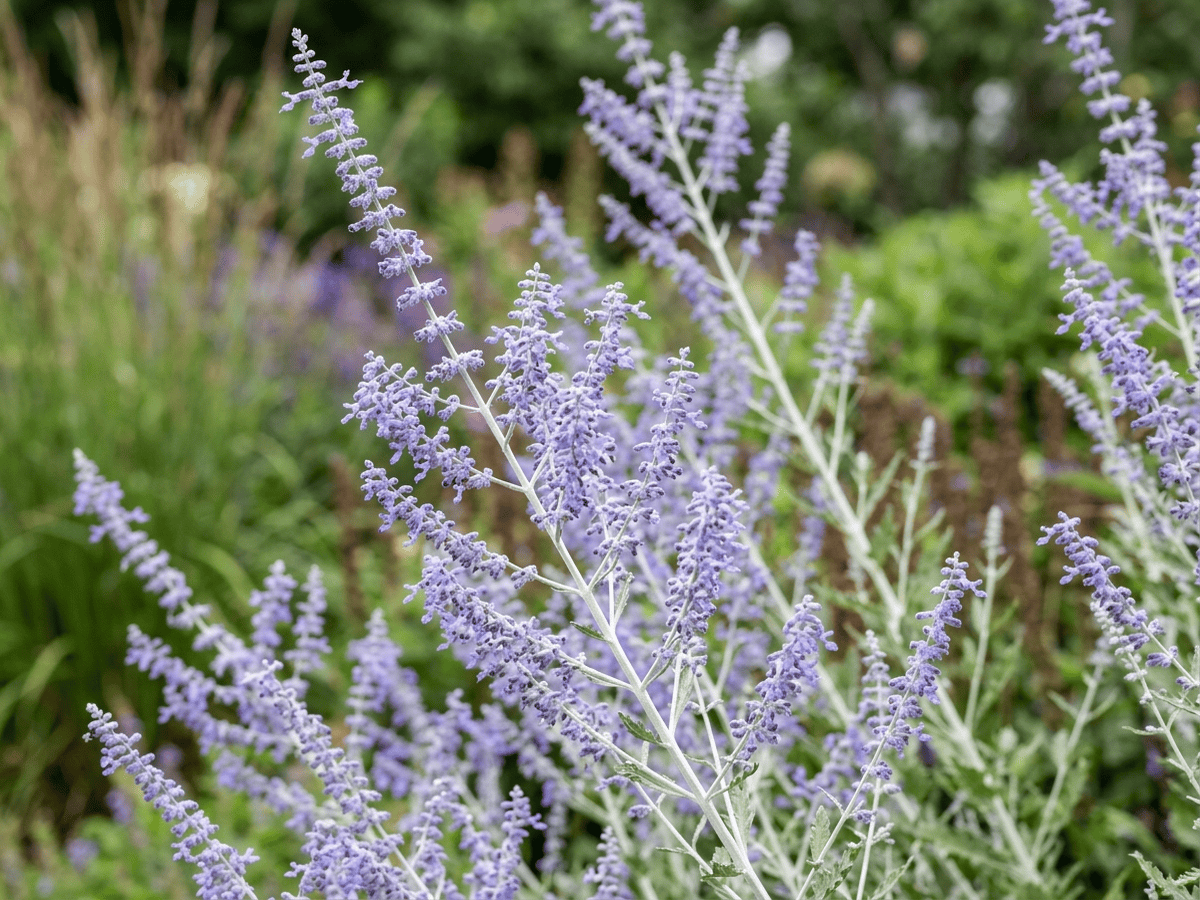
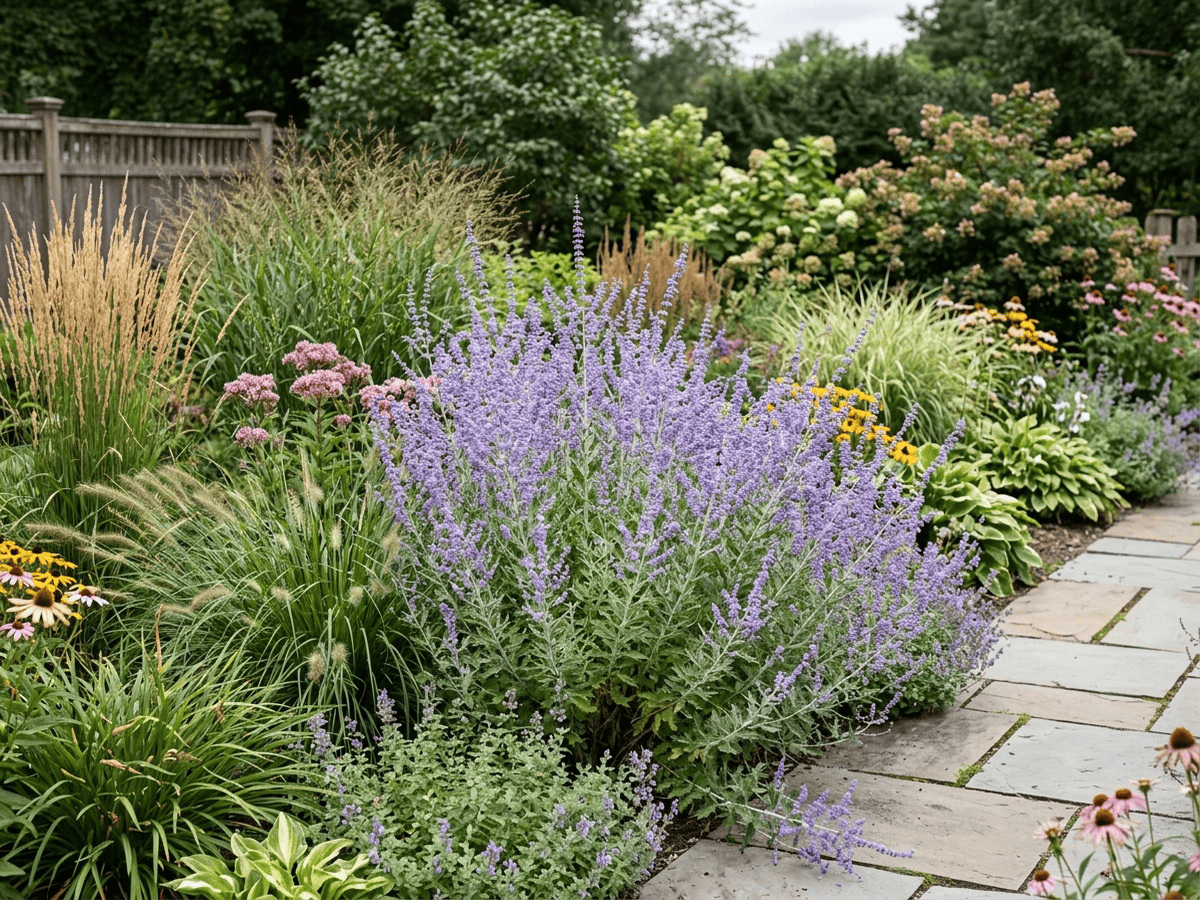
Russian Sage is a Central Asian woody perennial producing airy panicles of small violet-blue flowers above silver-gray aromatic divided foliage. Growing 3 to 5 feet tall and wide, it blooms from midsummer through fall, offering a long season of hazy lavender color. A signature American xeric garden plant and the 1995 Perennial Plant of the Year, now classified by botanists as Salvia yangii.
- Fragrant
- Drought-tolerant
- Deer-resistant
- Pollinator-friendly
How to care for Russian Sage
Watering
- Springevery 10 days
- Summerevery 7 days
- Fallevery 14 days
- Winterevery 30 days
Soil · Well-draining
- Top dressingPine bark mulch10%
- Main mixPotting soil + perlite 2:170%
- DrainageLECA / gravel20%
Never skip the drainage layer — standing water is the top cause of root rot.
FERTILIZER
- Springevery 60 days
- Summerevery 90 days
At a Glance
- NativeWestern Asia, South Asia
- Height3–4 ft (0.9–1.2 m)
- Spread2–4 ft (0.6–1.2 m)
- Flower colorBlue, Purple
- Foliage colorGreen, Silver
- SoilSandy, Well-drained, Alkaline
- LocationsYard
Bloom time
BLOOM CYCLE
Peak bloom
Jul–Oct
Airy violet-blue panicles July through October
Fragrance
STRONG FRAGRANCE
Whole plant aromatic, sage-and-camphor scent when brushed.
Toxicity
No toxicity has been reported for this plant. Still, it is wise to keep pets from chewing on any houseplant.
Educational information, not medical or veterinary advice. If exposure is suspected, contact a doctor or veterinarian.
DISTRIBUTION


- Native
- Introduced
- Western Asia
- South Asia
History
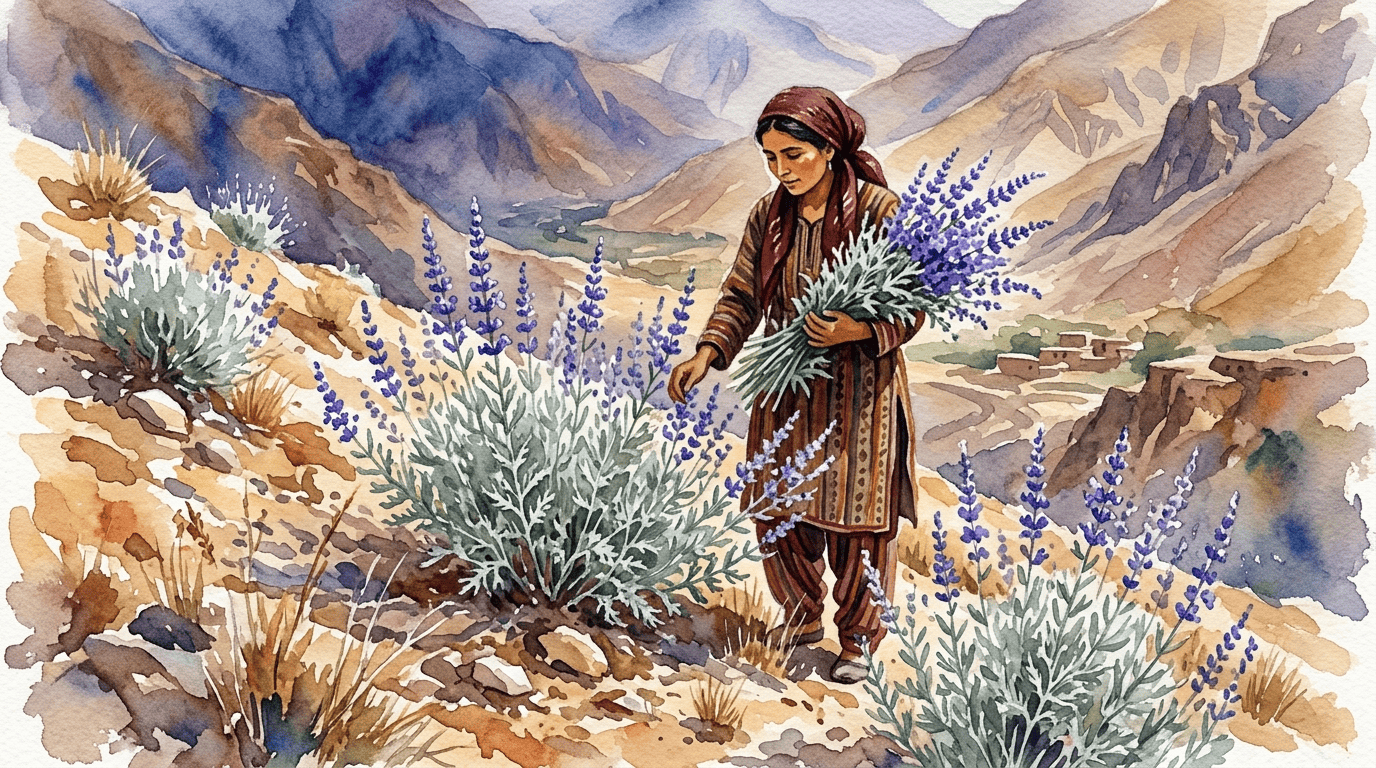
Perovskia atriplicifolia inhabits rocky hillsides and dry valleys across the Hindu Kush, Afghanistan, Pakistan, and Tibet. The Russian botanist George Karelin named the genus in 1841 to honor General Vasily Perovski, then governor of Orenburg. European plant hunters introduced it to Kew by the 1880s.
Afghan and Central Asian cultures used the fragrant leaves as a substitute for sage in cooking and, in Persia, as a spiritual cleansing smoke. Western garden use expanded rapidly after the Perennial Plant Association named it 1995 Perennial of the Year. Modern taxonomy merged Perovskia into Salvia in 2017, making the accepted name Salvia yangii, though Perovskia remains in wide horticultural use.
Cultivars include 'Blue Spire', 'Little Spire', and 'Lacey Blue'. Native from Iran through Afghanistan into Tibet. Introduced to American horticulture in the mid-20th century and became an instant classic after winning the 1995 Perennial Plant of the Year award. Recent DNA research reclassified it as Salvia yangii, though Perovskia remains the common garden name.
Symbolism & meaning
What It Symbolizes
Russian Sage carries lasting calm, its hazy lavender-blue flower clouds drifting above silver-green foliage in late summer when other perennials grow tired. It also expresses the silver meadow, its airy form dancing in every breeze with a softness that turns even still afternoons into motion. It is often read as a flower of breathable peace, a perennial whose meaning is the slow tranquil shimmer it lends to the late-season border.
- Lasting calm — hazy lavender cloud of flowers
- Silver meadow — airy form dances in breezes
Where the Name Comes From
The common name Russian Sage reflects its sage-scented foliage and its association with Russia, though it is not a true sage. 'Perovskia' honors V. A. Perovski, 19th-century Russian general; 'atriplicifolia' means with leaves like Atriplex (saltbush).
Uses & Fun Facts
- Silver foliage releases sage-like aroma when crushed
- Long flowering season feeds bees and butterflies
- Hazy violet-blue clouds anchor xeric American borders
Related plants
Plants with similar care
 Chinese AbeliaAbelia chinensis
 Fragrant AbeliaAbelia mosanensis
 Large-Flowered AbeliaAbelia uniflora
 Glossy AbeliaAbelia x grandiflora
Frequently asked questions
How often should I water Russian Sage?
In summer, water about every 7 days; in winter, about every 30 days. Adjust for heat, pot size and drainage.
How much light does Russian Sage need?
Full sun: 6+ hrs direct. Watch the leaves — scorching or stretching means the light needs adjusting.
Is Russian Sage toxic to cats or dogs?
No toxicity has been reported for this plant. Still, it is wise to keep pets from chewing on any houseplant. Educational information, not medical or veterinary advice. If exposure is suspected, contact a doctor or veterinarian.
Is Russian Sage easy to grow?
Yes — it is considered an easy, beginner-friendly plant.
When does Russian Sage bloom?
It typically blooms Jul–Oct in the Northern Hemisphere.
YardMate
Identify any plant in seconds
Snap a photo — YardMate names the plant, diagnoses problems, and reminds you when to water.
Download on the App Store