 YardMate


Lacy Phacelia
Phacelia tanacetifolia
Easy · Beginner friendlyAbout Lacy Phacelia
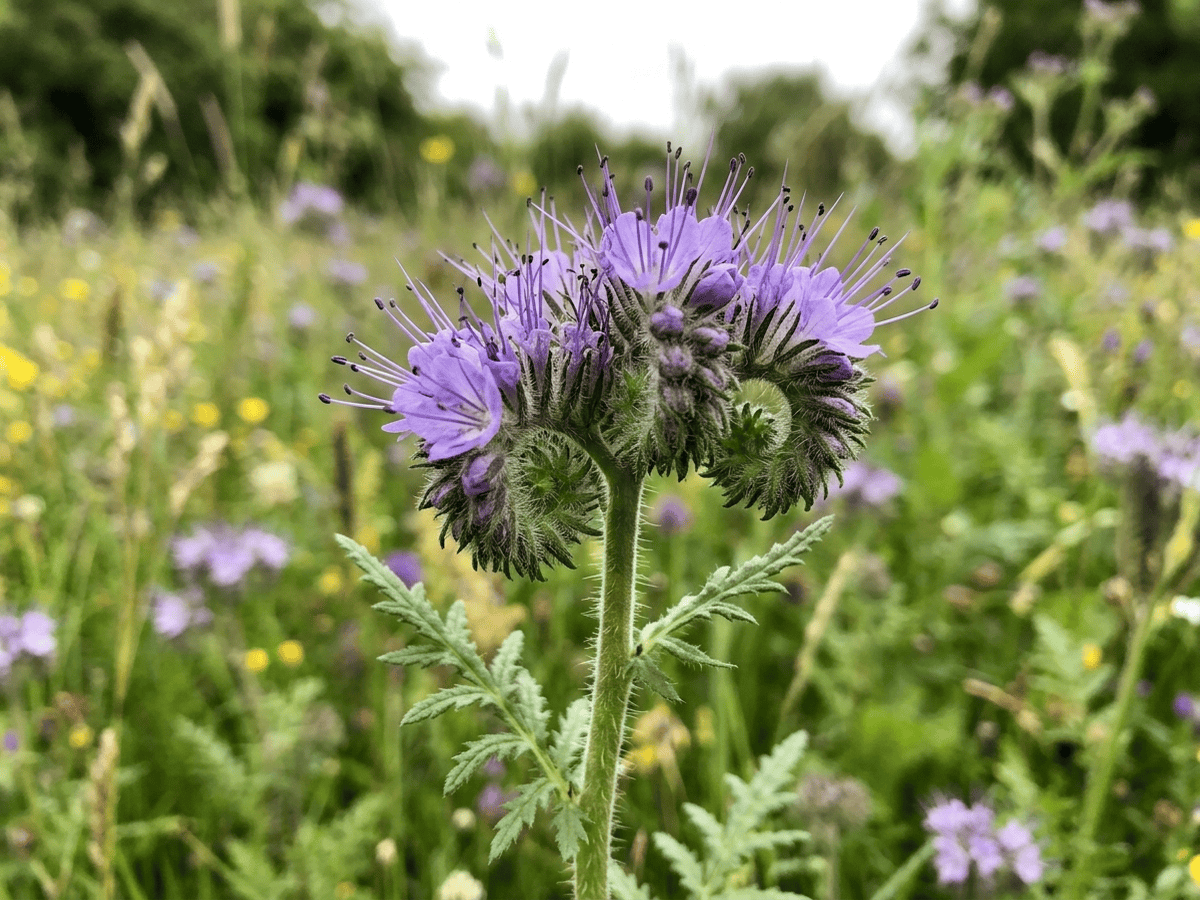
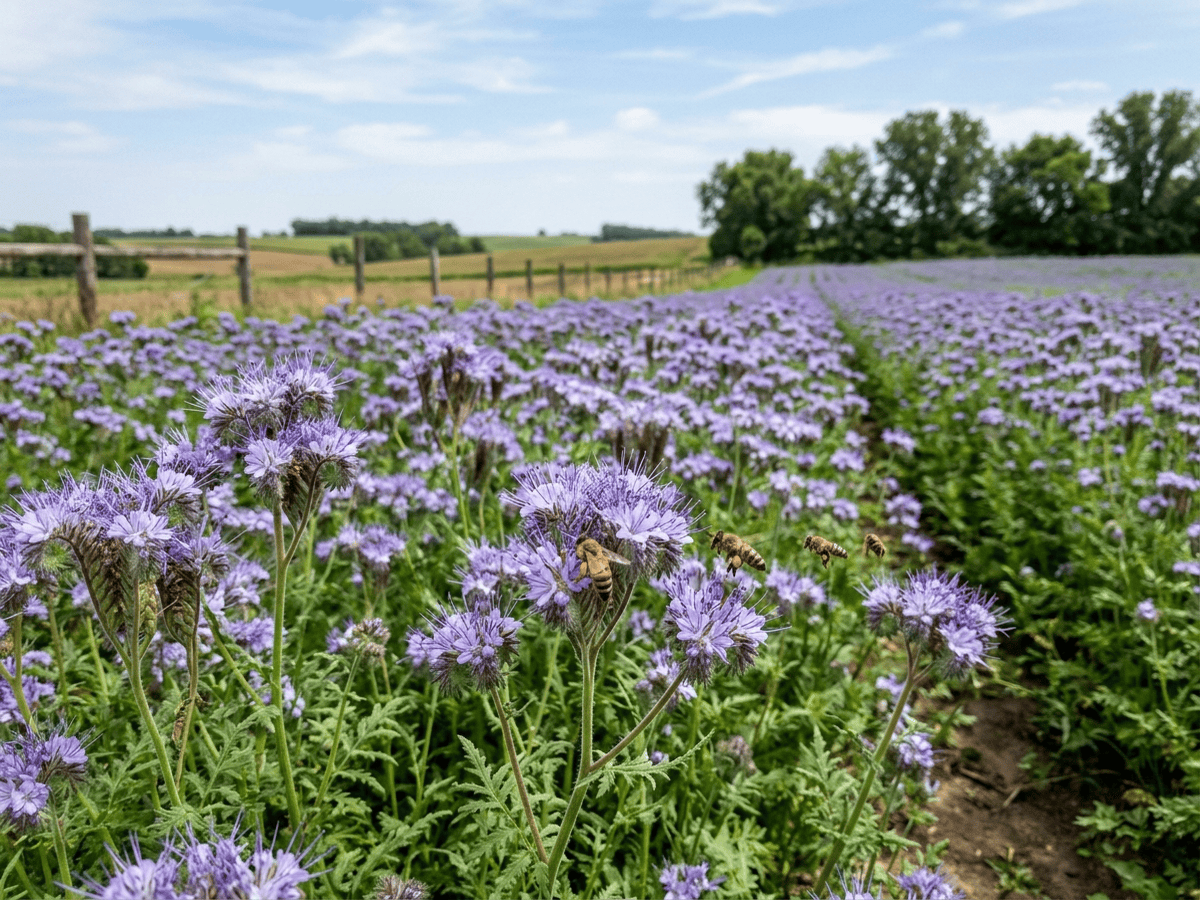
Lacy Phacelia or Tansy Leaf Phacelia is a California and Southwest native annual wildflower widely planted across the US as a premier bee forage cover crop and pollinator plant. Growing 1 to 3 feet tall with fern-like divided foliage, it produces dense scorpioid coils of lavender-blue flowers with prominent stamens from late spring through summer. Ranked among the top 20 honey plants worldwide for bee attraction.
- Drought-tolerant
- Native
- Pollinator-friendly
How to care for Lacy Phacelia
Watering
- Springevery 5 days
- Summerevery 7 days
- Fallevery 7 days
- Winterevery 10 days
Soil · Well-draining
- Top dressingPine bark mulch10%
- Main mixPotting soil + perlite 2:170%
- DrainageLECA / gravel20%
Never skip the drainage layer — standing water is the top cause of root rot.
FERTILIZER
This plant needs little to no feeding.
At a Glance
- NativeNorth America
- Height1.5–3 ft (0.5–0.9 m)
- Spread0.5–1 ft (0.2–0.3 m)
- Flower colorBlue, Purple
- Foliage colorGreen
- SoilLoamy, Well-drained
- LocationsYard
Bloom time
BLOOM CYCLE
Peak bloom
May–Aug
Lavender-blue coiled flower clusters late spring to summer
Fragrance
LIGHT FRAGRANCE
Sweet honey fragrance attracts bees.
Toxicity
Humans Slight
Unknown toxic principle
Slight
- Leaf
- Stem
- Contact
EXPOSURE Touching leaves and stems.
EFFECT Glandular hairs can cause contact dermatitis in sensitive individuals.
NOTE Dermatitis reported in sensitive individuals handling foliage.
Unknown
EXPOSURE Unspecified plant material.
EFFECT Toxic effects are not specified.
NOTE Toxicity for dogs is not well documented; use caution until verified.
Unknown
EXPOSURE Unspecified plant material.
EFFECT Toxic effects are not specified.
NOTE Toxicity for cats is not well documented; use caution until verified.
Educational information, not medical or veterinary advice. If exposure is suspected, contact a doctor or veterinarian.
DISTRIBUTION


- Native
- Introduced
- North America
History
Phacelia tanacetifolia, commonly called lacy phacelia, tansy phacelia, or scorpionweed, is an erect annual native to California, Arizona, Nevada, and adjacent northwestern Mexico. American botanist George Bentham described the species in 1836. The fern-like divided leaves give the plant a lacy texture, and coiled scorpioid flower spikes produce lavender-blue flowers filled with exceptional amounts of nectar.
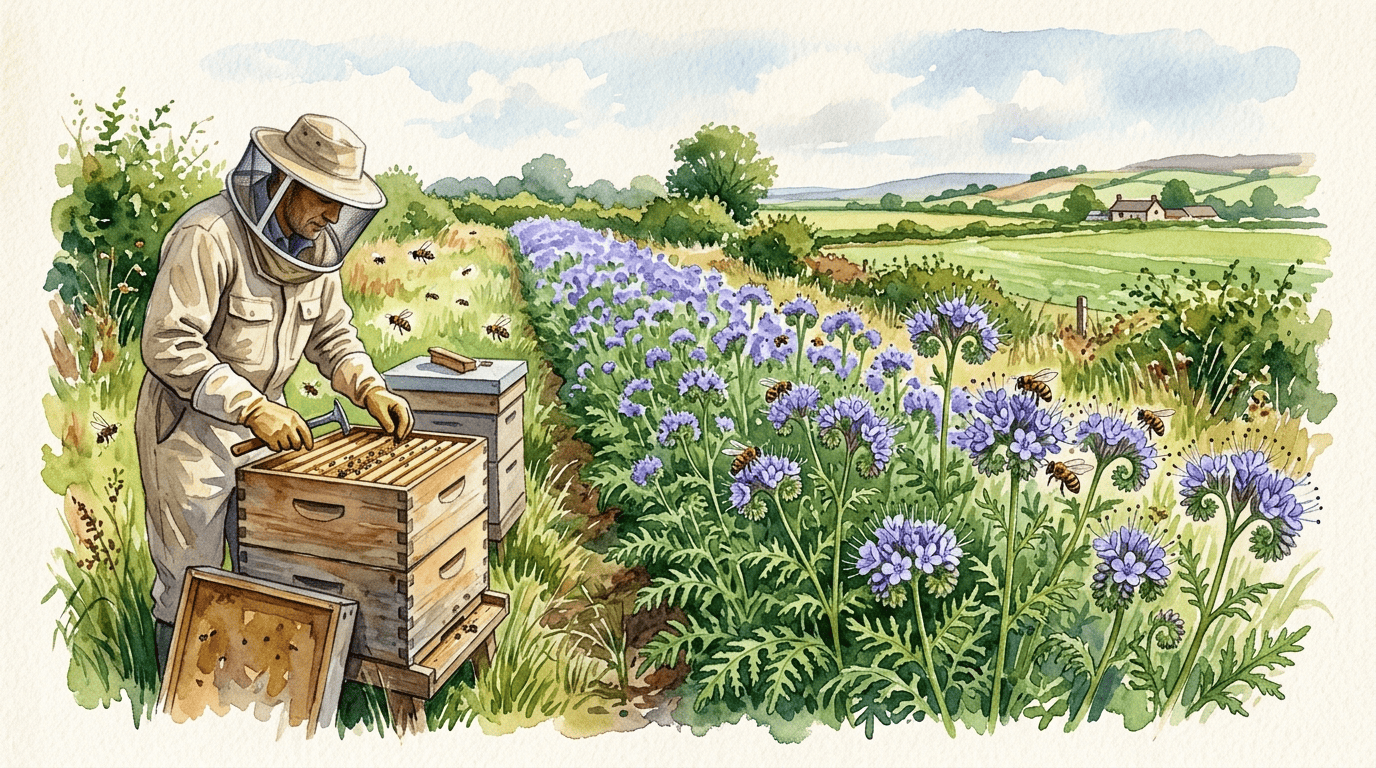
European beekeepers and organic farmers consider it one of the top-ranked bee forage plants worldwide, and it is widely sown as an insectary cover crop across Europe, especially Germany, Switzerland, and the UK, where agri-environment schemes promote it for pollinator habitat. US organic farmers and community gardens increasingly use it in similar roles. It germinates readily, blooms quickly, and reseeds gently. Native to California and the Southwest, introduced to European beekeeping in the 1800s as a premier honey plant.
Symbolism & meaning
What It Symbolizes
Lacy Phacelia can symbolize bee devotion, ranked among the world's top honey flowers and beloved by beekeepers from California to Central Europe. Another layer is soil builder, for it is the premier cover crop chosen specifically with pollinators in mind, threading lavender curls between rows of vegetables. In the modern ecological garden, phacelia is the working flower par excellence, simultaneously feeding bees, fixing structure into the soil and bringing beauty to a job traditionally done in green and brown.
- Bee devotion — one of the world's top honey flowers
- Soil builder — premier cover crop for pollinators
Where the Name Comes From
'Phacelia' from Greek 'phakelos' meaning bundle, for clustered flowers; 'tanacetifolia' means tansy-leaved, for fern-like foliage.
Uses & Fun Facts
- Lacy phacelia is a top cover crop for honey bees
Related plants
Plants with similar care
 Chinese AbeliaAbelia chinensis
 Fragrant AbeliaAbelia mosanensis
 Large-Flowered AbeliaAbelia uniflora
 Glossy AbeliaAbelia x grandiflora
Frequently asked questions
How often should I water Lacy Phacelia?
In summer, water about every 7 days; in winter, about every 10 days. Adjust for heat, pot size and drainage.
How much light does Lacy Phacelia need?
Full sun: 6+ hrs direct. Watch the leaves — scorching or stretching means the light needs adjusting.
Is Lacy Phacelia toxic to cats or dogs?
Pets Unknown (Dogs Unknown · Cats Unknown) Educational information, not medical or veterinary advice. If exposure is suspected, contact a doctor or veterinarian.
Is Lacy Phacelia easy to grow?
Yes — it is considered an easy, beginner-friendly plant.
When does Lacy Phacelia bloom?
It typically blooms May–Aug in the Northern Hemisphere.
YardMate
Identify any plant in seconds
Snap a photo — YardMate names the plant, diagnoses problems, and reminds you when to water.
Download on the App Store