 YardMate


Fraser's Photinia
Photinia x fraseri
Easy · Beginner friendlyAbout Fraser's Photinia
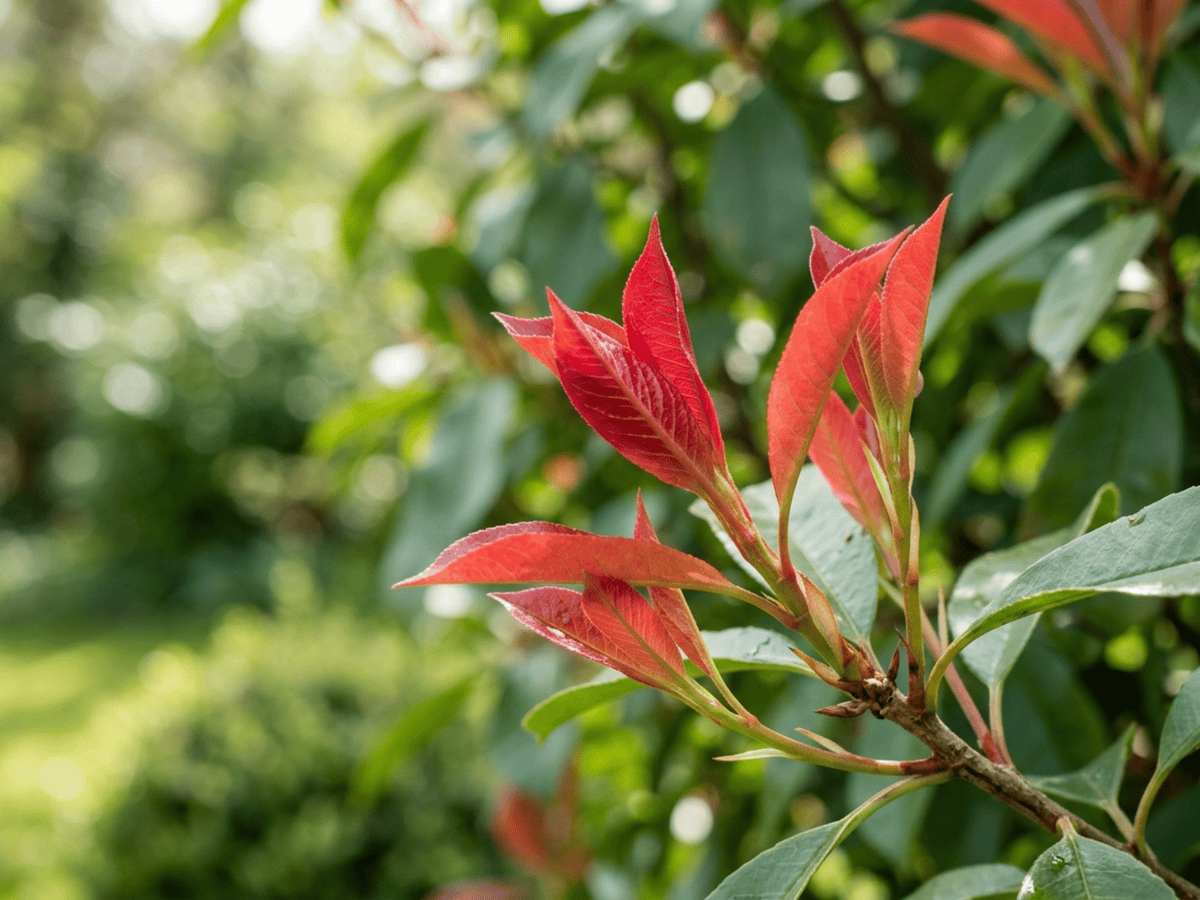
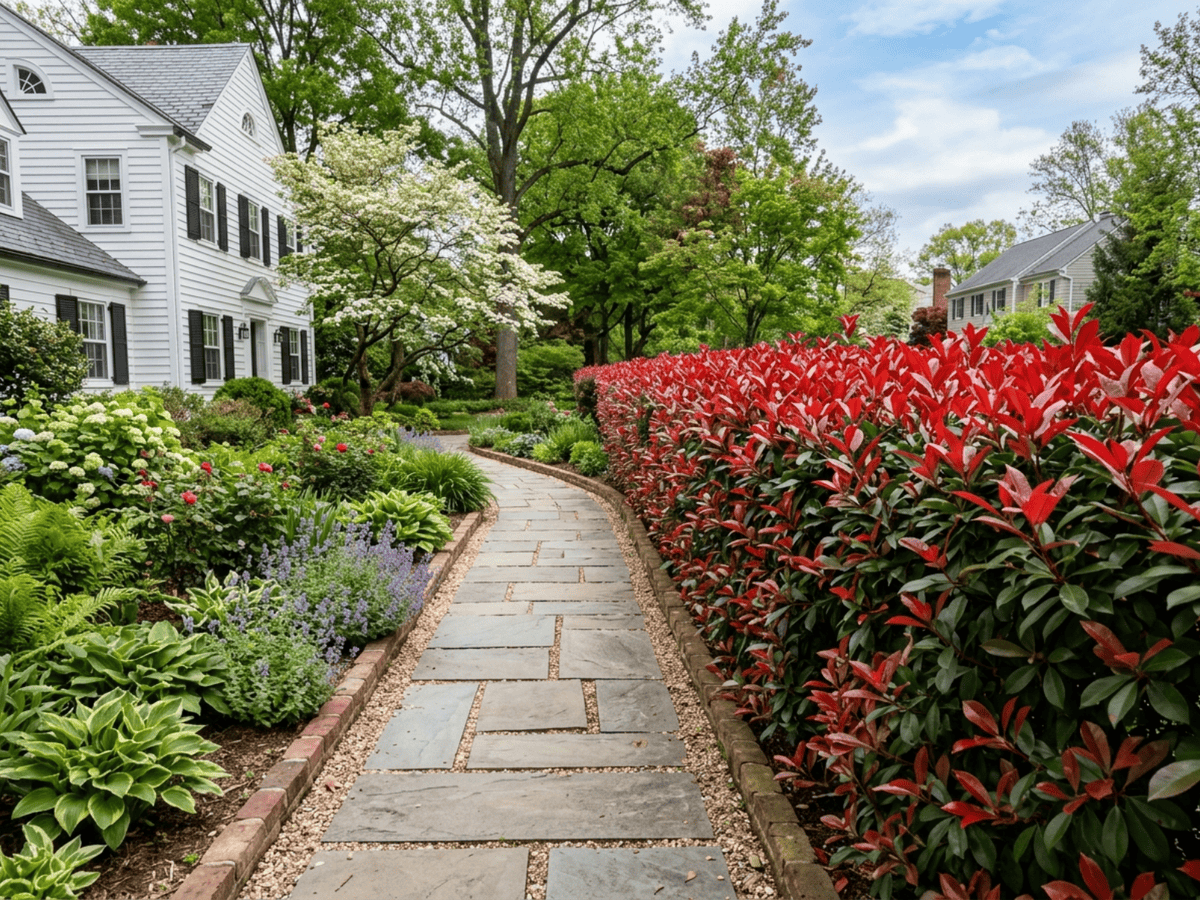
Red Tip Photinia or Fraser Photinia is a hybrid large evergreen shrub or small tree growing 10-15 feet tall, famous for its brilliant new growth that emerges deep red and ages to glossy dark green. Produces clusters of small white flowers in spring. Hardy in USDA zones 6-9, it has been one of the most planted hedging shrubs across the American South for decades, though more recently plagued by fungal leaf spot disease in humid climates.
- Evergreen
- Fast-growing
How to care for Fraser's Photinia
Watering
- Springevery 7 days
- Summerevery 5 days
- Fallevery 10 days
- Winterpause watering
Soil · Well-draining
- Top dressingPine bark mulch10%
- Main mixPotting soil + perlite 2:170%
- DrainageLECA / gravel20%
Never skip the drainage layer — standing water is the top cause of root rot.
FERTILIZER
Balanced Feed 14-14-14
An even feed covers all three needs at once, keeping leaves, roots and blooms moving together with nothing pushed out of balance.
- Nitrogen · Leaves
- Phosphorus · Roots + Blooms
- Potassium · Strength
- Springevery 60 days
- Summerevery 60 days
At a Glance
- Height10–15 ft (3–4.6 m)
- Spread8–12 ft (2.4–3.7 m)
- Flower colorWhite, Cream
- Foliage colorRed, Green
- Fruit colorRed
- SoilLoamy, Well-drained
- LocationsYard
Bloom time
BLOOM CYCLE
Peak bloom
Apr–May
White flat clusters April to May
Fragrance
LIGHT FRAGRANCE
The flowers have an unpleasant musky scent.
Toxicity
Humans Moderate · Pets Moderate
cyanogenic glycosides
Moderate
- Leaf
- Fruit
- Ingestion
EXPOSURE Eating leaves and fruit.
EFFECT Cyanide poisoning in quantity.
NOTE Leaves and berries contain cyanogenic compounds; toxic to pets and livestock if eaten in quantity.
Moderate
- Leaf
- Fruit
- Ingestion
EXPOSURE Eating leaves and fruit.
EFFECT Cyanide poisoning and vomiting.
NOTE Leaves and berries contain cyanogenic compounds; toxic to pets and livestock if eaten in quantity.
Moderate
- Leaf
- Fruit
- Ingestion
EXPOSURE Eating leaves and fruit.
EFFECT Cyanide poisoning and vomiting.
NOTE Leaves and berries contain cyanogenic compounds; toxic to pets and livestock if eaten in quantity.
Educational information, not medical or veterinary advice. If exposure is suspected, contact a doctor or veterinarian.
DISTRIBUTION


- Native
History

Photinia x fraseri originated around 1940 as a spontaneous hybrid at Fraser Nurseries in Birmingham, Alabama, crossing Asian P. glabra and P. serratifolia. Charles R. Fraser distributed the clone in 1943. The hybrid's characteristic blazing red flush of new leaves emerging through spring—with red foliage persisting for weeks before aging to green—made it spectacularly popular as a hedge plant across the American South, Mediterranean Europe, Australia, and New Zealand.
The cultivar 'Red Robin', selected in New Zealand around 1955, became the dominant commercial clone worldwide and remains ubiquitous in suburban and commercial landscapes. Unfortunately the plant is highly susceptible to a leaf-spot fungus (Entomosporium) that has caused major decline of hedges throughout its range since the 1990s. Resistant alternatives including Loropetalum chinense cultivars are now often preferred.
Quickly became the dominant hedge shrub throughout the American South from the 1960s to 2000s. Recent widespread entomosporium leaf spot has diminished its popularity, with many gardeners now choosing alternatives. When healthy, the creamy-white spring flower clusters attract pollinators.
Symbolism & meaning
What It Symbolizes
Fraser's Photinia evokes vitality through its famous fiery red new growth, each spring flush a fresh ignition along the hedge. Its heritage runs deep through the American South, where it has been the iconic privacy hedge of countless suburban yards for decades. It is a plant whose meaning lies in renewal — the regular announcement, in red, that another growing season has begun.
- Vitality — fiery red new growth
- Heritage — iconic Southern hedge plant
Where the Name Comes From
'Photinia' from Greek 'photeinos' (shining), referring to glossy leaves; 'fraseri' honors Fraser Nursery.
Uses & Fun Facts
- Vigorous evergreen with red new growth for tall privacy screens
- Bright red new leaves contrast mature dark green foliage
Related plants
Plants with similar care
 Chinese AbeliaAbelia chinensis
 Fragrant AbeliaAbelia mosanensis
 Large-Flowered AbeliaAbelia uniflora
 Glossy AbeliaAbelia x grandiflora
Frequently asked questions
How often should I water Fraser's Photinia?
Water about every 7 days during the growing season, and always let excess water drain away.
How much light does Fraser's Photinia need?
Full sun: 6+ hrs direct. Watch the leaves — scorching or stretching means the light needs adjusting.
Is Fraser's Photinia toxic to cats or dogs?
Pets Moderate (Dogs Moderate · Cats Moderate) Educational information, not medical or veterinary advice. If exposure is suspected, contact a doctor or veterinarian.
Is Fraser's Photinia easy to grow?
Yes — it is considered an easy, beginner-friendly plant.
When does Fraser's Photinia bloom?
It typically blooms Apr–May in the Northern Hemisphere.
YardMate
Identify any plant in seconds
Snap a photo — YardMate names the plant, diagnoses problems, and reminds you when to water.
Download on the App Store