 YardMate


Turkey Tangle Frogfruit
Phyla nodiflora
Easy · Beginner friendlyAbout Turkey Tangle Frogfruit
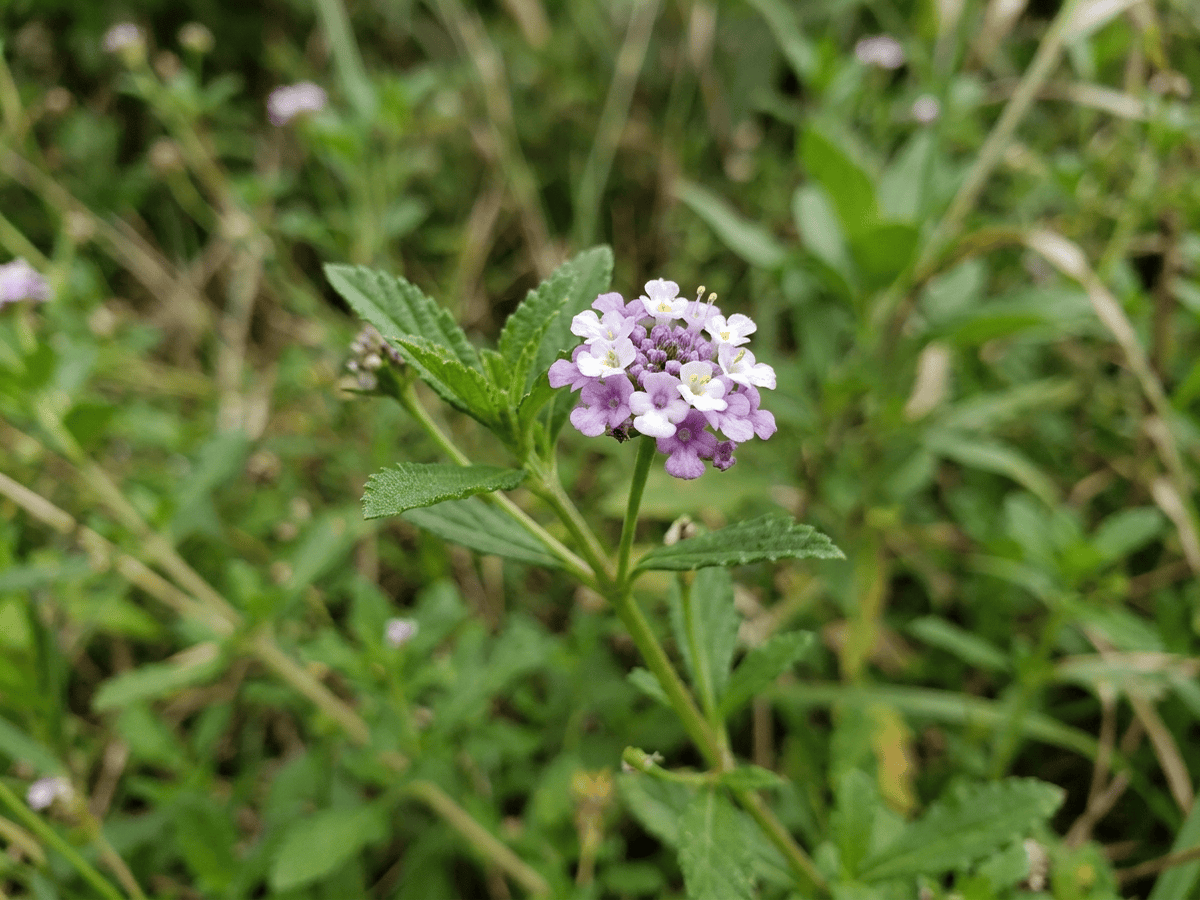
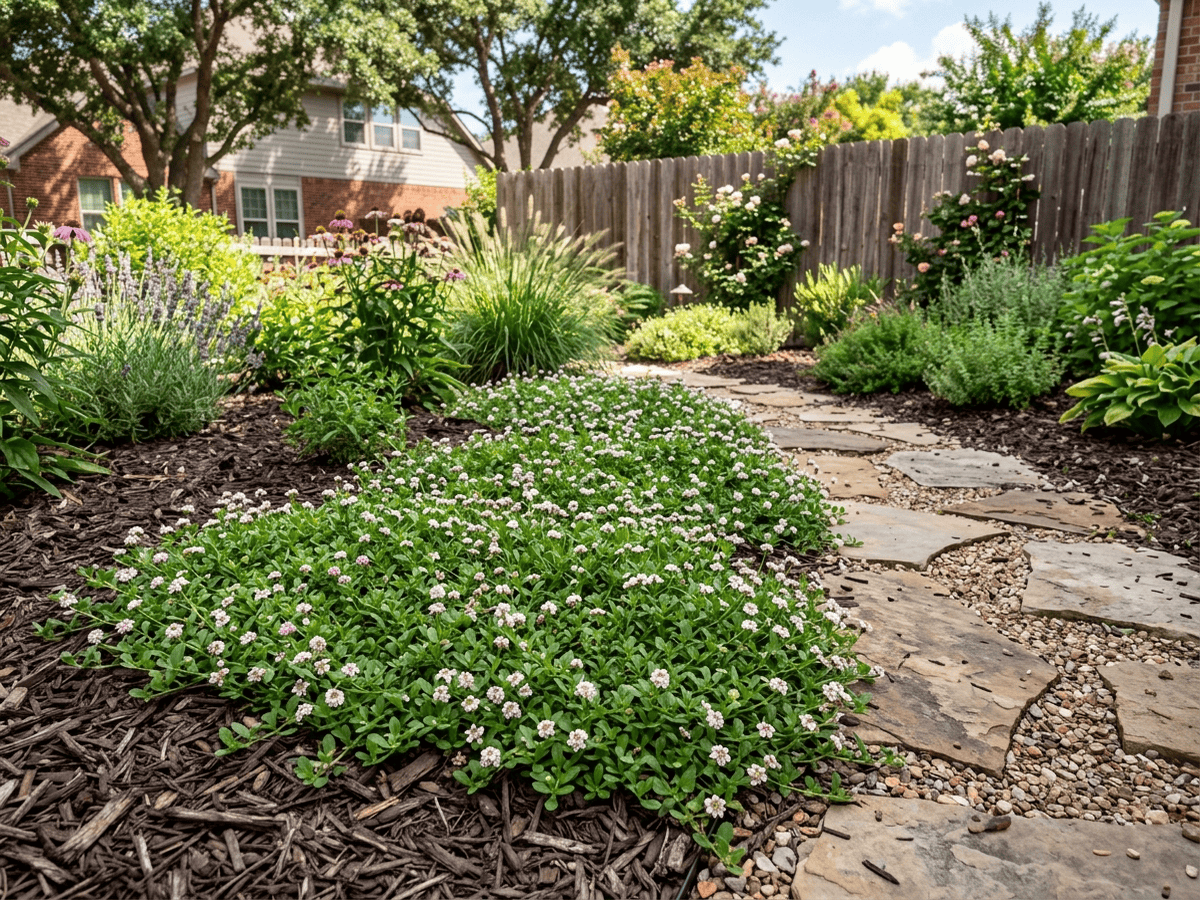
Turkey Tangle Frog Fruit is a native US groundcover reaching 2-4 inches tall with small gray-green leaves and charming small white flowers with purple centers held on short stalks throughout the warm season. Found natively from California to Florida and into Texas, it is drought-tolerant, walkable, and a valuable butterfly host plant for Common Buckeye and Phaon Crescent butterflies. An excellent native lawn substitute.
- Drought-tolerant
- Groundcover
- Native
- Pollinator-friendly
How to care for Turkey Tangle Frogfruit
Watering
- Springevery 14 days
- Summerevery 14 days
- Fallevery 21 days
- Winterevery 30 days
Soil · Well-draining
- Top dressingPine bark mulch10%
- Main mixPotting soil + perlite 2:170%
- DrainageLECA / gravel20%
Never skip the drainage layer — standing water is the top cause of root rot.
FERTILIZER
- Springevery 60 days
- Summerevery 60 days
At a Glance
- NativeNorth America, Africa, East Asia
- Height0.2–0.5 ft (0.1–0.2 m)
- Spread2–4 ft (0.6–1.2 m)
- Flower colorPurple, White, Pink
- Foliage colorGreen
- SoilSandy, Well-drained
- LocationsYard
Bloom time
BLOOM CYCLE
Peak bloom
Apr–Oct
White-purple flowers April to October
Toxicity
No toxicity has been reported for this plant. Still, it is wise to keep pets from chewing on any houseplant.
Educational information, not medical or veterinary advice. If exposure is suspected, contact a doctor or veterinarian.
DISTRIBUTION

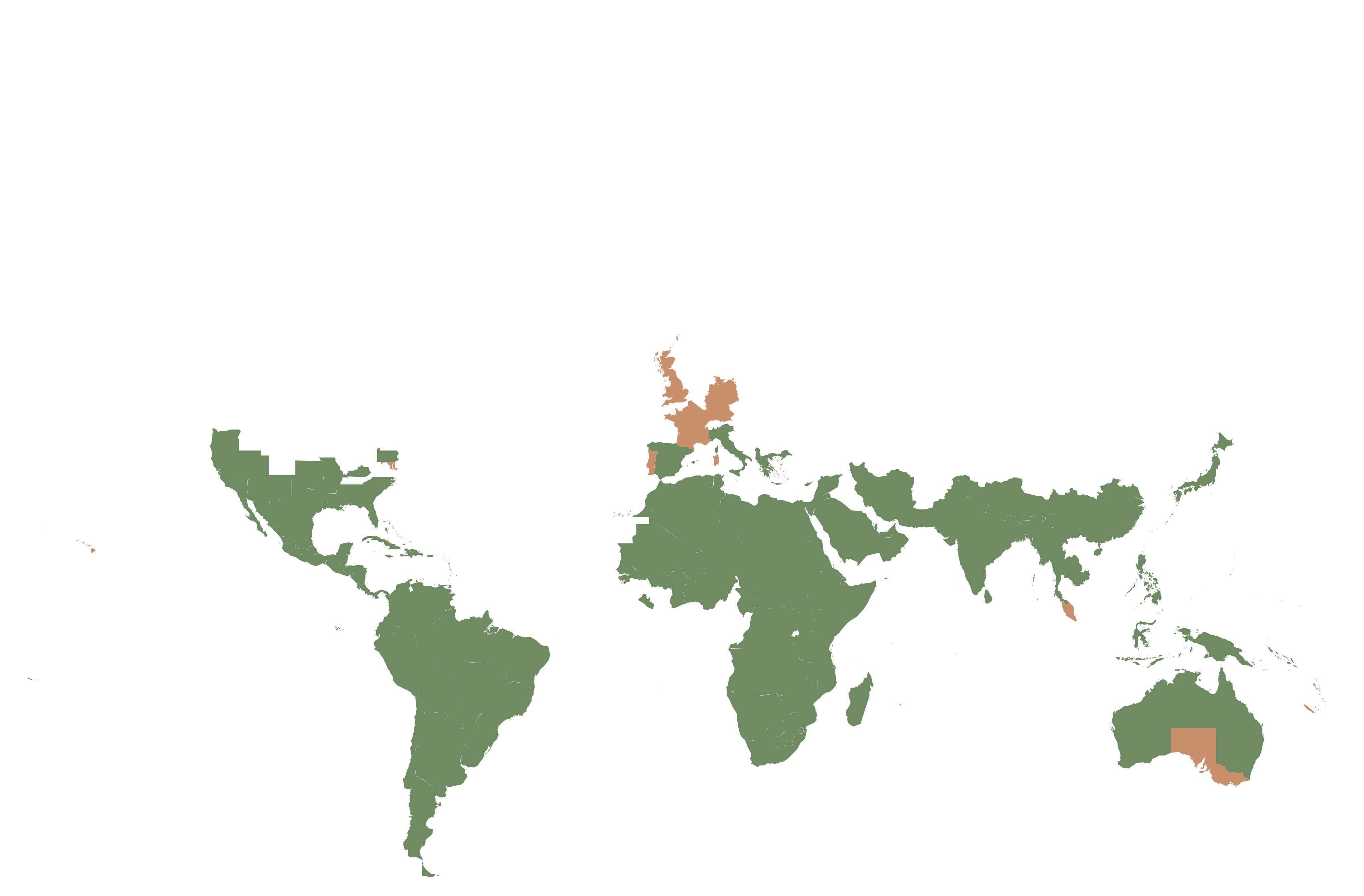
- Native
- Introduced
- North America
- Africa
- East Asia
History
Phyla nodiflora, commonly called turkey tangle frogfruit, matchweed, or capeweed, is a mat-forming perennial herb in the verbena family (Verbenaceae) with a pantropical native distribution including the southeastern United States, Mexico, Caribbean, much of South America, Africa, and Asia. Carl Linnaeus described it as Verbena nodiflora in Species Plantarum in 1753; American botanist Edward Lee Greene transferred it to Phyla in 1899. The plant forms flat 5-10 cm mats of small toothed gray-green leaves on rooting stolons that can extend several meters, producing distinctive small white-and-lavender or pink flower heads shaped like tiny matchsticks on 5-10 cm stalks year-round in frost-free climates.
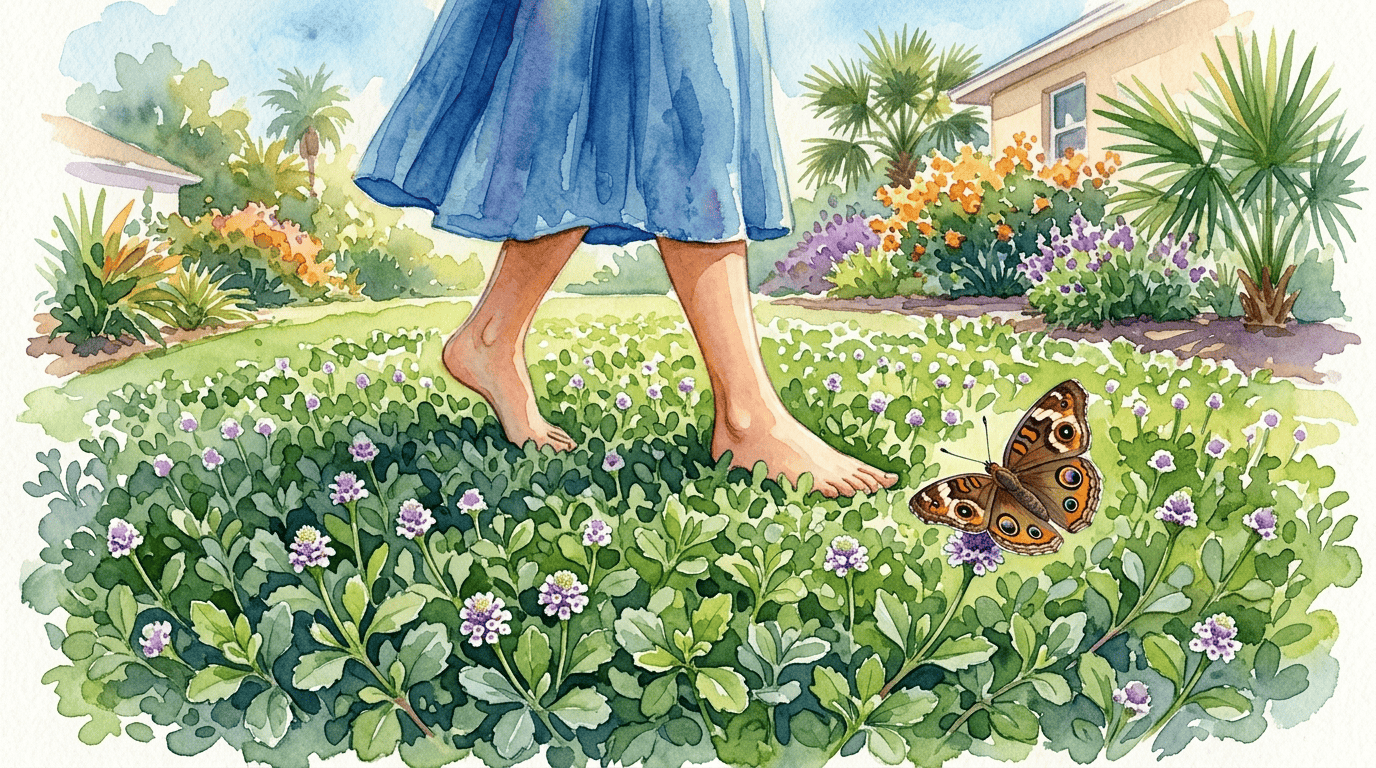
The species is an important larval host for phaon crescent, white peacock, and common buckeye butterflies in the southern US, and is heavily used as a low-maintenance lawn substitute in Florida, Gulf Coast, and Mediterranean climates, tolerating salt spray, drought, and foot traffic. A widespread native across southern US from coast to coast.
Increasingly promoted as a native lawn alternative in California, Texas, and Florida where it tolerates drought, foot traffic, and mowing. Known to Native Americans who used it medicinally. The common name references its tangling spreading habit.
Symbolism & meaning
What It Symbolizes
Turkey Tangle Frogfruit embodies wild harmony, a low native groundcover where garden meets meadow and supports native butterflies including Phaon Crescent and Common Buckeye. It evokes quiet abundance — unassuming in appearance but ecologically vital across the southern United States. A weed in some lawns, but a small, generous habitat in others.
- Wild harmony — native meets garden, supports native butterflies
- Quiet abundance — unassuming but ecologically vital
Where the Name Comes From
'Phyla' from Greek for tribe; 'nodiflora' means flowers at nodes.
Uses & Fun Facts
- Low creeping mat used as a no-mow lawn substitute
- Tiny pink-white flowers feed bees and small butterflies
- Frogfruit thrives in lawns, paths, and dry sunny areas
Related plants
Plants with similar care
 Chinese AbeliaAbelia chinensis
 Fragrant AbeliaAbelia mosanensis
 Large-Flowered AbeliaAbelia uniflora
 Glossy AbeliaAbelia x grandiflora
Frequently asked questions
How often should I water Turkey Tangle Frogfruit?
In summer, water about every 14 days; in winter, about every 30 days. Adjust for heat, pot size and drainage.
How much light does Turkey Tangle Frogfruit need?
Full sun: 6+ hrs direct. Watch the leaves — scorching or stretching means the light needs adjusting.
Is Turkey Tangle Frogfruit toxic to cats or dogs?
No toxicity has been reported for this plant. Still, it is wise to keep pets from chewing on any houseplant. Educational information, not medical or veterinary advice. If exposure is suspected, contact a doctor or veterinarian.
Is Turkey Tangle Frogfruit easy to grow?
Yes — it is considered an easy, beginner-friendly plant.
When does Turkey Tangle Frogfruit bloom?
It typically blooms Apr–Oct in the Northern Hemisphere.
YardMate
Identify any plant in seconds
Snap a photo — YardMate names the plant, diagnoses problems, and reminds you when to water.
Download on the App Store