 YardMate


Chinese Arborvitae
Platycladus orientalis
Easy · Beginner friendlyAbout Chinese Arborvitae
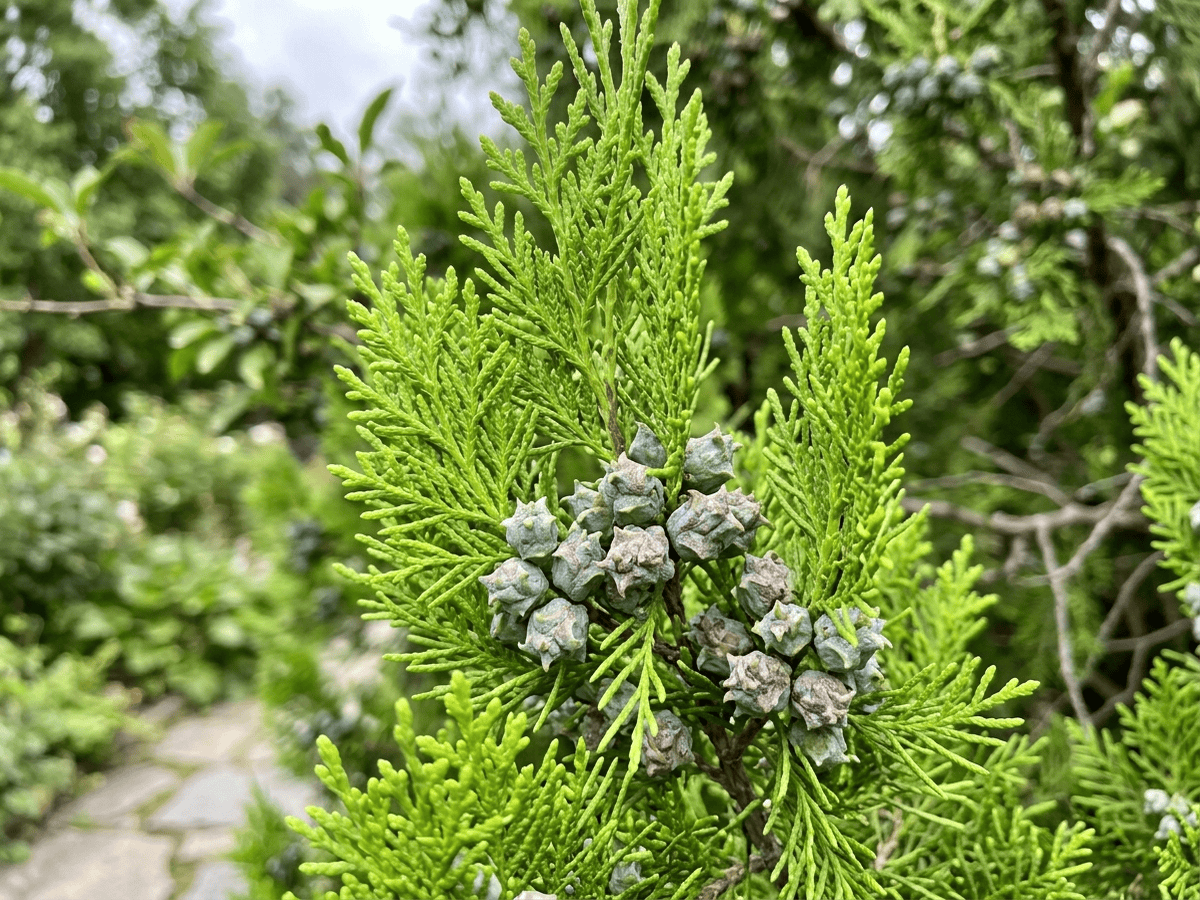
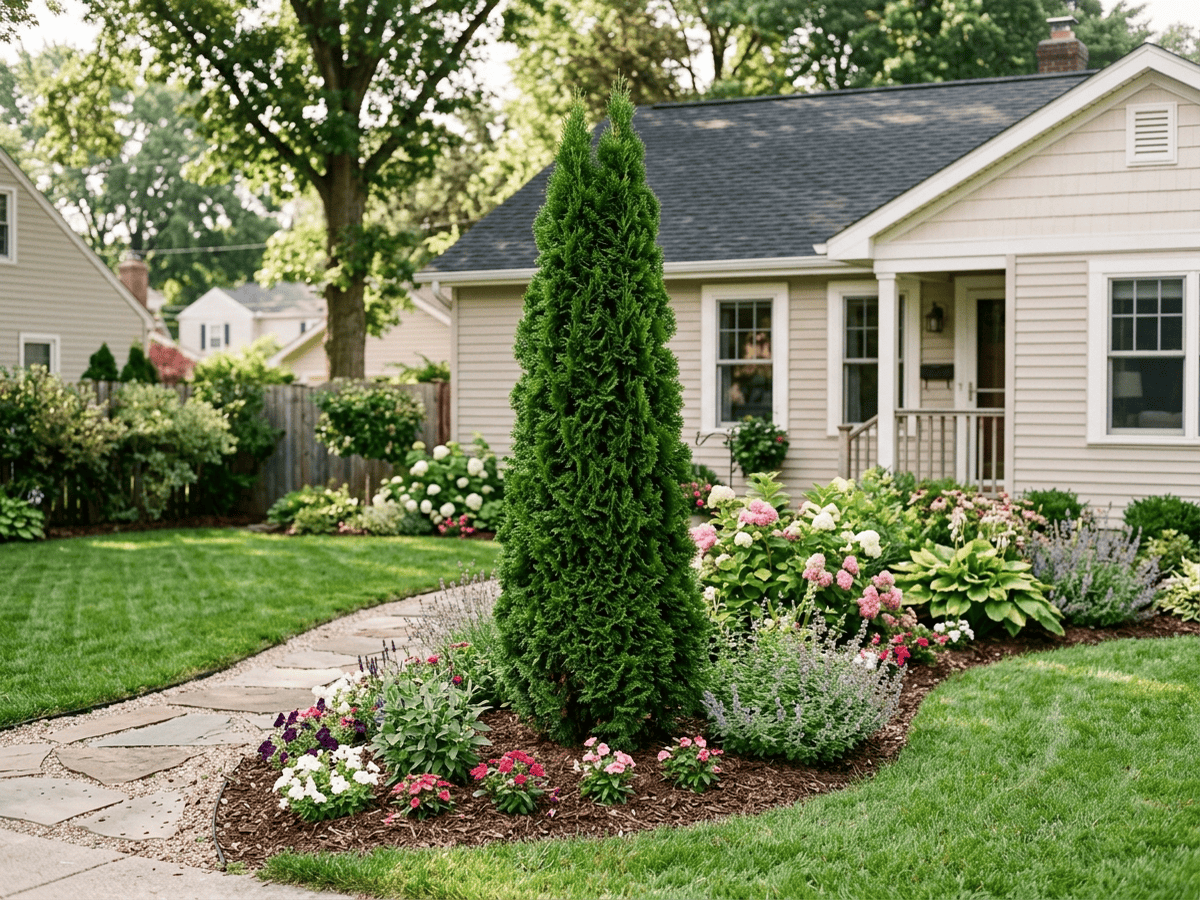
Oriental Arborvitae is an evergreen conifer native to China and Korea, reaching 20-40 feet, with tightly upright scale-like foliage held in vertical planes like open fans. Sharp-edged blue-purple cones with curved hooks distinguish it from American arborvitae. Drought-tolerant and tidy in form, the golden cultivars like 'Aurea Nana' are widely planted in foundation and formal American gardens across hot, dry regions.
- Drought-tolerant
- Evergreen
How to care for Chinese Arborvitae
Watering
- Springevery 14 days
- Summerevery 10 days
- Fallevery 21 days
- Winterevery 30 days
Soil · Well-draining
- Top dressingPine bark mulch10%
- Main mixPotting soil + perlite 2:170%
- DrainageLECA / gravel20%
Never skip the drainage layer — standing water is the top cause of root rot.
FERTILIZER
Balanced Feed 14-14-14
An even feed covers all three needs at once, keeping leaves, roots and blooms moving together with nothing pushed out of balance.
- Nitrogen · Leaves
- Phosphorus · Roots + Blooms
- Potassium · Strength
- Springevery 60 days
At a Glance
- NativeEast Asia
- Height20–40 ft (6.1–12.2 m)
- Spread10–15 ft (3–4.6 m)
- Flower colorYellow, Green
- Foliage colorGreen, Yellow, Bronze
- Fruit colorBlue, Purple
- SoilLoamy, Well-drained
- LocationsYard
Bloom time
BLOOM CYCLE
Small yellow male cones in spring
Fragrance
MODERATE FRAGRANCE
Resinous cypress-thuja scent when crushed.
Toxicity
Humans Moderate · Pets Moderate
thujone, pinene, and cedrol
Moderate
- Leaf
- Ingestion
EXPOSURE Eating leaves.
EFFECT GI irritation, convulsions at high doses from thujone.
NOTE Thujone content is higher than in Thuja; keep away from livestock and grazing animals. Traditional medicinal use requires processing.
Moderate
- Leaf
- Ingestion
EXPOSURE Eating leaves.
EFFECT Vomiting, diarrhea, potential tremors.
NOTE Thujone content is higher than in Thuja; keep away from livestock and grazing animals. Traditional medicinal use requires processing.
Moderate
- Leaf
- Ingestion
EXPOSURE Eating leaves.
EFFECT Vomiting, diarrhea.
NOTE Thujone content is higher than in Thuja; keep away from livestock and grazing animals. Traditional medicinal use requires processing.
Educational information, not medical or veterinary advice. If exposure is suspected, contact a doctor or veterinarian.
DISTRIBUTION

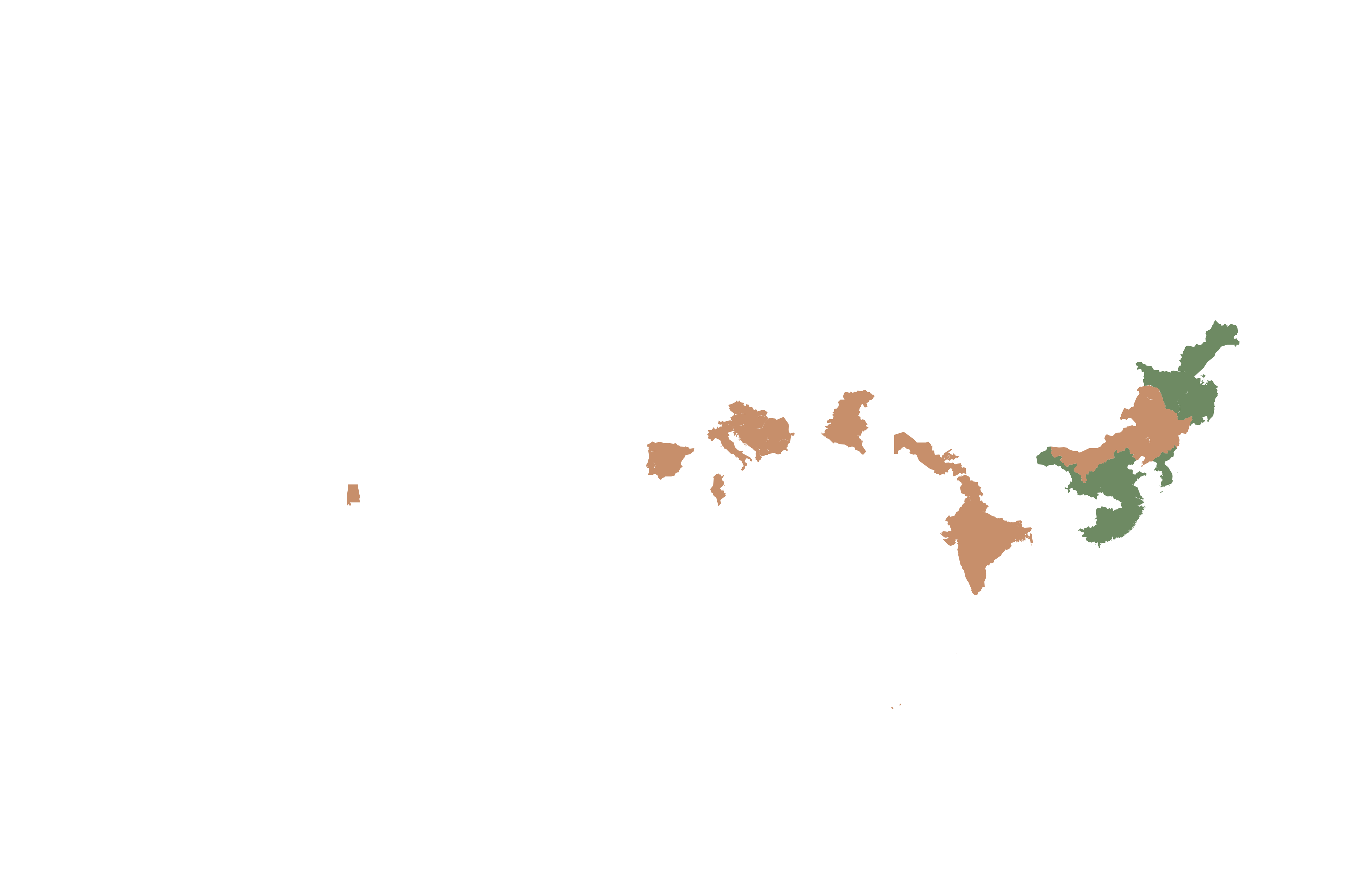
- Native
- Introduced
- East Asia
History
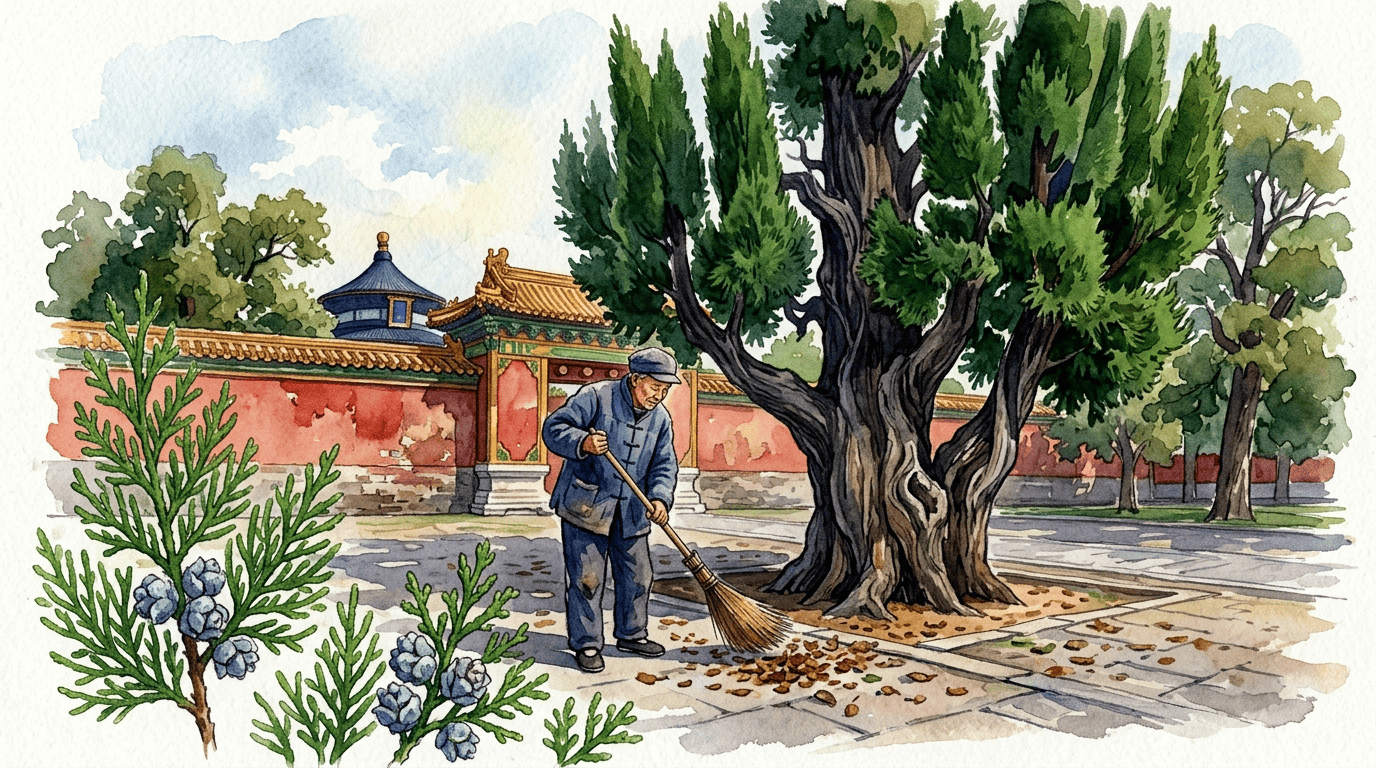
Platycladus orientalis, Chinese arborvitae, is native to northern China, Korea, and the Russian Far East, especially dry limestone mountain slopes. Linnaeus first described it as Thuja orientalis in 1753, and Franco moved it to the separate genus Platycladus in 1949 because its cones and wingless seeds differ from true Thuja. In Chinese culture it is known as bai and is one of the classic trees of longevity, planted around tombs, Confucian temples, imperial complexes, and sacred sites.
Ancient specimens at the Temple of Heaven and Zhongshan Park in Beijing are centuries old, and legendary trees at the Yellow Emperor's cemetery are said to be far older. Leaves and seeds entered Chinese medicine under names used for arborvitae leaf and seed.
It was among the earliest Chinese conifers brought to Europe, arriving in the 1690s, and compact golden forms such as 'Aurea Nana' later made it common in ornamental planting.
Symbolism & meaning
What It Symbolizes
Chinese Arborvitae evokes constancy, an evergreen long planted at Chinese temples as a quiet companion to ritual and contemplation. Paired with longevity, certain specimens are recorded at over two thousand years old, their twisted forms older than most living traditions around them. To plant one is to offer a tree whose meaning lies in lifetimes counted in dynasties, not decades.
- Constancy — evergreen temple tree of China
- Longevity — some specimens over 2000 years old
Where the Name Comes From
The name Chinese Arborvitae points to China. 'Platycladus' means 'flat branch' for the flattened foliage sprays; 'orientalis' means of the east.
Uses & Fun Facts
- Dense evergreen scale foliage clips into formal screens
- Oriental arborvitae as upright accent in dry-climate gardens
- Long planted at temples and tombs across East Asia
Related plants
Plants with similar care
 Chinese AbeliaAbelia chinensis
 Fragrant AbeliaAbelia mosanensis
 Large-Flowered AbeliaAbelia uniflora
 Glossy AbeliaAbelia x grandiflora
Frequently asked questions
How often should I water Chinese Arborvitae?
In summer, water about every 10 days; in winter, about every 30 days. Adjust for heat, pot size and drainage.
How much light does Chinese Arborvitae need?
Full sun: 6+ hrs direct. Watch the leaves — scorching or stretching means the light needs adjusting.
Is Chinese Arborvitae toxic to cats or dogs?
Pets Moderate (Dogs Moderate · Cats Moderate) Educational information, not medical or veterinary advice. If exposure is suspected, contact a doctor or veterinarian.
Is Chinese Arborvitae easy to grow?
Yes — it is considered an easy, beginner-friendly plant.
YardMate
Identify any plant in seconds
Snap a photo — YardMate names the plant, diagnoses problems, and reminds you when to water.
Download on the App Store