 YardMate


Annual Meadow-Grass
Poa annua
Easy · Beginner friendlyAbout Annual Meadow-Grass
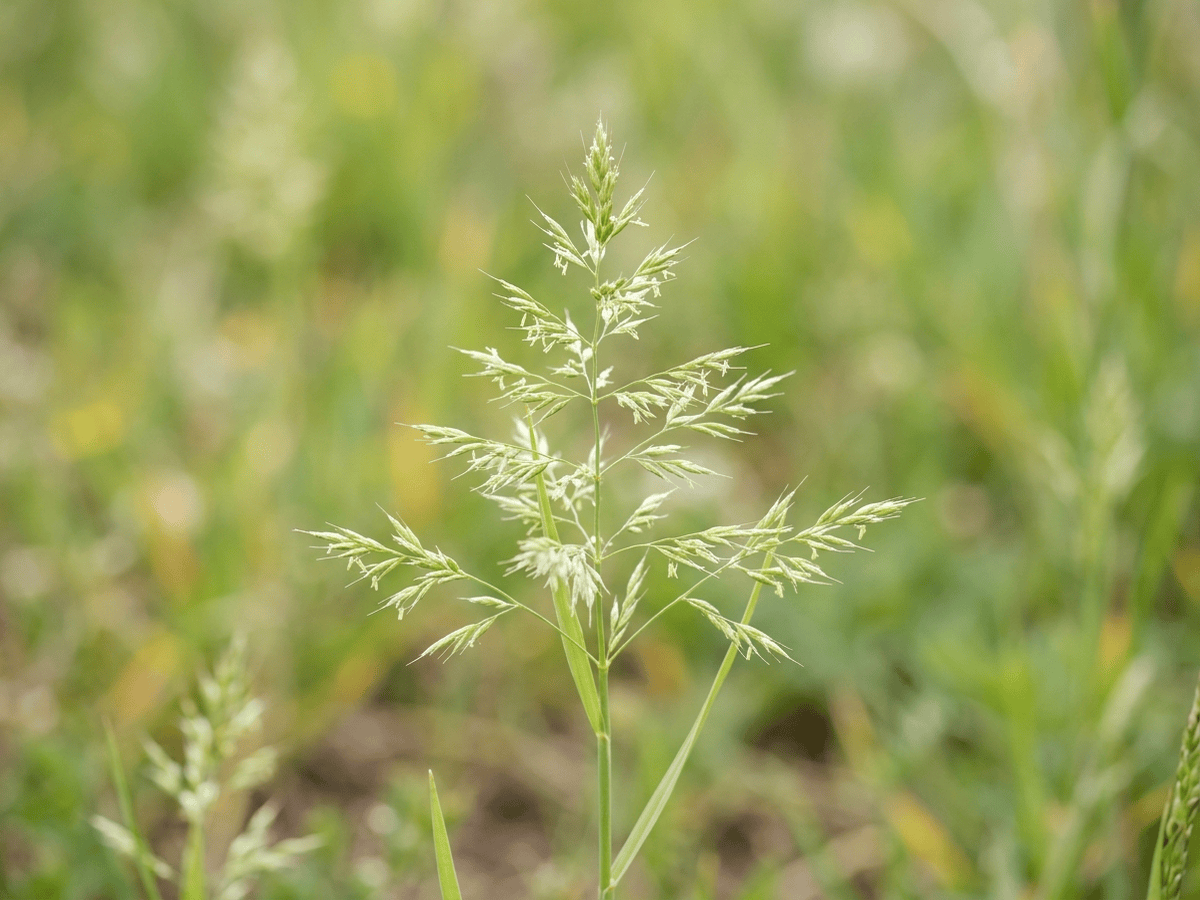
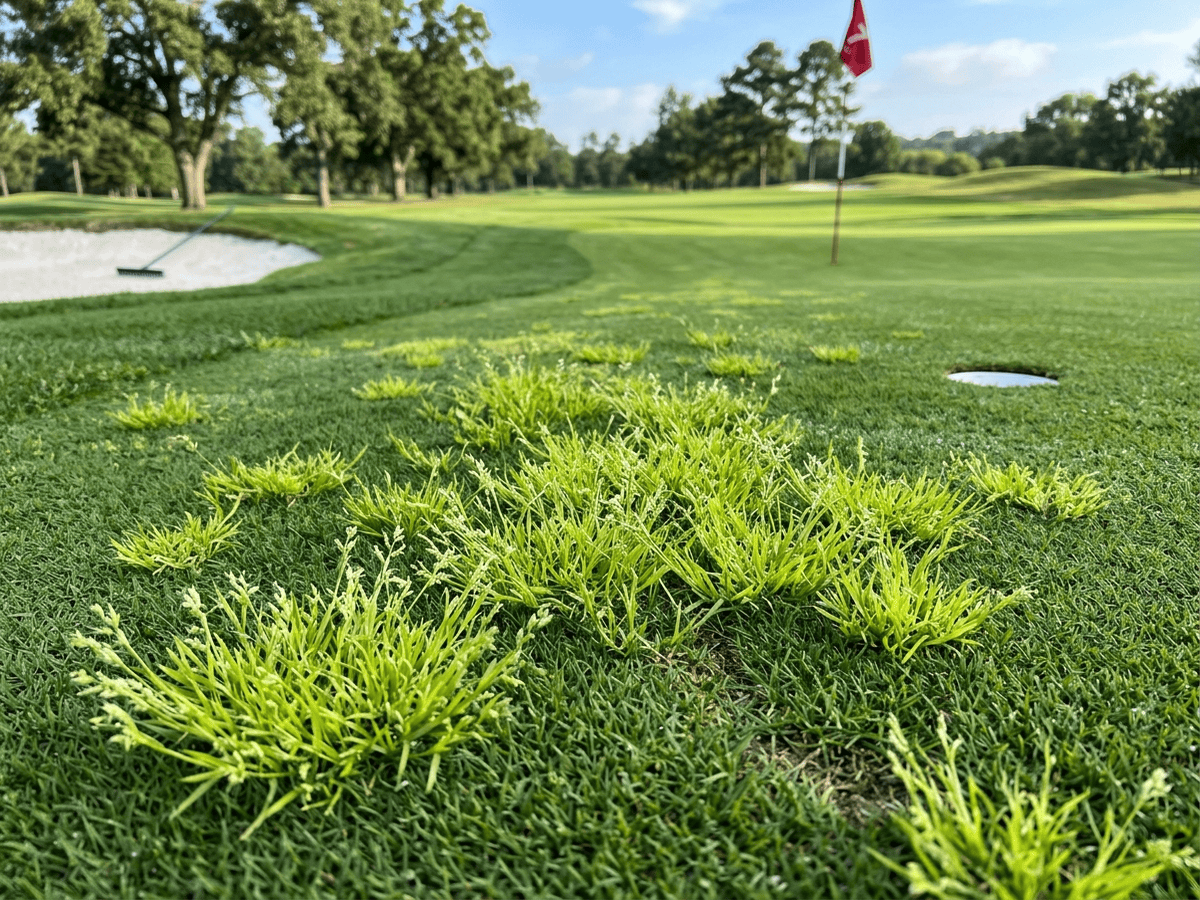
Annual Bluegrass is a small cool-season annual or short-lived perennial grass of uncertain Eurasian origin now naturalized worldwide, germinating in fall and flowering in spring with boat-shaped leaf tips and distinctive short pyramid seed heads. Persistent winter weed in American lawns, golf courses, and gardens, especially thriving in compacted moist soils. A major problem on premium turf because it produces seed even when mowed extremely short.
- Shade-tolerant
How to care for Annual Meadow-Grass
Watering
- Springevery 7 days
- Summerevery 5 days
- Fallevery 10 days
- Winterevery 14 days
Soil · Well-draining
- Top dressingPine bark mulch10%
- Main mixPotting soil + perlite 2:170%
- DrainageLECA / gravel20%
Never skip the drainage layer — standing water is the top cause of root rot.
FERTILIZER
This plant needs little to no feeding.
At a Glance
- NativeEurope
- Height0.3–0.8 ft (0.1–0.2 m)
- Spread0.3–0.8 ft (0.1–0.2 m)
- Flower colorGreen, Purple
- Foliage colorGreen
- Fruit colorBrown
- SoilLoamy, Moisture-retentive
- LocationsYard
Bloom time
BLOOM CYCLE
Peak bloom
Mar, Apr, May, Sep, Oct, Nov
Small pyramid seed heads fall through spring, often very short
Toxicity
No toxicity has been reported for this plant. Still, it is wise to keep pets from chewing on any houseplant.
Educational information, not medical or veterinary advice. If exposure is suspected, contact a doctor or veterinarian.
DISTRIBUTION

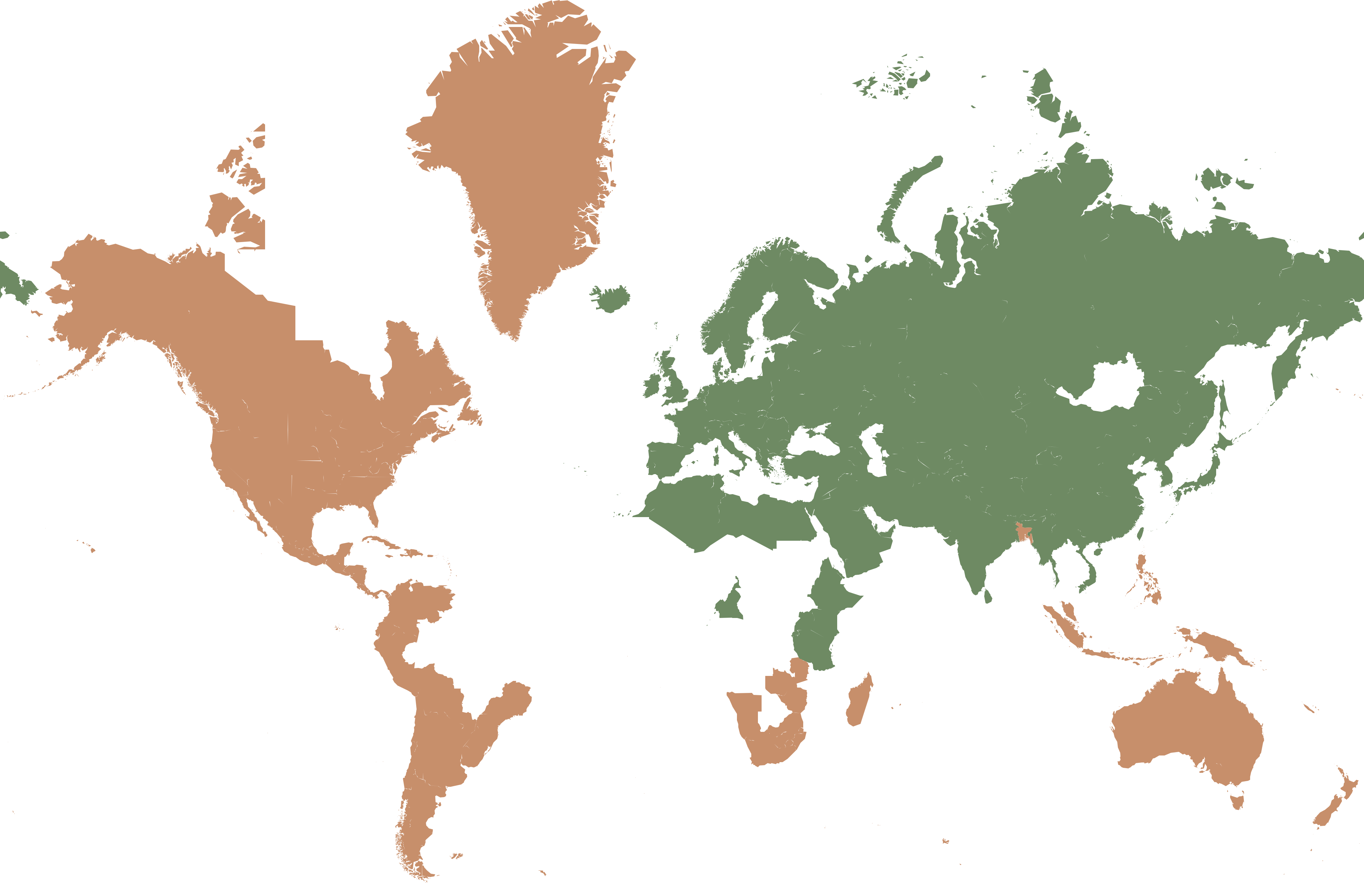
- Native
- Introduced
- Europe
History

Poa annua is native to Europe but now grows on every continent including Antarctica, where it became the first flowering plant to naturalize on the continent after 1950s research stations introduced it. Linnaeus described it in Species Plantarum (1753). Molecular studies show it originated as a hybrid between Poa supina and Poa infirma perhaps 15,000-100,000 years ago, acquiring the genomes of both parents.
It completes its life cycle in 6 weeks and can flower at lawn-mower height, producing copious seed that persists in soil for years. Golf course greens battle it constantly because it becomes a permanent component of putting surfaces despite its pale yellow winter appearance. It is the poster child species for rapid herbicide resistance evolution — Australian populations are resistant to at least 11 different herbicide modes of action.
Native to Europe but now one of the most widely distributed plants on Earth. A perpetual headache on American golf courses where premium bentgrass greens are invaded annually, triggering intensive preventive herbicide programs. Considered by turf scientists among the world's most adaptable plants.
Symbolism & meaning
What It Symbolizes
Annual Bluegrass is stubborn presence on a global scale — it sets seed at mowing heights below an inch and has spread to every continent on Earth, including Antarctica. The most universal weed of golf courses, lawns, and sidewalk cracks, it is the small grass that proves persistence beats almost everything. It is what grows when nothing else has been allowed to.
- Stubborn presence — produces seed at mowing height below 1 inch
- Universal weed — found on every continent including Antarctica
Where the Name Comes From
'Poa' from Greek 'poa' meaning fodder or grass; 'annua' from Latin means annual, for the typical one-year life cycle.
Related plants
Plants with similar care
 Chinese AbeliaAbelia chinensis
 Fragrant AbeliaAbelia mosanensis
 Large-Flowered AbeliaAbelia uniflora
 Glossy AbeliaAbelia x grandiflora
Frequently asked questions
How often should I water Annual Meadow-Grass?
In summer, water about every 5 days; in winter, about every 14 days. Adjust for heat, pot size and drainage.
How much light does Annual Meadow-Grass need?
Full sun: 6+ hrs direct. Watch the leaves — scorching or stretching means the light needs adjusting.
Is Annual Meadow-Grass toxic to cats or dogs?
No toxicity has been reported for this plant. Still, it is wise to keep pets from chewing on any houseplant. Educational information, not medical or veterinary advice. If exposure is suspected, contact a doctor or veterinarian.
Is Annual Meadow-Grass easy to grow?
Yes — it is considered an easy, beginner-friendly plant.
When does Annual Meadow-Grass bloom?
It typically blooms Mar, Apr, May, Sep, Oct, Nov in the Northern Hemisphere.
YardMate
Identify any plant in seconds
Snap a photo — YardMate names the plant, diagnoses problems, and reminds you when to water.
Download on the App Store