 YardMate


Kusamaki
Podocarpus macrophyllus
Easy · Beginner friendlyAbout Kusamaki
Podocarpus macrophyllus, commonly known as yew pine, Buddhist pine, or Japanese yew, is a graceful evergreen conifer native to southern Japan and China. Despite its common names, it is neither a true pine nor a yew, belonging instead to the ancient Podocarpaceae family. It grows as a tree or large shrub reaching six to fifteen meters tall in the landscape, with dense, dark-green, strap-shaped leaves arranged spirally along upright stems. The overall effect is refined and columnar, making it a popular choice for formal hedges, topiary, and vertical accents. Female plants produce fleshy, purple-blue seed structures on swollen red receptacles that are mildly edible. Podocarpus is a cornerstone of Asian garden design, prized for its elegant form that evokes the meditative quality of temple gardens. It tolerates heavy pruning, shade, salt spray, and urban conditions, making it exceptionally versatile. In warm climates, it is widely used as a privacy screen, specimen tree, or container plant. The wood is valued in Japan for its fine grain and is used in traditional woodworking. Buddhist pine grows slowly but lives for centuries, with ancient specimens found in temple grounds across Japan and China.
- Evergreen
How to care for Kusamaki
Watering
- Springevery 7 days
- Summerevery 5 days
- Fallevery 14 days
- Winterevery 30 days
Soil · Well-draining
- Top dressingPine bark mulch10%
- Main mixPotting soil + perlite 2:170%
- DrainageLECA / gravel20%
Never skip the drainage layer — standing water is the top cause of root rot.
FERTILIZER
Balanced Feed 14-14-14
An even feed covers all three needs at once, keeping leaves, roots and blooms moving together with nothing pushed out of balance.
- Nitrogen · Leaves
- Phosphorus · Roots + Blooms
- Potassium · Strength
- Springevery 60 days
- Summerevery 60 days
At a Glance
- NativeEast Asia
- Height20–40 ft (6.1–12.2 m)
- Spread8–15 ft (2.4–4.6 m)
- Foliage colorGreen
- SoilWell-drained, Loamy, Acidic
- LocationsYard · Indoor
Bloom time
BLOOM CYCLE
Inconspicuous; female plants produce ornamental fleshy purple-blue seeds on red stalks
Fragrance
NO FRAGRANCE
No notable fragrance.
Toxicity
Humans Slight · Pets Moderate
norditerpenoid dilactones
Slight
- Seed
- Leaf
- Ingestion
EXPOSURE Eating seeds and leaves.
EFFECT Leaves contain diterpenoid compounds and seeds sometimes eaten raw but foliage should be avoided.
NOTE Podocarpus is considered moderately toxic to pets; leaves and seeds should be kept away from chewing animals.
Moderate
- Leaf
- Seed
- Ingestion
EXPOSURE Eating leaves and seeds.
EFFECT Vomiting, diarrhea, weakness and potentially more serious with large ingestion.
NOTE Podocarpus is considered moderately toxic to pets; leaves and seeds should be kept away from chewing animals.
Moderate
- Leaf
- Seed
- Ingestion
EXPOSURE Eating leaves and seeds.
EFFECT Same as dogs.
NOTE Podocarpus is considered moderately toxic to pets; leaves and seeds should be kept away from chewing animals.
Educational information, not medical or veterinary advice. If exposure is suspected, contact a doctor or veterinarian.
DISTRIBUTION


- Native
- Introduced
- East Asia
History
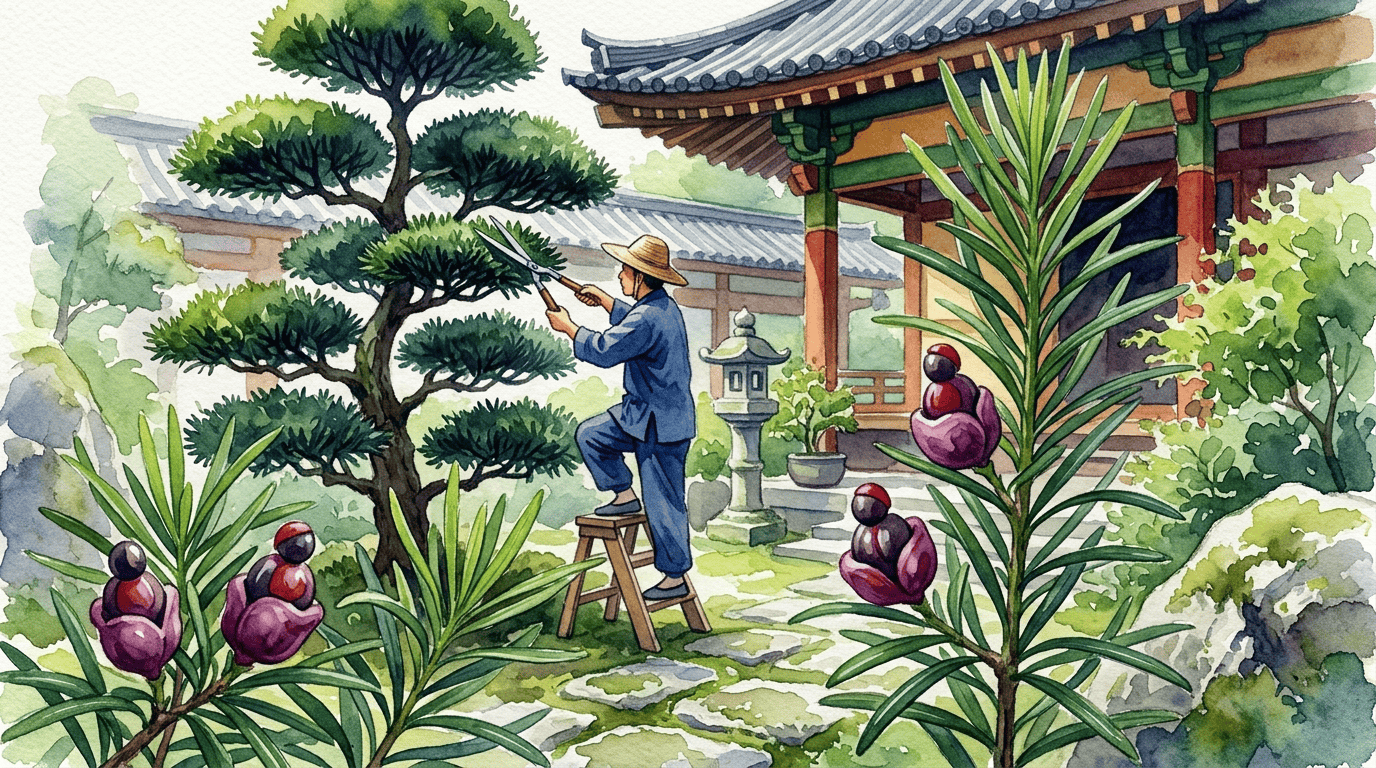
Podocarpus macrophyllus is native to southern Japan and southern China. In Japan it is called kusamaki or inumaki; in Chinese-influenced Buddhist landscapes it is often known as arhat pine, a name inspired by the seed sitting above a fleshy cup like a tiny seated figure. Despite the common name Buddhist pine, it is not a pine but a podocarp, part of an ancient southern conifer lineage.
For more than a thousand years it has been planted in temple, residential, and courtyard gardens, where it symbolizes longevity and responds well to formal shaping. The dark linear leaves, upright habit, and unusual fleshy seed structures make it distinctive among conifers.
In Chinese and Japanese horticulture it is classic material for cloud-pruned forms, bonsai, hedges, and niwaki. Introduced to warm parts of the United States, it became one of the most dependable evergreen screens in Florida, the Gulf Coast, the Carolinas, Texas, and California.
Symbolism & meaning
What It Symbolizes
Kusamaki carries Longevity — temple specimens in Japan and China have lived for centuries, witnessing dynasties from beneath the same canopy. It is also a tree of Spiritual calm, planted in Buddhist temple gardens where its dark, fine foliage frames quiet courtyards. A green presence shaped by both time and contemplation.
- Longevity — Centuries-old temple specimens represent endurance and the passage of time
- Spiritual calm — Associated with Buddhist temple gardens and meditative tranquility
Where the Name Comes From
'Podocarpus' comes from Greek 'pous' (foot) and 'karpos' (fruit), describing the fleshy stalk beneath the seed. 'Macrophyllus' means large-leaved.
Uses & Fun Facts
- Narrow evergreen foliage shears into dense formal screens
- Yew-like texture and clean form suit Asian-style gardens
- Tolerates large pots for entryways and patios
Related plants
Plants with similar care
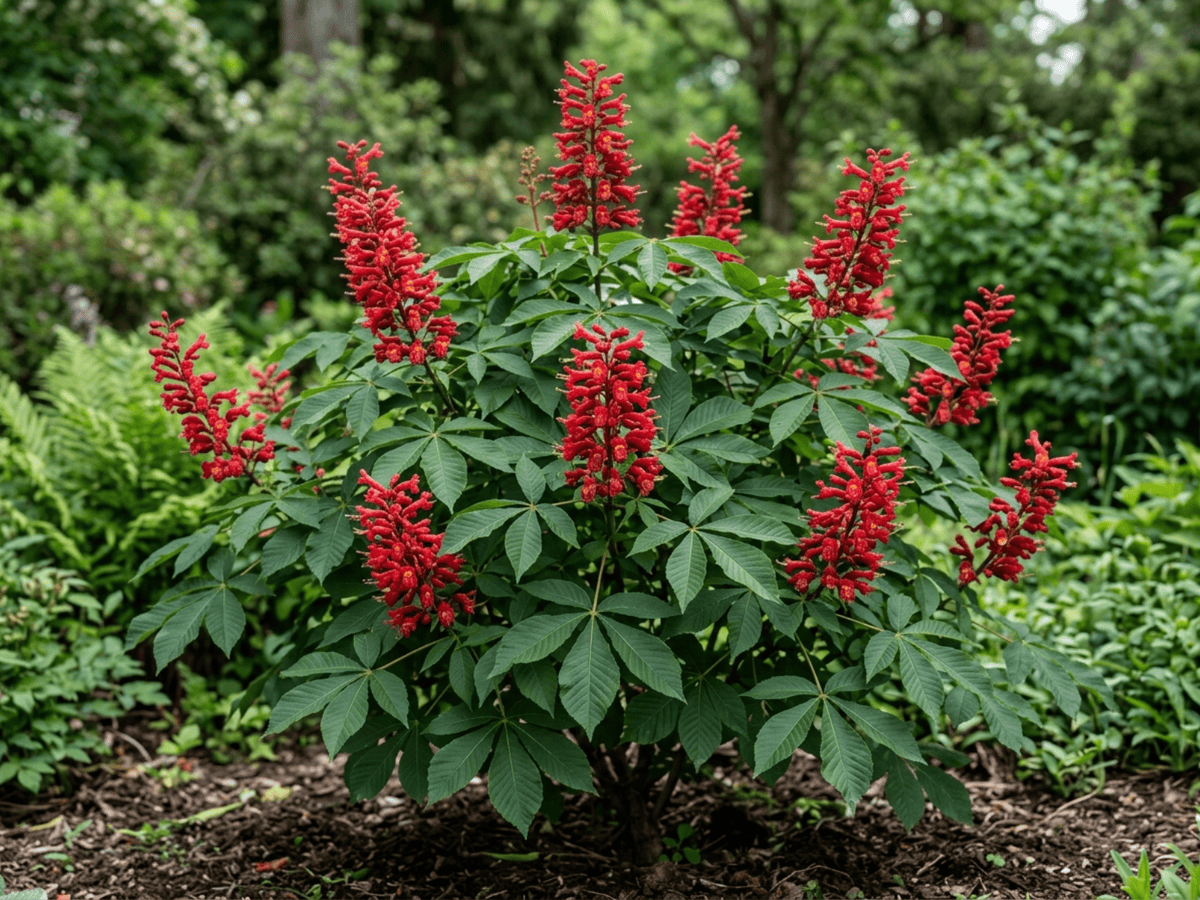 Red BuckeyeAesculus pavia
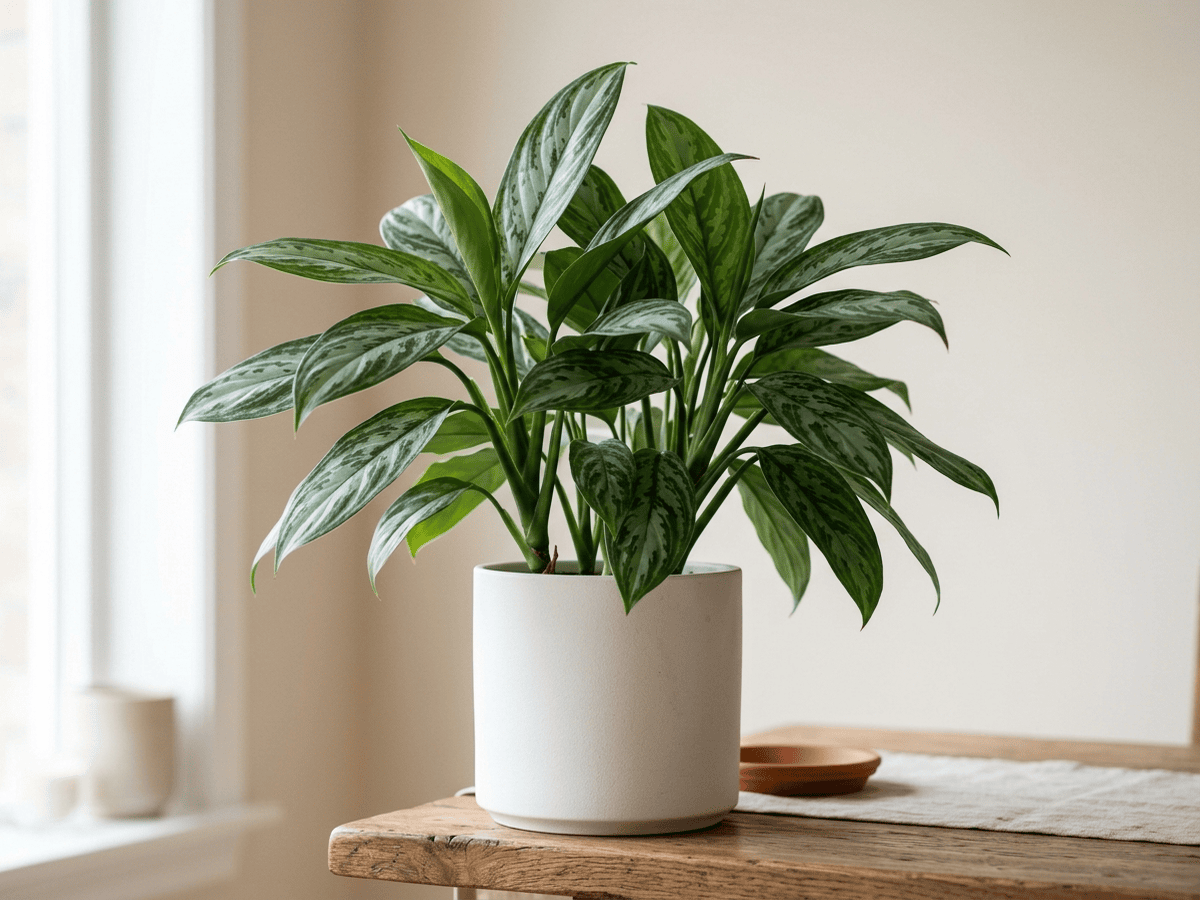 Philippine EvergreenAglaonema commutatum
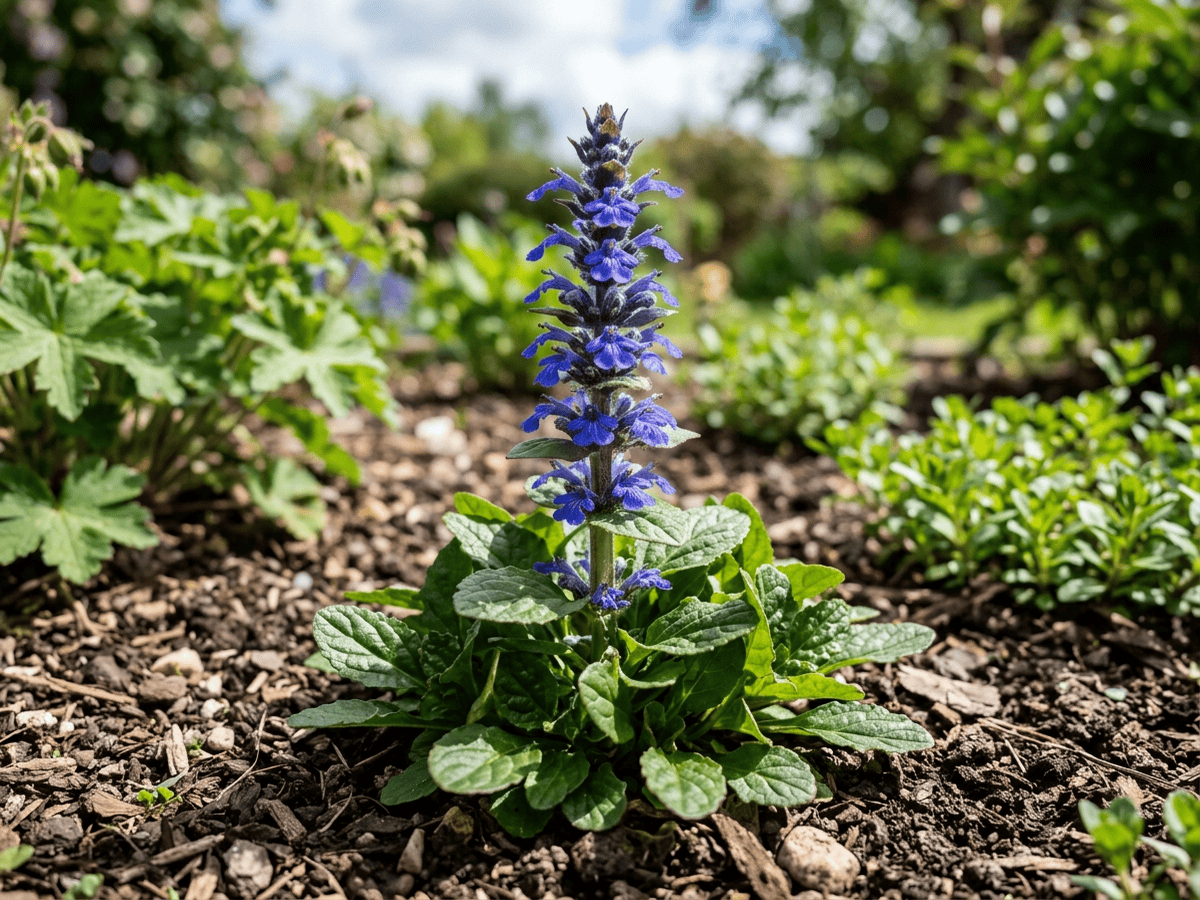 Blue BugleAjuga genevensis
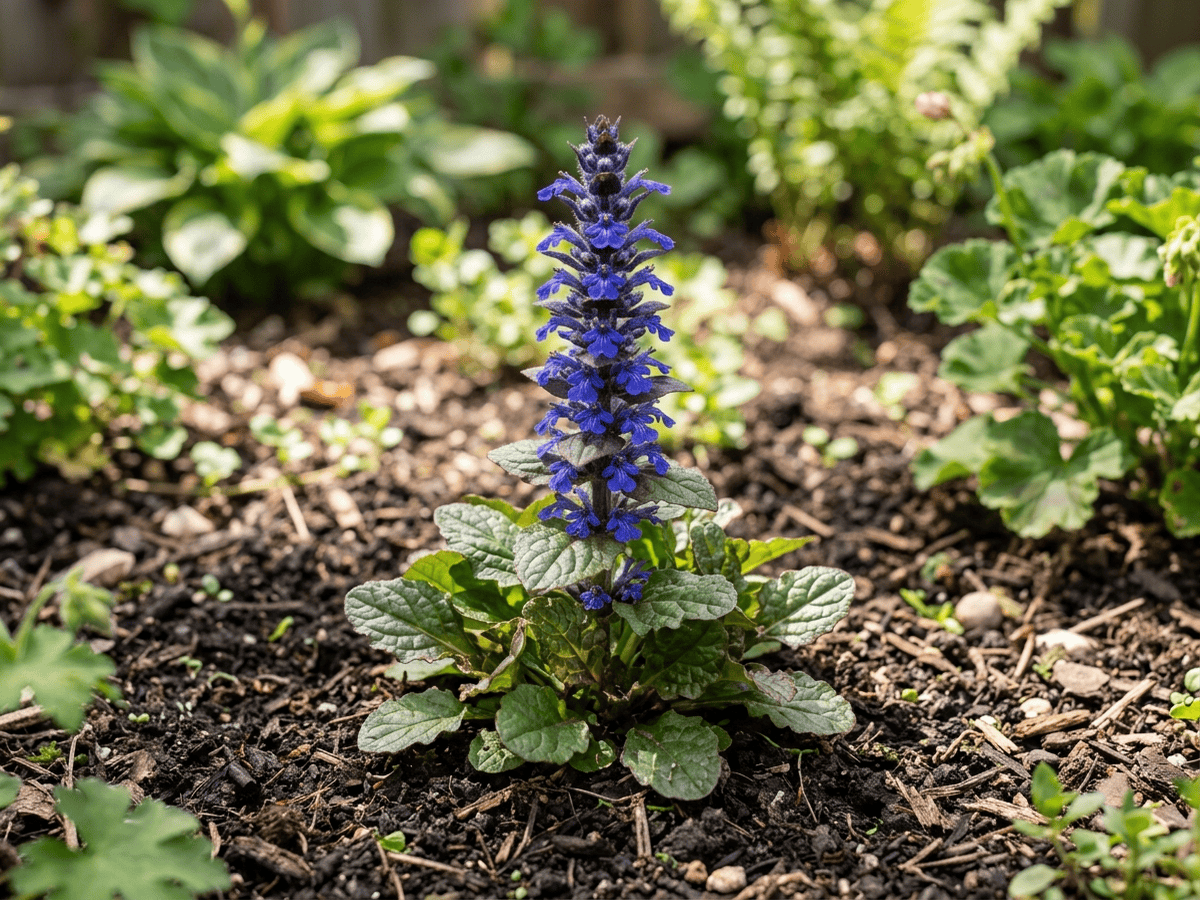 Pyramidal BugleAjuga pyramidalis
Frequently asked questions
How often should I water Kusamaki?
In summer, water about every 5 days; in winter, about every 30 days. Adjust for heat, pot size and drainage.
How much light does Kusamaki need?
Part shade: 2–4 hrs direct. Watch the leaves — scorching or stretching means the light needs adjusting.
Is Kusamaki toxic to cats or dogs?
Pets Moderate (Dogs Moderate · Cats Moderate) Educational information, not medical or veterinary advice. If exposure is suspected, contact a doctor or veterinarian.
Is Kusamaki easy to grow?
Yes — it is considered an easy, beginner-friendly plant.
Can Kusamaki be grown indoors?
Yes, it adapts well to indoor growing given the right light.
YardMate
Identify any plant in seconds
Snap a photo — YardMate names the plant, diagnoses problems, and reminds you when to water.
Download on the App Store