 YardMate


Prostrate Knotweed
Polygonum aviculare
Easy · Beginner friendlyAbout Prostrate Knotweed
Prostrate Knotweed or Common Knotgrass is a tough Eurasian annual naturalized across the US, forming wiry flat mats in high-traffic compacted areas where almost nothing else grows. Small narrow blue-green leaves alternate along wiry stems with tiny pink or white flowers in leaf axils. Invades heavily trodden paths, parking strips, athletic fields, and hard-packed driveways where its deep taproot and flexible stems defeat foot traffic.
- Compact
How to care for Prostrate Knotweed
Watering
- Springevery 10 days
- Summerevery 7 days
- Fallevery 14 days
- Winterevery 21 days
Soil · Well-draining
- Top dressingPine bark mulch10%
- Main mixPotting soil + perlite 2:170%
- DrainageLECA / gravel20%
Never skip the drainage layer — standing water is the top cause of root rot.
FERTILIZER
This plant needs little to no feeding.
At a Glance
- NativeEast Asia
- Height0.5–1 ft (0.2–0.3 m)
- Spread1–2 ft (0.3–0.6 m)
- Flower colorWhite, Pink, Green
- Foliage colorGreen
- Fruit colorBrown
- SoilLoamy, Well-drained
- LocationsYard
Bloom time
BLOOM CYCLE
Peak bloom
Jun–Nov
Tiny pink or white axillary flowers summer to frost
Toxicity
No toxicity has been reported for this plant. Still, it is wise to keep pets from chewing on any houseplant.
Educational information, not medical or veterinary advice. If exposure is suspected, contact a doctor or veterinarian.
DISTRIBUTION

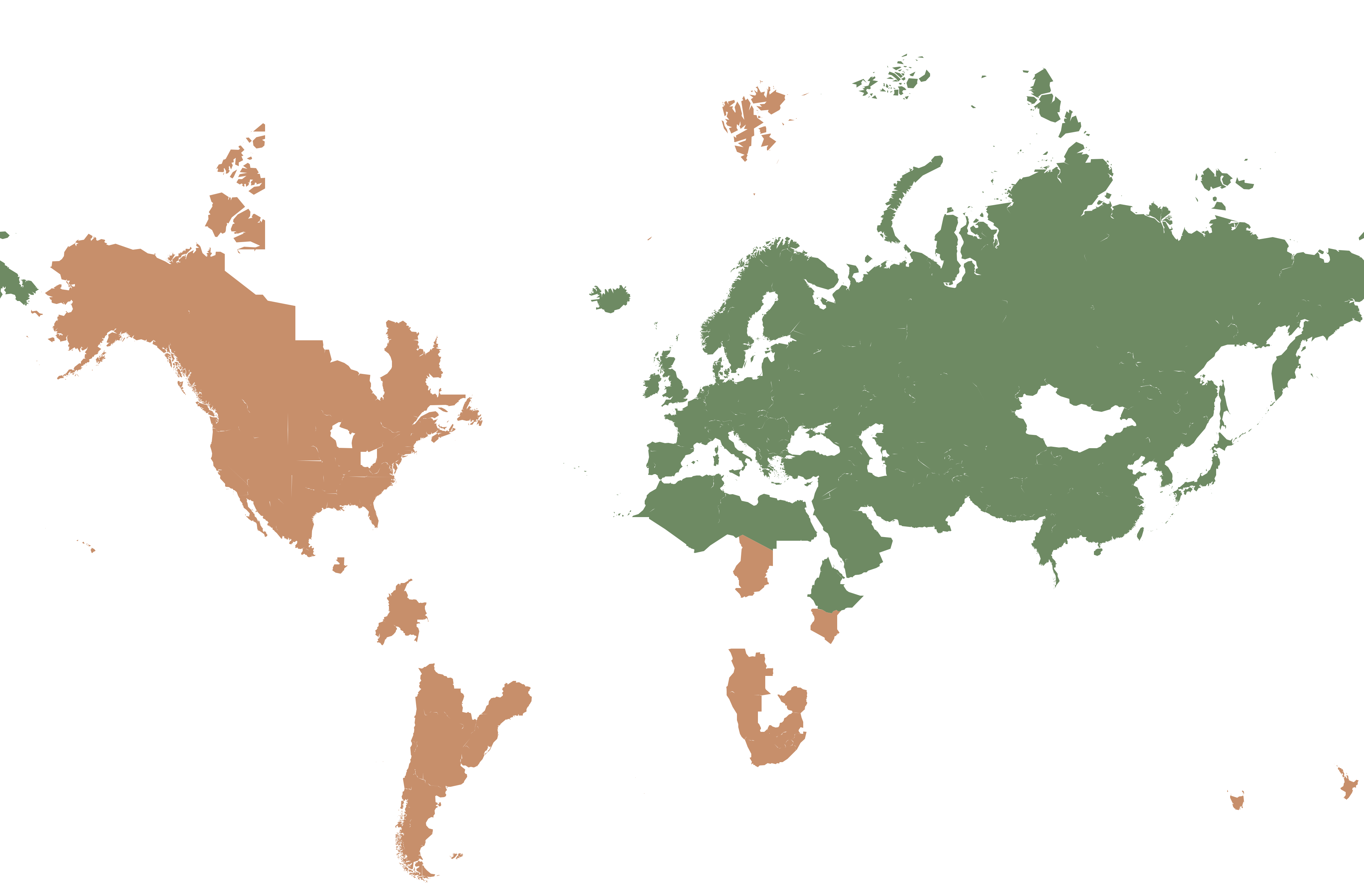
- Native
- Introduced
- East Asia
History
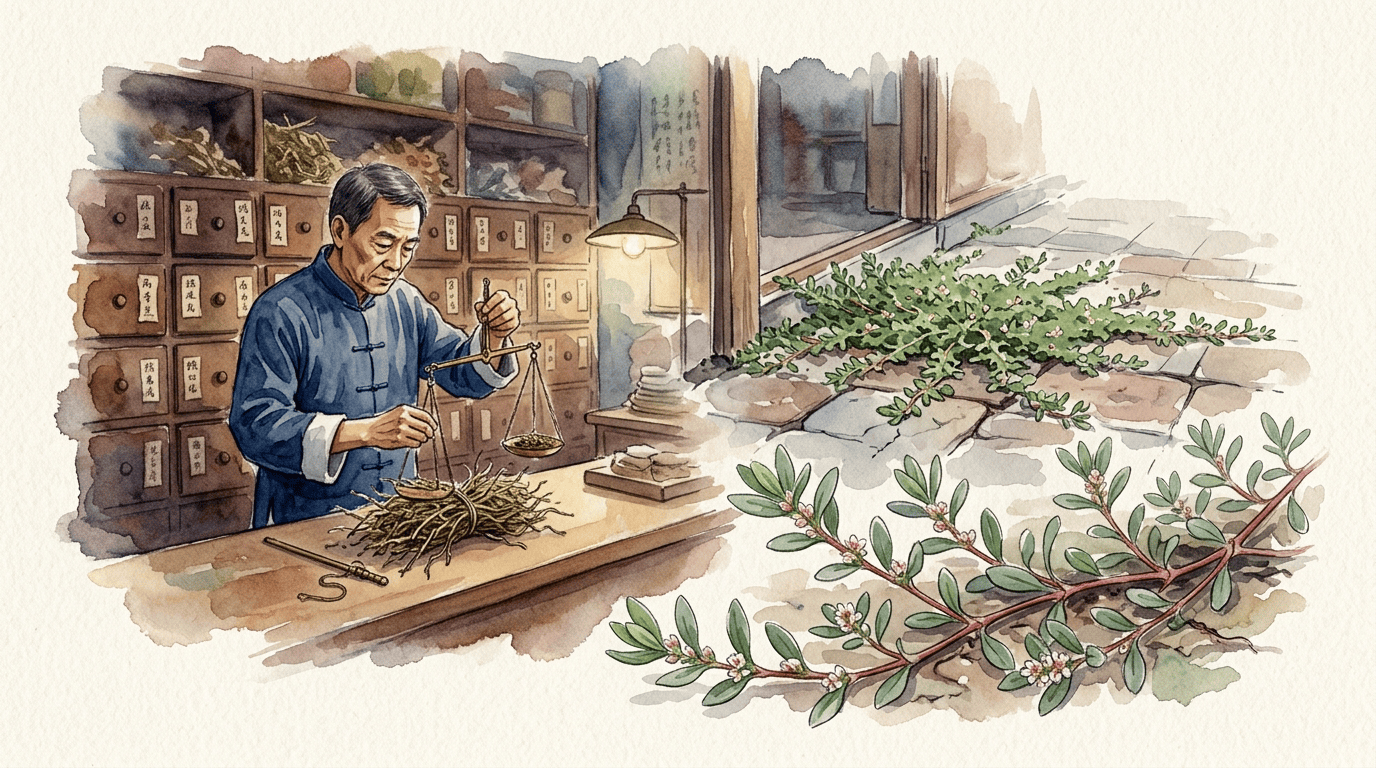
Polygonum aviculare is likely native to Europe and Asia but now occurs worldwide. Linnaeus described it in Species Plantarum (1753); the epithet aviculare ('of small birds') refers to small songbirds that eat its abundant seeds. It grows in places where most plants cannot — along well-trodden paths, between paving stones, in compacted sports-field edges — earning common names like knotgrass, doorweed, and matgrass.
Traditional Chinese medicine (bian xu) uses the dried herb for urinary tract infections and parasitic worms, and it remains listed in the modern Chinese Pharmacopoeia. European folk medicine used it as a mild astringent for diarrhea and bleeding wounds. It is remarkably variable genetically, with many forms once treated as separate species now lumped under the P. aviculare aggregate.
Its seeds are major food for doves and songbirds. Native to Eurasia, spread worldwide with human activity and one of the most widespread weeds on Earth. A universal indicator of soil compaction in American lawns, sports fields, and high-traffic areas.
Symbolism & meaning
What It Symbolizes
Prostrate Knotweed is the patron of trodden tenacity, specializing in the high-traffic, compacted ground that defeats other plants. Its small white flowers go unnoticed beneath shoes, but its seeds offer important food for finches, sparrows, and other small birds — earning it the affectionate folk name 'bird knotweed.' This is the weed of stepped-on places, beauty shrunken low and wide in service of the unglamorous edges of the world.
- Trodden tenacity — specializes in high-traffic compacted ground
- Bird knotweed — seeds are important food for small birds
Where the Name Comes From
'Polygonum' from Greek 'polys-gonu' meaning many-knees, for the jointed stems; 'aviculare' from Latin means of small birds, for the seeds eaten by sparrows and finches.
Uses & Fun Facts
- Prostrate Knotweed berries and cover sustain songbirds through autumn
Related plants
Plants with similar care
 Chinese AbeliaAbelia chinensis
 Fragrant AbeliaAbelia mosanensis
 Large-Flowered AbeliaAbelia uniflora
 Glossy AbeliaAbelia x grandiflora
Frequently asked questions
How often should I water Prostrate Knotweed?
In summer, water about every 7 days; in winter, about every 21 days. Adjust for heat, pot size and drainage.
How much light does Prostrate Knotweed need?
Full sun: 6+ hrs direct. Watch the leaves — scorching or stretching means the light needs adjusting.
Is Prostrate Knotweed toxic to cats or dogs?
No toxicity has been reported for this plant. Still, it is wise to keep pets from chewing on any houseplant. Educational information, not medical or veterinary advice. If exposure is suspected, contact a doctor or veterinarian.
Is Prostrate Knotweed easy to grow?
Yes — it is considered an easy, beginner-friendly plant.
When does Prostrate Knotweed bloom?
It typically blooms Jun–Nov in the Northern Hemisphere.
YardMate
Identify any plant in seconds
Snap a photo — YardMate names the plant, diagnoses problems, and reminds you when to water.
Download on the App Store