 YardMate

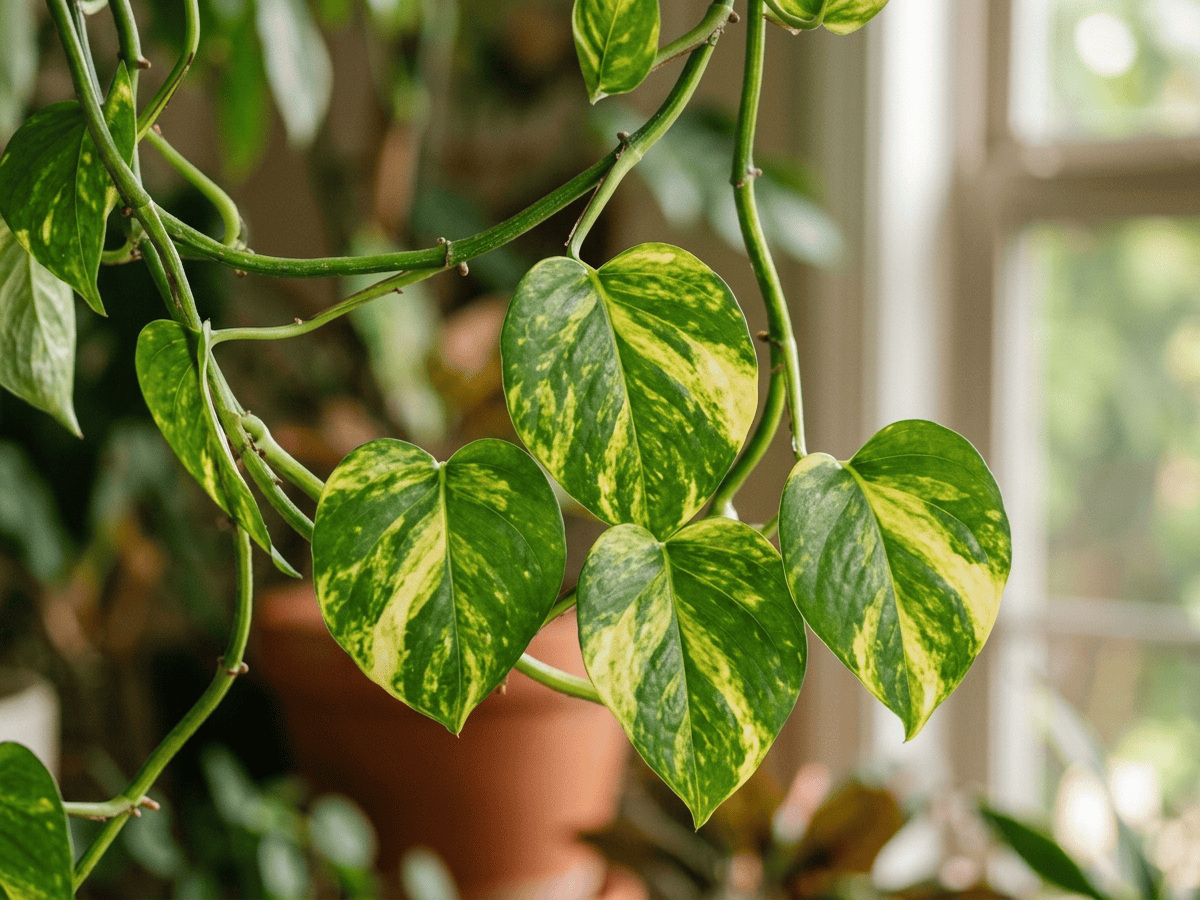


Epipremnum Aureum
Pothos aureus
Easy · Beginner friendlyAbout Epipremnum Aureum
Pothos aureus (often sold as Epipremnum aureum 'Golden Pothos') features heart-shaped leaves splashed with golden-yellow variegation on trailing vines. It is virtually identical in care to other pothos varieties — thriving in low to bright indirect light, tolerating missed waterings, and growing rapidly. The golden variegation becomes more pronounced in brighter conditions. In tropical regions, escaped pothos can become invasive, climbing trees with leaves growing to enormous sizes. Indoors, it remains compact and is one of the most popular beginner plants worldwide.
- Air-purifying
- Trailing
How to care for Epipremnum Aureum
Watering
- Springevery 7 days
- Summerevery 5 days
- Fallevery 10 days
- Winterevery 14 days
Soil · Chunky & airy
- Top dressingBark chips10%
- Main mixBark + potting soil + perlite 1:1:170%
- DrainageLECA20%
Chunky pieces hold air pockets open so thick roots don't suffocate.
FERTILIZER
Balanced Feed 14-14-14
An even feed covers all three needs at once, keeping leaves, roots and blooms moving together with nothing pushed out of balance.
- Nitrogen · Leaves
- Phosphorus · Roots + Blooms
- Potassium · Strength
- Springevery 30 days
- Summerevery 30 days
- Fallevery 60 days
At a Glance
- NativePacific Islands
- Height3–6 ft (0.9–1.8 m)
- Spread2–3 ft (0.6–0.9 m)
- Flower colorCream, Green
- Foliage colorGreen, Yellow, Variegated
- SoilLoamy, Well-drained, Rich
- LocationsIndoor · Balcony
Bloom time
BLOOM CYCLE
Peak bloom
Jun–Aug
Extremely rare indoors
Fragrance
NO FRAGRANCE
Flowers are essentially never produced in cultivation.
Toxicity
Humans Slight · Pets Slight
insoluble calcium oxalate crystals (raphides)
Slight
- Leaf
- Stem
- Sap
- Contact
- Ingestion
EXPOSURE Touching leaves, stems, and sap. Eating leaves, stems, and sap.
EFFECT Oral burning, lip and tongue swelling, drooling and skin may develop mild dermatitis from sap.
NOTE Toxicity is generally mild but can be alarming in cats and small dogs due to oral swelling.
Slight
- Leaf
- Stem
- Ingestion
EXPOSURE Eating leaves and stems.
EFFECT Oral irritation, pain and swelling of mouth, tongue and lips, excessive drooling, vomiting, difficulty swallowing and per ASPCA.
NOTE Toxicity is generally mild but can be alarming in cats and small dogs due to oral swelling.
Slight
- Leaf
- Stem
- Ingestion
EXPOSURE Eating leaves and stems.
EFFECT Oral irritation, intense burning and swelling, excessive drooling, vomiting, difficulty swallowing and per ASPCA.
NOTE Toxicity is generally mild but can be alarming in cats and small dogs due to oral swelling.
Educational information, not medical or veterinary advice. If exposure is suspected, contact a doctor or veterinarian.
DISTRIBUTION


- Native
- Introduced
- Pacific Islands
History

'Pothos aureus' is a historical synonym for what is now correctly named Epipremnum aureum. The plant was first described in the genus Pothos in 1880, reshuffled into Scindapsus, briefly placed in Rhaphidophora, and finally settled as Epipremnum aureum in 1964. Despite the taxonomic update, the old name survives in the global horticultural trade, in popular literature, and in many plant labels — particularly in Southeast Asia and the Americas, where retailers still market it as 'Pothos'.
It has never been observed flowering in cultivation — the last confirmed bloom was documented in 1962. It is considered invasive in Hawaii, Sri Lanka, and parts of Australia.
The plant itself is identical: the heart-leaved golden-variegated vine from the Solomon Islands, with the same NASA air-purifying credentials, the same vigorous growth, and the same mild calcium oxalate toxicity as its accepted name counterpart.
Symbolism & meaning
What It Symbolizes
Pothos is the perennial emblem of perseverance, thriving in almost any indoor condition — low light, dry air, irregular watering — and asking for very little in return. Its trailing vines simply keep going, a green argument for adaptability over fuss. As a houseplant, it has carried generations of beginning gardeners gently into the practice of keeping things alive.
- Perseverance — Thrives in almost any condition, symbolizing determination and adaptability
Where the Name Comes From
Pothos comes from a Sinhalese word for the genus. Aureus means 'golden' in Latin, referring to the yellow leaf variegation.
Uses & Fun Facts
- Trailing variegated foliage classic for hanging baskets and shelves
- Aerial roots climb moss poles for tall vertical foliage features
- Heart-shaped golden-marbled leaves for low-light interiors
Related plants
Plants with similar care
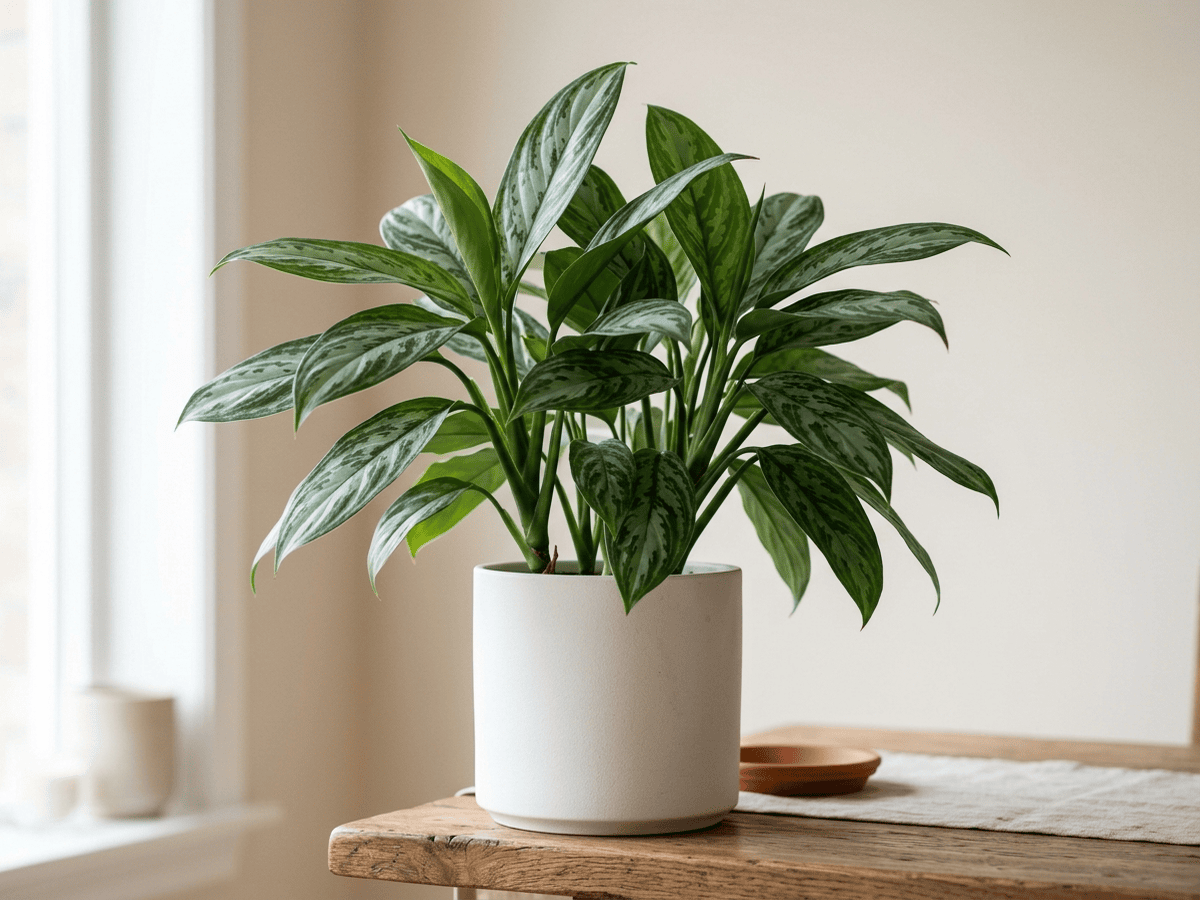 Philippine EvergreenAglaonema commutatum
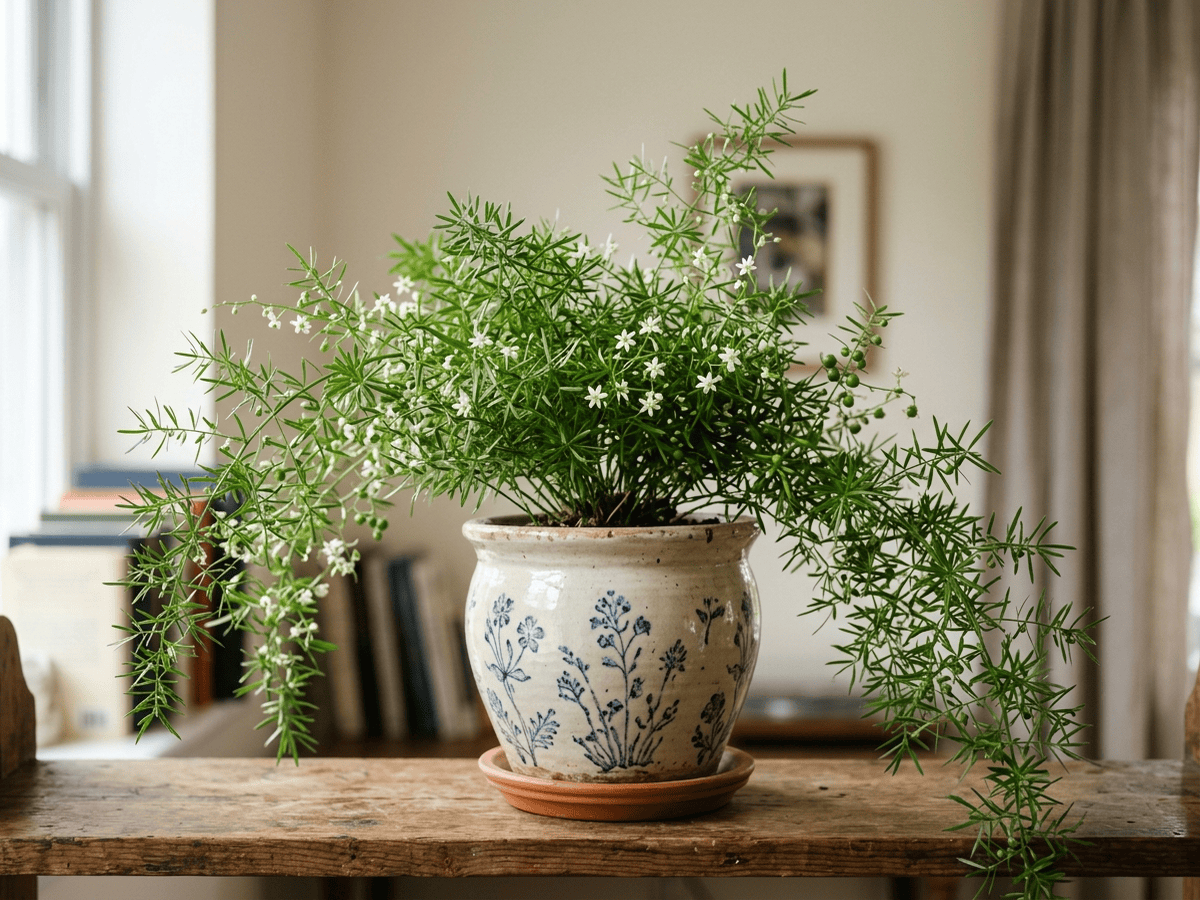 Sprenger's AsparagusAsparagus densiflorus
 Entire-Leaf False Goat’s BeardAstilbe simplicifolia
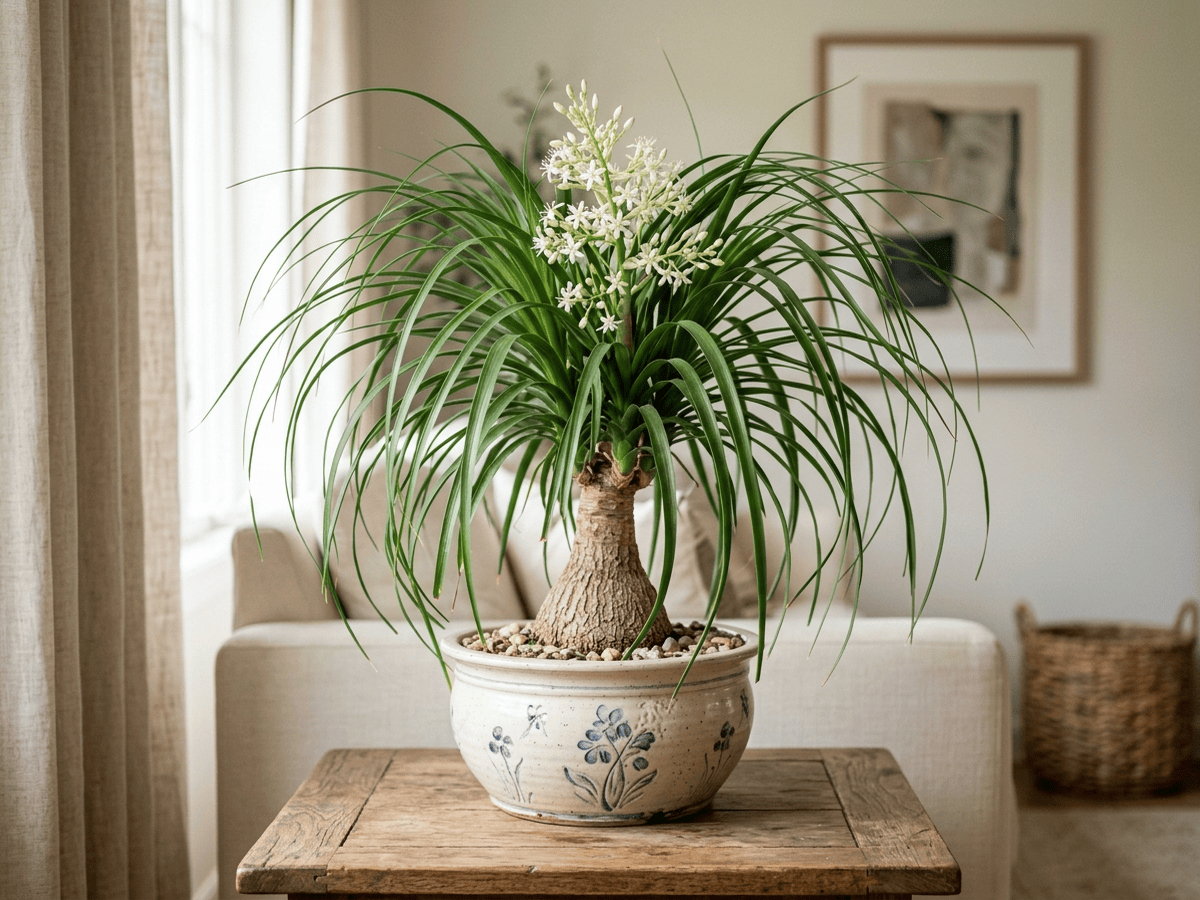 Ponytail PalmBeaucarnea recurvata
Frequently asked questions
How often should I water Epipremnum Aureum?
In summer, water about every 5 days; in winter, about every 14 days. Adjust for heat, pot size and drainage.
How much light does Epipremnum Aureum need?
Part shade: 2–4 hrs direct. Watch the leaves — scorching or stretching means the light needs adjusting.
Is Epipremnum Aureum toxic to cats or dogs?
Pets Slight (Dogs Slight · Cats Slight) Educational information, not medical or veterinary advice. If exposure is suspected, contact a doctor or veterinarian.
Is Epipremnum Aureum easy to grow?
Yes — it is considered an easy, beginner-friendly plant.
Can Epipremnum Aureum be grown indoors?
Yes, it adapts well to indoor growing given the right light.
When does Epipremnum Aureum bloom?
It typically blooms Jun–Aug in the Northern Hemisphere.
YardMate
Identify any plant in seconds
Snap a photo — YardMate names the plant, diagnoses problems, and reminds you when to water.
Download on the App Store