 YardMate


Mignonette
Reseda odorata
Easy · Beginner friendlyAbout Mignonette
Reseda odorata, mignonette, is an annual herb native to North Africa and the eastern Mediterranean that was the most celebrated fragrance plant of 19th-century Europe. Its unassuming greenish-white-yellow flower spikes on 30-60 cm plants produce an extraordinarily powerful raspberry-violet sweet fragrance that perfumes entire gardens.
Joséphine Bonaparte's gardener collected seed during Napoleon's 1798 Egyptian campaign and introduced the plant to the Malmaison greenhouses. Within 30 years, mignonette was one of the defining perfume plants of Europe — grown in pots on every Parisian balcony to scent the streets, and a key ingredient in the Grasse perfume industry.
The 20th century brought a nearly complete collapse in fragrance intensity as breeders selected for showier flowers at the cost of scent. Heirloom seed strains ('Grandiflora,' 'Machet') preserve the original powerful fragrance. A must for scent-first cottage gardens.
- Fragrant
How to care for Mignonette
Watering
- Springevery 5 days
- Summerevery 3 days
- Fallevery 7 days
- Winterpause watering
Soil · Well-draining
- Top dressingPine bark mulch10%
- Main mixPotting soil + perlite 2:170%
- DrainageLECA / gravel20%
Never skip the drainage layer — standing water is the top cause of root rot.
FERTILIZER
Balanced Feed 14-14-14
An even feed covers all three needs at once, keeping leaves, roots and blooms moving together with nothing pushed out of balance.
- Nitrogen · Leaves
- Phosphorus · Roots + Blooms
- Potassium · Strength
- Springevery 30 days
- Summerevery 30 days
At a Glance
- NativeAfrica, Mediterranean
- Height1–2 ft (0.3–0.6 m)
- Spread0.5–1 ft (0.2–0.3 m)
- Flower colorGreen, Yellow, White
- Foliage colorGreen
- SoilWell-drained, Loamy, Alkaline
- LocationsYard · Indoor · Balcony
Bloom time
BLOOM CYCLE
Peak bloom
Jun–Sep
Unassuming green-yellow spikes June-September with an extraordinary raspberry-violet perfume.
Fragrance
STRONG FRAGRANCE
Extraordinarily powerful raspberry-violet sweet perfume.
Toxicity
Humans Slight · Pets Slight
glucosinolates
Slight
- Leaf
- Ingestion
EXPOSURE Eating leaves.
EFFECT Mild GI upset if eaten.
NOTE Documented concern for humans: Mild GI upset if eaten.
Slight
- Leaf
- Ingestion
EXPOSURE Eating leaves.
EFFECT Mild GI upset.
NOTE Not listed specifically by ASPCA. Generally considered low-toxicity.
Slight
- Leaf
- Ingestion
EXPOSURE Eating leaves.
EFFECT Mild GI upset.
NOTE Not listed specifically by ASPCA. Generally considered low-toxicity.
Educational information, not medical or veterinary advice. If exposure is suspected, contact a doctor or veterinarian.
DISTRIBUTION

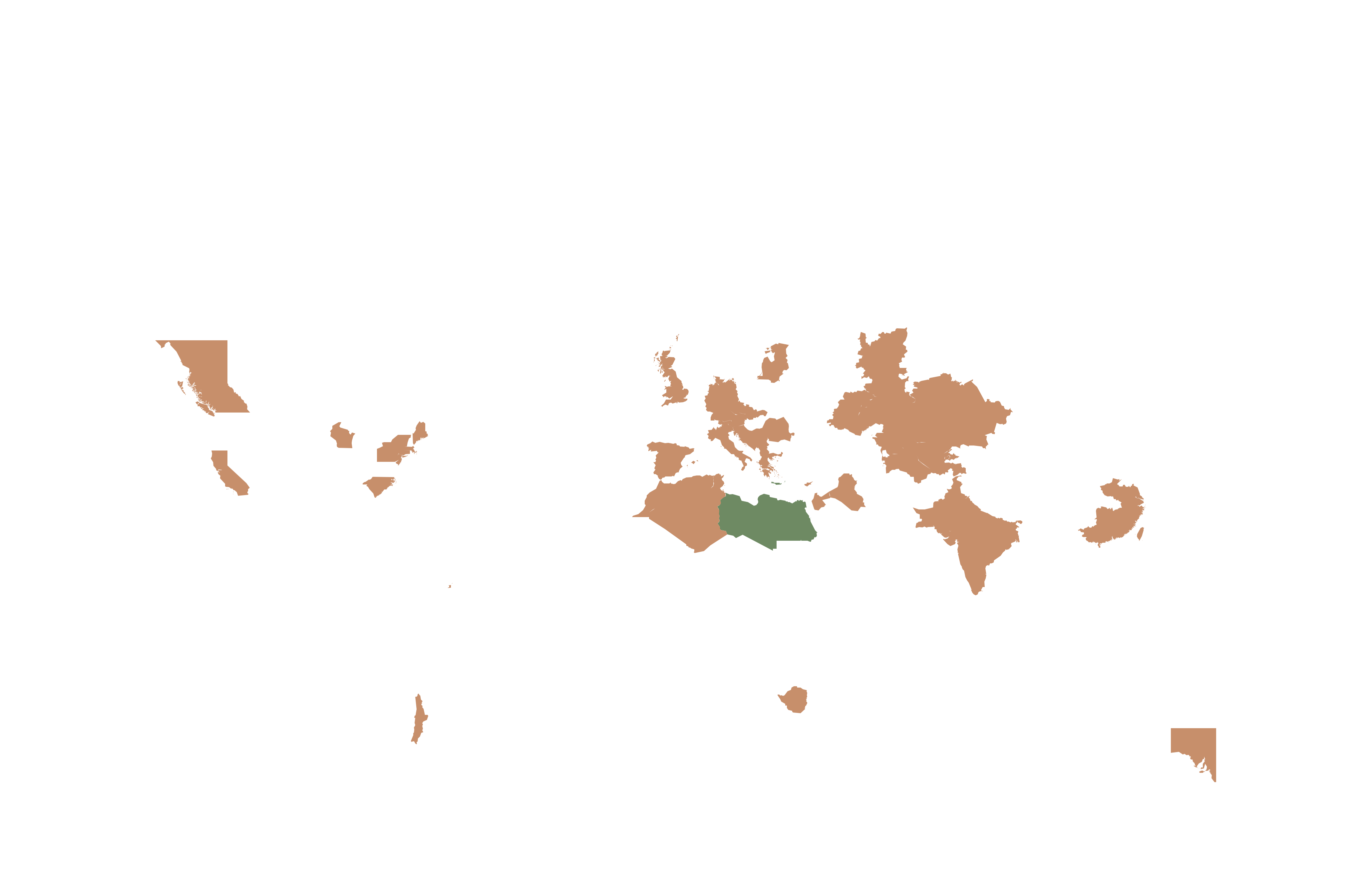
- Native
- Introduced
- Africa
- Mediterranean
History

Reseda odorata is native to North Africa (Egypt, Libya) and the eastern Mediterranean. Seed reached Europe in the 1750s via French botanists, but the plant became a horticultural star only after Joséphine Bonaparte's gardener at Château de Malmaison acquired seed from Napoleon's 1798 Egyptian expedition. Joséphine popularized the plant across Europe, and within 30 years mignonette was the signature garden fragrance of the era.
Parisian balconies featured pots of mignonette specifically to scent the streets below. Victorian English gardens and American colonial gardens followed. The perfume industry of Grasse, France, cultivated mignonette commercially for absolute extraction.
Classical perfumes containing mignonette absolute include Houbigant's Fougère Royale (1882) and numerous Guerlain compositions. The 20th century, unfortunately, saw a gradual decline: breeders selected for showier, larger, more colorful flower spikes at the cost of fragrance intensity, and modern commercial varieties are largely scentless. Heirloom strains like 'Grandiflora,' 'Machet,' and seed saved from pre-20th-century gardens preserve the original powerful fragrance. Thomas Jefferson grew mignonette at Monticello in 1812. Introduced to Europe from Egypt c. Defined 19th-century garden perfume. Modern cultivars lost most scent — heirloom strains preserve it.
Symbolism & meaning
What It Symbolizes
Mignonette's Victorian motto was 'your qualities surpass your charms' — plain greenish flowers carrying an extraordinary fragrance, the very picture of Hidden Beauty. It also bears an Imperial Romance: Joséphine Bonaparte introduced it to French society from seeds Napoleon's officers brought back from the Egyptian campaign, and parlor windows across Europe soon held a pot. A modest flower, briefly the perfume of an empire.
- Hidden Beauty — Plain flowers with extraordinary fragrance
- Imperial Romance — Joséphine Bonaparte introduced it from Napoleon's Egypt campaign
Where the Name Comes From
Reseda from Latin 'resedare' (to calm), based on belief that it reduced bruises; 'odorata' means fragrant.
Uses & Fun Facts
- Modest yellow-green flowers carry intensely sweet old-fashioned perfume
- Tiny scented flowers feed bees and useful insects in cool weather
- Historic perfumery plant prized in Victorian gardens
Related plants
Plants with similar care
 Chinese AbeliaAbelia chinensis
 Fragrant AbeliaAbelia mosanensis
 Large-Flowered AbeliaAbelia uniflora
 Glossy AbeliaAbelia x grandiflora
Frequently asked questions
How often should I water Mignonette?
Water about every 5 days during the growing season, and always let excess water drain away.
How much light does Mignonette need?
Full sun: 6+ hrs direct. Watch the leaves — scorching or stretching means the light needs adjusting.
Is Mignonette toxic to cats or dogs?
Pets Slight (Dogs Slight · Cats Slight) Educational information, not medical or veterinary advice. If exposure is suspected, contact a doctor or veterinarian.
Is Mignonette easy to grow?
Yes — it is considered an easy, beginner-friendly plant.
Can Mignonette be grown indoors?
Yes, it adapts well to indoor growing given the right light.
When does Mignonette bloom?
It typically blooms Jun–Sep in the Northern Hemisphere.
YardMate
Identify any plant in seconds
Snap a photo — YardMate names the plant, diagnoses problems, and reminds you when to water.
Download on the App Store