 YardMate



Mistletoe Cactus
Rhipsalis baccifera
Easy · Beginner friendlyAbout Mistletoe Cactus
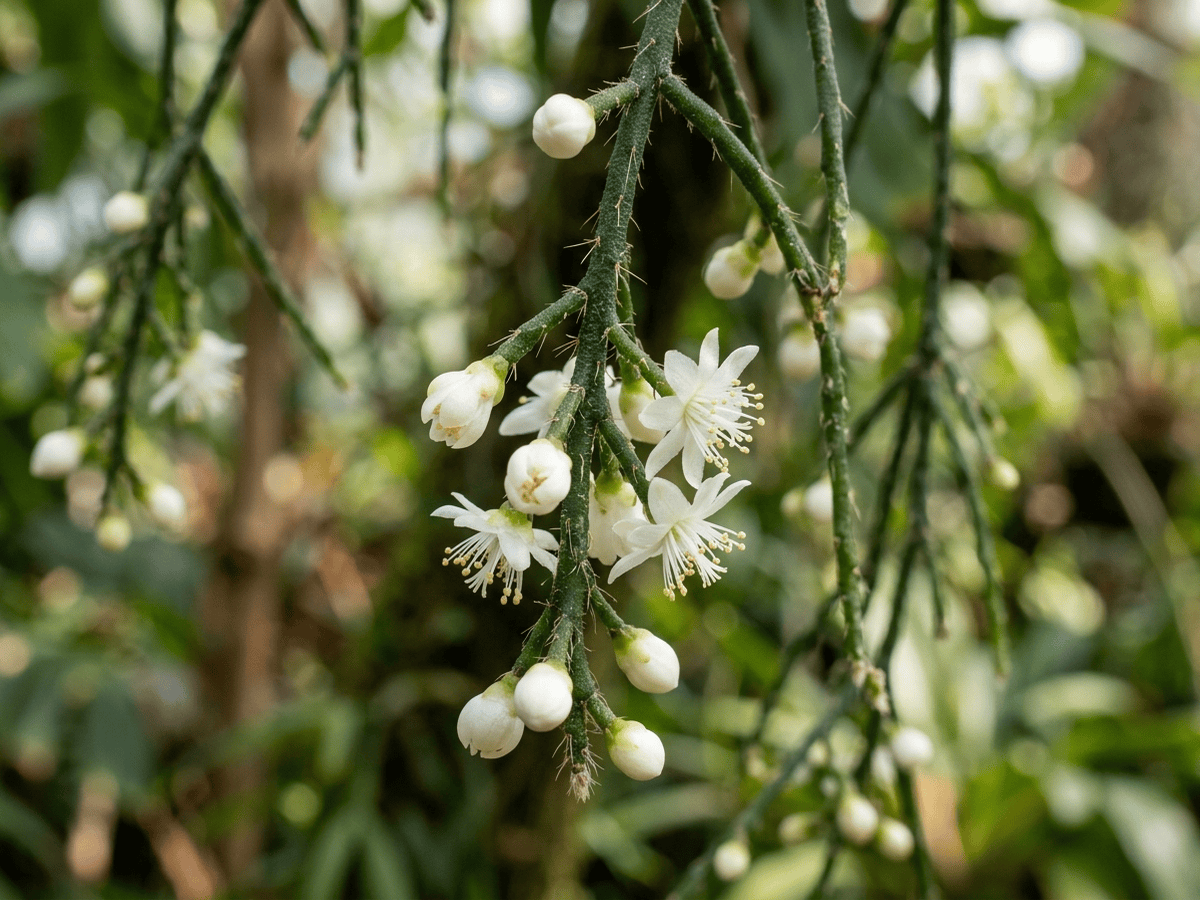
Rhipsalis baccifera, the mistletoe cactus, is an unusual epiphytic cactus with long, trailing, pencil-thin green stems that create a curtain-like cascade. It is the only cactus found naturally outside the Americas — growing across tropical Africa, Madagascar, and Sri Lanka, likely spread by migratory birds. Unlike typical cacti, it has no spines and prefers shade and regular moisture. Tiny white translucent berries (resembling mistletoe) appear after small white flowers. The pendant habit makes it perfect for hanging baskets, creating a sophisticated, minimalist green curtain effect.
- Shade-tolerant
- Trailing
How to care for Mistletoe Cactus
Watering
- Springevery 10 days
- Summerevery 7 days
- Fallevery 14 days
- Winterevery 21 days
Soil · Fast-draining
- Main mixSand + pumice + soil 1:1:150%
- DrainagePumice / gravel50%
Keep grit at half the mix or more — this soil is meant to dry out fast.
FERTILIZER
Balanced Feed 14-14-14
An even feed covers all three needs at once, keeping leaves, roots and blooms moving together with nothing pushed out of balance.
- Nitrogen · Leaves
- Phosphorus · Roots + Blooms
- Potassium · Strength
- Springevery 45 days
- Summerevery 45 days
- Fallevery 60 days
At a Glance
- NativeCentral America, Africa, South Asia
- Height2–6 ft (0.6–1.8 m)
- Spread1–2 ft (0.3–0.6 m)
- Flower colorWhite, Cream
- Foliage colorGreen
- Fruit colorWhite
- SoilSandy, Well-drained
- LocationsIndoor
Bloom time
BLOOM CYCLE
Peak bloom
Jun–Aug
Tiny white flowers followed by translucent white berries
Fragrance
NO FRAGRANCE
Not fragrant.
Toxicity
No toxicity has been reported for this plant. Still, it is wise to keep pets from chewing on any houseplant.
Educational information, not medical or veterinary advice. If exposure is suspected, contact a doctor or veterinarian.
DISTRIBUTION


- Native
- Introduced
- Central America
- Africa
- South Asia
History
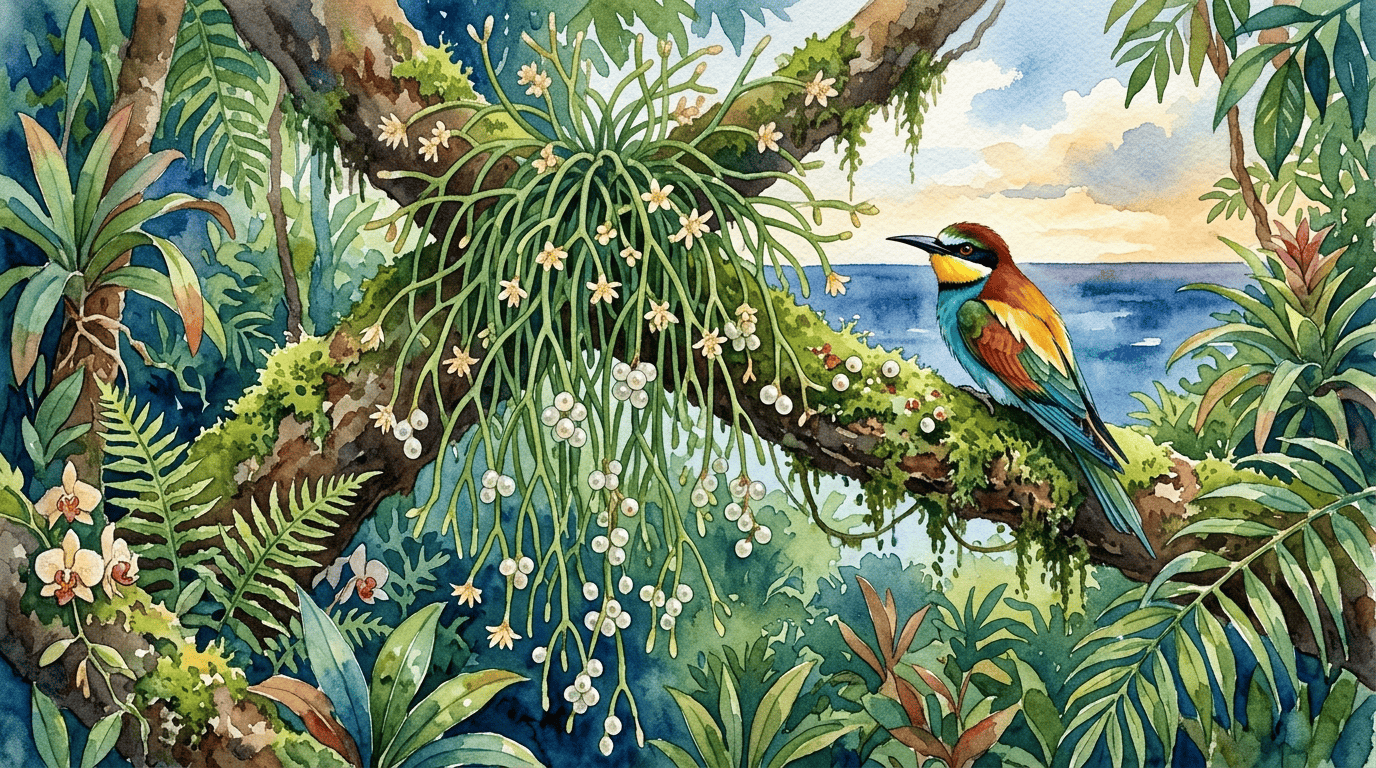
Rhipsalis baccifera has a biogeographically extraordinary distribution: cacti as a family are otherwise entirely American, but this species has populations in tropical Africa, Madagascar, and even Sri Lanka, making it the only cactus native outside the Americas. The most widely accepted explanation is that migratory birds carried its small sticky white berries — which look uncannily like mistletoe fruits, hence the common name — across the Atlantic at some point in the deep past, perhaps tens of thousands of years ago. Others argue for continental drift or human introduction, but bird dispersal remains the leading hypothesis.
Two theories compete: ancient continental drift carried ancestral populations before the Atlantic Ocean widened, or migratory birds transported seeds in their guts relatively recently. DNA studies support the bird hypothesis, estimating the dispersal occurred only 1–2 million years ago.
The genus Rhipsalis contains about 35 species, all epiphytic jungle cacti from Brazil's Atlantic Forest, making them the most species-rich group of epiphytic cacti in the world. It grows as a pendulous epiphyte with thin green stems, bears tiny cream flowers, and is confirmed non-toxic and pet-safe.
Symbolism & meaning
What It Symbolizes
Mistletoe Cactus can symbolize connection — remarkably, it is the only cactus to have crossed oceans on its own, naturally occurring in both the Americas and Africa. Its trailing green strands link two continents across an unlikely sea, a botanical bridge. To grow one is to keep a small reminder that even unlikely worlds can meet, hung from a single trailing thread of green.
- Connection — The only cactus to cross oceans, it represents bridging distances and linking worlds
Where the Name Comes From
Rhipsalis from Greek 'rhips' (wickerwork), for the interwoven stems. Baccifera means 'berry-bearing,' for the mistletoe-like fruit.
Uses & Fun Facts
- Trailing pencil-stem cactus prized for hanging interior baskets
- Cascading leafless green stems give airy tropical effect
Related plants
Plants with similar care
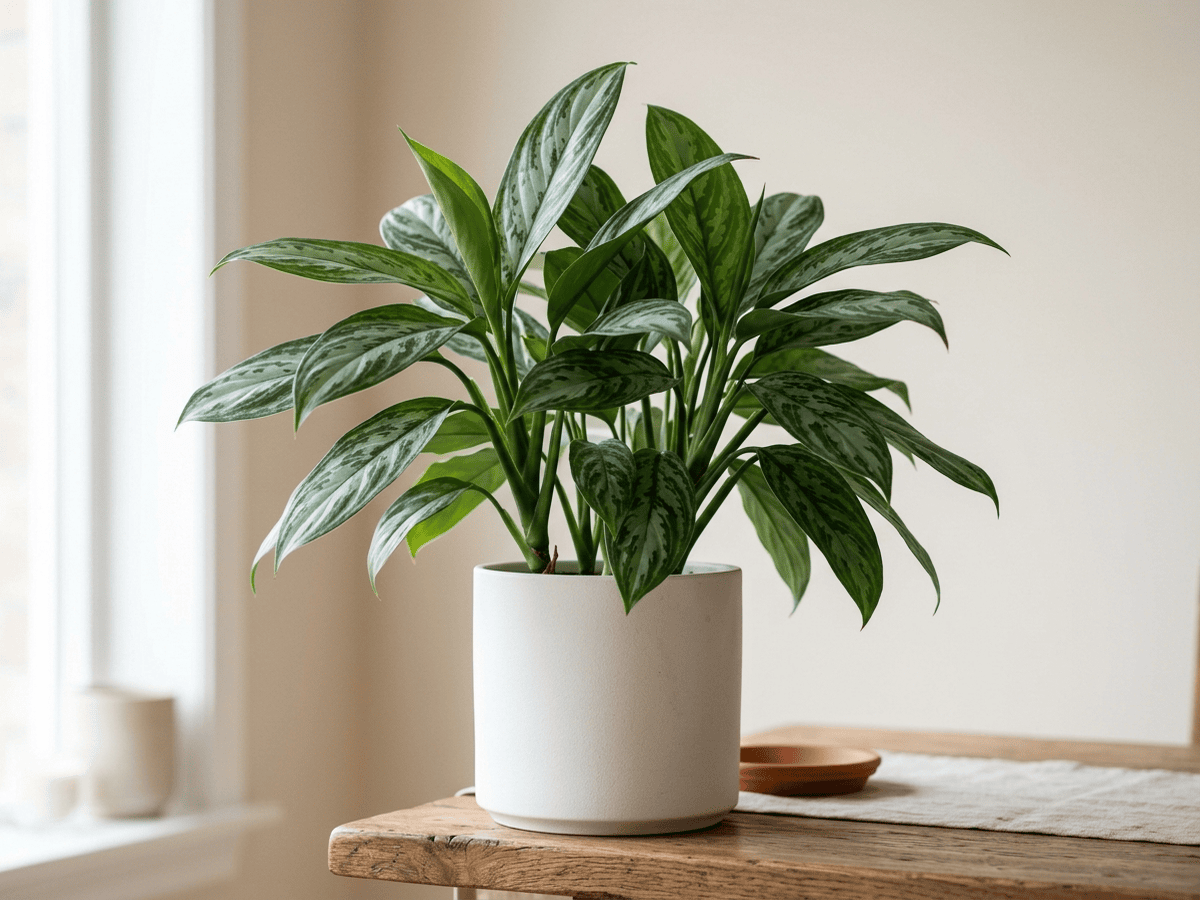 Philippine EvergreenAglaonema commutatum
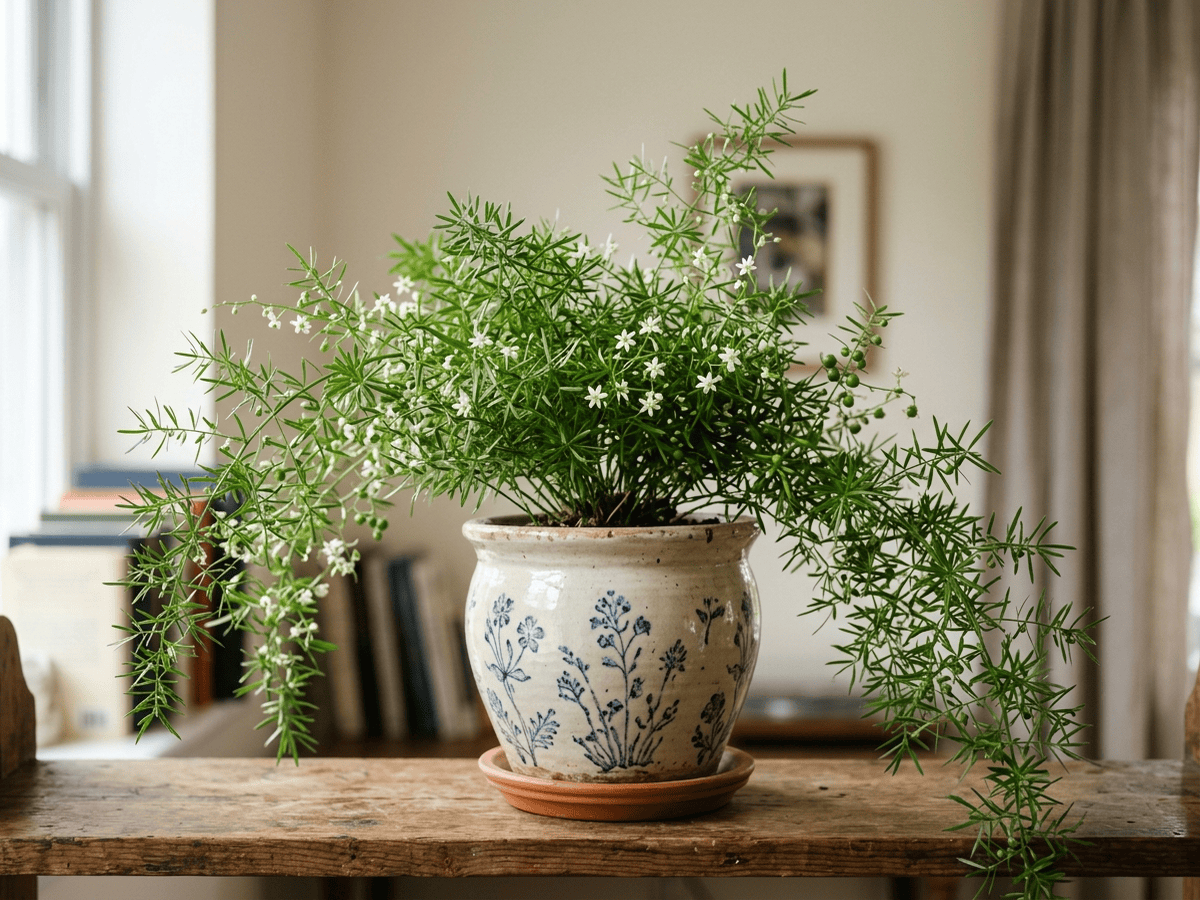 Sprenger's AsparagusAsparagus densiflorus
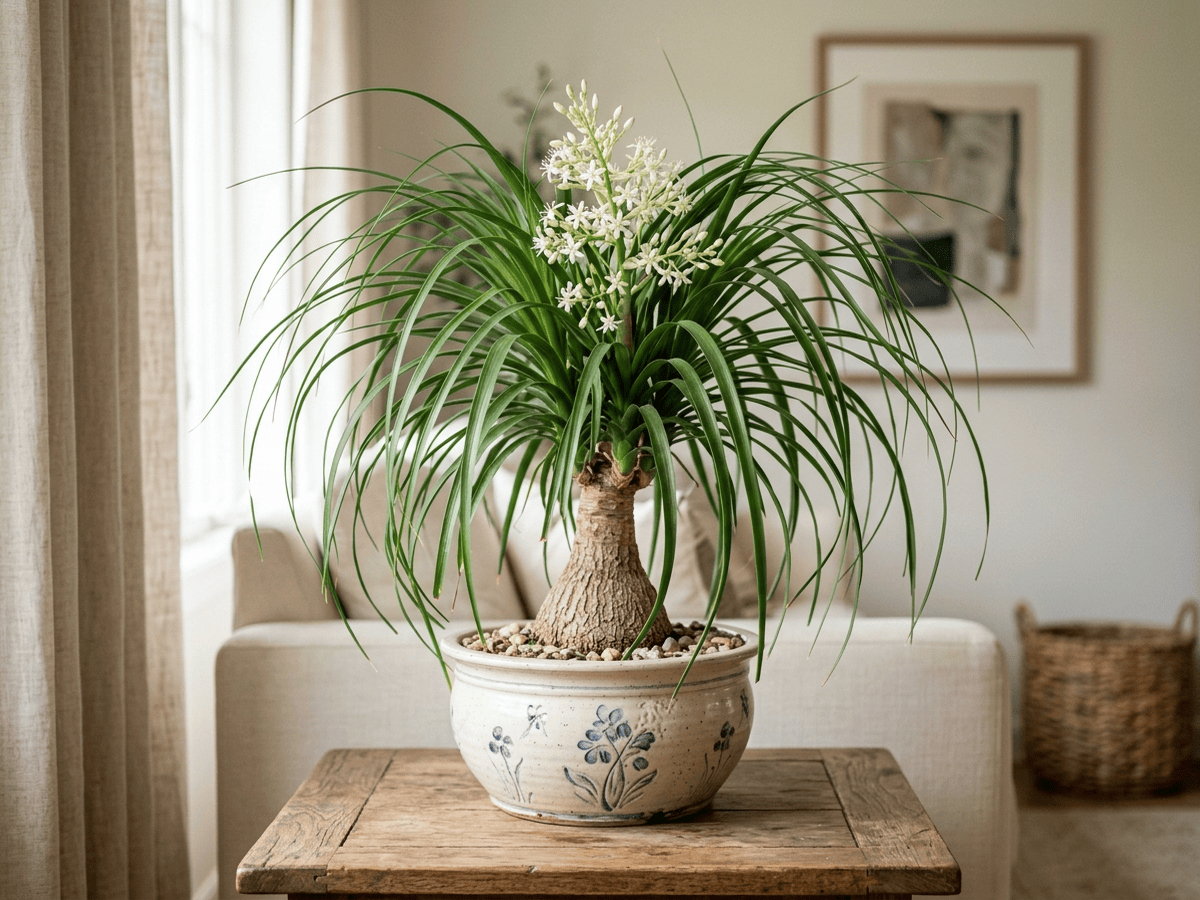 Ponytail PalmBeaucarnea recurvata
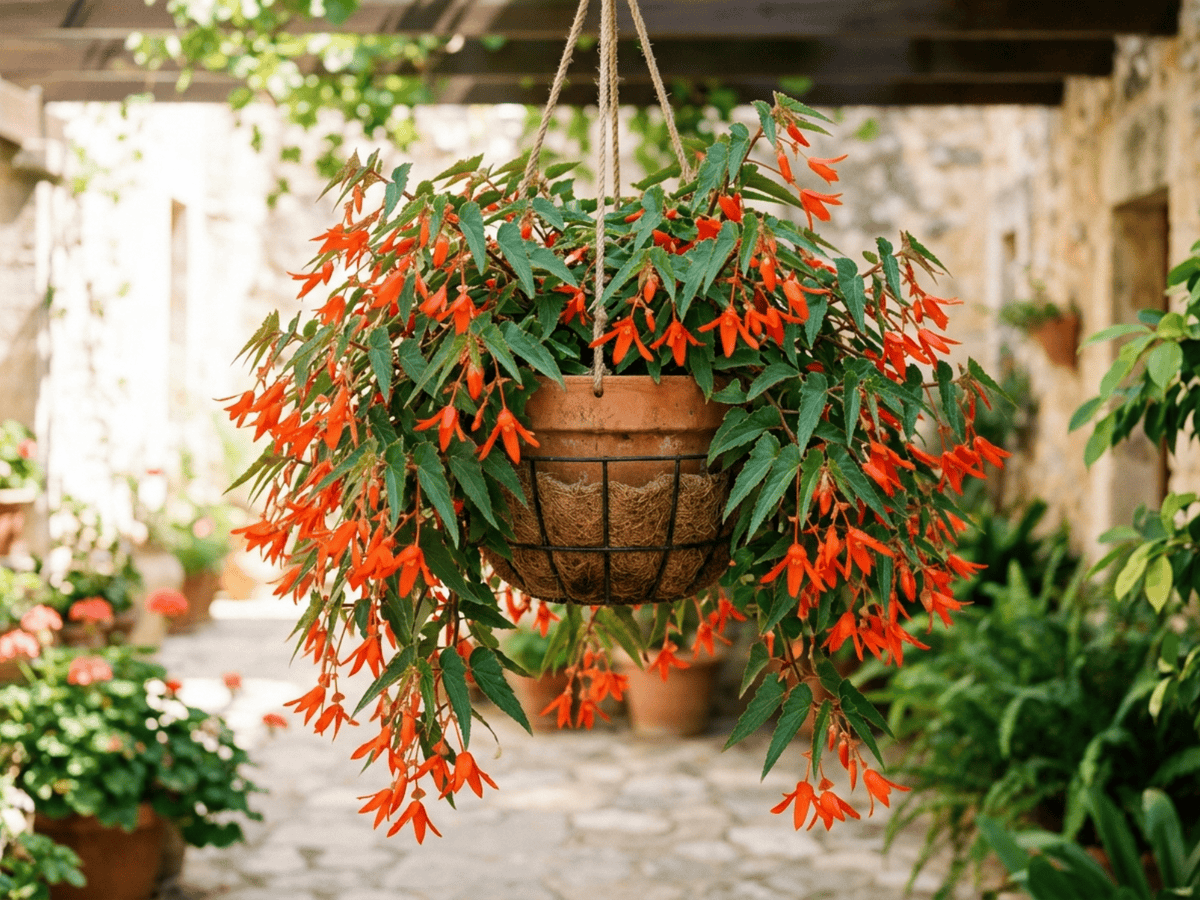 Tuberous BegoniaBegonia boliviensis
Frequently asked questions
How often should I water Mistletoe Cactus?
In summer, water about every 7 days; in winter, about every 21 days. Adjust for heat, pot size and drainage.
How much light does Mistletoe Cactus need?
Part shade: 2–4 hrs direct. Watch the leaves — scorching or stretching means the light needs adjusting.
Is Mistletoe Cactus toxic to cats or dogs?
No toxicity has been reported for this plant. Still, it is wise to keep pets from chewing on any houseplant. Educational information, not medical or veterinary advice. If exposure is suspected, contact a doctor or veterinarian.
Is Mistletoe Cactus easy to grow?
Yes — it is considered an easy, beginner-friendly plant.
Can Mistletoe Cactus be grown indoors?
Yes, it adapts well to indoor growing given the right light.
When does Mistletoe Cactus bloom?
It typically blooms Jun–Aug in the Northern Hemisphere.
YardMate
Identify any plant in seconds
Snap a photo — YardMate names the plant, diagnoses problems, and reminds you when to water.
Download on the App Store