 YardMate


Bristly Locust
Robinia hispida
Easy · Beginner friendlyAbout Bristly Locust
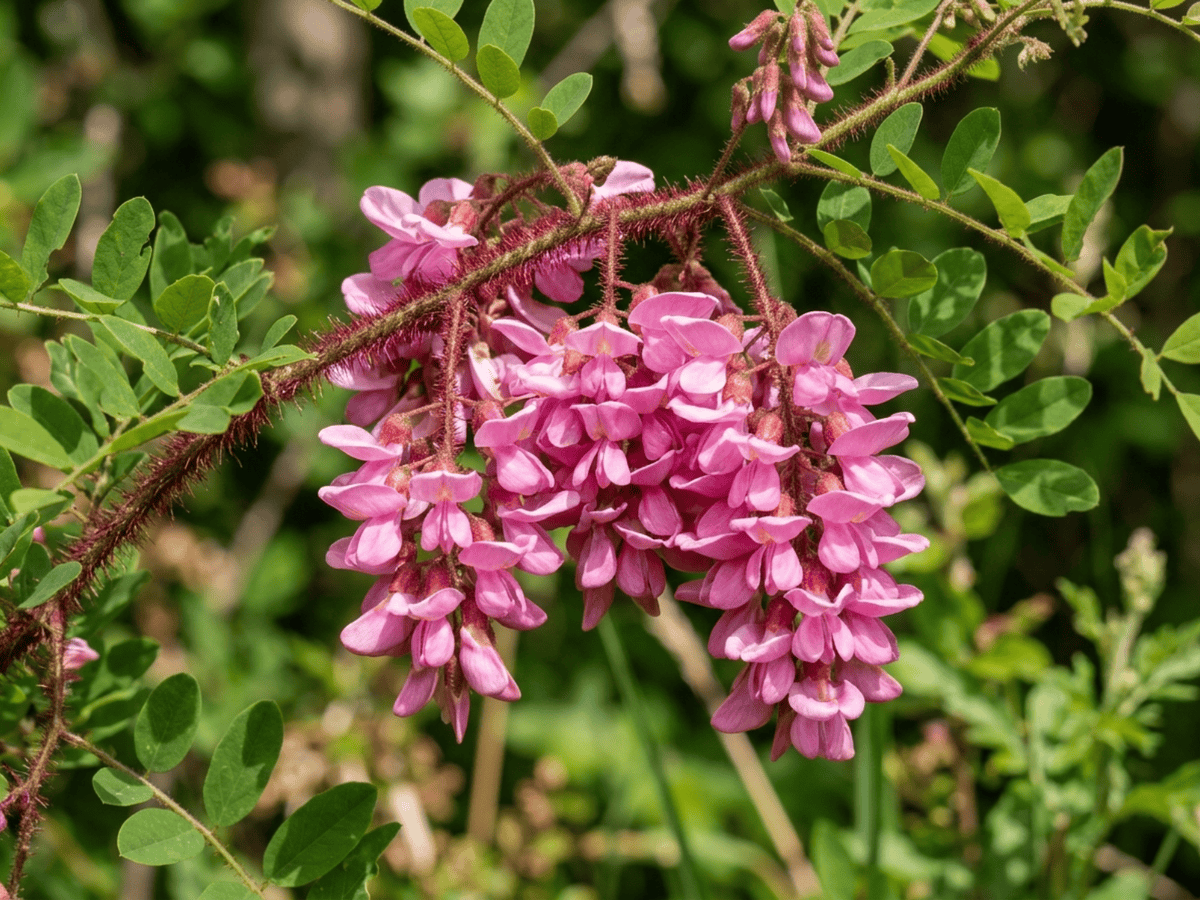
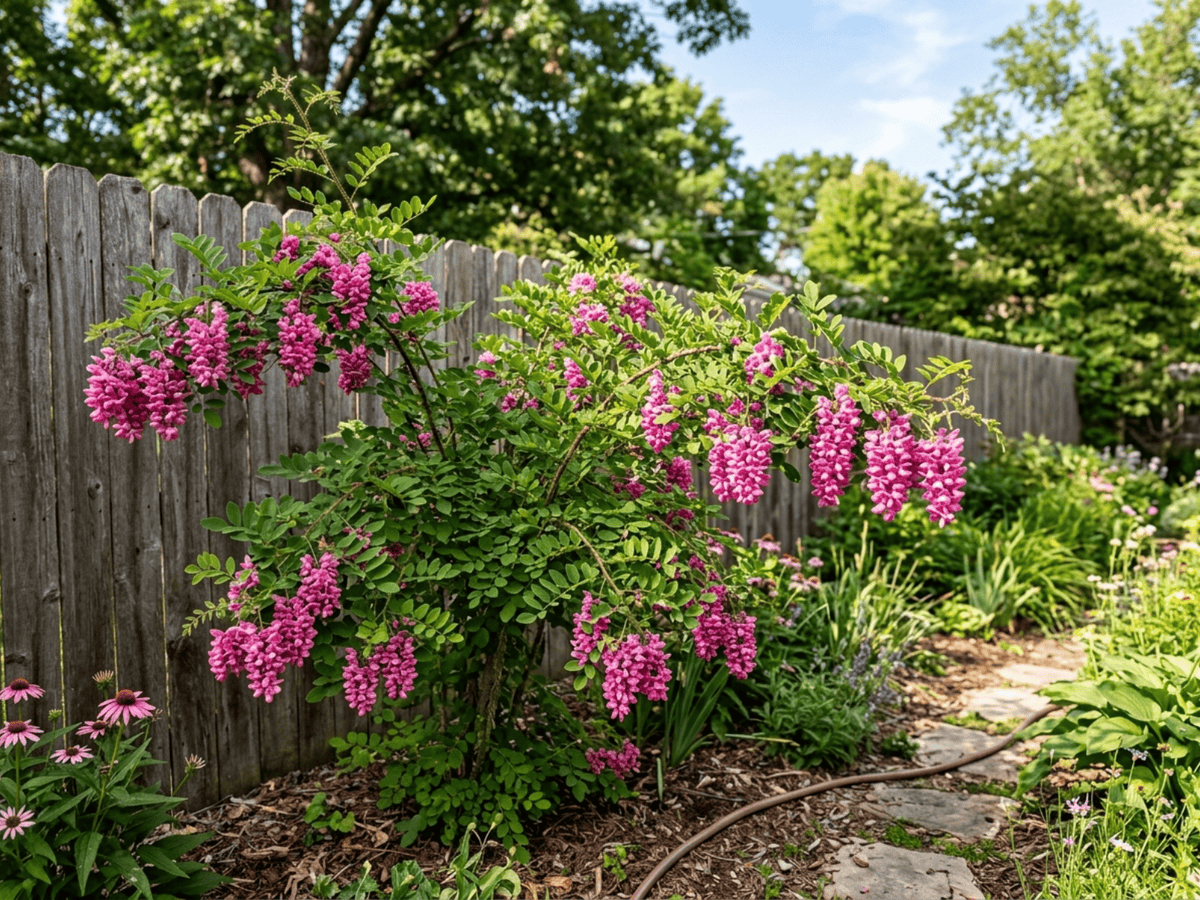
Bristly Locust or Rose Acacia is a small native American shrubby tree of the Southeastern US reaching 6-10 feet tall, bearing gorgeous dangling clusters of rose-pink pea-like flowers in late spring and early summer. Its branches and seed pods are distinctively bristly. Native from Virginia to Georgia, it is an underused ornamental plant for native gardens and erosion control, hardy in USDA zones 5-8 and a nitrogen-fixing soil improver.
- Drought-tolerant
- Native
- Pollinator-friendly
How to care for Bristly Locust
Watering
- Springevery 10 days
- Summerevery 7 days
- Fallevery 14 days
- Winterpause watering
Soil · Well-draining
- Top dressingPine bark mulch10%
- Main mixPotting soil + perlite 2:170%
- DrainageLECA / gravel20%
Never skip the drainage layer — standing water is the top cause of root rot.
FERTILIZER
- Springevery 60 days
- Summerevery 60 days
At a Glance
- NativeNorth America
- Height6–10 ft (1.8–3 m)
- Spread6–10 ft (1.8–3 m)
- Flower colorPink
- Foliage colorGreen
- Fruit colorBrown
- SoilSandy, Well-drained
- LocationsYard
Bloom time
BLOOM CYCLE
Peak bloom
May–Jun
Rose-pink hanging clusters May to June
Fragrance
LIGHT FRAGRANCE
The flowers have a mild sweet scent.
Toxicity
Humans Moderate · Pets Moderate
robinine and phasin
Moderate
- Bark
- Leaf
- Seed
- Ingestion
EXPOSURE Eating bark, leaves, and seeds.
EFFECT Nausea, vomiting, and diarrhea.
NOTE Documented concern for humans: Nausea, vomiting, and diarrhea.
Moderate
- Bark
- Leaf
- Seed
- Ingestion
EXPOSURE Eating bark, leaves, and seeds.
EFFECT Vomiting, diarrhea, and depression.
NOTE ASPCA lists Robinia as toxic; bark and seeds most concentrated. Fresh flowers sometimes fried in Europe.
Moderate
- Bark
- Leaf
- Seed
- Ingestion
EXPOSURE Eating bark, leaves, and seeds.
EFFECT Vomiting, diarrhea, and depression.
NOTE ASPCA lists Robinia as toxic; bark and seeds most concentrated. Fresh flowers sometimes fried in Europe.
Educational information, not medical or veterinary advice. If exposure is suspected, contact a doctor or veterinarian.
DISTRIBUTION

- Native
- Introduced
- North America
History

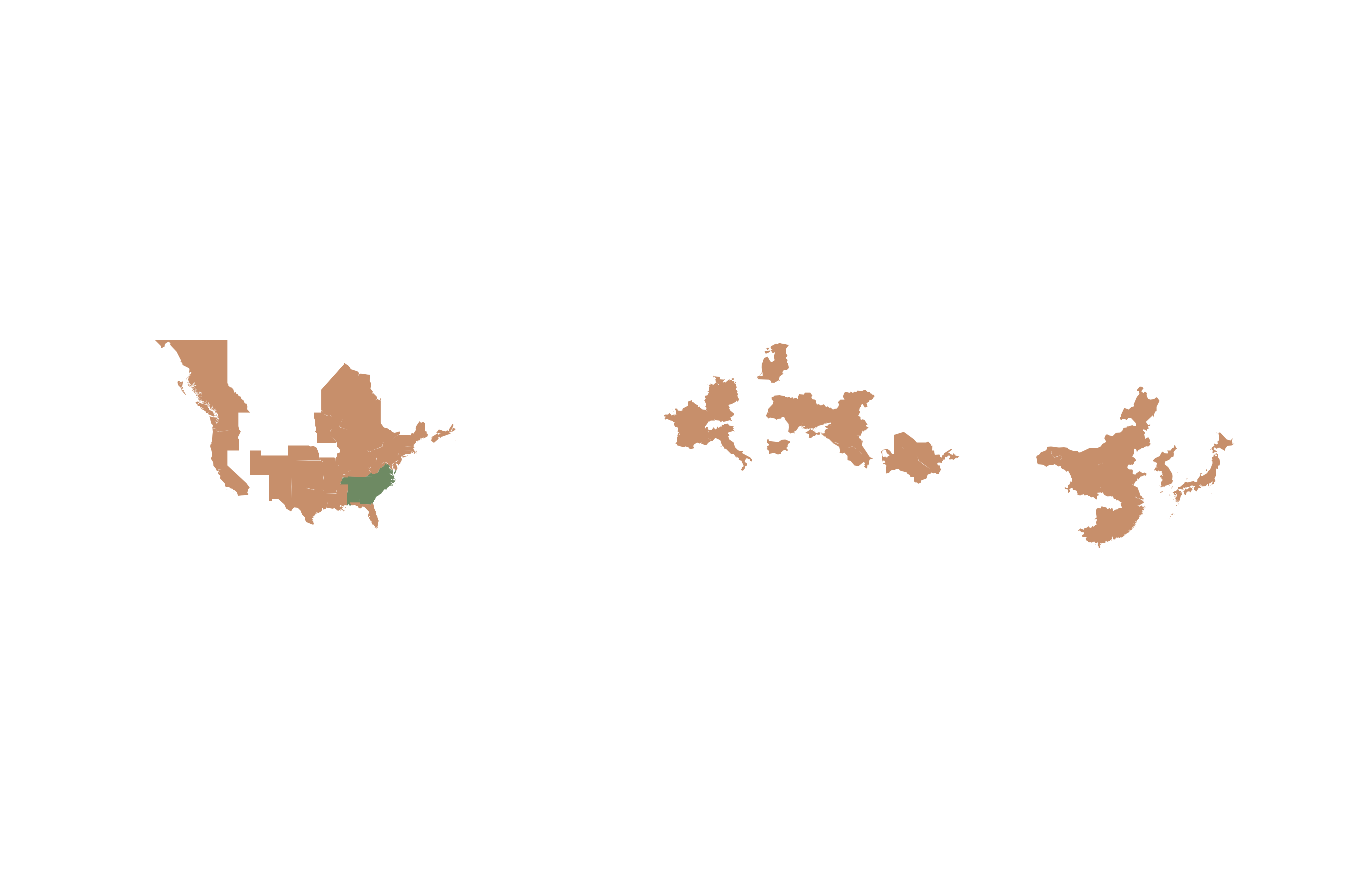
Robinia hispida is native to the southern Appalachians, ranging from Virginia through Kentucky, Tennessee, North Carolina, and Georgia to northern Alabama. Linnaeus described it in 1767. The specific epithet hispida refers to the dense bristly red-brown hairs covering young stems and flower stalks—a distinctive feature among locusts.
It produces showy 3-5 inch pendant racemes of rose-pink pea-like flowers in May-June, resembling wisteria at a smaller scale. It typically forms a 6-10 foot suckering shrub or small tree. Planted extensively across 19th and early-20th century American gardens as rose acacia, it later fell out of favor due to aggressive suckering habit.
Modern garden use often involves grafting onto non-suckering Robinia pseudoacacia rootstock. The cultivar 'Macrophylla' has larger flowers. Nitrogen-fixing root nodules enable growth on poor soils. Native to the southern Appalachian Mountains but widely naturalized across the eastern United States. Used traditionally by Southern farmers as a living hedge and nitrogen-fixing cover. Introduced to European gardens in 1743.
Symbolism & meaning
What It Symbolizes
Bristly Locust can symbolize simplicity, a humble native shrub of the southern Appalachians whose pink pea-flowers ask very little of the eye and even less of the soil. Another layer is regeneration, for it spreads readily by suckers, restoring disturbed and reclaimed land where richer plants refuse. In the native garden it is the modest pioneer, a plant whose understated beauty is inseparable from its willingness to colonize the places others have given up on.
- Simplicity — humble native beauty
- Regeneration — restores disturbed land
Where the Name Comes From
Genus honors Jean Robin (1550–1629), French king's gardener; 'hispida' means 'bristly'.
Uses & Fun Facts
- Bristly locust pink racemes feed bumblebees
- Rose-pink pea-flower clusters drape arching stems
Related plants
Plants with similar care
 Chinese AbeliaAbelia chinensis
 Fragrant AbeliaAbelia mosanensis
 Large-Flowered AbeliaAbelia uniflora
 Glossy AbeliaAbelia x grandiflora
Frequently asked questions
How often should I water Bristly Locust?
Water about every 10 days during the growing season, and always let excess water drain away.
How much light does Bristly Locust need?
Full sun: 6+ hrs direct. Watch the leaves — scorching or stretching means the light needs adjusting.
Is Bristly Locust toxic to cats or dogs?
Pets Moderate (Dogs Moderate · Cats Moderate) Educational information, not medical or veterinary advice. If exposure is suspected, contact a doctor or veterinarian.
Is Bristly Locust easy to grow?
Yes — it is considered an easy, beginner-friendly plant.
When does Bristly Locust bloom?
It typically blooms May–Jun in the Northern Hemisphere.
YardMate
Identify any plant in seconds
Snap a photo — YardMate names the plant, diagnoses problems, and reminds you when to water.
Download on the App Store