 YardMate

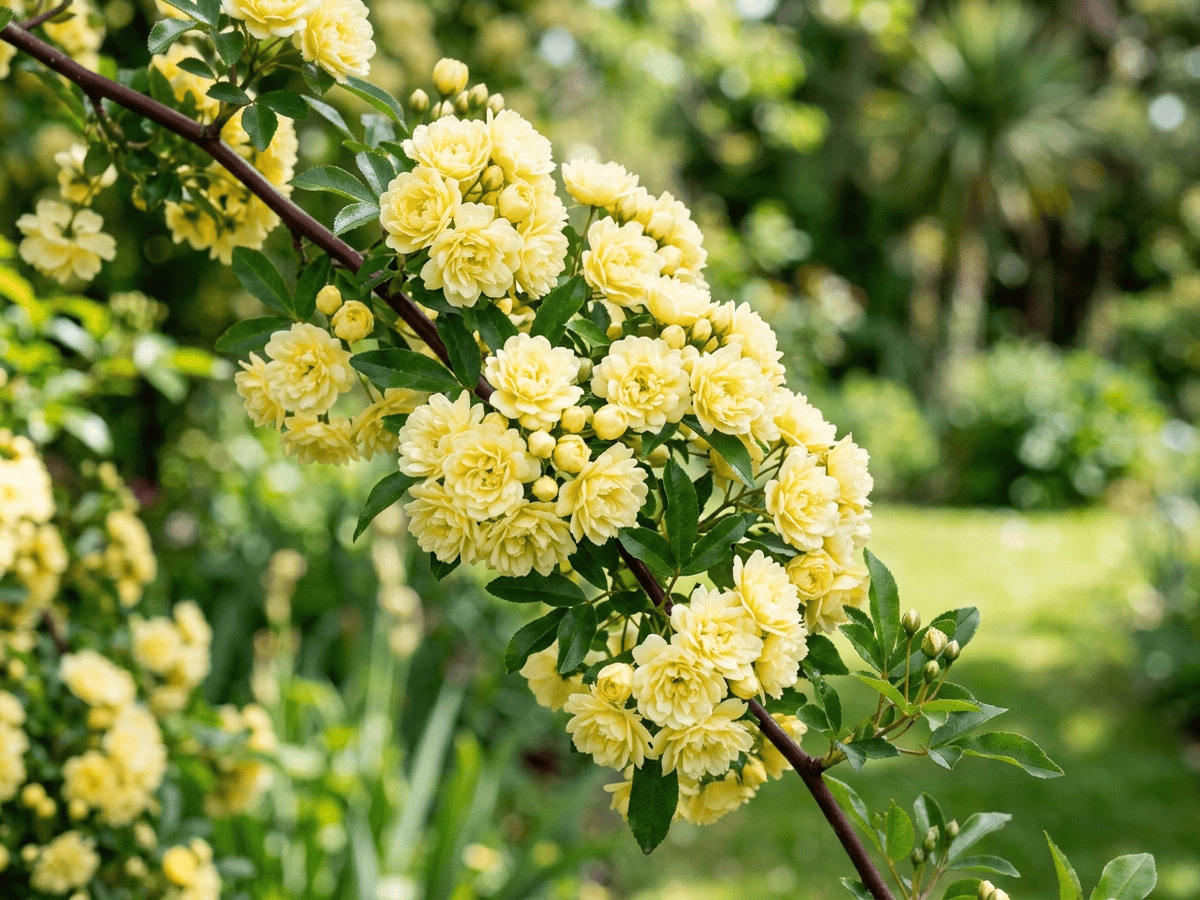

Lady Banks' Rose
Rosa banksiae
Easy · Beginner friendlyAbout Lady Banks' Rose
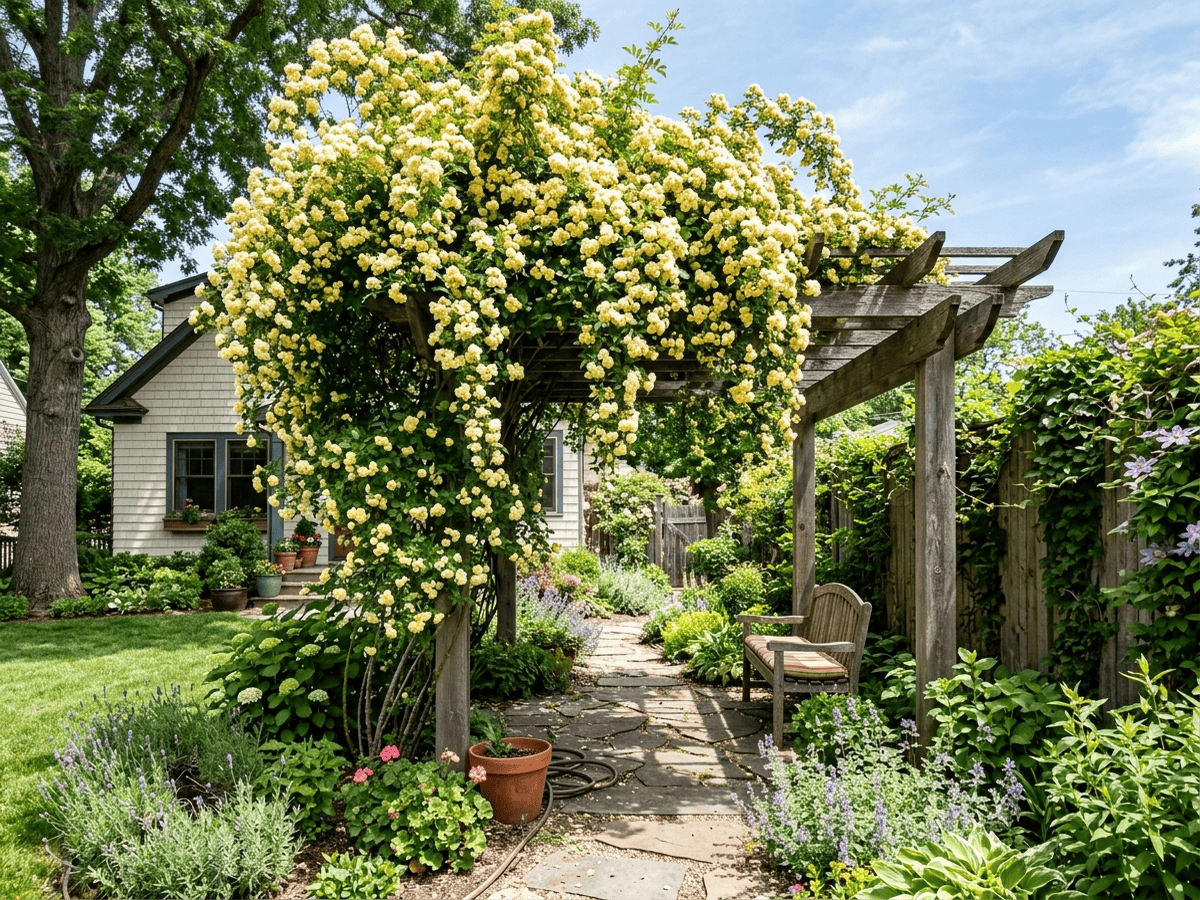
Lady Banks' Rose is a nearly thornless evergreen climbing rose from China that can reach 20-50 feet, producing cascading clusters of small double yellow or white flowers in early spring. It is one of the earliest roses to bloom and among the most vigorous climbers in warm climates. The world's largest rose plant, covering over 9,000 square feet, is a Lady Banks' Rose planted in 1885 in Tombstone, Arizona, listed in the Guinness Book of Records.
- Disease-resistant
- Drought-tolerant
- Evergreen
How to care for Lady Banks' Rose
Watering
- Springevery 5 days
- Summerevery 3 days
- Fallevery 7 days
- Winterevery 14 days
Soil · Rich & loamy
- Top dressingBark mulch15%
- Main mixRich loam + compost 3:170%
- DrainageGravel15%
Use fully finished compost — fresh compost burns roots.
FERTILIZER
Balanced Feed 14-14-14
An even feed covers all three needs at once, keeping leaves, roots and blooms moving together with nothing pushed out of balance.
- Nitrogen · Leaves
- Phosphorus · Roots + Blooms
- Potassium · Strength
- Springevery 30 days
- Summerevery 45 days
At a Glance
- NativeEast Asia
- Height15–25 ft (4.6–7.6 m)
- Spread10–20 ft (3–6.1 m)
- Flower colorWhite, Yellow
- Foliage colorGreen, Dark-green
- SoilWell-drained, Loamy
- LocationsYard
Bloom time
BLOOM CYCLE
Peak bloom
Mar–May
Yellow or white double clusters March to May; blooms once on old wood
Fragrance
MODERATE FRAGRANCE
White form has strong violet-like scent; yellow form is almost unscented.
Toxicity
Pets Safe
None reported
Not reported
EXPOSURE No exposure route is reported.
EFFECT No toxic effect is reported.
NOTE No human toxicity is reported in this catalog; avoid eating ornamental plants unless confirmed edible.
Safe
EXPOSURE No exposure route is reported.
EFFECT No toxic effect is reported.
NOTE Listed as non-toxic for dogs; avoid eating ornamental plants unless confirmed edible.
Safe
EXPOSURE No exposure route is reported.
EFFECT No toxic effect is reported.
NOTE Listed as non-toxic for cats; avoid eating ornamental plants unless confirmed edible.
Educational information, not medical or veterinary advice. If exposure is suspected, contact a doctor or veterinarian.
DISTRIBUTION


- Native
- Introduced
- East Asia
History
Rosa banksiae occurs naturally in central and western China, and has been cultivated in Chinese gardens for centuries. Scottish botanist William Kerr introduced the double white form (var. banksiae) to Kew Gardens in 1807, and Scottish botanist Robert Brown described the species in 1821 in honor of Lady Dorothea Banks, wife of Sir Joseph Banks, then director of Kew. The double yellow (var. lutea) followed in 1824.
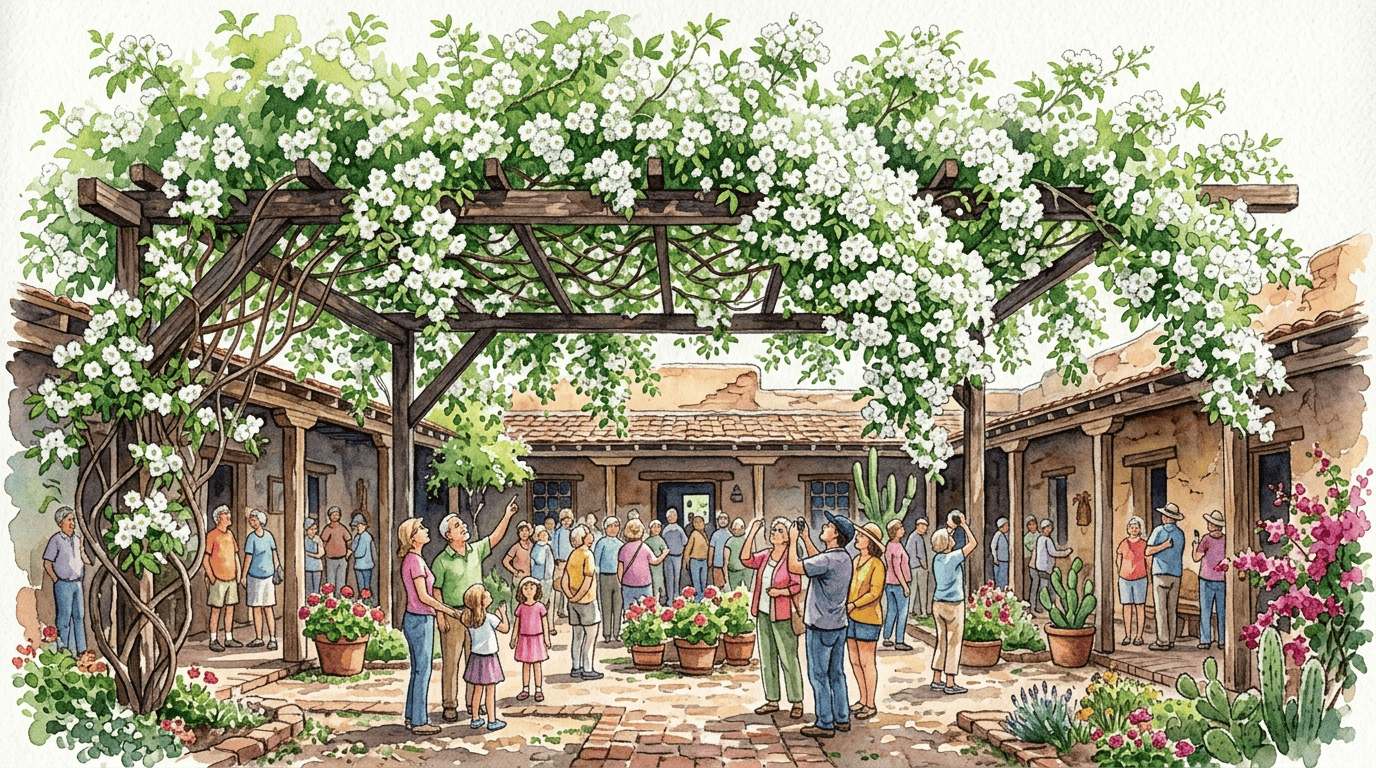
Distinguished by its thornless canes, small double flowers in large clusters, and partial evergreen foliage, Lady Banks' rose is extraordinarily vigorous in mild climates. The world's largest rose—a specimen of the double white form planted in 1885 at the Rose Tree Inn in Tombstone, Arizona—covers over 743 square meters (8,000 square feet) under a massive arbor, has a trunk over 3.7 meters in circumference, and blooms spectacularly every April.
The species produces some of the earliest rose blooms of the year and has been a favorite of Gulf Coast and Mediterranean gardeners for nearly two centuries. Brought from a Canton garden to Kew in 1807. The famous Tombstone rose, planted by a homesick Scottish bride in 1885, now shades an entire courtyard and draws tourists from around the world—a living symbol of the Old West's gentler side.
Symbolism & meaning
What It Symbolizes
Lady Banks' Rose pours grace from arbors and trellises in cascading clusters of tiny double flowers, often tens of thousands at once. Its heritage lives in the famous Tombstone Rose, planted in 1885 in Arizona and now the world's largest rosebush — an emblem of pioneer spirit rooted in desert ground. Its meaning is generosity on a grand scale: delicate blooms multiplied into an unforgettable spring waterfall.
- Grace — cascading clusters of delicate flowers
- Heritage — the Tombstone rose embodies pioneer spirit
Where the Name Comes From
'Banksiae' honors Lady Dorothea Banks (1758–1828), wife of Sir Joseph Banks.
Uses & Fun Facts
- Thornless canes drape arbors fences and large pergolas
- Tiny yellow or white flowers carry violet-like spring scent
- Massive evergreen rambling rose for warm-climate gardens
Related plants
More Rosa plants
 About FaceRosa 'About Face'
 Abraham DarbyRosa 'Abraham Darby'
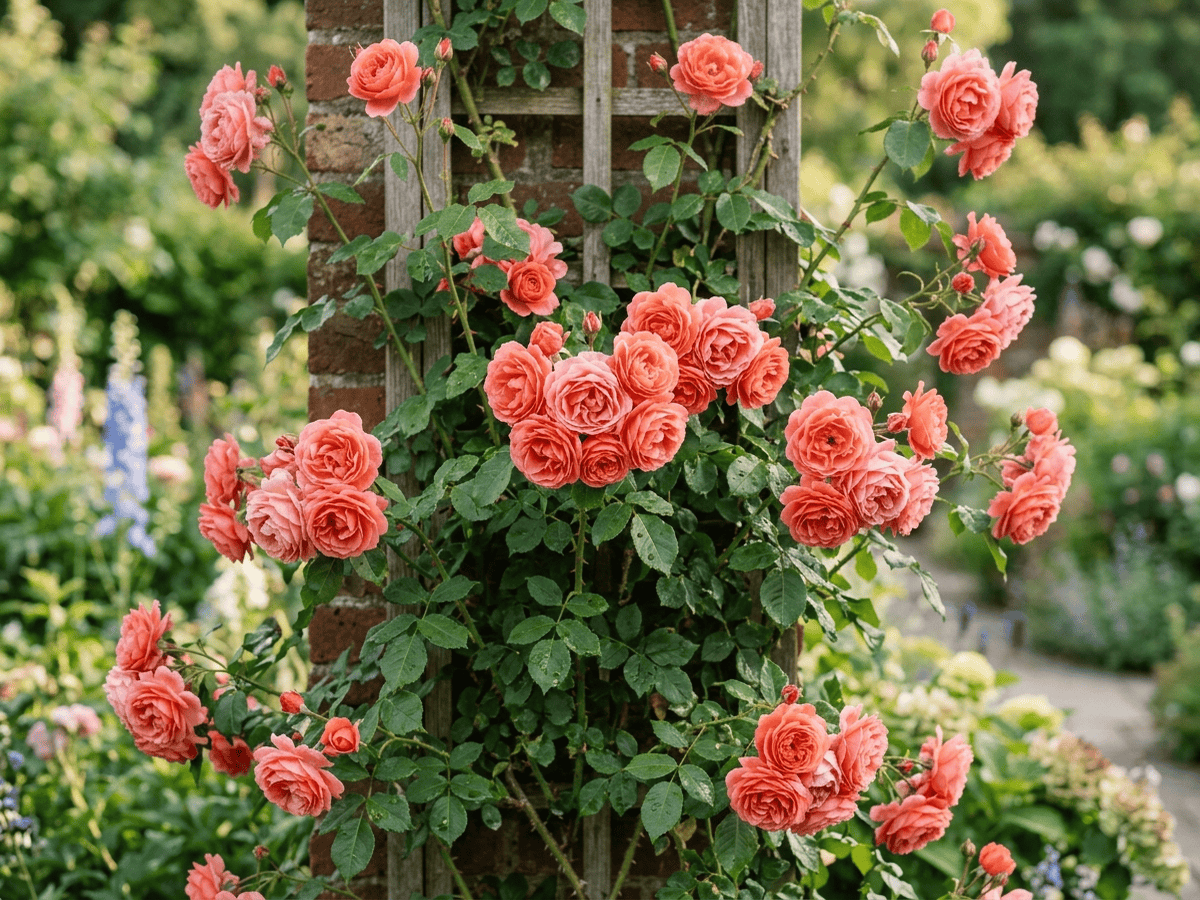 AmericaRosa 'America'
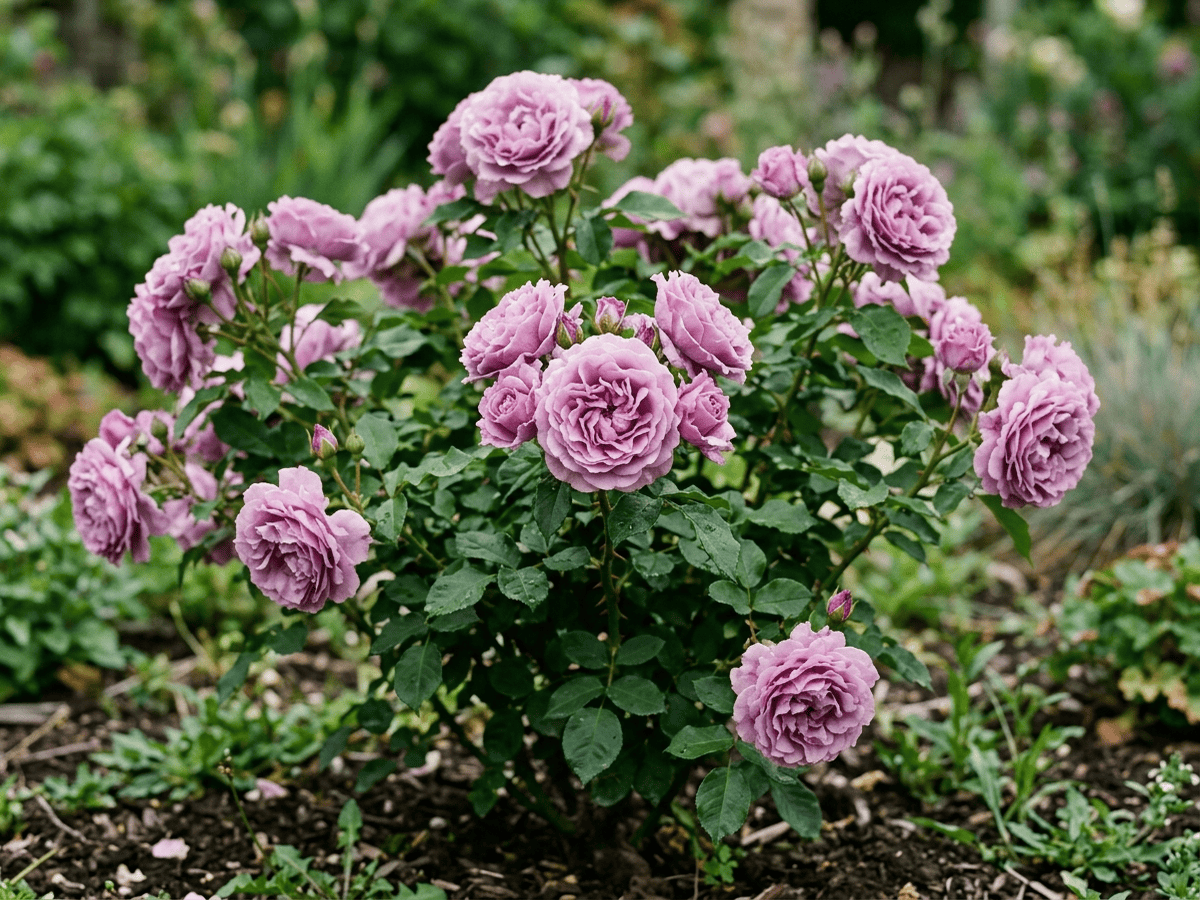 Angel FaceRosa 'Angel Face'
Plants with similar care
 Chinese AbeliaAbelia chinensis
 Fragrant AbeliaAbelia mosanensis
 Large-Flowered AbeliaAbelia uniflora
 Glossy AbeliaAbelia x grandiflora
Frequently asked questions
How often should I water Lady Banks' Rose?
In summer, water about every 3 days; in winter, about every 14 days. Adjust for heat, pot size and drainage.
How much light does Lady Banks' Rose need?
Full sun: 6+ hrs direct. Watch the leaves — scorching or stretching means the light needs adjusting.
Is Lady Banks' Rose toxic to cats or dogs?
Pets Safe (Dogs Safe · Cats Safe) Educational information, not medical or veterinary advice. If exposure is suspected, contact a doctor or veterinarian.
Is Lady Banks' Rose easy to grow?
Yes — it is considered an easy, beginner-friendly plant.
When does Lady Banks' Rose bloom?
It typically blooms Mar–May in the Northern Hemisphere.
YardMate
Identify any plant in seconds
Snap a photo — YardMate names the plant, diagnoses problems, and reminds you when to water.
Download on the App Store