 YardMate


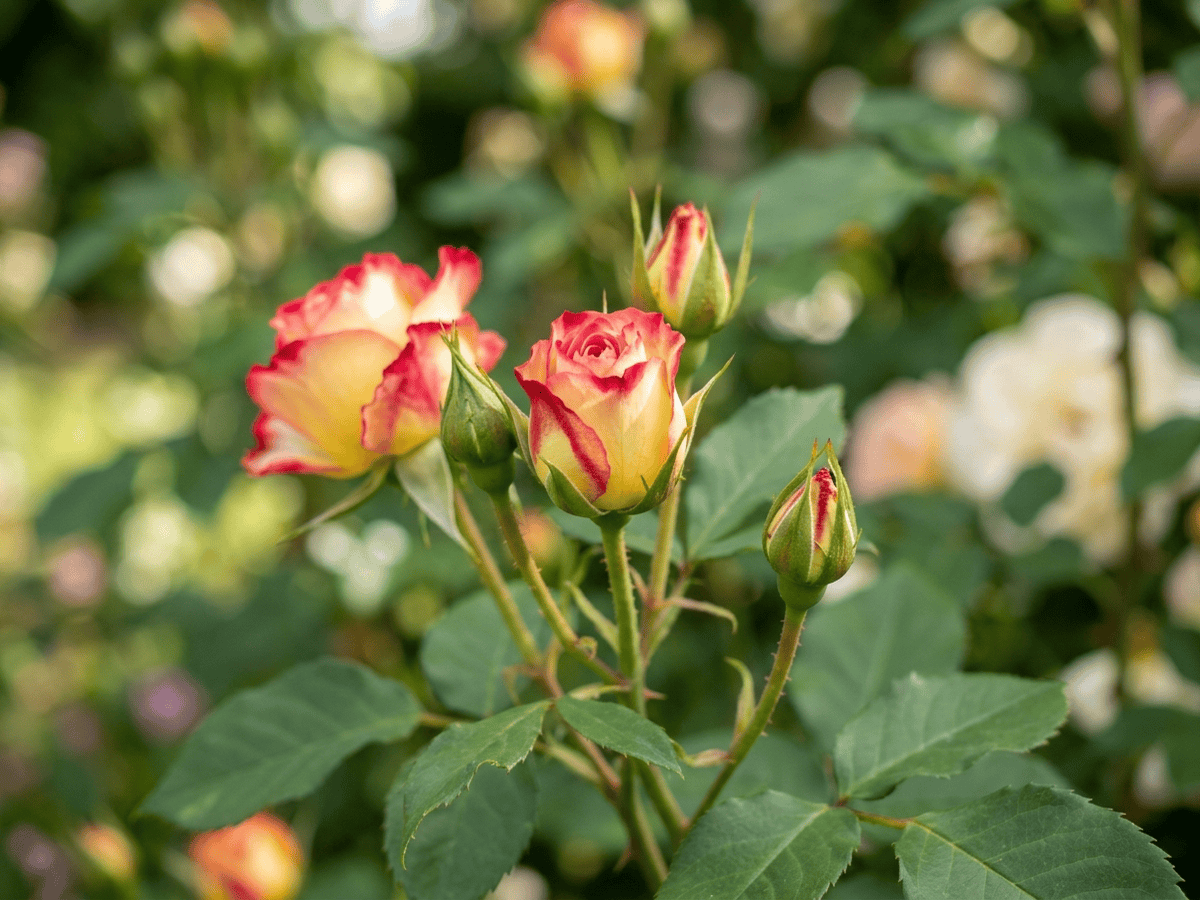

Rainbow's End
Rosa 'Rainbow's End'
Easy · Beginner friendlyAbout Rainbow's End
Rainbow's End is a stunning miniature rose bred by Harmon Saville and introduced in 1984, winning the American Rose Society's Award of Excellence. Producing small high-centered double blooms in spectacular yellow centers with red petal edges that intensify in sun, the plant grows 12 to 18 inches and blooms continuously from spring through frost. One of the most beloved bicolor miniatures in American rose gardens.
- Compact
- Container-friendly
- Long-blooming
How to care for Rainbow's End
Watering
- Springevery 5 days
- Summerevery 3 days
- Fallevery 7 days
- Winterevery 14 days
Soil · Rich & loamy
- Top dressingBark mulch15%
- Main mixRich loam + compost 3:170%
- DrainageGravel15%
Use fully finished compost — fresh compost burns roots.
FERTILIZER
Balanced Feed 14-14-14
An even feed covers all three needs at once, keeping leaves, roots and blooms moving together with nothing pushed out of balance.
- Nitrogen · Leaves
- Phosphorus · Roots + Blooms
- Potassium · Strength
- Springevery 30 days
- Summerevery 30 days
- Fallevery 45 days
At a Glance
- NativeNorth America
- Height1.5–2 ft (0.5–0.6 m)
- Spread1–1.5 ft (0.3–0.5 m)
- Flower colorYellow, Red
- Foliage colorGreen
- SoilLoamy, Well-drained
- LocationsYard · Balcony
Bloom time
BLOOM CYCLE
Peak bloom
Jan–Dec
Yellow-and-red bicolor minis, deadhead for continuous repeat
Fragrance
LIGHT FRAGRANCE
The flowers have a very light scent.
Toxicity
Humans Slight
Unknown toxic principle
Slight
- Stem
- Contact
EXPOSURE Touching stems.
EFFECT Pricks from thorns.
NOTE Not toxic; thorns cause mechanical injury.
Safe
EXPOSURE No exposure route is reported.
EFFECT No toxic effect is reported.
NOTE Listed as non-toxic for dogs; avoid eating ornamental plants unless confirmed edible.
Safe
EXPOSURE No exposure route is reported.
EFFECT No toxic effect is reported.
NOTE Listed as non-toxic for cats; avoid eating ornamental plants unless confirmed edible.
Educational information, not medical or veterinary advice. If exposure is suspected, contact a doctor or veterinarian.
DISTRIBUTION


- Native
- North America
History
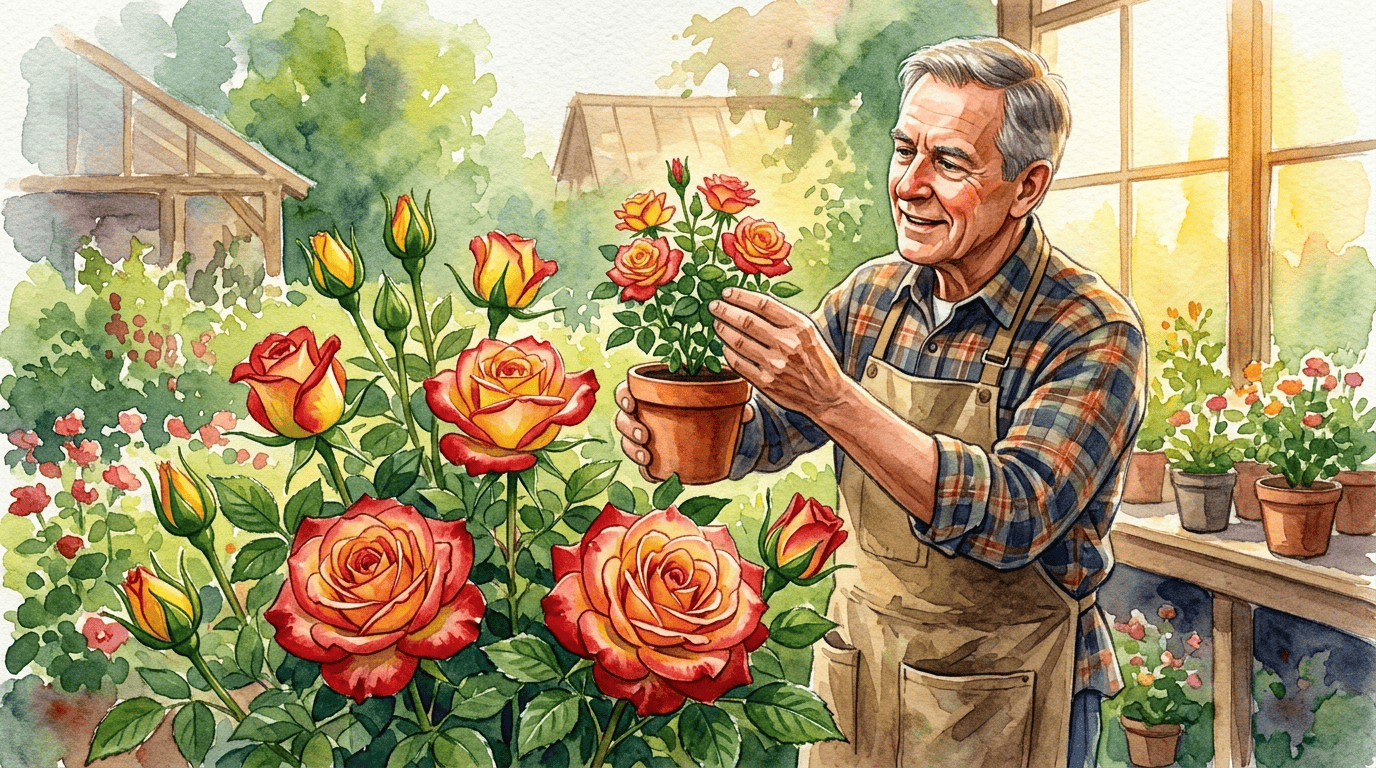
Rosa 'Rainbow's End' is a bicoloured yellow-and-red miniature rose bred by American hybridizer Harmon Saville at Nor'East Miniature Roses in Massachusetts, released in 1984 from a cross between 'Rise 'n' Shine' and 'Watercolor'. The perfect miniature hybrid-tea-shaped blooms, just four centimeters across, open a clear deep yellow and develop intense red flushing at the petal edges proportional to sun exposure, so plants grown in strong sun display a remarkable rainbow effect with buds, half-open blooms, and mature flowers showing every color transition simultaneously. 'Rainbow's End' won the American Rose Society's Award of Excellence in 1986 and became the most celebrated miniature rose of its generation, frequently described as the single most beautiful miniature ever bred.
The compact plant reaches 40 centimeters and blooms continuously; faint scent.
Symbolism & meaning
What It Symbolizes
Rainbow's End suggests hopeful promise, its golden flower centers like the legendary pot of gold at the rainbow's foot. Paired with sun-painted edges, the petals deepen to red with bright sun exposure, each bloom literally painted by the weather. It is a miniature rose that turns the garden's daily light into a visible reward.
- Hopeful promise — rainbow's-end gold at flower center
- Sun-painted — red edges intensify in bright sun
Where the Name Comes From
Cultivar name evokes the pot of gold at the end of a rainbow, referencing the yellow center and red petal edges.
Uses & Fun Facts
- Compact yellow-to-red blooms brighten patio pots and low edging
- Yellow blooms blushed crimson edges on a tidy small bush
- Tiny bicolor blooms perfect for miniature arrangements
Related plants
More Rosa plants
 About FaceRosa 'About Face'
 Abraham DarbyRosa 'Abraham Darby'
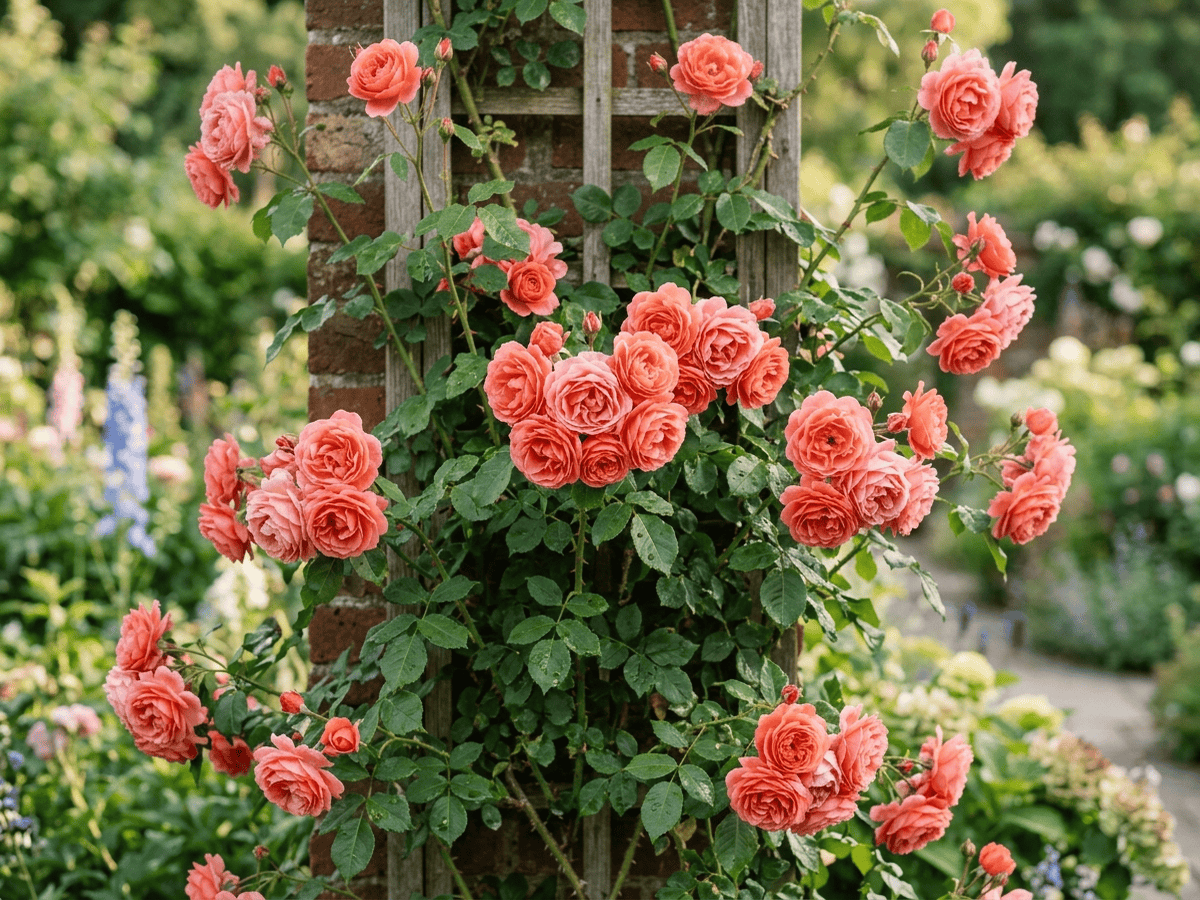 AmericaRosa 'America'
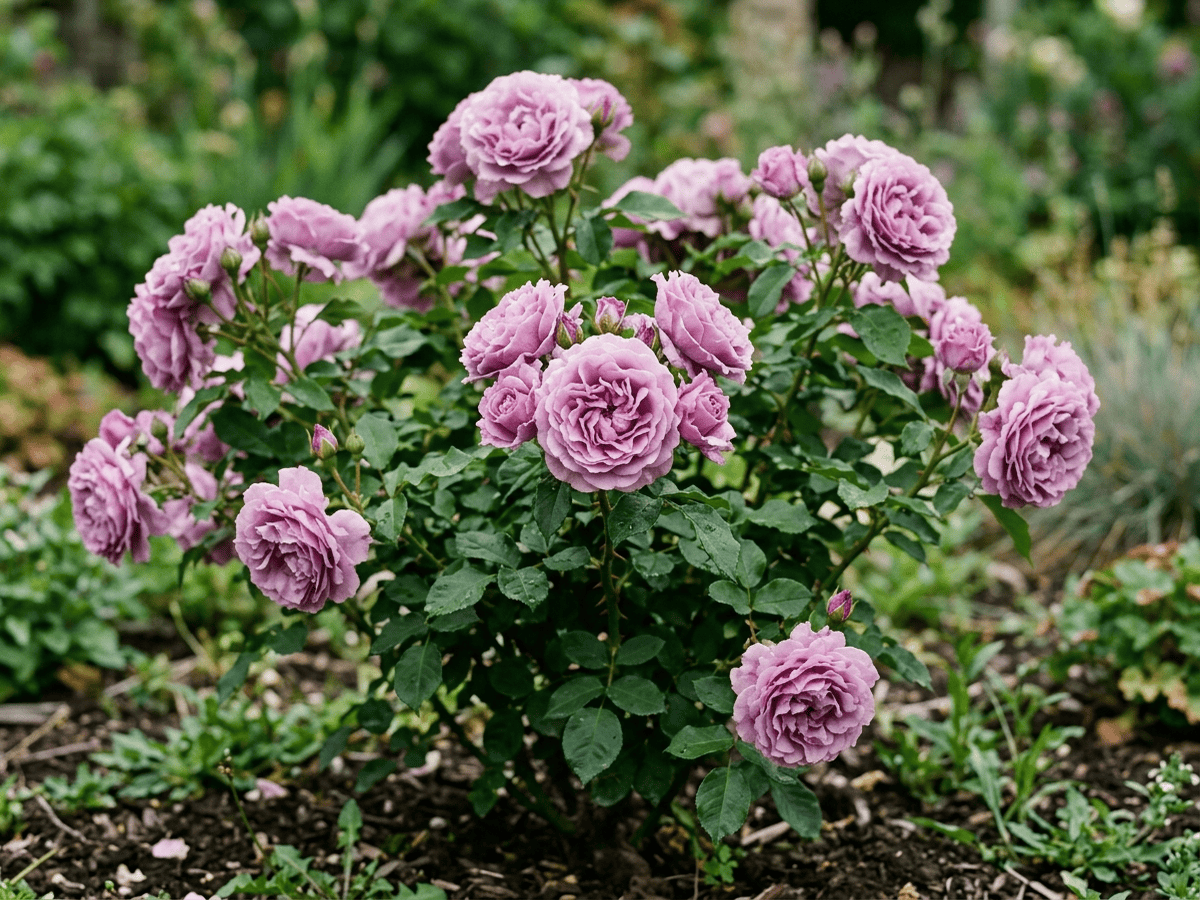 Angel FaceRosa 'Angel Face'
Plants with similar care
 Chinese AbeliaAbelia chinensis
 Fragrant AbeliaAbelia mosanensis
 Large-Flowered AbeliaAbelia uniflora
 Glossy AbeliaAbelia x grandiflora
Frequently asked questions
How often should I water Rainbow's End?
In summer, water about every 3 days; in winter, about every 14 days. Adjust for heat, pot size and drainage.
How much light does Rainbow's End need?
Full sun: 6+ hrs direct. Watch the leaves — scorching or stretching means the light needs adjusting.
Is Rainbow's End toxic to cats or dogs?
Pets Safe (Dogs Safe · Cats Safe) Educational information, not medical or veterinary advice. If exposure is suspected, contact a doctor or veterinarian.
Is Rainbow's End easy to grow?
Yes — it is considered an easy, beginner-friendly plant.
When does Rainbow's End bloom?
It typically blooms Jan–Dec in the Northern Hemisphere.
YardMate
Identify any plant in seconds
Snap a photo — YardMate names the plant, diagnoses problems, and reminds you when to water.
Download on the App Store