 YardMate


Mexican Ruellia
Ruellia brittoniana
Easy · Beginner friendlyAbout Mexican Ruellia
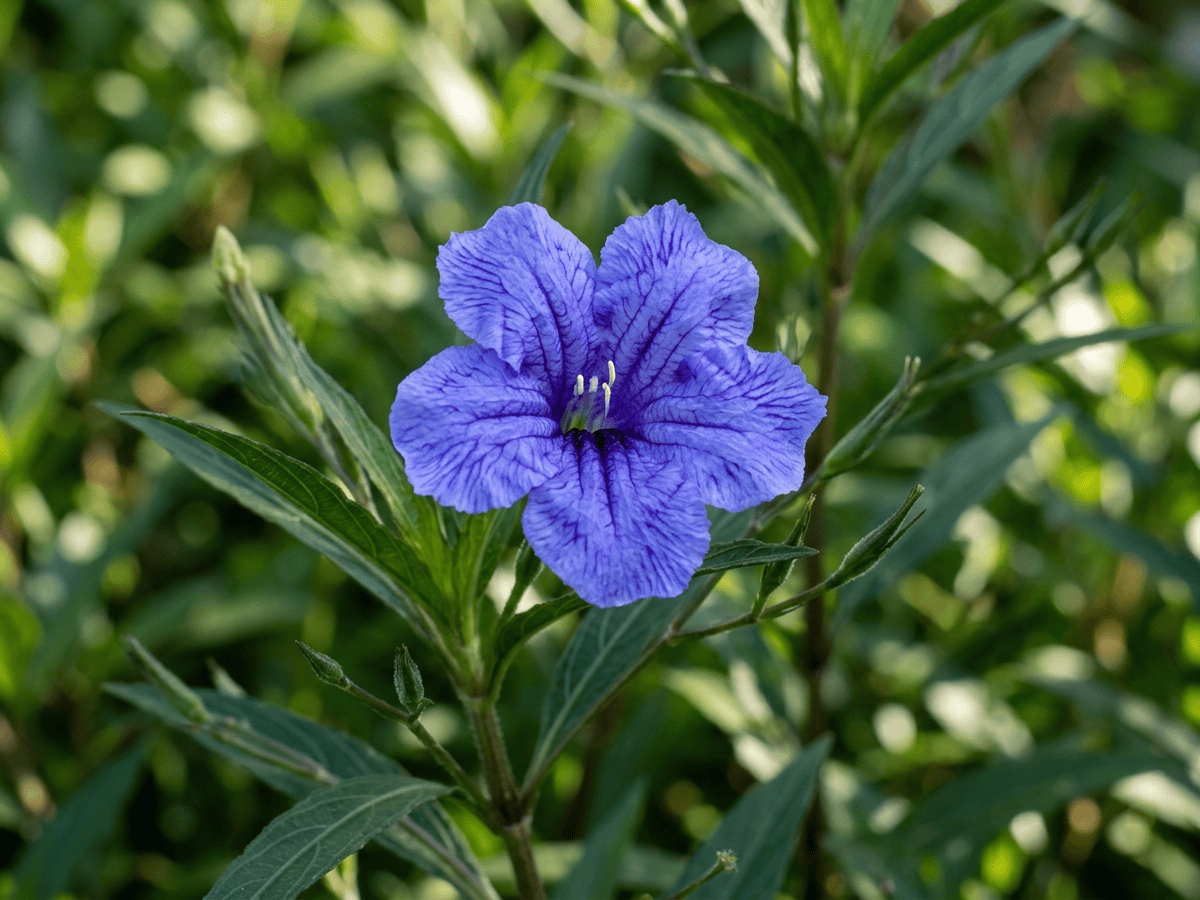
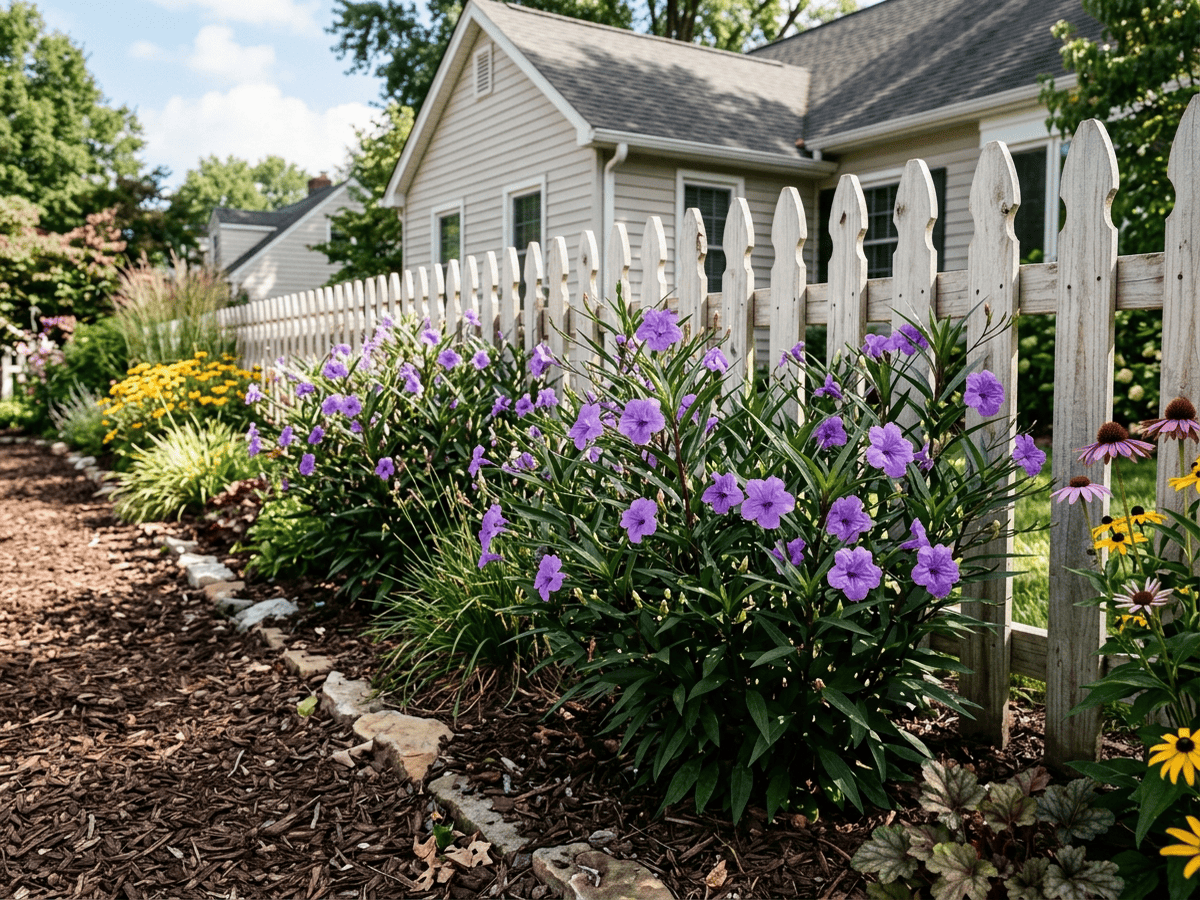
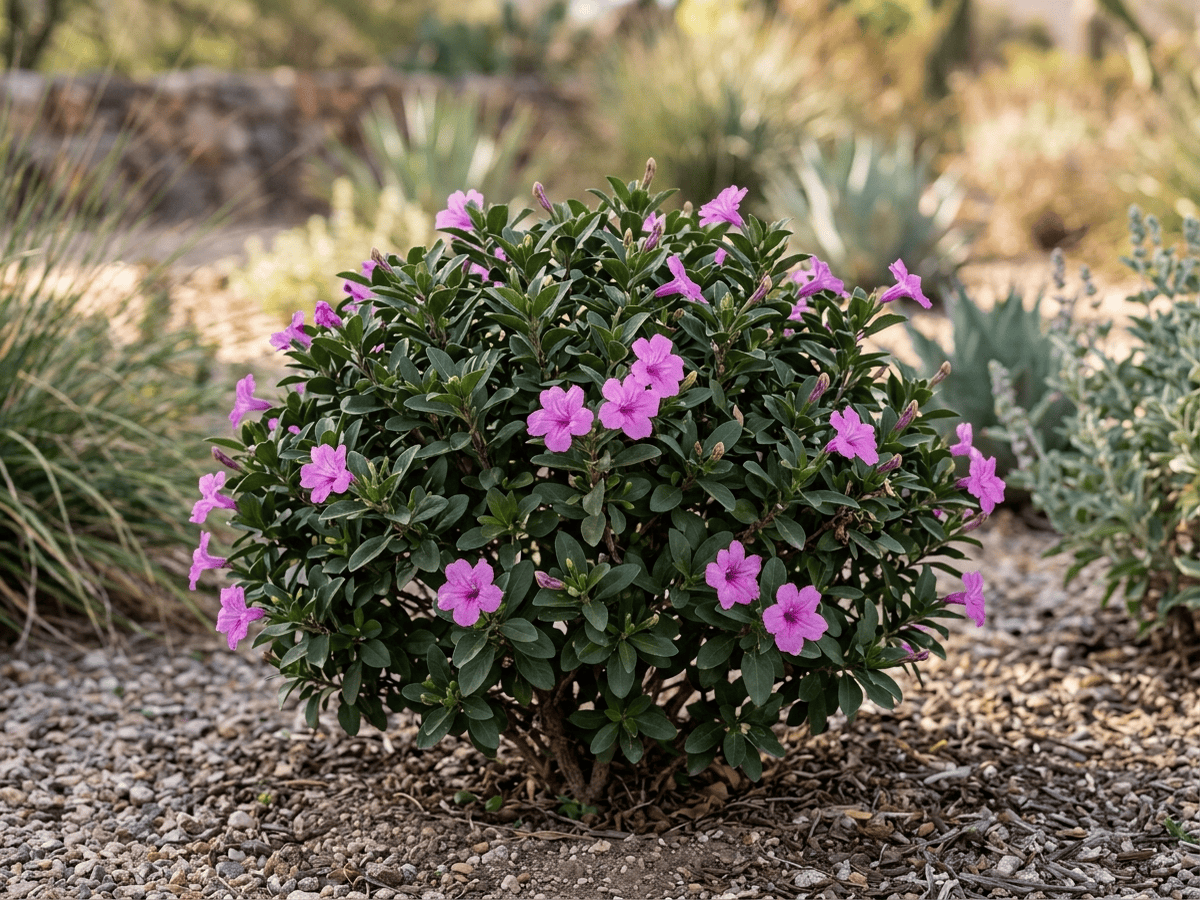
Mexican Petunia is a vigorous perennial native to Mexico that has naturalized across the southeastern United States, particularly Florida and the Gulf Coast. Growing 2 to 4 feet tall with willowy dark purple stems and narrow leaves, it produces an unending succession of vivid purple, pink, or white trumpet flowers that open at dawn and drop by evening. While beloved for its toughness and beauty, it can be aggressively invasive in moist warm climates and is restricted in some states.
- Drought-tolerant
- Fast-growing
- Long-blooming
- Pollinator-friendly
How to care for Mexican Ruellia
Watering
- Springevery 5 days
- Summerevery 4 days
- Fallevery 7 days
- Winterevery 14 days
Soil · Well-draining
- Top dressingPine bark mulch10%
- Main mixPotting soil + perlite 2:170%
- DrainageLECA / gravel20%
Never skip the drainage layer — standing water is the top cause of root rot.
FERTILIZER
Balanced Feed 14-14-14
An even feed covers all three needs at once, keeping leaves, roots and blooms moving together with nothing pushed out of balance.
- Nitrogen · Leaves
- Phosphorus · Roots + Blooms
- Potassium · Strength
- Springevery 30 days
- Summerevery 45 days
At a Glance
- NativeNorth America, Central America
- Height3–4 ft (0.9–1.2 m)
- Spread2–3 ft (0.6–0.9 m)
- Flower colorPurple, Pink, White, Blue
- Foliage colorGreen, Purple
- SoilWell-drained, Loamy
- LocationsYard · Balcony
Bloom time
BLOOM CYCLE
Peak bloom
Mar–Nov
Purple, pink, or white trumpets spring through fall
Toxicity
Toxicity unknown
None reported
Unknown
EXPOSURE Unspecified plant material.
EFFECT Toxic effects are not specified.
NOTE Toxicity for humans is not well documented; use caution until verified.
Unknown
EXPOSURE Unspecified plant material.
EFFECT Toxic effects are not specified.
NOTE Toxicity for dogs is not well documented; use caution until verified.
Unknown
EXPOSURE Unspecified plant material.
EFFECT Toxic effects are not specified.
NOTE Toxicity for cats is not well documented; use caution until verified.
Educational information, not medical or veterinary advice. If exposure is suspected, contact a doctor or veterinarian.
DISTRIBUTION

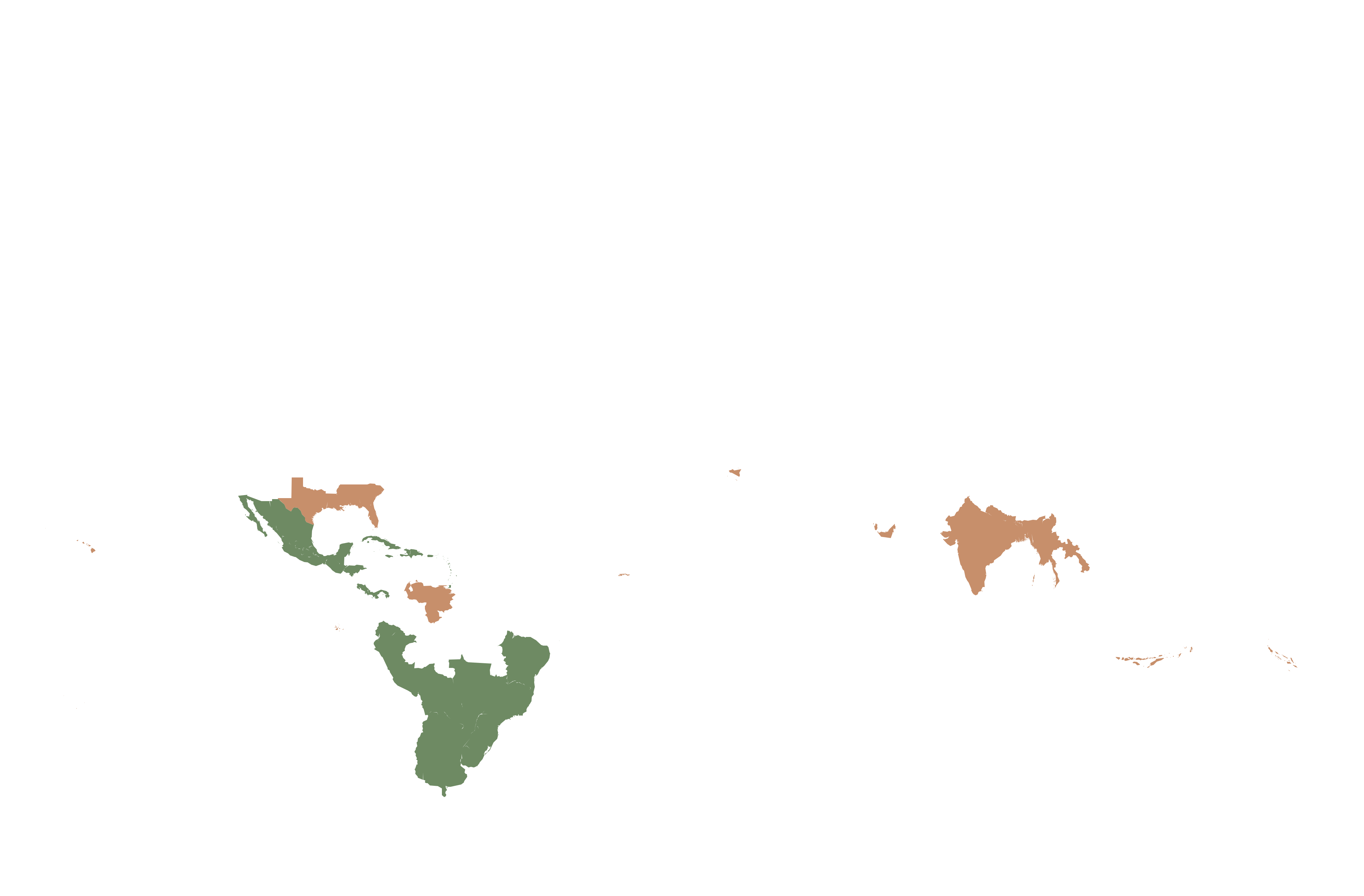
- Native
- Introduced
- North America
- Central America
History
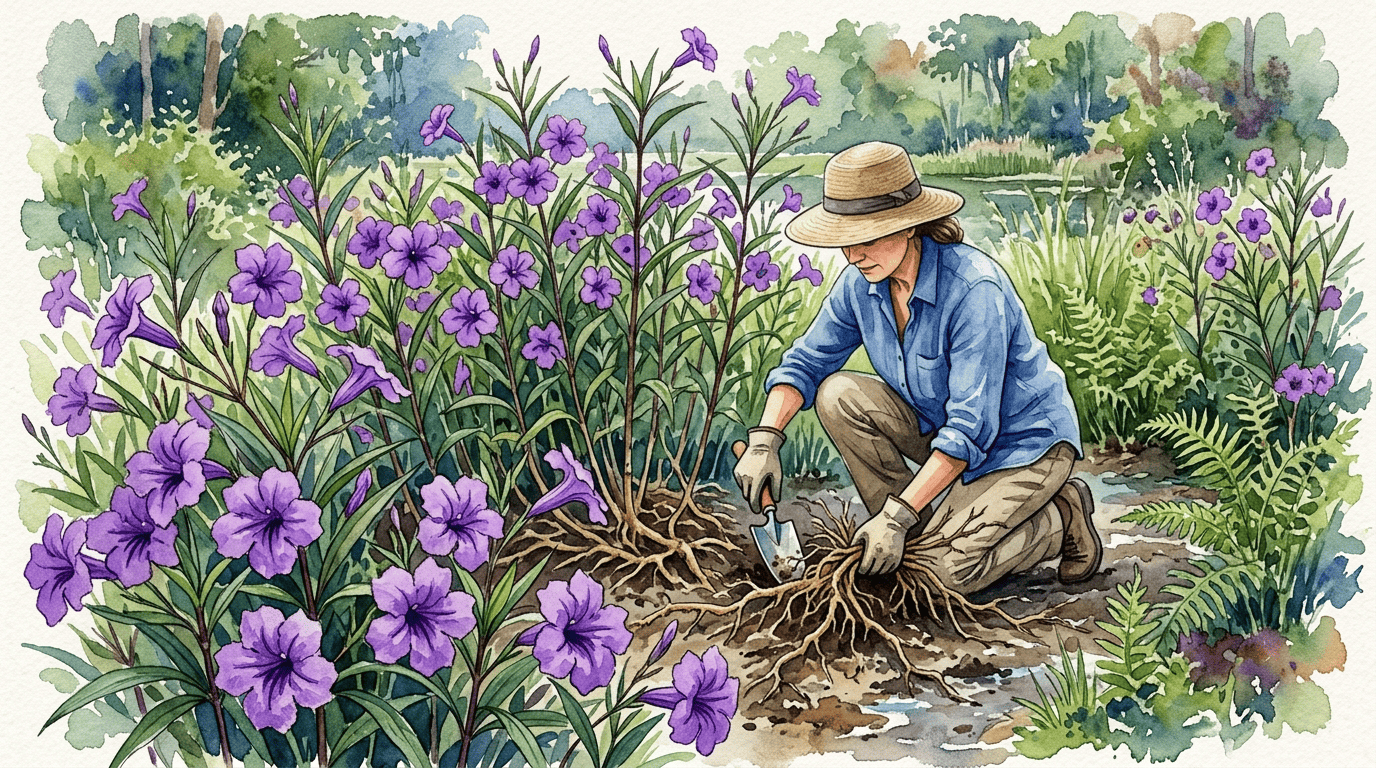
Ruellia brittoniana, the Mexican petunia or Britton's wild petunia, is a perennial herb now accepted under the name Ruellia simplex, native to Mexico, Central America, and the Caribbean. American botanist C. V. Morton honored Nathaniel Britton of the New York Botanical Garden when he described the species in 1927. Its tall stems bearing showy funnel-shaped purple, pink, or white flowers made it a popular southern US garden plant through the 20th century, but vigorous seeding and rhizomatous spread have driven it to invasive status in Florida and parts of Texas, where it displaces native wetland vegetation.
Sterile and compact cultivars of the Mayan Purple series, developed at the University of Florida and released through Plants of Distinction, have largely replaced the fertile species in the nursery trade. Introduced from Mexico to American horticulture in the 20th century, this plant is now widely naturalized across the Southeast and is classified as invasive in Florida.
Sterile cultivars like 'Purple Showers' and 'Mayan Purple' have been developed to provide the ornamental value without invasion risk.
Symbolism & meaning
What It Symbolizes
Mexican Ruellia carries endless joy through its long Southern bloom season, producing fresh purple trumpets every morning that fade by evening only to be replaced the next day. Resilience is its companion gift — it thrives in heat, drought, and poor soil where many flowers simply give up. Its meaning is daily renewal: a plant that quietly resets its small celebration each dawn for months on end.
- Endless joy — produces fresh blooms daily through long season
- Resilience — thrives where many others fail
Where the Name Comes From
'Ruellia' honors Jean Ruelle (1474–1537), French herbalist; 'brittoniana' honors Nathaniel Lord Britton, American botanist.
Uses & Fun Facts
- Purple trumpet flowers attract butterflies and bees
- Tough long-blooming perennial for hot southern borders
Related plants
More Ruellia plants
Plants with similar care
 Chinese AbeliaAbelia chinensis
 Fragrant AbeliaAbelia mosanensis
 Large-Flowered AbeliaAbelia uniflora
 Glossy AbeliaAbelia x grandiflora
Frequently asked questions
How often should I water Mexican Ruellia?
In summer, water about every 4 days; in winter, about every 14 days. Adjust for heat, pot size and drainage.
How much light does Mexican Ruellia need?
Full sun: 6+ hrs direct. Watch the leaves — scorching or stretching means the light needs adjusting.
Is Mexican Ruellia toxic to cats or dogs?
Pets Unknown (Dogs Unknown · Cats Unknown) Educational information, not medical or veterinary advice. If exposure is suspected, contact a doctor or veterinarian.
Is Mexican Ruellia easy to grow?
Yes — it is considered an easy, beginner-friendly plant.
When does Mexican Ruellia bloom?
It typically blooms Mar–Nov in the Northern Hemisphere.
YardMate
Identify any plant in seconds
Snap a photo — YardMate names the plant, diagnoses problems, and reminds you when to water.
Download on the App Store