 YardMate


Whale Fin Snake Plant
Sansevieria masoniana
Easy · Beginner friendlyAbout Whale Fin Snake Plant
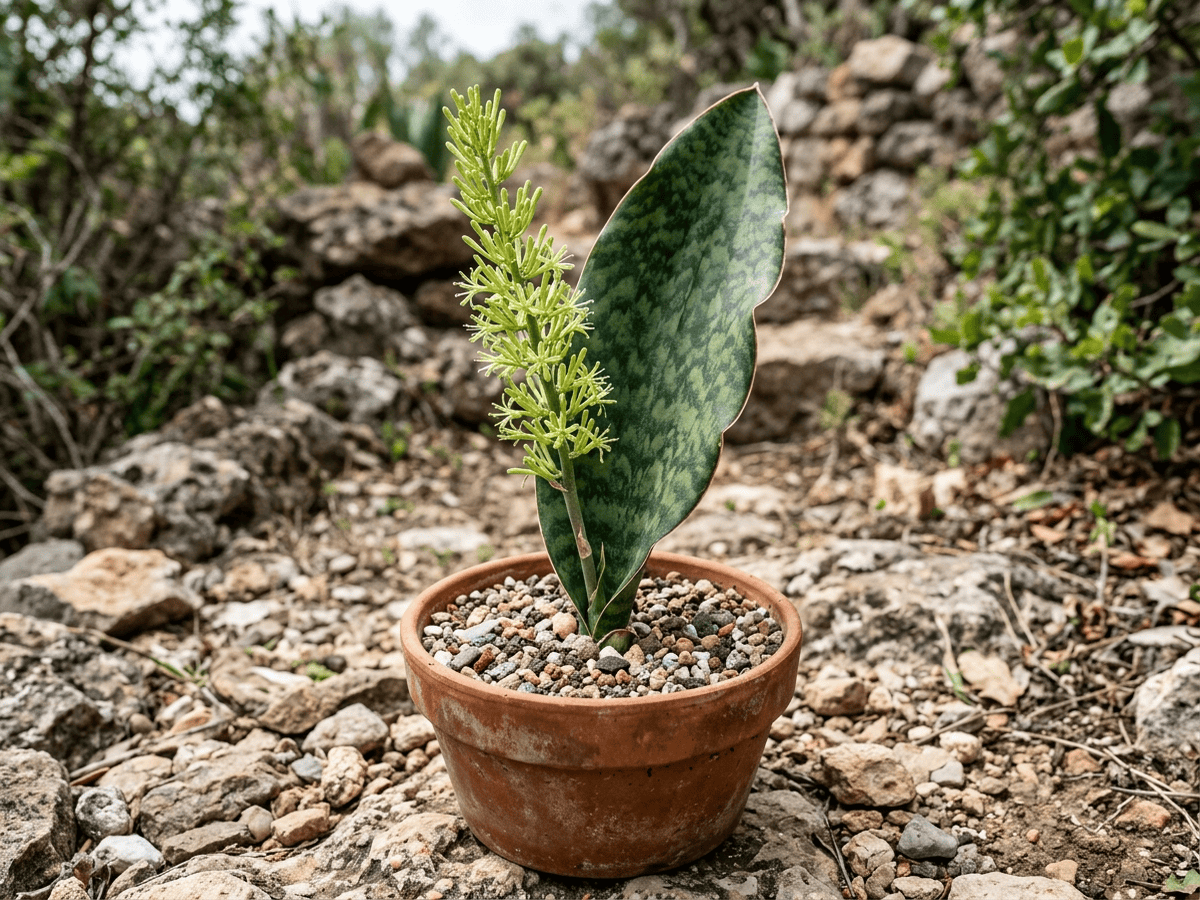
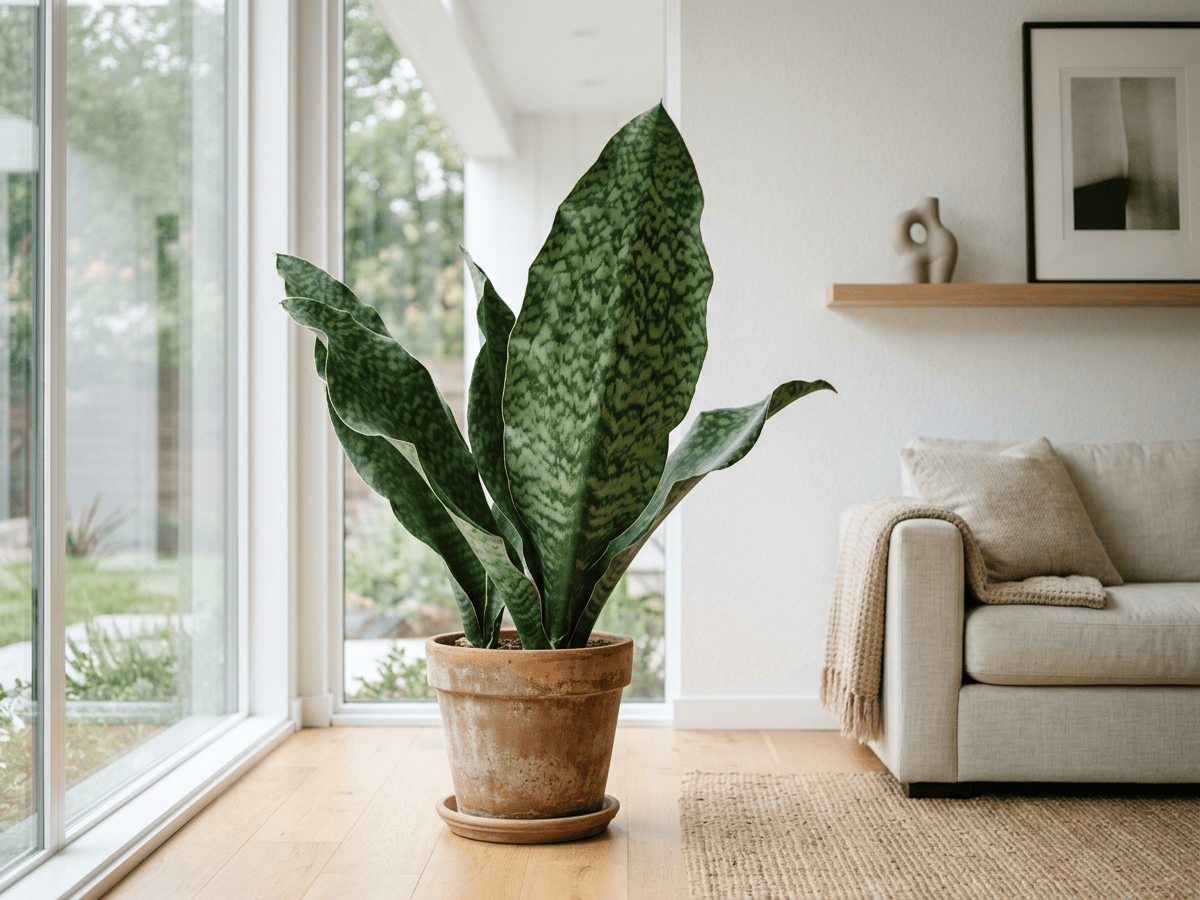
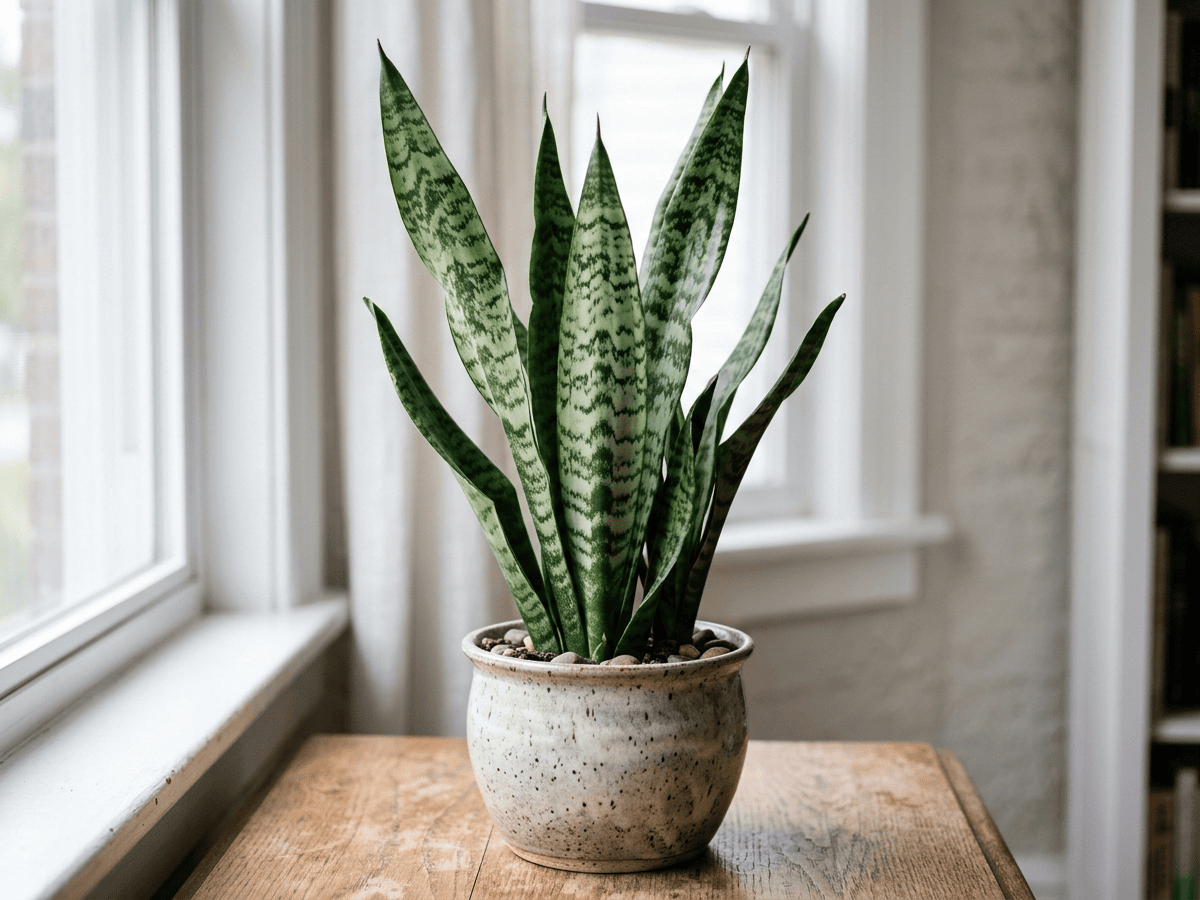
Whale Fin Snake Plant is a striking African succulent with massive paddle-shaped upright dark-green leaves dramatically mottled in lighter green—each leaf can reach 3-4 feet tall and 6-12 inches wide on mature plants. Often grown as a single-leaf statement plant in a sleek pot, its sculptural form has made it one of the most coveted snake plants in modern American interior design. Tough as nails and tolerates neglect.
- Drought-tolerant
- Architectural
- Evergreen
How to care for Whale Fin Snake Plant
Watering
- Springevery 14 days
- Summerevery 14 days
- Fallevery 21 days
- Winterevery 45 days
Soil · Fast-draining
- Main mixSand + pumice + soil 1:1:150%
- DrainagePumice / gravel50%
Keep grit at half the mix or more — this soil is meant to dry out fast.
FERTILIZER
- Springevery 60 days
At a Glance
- Height2–4 ft (0.6–1.2 m)
- Spread1–2 ft (0.3–0.6 m)
- Flower colorGreen
- Foliage colorGreen, Variegated
- SoilSandy, Well-drained
- LocationsIndoor · Balcony
Bloom time
BLOOM CYCLE
Peak bloom
Jun–Aug
Greenish-white tubular flowers on tall spike (rare indoors)
Toxicity
Humans Slight · Pets Moderate
saponins
Slight
- Leaf
- Ingestion
EXPOSURE Eating leaves.
EFFECT Oral irritation and nausea.
NOTE Documented concern for humans: Oral irritation and nausea.
Moderate
- Leaf
- Ingestion
EXPOSURE Eating leaves.
EFFECT Vomiting and diarrhea.
NOTE ASPCA lists Sansevieria/Dracaena as toxic to pets due to saponins.
Moderate
- Leaf
- Ingestion
EXPOSURE Eating leaves.
EFFECT Vomiting and diarrhea.
NOTE ASPCA lists Sansevieria/Dracaena as toxic to pets due to saponins.
Educational information, not medical or veterinary advice. If exposure is suspected, contact a doctor or veterinarian.
DISTRIBUTION


- Native
History
Sansevieria masoniana, commonly called whale fin or shark fin sansevieria, is a distinctive large-leaved succulent in the asparagus family (Asparagaceae) native to the Democratic Republic of Congo in central Africa. Lebanese-American sansevieria specialist B. Juan Chahinian formally described the species in 2000, honoring Maurice Mason, the British plantsman who introduced the species from African exploration. Following the 2018 phylogenetic revision of Sansevieria by Takawira-Nyenya, Mucina, and colleagues, the entire genus Sansevieria was subsumed into the older-named genus Dracaena, making the species formally Dracaena masoniana, though horticultural trade retains Sansevieria.
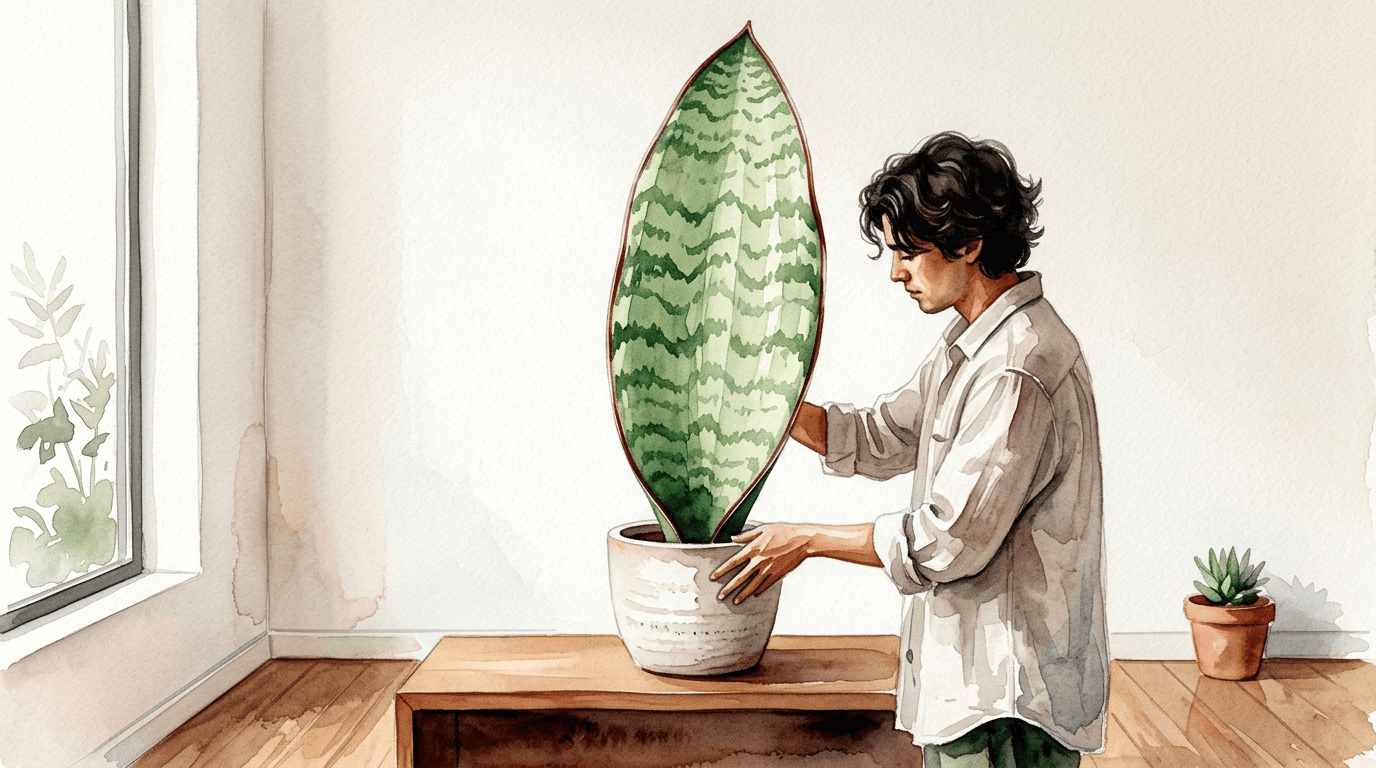
The plant produces enormous single paddle-shaped upright leaves 25-35 cm wide and 60-120 cm tall (rarely to 1.8 meters), pale green marked with distinctive darker green transverse bands and a maroon-red leaf margin. Rather than forming rosettes, single-leaf offsets slowly emerge from the rhizome. A highly sought collector plant since the mid-2010s.
Toxic to pets. Now reclassified by some botanists as Dracaena masoniana. A classic botanical curiosity that surged to mainstream popularity in the 2018-2022 American houseplant boom, with single-leaf specimens defining minimalist modern interiors.
Symbolism & meaning
What It Symbolizes
Whale Fin Snake Plant expresses strength through its single imposing paddle-shaped leaf, an architectural statement that needs no companion to be complete. Its simplicity is part of its meaning, a single leaf becoming a defining design element in a room. It is often read as a flower of singular form, a houseplant whose meaning is the confidence of standing alone, a botanical sculpture that makes a virtue of having only one bold thing to say.
- Strength — imposing single-paddle architecture
- Simplicity — single leaf becomes a defining design element
Where the Name Comes From
The name Whale Fin Snake Plant describes its upright, banded leaves. 'Sansevieria' honors Italian Prince Raimondo di Sangro of San Severo; 'masoniana' honors plantsman Maurice Mason.
Uses & Fun Facts
- Single-leaf statement plant for sleek modern pots
- Massive paddle leaves anchor minimalist interiors
- Mottled architectural succulent for indoor displays
Related plants
More Sansevieria plants
 African SpearSansevieria cylindrica
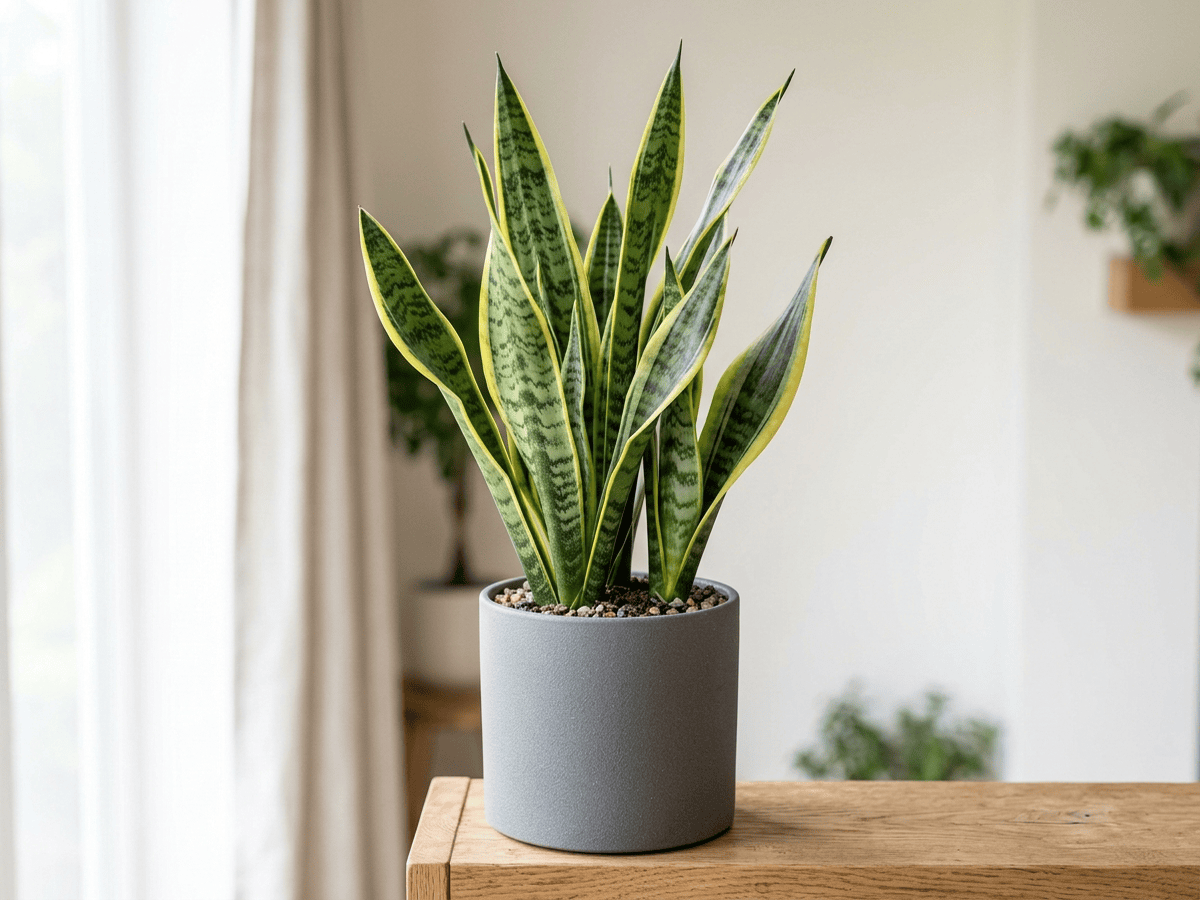 Snake PlantSansevieria trifasciata
 Ceylon Snake PlantSansevieria zeylanica
Plants with similar care

Frequently asked questions
How often should I water Whale Fin Snake Plant?
In summer, water about every 14 days; in winter, about every 45 days. Adjust for heat, pot size and drainage.
How much light does Whale Fin Snake Plant need?
Low light: Dim corners. Watch the leaves — scorching or stretching means the light needs adjusting.
Is Whale Fin Snake Plant toxic to cats or dogs?
Pets Moderate (Dogs Moderate · Cats Moderate) Educational information, not medical or veterinary advice. If exposure is suspected, contact a doctor or veterinarian.
Is Whale Fin Snake Plant easy to grow?
Yes — it is considered an easy, beginner-friendly plant.
Can Whale Fin Snake Plant be grown indoors?
Yes, it adapts well to indoor growing given the right light.
When does Whale Fin Snake Plant bloom?
It typically blooms Jun–Aug in the Northern Hemisphere.
YardMate
Identify any plant in seconds
Snap a photo — YardMate names the plant, diagnoses problems, and reminds you when to water.
Download on the App Store