 YardMate


Ceylon Snake Plant
Sansevieria zeylanica
Easy · Beginner friendlyAbout Ceylon Snake Plant
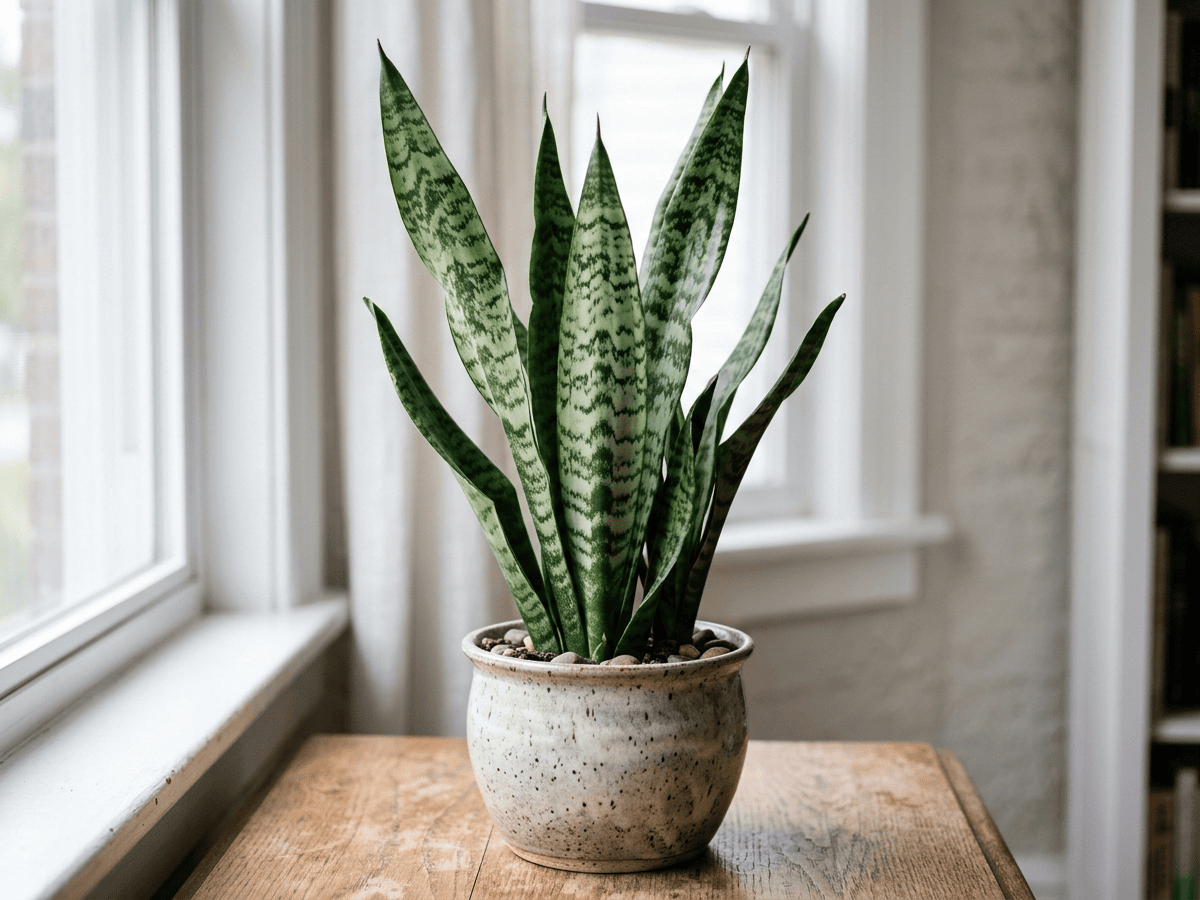
Ceylon Snake Plant is a classic upright African-Asian succulent with stiff sword-like dark-green leaves marked with horizontal pale-green stripes, reaching 2-3 feet tall in tight clumps. Among the most common snake plants in American homes for over a century, it tolerates extreme neglect, low light, and drought—making it perhaps the toughest houseplant in cultivation. Often confused with the very similar Sansevieria trifasciata.
- Air-purifying
- Drought-tolerant
- Evergreen
How to care for Ceylon Snake Plant
Watering
- Springevery 14 days
- Summerevery 14 days
- Fallevery 21 days
- Winterevery 45 days
Soil · Fast-draining
- Main mixSand + pumice + soil 1:1:150%
- DrainagePumice / gravel50%
Keep grit at half the mix or more — this soil is meant to dry out fast.
FERTILIZER
- Springevery 60 days
At a Glance
- NativeSouth Asia
- Height2–4 ft (0.6–1.2 m)
- Spread1–2 ft (0.3–0.6 m)
- Flower colorGreen
- Foliage colorGreen
- SoilSandy, Well-drained
- LocationsIndoor · Balcony
Bloom time
BLOOM CYCLE
Peak bloom
Jun–Aug
Greenish-white tubular flowers on tall spike (rare indoors)
Fragrance
LIGHT FRAGRANCE
Faint nocturnal sweet fragrance when flowering.
Toxicity
Humans Slight · Pets Moderate
saponins
Slight
- Leaf
- Ingestion
EXPOSURE Eating leaves.
EFFECT Oral irritation and nausea.
NOTE Documented concern for humans: Oral irritation and nausea.
Moderate
- Leaf
- Ingestion
EXPOSURE Eating leaves.
EFFECT Vomiting and diarrhea.
NOTE ASPCA lists Sansevieria/Dracaena as toxic to pets.
Moderate
- Leaf
- Ingestion
EXPOSURE Eating leaves.
EFFECT Vomiting and diarrhea.
NOTE ASPCA lists Sansevieria/Dracaena as toxic to pets.
Educational information, not medical or veterinary advice. If exposure is suspected, contact a doctor or veterinarian.
DISTRIBUTION


- Native
- Introduced
- South Asia
History
Sansevieria zeylanica, Ceylon bowstring hemp, is an evergreen rhizomatous succulent in the asparagus family (Asparagaceae) native to Sri Lanka (formerly Ceylon, from which the epithet zeylanica derives) and the southeastern Indian Deccan Peninsula. Carl Linnaeus described it as Aloe zeylanica in 1753 in Species Plantarum; Prussian botanist Carl Ludwig Willdenow transferred it to Sansevieria in 1799, shortly after Thunberg erected the genus (honoring Italian prince Raimondo di Sangro of San Severo). Following the 2018 Takawira-Nyenya et al.
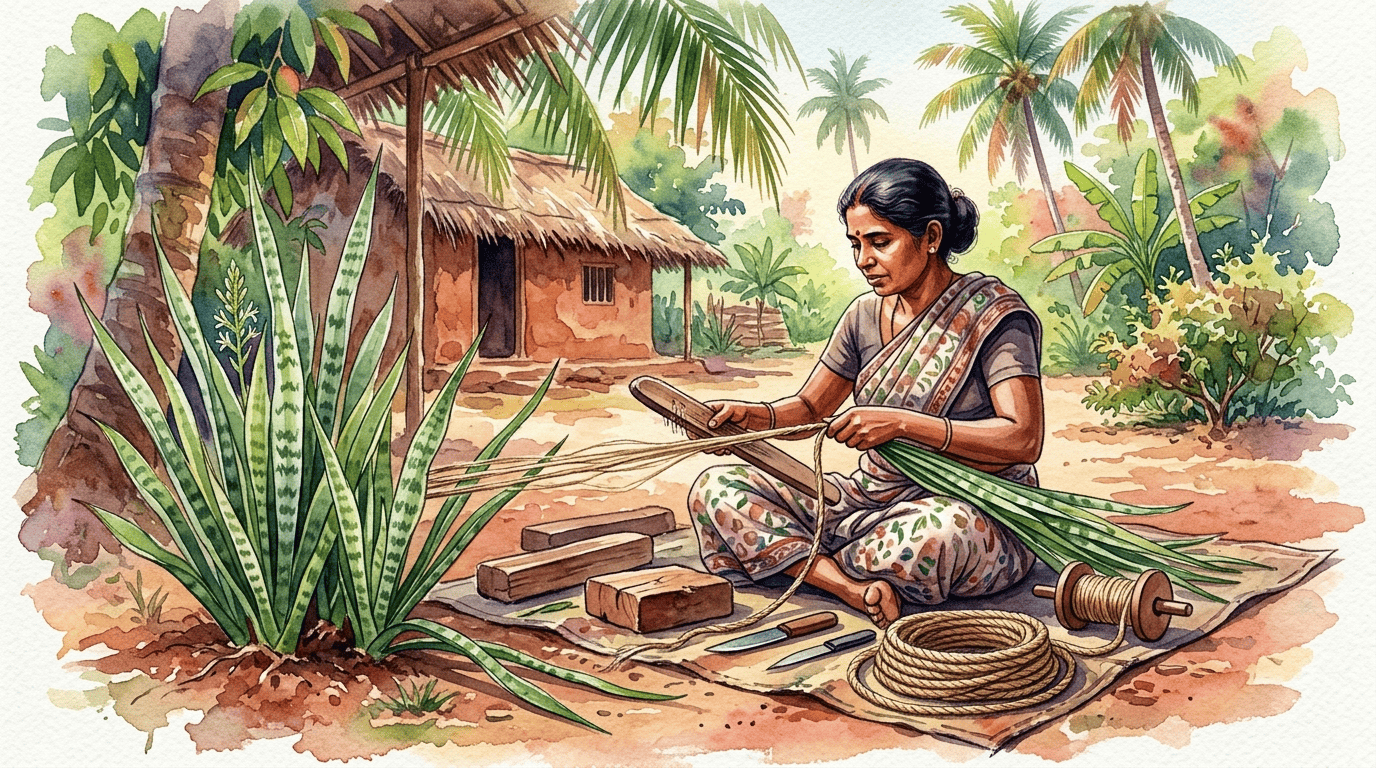
phylogenetic revision, the species was transferred to Dracaena zeylanica, though horticulture retains Sansevieria. The species is widely confused with the much more common snake plant (Dracaena trifasciata), but true D. zeylanica has narrower (2-3 cm wide) fiber-rich leaves with subtler wavy pale-green cross-banding and a less robust growth habit reaching 60-90 cm. Historically valued in Sri Lanka for bowstring and cordage fiber.
Toxic to pets due to saponins. Native to Sri Lanka (formerly Ceylon, the source of its name) and tropical Africa. Among the first tropical foliage plants to become a fixture of American homes in the early 20th century. NASA's 1989 Clean Air Study identified snake plants as among the most effective air purifiers.
Symbolism & meaning
What It Symbolizes
Sansevieria is endurance pressed into living form — a houseplant capable of surviving extreme neglect for decades, forgotten in dim corners and dry pots. Its resilience is legendary: it thrives where other plants quietly perish from over- or underwatering. Its meaning is the steady, almost stoic devotion of a green companion that simply refuses to die, growing tall through every household upheaval.
- Endurance — survives extreme neglect for decades
- Resilience — thrives where other houseplants die
Where the Name Comes From
'Zeylanica' refers to Ceylon (modern Sri Lanka), one of its native ranges.
Uses & Fun Facts
- Tough upright succulent popular as low-care indoor plant
- Striking sword-shaped leaves for modern minimalist interiors
- Strong leaf fibers historically used for cordage and bowstrings
Related plants
More Sansevieria plants
 African SpearSansevieria cylindrica
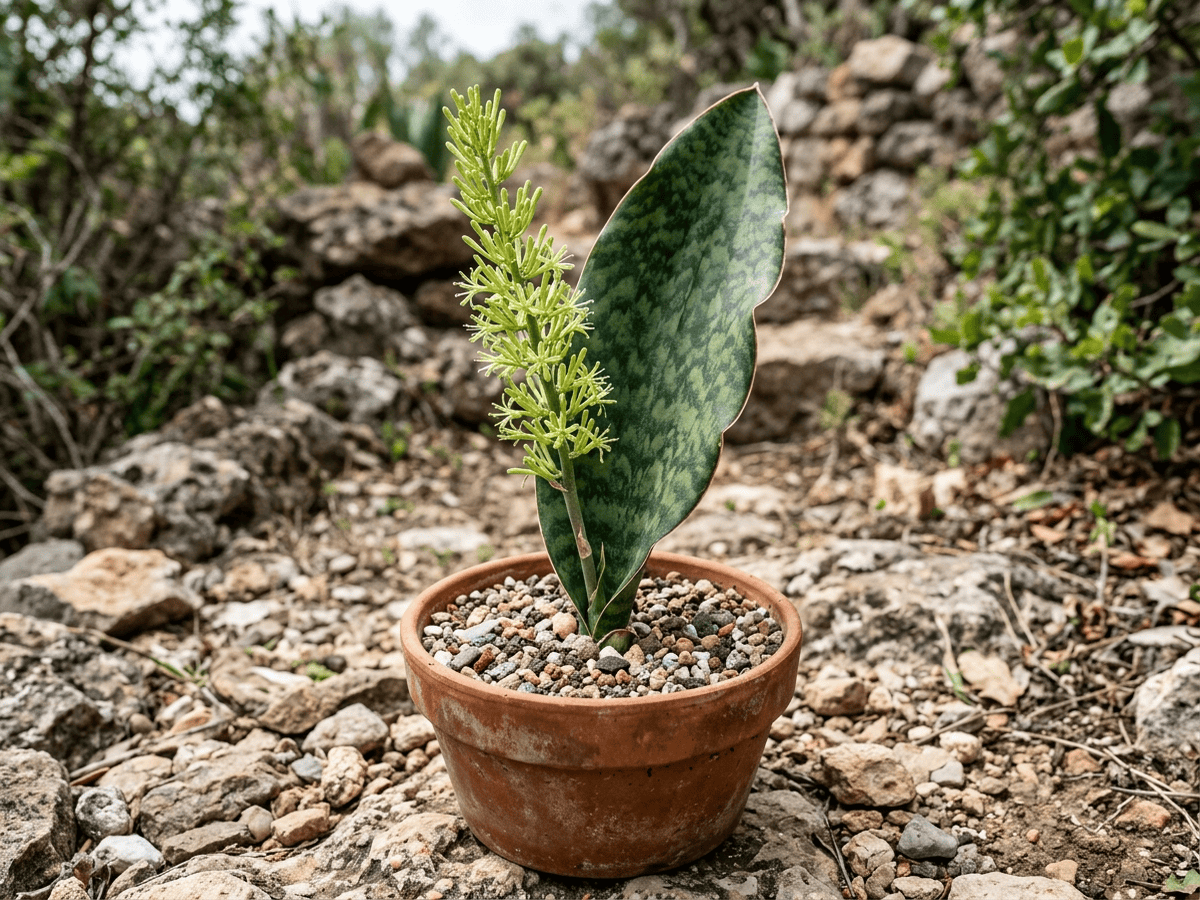 Whale Fin Snake PlantSansevieria masoniana
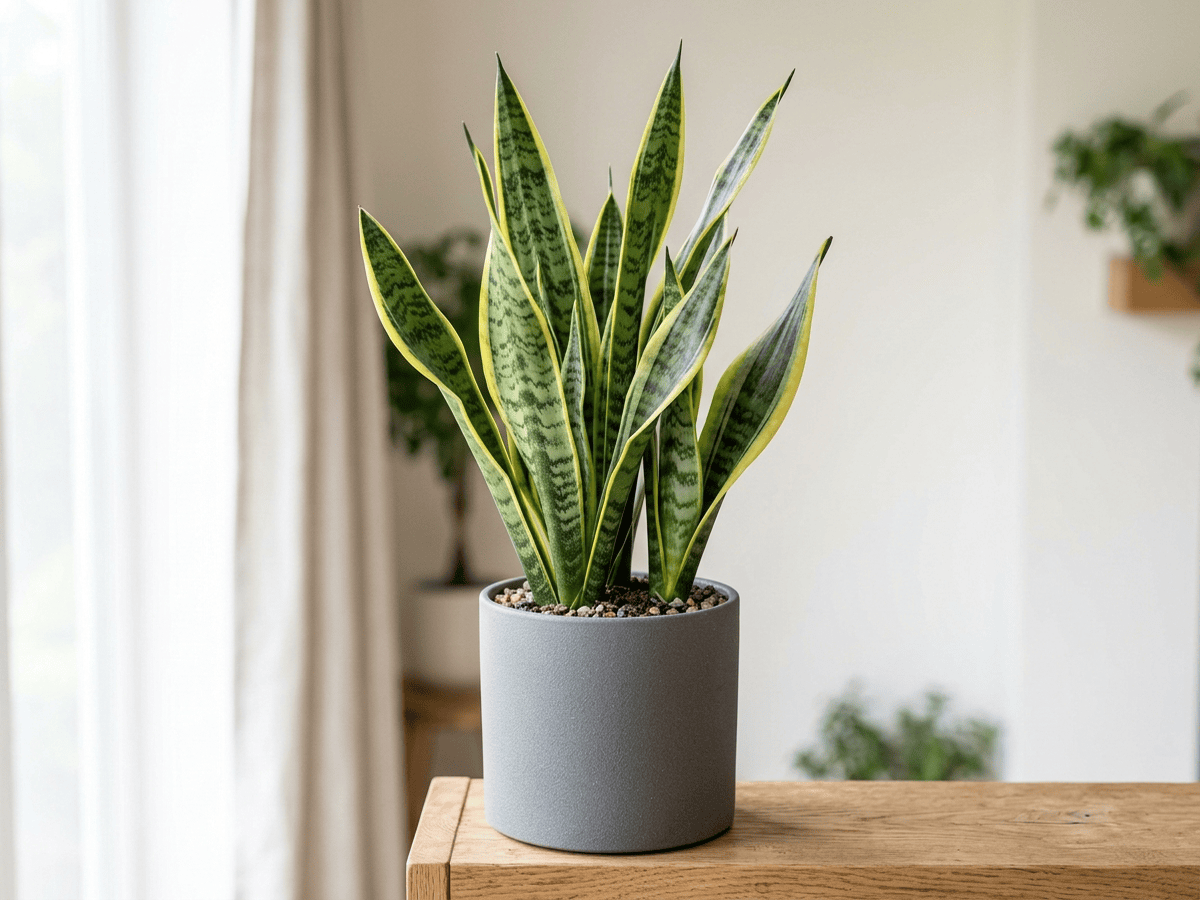 Snake PlantSansevieria trifasciata
Plants with similar care
Frequently asked questions
How often should I water Ceylon Snake Plant?
In summer, water about every 14 days; in winter, about every 45 days. Adjust for heat, pot size and drainage.
How much light does Ceylon Snake Plant need?
Low light: Dim corners. Watch the leaves — scorching or stretching means the light needs adjusting.
Is Ceylon Snake Plant toxic to cats or dogs?
Pets Moderate (Dogs Moderate · Cats Moderate) Educational information, not medical or veterinary advice. If exposure is suspected, contact a doctor or veterinarian.
Is Ceylon Snake Plant easy to grow?
Yes — it is considered an easy, beginner-friendly plant.
Can Ceylon Snake Plant be grown indoors?
Yes, it adapts well to indoor growing given the right light.
When does Ceylon Snake Plant bloom?
It typically blooms Jun–Aug in the Northern Hemisphere.
YardMate
Identify any plant in seconds
Snap a photo — YardMate names the plant, diagnoses problems, and reminds you when to water.
Download on the App Store