 YardMate


Snake Plant
Sansevieria trifasciata
Easy · Beginner friendlyAbout Snake Plant
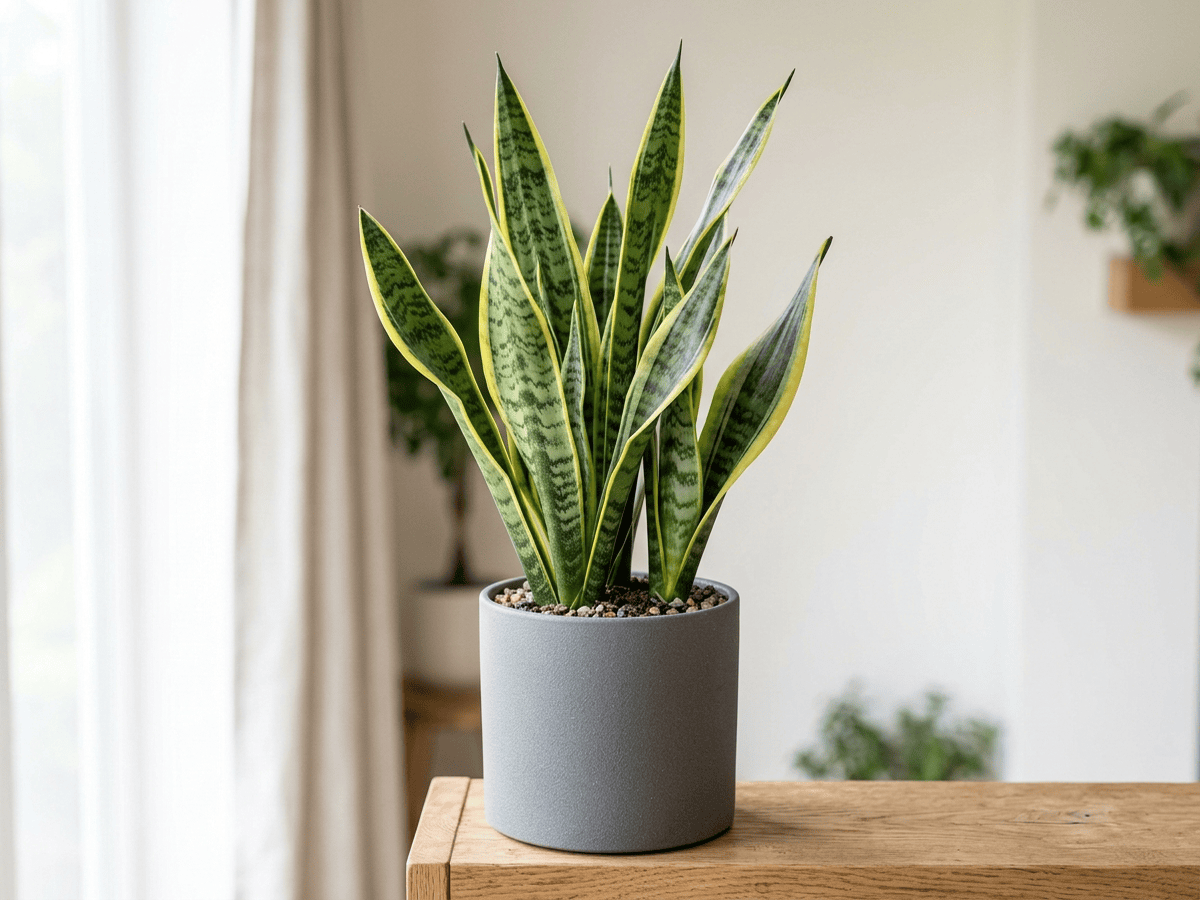
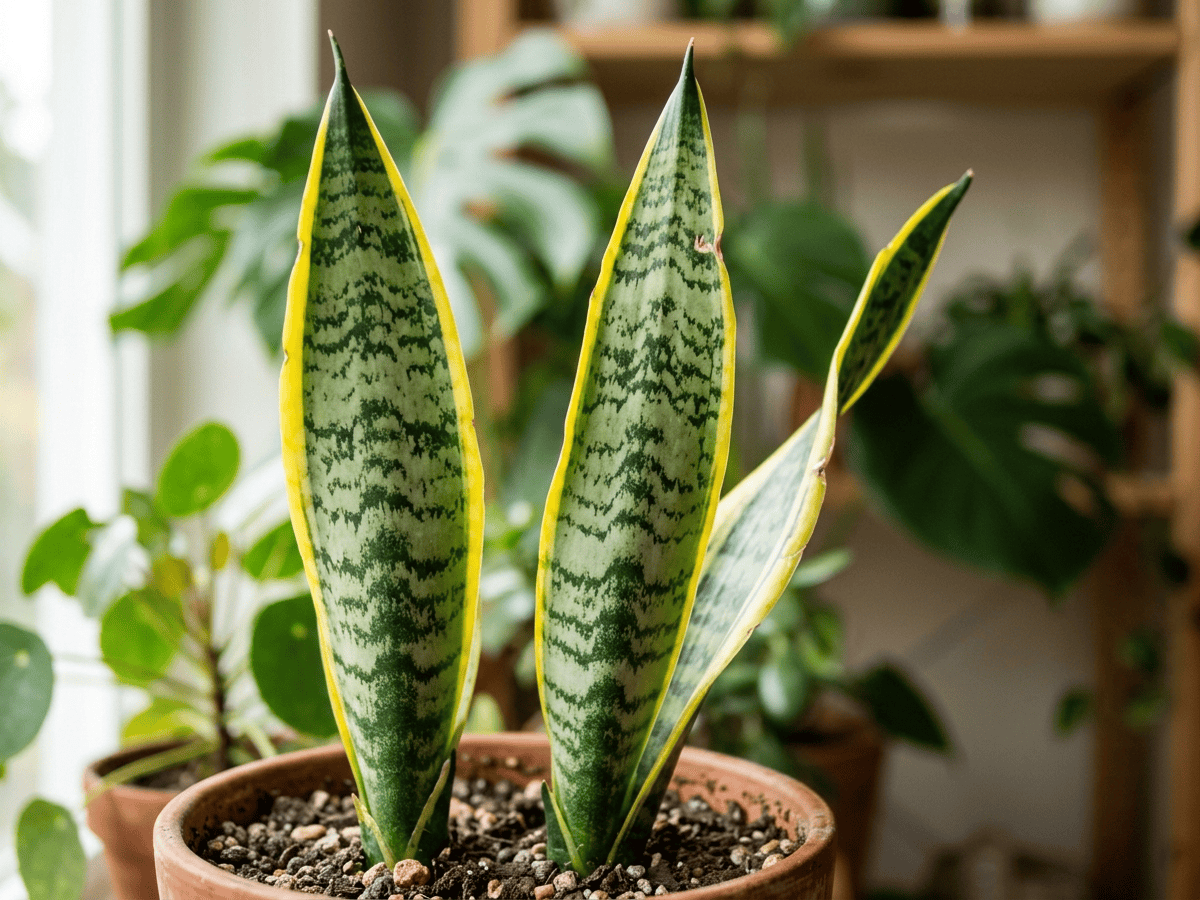
The Snake Plant is one of the most resilient houseplants on earth, native to West Africa's dry rocky terrain. Its stiff, sword-like leaves with distinctive banding can survive weeks without water, extreme heat, and near-total darkness. Uniquely, it performs CAM photosynthesis — converting CO₂ to oxygen at night — making it an ideal bedroom plant. It's virtually indestructible, tolerating the kind of neglect that would kill most other houseplants.
- Air-purifying
- Low-maintenance
- Drought-tolerant
How to care for Snake Plant
Watering
- Springevery 14 days
- Summerevery 14 days
- Fallevery 21 days
- Winterevery 45 days
Soil · Fast-draining
- Main mixSand + pumice + soil 1:1:150%
- DrainagePumice / gravel50%
Keep grit at half the mix or more — this soil is meant to dry out fast.
FERTILIZER
Foliage Feed 24-8-16
Nitrogen leads so the plant spends its energy on dense green growth. Phosphorus and potassium follow just far enough to keep roots and stems up to speed.
- Nitrogen · Leaves
- Phosphorus · Roots + Blooms
- Potassium · Strength
- Springevery 60 days
- Summerevery 60 days
At a Glance
- NativeAfrica
- Height2–4 ft (0.6–1.2 m)
- Spread1–2 ft (0.3–0.6 m)
- Flower colorWhite, Cream, Green
- Foliage colorDark-green, Variegated
- Fruit colorOrange
- SoilSandy, Well-drained
- LocationsIndoor · Balcony
Bloom time
BLOOM CYCLE
Peak bloom
Jun–Aug
Rare fragrant blooms
Fragrance
MODERATE FRAGRANCE
When it blooms (rare indoors), flowers release a strong sweet jasmine-like scent at night.
Toxicity
Humans Slight · Pets Moderate
saponins
Slight
- Leaf
- Ingestion
EXPOSURE Eating leaves.
EFFECT Oral irritation and nausea.
NOTE Documented concern for humans: Oral irritation and nausea.
Moderate
- Leaf
- Ingestion
EXPOSURE Eating leaves.
EFFECT Vomiting and diarrhea.
NOTE ASPCA lists Sansevieria/Dracaena trifasciata as toxic to pets.
Moderate
- Leaf
- Ingestion
EXPOSURE Eating leaves.
EFFECT Vomiting and diarrhea.
NOTE ASPCA lists Sansevieria/Dracaena trifasciata as toxic to pets.
Educational information, not medical or veterinary advice. If exposure is suspected, contact a doctor or veterinarian.
DISTRIBUTION


- Native
- Introduced
- Africa
History
Sansevieria trifasciata was first described in 1794 and named after Raimondo di Sangro, an 18th-century Italian prince. Molecular studies reclassified it as Dracaena trifasciata in 2017, though the older name remains commercially dominant. In its native West Africa — particularly Nigeria and the Congo Basin — its tough leaf fibers were spun into bowstrings, giving rise to the name 'bowstring hemp'.
Victorian Britons imported it as a hardy parlor plant tolerant of gaslight fumes, and it became a mid-century modern fixture for the same reason. NASA's 1989 Clean Air Study documented its ability to convert CO2 to oxygen at night via CAM photosynthesis, one of the few houseplants to do so, making it a popular bedroom plant.
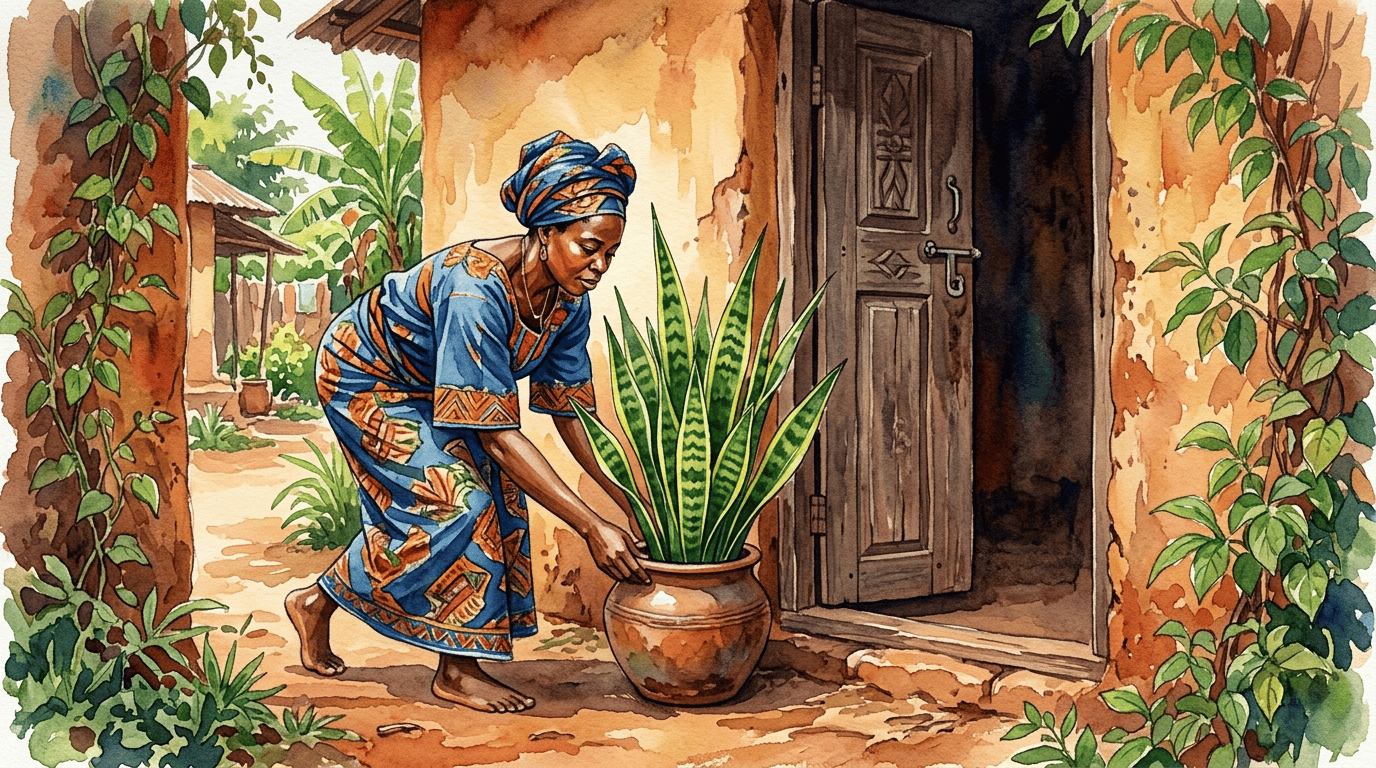
In Nigeria it's associated with Ogun, the god of iron and war, and placed at doorways for spiritual protection. The Chinese consider it a treasure plant — its upward-pointing leaves are said to channel good fortune upward through the home. During WWII, the plant's tough fibers were used as a substitute for bowstring hemp when supply chains broke down.
Symbolism & meaning
What It Symbolizes
Snake Plant is resilience in a pot, thriving in low light, dry air, and forgetful watering with an unbothered tenacity most houseplants only dream of. It also carries old protective associations, traditionally placed near doors in West African and Chinese homes to turn away unwanted energy. Its symbolism is steady guardianship: upright leaves, little fuss, and calm strength from a forgotten corner.
- Resilience — thrives in the harshest conditions, symbolizing tenacity
- Protection — traditionally placed at doors to ward off negative energy
Where the Name Comes From
The name Snake Plant describes its upright, banded leaves. 'Sansevieria' honors Raimondo di Sangro, Prince of San Seviero, an 18th-century Italian patron of botany. 'Trifasciata' means 'three bundles' referring to its leaf banding.
Uses & Fun Facts
- Banded sword leaves as classic resilient bedroom houseplant
- Near-indestructible pot subject performing CAM photosynthesis at night
Related plants
More Sansevieria plants
 African SpearSansevieria cylindrica
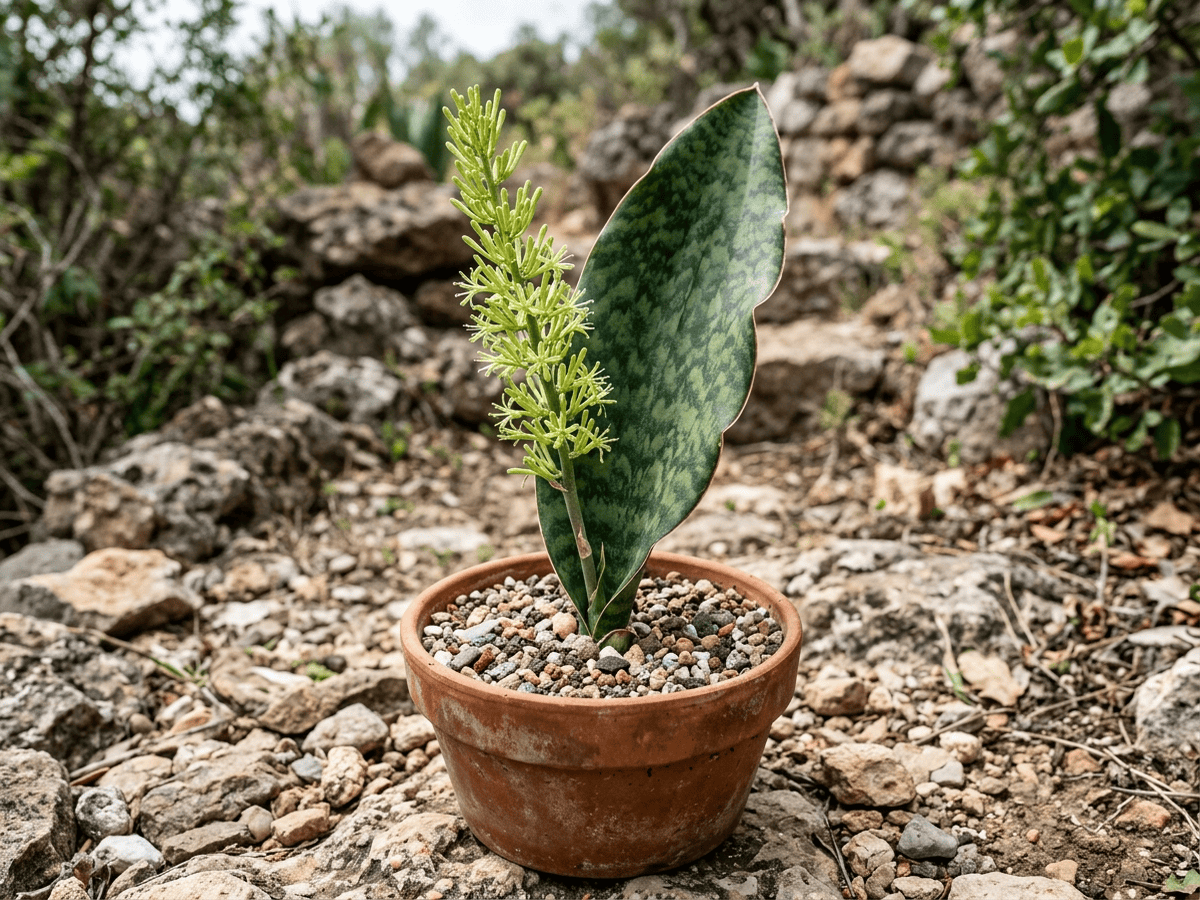 Whale Fin Snake PlantSansevieria masoniana
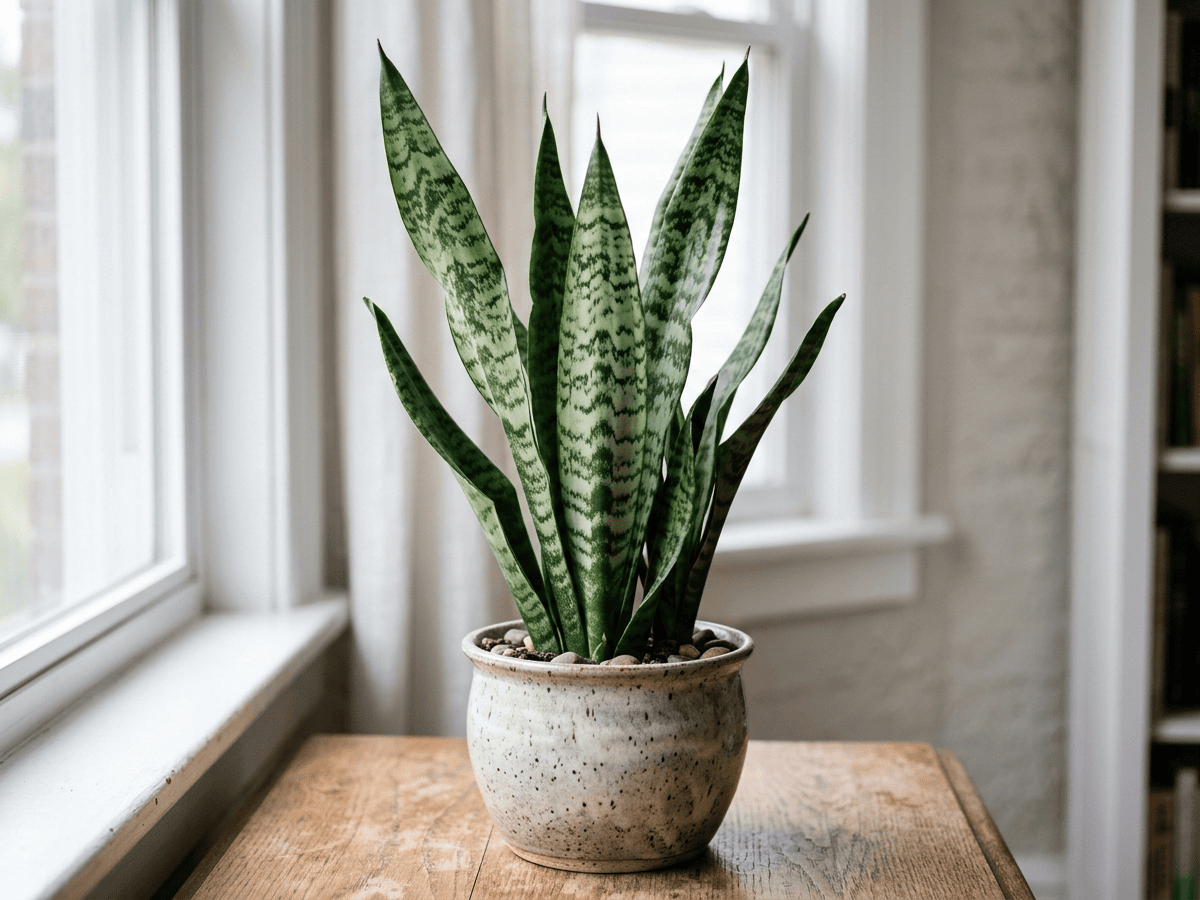 Ceylon Snake PlantSansevieria zeylanica
Plants with similar care
 Giant TaroAlocasia macrorrhizos
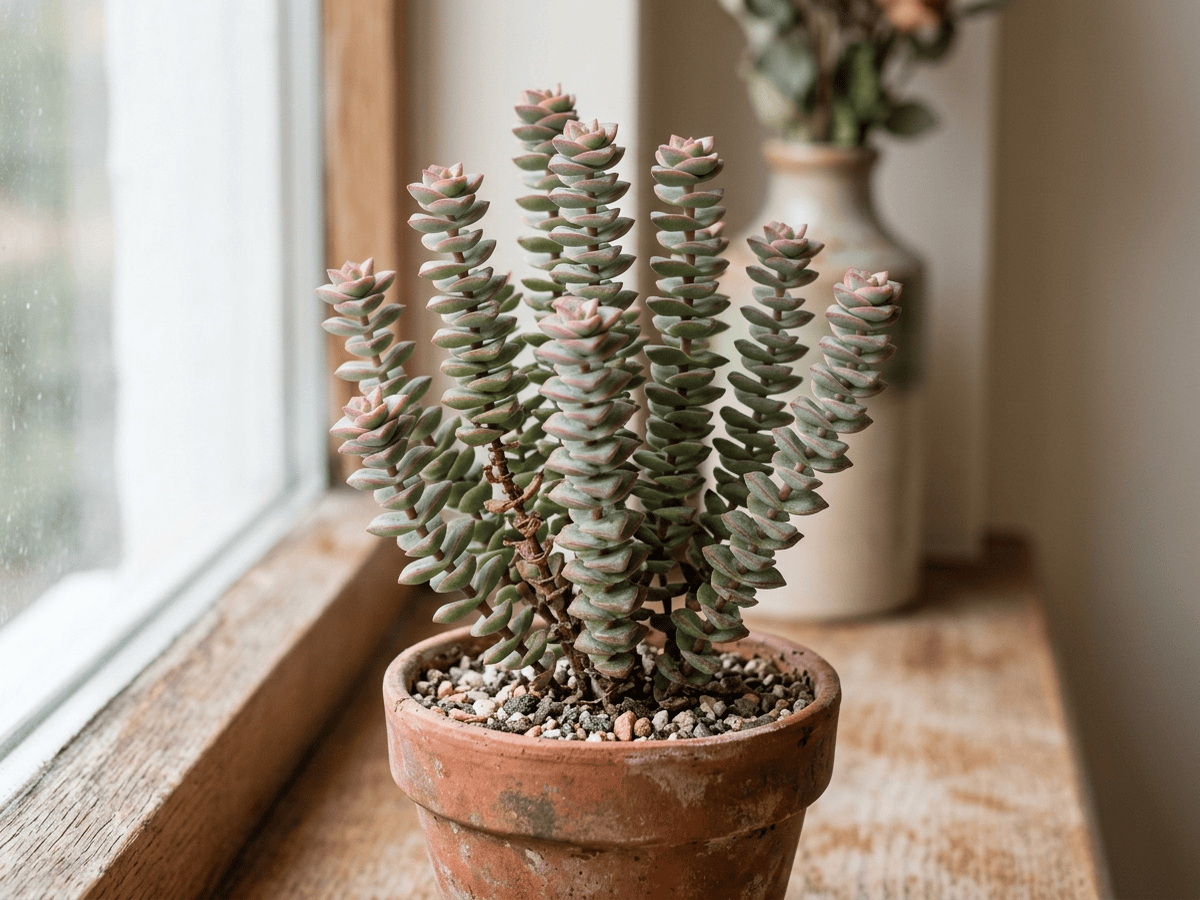 Concertina PlantCrassula perforata
 Song Of IndiaDracaena reflexa
 Snake PlantDracaena trifasciata
Frequently asked questions
How often should I water Snake Plant?
In summer, water about every 14 days; in winter, about every 45 days. Adjust for heat, pot size and drainage.
How much light does Snake Plant need?
Indirect: Filtered light. Watch the leaves — scorching or stretching means the light needs adjusting.
Is Snake Plant toxic to cats or dogs?
Pets Moderate (Dogs Moderate · Cats Moderate) Educational information, not medical or veterinary advice. If exposure is suspected, contact a doctor or veterinarian.
Is Snake Plant easy to grow?
Yes — it is considered an easy, beginner-friendly plant.
Can Snake Plant be grown indoors?
Yes, it adapts well to indoor growing given the right light.
When does Snake Plant bloom?
It typically blooms Jun–Aug in the Northern Hemisphere.
YardMate
Identify any plant in seconds
Snap a photo — YardMate names the plant, diagnoses problems, and reminds you when to water.
Download on the App Store