 YardMate

Sweet Box
Sarcococca confusa
Easy · Beginner friendlyAbout Sweet Box
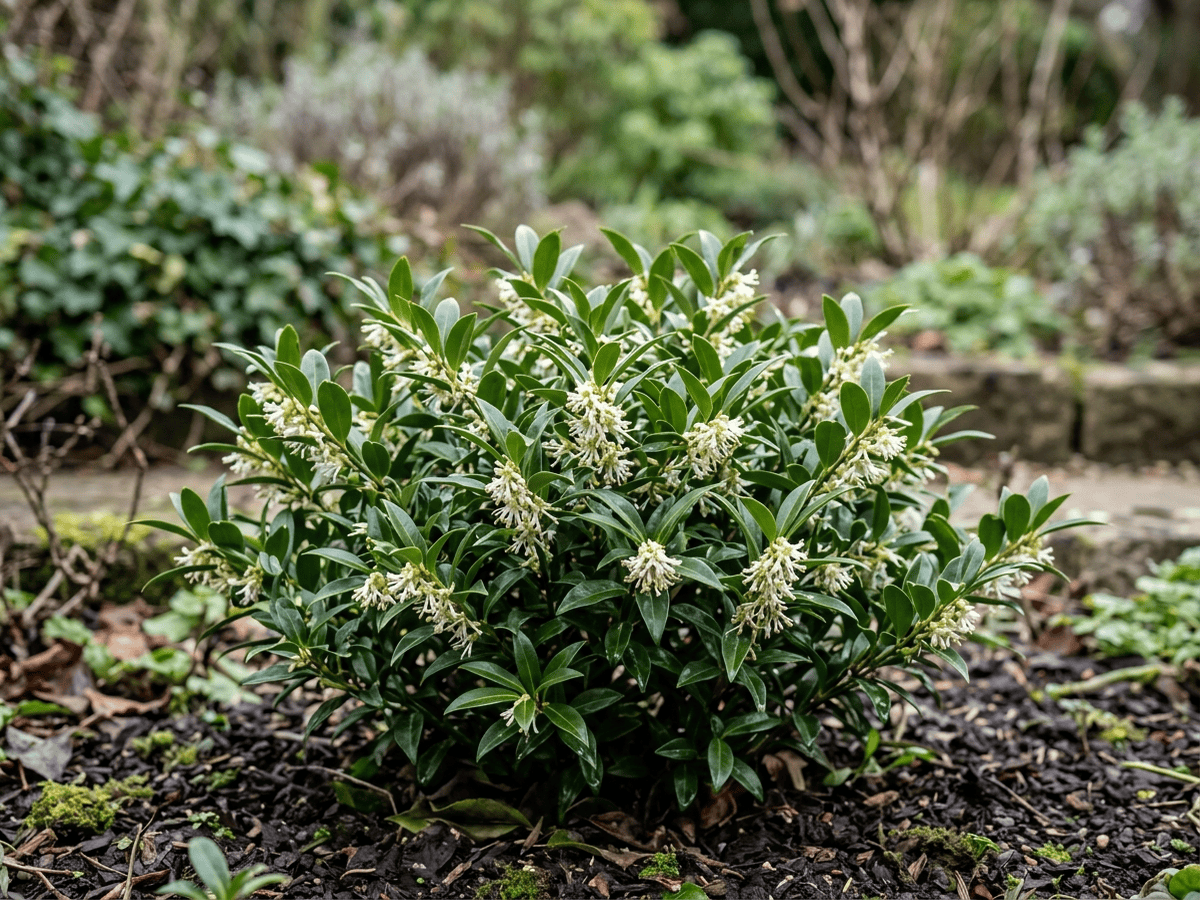
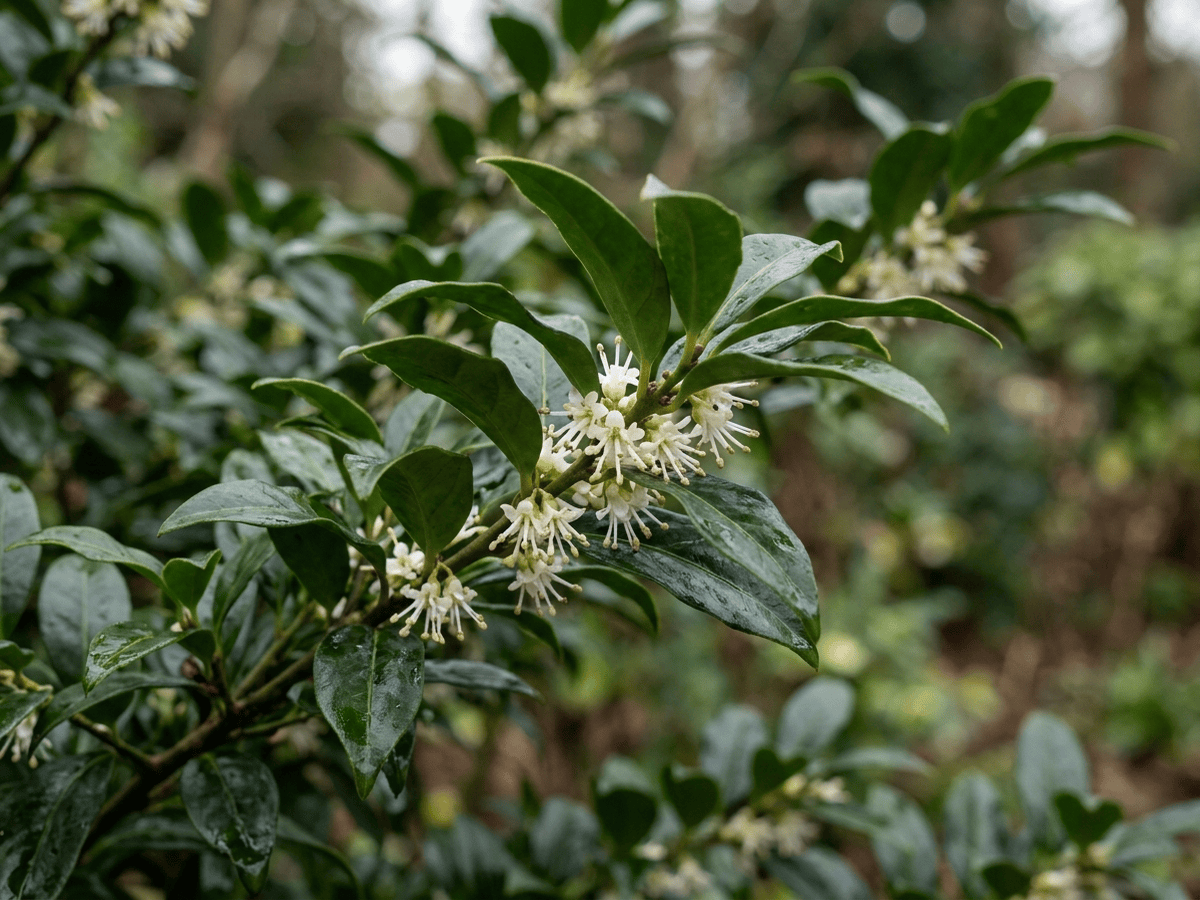
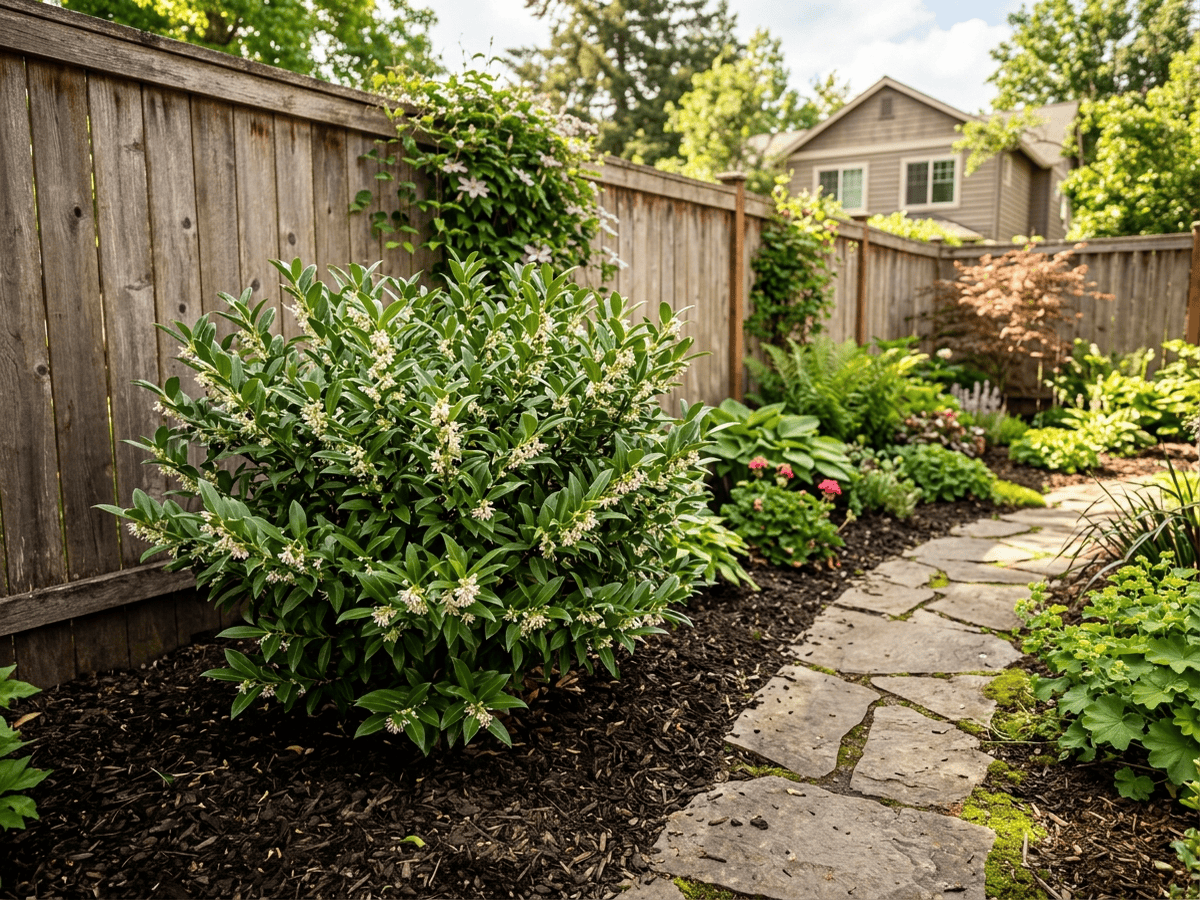
Sweet Box is a low evergreen shrub reaching 3-5 feet with glossy lance-shaped dark green leaves and an extraordinary sweet fragrance released by tiny winter flowers tucked in the leaf axils. Black berries follow the blooms. Its intense perfume carries on winter air, making it invaluable near doorways and paths in shade gardens. A favorite of shade gardeners in the Pacific Northwest and Mid-Atlantic US for its winter bloom and tough constitution.
- Fragrant
- Shade-tolerant
- Deer-resistant
- Evergreen
How to care for Sweet Box
Watering
- Springevery 7 days
- Summerevery 5 days
- Fallevery 10 days
- Winterevery 21 days
Soil · Well-draining
- Top dressingPine bark mulch10%
- Main mixPotting soil + perlite 2:170%
- DrainageLECA / gravel20%
Never skip the drainage layer — standing water is the top cause of root rot.
FERTILIZER
- Springevery 30 days
At a Glance
- NativeEast Asia
- Height3–6 ft (0.9–1.8 m)
- Spread3–6 ft (0.9–1.8 m)
- Flower colorCream, White
- Foliage colorDark-green, Green
- Fruit colorBlack
- SoilMoisture-retentive, Loamy, Rich
- LocationsYard
Bloom time
BLOOM CYCLE
Peak bloom
Jan–Mar
Tiny intensely fragrant white flowers January to March
Fragrance
STRONG FRAGRANCE
Powerful sweet vanilla-jasmine-honey fragrance in winter.
Toxicity
Humans Moderate · Pets Moderate
sarcococcines and steroidal alkaloids (Buxaceae family)
Moderate
- Fruit
- Leaf
- Ingestion
EXPOSURE Eating fruit and leaves.
EFFECT GI upset, possible neurological effects from steroidal alkaloids.
NOTE Like its Buxus relatives, Sarcococca contains steroidal alkaloids; fruits tempting to children.
Moderate
- Fruit
- Leaf
- Ingestion
EXPOSURE Eating fruit and leaves.
EFFECT Vomiting, diarrhea.
NOTE Like its Buxus relatives, Sarcococca contains steroidal alkaloids; fruits tempting to children.
Moderate
- Fruit
- Leaf
- Ingestion
EXPOSURE Eating fruit and leaves.
EFFECT Vomiting, diarrhea.
NOTE Like its Buxus relatives, Sarcococca contains steroidal alkaloids; fruits tempting to children.
Educational information, not medical or veterinary advice. If exposure is suspected, contact a doctor or veterinarian.
DISTRIBUTION


- Native
- Introduced
- East Asia
History
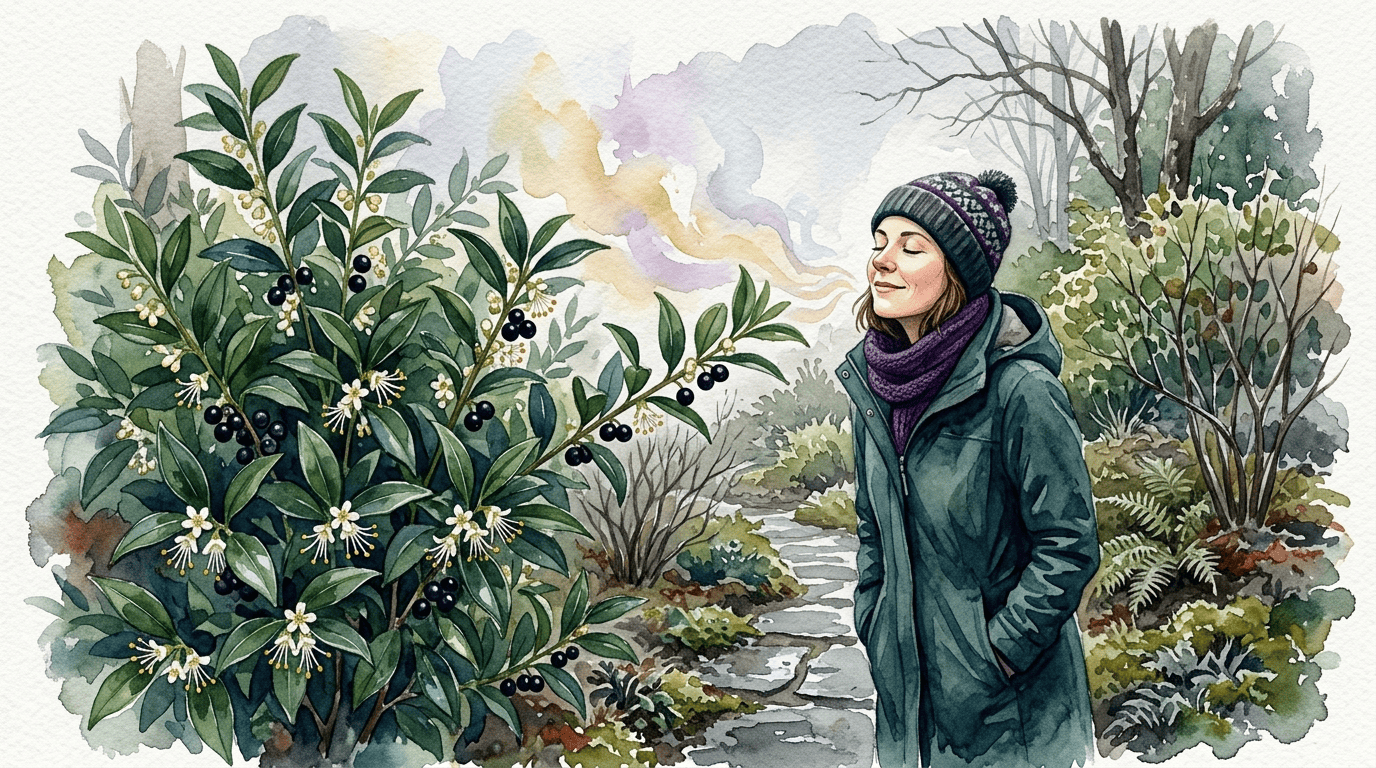
Sarcococca confusa is of uncertain wild origin—probably China—and has been cultivated long enough that its exact native provenance cannot be traced; hence the epithet confusa, meaning confused or uncertain. English botanist Joseph Robert Sealy at Kew Gardens formally described the species in 1949 to clarify confusion among various cultivated Sarcococca forms. The 1-2 meter evergreen shrub has glossy dark green pointed leaves and produces, from December through February, tiny cream-white flower clusters with protruding stamens tucked along the stems.
What the flowers lack in visual impact they more than make up for in fragrance: a powerful sweet vanilla-jasmine-honey perfume that carries many meters on mild winter days—rivaling winter daphne as the most fragrant winter bloomer. Glossy black berries follow. S. confusa is hardier and more vigorous than the related S. hookeriana and S. ruscifolia, and tolerates dry shade remarkably well.
It received the RHS Award of Garden Merit and has become a mainstay of temperate shade gardens since the 1960s. A shade gardener's secret weapon — the flowers are invisible but the scent stops passersby in their tracks on a gray January day. Widely planted in British and American public gardens where winter visitors appreciate the perfume.
Symbolism & meaning
What It Symbolizes
Sweet Box is often read as a flower of Winter promise — small, almost invisible white blooms releasing a powerful honey-vanilla scent in January and February. Its Subtlety is the heart of its beauty: passersby smell it long before they ever see it, and many never spot the flowers at all. A shrub that proves perfume can outweigh display.
- Winter promise — fragrance precedes spring
- Subtlety — hidden flowers reveal themselves by scent
Where the Name Comes From
The name Sweet Box describes its sweet scent or flavor. From Greek 'sarcos' (flesh) and 'cocca' (berry); 'confusa' refers to historical confusion with related species.
Uses & Fun Facts
- Tiny winter flowers release powerful sweet-vanilla perfume
- Glossy evergreen mound thrives in deep dry shade
- Low informal screen for entryways and walkways
Related plants
More Sarcococca plants

Plants with similar care
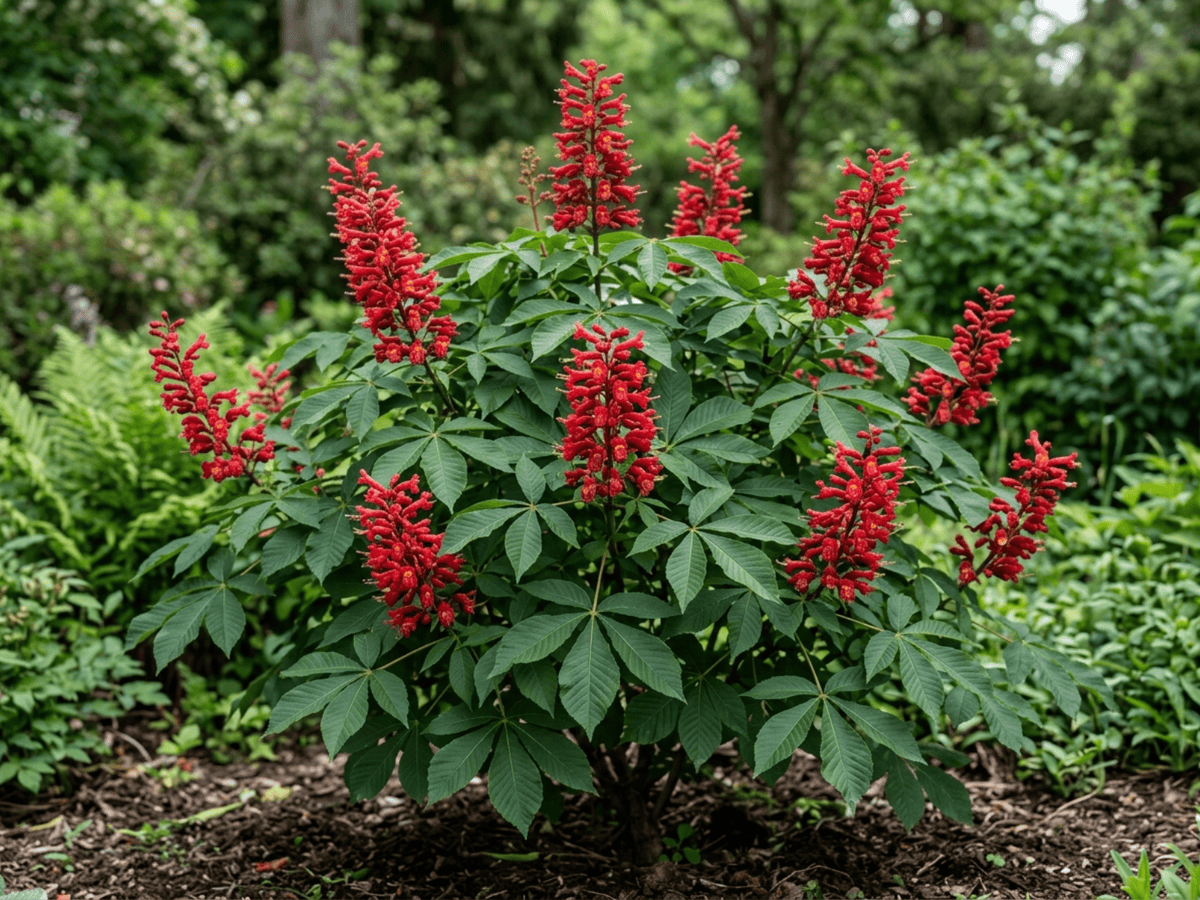 Red BuckeyeAesculus pavia
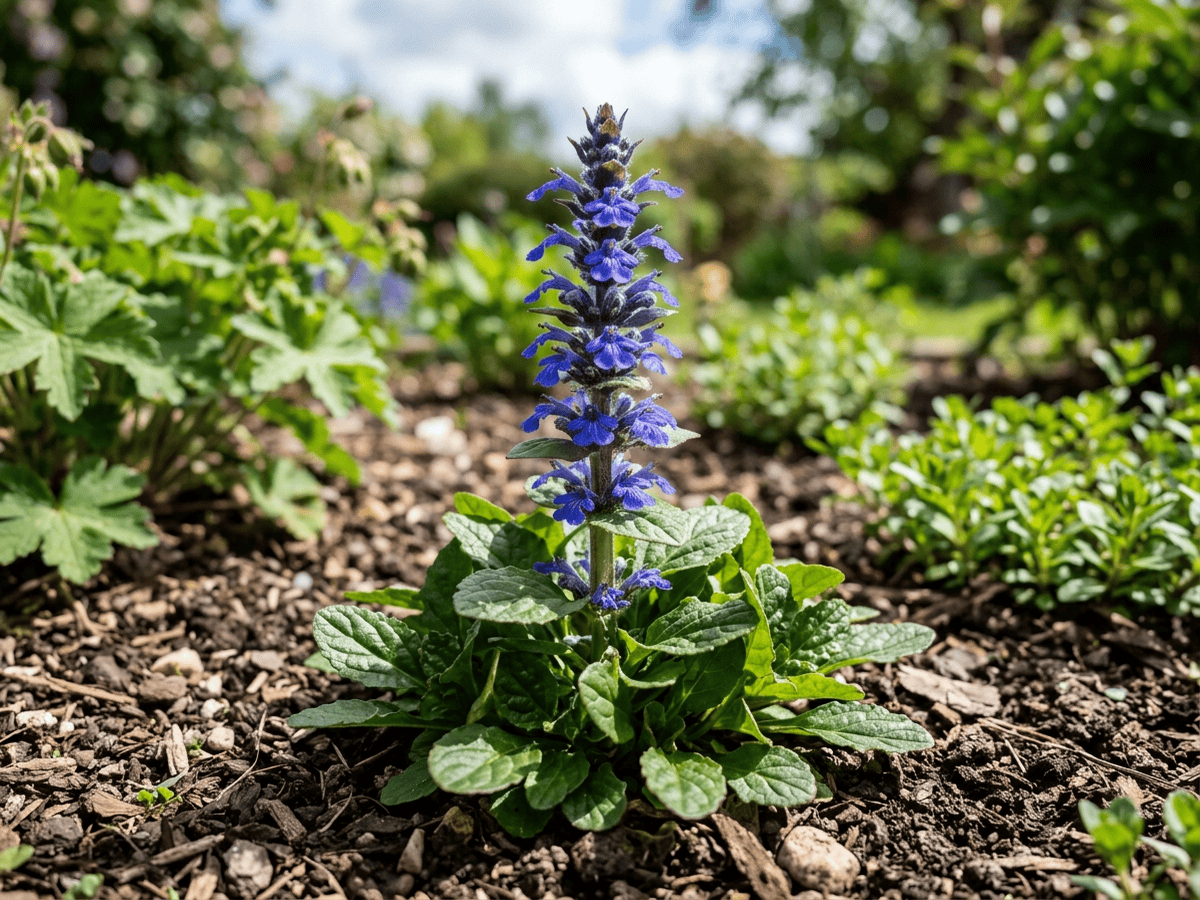 Blue BugleAjuga genevensis
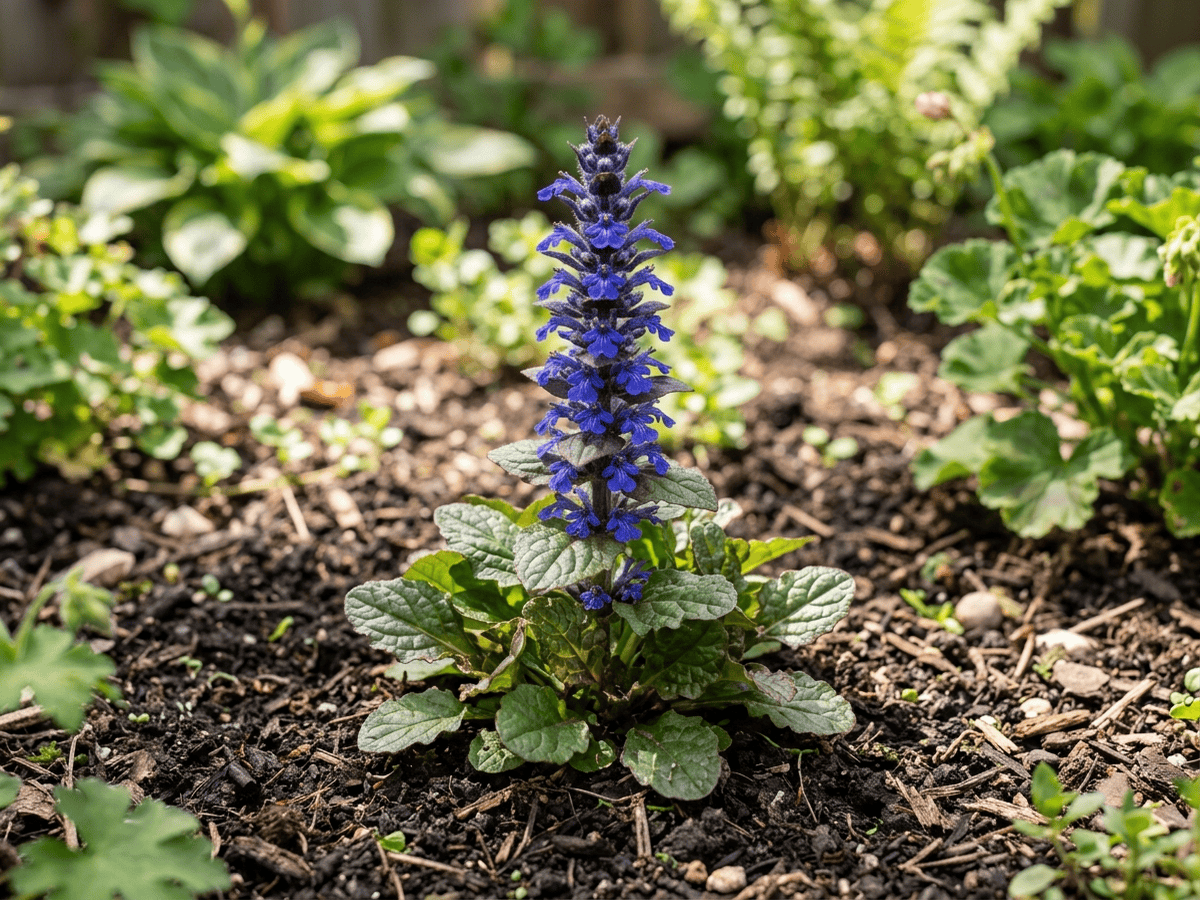 Pyramidal BugleAjuga pyramidalis
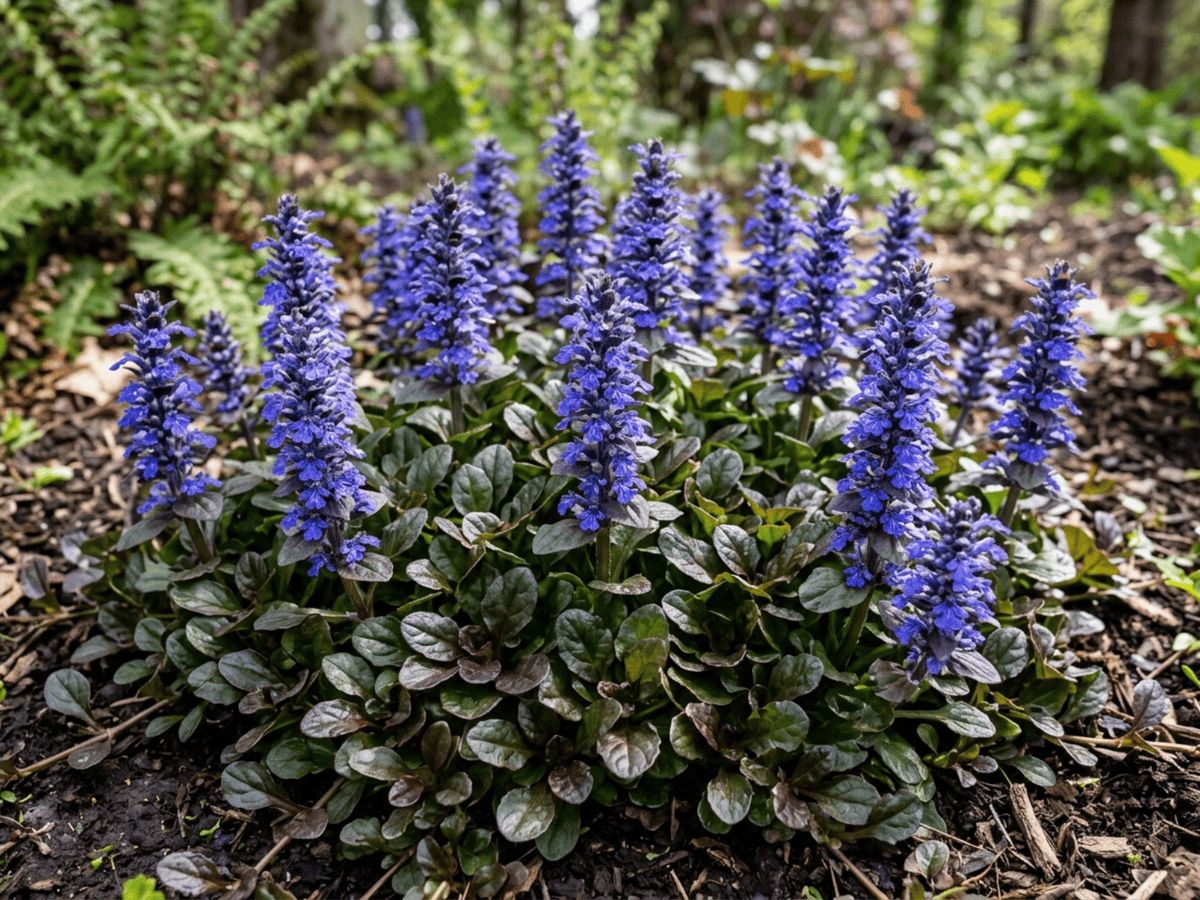 Carpet BugleAjuga reptans
Frequently asked questions
How often should I water Sweet Box?
In summer, water about every 5 days; in winter, about every 21 days. Adjust for heat, pot size and drainage.
How much light does Sweet Box need?
Part shade: 2–4 hrs direct. Watch the leaves — scorching or stretching means the light needs adjusting.
Is Sweet Box toxic to cats or dogs?
Pets Moderate (Dogs Moderate · Cats Moderate) Educational information, not medical or veterinary advice. If exposure is suspected, contact a doctor or veterinarian.
Is Sweet Box easy to grow?
Yes — it is considered an easy, beginner-friendly plant.
When does Sweet Box bloom?
It typically blooms Jan–Mar in the Northern Hemisphere.
YardMate
Identify any plant in seconds
Snap a photo — YardMate names the plant, diagnoses problems, and reminds you when to water.
Download on the App Store