 YardMate


Crab Cactus
Schlumbergera truncata
Easy · Beginner friendlyAbout Crab Cactus
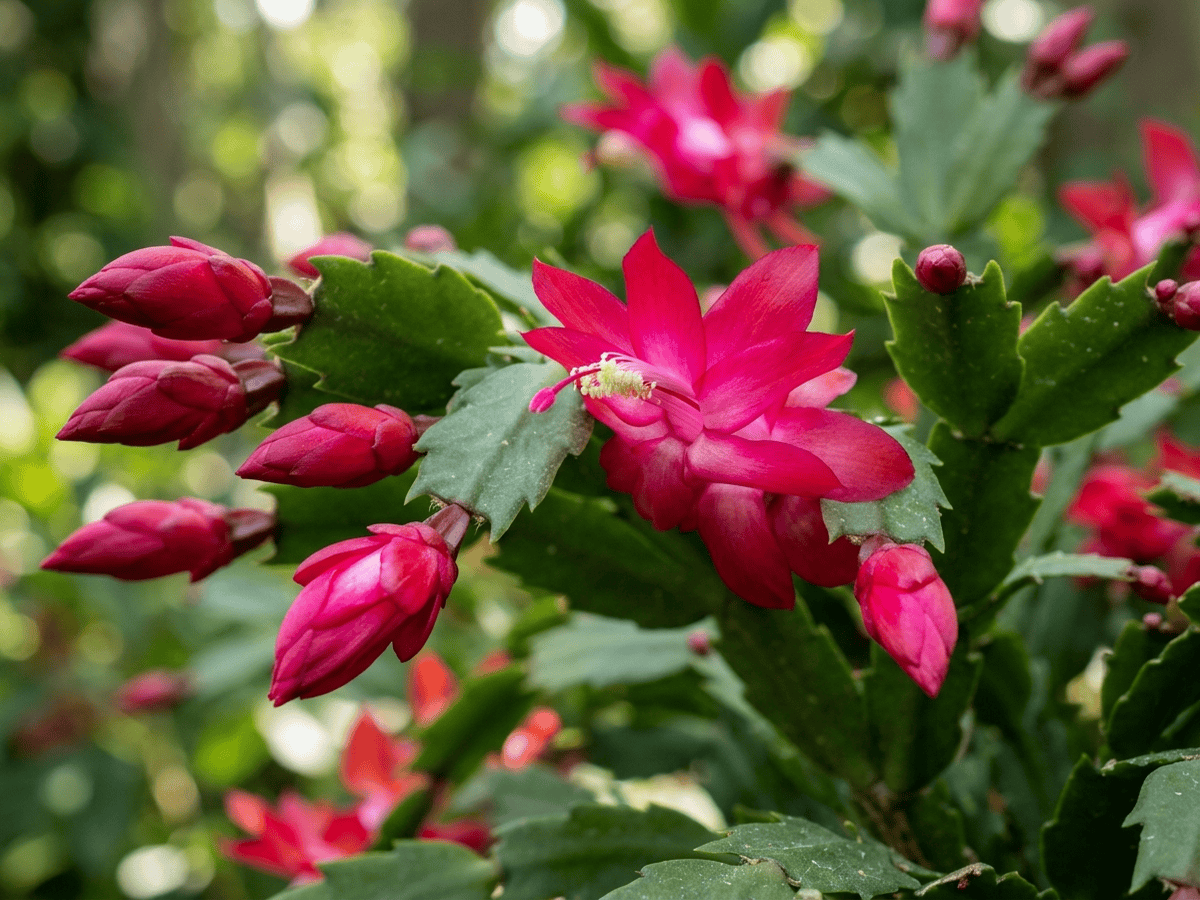
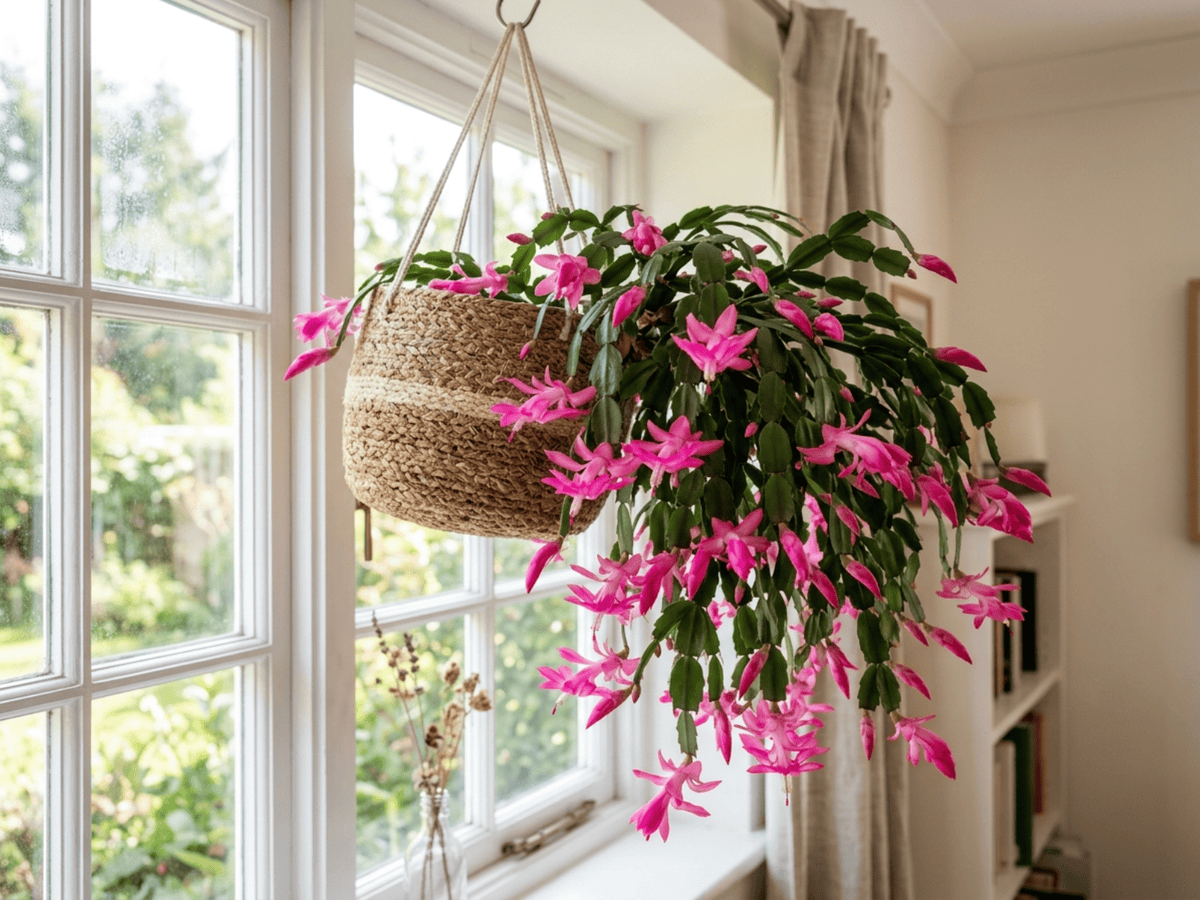
Schlumbergera truncata, the Thanksgiving cactus (often sold as Christmas cactus), is an epiphytic jungle cactus with flattened, segmented stems that cascade gracefully and burst into spectacular tubular flowers in late autumn. Native to the coastal mountains of southeastern Brazil, it grows in mossy tree branches. Flower colors range from pink, red, and white to orange and bicolors. Unlike desert cacti, it needs regular moisture and shade from direct sun. It is extremely long-lived — family plants over 100 years old have been documented. Flowering is triggered by cool temperatures and long nights.
- Trailing
- Long-blooming
How to care for Crab Cactus
Watering
- Springevery 10 days
- Summerevery 7 days
- Fallevery 14 days
- Winterevery 21 days
Soil · Fast-draining
- Main mixSand + pumice + soil 1:1:150%
- DrainagePumice / gravel50%
Keep grit at half the mix or more — this soil is meant to dry out fast.
FERTILIZER
Balanced Feed 14-14-14
An even feed covers all three needs at once, keeping leaves, roots and blooms moving together with nothing pushed out of balance.
- Nitrogen · Leaves
- Phosphorus · Roots + Blooms
- Potassium · Strength
- Springevery 45 days
- Summerevery 45 days
- Fallevery 60 days
At a Glance
- NativeSouth America
- Height0.5–1 ft (0.2–0.3 m)
- Spread1–2 ft (0.3–0.6 m)
- Flower colorRed, Pink, White, Orange
- Foliage colorGreen
- SoilAcidic, Well-drained
- LocationsIndoor
Bloom time
BLOOM CYCLE
Peak bloom
Sep–Nov
Blooms late autumn; trigger with 6 weeks of 14h darkness and cool temps (15°C)
Fragrance
NO FRAGRANCE
Not fragrant.
Toxicity
No toxicity has been reported for this plant. Still, it is wise to keep pets from chewing on any houseplant.
Educational information, not medical or veterinary advice. If exposure is suspected, contact a doctor or veterinarian.
DISTRIBUTION


- Native
- Introduced
- South America
History

Schlumbergera truncata is native to a small area of the Serra dos Órgãos mountains in southeast Brazil, where it grows as an epiphytic cactus on mossy tree branches in cool cloud forest between 700 and 2000 meters elevation. Unlike the stereotypical desert cactus, Schlumbergera species tolerate relatively low light and higher humidity and have no spines. It was introduced to European horticulture in 1818.
Nearly all 'Christmas Cactus' plants sold in North American supermarkets are actually this species, Schlumbergera truncata, which blooms in November (Thanksgiving Cactus is the precise name); the true Christmas Cactus is the closely related S. × buckleyi, which blooms a month later. Hundreds of cultivars span red, pink, white, orange, yellow, and purple. Non-toxic to pets.
Schlumbergera truncata is one of the most passed-down houseplants in history, with family specimens documented at over 100 years old. It was named after Frédéric Schlumberger, a 19th-century French collector of cacti. In Brazil, where it blooms around Easter (Southern Hemisphere autumn), it is called 'flor de maio' (May flower). The confusion between Thanksgiving, Christmas, and Easter cactus stems from three different Schlumbergera species that bloom at different times. truncata has pointed stem segments with two 'teeth' on each side, while the true Christmas cactus (S. x buckleyi) has rounded segments.
Symbolism & meaning
What It Symbolizes
The Crab Cactus blooms in late autumn and winter, its arching pink and red flowers timed almost exactly to the holidays when families travel and gather. That coincidence has given it a meaning of reunion — passed from grandparent to grandchild, often the same plant sharing decades of shared dinners. Its message is togetherness held in petal form, a flower that blooms when households finally come back into the same room.
- Reunion — Blooming during holidays when families gather, it symbolizes togetherness and reunion
Where the Name Comes From
Schlumbergera honors Frédéric Schlumberger (1823–1893), French cactus collector. Truncata means 'cut off,' describing the truncated stem segment tips.
Uses & Fun Facts
- Trailing holiday cactus popular as indoor windowsill plant
- Bright pink or red flowers bloom around Thanksgiving
- Beloved heirloom houseplant passed through generations
Related plants
Plants with similar care
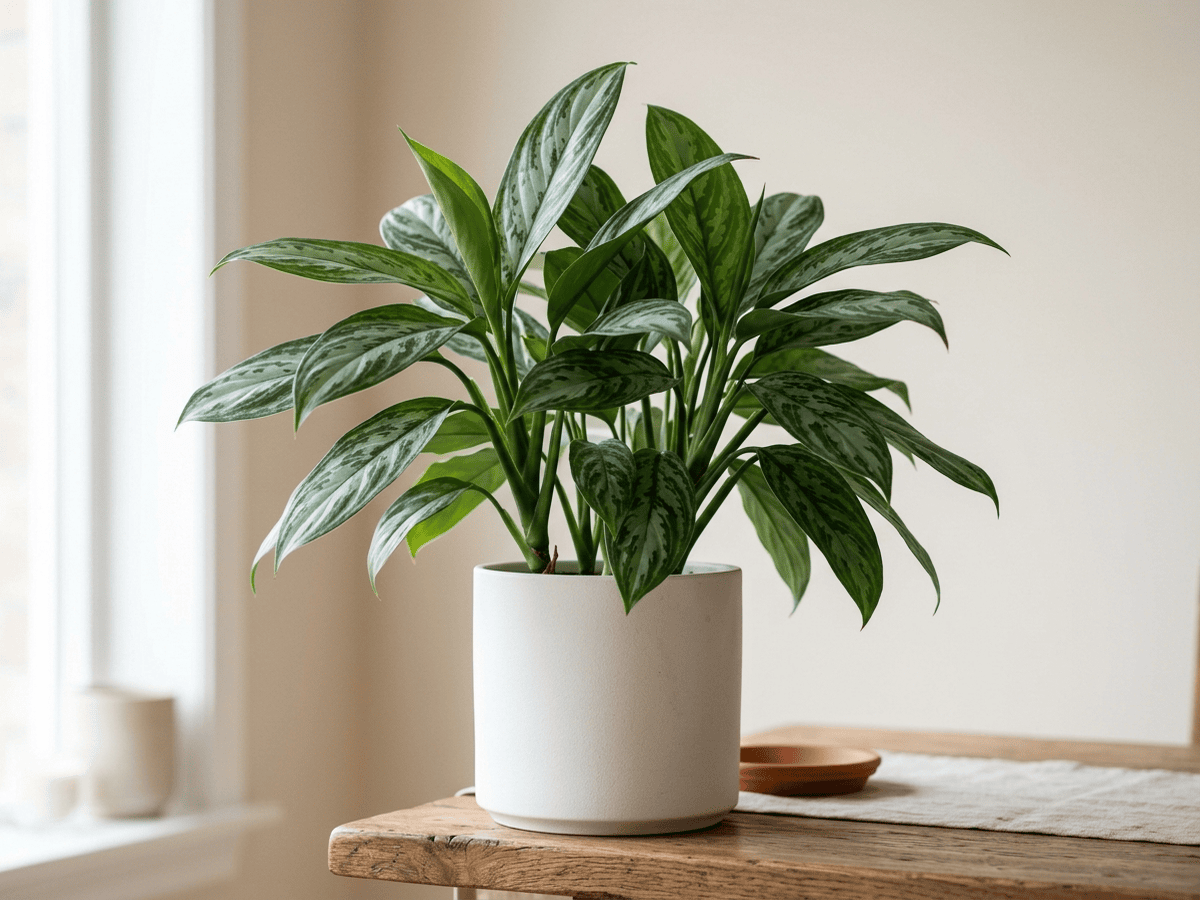 Philippine EvergreenAglaonema commutatum
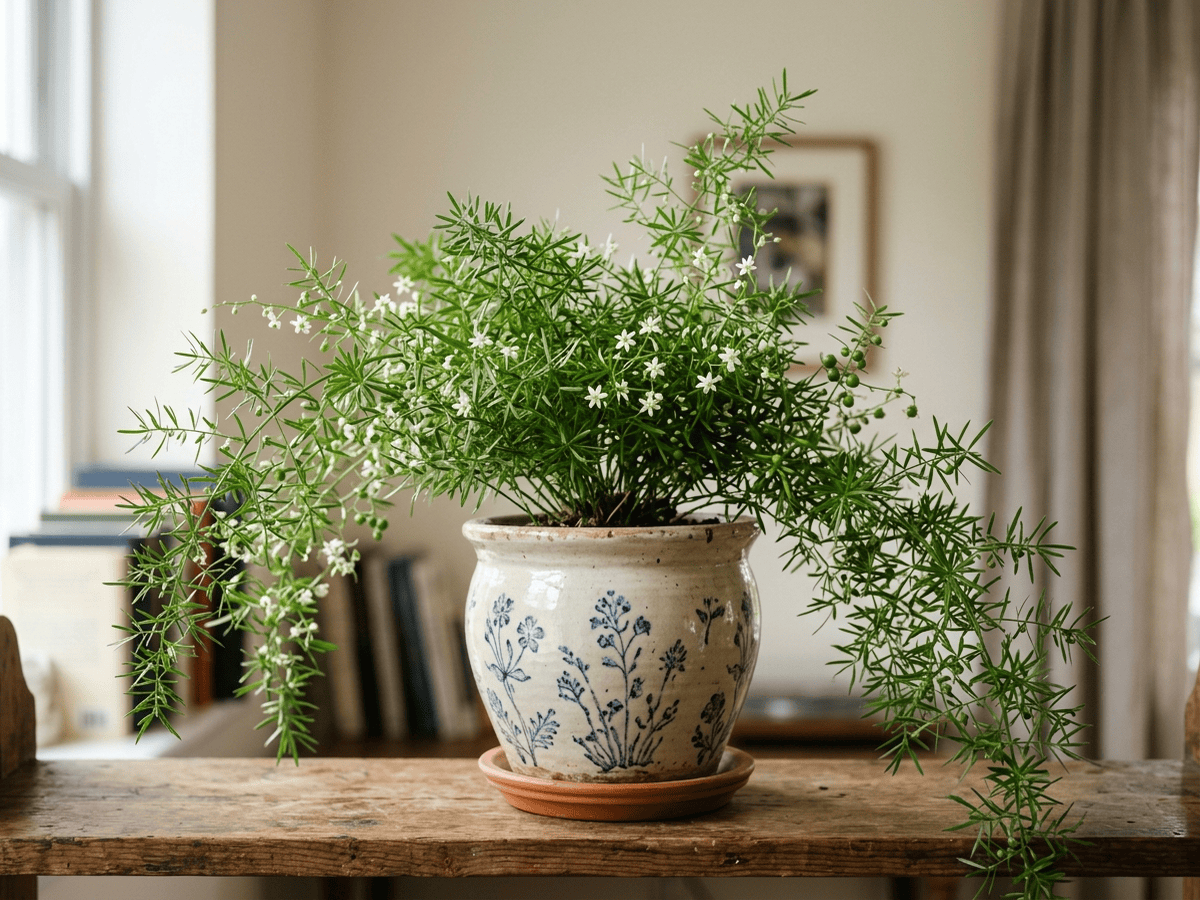 Sprenger's AsparagusAsparagus densiflorus
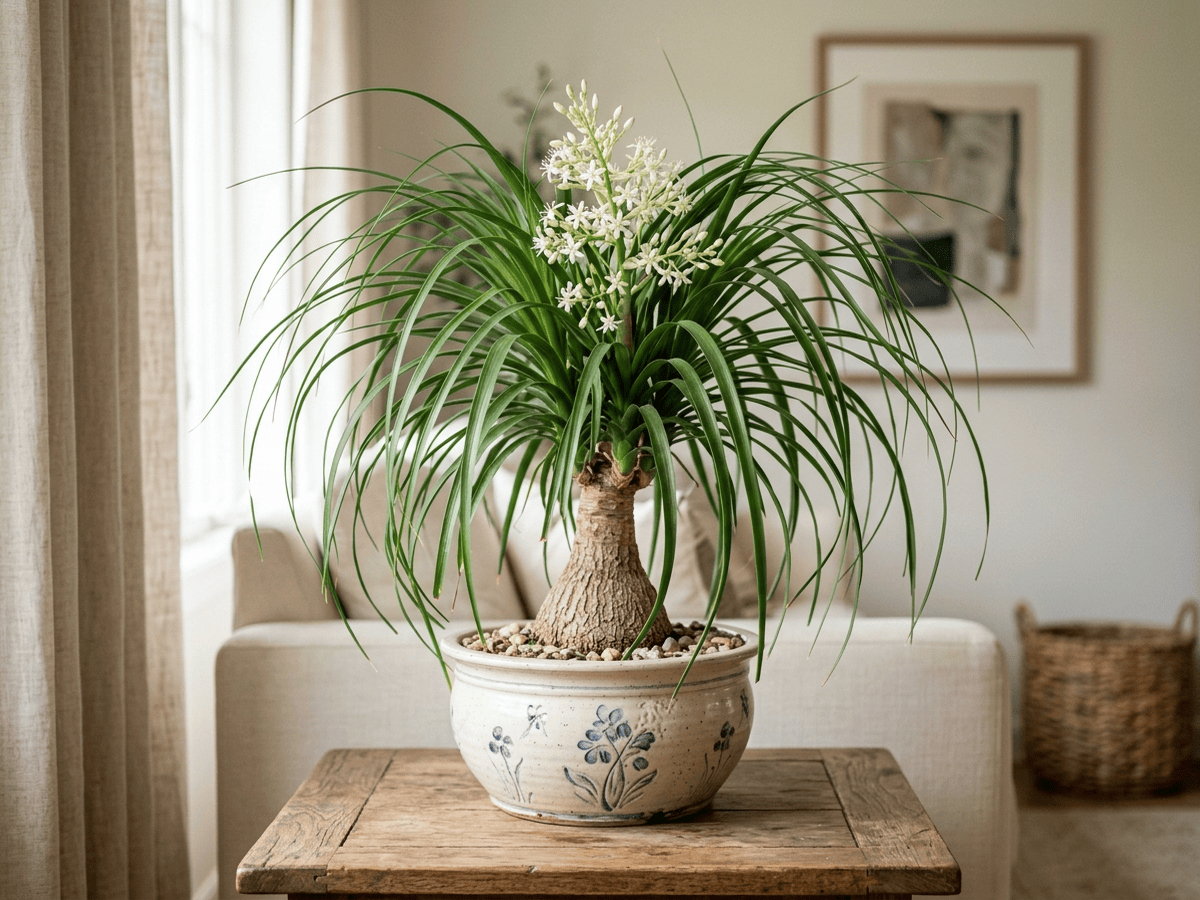 Ponytail PalmBeaucarnea recurvata
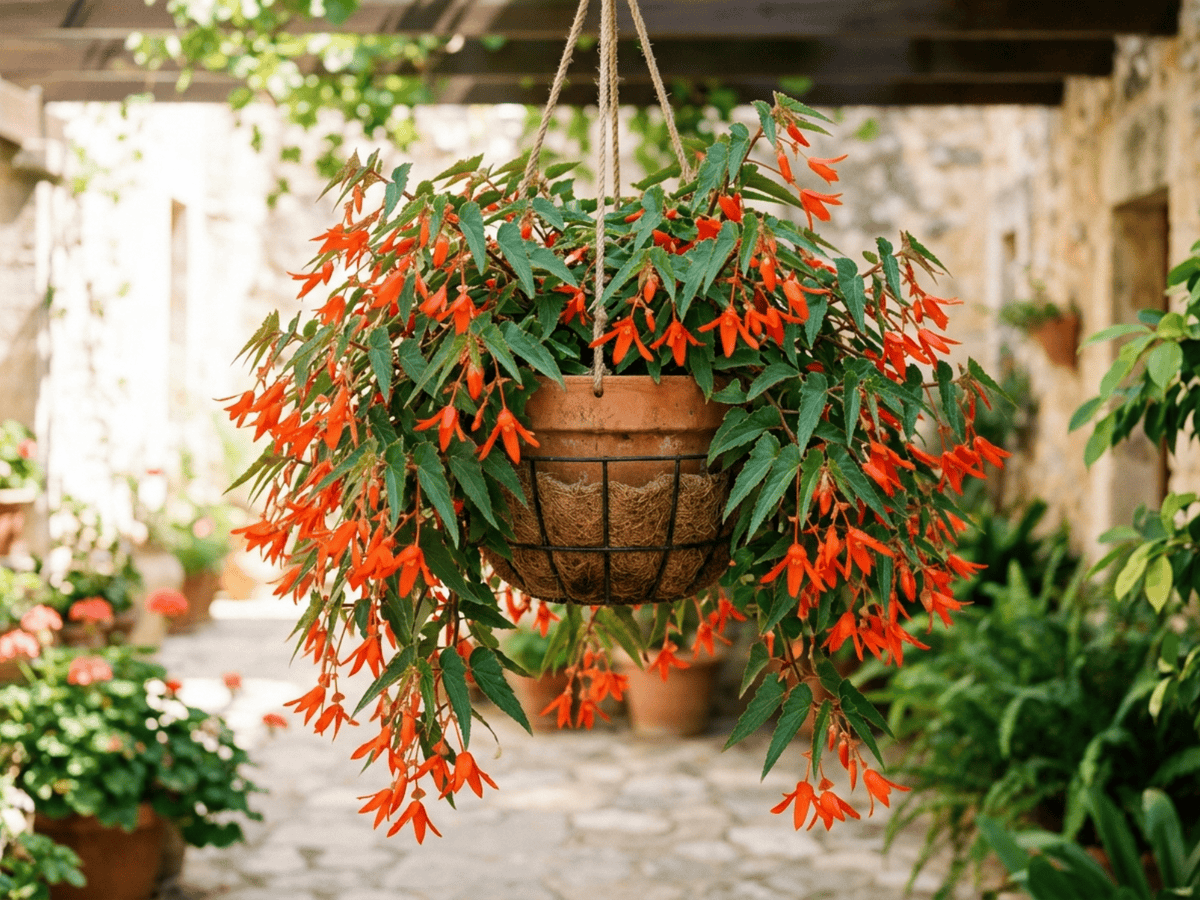 Tuberous BegoniaBegonia boliviensis
Frequently asked questions
How often should I water Crab Cactus?
In summer, water about every 7 days; in winter, about every 21 days. Adjust for heat, pot size and drainage.
How much light does Crab Cactus need?
Part shade: 2–4 hrs direct. Watch the leaves — scorching or stretching means the light needs adjusting.
Is Crab Cactus toxic to cats or dogs?
No toxicity has been reported for this plant. Still, it is wise to keep pets from chewing on any houseplant. Educational information, not medical or veterinary advice. If exposure is suspected, contact a doctor or veterinarian.
Is Crab Cactus easy to grow?
Yes — it is considered an easy, beginner-friendly plant.
Can Crab Cactus be grown indoors?
Yes, it adapts well to indoor growing given the right light.
When does Crab Cactus bloom?
It typically blooms Sep–Nov in the Northern Hemisphere.
YardMate
Identify any plant in seconds
Snap a photo — YardMate names the plant, diagnoses problems, and reminds you when to water.
Download on the App Store