 YardMate


Saw Palmetto
Serenoa repens
Easy · Beginner friendlyAbout Saw Palmetto
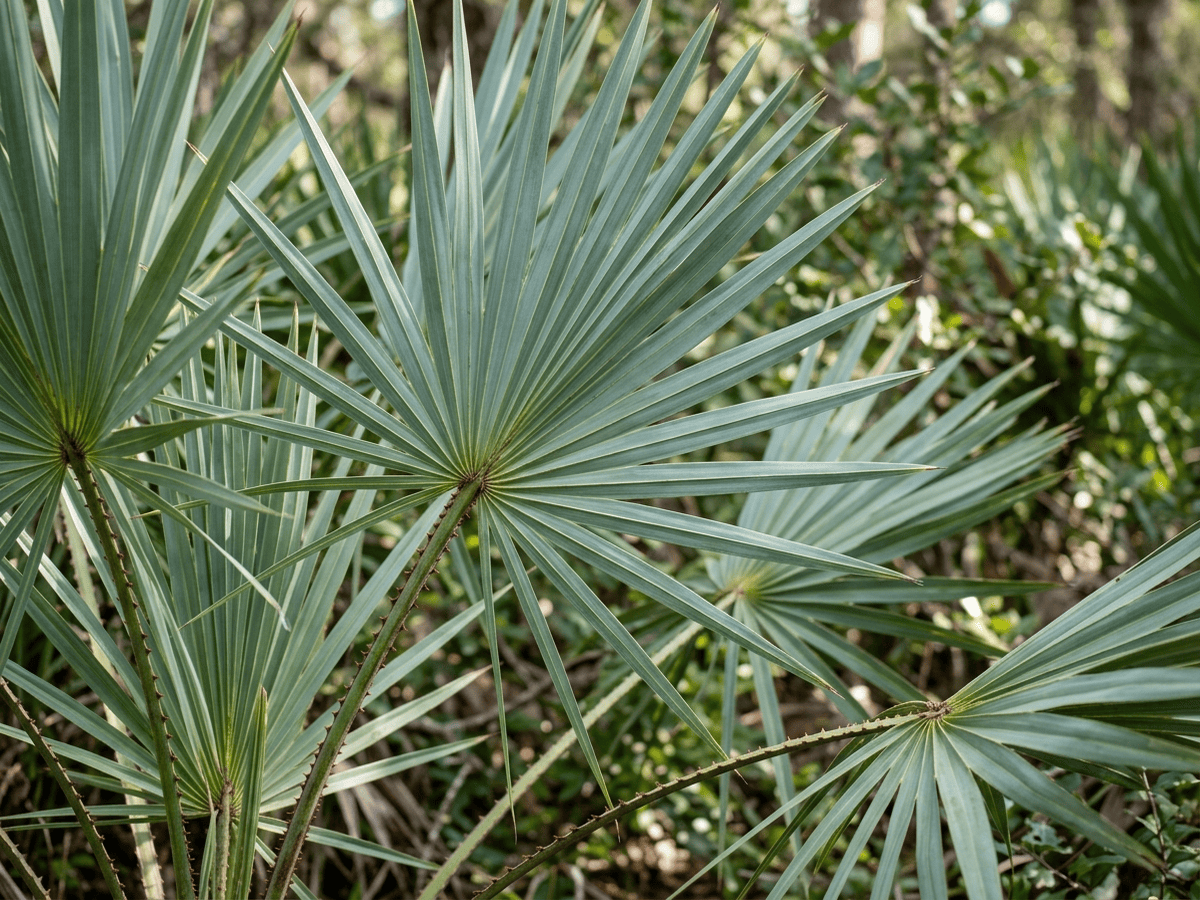
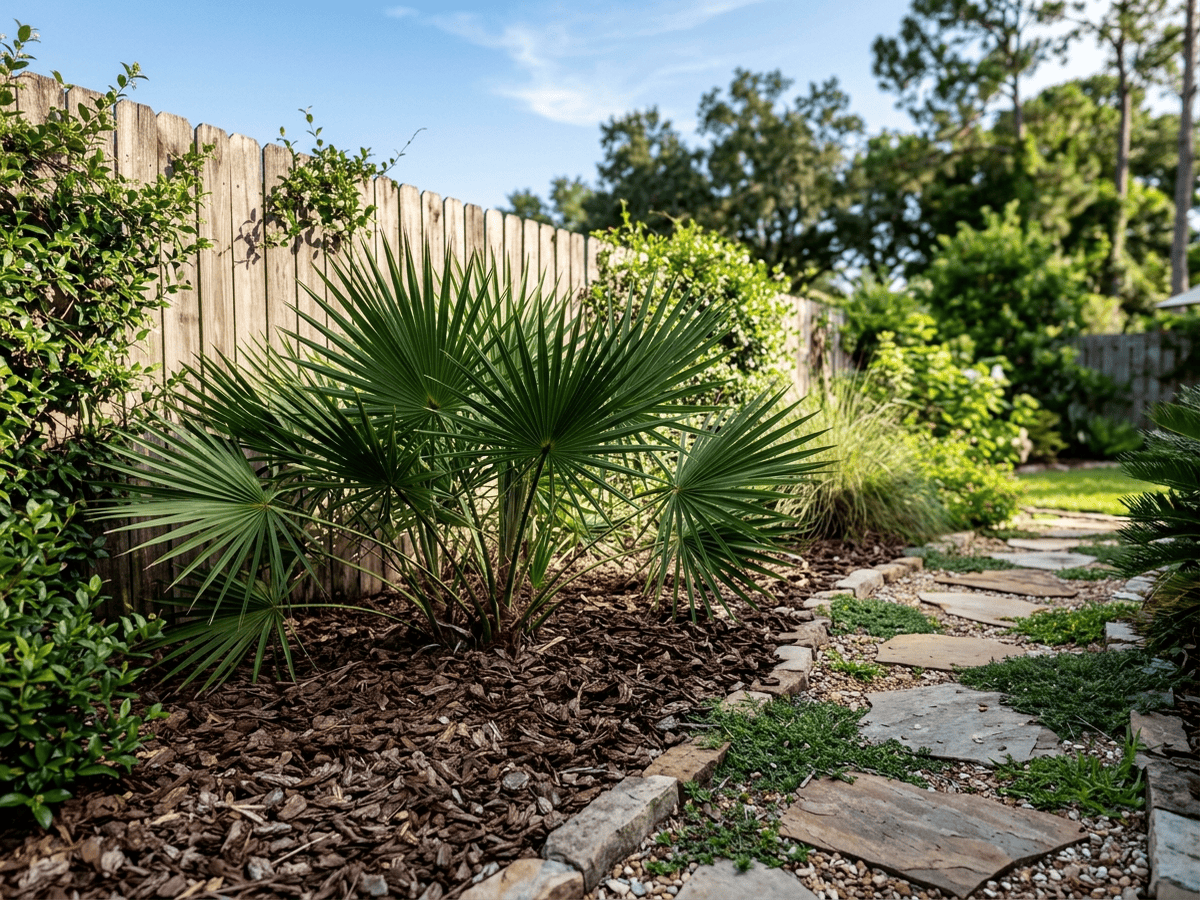
Serenoa repens, saw palmetto, is a slow-growing palm of the southeastern US coastal plain, especially Florida's pine flatwoods, scrub, and sandy uplands. Fan-shaped fronds may be green or blue-silver, rising from creeping trunks that can live for centuries and form broad thickets. Creamy flower clusters feed pollinators, and the dark fruits are eaten by wildlife. The fruits also support a large supplement industry, which makes ethical sourcing important because wild stands are habitat for species such as the Florida black bear and gopher tortoise. In landscapes, saw palmetto is drought-tolerant, salt-tolerant, fire-adapted, and unmistakably regional: a palm that belongs to the ecology as much as to the view.
- Medicinal
- Drought-tolerant
- Evergreen
- Native
How to care for Saw Palmetto
Watering
- Springevery 14 days
- Summerevery 10 days
- Fallevery 21 days
- Winterevery 30 days
Soil · Well-draining
- Main mixLoam + bark + perlite 2:1:175%
- DrainageLECA25%
Bark keeps the mix from compacting under a heavy root ball.
FERTILIZER
- Springevery 90 days
- Summerevery 90 days
At a Glance
- NativeNorth America
- Height5–10 ft (1.5–3 m)
- Spread4–10 ft (1.2–3 m)
- Flower colorWhite, Cream
- Foliage colorGreen, Silver, Blue-green
- Fruit colorBlack
- SoilSandy, Well-drained
- LocationsYard
Bloom time
BLOOM CYCLE
Peak bloom
Mar–May
Creamy white fragrant flower spikes in spring
Fragrance
MODERATE FRAGRANCE
Heavy sweet honey-like scent attracts many pollinators.
Toxicity
No toxicity has been reported for this plant. Still, it is wise to keep pets from chewing on any houseplant.
Educational information, not medical or veterinary advice. If exposure is suspected, contact a doctor or veterinarian.
DISTRIBUTION


- Native
- North America
History
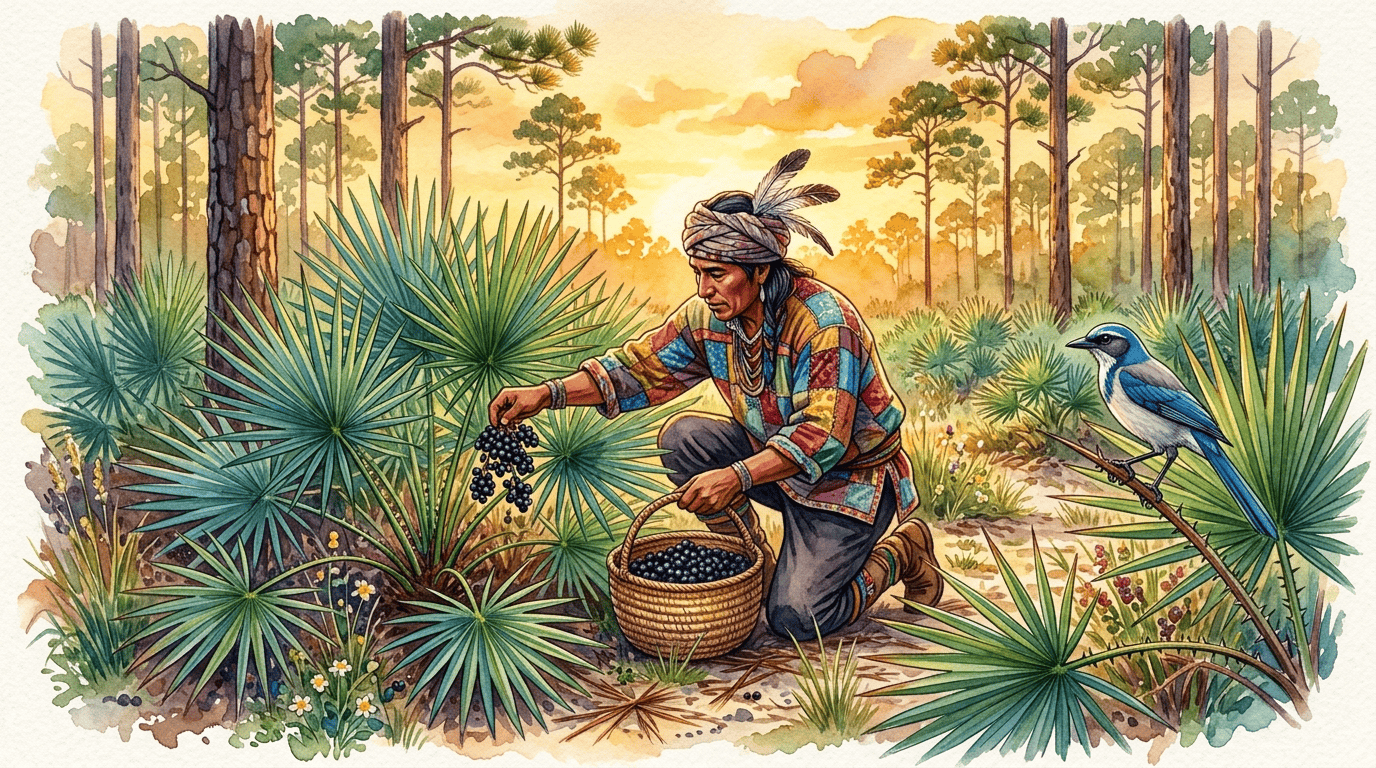
Serenoa repens, the saw palmetto, is a low-growing fan palm endemic to the southeastern United States coastal plain from South Carolina through Florida to Louisiana, often forming extensive ground cover in pine flatwoods and scrub. Indigenous Seminole, Creek, and earlier Calusa peoples consumed the oily black fruits and used them in traditional medicine. Spanish and early American settlers adopted the berries for urinary complaints.
In the 20th century pharmaceutical research isolated fatty acids and phytosterols responsible for the fruit's modest effects on benign prostatic hyperplasia, and saw palmetto extract remains a multi-billion-dollar herbal supplement globally. Florida regulates commercial berry harvest to protect the species, which lives over 500 years and provides critical habitat for the threatened Florida scrub-jay and gopher tortoise.
Used medicinally by the Seminole and other southeastern Indigenous peoples for centuries before becoming a globally traded herbal supplement in the late 20th century. Saw palmetto honey produced from spring flowers is considered among the finest in North America and is a major Florida agricultural product.
Symbolism & meaning
What It Symbolizes
Saw Palmetto is steadfastness made shrub, ancient long-lived plants whose colonies anchor Florida scrub for centuries. As an iconic groundcover of the wild South, it shelters gopher tortoises, panthers, and a whole vanishing landscape beneath its toothed fans. To walk through palmetto is to wade through one of the oldest, most patient biographies of the Florida peninsula.
- Steadfastness — ancient long-lived plants of Southern landscapes
- Wild Florida — iconic groundcover of the Florida scrub
Where the Name Comes From
The name Saw Palmetto describes its palm-like silhouette. 'Serenoa' honors American botanist Sereno Watson (1826–1892); 'repens' means creeping, describing its growth habit.
Uses & Fun Facts
- Berry extract widely used in prostate-health herbal supplements
- Dense thickets shelter Florida wildlife and pollinator larvae
- Silver-blue fan fronds anchor Southeastern native landscapes
Related plants
Plants with similar care
 Chinese AbeliaAbelia chinensis
 Fragrant AbeliaAbelia mosanensis
 Large-Flowered AbeliaAbelia uniflora
 Glossy AbeliaAbelia x grandiflora
Frequently asked questions
How often should I water Saw Palmetto?
In summer, water about every 10 days; in winter, about every 30 days. Adjust for heat, pot size and drainage.
How much light does Saw Palmetto need?
Full sun: 6+ hrs direct. Watch the leaves — scorching or stretching means the light needs adjusting.
Is Saw Palmetto toxic to cats or dogs?
No toxicity has been reported for this plant. Still, it is wise to keep pets from chewing on any houseplant. Educational information, not medical or veterinary advice. If exposure is suspected, contact a doctor or veterinarian.
Is Saw Palmetto easy to grow?
Yes — it is considered an easy, beginner-friendly plant.
When does Saw Palmetto bloom?
It typically blooms Mar–May in the Northern Hemisphere.
YardMate
Identify any plant in seconds
Snap a photo — YardMate names the plant, diagnoses problems, and reminds you when to water.
Download on the App Store