 YardMate


Japanese Skimmia
Skimmia japonica
Medium · Some experienceAbout Japanese Skimmia
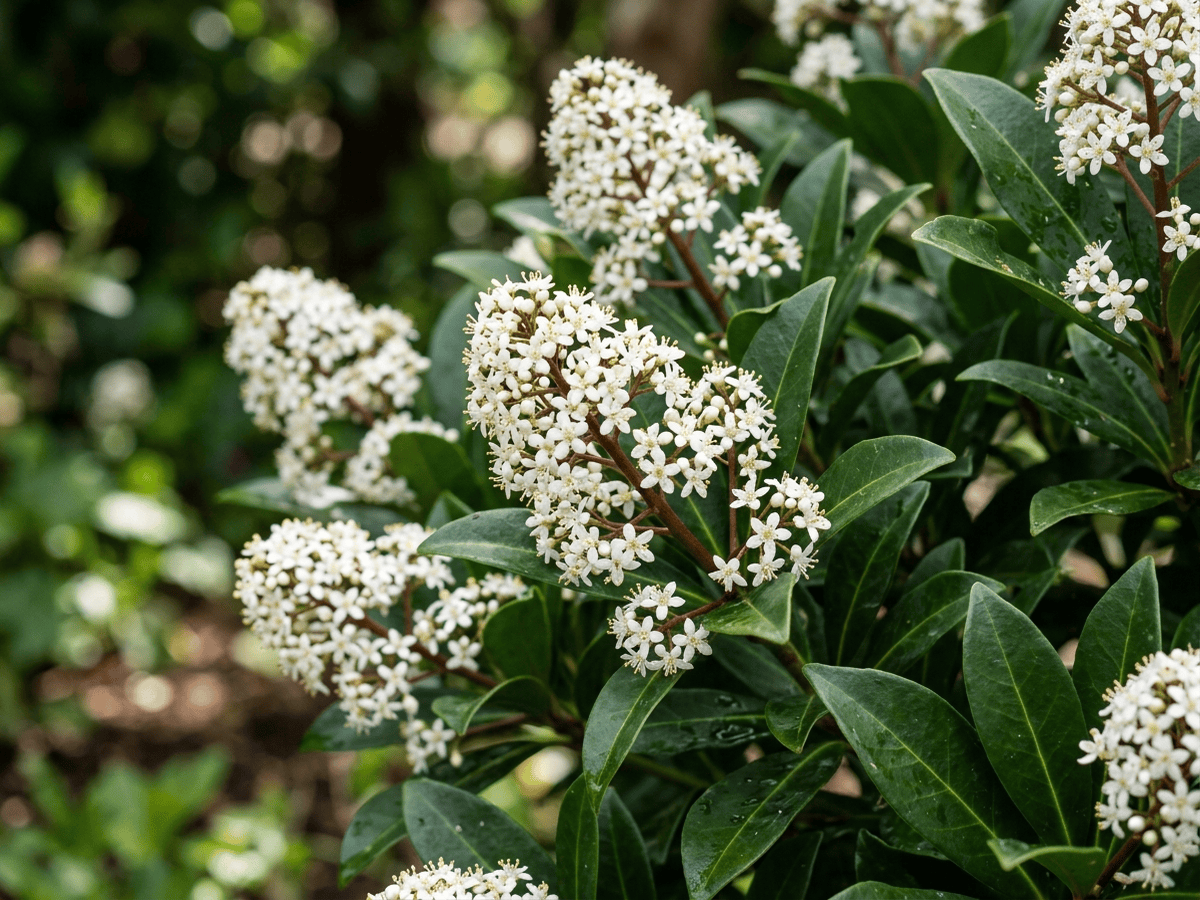
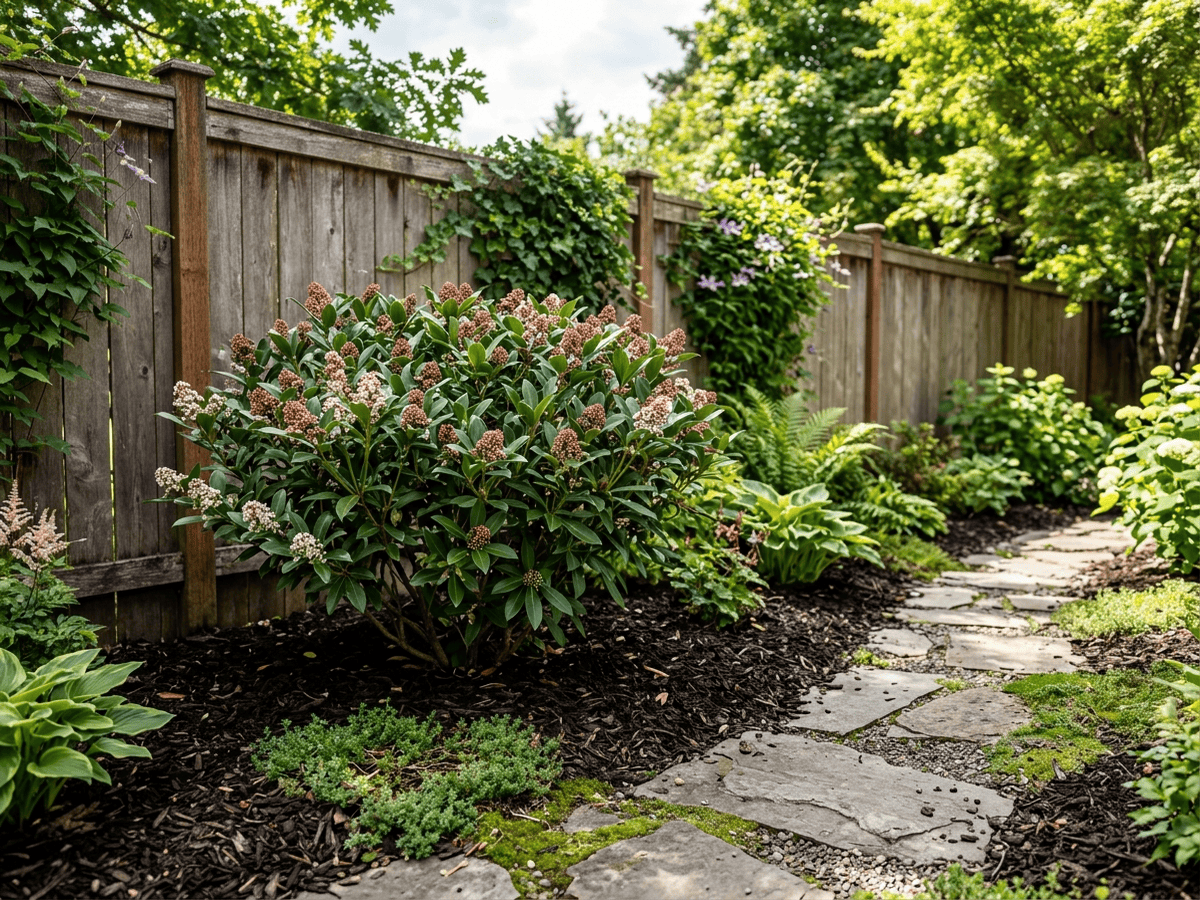
Japanese Skimmia is a compact evergreen shrub growing 3-4 feet tall with whorled glossy dark green aromatic leaves. Clusters of fragrant creamy flowers in spring are borne on male plants, while female plants produce showy bright red berries that persist through winter. Both sexes are needed for fruiting. A cherished shade shrub for woodland gardens, especially in the Pacific Northwest where winter berries bring color to rainy months.
- Fragrant
- Shade-tolerant
- Evergreen
How to care for Japanese Skimmia
Watering
- Springevery 5 days
- Summerevery 3 days
- Fallevery 7 days
- Winterevery 14 days
Soil · Acidic · pH 4.5–6
- Top dressingPine needle mulch10%
- Main mixAcid-lover mix + peat 3:175%
- DrainageGravel15%
Never add lime or wood ash — it cancels out the acidity.
FERTILIZER
Acid-Loving Feed 4-3-4
One bag does both jobs. An acid feed carries the usual nitrogen, phosphorus and potassium, plus the sulfur and iron that keep the soil sour enough for the roots to take them up at all.
- Nitrogen · Leaves
- Phosphorus · Roots + Blooms
- Potassium · Strength
- Springevery 30 days
At a Glance
- NativeEast Asia
- Height3–5 ft (0.9–1.5 m)
- Spread3–5 ft (0.9–1.5 m)
- Flower colorCream, White, Pink, Red
- Foliage colorDark-green, Green
- Fruit colorRed
- SoilAcidic, Well-drained, Loamy
- LocationsYard
Bloom time
BLOOM CYCLE
Peak bloom
Mar–Apr
Fragrant cream flowers March to April
Fragrance
STRONG FRAGRANCE
Strong sweet orange-jasmine fragrance from male flowers.
Toxicity
Humans Moderate · Pets Moderate
skimmianine and skimmine
Moderate
- Leaf
- Fruit
- Ingestion
EXPOSURE Eating leaves and fruit.
EFFECT Vomiting, convulsions from skimmianine and related alkaloids.
NOTE Bright red berries attractive to children; all parts contain toxic alkaloids.
Moderate
- Leaf
- Fruit
- Ingestion
EXPOSURE Eating leaves and fruit.
EFFECT Vomiting, tremors.
NOTE Bright red berries attractive to children; all parts contain toxic alkaloids.
Moderate
- Leaf
- Fruit
- Ingestion
EXPOSURE Eating leaves and fruit.
EFFECT Vomiting, tremors.
NOTE Bright red berries attractive to children; all parts contain toxic alkaloids.
Educational information, not medical or veterinary advice. If exposure is suspected, contact a doctor or veterinarian.
DISTRIBUTION


- Native
- East Asia
History
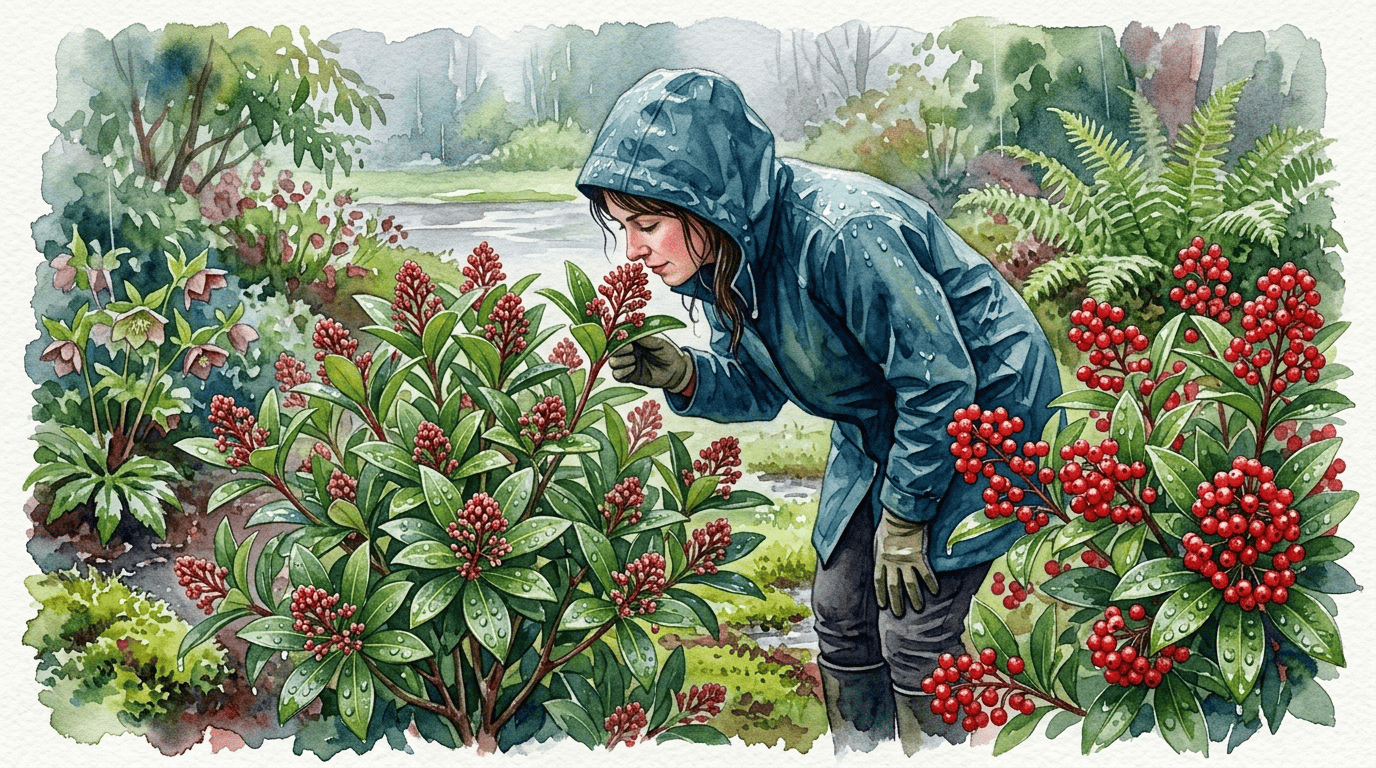
Skimmia japonica occurs naturally in Japan (Honshu, Shikoku, Kyushu, Hokkaido), the Korean Peninsula, and parts of China. Swedish botanist Carl Peter Thunberg described the species in 1784 in Flora Japonica, the genus name Skimmia being a Latinization of the Japanese vernacular name shikimi (a name also applied to Illicium anisatum, though the two plants are unrelated). The 1-1.5 meter evergreen shrub is dioecious (with male and female flowers on separate plants), so both are needed for berry production.
Conical panicles of small cream-white flowers open in March-April from the winter-prominent red-tinged flower buds that have been a feature since the previous autumn; male flowers are larger and fragrant with a powerful sweet orange-jasmine scent. On female plants, bright red berries follow the flowers and persist through winter. Important cultivars include 'Rubella' (male, prized for red winter buds and stems), 'Fragrans' (male, exceptionally fragrant), 'Nymans' (female, heavy fruiting), and 'Reevesiana' (self-fertile variety).
All parts are toxic. Introduced from Japan to European gardens in the 1830s and quickly adopted as a favorite winter-interest shrub. The name 'miyama shikimi' in Japanese reflects its mountain forest origins. A signature shrub of Pacific Northwest winter gardens where wet mild climates suit it perfectly.
Symbolism & meaning
What It Symbolizes
Japanese Skimmia can symbolize a promise kept — its white spring flowers ripen into red winter berries, fulfilling in cold months what was offered in mild ones. Partnership runs through its biology too: male and female plants must grow together for the berries to set. Its meaning weaves devotion and patience, a small evergreen shrub that remembers its springtime vows when frost arrives.
- Promise — flowers in spring fulfill with winter berries
- Partnership — male and female plants needed together
Where the Name Comes From
From Japanese 'miyama shikimi' (mountain shikimi); 'japonica' means of Japan.
Uses & Fun Facts
- Creamy flower clusters scent shaded spring gardens
- Compact evergreen brightens shaded patio pots in winter
- Glossy red berries persist on female plants through winter
Related plants
Plants with similar care
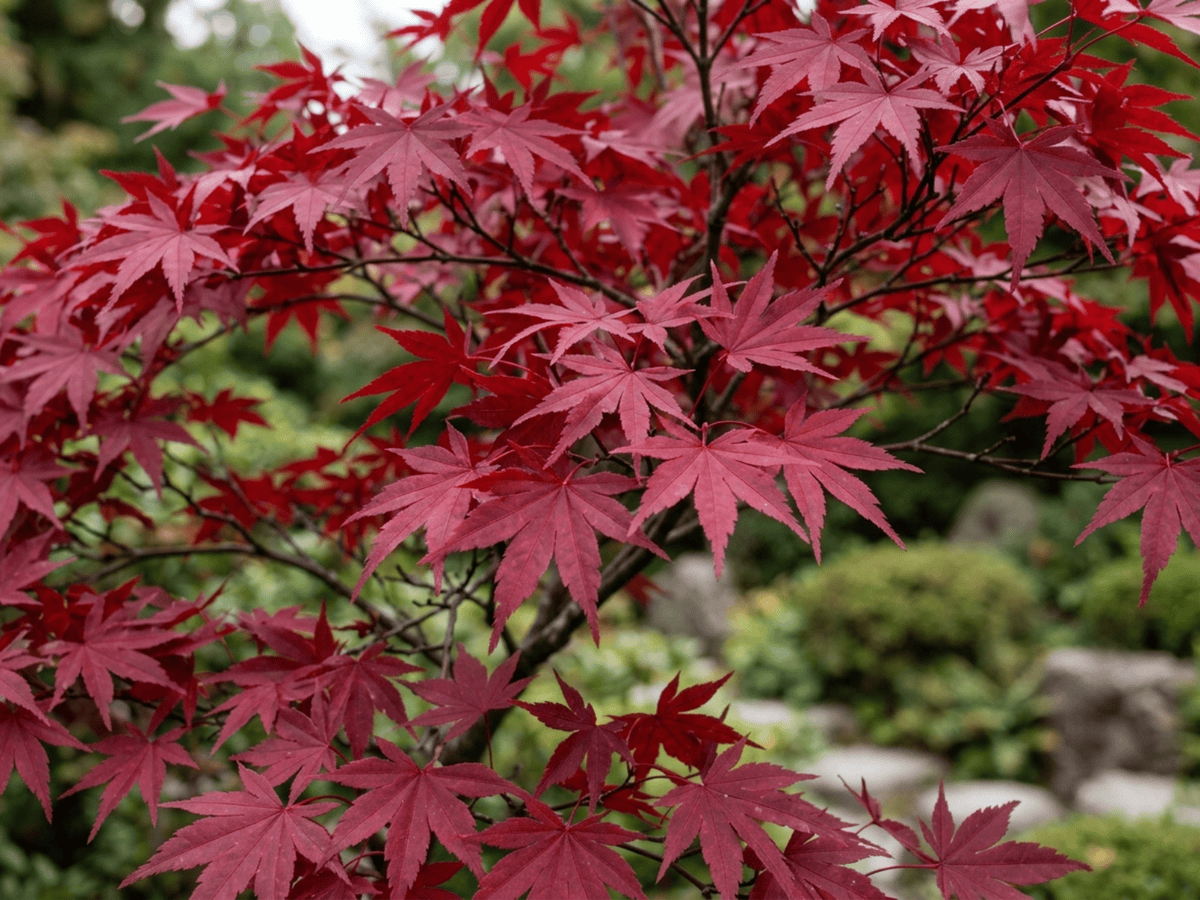 Japanese MapleAcer palmatum
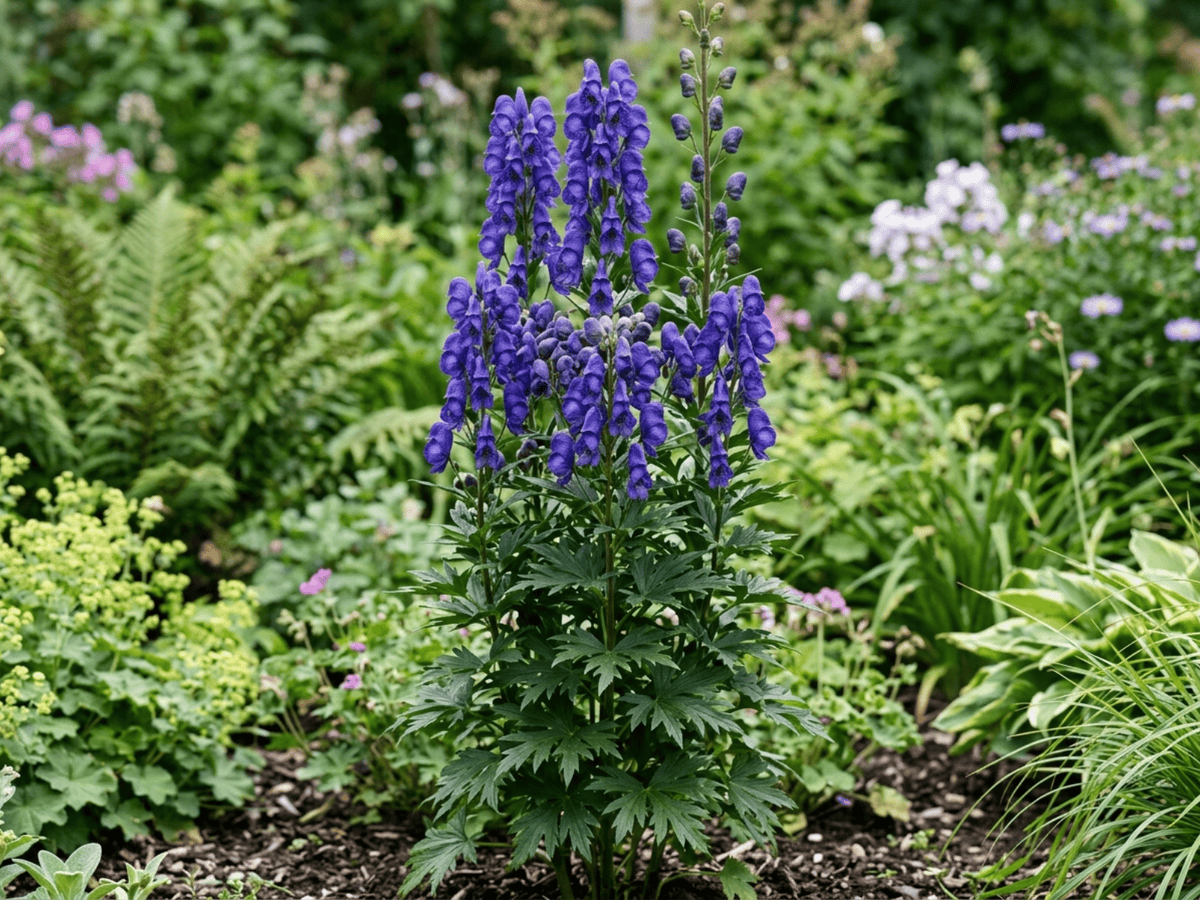 Azure MonkshoodAconitum carmichaelii
 Florida HobblebushAgarista populifolia
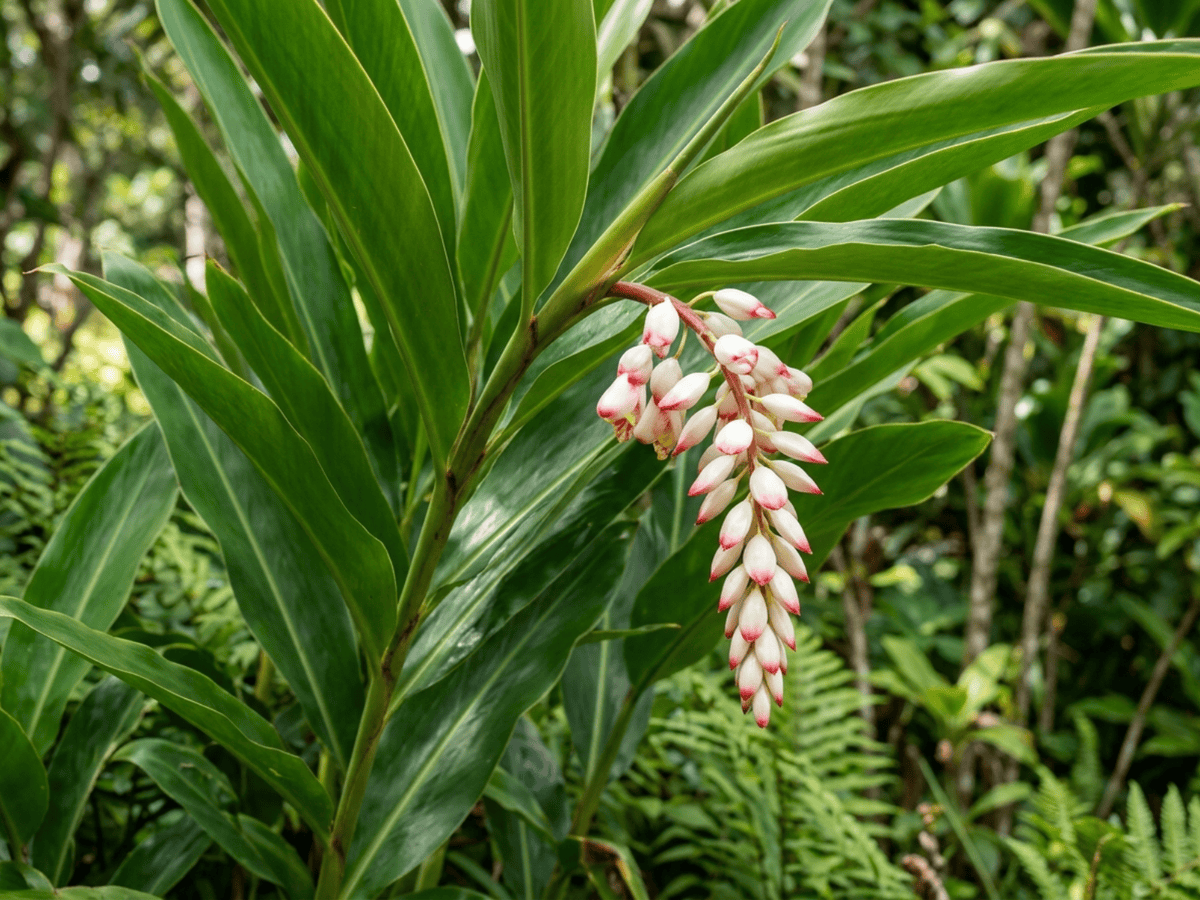 Shell GingerAlpinia zerumbet
Frequently asked questions
How often should I water Japanese Skimmia?
In summer, water about every 3 days; in winter, about every 14 days. Adjust for heat, pot size and drainage.
How much light does Japanese Skimmia need?
Part shade: 2–4 hrs direct. Watch the leaves — scorching or stretching means the light needs adjusting.
Is Japanese Skimmia toxic to cats or dogs?
Pets Moderate (Dogs Moderate · Cats Moderate) Educational information, not medical or veterinary advice. If exposure is suspected, contact a doctor or veterinarian.
Is Japanese Skimmia easy to grow?
It is moderately demanding: a good choice once you have a little experience.
When does Japanese Skimmia bloom?
It typically blooms Mar–Apr in the Northern Hemisphere.
YardMate
Identify any plant in seconds
Snap a photo — YardMate names the plant, diagnoses problems, and reminds you when to water.
Download on the App Store