 YardMate


Mexican Feathergrass
Stipa tenuissima
Easy · Beginner friendlyAbout Mexican Feathergrass
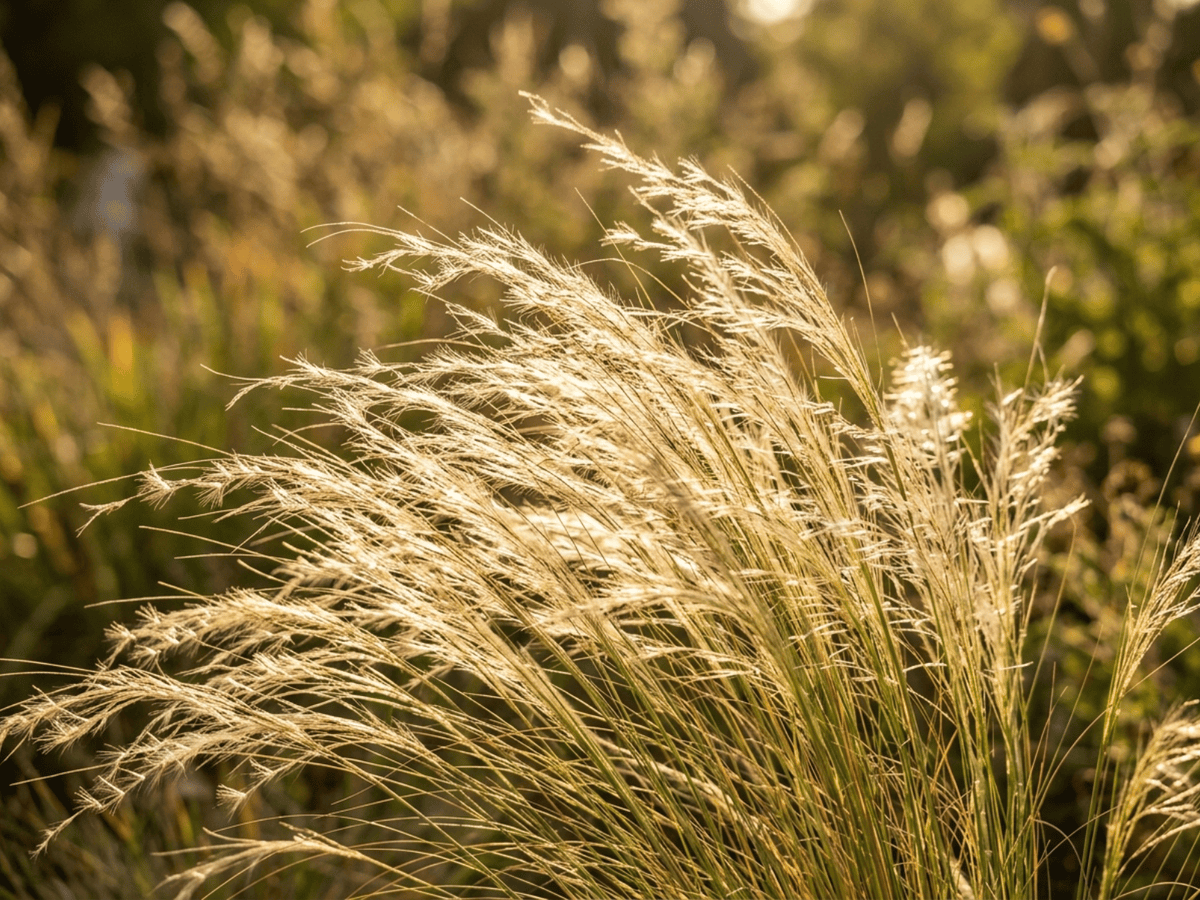
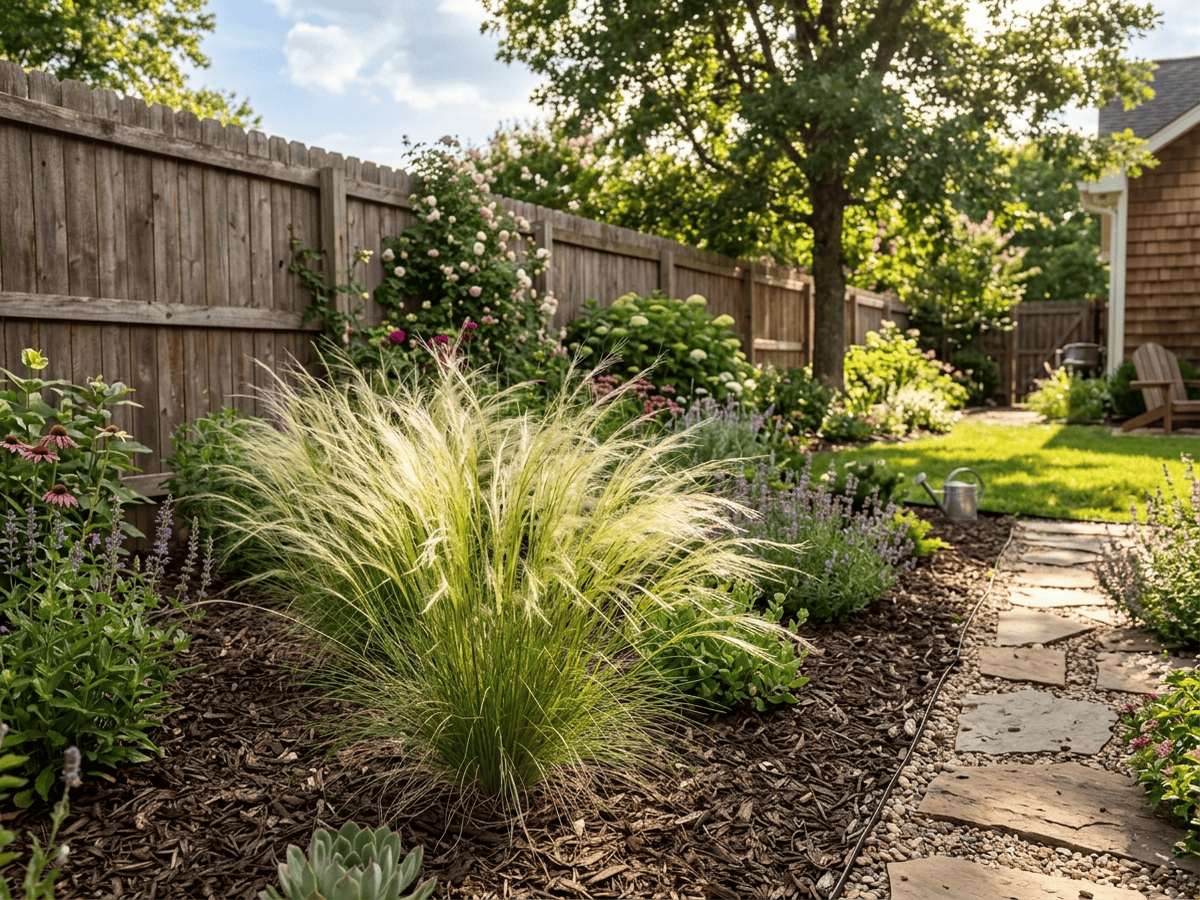
Stipa tenuissima, commonly called Mexican feather grass or nassella, is one of the most graceful ornamental grasses available, native to the arid regions of the southwestern United States, Mexico, and Argentina. It forms fine-textured, hair-like fountains of bright green foliage that bleach to a beautiful golden blonde in summer and fall. The entire plant moves fluidly in the slightest breeze, creating a mesmerizing wave-like motion that no other grass can match. Growing 40 to 60 centimeters tall, it is ideal for mass planting, meadow gardens, and softening hardscape edges. It is extremely drought-tolerant and thrives in poor, well-drained soils where other plants struggle. The thread-thin seed heads emerge in early summer, adding a shimmering haze above the foliage. It self-seeds freely in mild climates and is considered invasive in parts of Australia and New Zealand, though it is generally well-behaved in continental climates with cold winters.
- Drought-tolerant
How to care for Mexican Feathergrass
Watering
- Springevery 14 days
- Summerevery 21 days
- Fallevery 21 days
- Winterevery 45 days
Soil · Well-draining
- Top dressingPine bark mulch10%
- Main mixPotting soil + perlite 2:170%
- DrainageLECA / gravel20%
Never skip the drainage layer — standing water is the top cause of root rot.
FERTILIZER
- Springevery 60 days
At a Glance
- NativeNorth America, South America
- Height1–2 ft (0.3–0.6 m)
- Spread1–2 ft (0.3–0.6 m)
- Flower colorGreen, Cream
- Foliage colorGreen, Silver, Bronze
- SoilSandy, Well-drained
- LocationsYard · Balcony
Bloom time
BLOOM CYCLE
Peak bloom
Jun–Aug
Silky seed heads in early summer; comb out old growth in spring
Fragrance
NO FRAGRANCE
No notable fragrance.
Toxicity
Pets Slight
Unknown toxic principle
Not reported
EXPOSURE No exposure route is reported.
EFFECT No toxic effect is reported.
NOTE No toxicity is reported for humans in this catalog; this is not evidence that the plant is edible or harmless.
Slight
- Seed
- Contact
- Ingestion
EXPOSURE Touching seeds. Eating seeds.
EFFECT Awns can lodge in ears, eyes, throat.
NOTE Not chemically toxic; seed awns pose mechanical injury to grazing pets (foxtail-type injuries).
Slight
- Seed
- Contact
- Ingestion
EXPOSURE Touching seeds. Eating seeds.
EFFECT Awns can lodge in ears, eyes, throat.
NOTE Not chemically toxic; seed awns pose mechanical injury to grazing pets (foxtail-type injuries).
Educational information, not medical or veterinary advice. If exposure is suspected, contact a doctor or veterinarian.
DISTRIBUTION

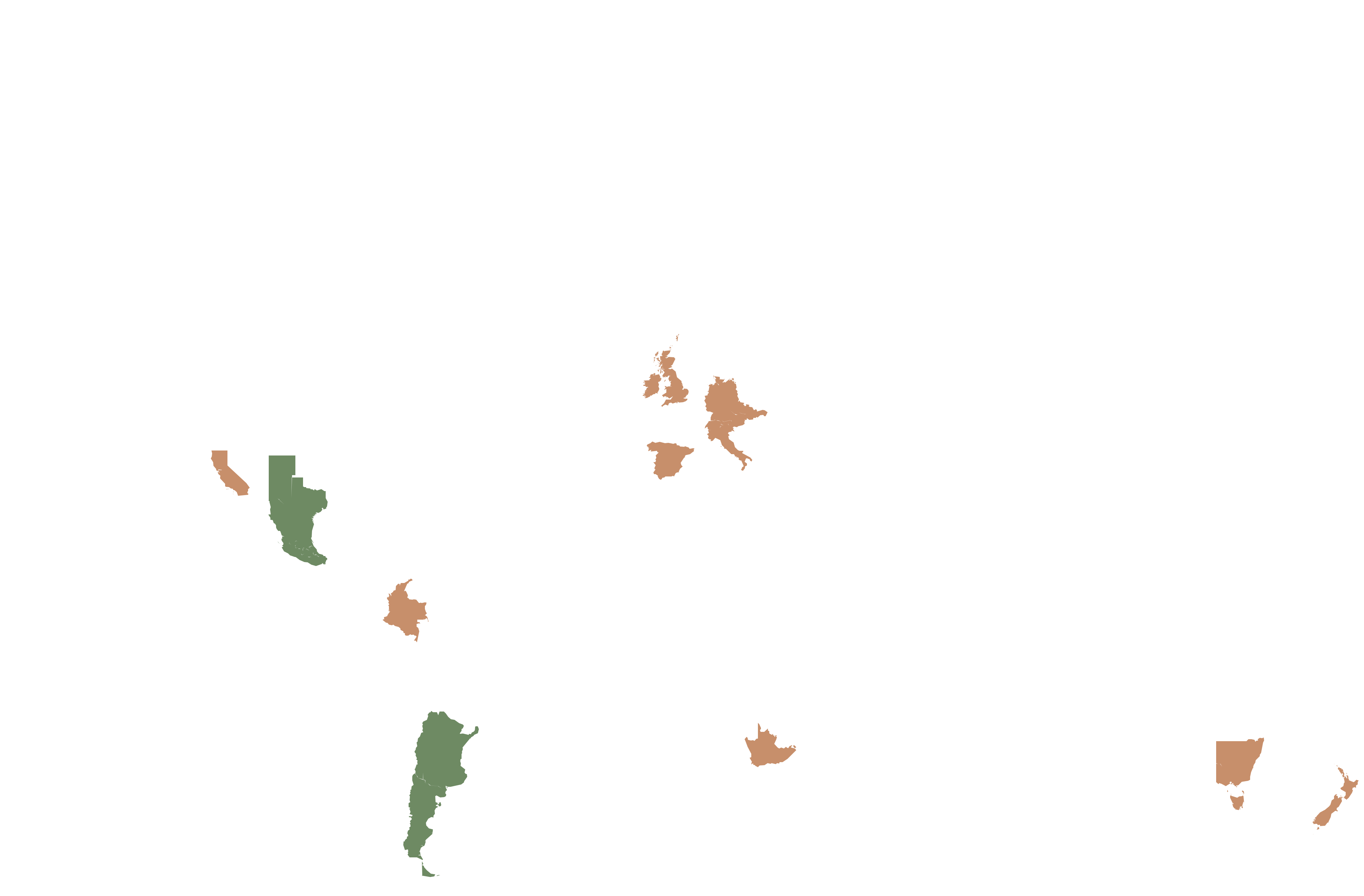
- Native
- Introduced
- North America
- South America
History
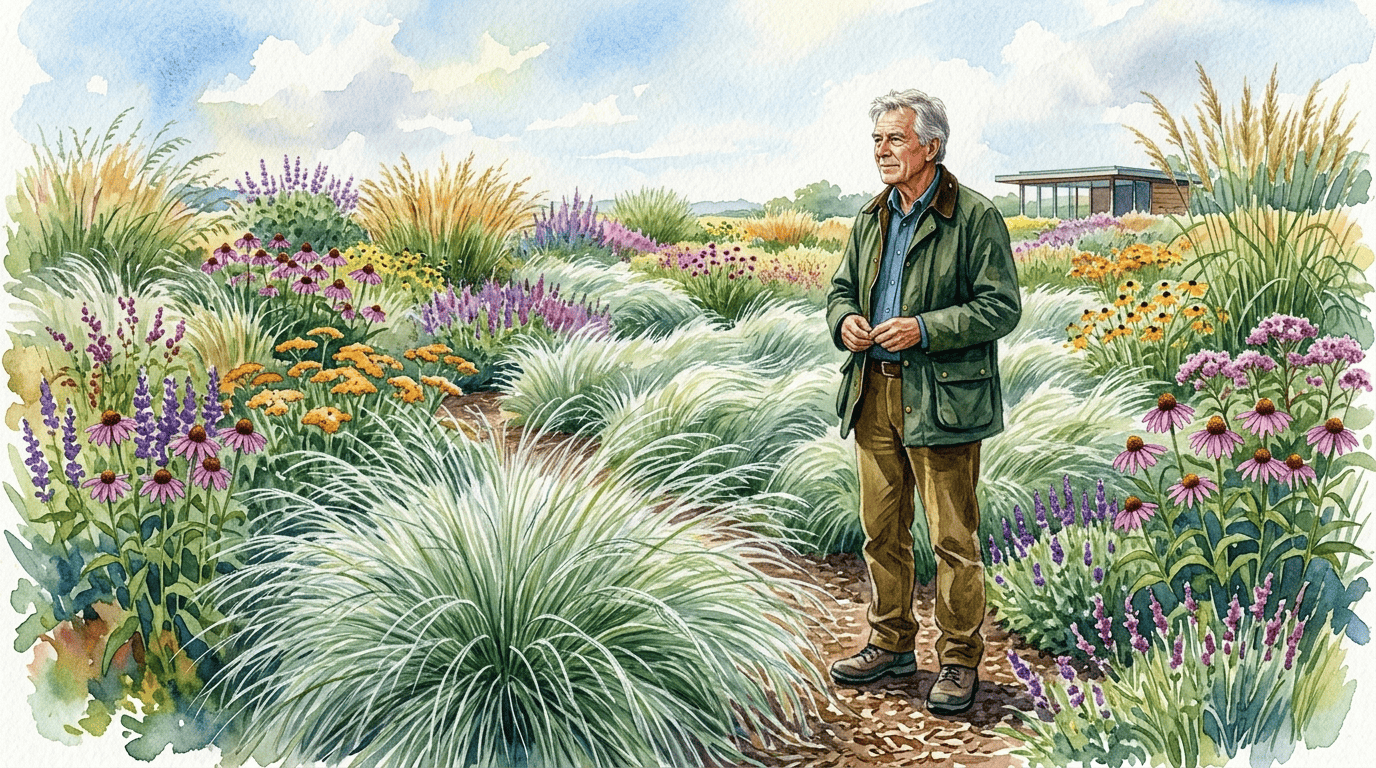
Stipa tenuissima (now taxonomically accepted as Nassella tenuissima) is native to north-central Mexico, the Trans-Pecos region of Texas, southern New Mexico, and disjunct populations in Argentina. It grows in rocky calcareous slopes and dry grasslands, forming compact clumps 40-60 cm tall with extraordinarily fine, hair-like, silvery-green foliage that moves visibly in the faintest air current — a property that has made it one of the most visually distinctive and widely used ornamental grasses of late 20th- and early 21st-century naturalistic and Mediterranean-style design. Piet Oudolf's planting schemes, and the 2000s-2010s "prairie" and "new perennial" design movements, extensively deploy Nassella/Stipa tenuissima for its movement and textural contrast.
However, the species' prolific wind-dispersed seed and drought tolerance have led to it becoming an emerging invasive species in California, Victoria and New South Wales (Australia), and parts of southern Europe. California is actively reviewing its status; Australia has restricted its sale in several states.
Some responsible nurseries and designers now recommend sterile or near-sterile alternatives such as Bouteloua gracilis "Blonde Ambition" or Stipa barbata. Foliage often turns tan-straw through summer and winter. Stipa tenuissima gained horticultural fame in the 1990s when landscape designers began using it to bring naturalistic movement into modern gardens.
Symbolism & meaning
What It Symbolizes
Mexican feathergrass is grace in motion — its hair-fine blades flow like green-gold water with every breath of wind, the most kinetic plant in the dry garden. Its resilience is the second virtue: drought, heat, and poor soil are no obstacle, the conditions where it actually thrives. The grass turns severity into elegance, a small choreography of survival in places where stiller plants would burn.
- Grace — Its flowing movement in the wind embodies effortless elegance
- Resilience — Thrives in harsh, dry conditions where other plants fail
Where the Name Comes From
The name Mexican Feathergrass describes its grasslike foliage. 'Stipa' comes from Greek 'stupe' meaning 'tow' or 'fiber,' referring to the feathery awns. 'Tenuissima' is Latin for 'very thin,' describing the hair-fine leaves.
Uses & Fun Facts
- Hair-fine fountains shimmer and ripple in the slightest breeze
- Mass plantings create flowing drifts in xeric Southwestern designs
Related plants
Plants with similar care
 Chinese AbeliaAbelia chinensis
 Fragrant AbeliaAbelia mosanensis
 Large-Flowered AbeliaAbelia uniflora
 Glossy AbeliaAbelia x grandiflora
Frequently asked questions
How often should I water Mexican Feathergrass?
In summer, water about every 21 days; in winter, about every 45 days. Adjust for heat, pot size and drainage.
How much light does Mexican Feathergrass need?
Full sun: 6+ hrs direct. Watch the leaves — scorching or stretching means the light needs adjusting.
Is Mexican Feathergrass toxic to cats or dogs?
Pets Slight (Dogs Slight · Cats Slight) Educational information, not medical or veterinary advice. If exposure is suspected, contact a doctor or veterinarian.
Is Mexican Feathergrass easy to grow?
Yes — it is considered an easy, beginner-friendly plant.
When does Mexican Feathergrass bloom?
It typically blooms Jun–Aug in the Northern Hemisphere.
YardMate
Identify any plant in seconds
Snap a photo — YardMate names the plant, diagnoses problems, and reminds you when to water.
Download on the App Store