 YardMate


Japanese Pagoda Tree
Styphnolobium japonicum
Easy · Beginner friendlyAbout Japanese Pagoda Tree
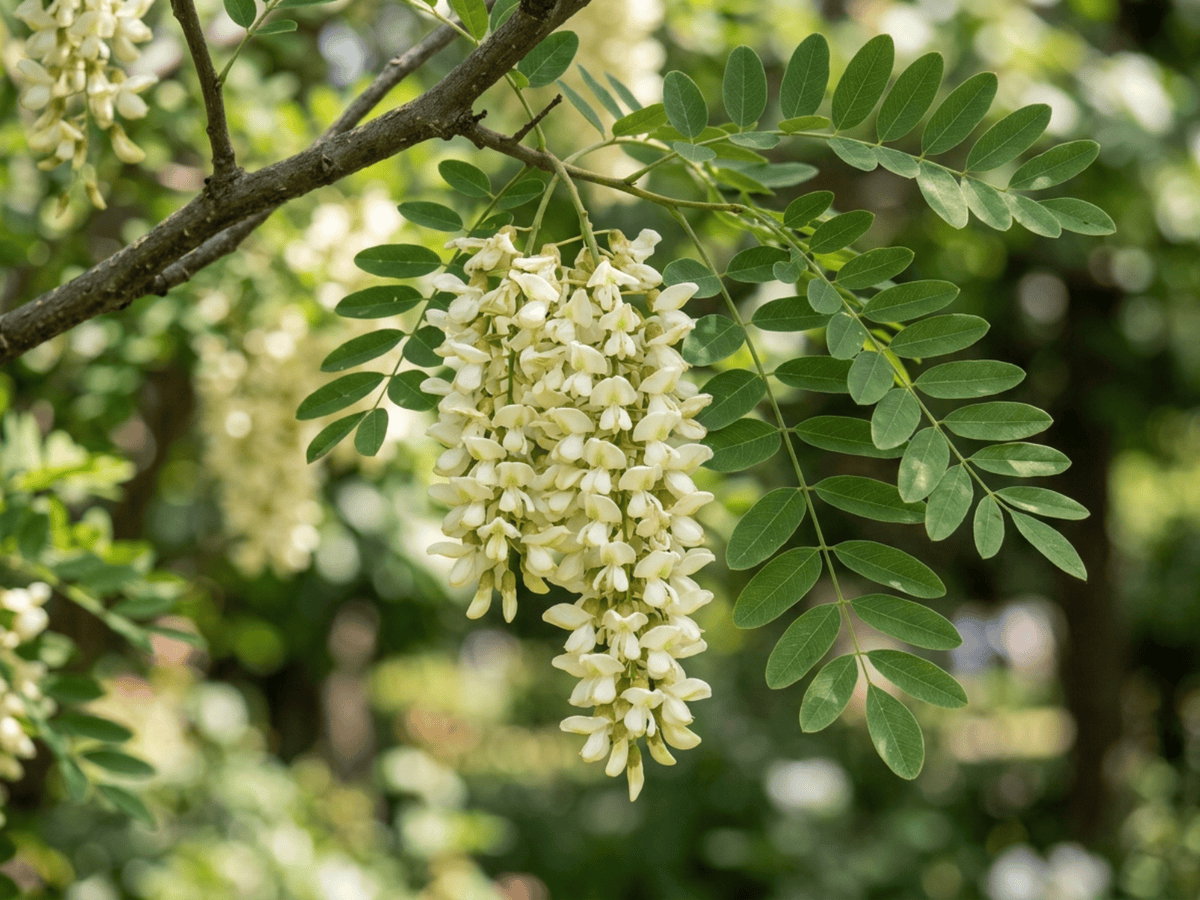
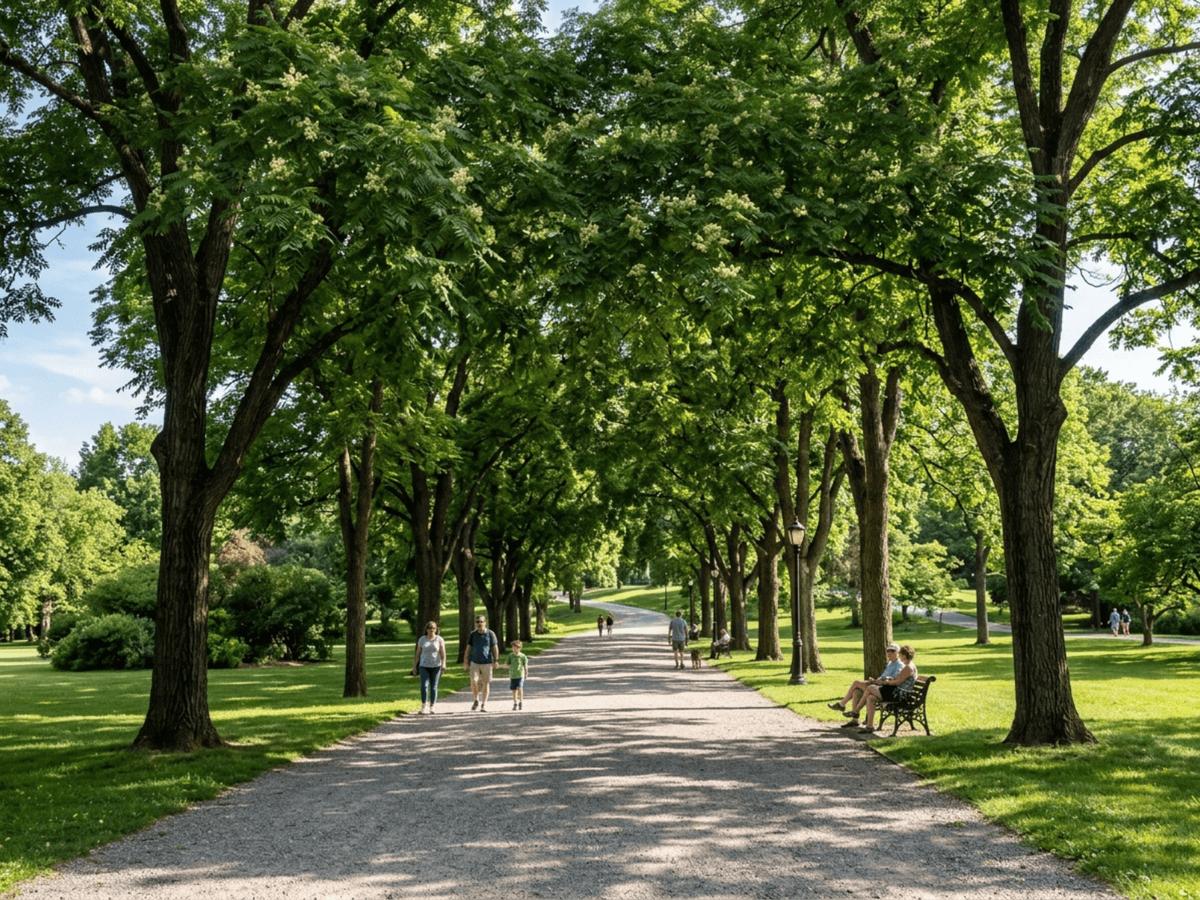
Japanese Pagoda Tree or Scholar Tree is a majestic deciduous tree from China and Korea (despite its name) growing 50-75 feet tall with a spreading rounded crown, producing massive drooping panicles of creamy-white pea-like flowers in midsummer. A tough urban-tolerant tree hardy in USDA zones 4-8, valued as a superb shade and street tree across the United States for its late-summer bloom and pollution tolerance.
- Pollinator-friendly
How to care for Japanese Pagoda Tree
Watering
- Springevery 7 days
- Summerevery 5 days
- Fallevery 10 days
- Winterpause watering
Soil · Well-draining
- Top dressingPine bark mulch10%
- Main mixPotting soil + perlite 2:170%
- DrainageLECA / gravel20%
Never skip the drainage layer — standing water is the top cause of root rot.
FERTILIZER
Balanced Feed 14-14-14
An even feed covers all three needs at once, keeping leaves, roots and blooms moving together with nothing pushed out of balance.
- Nitrogen · Leaves
- Phosphorus · Roots + Blooms
- Potassium · Strength
- Springevery 60 days
- Summerevery 60 days
At a Glance
- NativeEast Asia
- Height50–70 ft (15.2–21.3 m)
- Spread40–60 ft (12.2–18.3 m)
- Flower colorCream, White
- Foliage colorGreen, Yellow
- Fruit colorYellow, Green
- SoilWell-drained, Loamy
- LocationsYard
Bloom time
BLOOM CYCLE
Peak bloom
Jul–Aug
Creamy white panicles July to August
Fragrance
LIGHT FRAGRANCE
The flowers have a mild sweet scent.
Toxicity
Humans Moderate · Pets Moderate
cytisine and quinolizidine alkaloids
Moderate
- Seed
- Pod
- Ingestion
EXPOSURE Eating seeds and pod.
EFFECT GI upset and nausea.
NOTE Seeds and pods contain mildly toxic alkaloids; flowers used in TCM.
Moderate
- Seed
- Pod
- Ingestion
EXPOSURE Eating seeds and pod.
EFFECT Vomiting and diarrhea.
NOTE Seeds and pods contain mildly toxic alkaloids; flowers used in TCM.
Moderate
- Seed
- Pod
- Ingestion
EXPOSURE Eating seeds and pod.
EFFECT Vomiting and diarrhea.
NOTE Seeds and pods contain mildly toxic alkaloids; flowers used in TCM.
Educational information, not medical or veterinary advice. If exposure is suspected, contact a doctor or veterinarian.
DISTRIBUTION


- Native
- Introduced
- East Asia
History
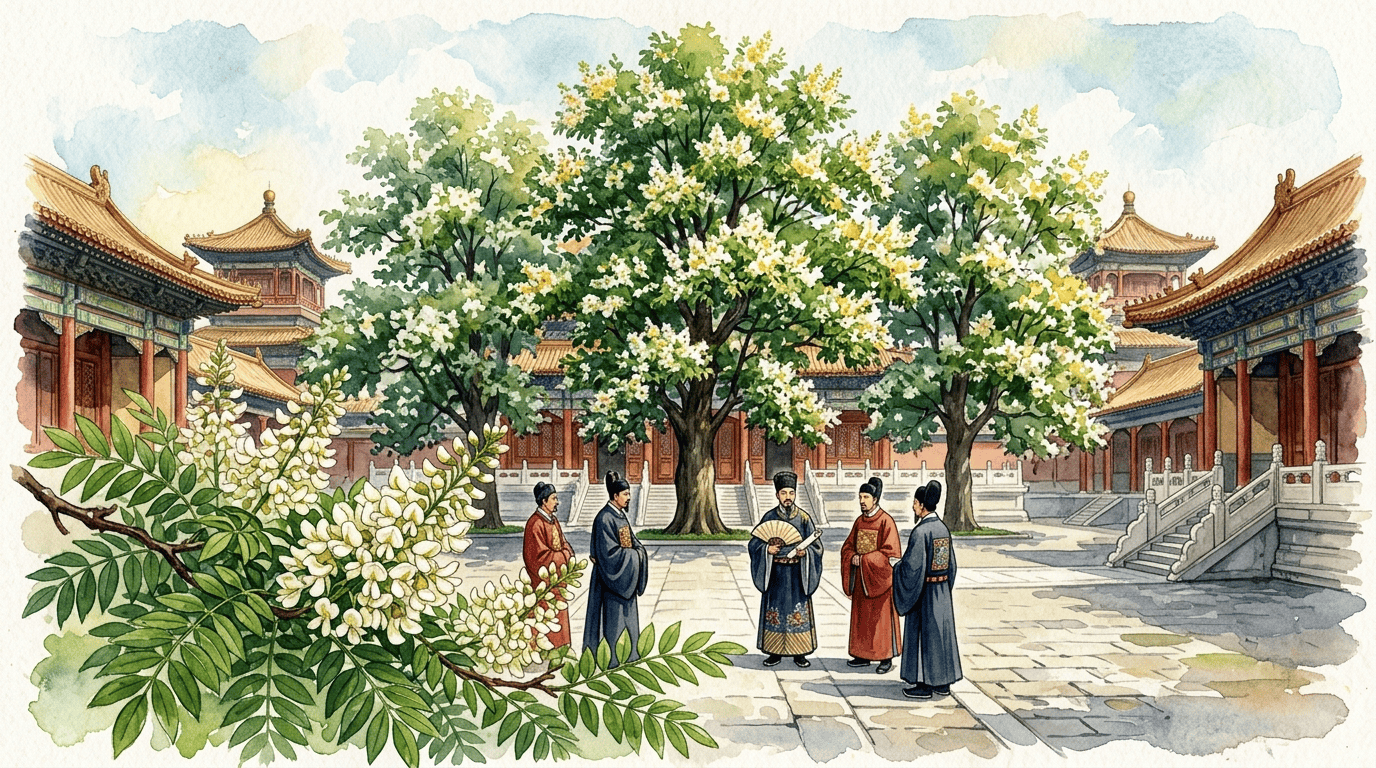
Styphnolobium japonicum (formerly Sophora japonica) is native to China and Korea; the specific epithet japonicum is misleading as it reflects 18th-century European misunderstanding of Asian plant origins. In Chinese culture the tree—called huai shu—carried deep significance: three huai trees were planted at imperial courts representing the Three Dukes of government, and huai appears throughout classical Chinese poetry and place names. French Jesuit Pierre Nicolas d'Incarville sent seeds from Beijing to Paris in 1747 alongside Koelreuteria, making it one of the earliest Chinese trees cultivated in Europe.
Its late-summer creamy-white 12-inch panicles fill a void when few trees bloom, and it tolerates urban pollution and compacted soil exceptionally well, becoming a major street tree in European and American cities. The cultivar 'Regent' was selected for faster growth and better form. Molecular data moved it from Sophora to Styphnolobium in 1995.
Long cultivated in China and Japan, traditionally planted near scholar's homes and temples—hence 'scholar tree'. The flower buds produce a yellow dye used historically in Imperial Chinese robes. Introduced to Europe in 1753 and widely planted in American cities from the 19th century onward.
Symbolism & meaning
What It Symbolizes
The Japanese Pagoda Tree is the scholar tree of East Asian tradition, planted near temples and academies as an emblem of wisdom. Endurance shapes its modern role too — it tolerates pollution and poor urban soils with rare patience, lining city streets where lesser trees fail. Its meaning gathers learning and toughness: a tree that has shaded both meditating monks and rumbling buses, carrying its quiet authority through every century.
- Wisdom — 'scholar tree' of East Asian tradition
- Endurance — tolerates pollution and poor urban soils
Where the Name Comes From
The name Japanese Pagoda Tree points to Japan. 'Styphnolobium' from Greek 'styphnos' (astringent) and 'lobion' (pod); 'japonicum' is misleading as it is native to China and Korea.
Uses & Fun Facts
- Late-summer cream flowers feed bees during nectar dearth
- Spreading canopy shades urban streets and lawns
- Tough late-blooming legume tree for tough city sites
Related plants
Plants with similar care
 Chinese AbeliaAbelia chinensis
 Fragrant AbeliaAbelia mosanensis
 Large-Flowered AbeliaAbelia uniflora
 Glossy AbeliaAbelia x grandiflora
Frequently asked questions
How often should I water Japanese Pagoda Tree?
Water about every 7 days during the growing season, and always let excess water drain away.
How much light does Japanese Pagoda Tree need?
Full sun: 6+ hrs direct. Watch the leaves — scorching or stretching means the light needs adjusting.
Is Japanese Pagoda Tree toxic to cats or dogs?
Pets Moderate (Dogs Moderate · Cats Moderate) Educational information, not medical or veterinary advice. If exposure is suspected, contact a doctor or veterinarian.
Is Japanese Pagoda Tree easy to grow?
Yes — it is considered an easy, beginner-friendly plant.
When does Japanese Pagoda Tree bloom?
It typically blooms Jul–Aug in the Northern Hemisphere.
YardMate
Identify any plant in seconds
Snap a photo — YardMate names the plant, diagnoses problems, and reminds you when to water.
Download on the App Store