 YardMate

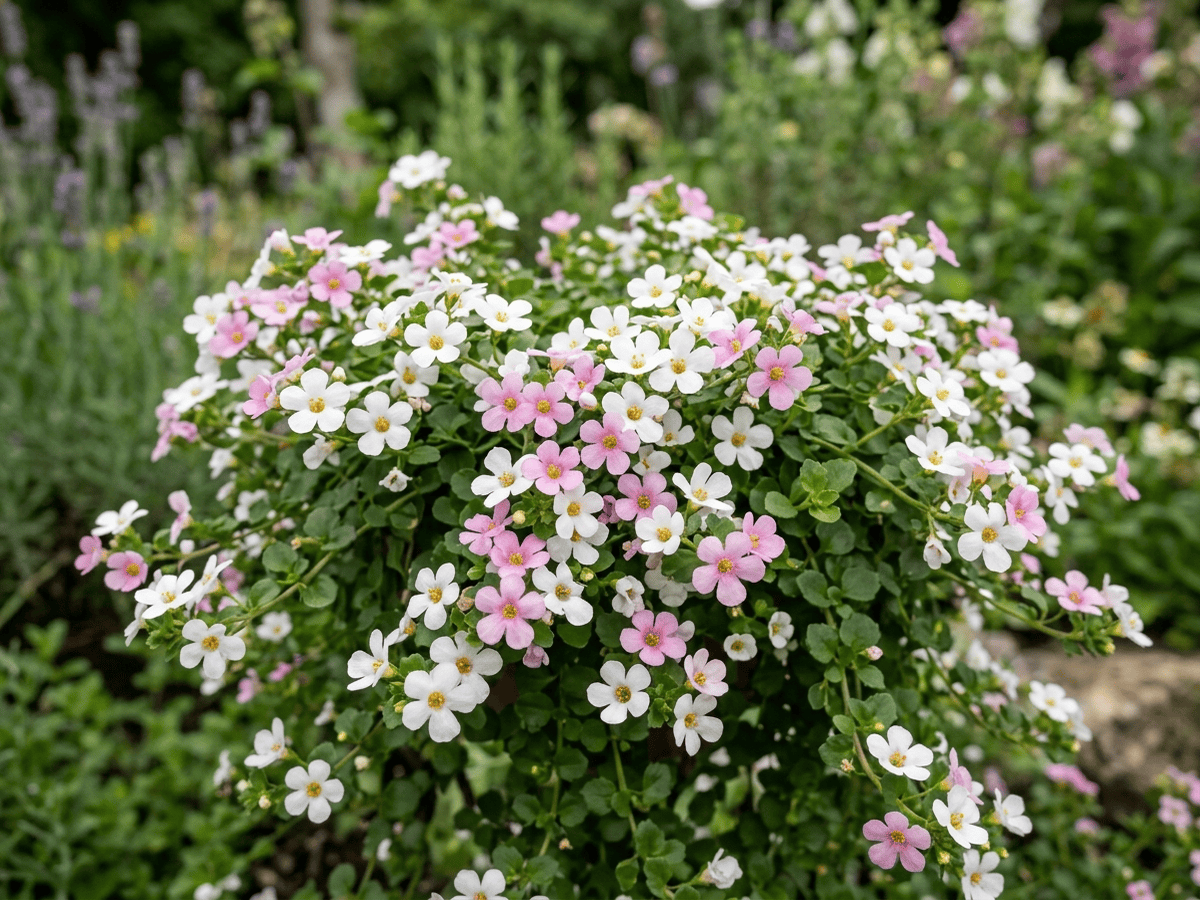


Bacopa
Sutera cordata
Medium · Some experienceAbout Bacopa
Bacopa is a trailing South African tender perennial grown as an annual in American containers, producing cascading stems covered in tiny five-petal white, pink, lavender, or blue flowers. Growing only 3 to 6 inches tall and trailing 12 to 24 inches, it acts as a delicate filler and spiller in mixed containers and hanging baskets, blooming continuously from spring through frost. A modern must-have for layered American container designs.
- Trailing
- Container-friendly
- Long-blooming
How to care for Bacopa
Watering
- Springevery 3 days
- Summerevery 2 days
- Fallevery 5 days
- Winterevery 7 days
Soil · Well-draining
- Top dressingPine bark mulch10%
- Main mixPotting soil + perlite 2:170%
- DrainageLECA / gravel20%
Never skip the drainage layer — standing water is the top cause of root rot.
FERTILIZER
Balanced Feed 14-14-14
An even feed covers all three needs at once, keeping leaves, roots and blooms moving together with nothing pushed out of balance.
- Nitrogen · Leaves
- Phosphorus · Roots + Blooms
- Potassium · Strength
- Springevery 14 days
- Summerevery 14 days
- Fallevery 30 days
At a Glance
- NativeAfrica
- Height0.3–0.5 ft (0.1–0.2 m)
- Spread1–2 ft (0.3–0.6 m)
- Flower colorWhite, Pink, Purple
- Foliage colorGreen
- SoilLoamy, Well-drained
- LocationsBalcony · Yard
Bloom time
BLOOM CYCLE
Peak bloom
Mar–Nov
Continuous tiny flowers spring to frost if kept moist
Toxicity
Toxicity unknown
None reported
Unknown
EXPOSURE Unspecified plant material.
EFFECT Toxic effects are not specified.
NOTE Toxicity for humans is not well documented; use caution until verified.
Unknown
EXPOSURE Unspecified plant material.
EFFECT Toxic effects are not specified.
NOTE Toxicity for dogs is not well documented; use caution until verified.
Unknown
EXPOSURE Unspecified plant material.
EFFECT Toxic effects are not specified.
NOTE Toxicity for cats is not well documented; use caution until verified.
Educational information, not medical or veterinary advice. If exposure is suspected, contact a doctor or veterinarian.
DISTRIBUTION


- Native
- Introduced
- Africa
History
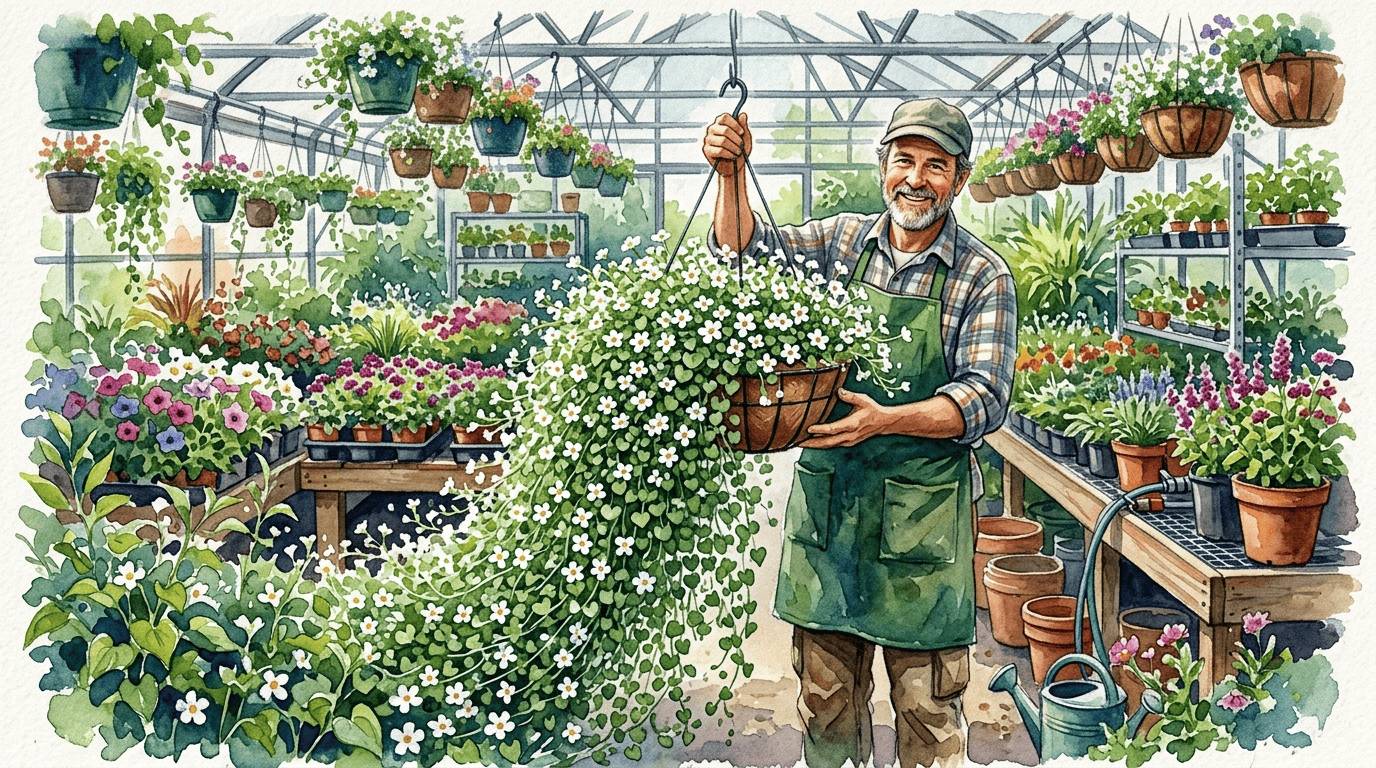
Sutera cordata, now more correctly classified as Chaenostoma cordatum, is a trailing perennial herb native to South Africa. Linnaeus the younger described the species in 1782. Its tiny white, pink, or lavender five-petaled flowers cover fine-textured heart-shaped leaves from spring through fall, providing soft airy fill for containers and hanging baskets.
Although long known to South African gardeners, the plant became a global bedding phenomenon only after Proven Winners released the vigorous Snowstorm series including Snowflake and Giant Snowflake in the late 1990s. Gardeners often call it bacopa, though true medicinal bacopa is an unrelated aquatic plant.
Recent taxonomic revisions moved the plant into Chaenostoma, but the nursery trade still markets it as Sutera or Bacopa for continuity. Native to South Africa, introduced to American container horticulture in the 1990s. Proven Winners' Snowstorm series launched in 1998 standardized it as a modern combo-planting essential, and it remains among the top-selling spillers at US garden centers each spring.
Symbolism & meaning
What It Symbolizes
Bacopa is gentle devotion in continuous miniature bloom, its delicate white or lavender flowers never quite stopping through a long warm season. In containers it provides delicate grace, softening bold thrillers and fillers with airy texture along the edges. In its quiet, persistent flowering, devotion is shown at the simplest scale: never-ending small kindnesses spilling over the rim.
- Gentle devotion — constant small blooms never stop
- Delicate grace — fine texture softens bold container plants
Where the Name Comes From
'Sutera' honors Swiss botanist Johann Rudolph Suter (1766-1827); 'cordata' from Latin means heart-shaped, for leaf outline. Commonly still sold as Bacopa.
Uses & Fun Facts
- Cascading spiller drapes baskets, window boxes, and mixed pots
- Tiny flowers add delicate filler to combination plantings
Related plants
Plants with similar care
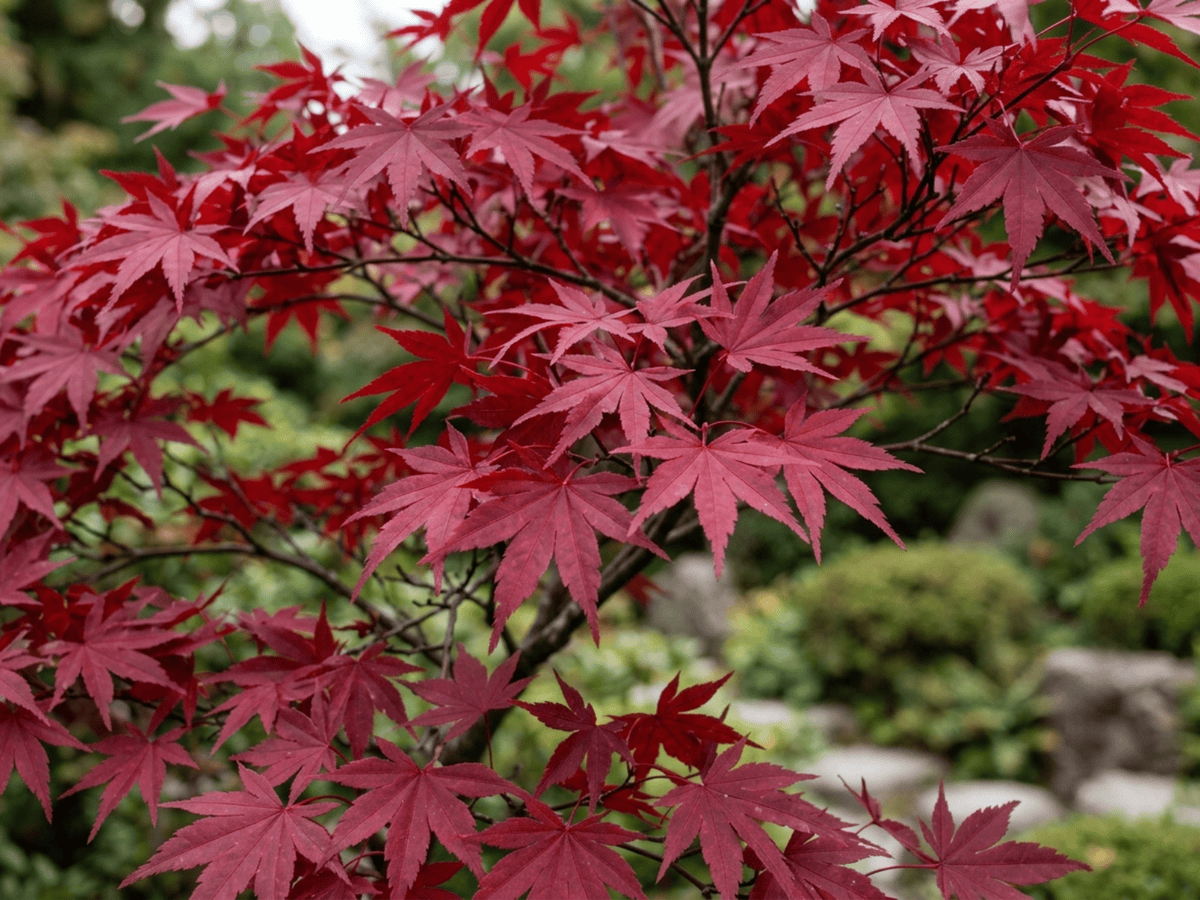 Japanese MapleAcer palmatum
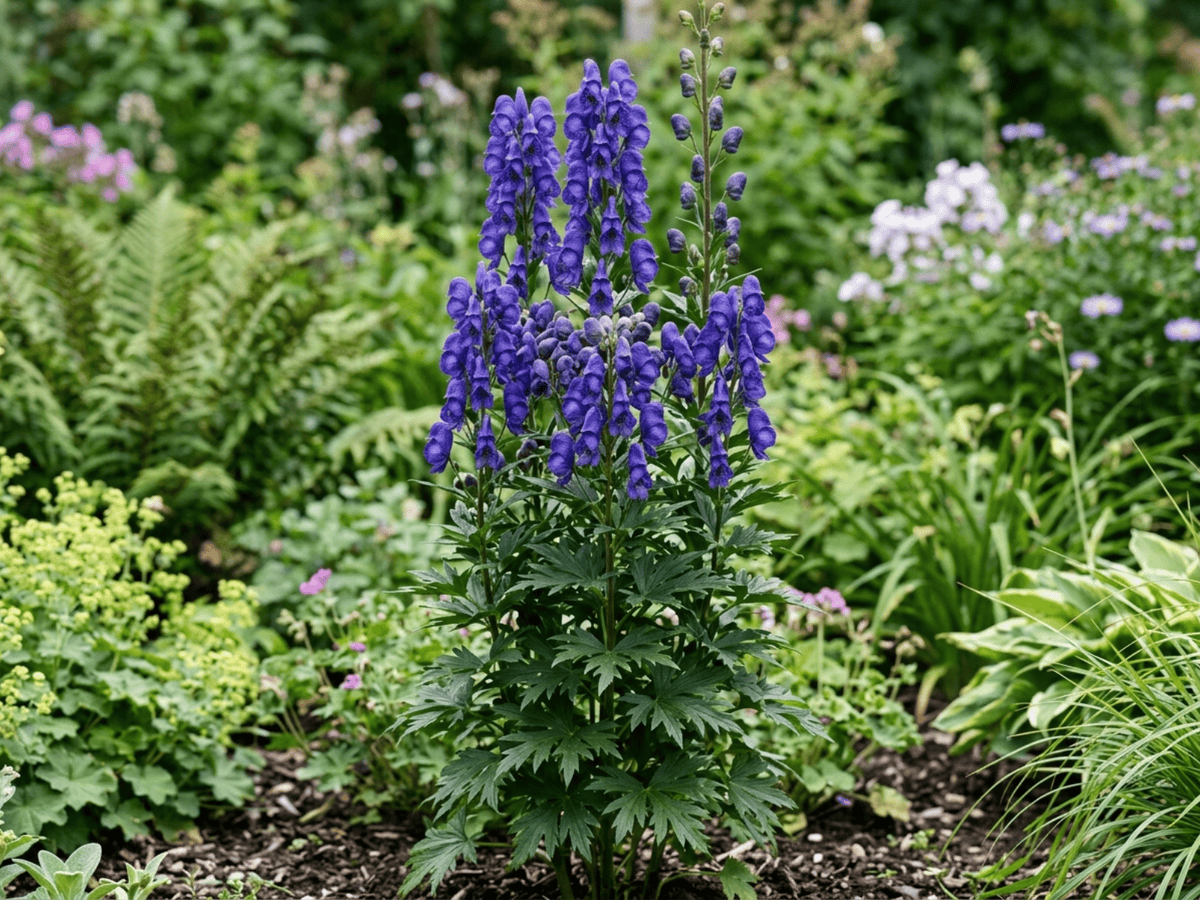 Azure MonkshoodAconitum carmichaelii
 Florida HobblebushAgarista populifolia
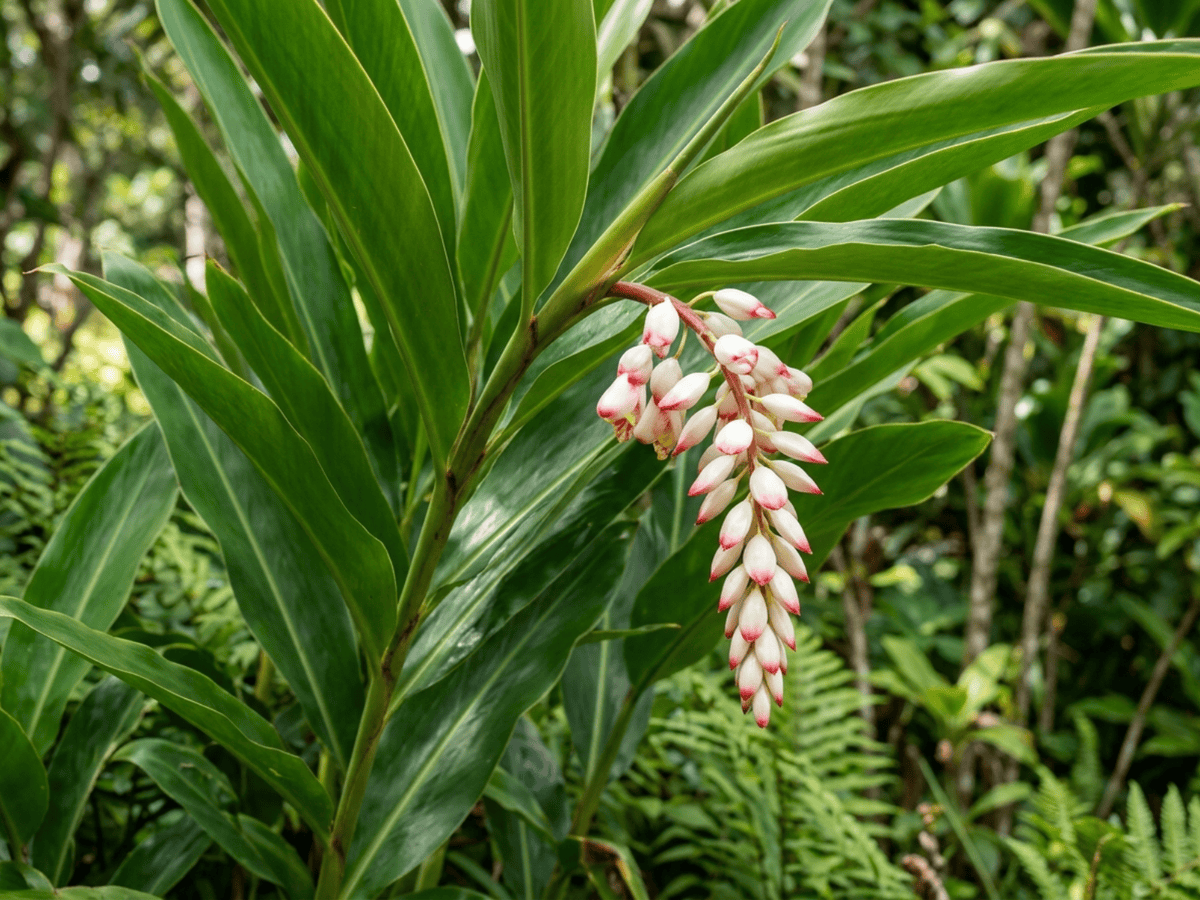 Shell GingerAlpinia zerumbet
Frequently asked questions
How often should I water Bacopa?
In summer, water about every 2 days; in winter, about every 7 days. Adjust for heat, pot size and drainage.
How much light does Bacopa need?
Part shade: 2–4 hrs direct. Watch the leaves — scorching or stretching means the light needs adjusting.
Is Bacopa toxic to cats or dogs?
Pets Unknown (Dogs Unknown · Cats Unknown) Educational information, not medical or veterinary advice. If exposure is suspected, contact a doctor or veterinarian.
Is Bacopa easy to grow?
It is moderately demanding: a good choice once you have a little experience.
When does Bacopa bloom?
It typically blooms Mar–Nov in the Northern Hemisphere.
YardMate
Identify any plant in seconds
Snap a photo — YardMate names the plant, diagnoses problems, and reminds you when to water.
Download on the App Store