 YardMate


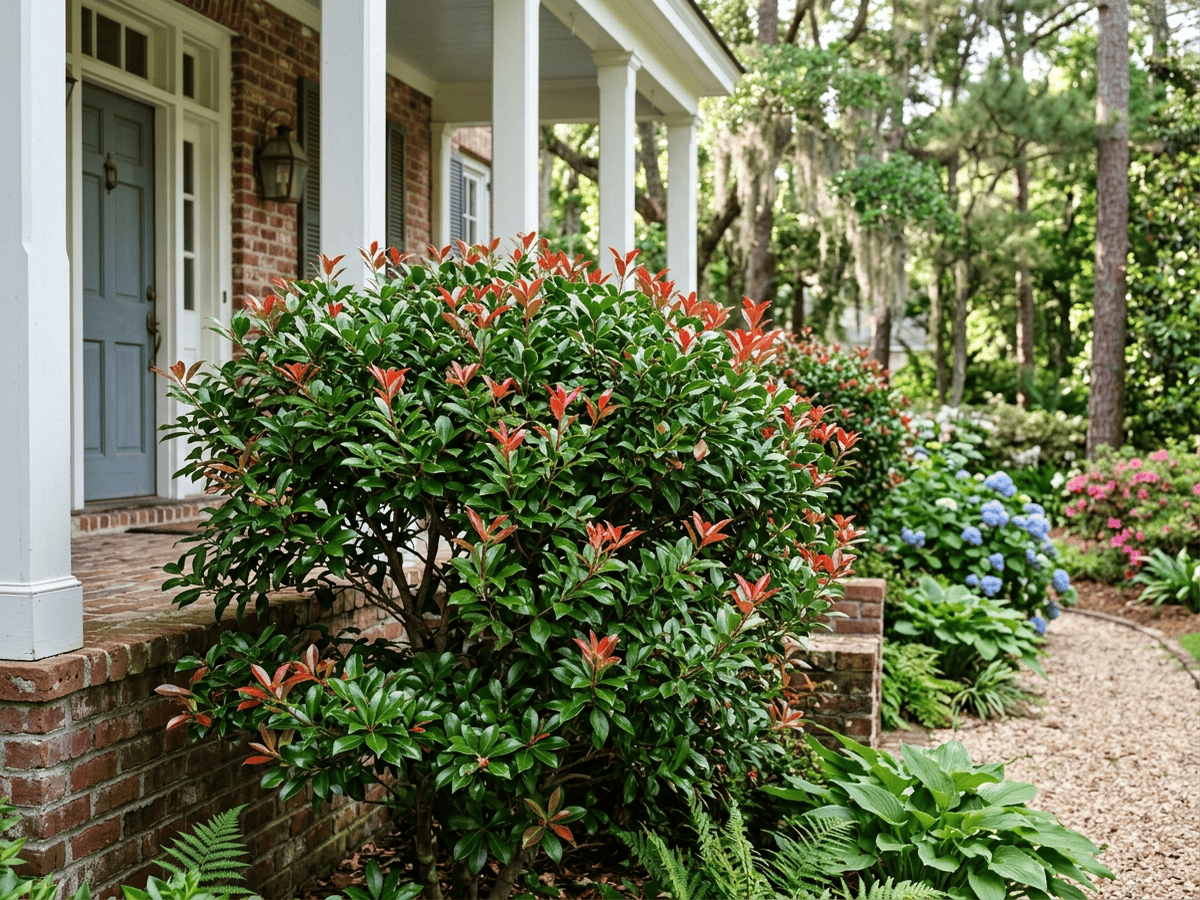
Japanese Ternstroemia
Ternstroemia gymnanthera
Easy · Beginner friendlyAbout Japanese Ternstroemia
Ternstroemia, often called Japanese Cleyera in the Southern US nursery trade, is a handsome evergreen shrub reaching 8-12 feet with whorled leathery dark green leaves that emerge bronze-red and turn burgundy in cool weather. Small fragrant creamy flowers in summer are followed by red berries. A tough, drought-tolerant, and pest-resistant evergreen widely used as a foundation shrub or hedge throughout the Southeast US.
- Low-maintenance
- Drought-tolerant
- Heat-tolerant
- Evergreen
How to care for Japanese Ternstroemia
Watering
- Springevery 7 days
- Summerevery 5 days
- Fallevery 10 days
- Winterevery 21 days
Soil · Acidic · pH 4.5–6
- Top dressingPine needle mulch10%
- Main mixAcid-lover mix + peat 3:175%
- DrainageGravel15%
Never add lime or wood ash — it cancels out the acidity.
FERTILIZER
Balanced Feed 14-14-14
An even feed covers all three needs at once, keeping leaves, roots and blooms moving together with nothing pushed out of balance.
- Nitrogen · Leaves
- Phosphorus · Roots + Blooms
- Potassium · Strength
- Springevery 30 days
At a Glance
- NativeEast Asia
- Height8–15 ft (2.4–4.6 m)
- Spread6–10 ft (1.8–3 m)
- Flower colorCream, White, Yellow
- Foliage colorGreen, Dark-green, Red, Bronze
- Fruit colorRed
- SoilLoamy, Well-drained, Acidic
- LocationsYard
Bloom time
BLOOM CYCLE
Peak bloom
Jun–Jul
Small cream fragrant flowers June to July
Fragrance
MODERATE FRAGRANCE
The flowers have a sweet honey-jasmine fragrance.
Toxicity
No toxicity has been reported for this plant. Still, it is wise to keep pets from chewing on any houseplant.
Educational information, not medical or veterinary advice. If exposure is suspected, contact a doctor or veterinarian.
DISTRIBUTION


- Native
- Introduced
- East Asia
History
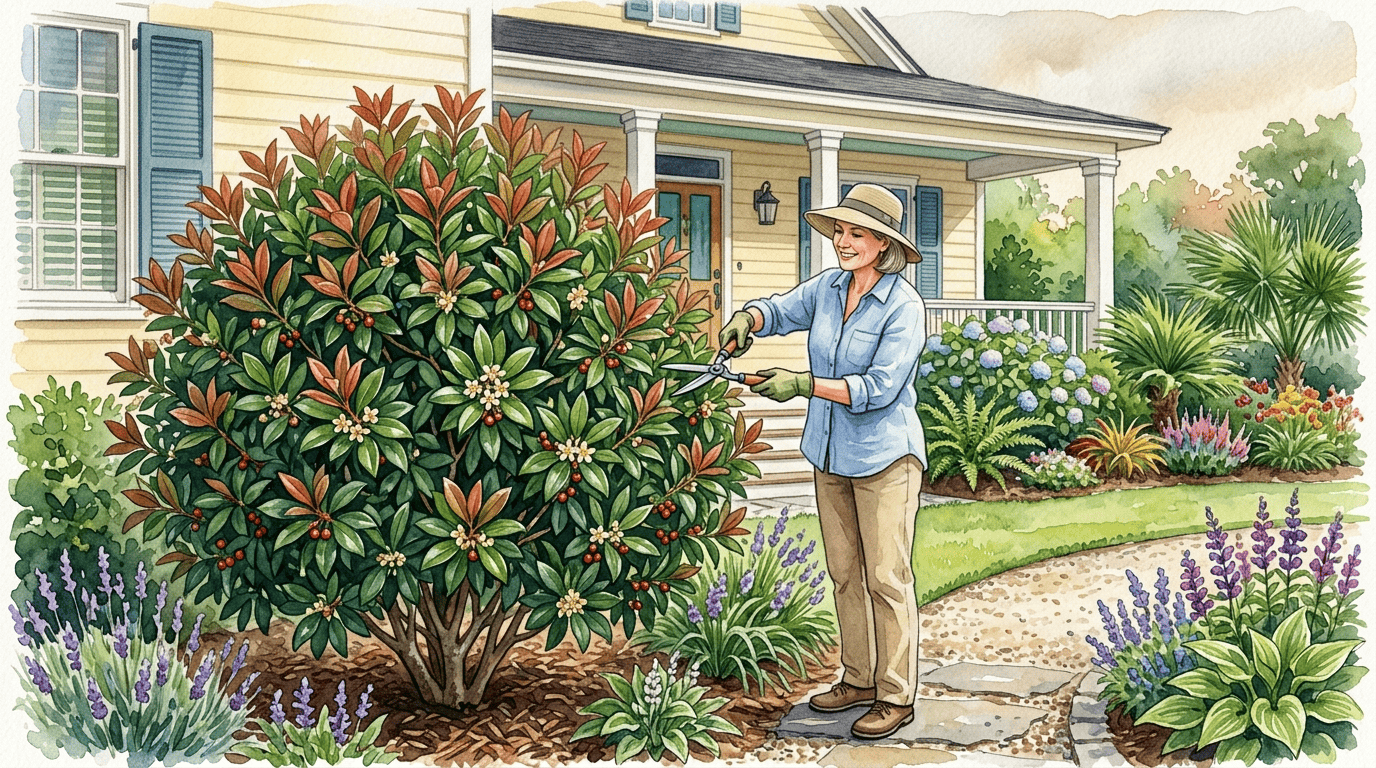
Ternstroemia gymnanthera is native to southern Japan (Kyushu and the Ryukyu Islands), southern Korea, China, Taiwan, and much of Southeast Asia. English botanist Thomas Archibald Sprague formalized the current name. The genus Ternstroemia honors Swedish naturalist Christoffer Tärnström, an 18th-century student of Linnaeus.
In the North American southeastern landscape trade the species is sold as Cleyera japonica, though taxonomically the two species are distinct and belong to different families (Ternstroemia in Pentaphylacaceae, Cleyera in Pentaphylacaceae—though these and Theaceae affinities have been long debated). True C. japonica is rarely grown commercially in the US. Ternstroemia forms a dense rounded evergreen shrub or small tree to 3-5 meters with bronzy-red new growth turning dark glossy green at maturity, small fragrant cream flowers in early summer, and red berries in fall.
The species tolerates heat, humidity, and poor soils extremely well, explaining its popularity throughout the humid southeastern United States as a foundation shrub, hedge, and small tree. A longtime Southern US landscape staple for heat and humidity tolerance, now so ubiquitous around Southern homes that it has become a regional signature foundation shrub. Native from Japan and China, it adapted superbly to Gulf Coast conditions.
Symbolism & meaning
What It Symbolizes
Japanese Ternstroemia is steadfastness through the Southern year, holding its glossy color through brutal heat and humidity that defeats softer evergreens. Each winter it transforms, burgundy tones replacing summer green in a quiet seasonal metamorphosis. In its calm, unbroken presence lies a year-round backbone for gardens that ask shrubs to work hard.
- Steadfastness — year-round color in Southern heat
- Transformation — burgundy winter foliage contrasts with green summer
Where the Name Comes From
The name Japanese Ternstroemia points to Japan. Genus honors Swedish botanist Christopher Ternstroem; 'gymnanthera' means naked anthers.
Uses & Fun Facts
- Dense evergreen shrub shears reliably into Southern formal hedges
- Bronze new growth and burgundy winter color anchor entryways
- Tough heat-tolerant foundation shrub for hot Southern landscapes
Related plants
Plants with similar care
 Chinese AbeliaAbelia chinensis
 Fragrant AbeliaAbelia mosanensis
 Large-Flowered AbeliaAbelia uniflora
 Glossy AbeliaAbelia x grandiflora
Frequently asked questions
How often should I water Japanese Ternstroemia?
In summer, water about every 5 days; in winter, about every 21 days. Adjust for heat, pot size and drainage.
How much light does Japanese Ternstroemia need?
Full sun: 6+ hrs direct. Watch the leaves — scorching or stretching means the light needs adjusting.
Is Japanese Ternstroemia toxic to cats or dogs?
No toxicity has been reported for this plant. Still, it is wise to keep pets from chewing on any houseplant. Educational information, not medical or veterinary advice. If exposure is suspected, contact a doctor or veterinarian.
Is Japanese Ternstroemia easy to grow?
Yes — it is considered an easy, beginner-friendly plant.
When does Japanese Ternstroemia bloom?
It typically blooms Jun–Jul in the Northern Hemisphere.
YardMate
Identify any plant in seconds
Snap a photo — YardMate names the plant, diagnoses problems, and reminds you when to water.
Download on the App Store