 YardMate


Red Sunflower
Tithonia rotundifolia
Easy · Beginner friendlyAbout Red Sunflower
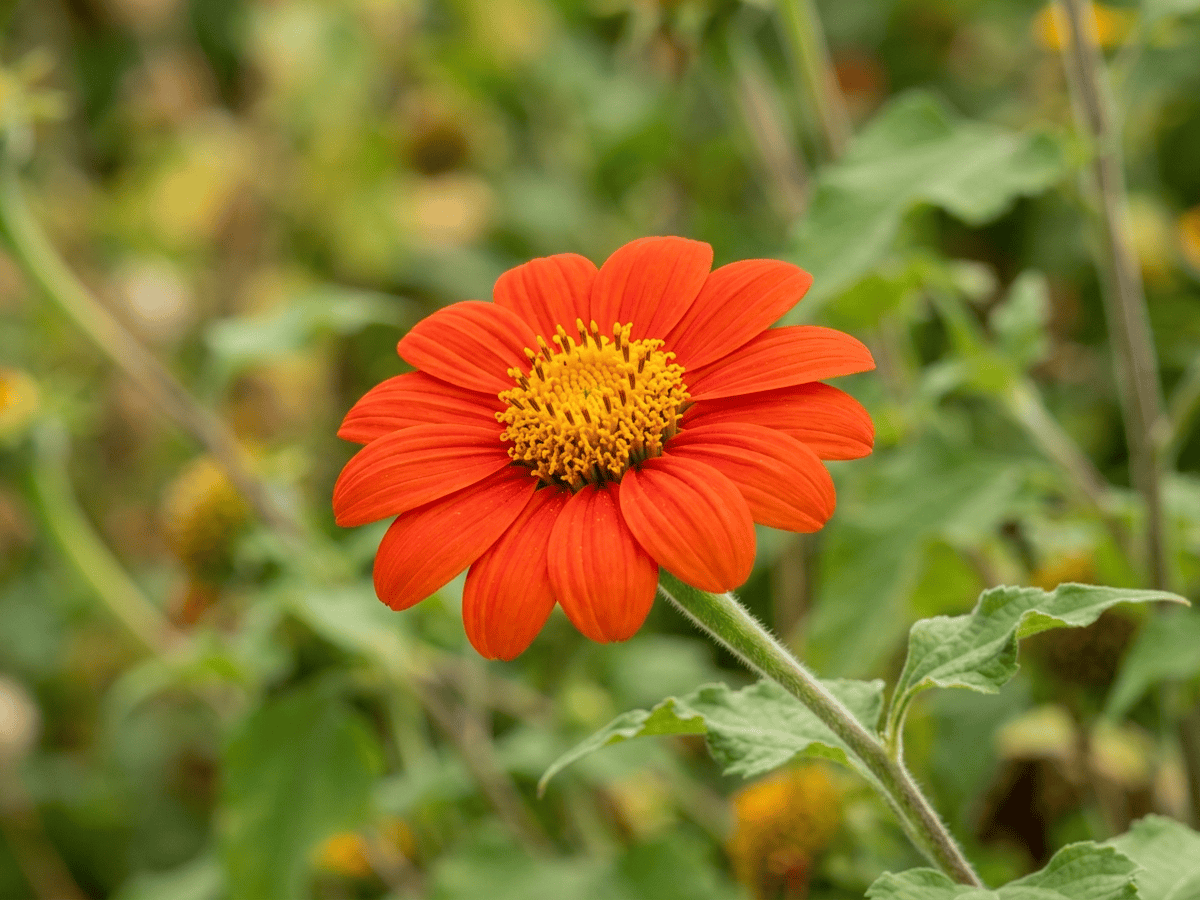
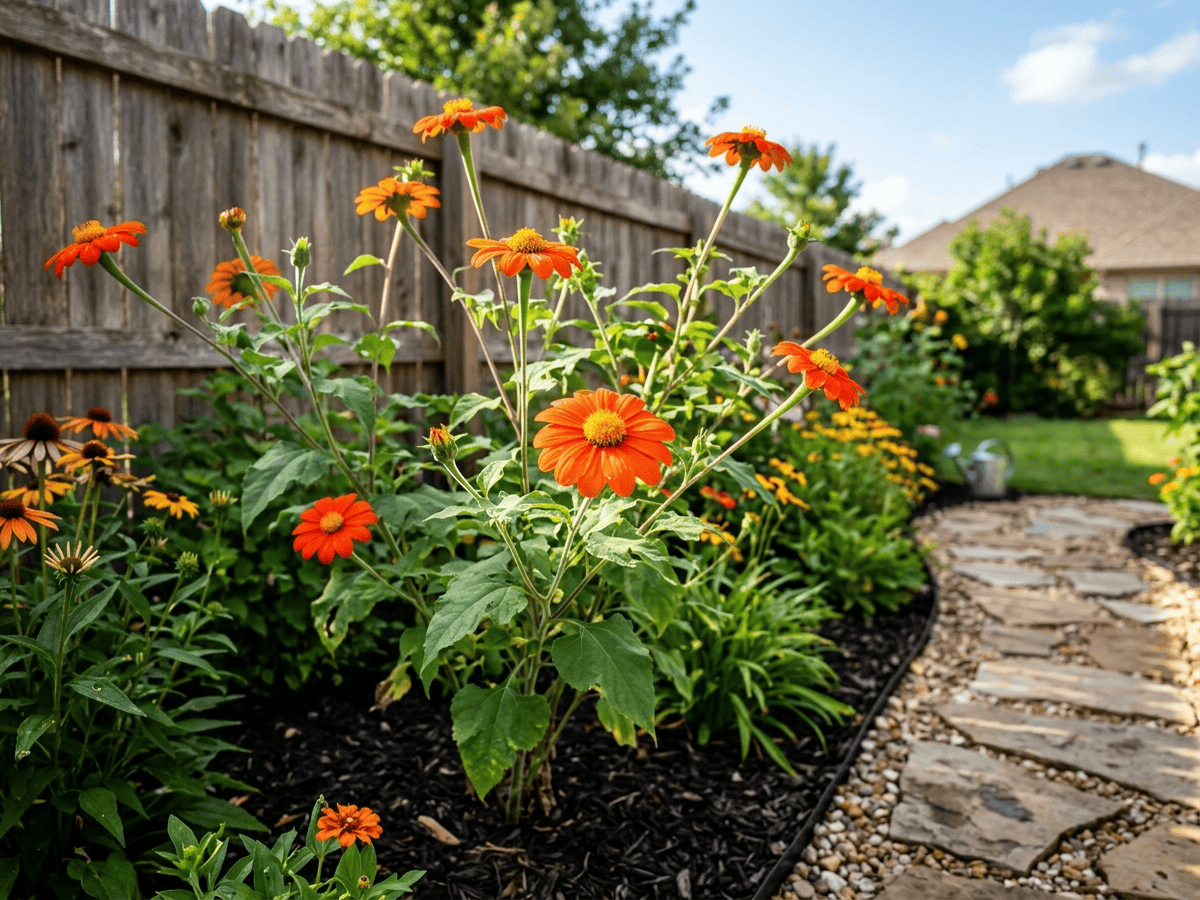
Mexican Sunflower is a spectacular Mexican annual producing brilliant orange-red 3-inch daisy flowers on 4 to 6 foot branching plants, a tropical powerhouse that draws butterflies and hummingbirds all summer. Heat and drought tolerant, blooming from midsummer through frost. 'Torch' is the iconic Mexican sunflower cultivar, and 'Fiesta del Sol' is a compact AAS-winning dwarf version.
- Cut-flower
- Drought-tolerant
- Heat-tolerant
- Pollinator-friendly
How to care for Red Sunflower
Watering
- Springevery 5 days
- Summerevery 4 days
- Fallevery 7 days
- Winterpause watering
Soil · Well-draining
- Top dressingPine bark mulch10%
- Main mixPotting soil + perlite 2:170%
- DrainageLECA / gravel20%
Never skip the drainage layer — standing water is the top cause of root rot.
FERTILIZER
Balanced Feed 14-14-14
An even feed covers all three needs at once, keeping leaves, roots and blooms moving together with nothing pushed out of balance.
- Nitrogen · Leaves
- Phosphorus · Roots + Blooms
- Potassium · Strength
- Springevery 30 days
- Summerevery 30 days
At a Glance
- NativeNorth America, Central America
- Height4–6 ft (1.2–1.8 m)
- Spread3–4 ft (0.9–1.2 m)
- Flower colorOrange, Red, Yellow
- Foliage colorGreen
- SoilLoamy, Well-drained
- LocationsYard
Bloom time
BLOOM CYCLE
Peak bloom
Jul–Nov
Vivid orange daisies July to frost
Fragrance
LIGHT FRAGRANCE
Slight resinous scent when foliage bruised.
Toxicity
No toxicity has been reported for this plant. Still, it is wise to keep pets from chewing on any houseplant.
Educational information, not medical or veterinary advice. If exposure is suspected, contact a doctor or veterinarian.
DISTRIBUTION

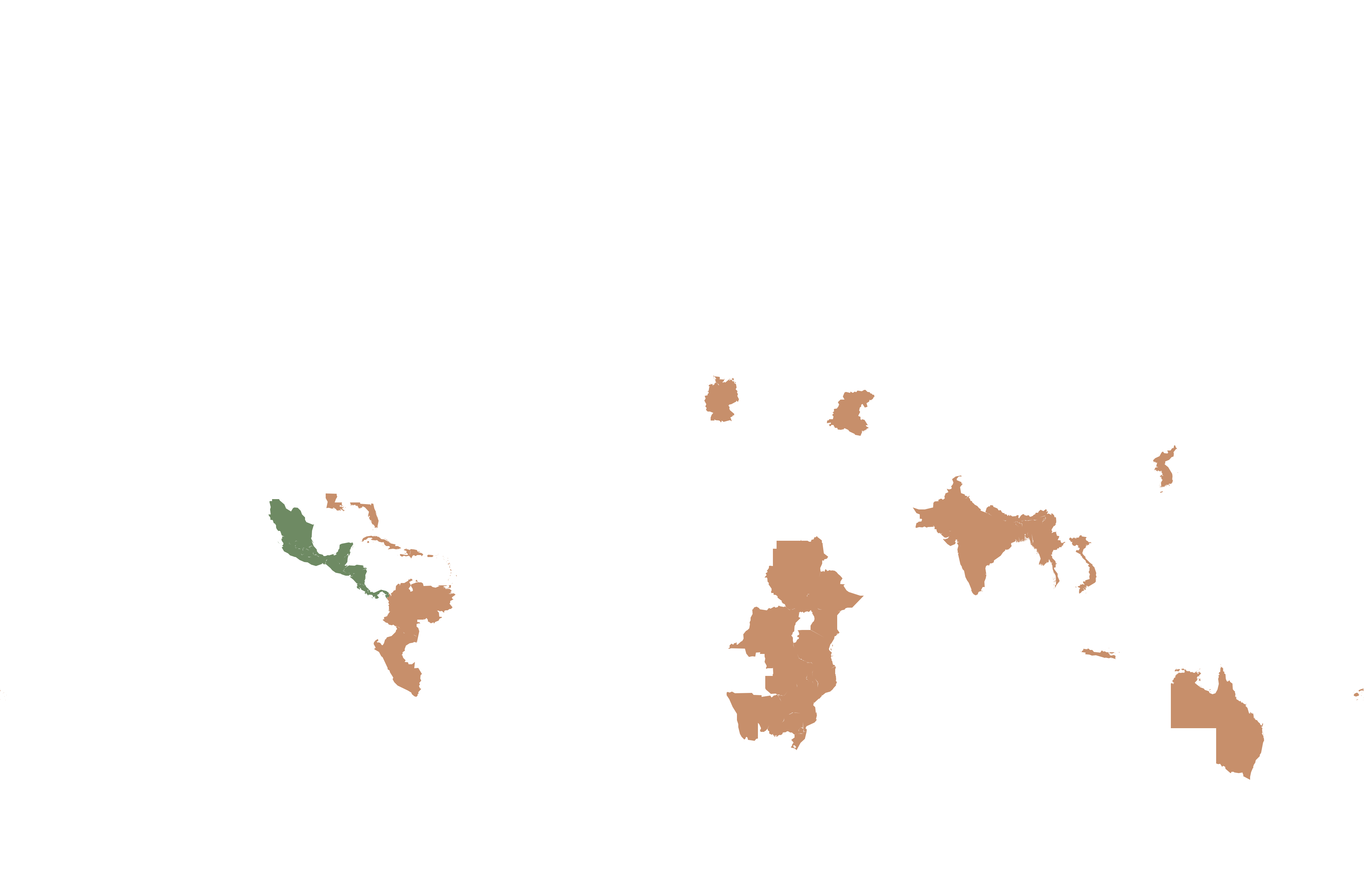
- Native
- Introduced
- North America
- Central America
History
Tithonia rotundifolia, the Mexican sunflower, is a tall herbaceous annual native to Mexico and Central America, where it grows along roadsides and in disturbed soils from sea level to mountain plateaus. Spanish explorers likely encountered it during early colonial expeditions, and French botanist Sébastien Vaillant established the genus Tithonia in 1721, naming it for the mythological Trojan prince Tithonus. The plant reaches two meters tall and bears brilliant orange to red-orange daisy flowers with yellow centers from midsummer through frost.
Modern dwarf cultivars including Torch, Fiesta del Sol, and Goldfinger have made the species accessible to small gardens. 'Torch' became a 1951 All-America Selections winner, launching it as a hot-color cutting-garden standard.
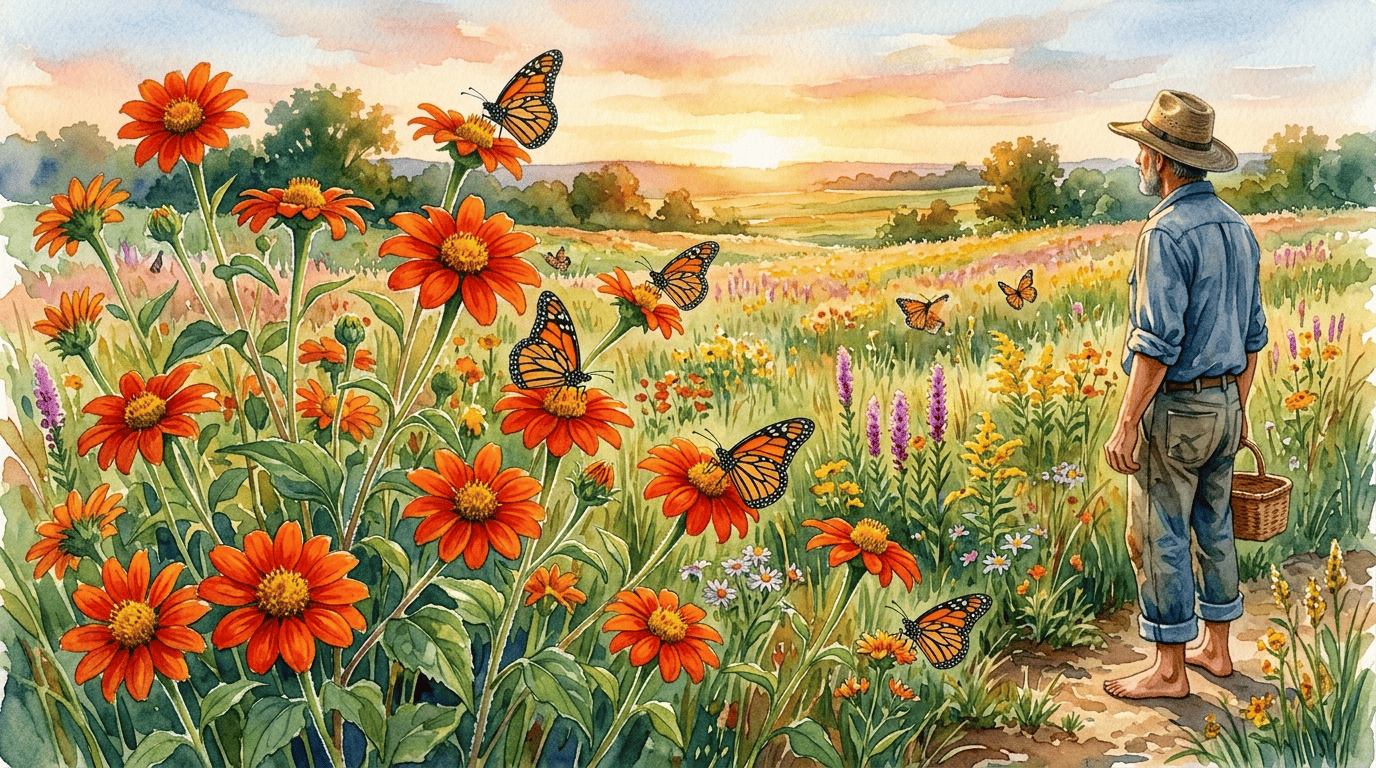
Critical nectar source for migrating monarchs in late summer and fall across the American Midwest and Southeast. Monarch butterflies migrating south to Michoacán wintering sites rely heavily on Mexican sunflower nectar as they cross the US heartland, making it a fall pollinator hero.
Symbolism & meaning
What It Symbolizes
The Mexican Sunflower expresses fiery devotion, named for Tithonus the immortal lover of classical myth — a flame of orange burning at the late-summer border. Paired with monarch fuel, it is a critical fall nectar source for butterflies migrating south, fueling their long crossing. It is a flower whose meaning is sustained passion in two registers: mythic love and very real, very urgent wings.
- Fiery devotion — flames of Tithonus the immortal lover
- Monarch fuel — critical fall migration nectar
Where the Name Comes From
The common name highlights its red coloring. 'Tithonia' honors Tithonus, Greek mythological lover of dawn goddess Eos; 'rotundifolia' means round-leaved.
Uses & Fun Facts
- Vivid orange Mexican sunflowers brilliant in late-summer bouquets
- Brilliant orange flowers magnetic to migrating monarch butterflies
- Ripening sunflower heads offer seed for birds and late-season wildlife
- Towering orange daisies bring tropical heat to back of border
Related plants
Plants with similar care
 Chinese AbeliaAbelia chinensis
 Fragrant AbeliaAbelia mosanensis
 Large-Flowered AbeliaAbelia uniflora
 Glossy AbeliaAbelia x grandiflora
Frequently asked questions
How often should I water Red Sunflower?
Water about every 5 days during the growing season, and always let excess water drain away.
How much light does Red Sunflower need?
Full sun: 6+ hrs direct. Watch the leaves — scorching or stretching means the light needs adjusting.
Is Red Sunflower toxic to cats or dogs?
No toxicity has been reported for this plant. Still, it is wise to keep pets from chewing on any houseplant. Educational information, not medical or veterinary advice. If exposure is suspected, contact a doctor or veterinarian.
Is Red Sunflower easy to grow?
Yes — it is considered an easy, beginner-friendly plant.
When does Red Sunflower bloom?
It typically blooms Jul–Nov in the Northern Hemisphere.
YardMate
Identify any plant in seconds
Snap a photo — YardMate names the plant, diagnoses problems, and reminds you when to water.
Download on the App Store