 YardMate


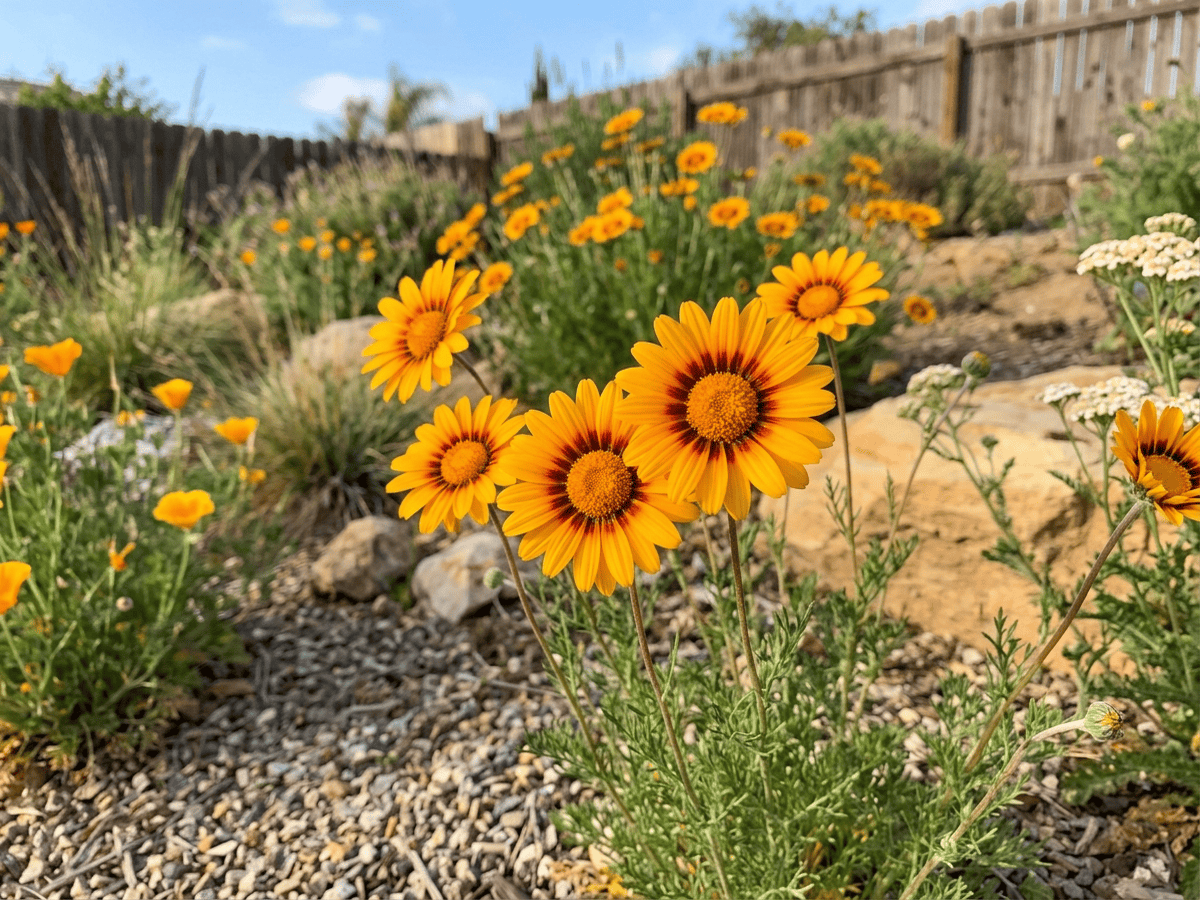
Star Of The Veldt
Ursinia anthemoides
Easy · Beginner friendlyAbout Star Of The Veldt
Jewel of the Veldt is a South African annual producing 2-inch orange, yellow, or peach daisy flowers with distinctive dark purple ring zones around the centers. Growing 10 to 18 inches tall with finely divided aromatic foliage, it blooms from spring through summer and thrives in hot dry conditions. A choice specialty annual for American xeric gardens and as a colorful alternative to African daisies.
- Fragrant
- Drought-tolerant
- Heat-tolerant
- Pollinator-friendly
How to care for Star Of The Veldt
Watering
- Springevery 5 days
- Summerevery 10 days
- Fallevery 7 days
- Winterevery 10 days
Soil · Well-draining
- Top dressingPine bark mulch10%
- Main mixPotting soil + perlite 2:170%
- DrainageLECA / gravel20%
Never skip the drainage layer — standing water is the top cause of root rot.
FERTILIZER
- Springevery 30 days
- Fallevery 30 days
At a Glance
- NativeAfrica
- Height1–2 ft (0.3–0.6 m)
- Spread0.5–1 ft (0.2–0.3 m)
- Flower colorOrange, Yellow, Red
- Foliage colorGreen
- SoilSandy, Well-drained
- LocationsYard
Bloom time
BLOOM CYCLE
Peak bloom
Mar–Aug
Orange daisies with dark eyes spring to summer
Toxicity
Toxicity unknown
None reported
Unknown
EXPOSURE Unspecified plant material.
EFFECT Toxic effects are not specified.
NOTE Toxicity for humans is not well documented; use caution until verified.
Unknown
EXPOSURE Unspecified plant material.
EFFECT Toxic effects are not specified.
NOTE Toxicity for dogs is not well documented; use caution until verified.
Unknown
EXPOSURE Unspecified plant material.
EFFECT Toxic effects are not specified.
NOTE Toxicity for cats is not well documented; use caution until verified.
Educational information, not medical or veterinary advice. If exposure is suspected, contact a doctor or veterinarian.
DISTRIBUTION

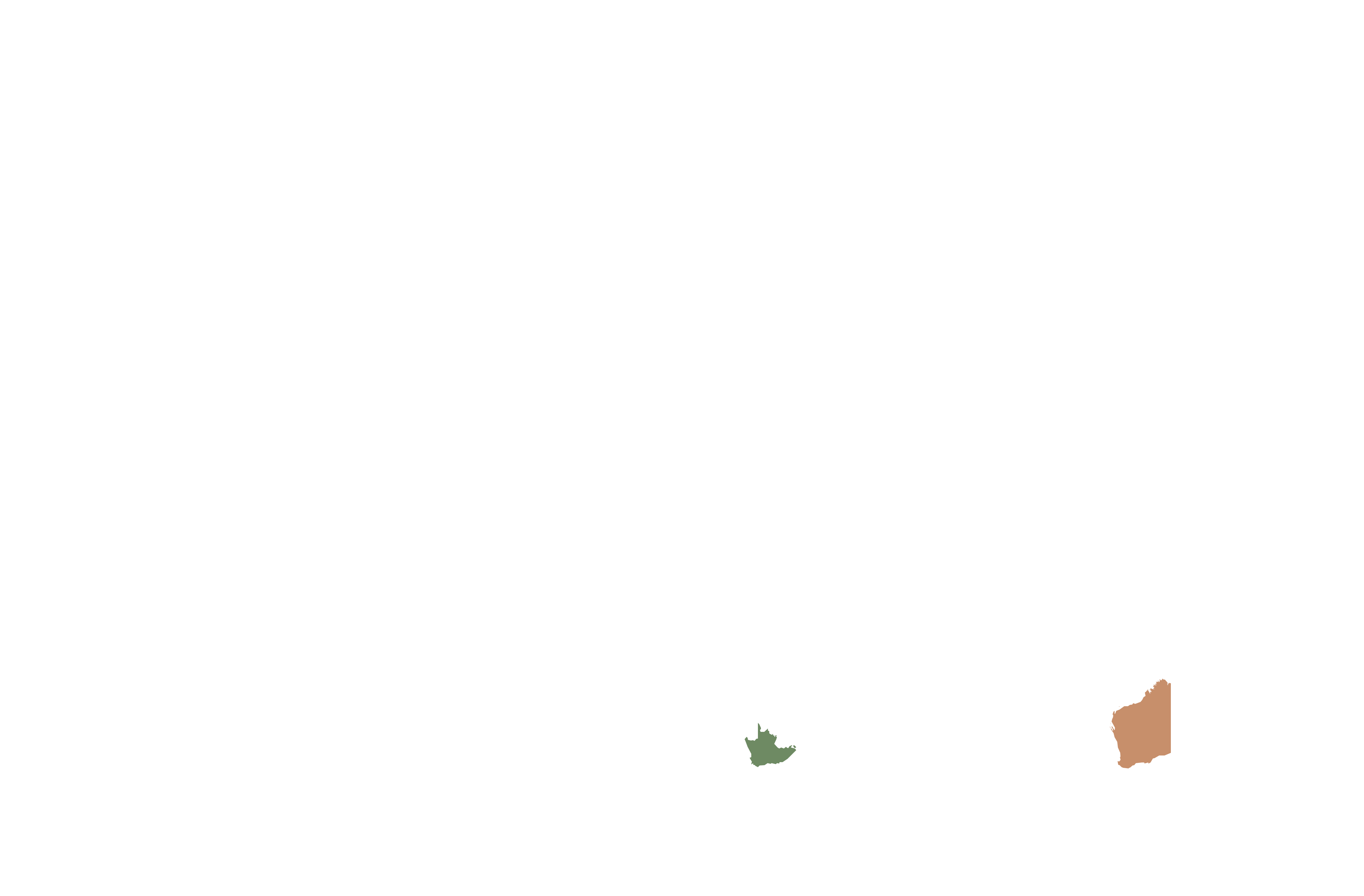
- Native
- Introduced
- Africa
History
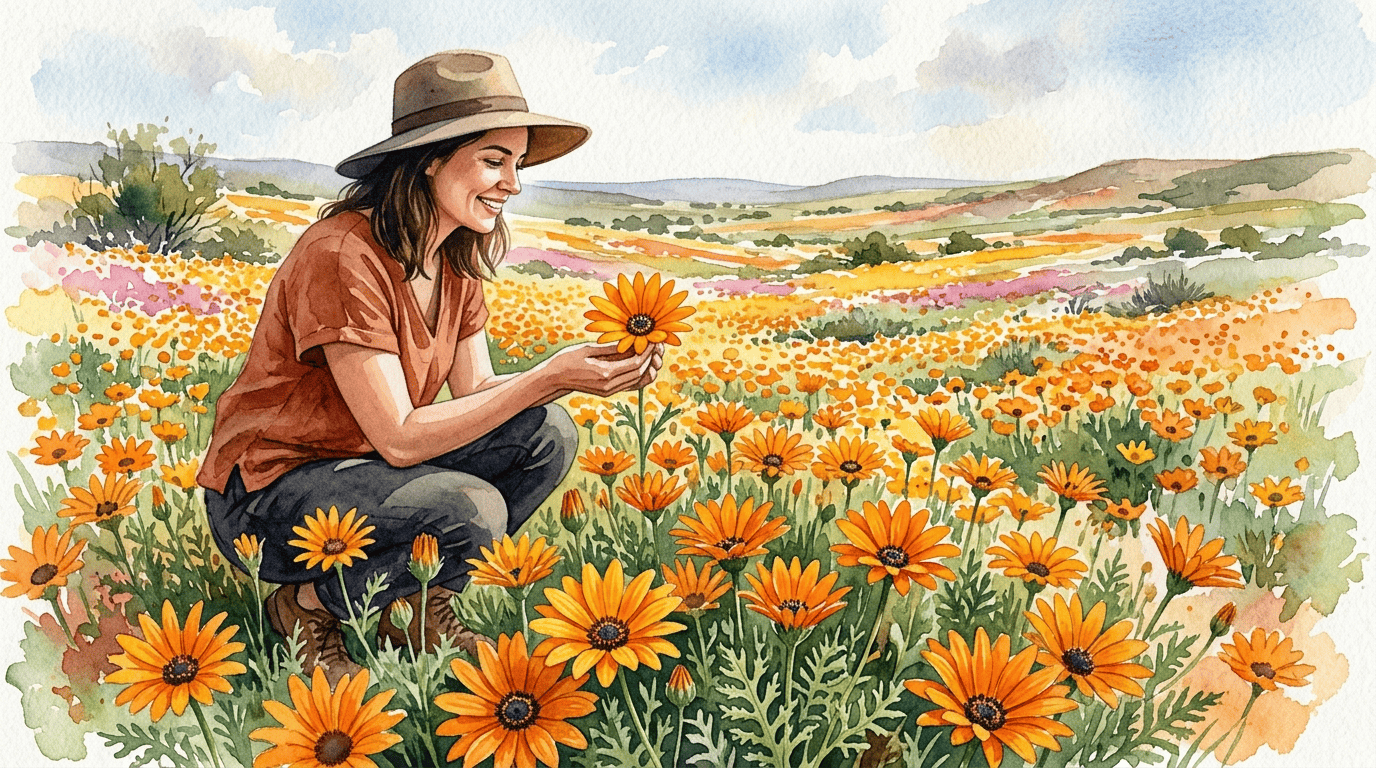
Ursinia anthemoides, the Namaqua parachute daisy, common dill-leaf, or lace-leaf ursinia, is a showy annual native to the winter-rainfall regions of South Africa, particularly Namaqualand and the Western Cape. The genus Ursinia honors 17th-century German botanist Johann Heinrich Ursinus, established by French naturalist Philibert Commerson in 1767. The plant produces finely divided fern-like foliage and orange to yellow daisy flowers with dark centers, often carpeting Namaqualand fields alongside Dimorphotheca sinuata during the famous August and September wildflower season.
European seed houses introduced the species to ornamental horticulture in the 18th century, and it remains a cool-season cottage garden and Mediterranean bedding annual. Cultivars such as Solar Fire and Sunburst offer warmer red and orange tones.
Native to South Africa's Cape region, introduced to English gardens in the early 1800s and reached American specialty seed catalogs in the mid-20th century. Still a niche specialty annual valued by drought-garden enthusiasts and veld-style planting designers.
Symbolism & meaning
What It Symbolizes
Star Of The Veldt carries hidden depth, its sunny orange or yellow petals encircling a dark inner ring that gives each flower an unexpected eye of mystery. It is also a veldt jewel, embodying the brilliant colors of the African grassland where it evolved among other wildflower stars. It is often read as a flower of bright surprise, an annual whose meaning is the small interior darkness behind even the cheeriest face, and the way that contrast deepens beauty rather than diminishing it.
- Hidden depth — dark ring contrasts sunny petals
- Veldt jewel — brilliant colors of African grassland
Where the Name Comes From
'Ursinia' honors Johannes Heinrich Ursinus (1608-1667), German botanist; 'anthemoides' means resembling Anthemis (chamomile).
Uses & Fun Facts
- Dark-ringed orange daisies brighten hot dry borders
- Finely divided foliage releases aromatic scent
- Open daisy faces feed bees and beneficial insects
Related plants
Plants with similar care
 Chinese AbeliaAbelia chinensis
 Fragrant AbeliaAbelia mosanensis
 Large-Flowered AbeliaAbelia uniflora
 Glossy AbeliaAbelia x grandiflora
Frequently asked questions
How often should I water Star Of The Veldt?
In summer, water about every 10 days; in winter, about every 10 days. Adjust for heat, pot size and drainage.
How much light does Star Of The Veldt need?
Full sun: 6+ hrs direct. Watch the leaves — scorching or stretching means the light needs adjusting.
Is Star Of The Veldt toxic to cats or dogs?
Pets Unknown (Dogs Unknown · Cats Unknown) Educational information, not medical or veterinary advice. If exposure is suspected, contact a doctor or veterinarian.
Is Star Of The Veldt easy to grow?
Yes — it is considered an easy, beginner-friendly plant.
When does Star Of The Veldt bloom?
It typically blooms Mar–Aug in the Northern Hemisphere.
YardMate
Identify any plant in seconds
Snap a photo — YardMate names the plant, diagnoses problems, and reminds you when to water.
Download on the App Store