 YardMate


Great Mullein
Verbascum thapsus
Easy · Beginner friendlyAbout Great Mullein
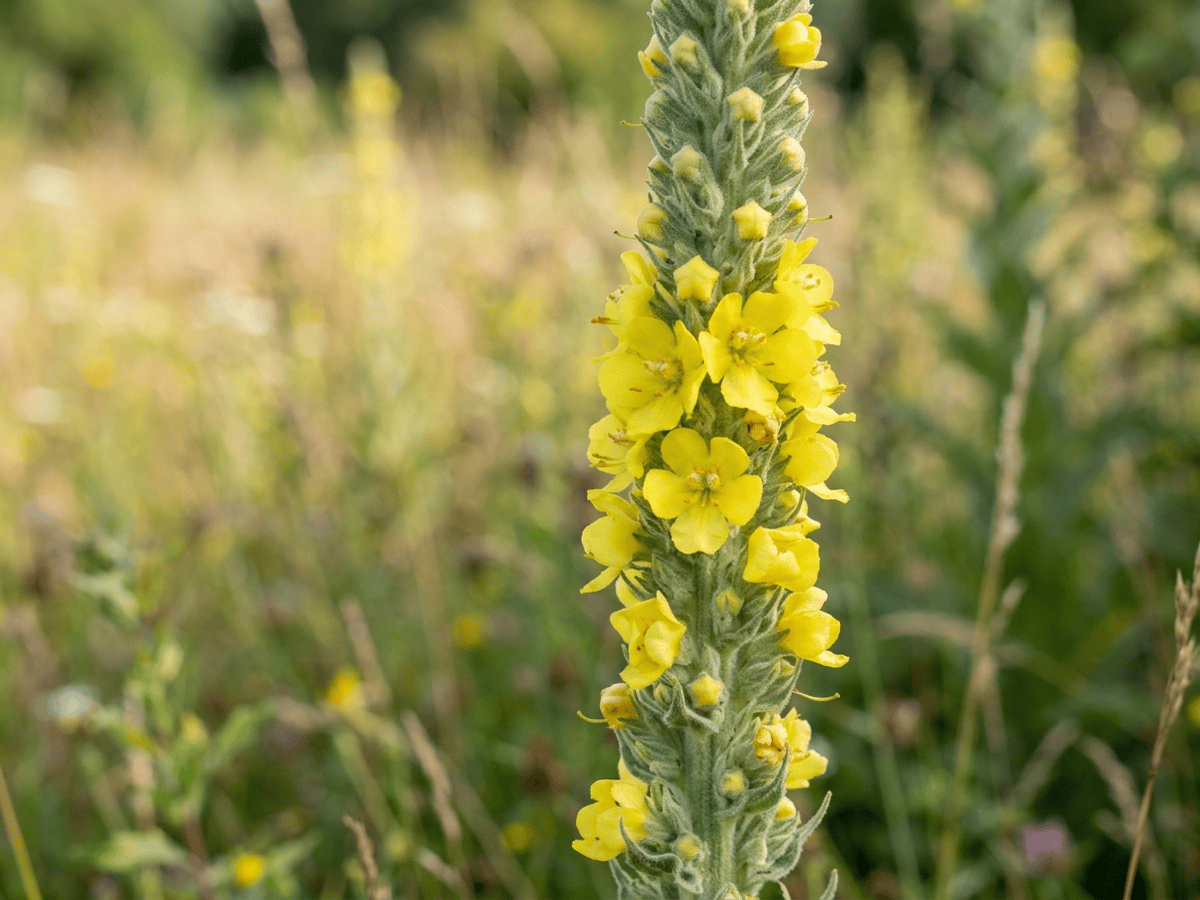
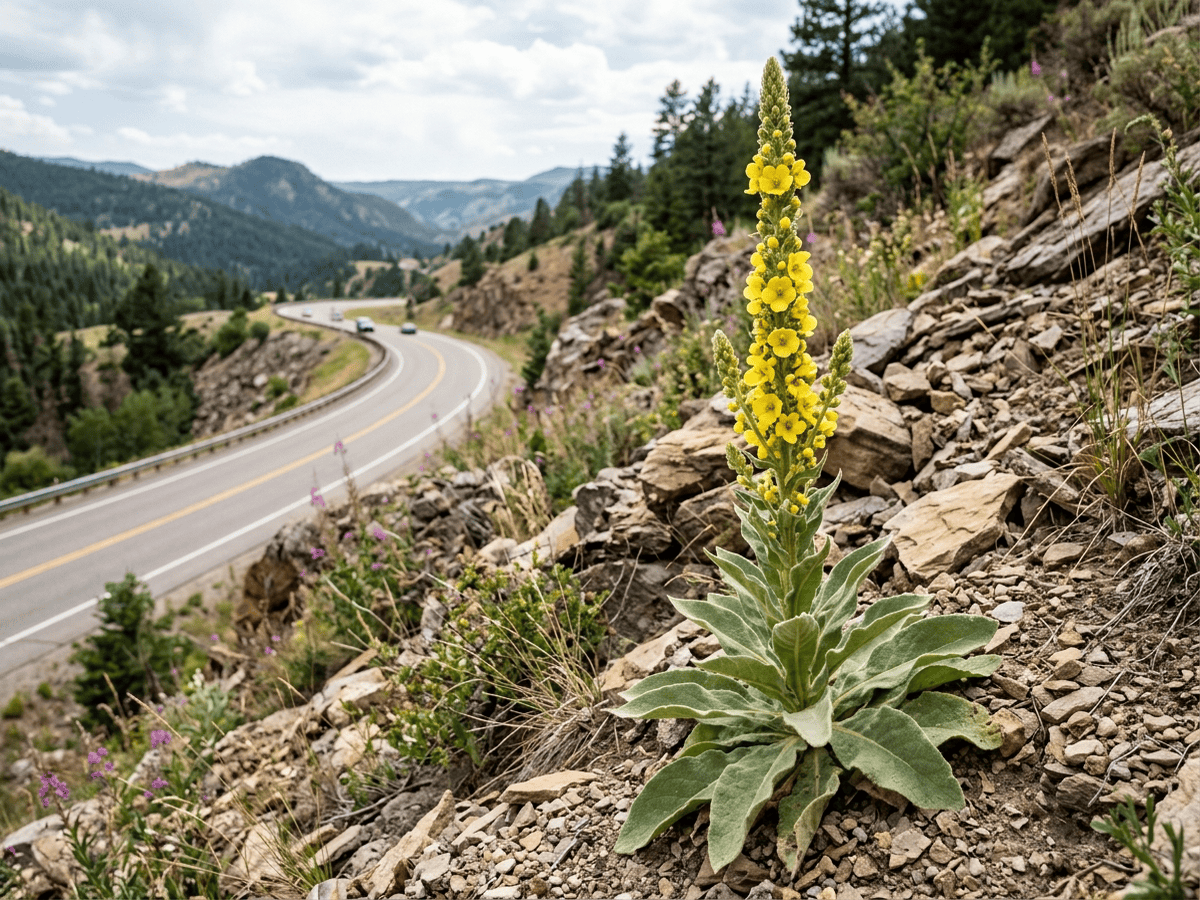
Common Mullein is a Eurasian biennial with a distinctive woolly gray-green rosette in year one and a towering 2 to 7 foot yellow flower spike in year two, widely naturalized across US roadsides, pastures, and burned areas. The fuzzy leaves have long been used as lamp wicks, torches, and folk medicine. Listed as invasive in many US states due to prolific seeding but only weakly competitive with established vegetation.
- Medicinal
- Drought-tolerant
How to care for Great Mullein
Watering
- Springevery 14 days
- Summerevery 10 days
- Fallevery 14 days
- Winterevery 30 days
Soil · Well-draining
- Top dressingPine bark mulch10%
- Main mixPotting soil + perlite 2:170%
- DrainageLECA / gravel20%
Never skip the drainage layer — standing water is the top cause of root rot.
FERTILIZER
This plant needs little to no feeding.
At a Glance
- NativeEurope, Africa, Western Asia
- Height4–7 ft (1.2–2.1 m)
- Spread1–2 ft (0.3–0.6 m)
- Flower colorYellow
- Foliage colorGreen, Silver
- SoilSandy, Well-drained
- LocationsYard
Bloom time
BLOOM CYCLE
Peak bloom
Jun–Aug
Tall yellow flower spike summer of second year
Fragrance
LIGHT FRAGRANCE
The flowers have a light honey scent.
Toxicity
Humans Slight
iridoid glycosides and saponins
Slight
- Leaf
- Contact
EXPOSURE Touching leaves.
EFFECT Skin irritation from leaf hairs.
NOTE Leaf hairs can irritate skin; seeds contain rotenoids historically used as fish poison.
Not reported
EXPOSURE No exposure route is reported.
EFFECT No toxic effect is reported.
NOTE No toxicity is reported for dogs in this catalog; this is not evidence that the plant is edible or harmless.
Not reported
EXPOSURE No exposure route is reported.
EFFECT No toxic effect is reported.
NOTE No toxicity is reported for cats in this catalog; this is not evidence that the plant is edible or harmless.
Educational information, not medical or veterinary advice. If exposure is suspected, contact a doctor or veterinarian.
DISTRIBUTION

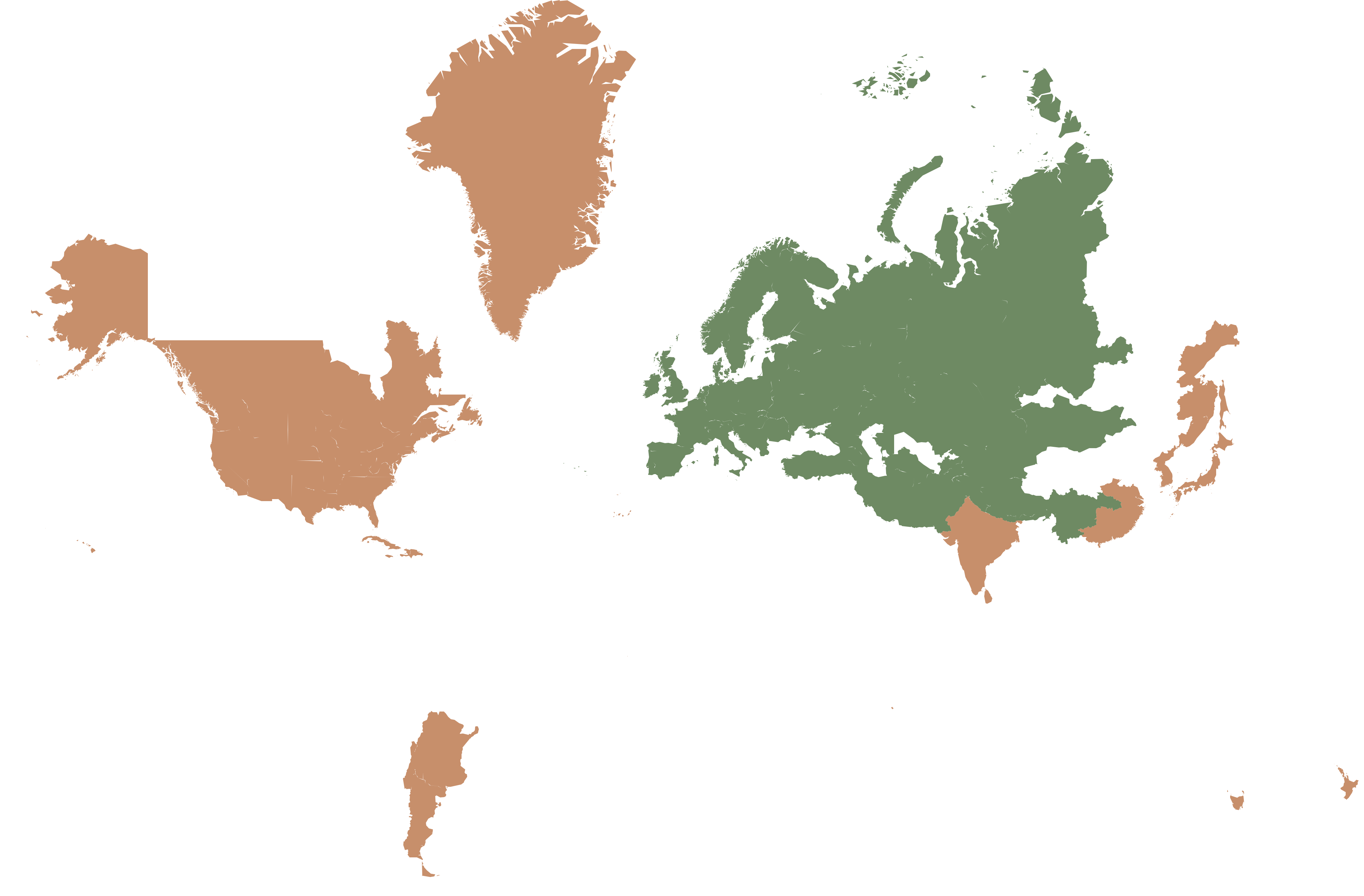
- Native
- Introduced
- Europe
- Africa
- Western Asia
History
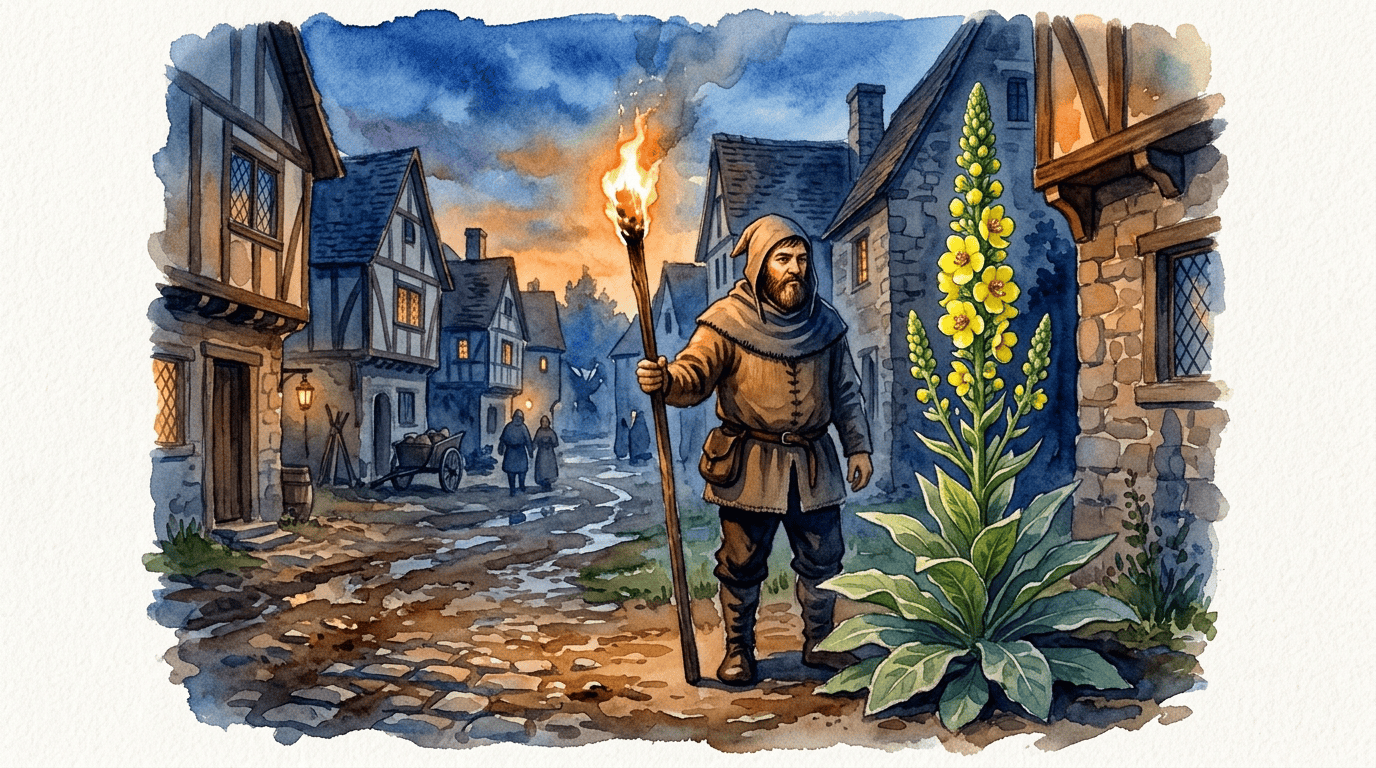
Verbascum thapsus, common or great mullein, is a biennial native to Europe, North Africa, and western Asia. It forms a large rosette of thick, densely hairy leaves in its first year and bolts in the second to a single stout flower spike up to two meters tall, studded with lemon-yellow flowers over a long summer season. Ancient Greek and Roman herbalists prescribed the leaves for pulmonary complaints, and the dried stalks, dipped in tallow, served for centuries as torches in European villages, giving rise to names such as torchwort and candlewick plant.
Roman soldiers reputedly used the fuzzy leaves as bandages and bootliners. Modern herbalism continues to use the dried flowers and leaves for coughs and mild ear complaints.
The plant arrived in North America in the late 1700s. Native to Europe and Asia, Common Mullein arrived in colonial America in the 1700s as a medicinal herb and has since naturalized across the entire US. Seeds can remain viable in soil for over 100 years, explaining why dense stands appear after fire or soil disturbance, earning it the name Fire Mullein in western states.
Symbolism & meaning
What It Symbolizes
Great Mullein is a candle in waste ground. Woolly leaves form a rosette like gray felt, then a tall yellow spike rises from gravel, fields, and roadsides. Its old household uses add history, but its symbolism is plain endurance: light lifted from poor soil.
- Humble torch — dried stalks used as torches since antiquity
- Lung herb — traditional respiratory medicine
Where the Name Comes From
'Verbascum' from Latin possibly from 'barbascum' meaning bearded, for fuzzy leaves; 'thapsus' possibly refers to the island of Thapsos.
Uses & Fun Facts
- Leaves and flowers traditionally used for coughs and respiratory complaints
- Tall yellow flower spikes attract bees and beneficial wasps
Related plants
Plants with similar care
 Chinese AbeliaAbelia chinensis
 Fragrant AbeliaAbelia mosanensis
 Large-Flowered AbeliaAbelia uniflora
 Glossy AbeliaAbelia x grandiflora
Frequently asked questions
How often should I water Great Mullein?
In summer, water about every 10 days; in winter, about every 30 days. Adjust for heat, pot size and drainage.
How much light does Great Mullein need?
Full sun: 6+ hrs direct. Watch the leaves — scorching or stretching means the light needs adjusting.
Is Great Mullein toxic to cats or dogs?
Pets Not reported (Dogs Not reported · Cats Not reported) Educational information, not medical or veterinary advice. If exposure is suspected, contact a doctor or veterinarian.
Is Great Mullein easy to grow?
Yes — it is considered an easy, beginner-friendly plant.
When does Great Mullein bloom?
It typically blooms Jun–Aug in the Northern Hemisphere.
YardMate
Identify any plant in seconds
Snap a photo — YardMate names the plant, diagnoses problems, and reminds you when to water.
Download on the App Store