 YardMate
California fan palm
Washingtonia filifera
Hard · Experienced growersAbout California fan palm
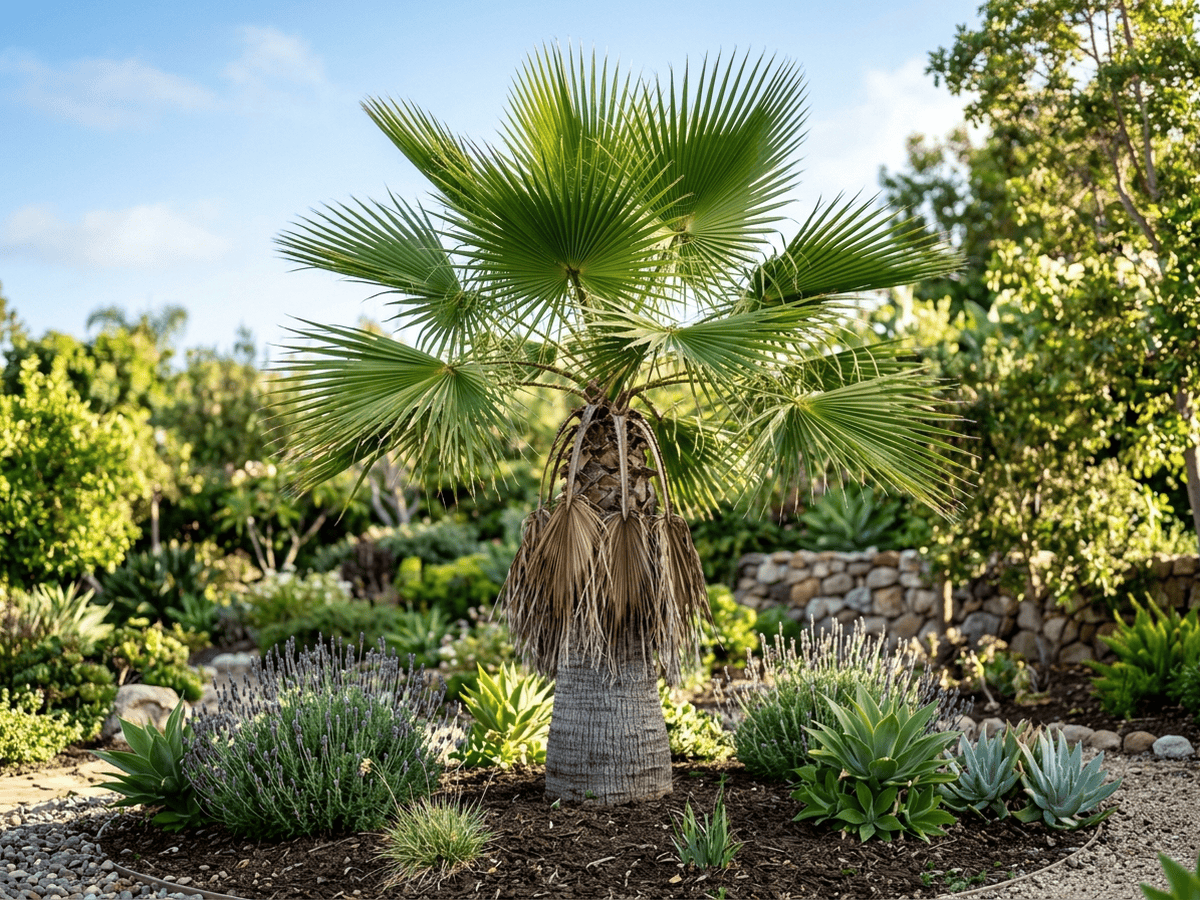
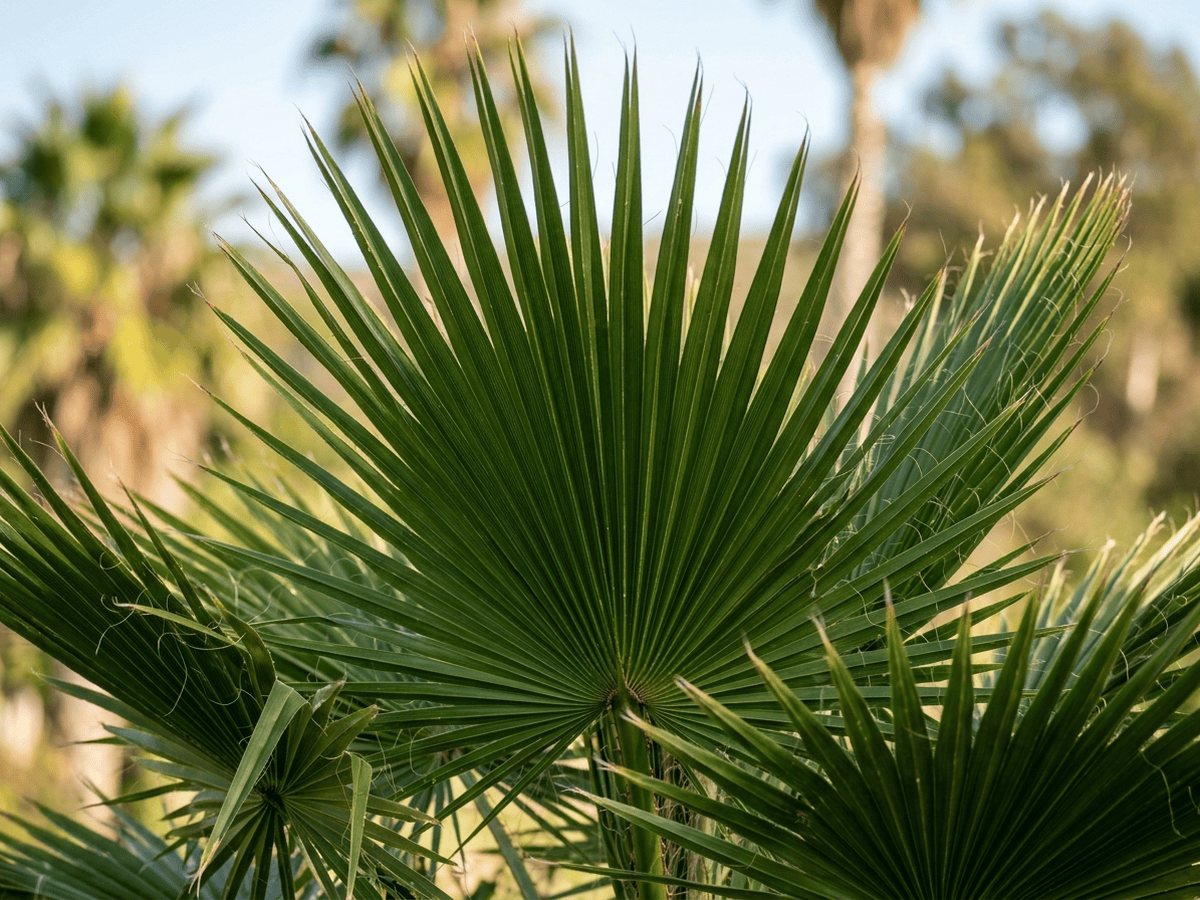
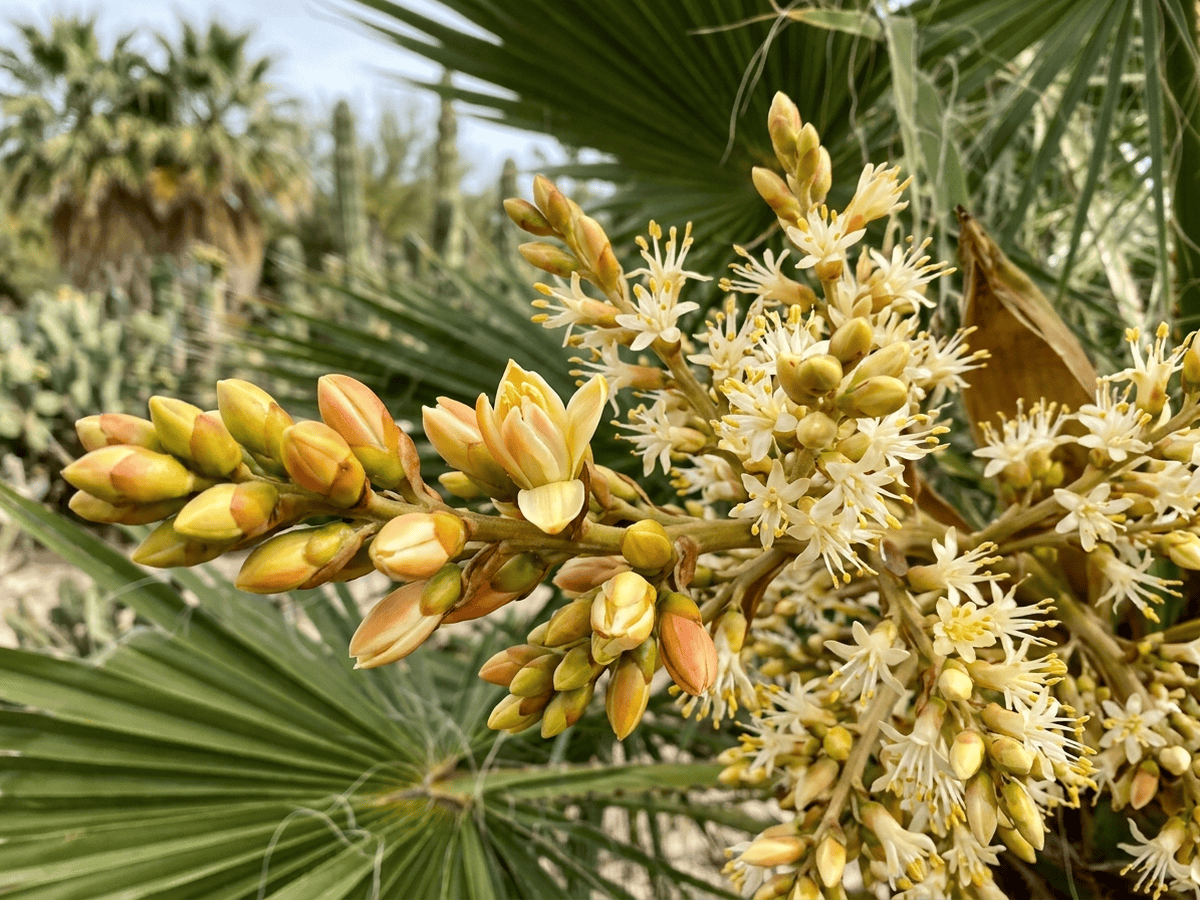
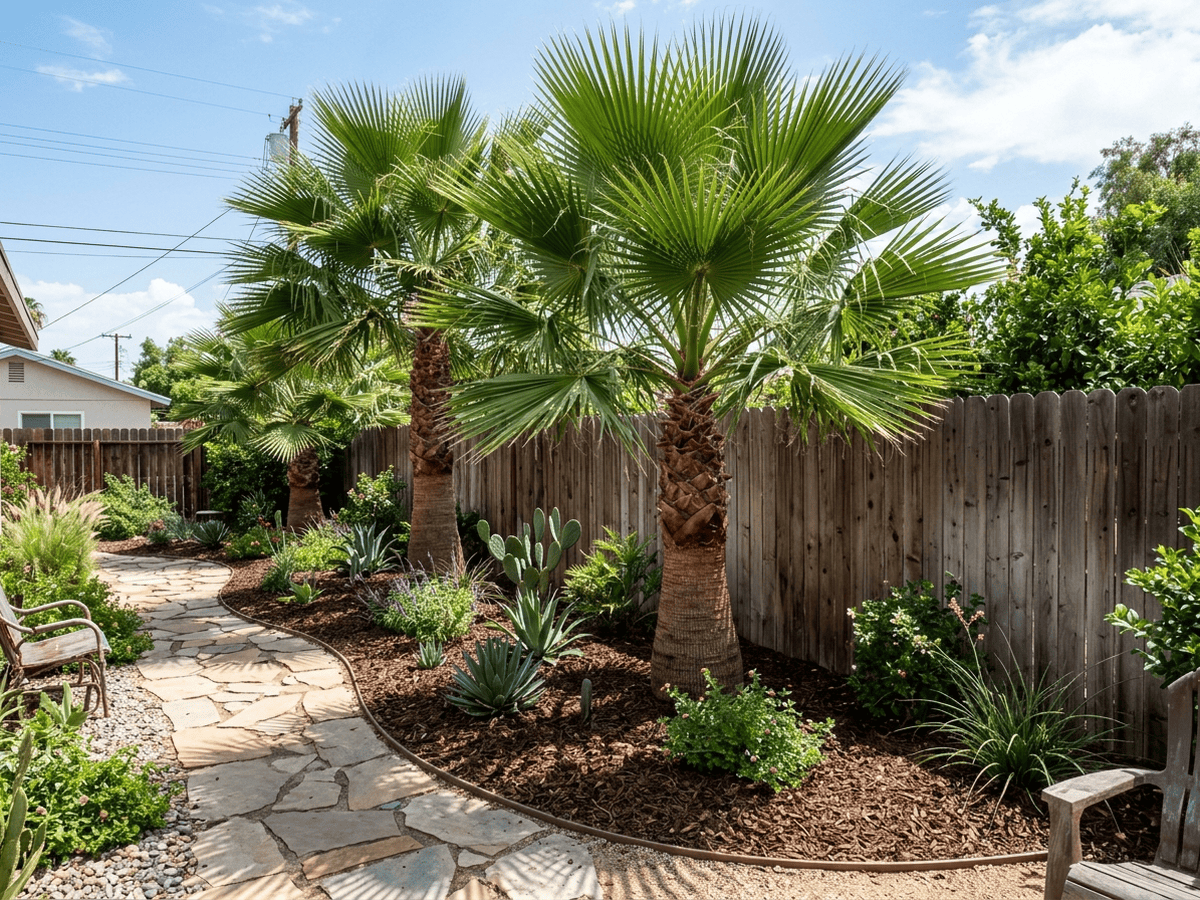
The California fan palm is the only palm native to the western United States, forming towering, single-trunked specimens that rise from desert oases in the Colorado Desert of southern California, western Arizona, and northern Baja California. Its thick, fibrous trunk supports a dense crown of large, pleated, fan-shaped leaves, and unless trimmed, a shaggy 'skirt' of dead fronds cloaks the trunk for much of its height. In summer, arching stalks bear small creamy white blooms, followed by clusters of small black, date-like fruit. Deeply rooted to reach the groundwater of desert springs and fault-line seeps, it tolerates searing heat and drought once established, and can grow 60 to 75 feet tall over many decades. Fast-growing and striking in silhouette, it remains a signature palm of the American Southwest, both in its native oases and in warm-climate gardens and streetscapes.
- Drought-tolerant
- Evergreen
- Fast-growing
- Cold-hardy
How to care for California fan palm
Watering
- Springevery 15 days
- Summerevery 10 days
- Fallevery 30 days
- Winterevery 30 days
Soil · Well-draining
- Main mixLoam + bark + perlite 2:1:175%
- DrainageLECA25%
Bark keeps the mix from compacting under a heavy root ball.
FERTILIZER
Balanced Feed 14-14-14
An even feed covers all three needs at once, keeping leaves, roots and blooms moving together with nothing pushed out of balance.
- Nitrogen · Leaves
- Phosphorus · Roots + Blooms
- Potassium · Strength
- Springevery 60 days
- Summerevery 60 days
At a Glance
- NativeNorth America
- Height30–75 ft (9.1–22.9 m)
- Spread10–15 ft (3–4.6 m)
- Foliage colorGreen
- SoilWell-drained, Sandy
- LocationsYard · Patio
Toxicity
No toxicity has been reported for this plant. Still, it is wise to keep pets from chewing on any houseplant.
Educational information, not medical or veterinary advice. If exposure is suspected, contact a doctor or veterinarian.
DISTRIBUTION

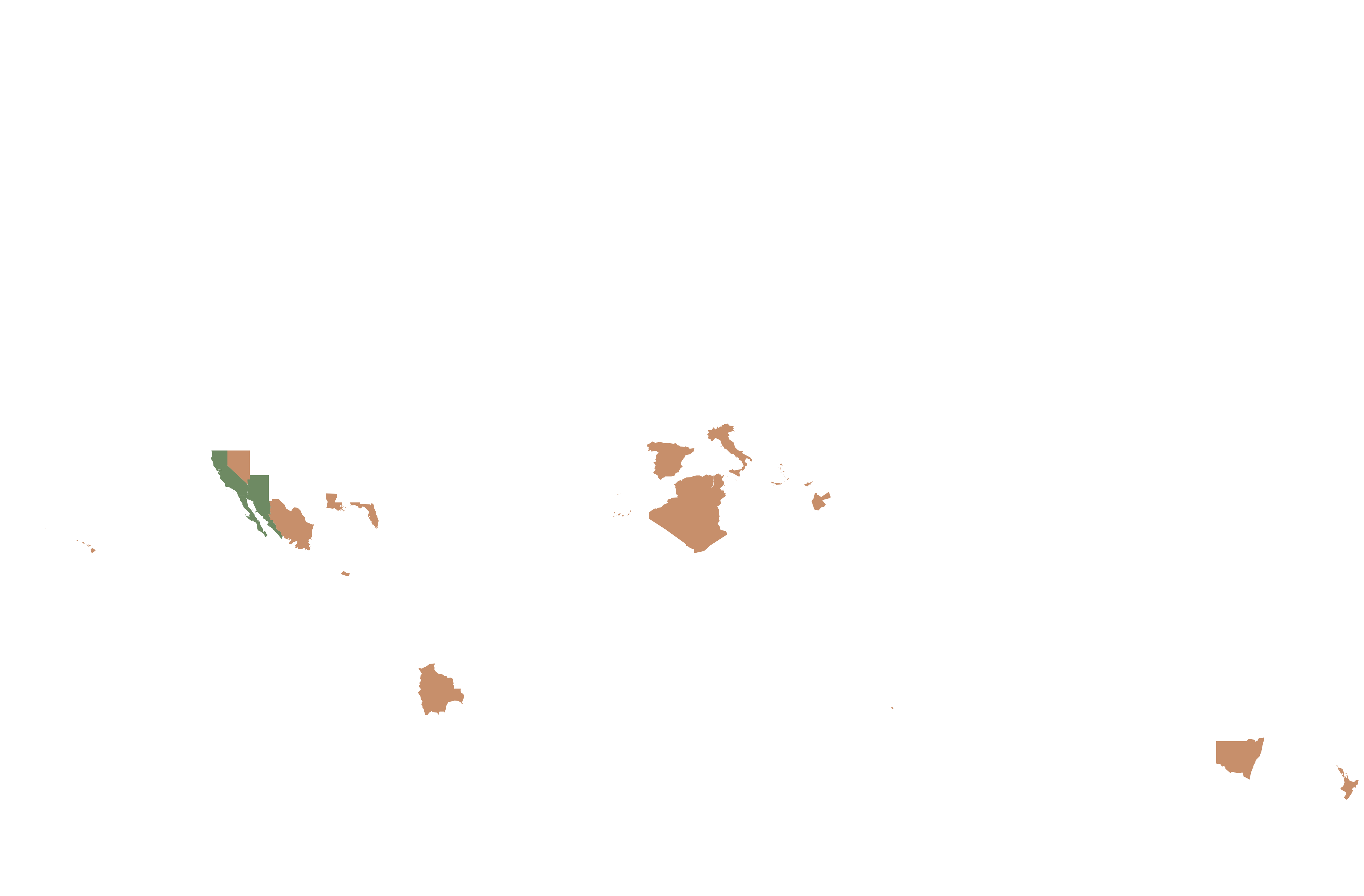
- Native
- Introduced
- North America
History
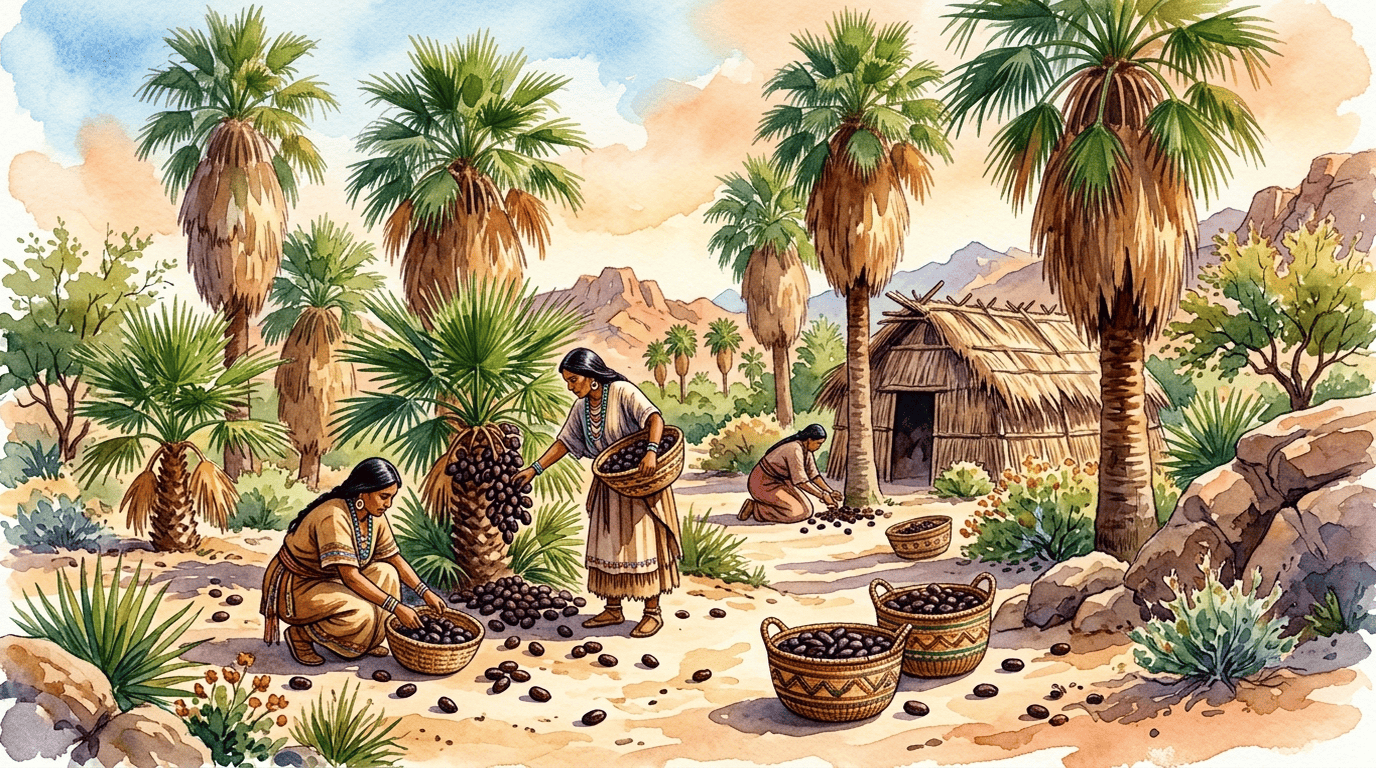
For centuries, the California fan palm was far more than scenery to the Cahuilla people, who have lived in the Colorado Desert of southern California since long before European contact. Wherever the palm grew in dense stands, it marked the presence of a permanent desert spring or fault-line seep, and these oases became essential gathering places and village sites. The palm's small, dark, date-like fruit ripened in late summer and was eaten fresh, dried for storage, or ground into a sweet meal; its broad fan-shaped leaves were cut and woven into baskets, sandals, and mats, or lashed together to thatch the roofs of dwellings called kish. Cahuilla families also periodically set fire to the shaggy skirts of dead fronds that build up around each trunk, a practice that cleared debris, discouraged pests, and appears to have encouraged heavier fruit production the following season — an early form of active land management in what looks, at first glance, like untouched wilderness. The oases themselves, threaded through canyons such as Palm Canyon near what is now Palm Springs, gave the region its name once American and European visitors began arriving in the nineteenth century, drawn by the same reliable water that had sustained Cahuilla communities for generations before them.
Symbolism & meaning
What It Symbolizes
Rising wherever hidden desert water reaches the surface, the California fan palm has long stood as a natural marker of sanctuary — a sign, visible for miles, that life-sustaining water and shade lie ahead. For the Cahuilla people, and for the desert wildlife that still shelters beneath its skirted trunk, it represents both endurance in a harsh climate and the quiet promise of refuge.
- Sanctuary — Marking the presence of scarce desert water for thousands of years, the California fan palm has come to symbolize refuge and life-giving shelter in an unforgiving landscape.
- Endurance — Its ability to thrive for decades on scattered desert springs makes it an emblem of resilience and permanence in arid country.
Where the Name Comes From
The genus name Washingtonia honors George Washington, bestowed by nineteenth-century botanists; the species name filifera is Latin for 'thread-bearing,' referring to the pale, curling fibers that fray from the margins of its fan-shaped leaves.
Uses & Fun Facts
- Long planted as a signature palm along streets, resorts, and gardens throughout the warm-winter Southwest, prized for its towering silhouette.
- Its small, sweet, date-like fruit was a traditional food of the Cahuilla people, eaten fresh, dried, or ground into meal.
- Broad fan-shaped leaves were woven into baskets, sandals, and mats, and used to thatch traditional dwellings.
- Its fruit and shaggy frond skirts provide food and shelter for desert birds, bats, and other wildlife.
Related plants
Plants with similar care
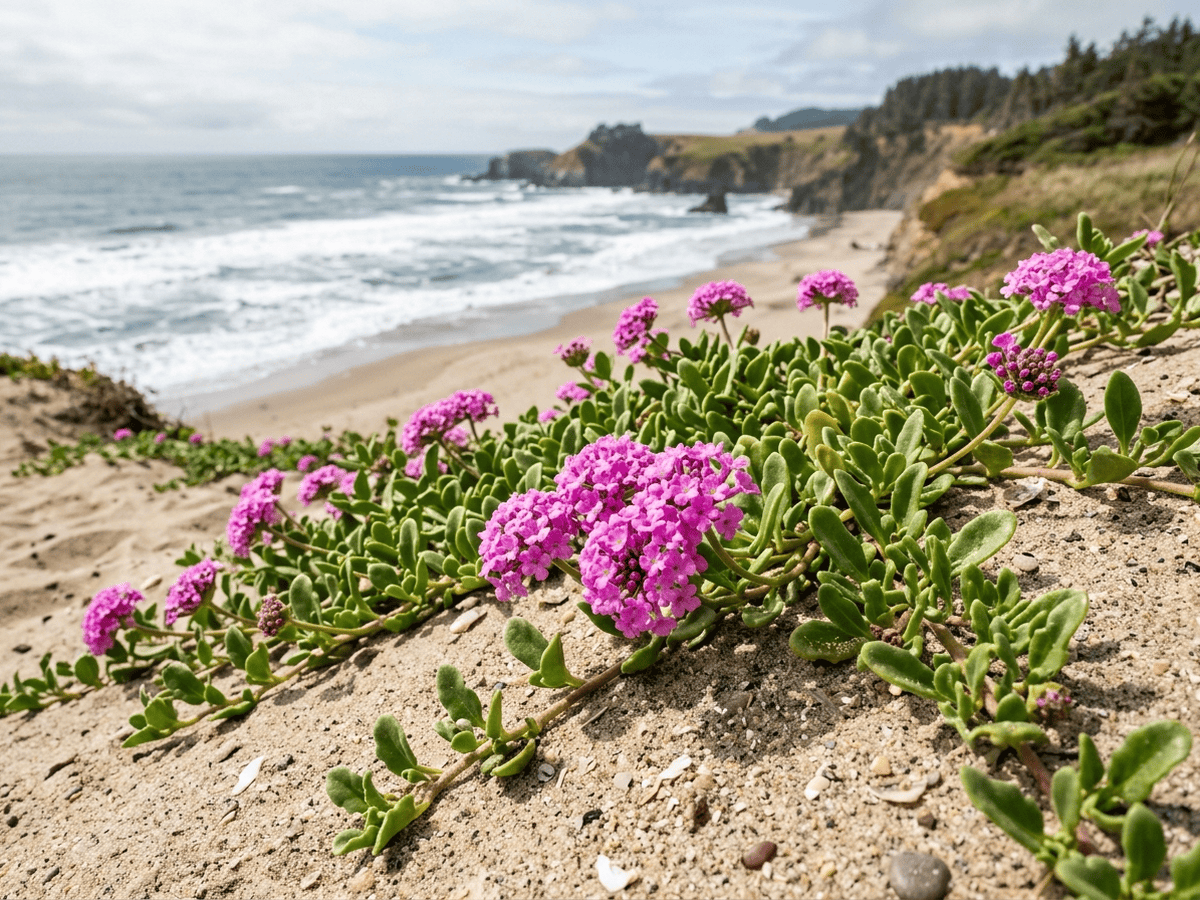 Pink Sand VerbenaAbronia umbellata
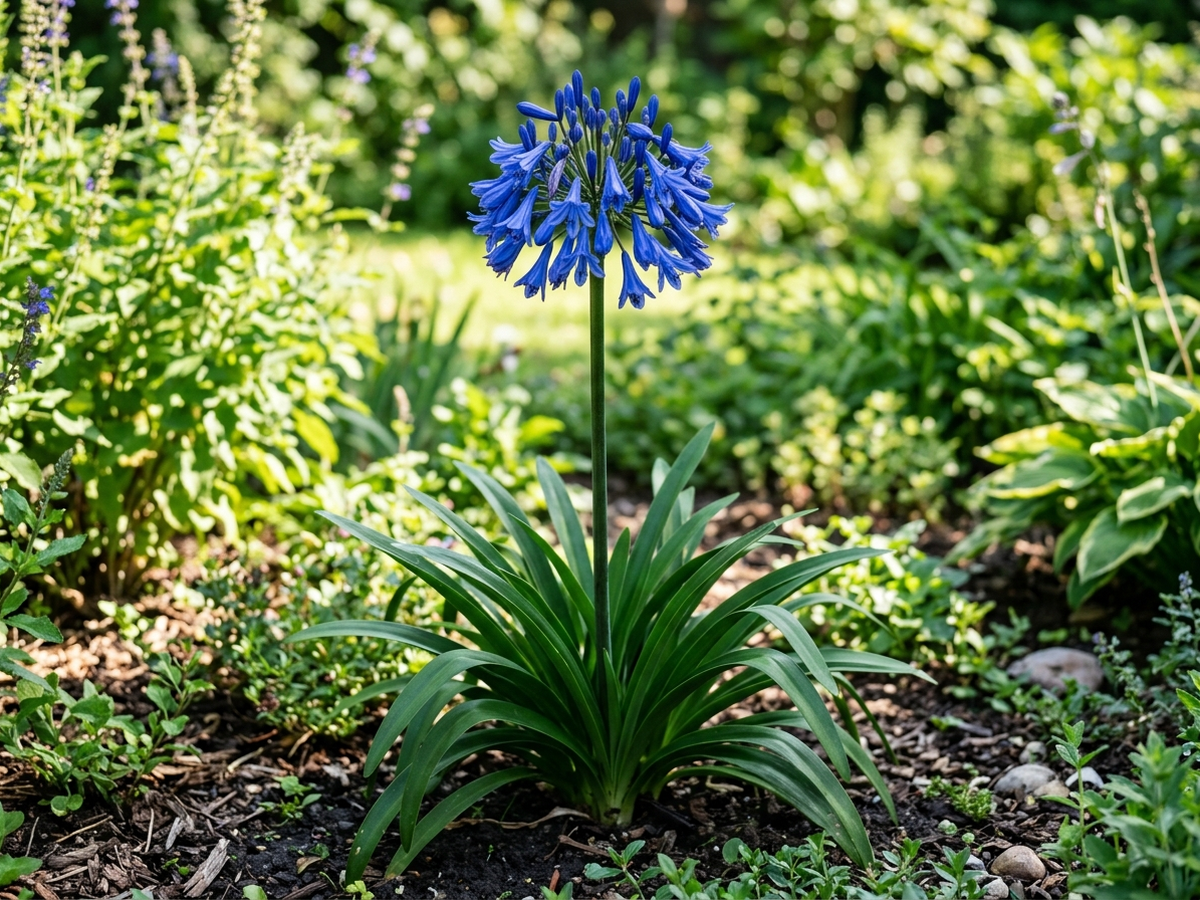 Drooping AgapanthusAgapanthus inapertus
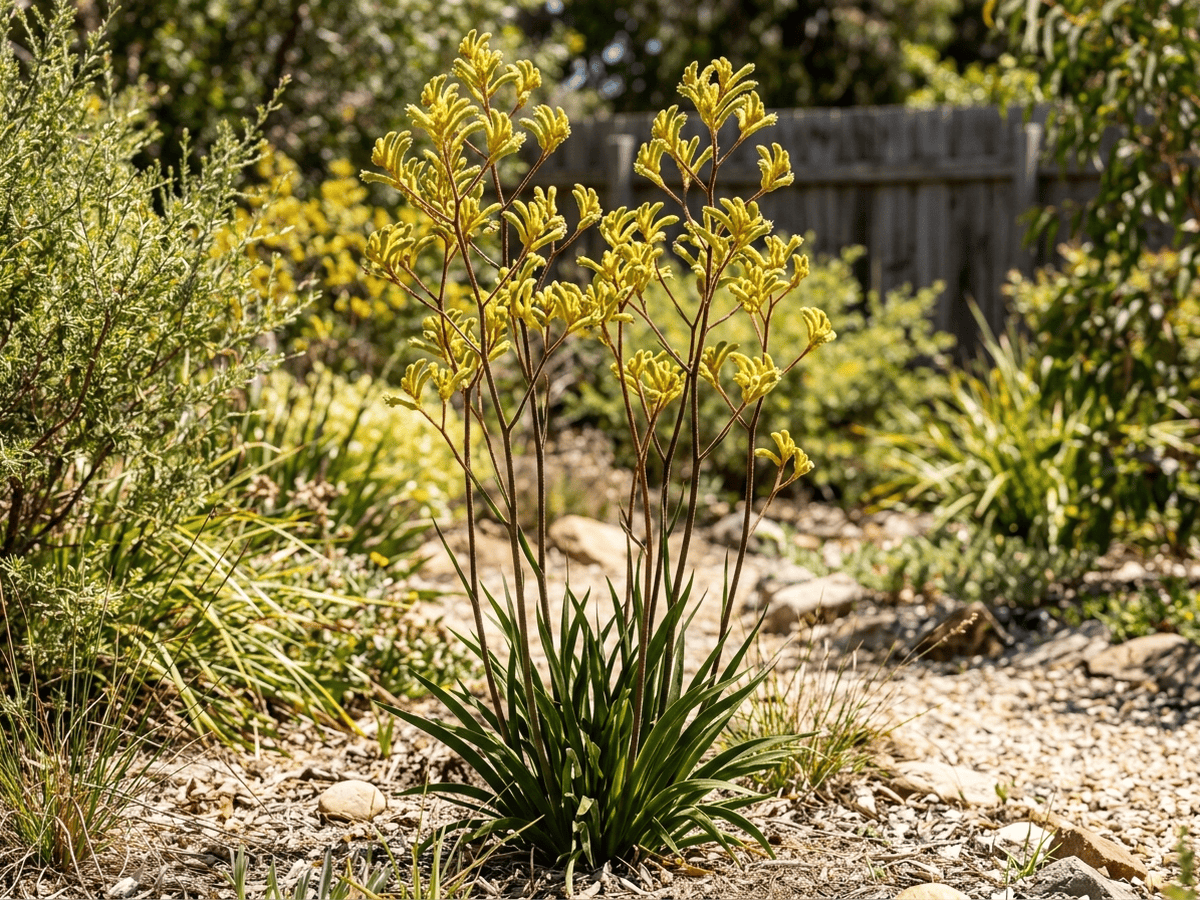 Tall Kangaroo PawAnigozanthos flavidus
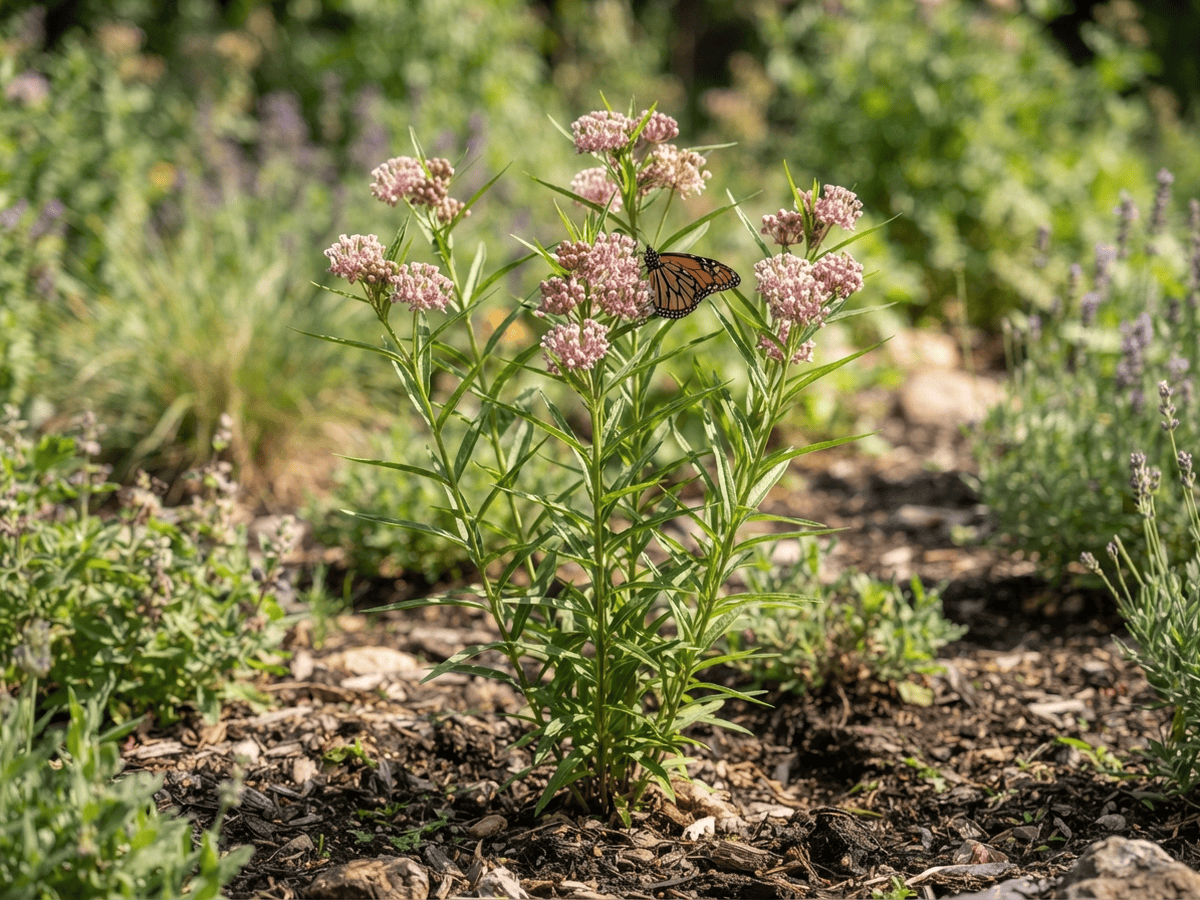 Narrowleaf MilkweedAsclepias fascicularis
Frequently asked questions
How often should I water California fan palm?
In summer, water about every 10 days; in winter, about every 30 days. Adjust for heat, pot size and drainage.
How much light does California fan palm need?
Full sun: 6+ hrs direct. Watch the leaves — scorching or stretching means the light needs adjusting.
Is California fan palm toxic to cats or dogs?
No toxicity has been reported for this plant. Still, it is wise to keep pets from chewing on any houseplant. Educational information, not medical or veterinary advice. If exposure is suspected, contact a doctor or veterinarian.
Is California fan palm easy to grow?
It is considered challenging and rewards experienced growers.
YardMate
Identify any plant in seconds
Snap a photo — YardMate names the plant, diagnoses problems, and reminds you when to water.
Download on the App Store