 YardMate


Rough Cocklebur
Xanthium strumarium
Easy · Beginner friendlyAbout Rough Cocklebur
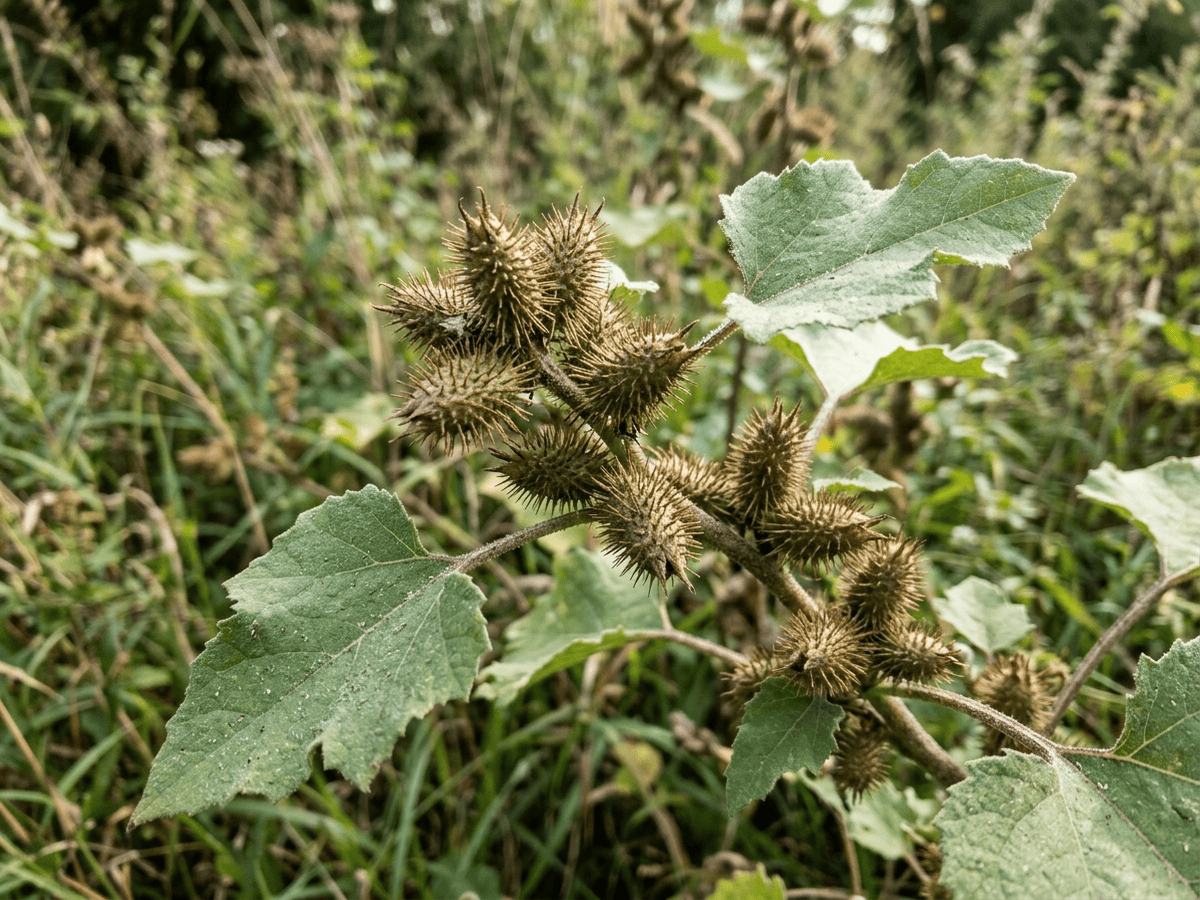
Common Cocklebur is an annual weed with coarse triangular leaves and notorious spiny burs that cling tenaciously to fur, clothing, and wool. Growing 1 to 5 feet tall, it produces inconspicuous green flowers followed by tough oval burs each containing two seeds with differing germination patterns. A serious weed of American pastures, cropland, and riverbanks, with seedlings highly toxic to grazing livestock.
- Drought-tolerant
- Fast-growing
- Heat-tolerant
How to care for Rough Cocklebur
Watering
- Springevery 10 days
- Summerevery 7 days
- Fallevery 14 days
- Winterpause watering
Soil · Well-draining
- Top dressingPine bark mulch10%
- Main mixPotting soil + perlite 2:170%
- DrainageLECA / gravel20%
Never skip the drainage layer — standing water is the top cause of root rot.
FERTILIZER
This plant needs little to no feeding.
At a Glance
- NativeNorth America
- Height2–4 ft (0.6–1.2 m)
- Spread1–2 ft (0.3–0.6 m)
- Flower colorGreen
- Foliage colorGreen
- Fruit colorBrown
- SoilLoamy, Moisture-retentive
- LocationsYard
Bloom time
BLOOM CYCLE
Peak bloom
Jun–Nov
Inconspicuous green flowers summer, prickly oval burs in fall
Toxicity
Humans Moderate · Pets Moderate
carboxyatractyloside and atractyloside
Moderate
- Seed
- Leaf
- Ingestion
EXPOSURE Eating seeds and leaves.
EFFECT Vomiting, hypoglycemia, liver damage, and weakness.
NOTE Seedlings and seeds most toxic; livestock poisonings documented.
Moderate
- Seed
- Leaf
- Ingestion
EXPOSURE Eating seeds and leaves.
EFFECT Vomiting, weakness, and liver damage.
NOTE Seedlings and seeds most toxic; livestock poisonings documented.
Moderate
- Seed
- Leaf
- Ingestion
EXPOSURE Eating seeds and leaves.
EFFECT Vomiting, weakness, and liver damage.
NOTE Seedlings and seeds most toxic; livestock poisonings documented.
Educational information, not medical or veterinary advice. If exposure is suspected, contact a doctor or veterinarian.
DISTRIBUTION

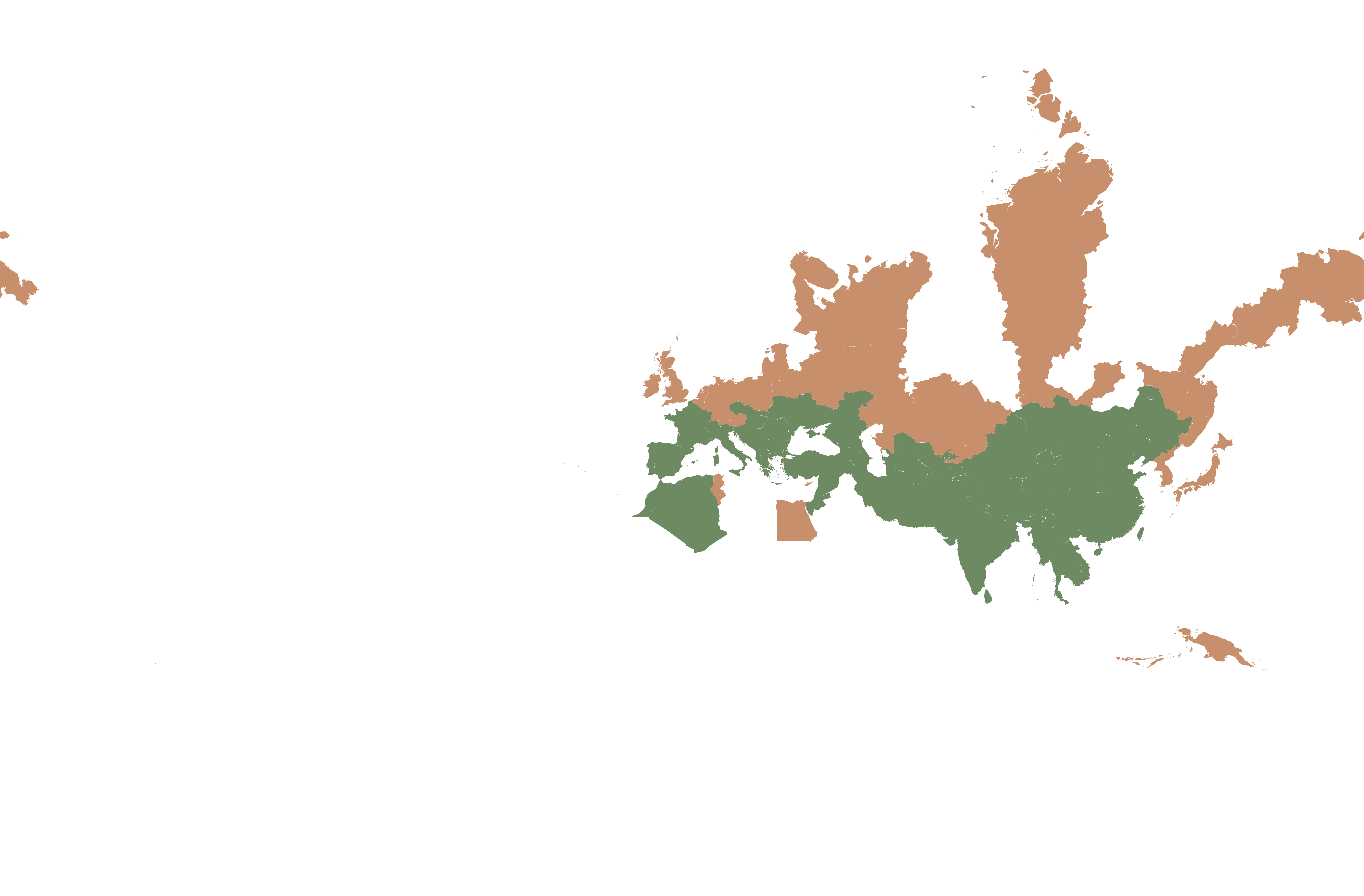
- Native
- Introduced
- North America
History

Xanthium strumarium, common cocklebur, is a coarse annual composite with a long association with human movement. Native to the Americas, its spiny two-chambered burs attach to animal fur and human clothing, dispersing seeds across continents long before modern transport. Traditional Chinese medicine uses the burs, called cang er zi, for nasal congestion despite their toxicity.
The plant is best known scientifically for two contributions: its seedlings and seeds contain carboxyatractyloside, a hepatotoxin responsible for periodic livestock poisonings, and its hooked burs inspired Swiss engineer George de Mestral to invent Velcro after examining them under a microscope following a 1941 hunting trip. Today the species is a cosmopolitan weed of disturbed ground, cultivated fields, and riverbanks.
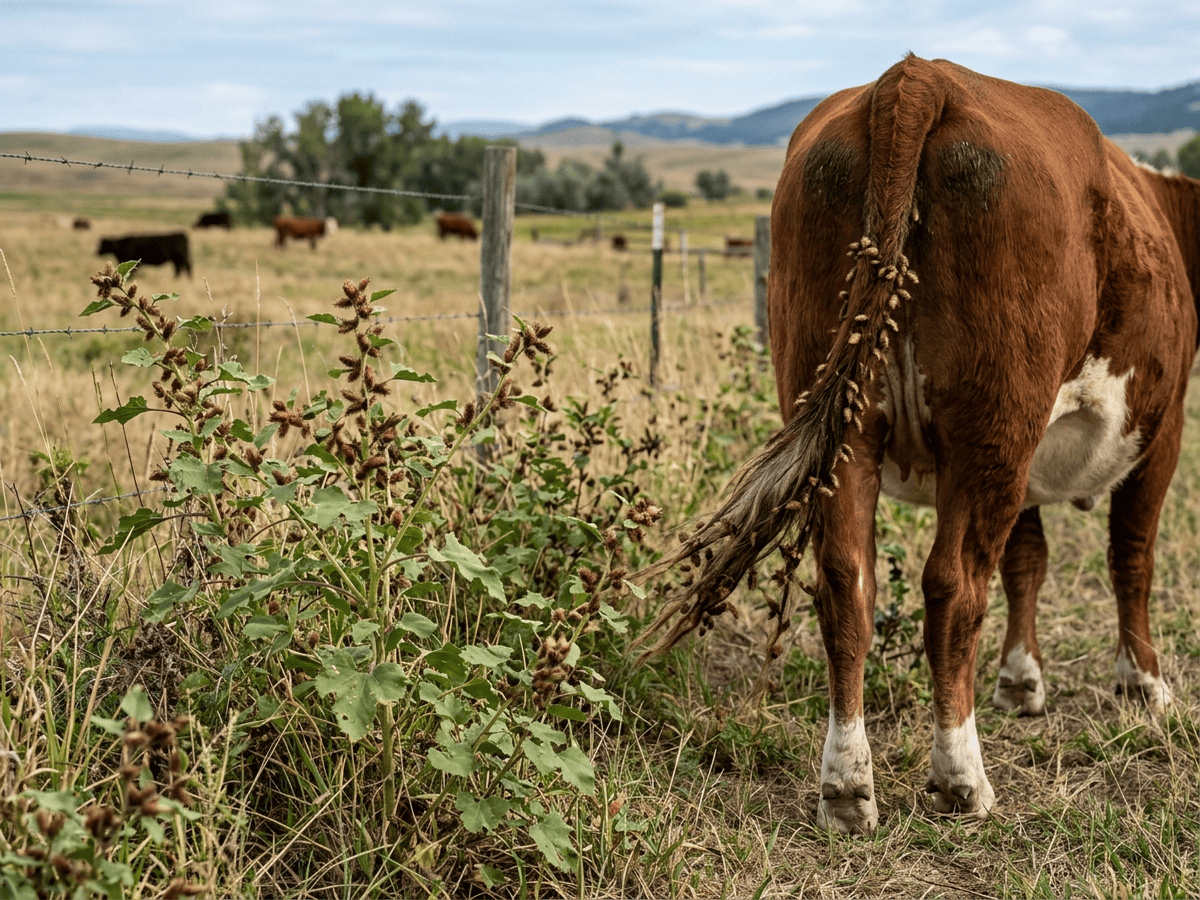
Native range debated (likely North America or Eurasia), Cocklebur is now distributed worldwide as a weed of disturbed ground and pastures. Notorious in American livestock operations for bur contamination of wool and hair coats, and the seedlings cause thousands of livestock poisonings annually across US pastures.
Symbolism & meaning
What It Symbolizes
Rough Cocklebur embodies clinging persistence, its hooked burs latching onto fur, socks, and pant legs to ride to whatever next patch of disturbed soil they reach. That same hook-and-loop architecture famously inspired velcro after a Swiss inventor pulled a few burs from his dog. An unloved weed that quietly contributed to the way we fasten everything from sneakers to space suits.
- Clinging persistence — burs attach to anything that passes
- Velcro inspiration — hook-and-loop fastener inspired by bur structure
Where the Name Comes From
'Xanthium' comes from Greek 'xanthos' meaning yellow, for a yellow dye anciently extracted from the plant; 'strumarium' refers to an old folk-herbal association with scrofula.
Related plants
Plants with similar care
 Chinese AbeliaAbelia chinensis
 Fragrant AbeliaAbelia mosanensis
 Large-Flowered AbeliaAbelia uniflora
 Glossy AbeliaAbelia x grandiflora
Frequently asked questions
How often should I water Rough Cocklebur?
Water about every 10 days during the growing season, and always let excess water drain away.
How much light does Rough Cocklebur need?
Full sun: 6+ hrs direct. Watch the leaves — scorching or stretching means the light needs adjusting.
Is Rough Cocklebur toxic to cats or dogs?
Pets Moderate (Dogs Moderate · Cats Moderate) Educational information, not medical or veterinary advice. If exposure is suspected, contact a doctor or veterinarian.
Is Rough Cocklebur easy to grow?
Yes — it is considered an easy, beginner-friendly plant.
When does Rough Cocklebur bloom?
It typically blooms Jun–Nov in the Northern Hemisphere.
YardMate
Identify any plant in seconds
Snap a photo — YardMate names the plant, diagnoses problems, and reminds you when to water.
Download on the App Store