 YardMate


Golden Everlasting
Xerochrysum bracteatum
Easy · Beginner friendlyAbout Golden Everlasting
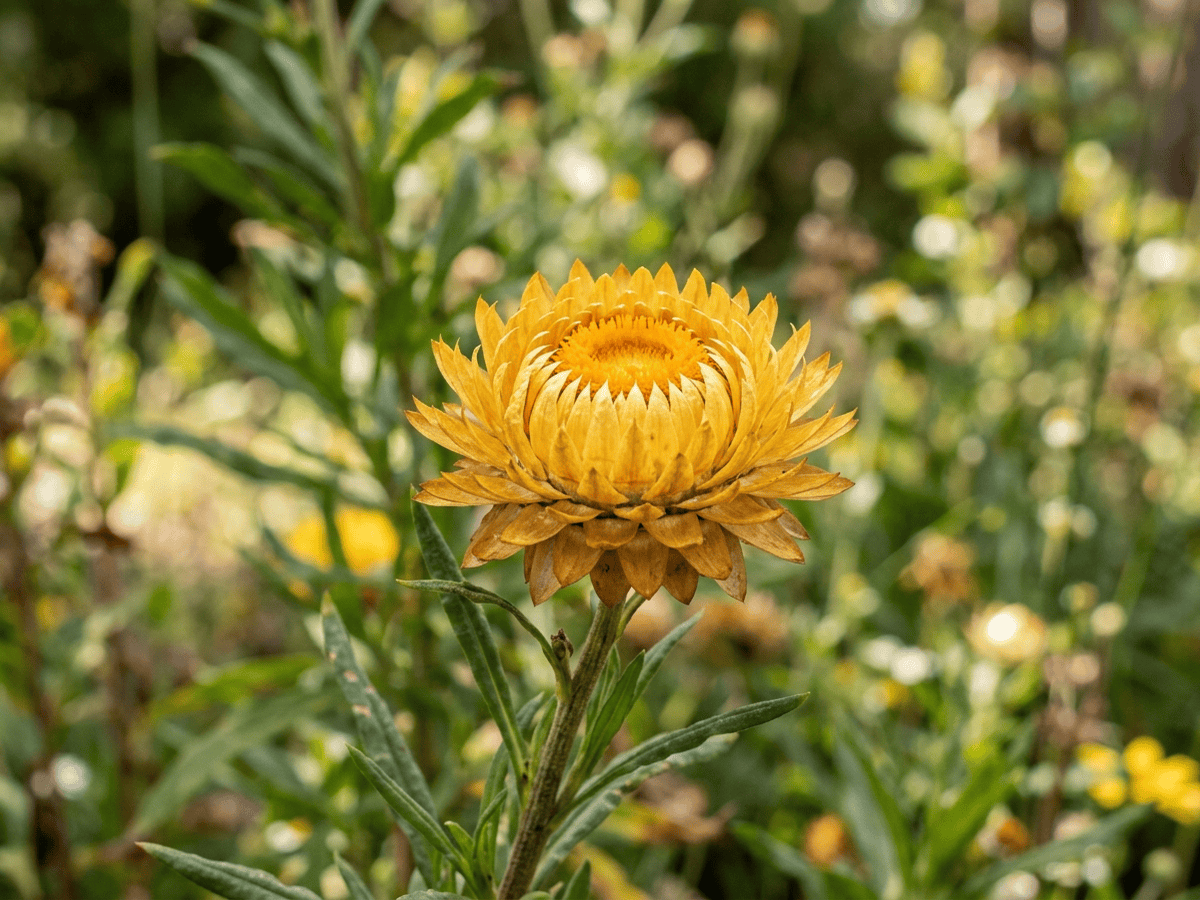
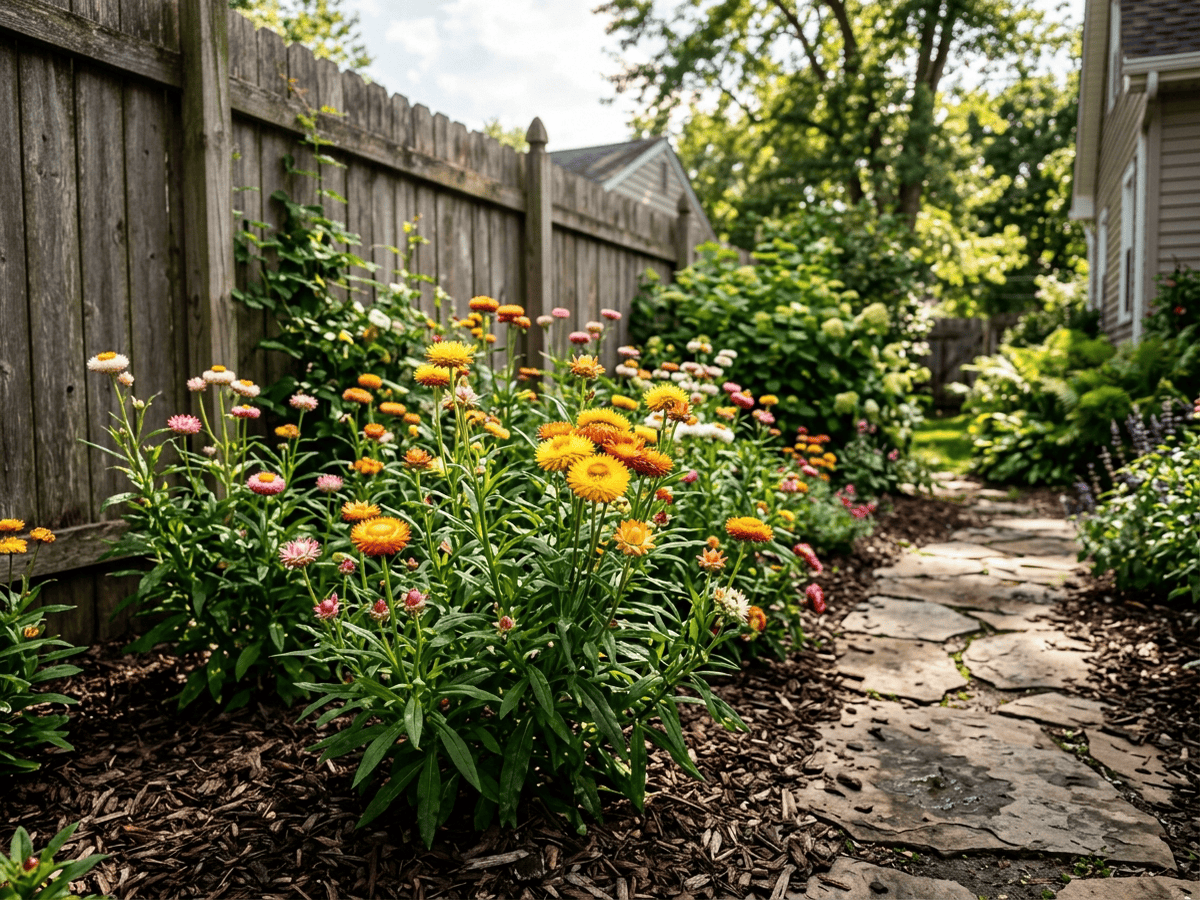
Strawflower or Golden Everlasting is an Australian annual famous for its papery petals that feel dry and crisp even on living plants, making it the premier everlasting dried flower worldwide. Growing 1 to 3 feet tall on branched upright stems, it produces 2 to 3-inch daisy-like bracted flowers in yellow, orange, red, pink, or white from summer through frost. A classic American cutting and dried flower garden plant.
- Cut-flower
- Heat-tolerant
- Drought-tolerant
- Pollinator-friendly
How to care for Golden Everlasting
Watering
- Springevery 5 days
- Summerevery 4 days
- Fallevery 7 days
- Winterevery 10 days
Soil · Well-draining
- Top dressingPine bark mulch10%
- Main mixPotting soil + perlite 2:170%
- DrainageLECA / gravel20%
Never skip the drainage layer — standing water is the top cause of root rot.
FERTILIZER
Balanced Feed 14-14-14
An even feed covers all three needs at once, keeping leaves, roots and blooms moving together with nothing pushed out of balance.
- Nitrogen · Leaves
- Phosphorus · Roots + Blooms
- Potassium · Strength
- Springevery 30 days
- Summerevery 30 days
- Fallevery 30 days
At a Glance
- NativeAustralasia
- Height2–4 ft (0.6–1.2 m)
- Spread1–2 ft (0.3–0.6 m)
- Flower colorYellow, Orange, Red, Pink
- Foliage colorGreen
- SoilLoamy, Well-drained, Sandy
- LocationsYard
Bloom time
BLOOM CYCLE
Peak bloom
Jun–Nov
Papery everlasting flowers summer to frost
Fragrance
LIGHT FRAGRANCE
Flowers have little scent, at most lightly sweet up close.
Toxicity
Toxicity unknown
None reported
Unknown
EXPOSURE Unspecified plant material.
EFFECT Toxic effects are not specified.
NOTE Toxicity for humans is not well documented; use caution until verified.
Unknown
EXPOSURE Unspecified plant material.
EFFECT Toxic effects are not specified.
NOTE Toxicity for dogs is not well documented; use caution until verified.
Unknown
EXPOSURE Unspecified plant material.
EFFECT Toxic effects are not specified.
NOTE Toxicity for cats is not well documented; use caution until verified.
Educational information, not medical or veterinary advice. If exposure is suspected, contact a doctor or veterinarian.
DISTRIBUTION


- Native
- Introduced
- Australasia
History
Xerochrysum bracteatum, the strawflower or golden everlasting, is a short-lived perennial or annual native to all Australian states and territories. Long classified as Helichrysum bracteatum or Bracteantha bracteata, it was moved to the segregated genus Xerochrysum in 1990. Aboriginal Australians used the flowers decoratively and medicinally, and English settlers introduced the species to European horticulture by the 1790s.
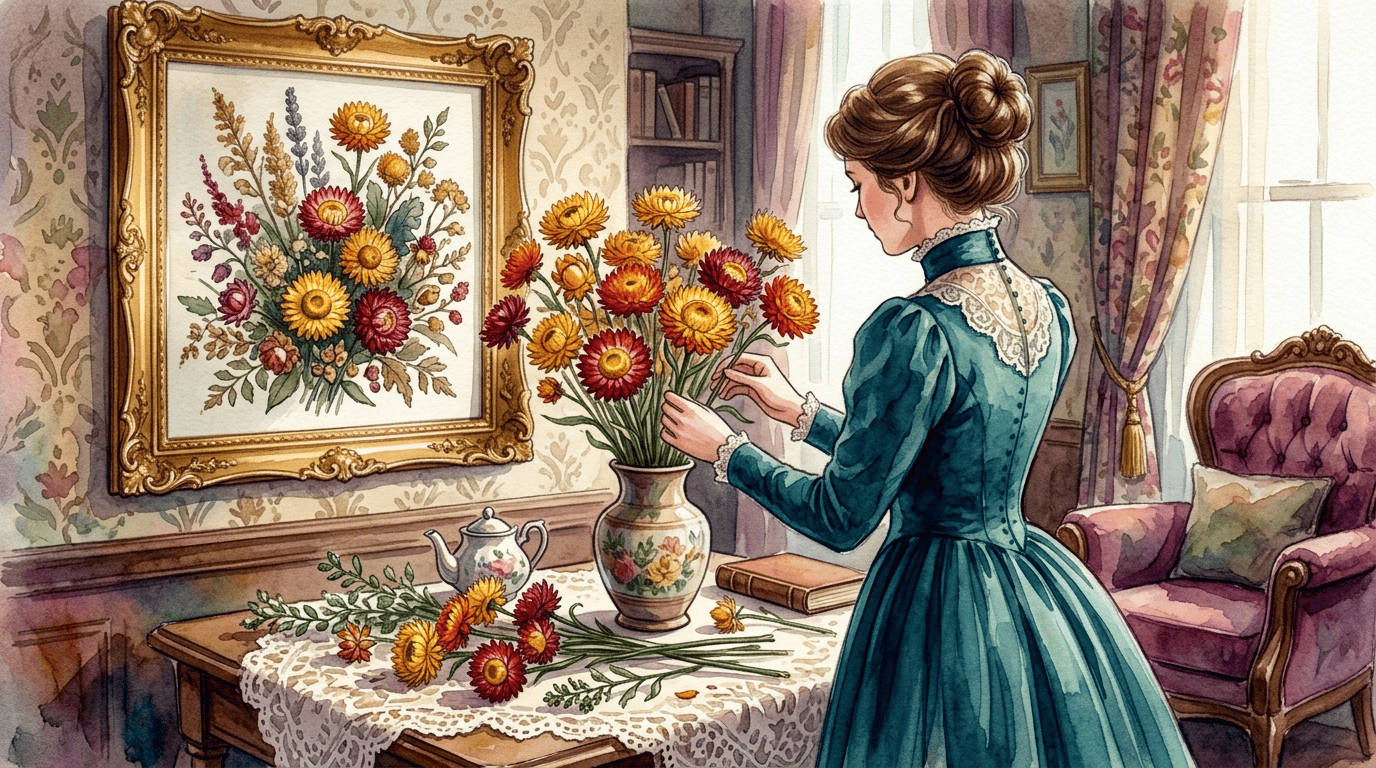
Victorian gardeners embraced strawflowers for dried bouquets because the stiff papery bracts retain color for years after drying. Modern breeding at Queensland Department of Primary Industries and ANBG, released through licensees such as Syngenta and Proven Winners, produced the compact Granvia, Mohave, Dreamtime, and Sundaze series in the 1990s and 2000s, extending the plant's role to containers and cutting gardens worldwide.
Dried flower arrangements featuring strawflowers became iconic of Victorian parlors and remain the gold standard of everlasting craft flowers across the US.
Symbolism & meaning
What It Symbolizes
Golden Everlasting is eternal memory — its flowers dry on the stem with their color essentially unchanged, holding bright gold for years in a vase or wreath. Its petals feel like fine paper even when alive, a quality the Australians call paper gold. It is the wildflower that refuses to fade, the natural emblem of a memory deliberately preserved against all the bleaching of time.
- Eternal memory — flowers dry with color unchanged
- Paper gold — petals feel like fine paper while alive
Where the Name Comes From
The common name highlights its golden coloring. 'Xerochrysum' from Greek means dry gold, for the papery yellow bracts; 'bracteatum' means with bracts, for the petal-like involucral bracts.
Uses & Fun Facts
- Premier everlasting flower for dried floral crafts worldwide
- Daisy-like bracted flowers attract native bees and butterflies
- Drought-tolerant Australian annual for hot sunny cottage borders
Related plants
Plants with similar care
 Chinese AbeliaAbelia chinensis
 Fragrant AbeliaAbelia mosanensis
 Large-Flowered AbeliaAbelia uniflora
 Glossy AbeliaAbelia x grandiflora
Frequently asked questions
How often should I water Golden Everlasting?
In summer, water about every 4 days; in winter, about every 10 days. Adjust for heat, pot size and drainage.
How much light does Golden Everlasting need?
Full sun: 6+ hrs direct. Watch the leaves — scorching or stretching means the light needs adjusting.
Is Golden Everlasting toxic to cats or dogs?
Pets Unknown (Dogs Unknown · Cats Unknown) Educational information, not medical or veterinary advice. If exposure is suspected, contact a doctor or veterinarian.
Is Golden Everlasting easy to grow?
Yes — it is considered an easy, beginner-friendly plant.
When does Golden Everlasting bloom?
It typically blooms Jun–Nov in the Northern Hemisphere.
YardMate
Identify any plant in seconds
Snap a photo — YardMate names the plant, diagnoses problems, and reminds you when to water.
Download on the App Store